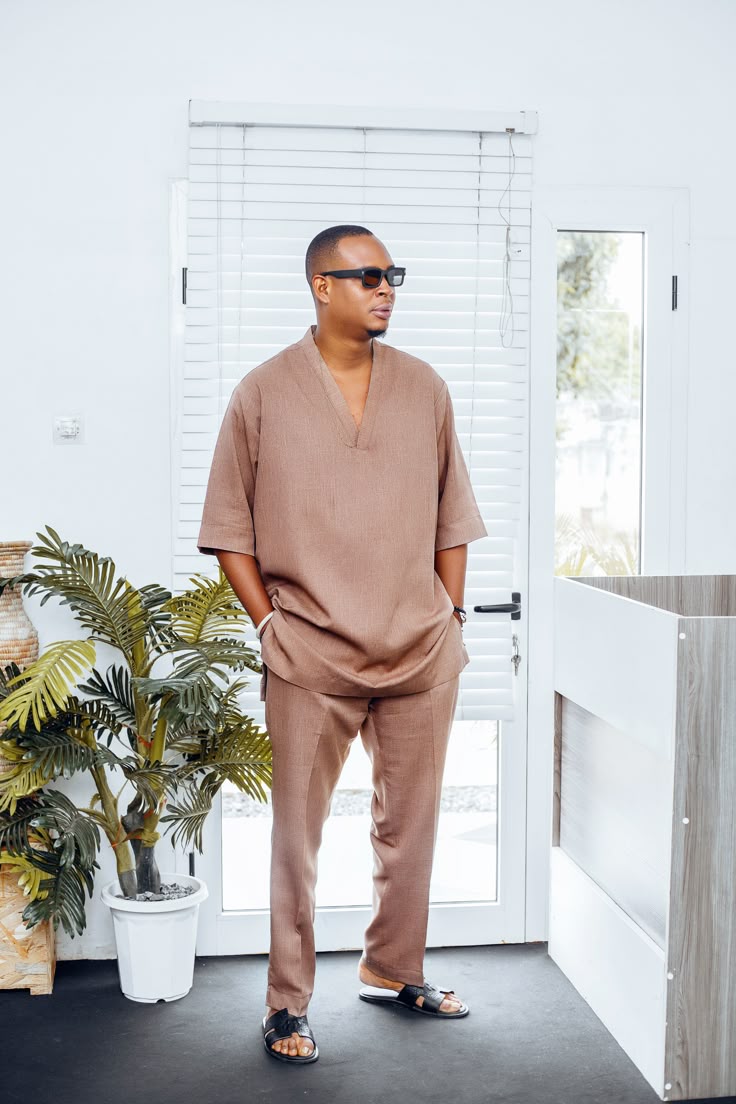
On a Friday afternoon in Kano, a young entrepreneur leaves his office wearing a sharply tailored navy kaftan with minimal embroidery. In Lagos, a groom chooses an ivory kaftan instead of a three-piece suit for his traditional wedding reception. In Dakar, a fashion designer sends contemporary interpretations of the grand boubou down the runway. Across different cities and different generations, a familiar garment continues to appear.
Many fashion commentators describe this as the return of the kaftan in African menswear. The phrase sounds convincing, but it misses an important fact. The kaftan never disappeared.
For centuries, robe traditions associated with the kaftan have remained part of everyday life, religious practice, ceremonial dress, and elite culture across large parts of Africa. What has changed is not the garment’s existence. What has changed is who is wearing it, how it is being tailored, and the settings in which it now appears.
Discover how the kaftan evolved across Africa and why a new generation of men is embracing this classic garment in modern fashion and everyday life.
A Garment Shaped by Trade, Faith, and Adaptation
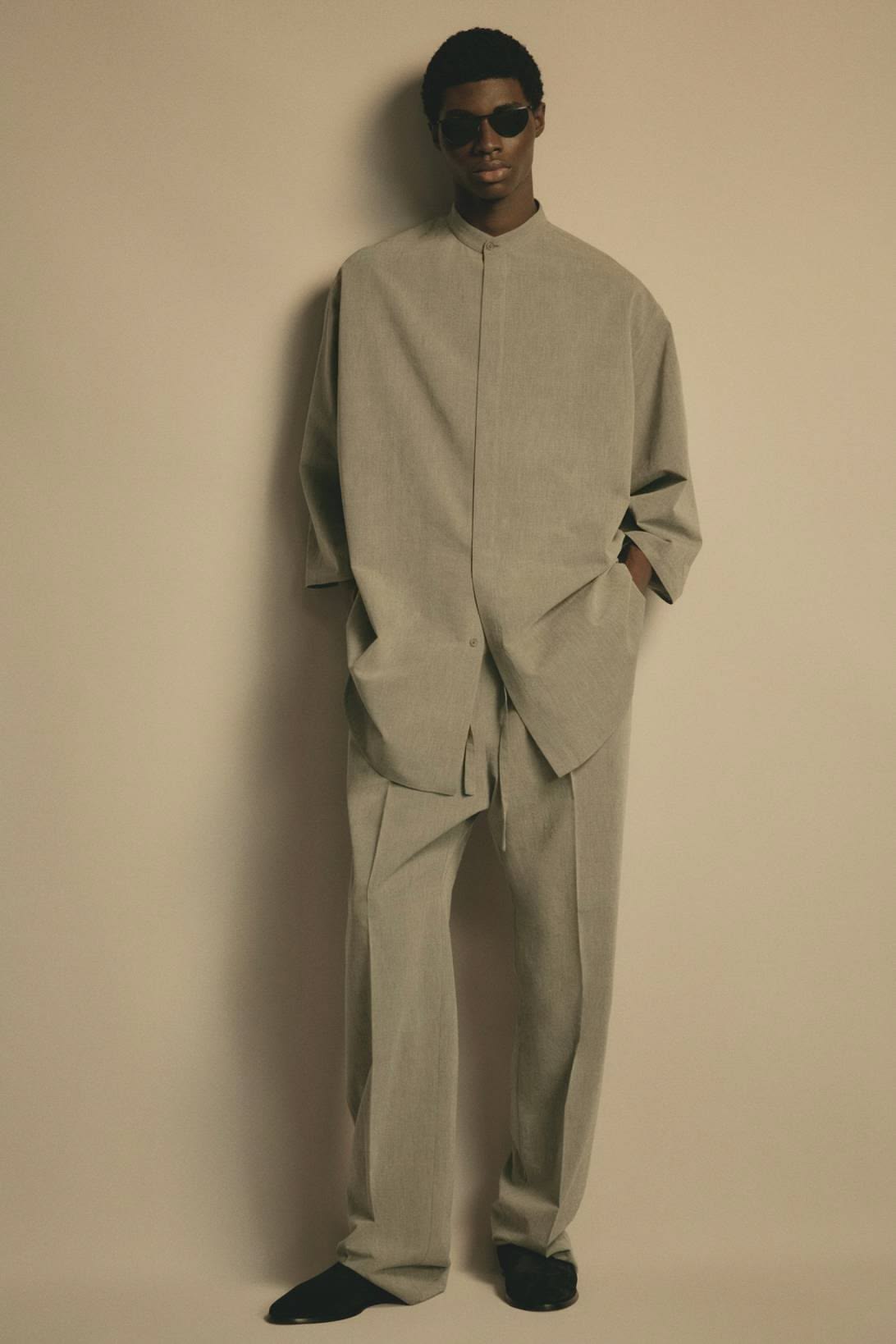
The history of the kaftan in Africa cannot be traced to a single country or moment. Variations of long, flowing robes moved along trade routes linking North Africa, the Sahel, and the wider Islamic world during the late medieval and early modern periods. Merchants, scholars, pilgrims, and rulers carried not only goods and ideas but also forms of dress.
As these garments moved across regions, African societies adapted them to local conditions. Climate played a role. Loose-fitting robes provided comfort in hot environments where airflow mattered. Textile traditions also influenced their development. Local weavers, dyers, and tailors reshaped imported forms according to regional aesthetics and available materials.
By the nineteenth century, robe traditions related to the kaftan were firmly established across parts of present-day Nigeria, Niger, Mali, Senegal, Mauritania, Chad, and Sudan. They had become African garments in both function and cultural meaning.
One Name, Many Traditions
The word “kaftan” often creates the impression that a single garment exists across the continent. The reality is more complex.
In northern Nigeria, men’s kaftans are commonly paired with matching trousers and feature embroidery concentrated around the neckline and chest. These garments originated in Hausa-Fulani dress traditions and remain prominent at religious celebrations, weddings, and formal gatherings.
In Senegal and Mali, the grand boubou occupies a related but distinct place within menswear culture. Cut in wide panels that create a boxy, floating volume when worn over a tunic and trousers, it reflects a different tailoring tradition shaped by local aesthetics and social expectations.
Morocco presents another variation. The Moroccan kaftan followed its own historical path and is now, in popular discourse, most strongly associated with women’s ceremonial wear. However, men’s robe traditions persist within the country’s broader clothing culture.
These differences matter because they reveal how African societies adapted a broad family of garments to local realities. The kaftan is not a uniform style imposed across regions. It is a collection of related traditions shaped by specific histories.
Why the Kaftan Survived When Other Garments Did Not
Many garments associated with pre-colonial life declined or shifted under the pressures of colonial rule, industrialisation, and changing consumer habits. The kaftan followed a different trajectory.
European-style suits gained prestige during the colonial era. Mission schools, government offices, and administrative institutions often encouraged Western forms of dress. Across many African cities, the suit became associated with formal employment and upward mobility.
Yet the kaftan remained visible.
Religious leaders continued to wear it. Traditional rulers retained it as part of ceremonial life. Families chose it for weddings and important gatherings. In many communities, it remained everyday clothing rather than occasional attire.
Its survival owed much to practicality. A garment designed for airflow and comfort remained useful in climates where heavy Western tailoring often felt restrictive. It also retained cultural legitimacy. Unlike imported fashions that depended on changing trends, the kaftan remained connected to social and religious life.
The result was continuity rather than revival.
The Generation That Changed the Conversation
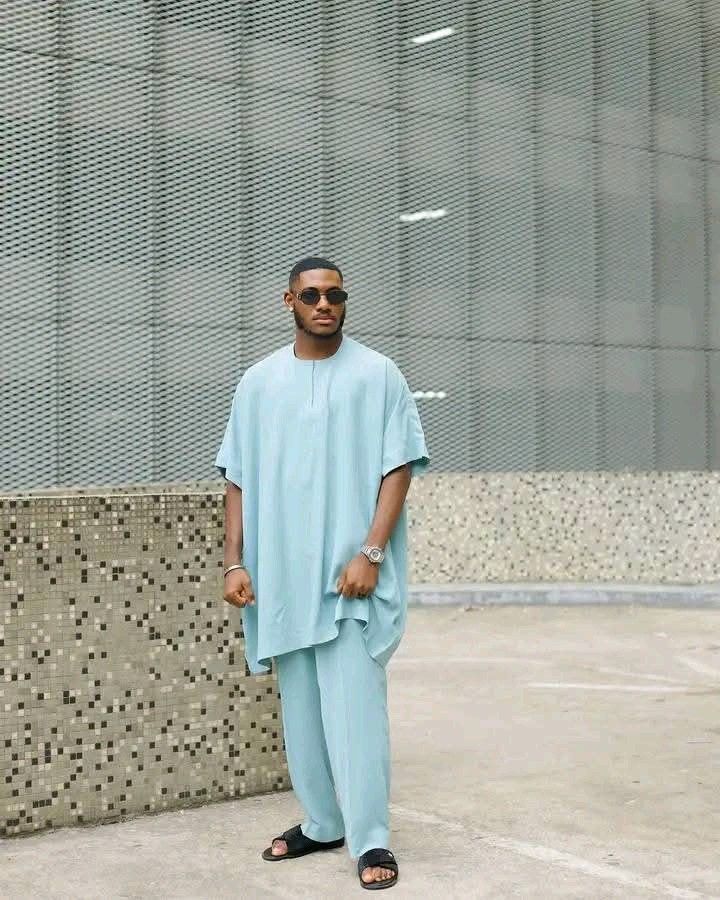
The most significant transformation occurred during the early twenty-first century.
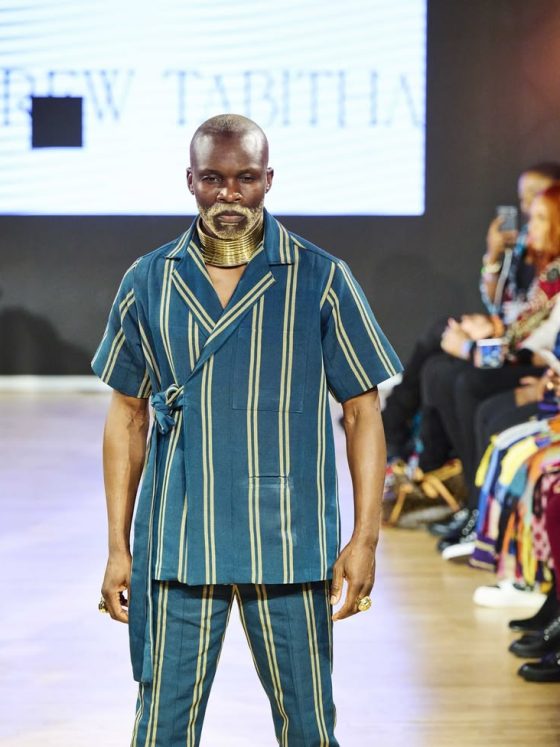
Across West Africa, younger men began wearing kaftans in settings that previous generations might have reserved for Western suits. Designers introduced slimmer silhouettes, cleaner cuts, and more restrained embroidery. The garment became part of contemporary fashion without losing its cultural foundations.
Popular culture accelerated this shift.
Nollywood actors increasingly appeared in tailored native menswear at public events. Musicians incorporated kaftans into performances, music videos, and promotional imagery. Social media amplified these appearances, exposing younger audiences to new ways of styling familiar garments.
The garment’s visibility expanded beyond weddings and religious celebrations. It entered creative industries, business gatherings, award ceremonies, and contemporary fashion campaigns.
The kaftan was no longer viewed solely through the lens of tradition. It became part of modern self-presentation.
The result was continuity rather than revival.
Tailoring as the Engine of Reinvention
The modern popularity of the kaftan owes much to African tailoring. Across cities such as Kano, Lagos, Accra, and Dakar, skilled tailors have reworked the garment without abandoning its essential character, a transformation traced in detail in Omiren Styles’ Inside the Heritage of Hausa Embroidery, which documents how embroidery itself functions as a silent grammar of status, lineage, and identity. Contemporary kaftan versions often feature sharper construction, luxury fabrics, and proportions designed for younger consumers.
Older styles frequently prioritised volume. Newer versions emphasise structure, narrower shoulders, cleaner lines at the waist, and less excess fabric at the hem. The silhouette remains recognisable, but the details reflect changing tastes.
This transformation demonstrates an important principle within African fashion history. Garments survive when craftspeople allow them to evolve. Tailors act as translators between heritage and contemporary life, preserving cultural meaning while responding to changing expectations. The same logic runs through the wider robe family to which the kaftan belongs. As Omiren Styles has traced in Agbada, Boubou, Grand Boubou: One Silhouette, Four Countries, Four Arguments About Power, the same wide-sleeved over-robe carries different meanings in Lagos, Dakar, Abidjan, and Bamako, with fabric choice, particularly the difference between everyday cotton and ceremonial bazin riche, doing much of the work of signalling occasion and status. The modern kaftan reflects that same process.
ALSO READ
- Agbada, Boubou, Grand Boubou: One Silhouette, Four Countries, Four Arguments About Power
- Inside the Heritage of Hausa Embroidery
Why Young Men Continue to Choose It
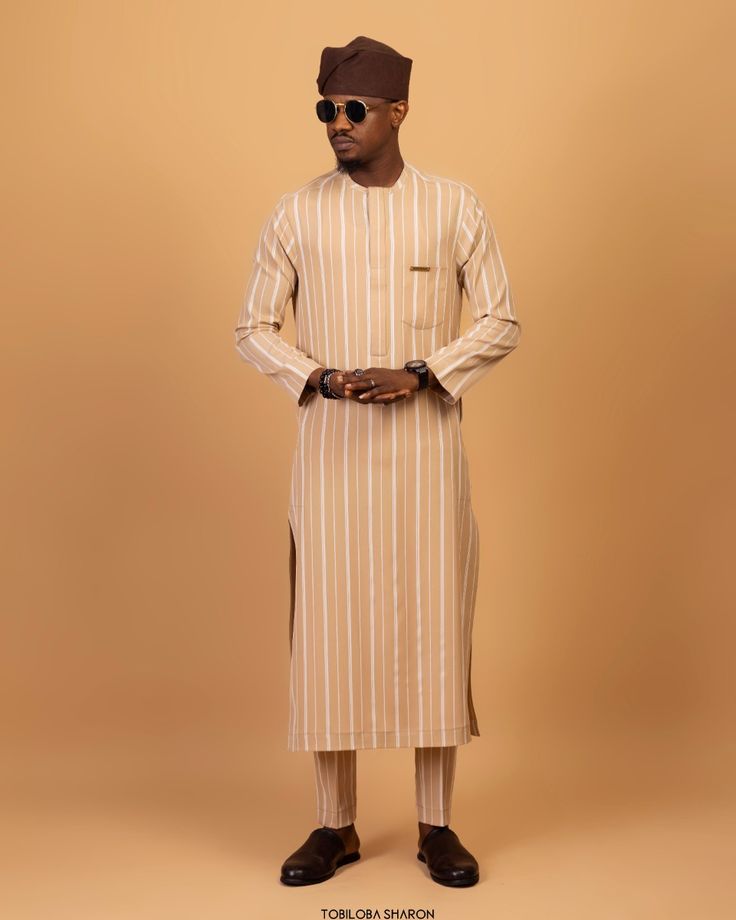
The appeal of the kaftan cannot be reduced to nostalgia.
Comfort remains important. In many African climates, loose-fitting garments offer practical advantages over heavily structured Western tailoring.
Cultural confidence also plays a role. Younger generations have grown increasingly comfortable expressing local identity in public and professional spaces. The assumption that formality must mirror European dress codes carries less influence than it once did.
The garment also offers distinction. In environments dominated by mass-produced clothing, a well-made kaftan provides individuality. Custom tailoring allows wearers to participate in a tradition while creating something personal.
Perhaps most importantly, the kaftan connects contemporary life to a longer history without requiring imitation of the past. A young man can walk into a modern office in a kaftan and still be standing within a history that predates the building, the bureaucracy, and the colonial suit itself.
THE OMIREN ARGUMENT
The story of the kaftan in African menswear is often framed as a revival. The historical record suggests otherwise. Across large parts of the continent, the garment never disappeared from public life, religious practice, or ceremonial culture.
What changed was the generation wearing it and the contexts in which it appeared; its continued relevance comes not from nostalgia but from its ability to evolve while remaining connected to the histories that shaped it. Contemporary African men have expanded the kaftan’s role beyond traditional settings, adapting it to modern professional, creative, and social environments, and in doing so, they are not borrowing from the past so much as continuing a conversation that trade, faith, and tailoring have been having for centuries.
FREQUENTLY ASKED QUESTIONS
What is the history of the kaftan in African men’s wear?
The history of the kaftan in African menswear is closely tied to trans-Saharan trade networks, Islamic scholarship, and local tailoring traditions. Over centuries, African societies adapted robe styles to their own climates, textiles, and cultural practices, creating distinct versions found across West Africa, the Sahel, and North Africa.
Why do African men wear kaftans alongside suits?
Many African men choose kaftans because they offer comfort in warm climates, reflect cultural identity, and provide a tailored alternative to Western business wear. In many regions, kaftans are also associated with formal occasions, religious gatherings, and social status, and men frequently move between both wardrobes depending on the setting.
What is the difference between a kaftan and a grand boubou?
A kaftan is generally a long tunic-style garment often worn with matching trousers. At the same time, a grand boubou is a larger, flowing robe commonly worn in countries such as Senegal and Mali. Both belong to related menswear traditions but developed through different cultural and tailoring histories.
Why is the kaftan becoming popular among younger African men?
Younger African men are embracing kaftans because contemporary designers have introduced slimmer cuts, modern fabrics, and more versatile styling options, while film, music, and social media have made those designs highly visible to younger audiences. The garment also aligns with growing interest in cultural identity and locally rooted fashion.
How has African tailoring changed the modern kaftan?
African tailors have adapted the kaftan by refining its silhouette, introducing luxury fabrics, and creating designs suitable for weddings, business events, and everyday wear. These changes have helped the garment remain relevant to contemporary lifestyles.
Which African countries have strong kaftan traditions?
Kaftan and related robe traditions are particularly prominent in Nigeria, Niger, Senegal, Mali, Mauritania, Chad, and Sudan. Each country has developed distinctive styles shaped by local culture, climate, and textile traditions.
Can African kaftans be worn in professional settings?
Yes. Across many African cities, modern kaftans are increasingly worn in professional and business environments. Well-tailored designs offer a formal appearance while allowing wearers to express cultural identity through dress.