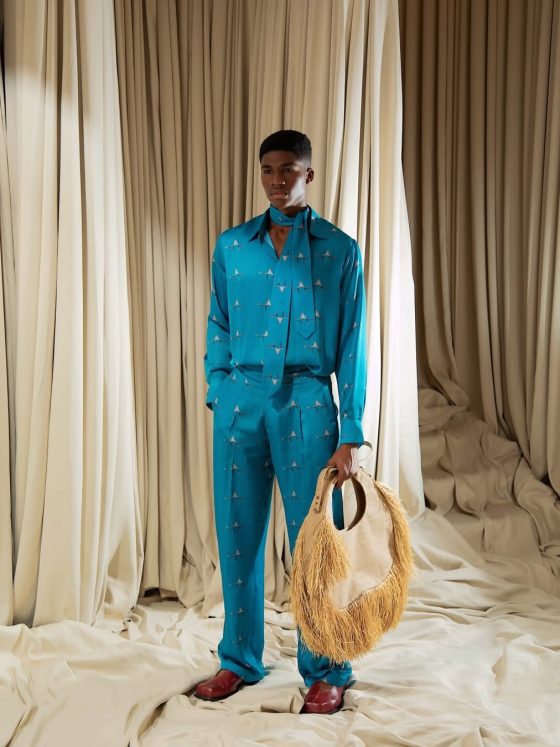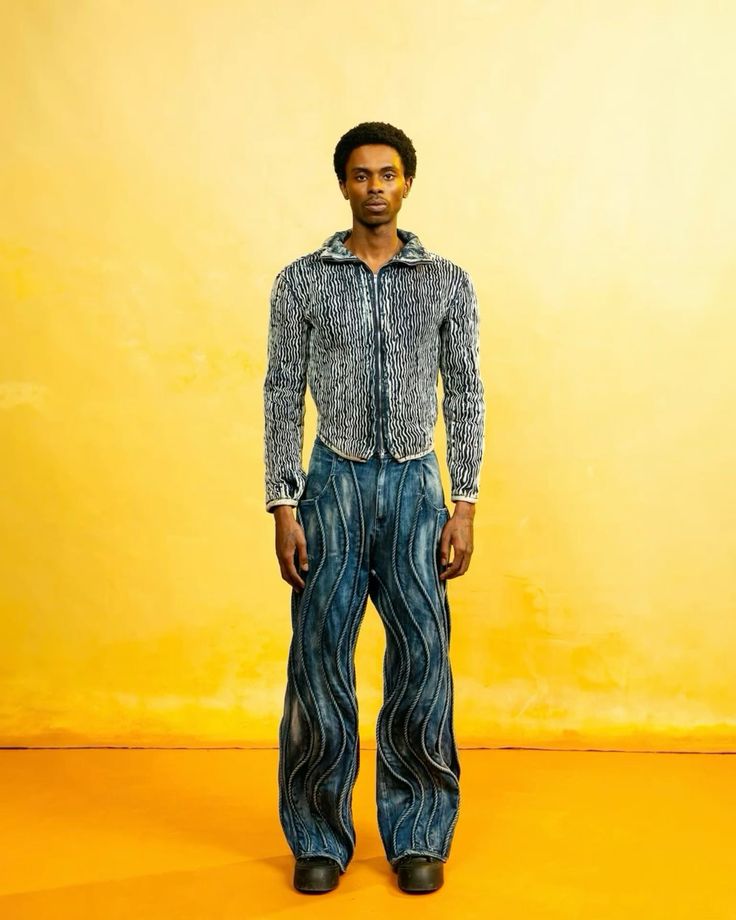
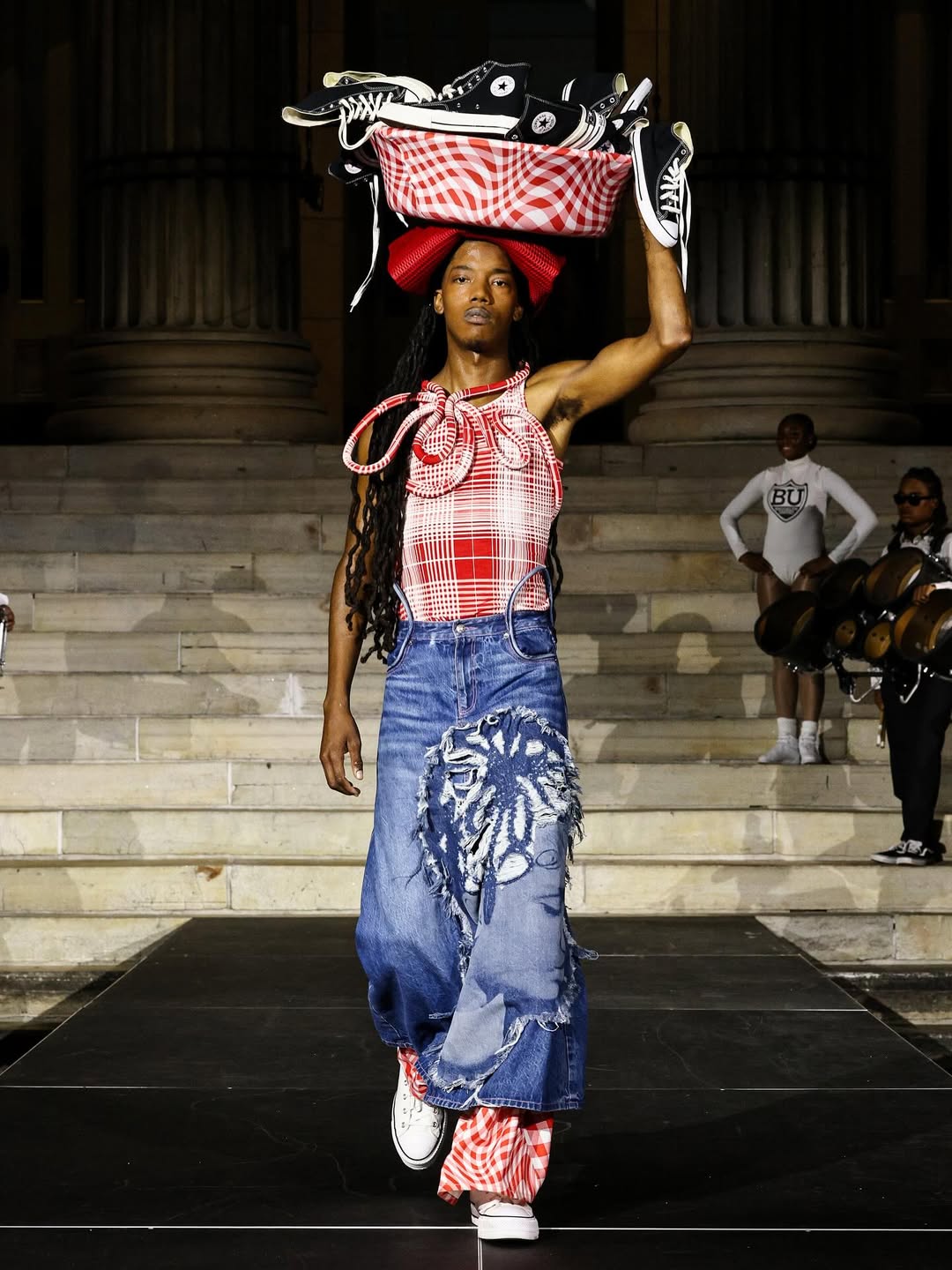
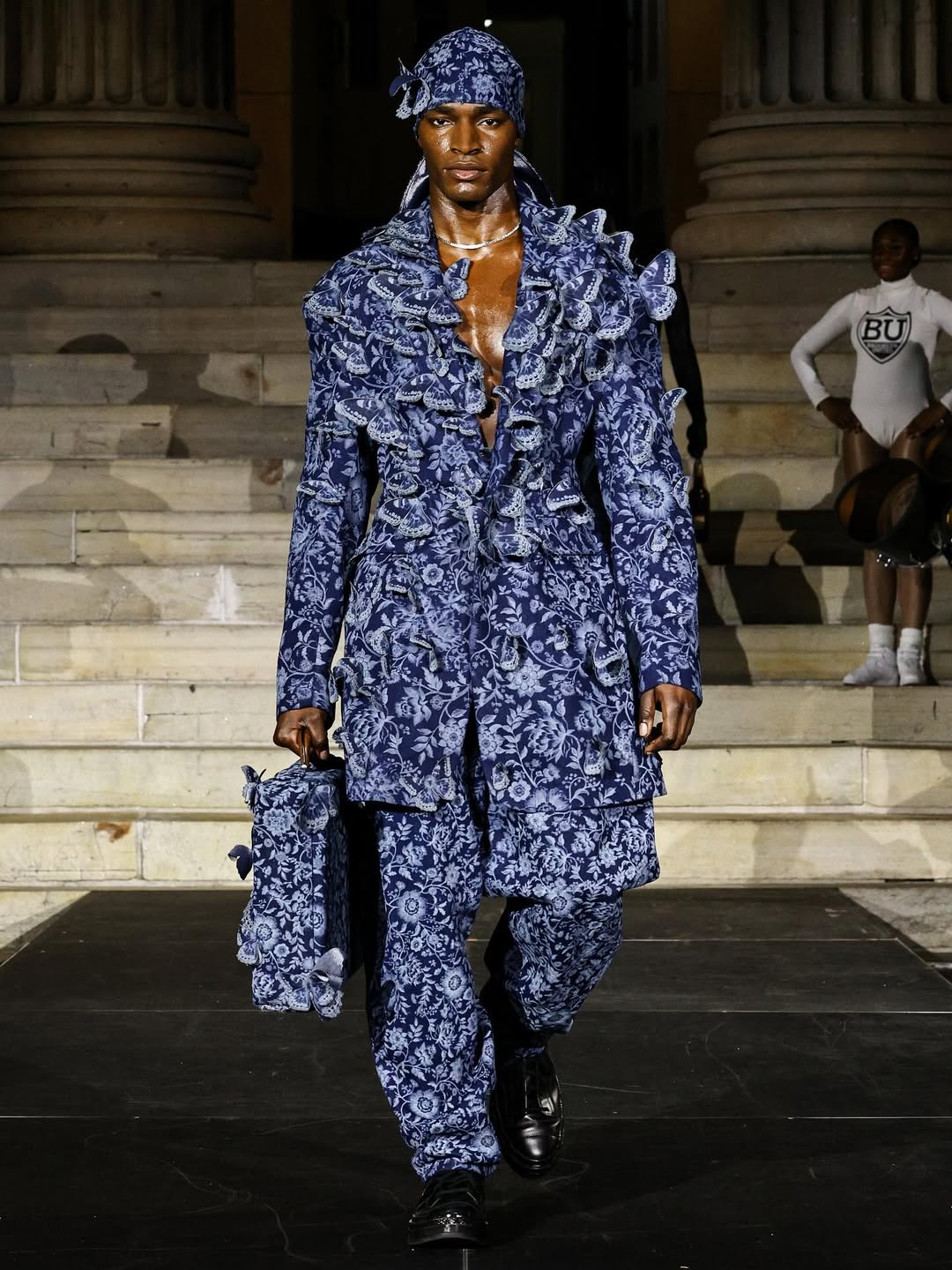
Daveed Baptiste closed the Harlem Fashion Row runway on 9 September 2025. His models walked out in silver-and-blue body paint. Elevated denim moved through the room, carrying swirling motifs that Baptiste had designed from the immigration routes of the Haitian diaspora: the sea crossings, the land routes through Central America, the passage through the Darien Gap and up through Mexico to the United States border. The patterns were not abstract. They were drawn from the routes his community has actually taken. The room gave him a standing ovation before the last look had cleared the stage.
Daveed Baptiste’s denim maps the routes Haitian immigrants take to reach the United States. Streetwear built on immigration routes is not streetwear. It is political cartography.
The Design Language of Migration
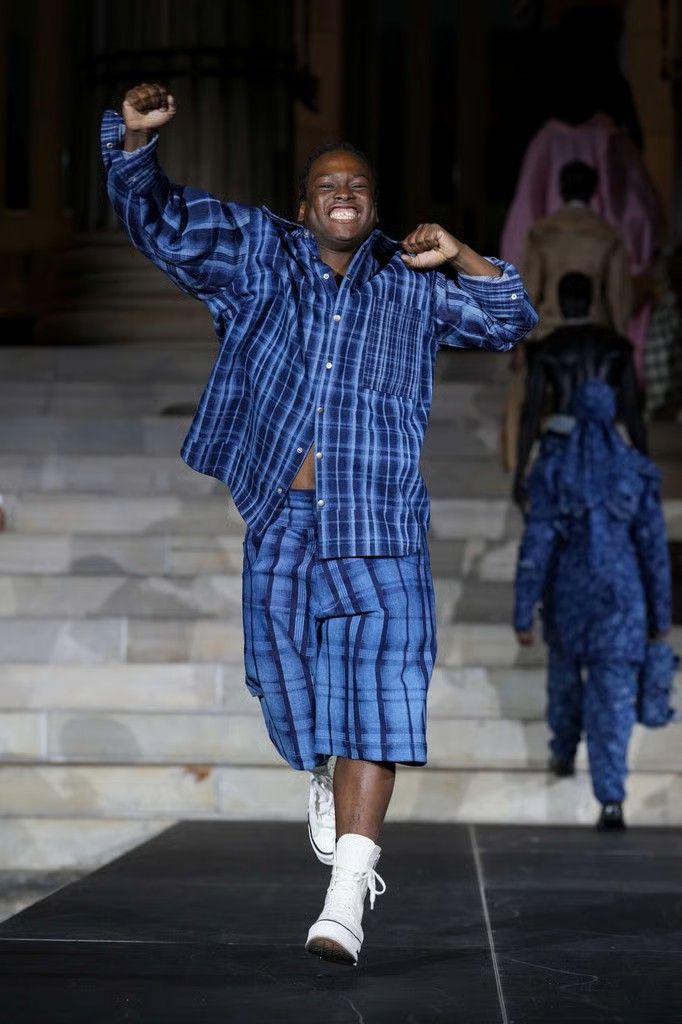
For many Haitian migrants, particularly those who left after the 2010 earthquake, the assassination of President Jovenel Moise in 2021, or the gang violence that has since destabilised large parts of Port-au-Prince, the journey to the United States does not proceed by direct flight. It moves through the Caribbean, across Central America, through the Darien Gap in Panama, and up through Mexico to the US border. It is a route defined by water, by dangerous land crossings, by the bodies of people in motion through multiple countries without legal protection.
The swirling motifs in Baptiste’s silhouettes carry that specific geography. Baptiste told WWD: ‘I’m into beautiful shapes. Some of these silhouettes were roadmaps that many Haitian immigrants used to get to the U.S. This is not a metaphor. This is cartography rendered in denim. The routes are specific. The garments hold them precisely.
The HFR 2025 Collection: Denim, Water, and Body Paint
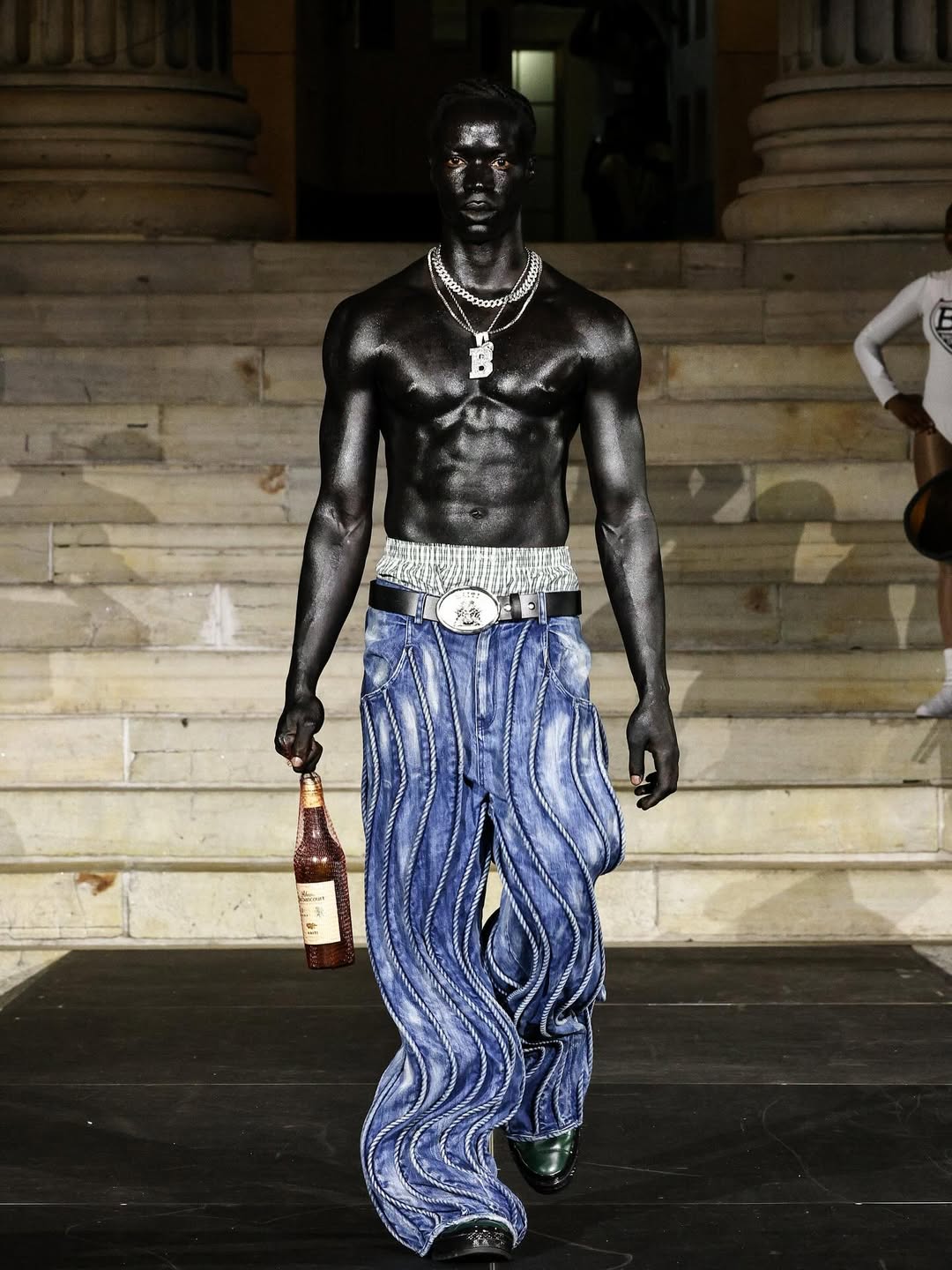
The collection is built around elevated denim and tailored menswear. Key jackets and outerwear carried the swirling route motifs. Models wore silver and blue body paint representing water: the sea crossings that define the Haitian migration route, and the specific spiritual significance water holds in Haitian Vodou tradition through the lwa Lasiren and Agwe, who govern the sea.
Baptiste has described his passion for denim and the sanctity of water as the collection’s twin driving forces. Denim carries a specific meaning for Haitian diaspora communities: it is the material of American working-class and streetwear culture that Haitian immigrants have navigated, claimed, and made their own. Water carries both the danger of the migration route and the spiritual inheritance of a culture whose relationship to the sea predates colonial contact.
Coverage ran in Essence, WWD, and the Karibbean Kollective. WWD described the finale as ethereally otherworldly.
What Diaspora Fashion Actually Means
The fashion industry’s use of the word diaspora tends toward decoration. It signals multicultural credentials without requiring engagement with what diaspora actually means: the specific experience of displacement, of carrying one country inside the body while navigating another, of building a life in the gap between where you come from and where you are.
Daveed Baptiste uses diaspora as a design method. His collections are built from the inside of that experience. The immigration routes are not metaphors used to add emotional resonance. The denim is not a symbol chosen for cultural signalling. The body paint is not a costume decision taken for visual impact. They are materials chosen because they hold the specific weight of a specific community’s experience, and because that weight, when carried in a well-constructed garment, produces something the fashion industry rarely sees: beauty with a precise political address.
Also Read:
- Haiti Fashion: The Designers Reshaping Global Style from the Inside Out
- LaTouche: Jacmel, Haiti and the Architecture of Identity
- Waina Chancy and Atelier Ndigo: Haitian Elegance on a Global Stage
Vodou, Water, and the Spiritual Inheritance
The silver-and-blue body paint in the HFR 2025 collection carried a reference that the mainstream fashion press did not fully document. In Haitian Vodou, Lasiren is the lwa of the sea, associated with beauty, music, and femininity, and depicted in the colours silver and blue. Agwe is the lwa of the ocean, governing sea travel and the protection of those who cross water. Both lwa are central to Haitian spiritual practice and carry specific relevance to the diaspora experience: the sea as both a danger and a protection, both the route of the Atlantic slave trade and the spiritual domain of the lwa who watch over those who cross it.
Baptiste’s body paint did not reference Vodou symbolism for aesthetic effect. It placed his models inside a specific spiritual and historical context: the bodies of Haitian people in motion across water, protected by the lwa, carrying the full weight of what that motion has meant across three centuries of Haitian history.
The Broader Argument About Political Fashion Design
The standing ovation Daveed Baptiste received at HFR 2025 was not unusual in itself. Standing ovations happen at fashion shows. What was unusual was what the room was responding to: a collection explicitly built on the danger, grief, and resilience of Haitian migration, presented to an audience of American fashion editors, buyers, and executives, and recognised as fashion of the highest order.
The $31 billion African fashion market is built partly on designers who refuse to strip the political and cultural weight of their formation to make their work more palatable to mainstream markets. Baptiste’s standing ovation was the room demonstrating that it can recognise the full weight of the work when it is placed before it. The question for the industry is what it does with that recognition in the seasons that follow.
The Omiren Argument
Thesis: Streetwear built on immigration routes is not streetwear. It is political cartography. Daveed Baptiste makes this argument in denim, and the standing ovation at HFR 2025 was the fashion industry recognising, for three minutes, what it was looking at.
Context: The fashion industry classifies Baptiste’s work as streetwear because it involves denim and oversized proportions. That classification misses the construction logic entirely. The garments are maps. The motifs are routes. The body paint represents the water those routes cross and the lwa who govern it.
Disruption: A standing ovation at Harlem’s Fashion Row is not unusual. A standing ovation for a collection explicitly about the danger and grief of Haitian migration, presented to American fashion editors and executives, is different. The room understood what it was seeing. The classification applied to the work the morning after did not match what the room felt in the moment.
Cultural insight: The silver-and-blue body paint in the HFR 2025 collection evoked the colours of Lasiren and Agwe, the Vodou lwa of the sea. This placed the models inside a specific spiritual and historical context: Haitian bodies in motion across water, carrying three centuries of meaning. The mainstream fashion press noted the paint. It did not note the LWA.
Conclusion: Daveed Baptiste is not a streetwear designer who happens to be Haitian. He is a Haitian designer whose practice engages with denim as one of the primary material languages of the Black Atlantic diaspora. The standing ovation was the room’s recognition of the full weight of the work. What the industry builds from that recognition is now the question.
Frequently Asked Questions
Who is Daveed Baptiste?
Daveed Baptiste is a Haitian fashion designer and founder of the Daveed Baptiste label. He is known for elevated menswear built around denim, with collections that map Haitian immigration routes through silhouette and motif. He closed the Harlem Fashion Row’s 18th annual show on 9 September 2025 to a standing ovation, in the third of three consecutive presentations by designers of Haitian origin.
What is the concept behind Daveed Baptiste’s denim collections?
Daveed Baptiste’s denim collections map the routes Haitian immigrants take to reach the United States: through the Caribbean, across Central America, through the Darien Gap, and into Mexico. The swirling motifs in his silhouettes are drawn from these actual migration routes. The silver-and-blue body paint worn by his models carries the colours of the Vodou lwa Lasiren and Agwe, who govern the sea, connecting the physical migration route to Haitian spiritual inheritance.
Which Caribbean designer received a standing ovation at NYFW 2025?
Daveed Baptiste received a standing ovation, closing the Harlem Fashion Row 18th annual show at Cipriani Wall Street on 9 September 2025. His collection, built around elevated denim with motifs mapping Haitian immigration routes, was described by WWD as ethereally otherworldly and drew what Essence called the most electric response of the evening.
What is political fashion design?
Political fashion design refers to work that conveys an explicit political argument through the garment’s construction and materials, rather than through statement or branding. Daveed Baptiste’s collections are a current example: the denim maps immigration routes, the body paint references Vodou lwa, and the silhouettes carry the specific weight of Haitian diaspora experience. The politics are in the pattern-cutting, not in the press release.
How does Haitian Vodou influence contemporary fashion?
Haitian Vodou’s influence on contemporary fashion is most often visible in colour, motifs, and references to ceremonial dress. Daveed Baptiste’s use of silver and blue body paint in the HFR 2025 collection directly references the lwa Lasiren and Agwe. Waina Chancy’s Atelier Ndigo draws on the relationship between structure and ornament in Vodou ceremonial dress. These are not aesthetic borrowings. They are designers working from within a living tradition.
Where can I follow Daveed Baptiste’s work?
Daveed Baptiste’s collections have been covered by WWD, Essence, and the Karibbean Kollective around Harlem’s Fashion Row events. Follow the designer’s own channels for current collection and stocking information.