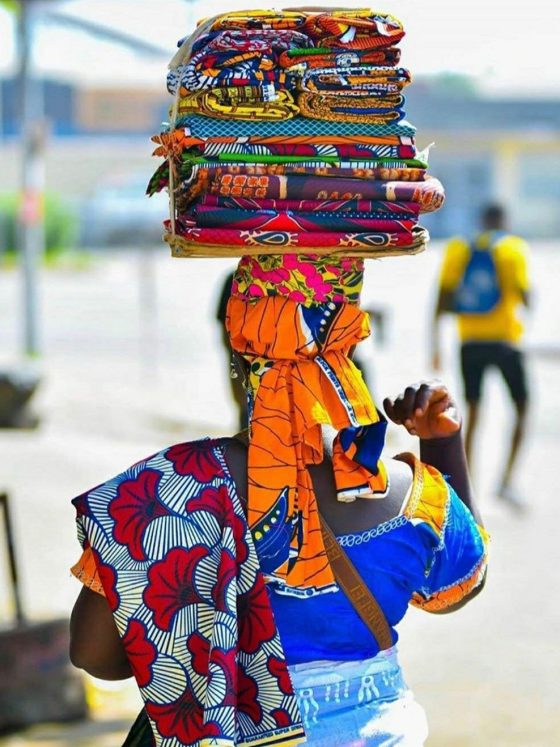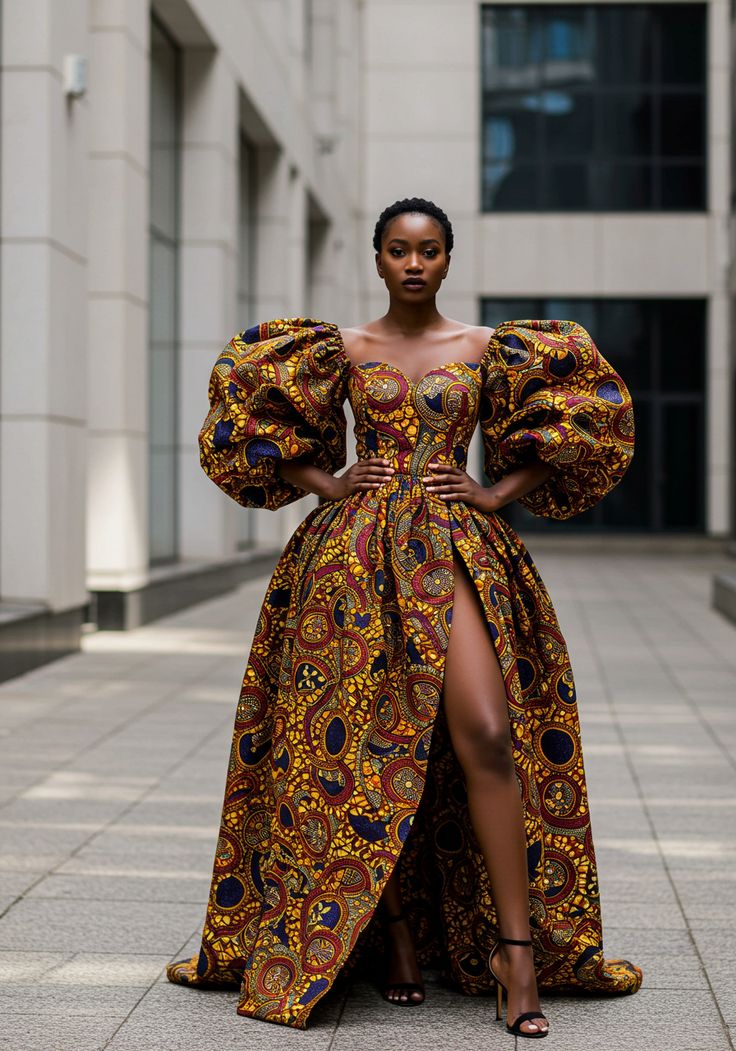
Ankara was not made in Africa. This is the starting point for a conversation that the fashion industry finds uncomfortable, because it complicates one of the most powerful symbols of Afrocentric identity in global fashion. The cloth that has come to represent West African dress to the rest of the world, the fabric that anchors aso-ebi culture in Nigeria, that fills the stalls of Balogun Market and Makola, that is worn to weddings and naming ceremonies and church services across the continent, was designed and manufactured by Dutch colonial companies attempting to replicate an Indonesian textile tradition they had lifted without permission. West Africa did not make Ankara. West Africa made Ankara mean something. That distinction is the whole argument, and it is one the fashion industry has been avoiding having at scale for years.
The market that resulted from that meaning-making is worth $4 billion in annual retail value across Sub-Saharan Africa. The annual sales volume across the region runs to 2.1 billion yards, with an average production cost of $2.6 billion. The majority of the high-quality fabric that generates the premium end of that market is still manufactured in the Netherlands by Vlisco, a company founded in Helmond in 1846. The majority of the affordable fabric is manufactured in China. The designers who have built their careers on Ankara, the women who have built entire informal economies around it, and the communities that have made it a language of celebration and identity receive none of the structural economic benefits that a $4 billion market generates for its manufacturers. That is the ownership problem, and it has not been solved.
Ankara was made in Holland, stolen from Indonesia, sold to West Africa, and is now mostly counterfeited by China. The ownership question is still unanswered. Omiren Styles asks it.
Who Owns Ankara: The History the Label Leaves Out
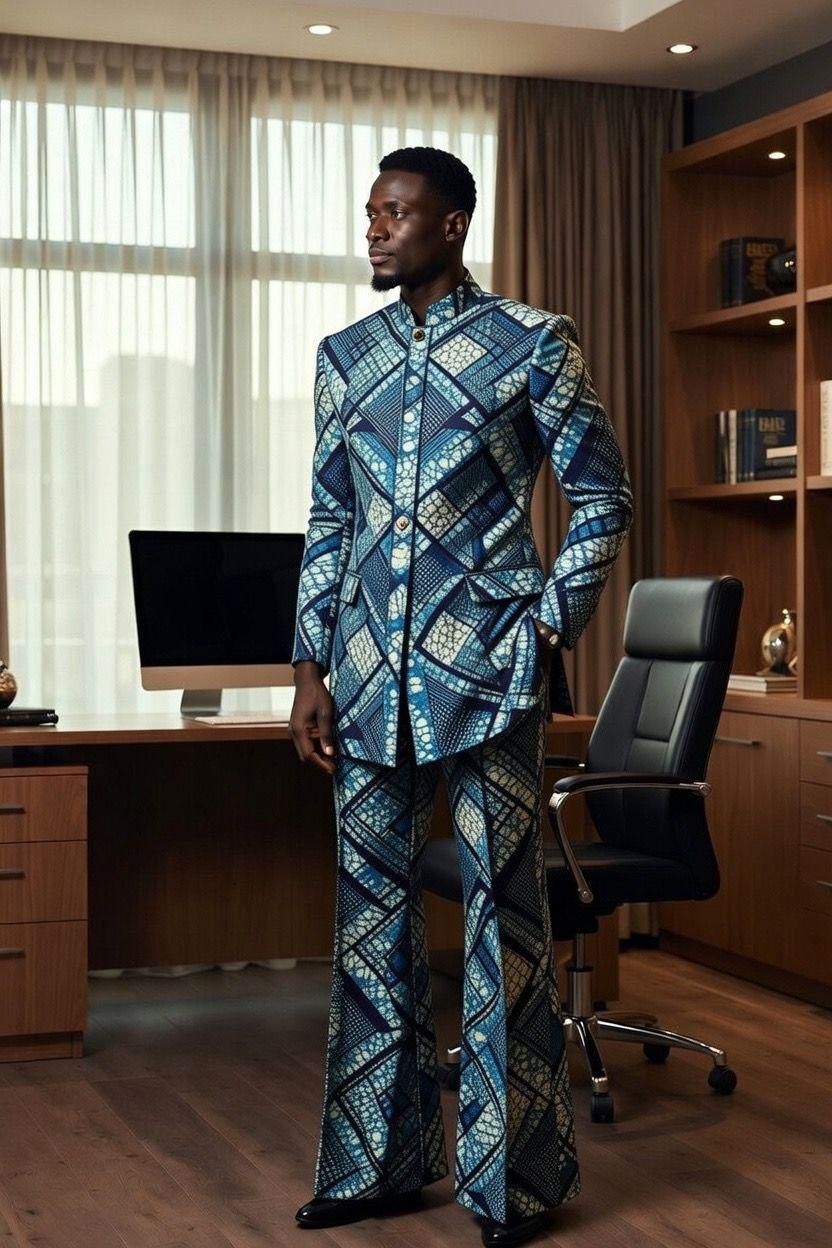
Ankara’s origin story begins not in Africa but in Indonesia. Batik, the resist-dyeing technique that uses wax to pattern cloth before dyeing, has been practised in Java and across Southeast Asia for centuries. During the Dutch colonisation of Indonesia, which ran from the early nineteenth century to 1945, Dutch manufacturers identified batik as a commercially valuable product and set about mechanising it. The industrialised version, produced on rollers rather than by hand, was rejected by Indonesian consumers who preferred their own handmade cloth. Dutch traders, as Al Jazeera’s documented history of the wax print confirms, began selling the rejected fabric at West African ports from around 1880. The Belanda Hitam, West African soldiers from Ghana who served in the Dutch colonial army in Indonesia between 1831 and 1872 and retired to Elmina, are documented as a possible early vector through which familiarity with the cloth reached West African consumers. The patterns were then adapted to suit African market tastes. Meanings and names were assigned to specific prints by the women traders who dominated the market. Over the decades, the cloth became the visual language of West African public life.
The name Ankara itself carries this complex history. According to documented etymology, the term derives from the Hausa name for Accra, used by Nigerian Hausa traders to refer to the printed cloth that came through the Ghanaian port city. It is not a Turkish reference. It is a West African naming practice applied to a Dutch product built from a stolen Indonesian technique. Every layer of the cloth’s origin points away from Africa. Yet the cloth is more thoroughly African in terms of cultural significance, social function, and market adoption than any of its manufacturers.
Vlisco, now part of the Vlisco Group portfolio of four brands, including the Ghana-based GTP and Woodin and the Ivory Coast-based Uniwax, was acquired by UK private equity firm Actis for $151 million in 2010. The company describes itself as the originator of African Wax. Tunde Akinwumi, whose 2008 article, The African Print Hoax, remains one of the most-cited critical analyses of the issue, argues that producers of African prints mislead customers by presenting their products as authentically African when the designs are, in fact, drawn from Chinese, Indian, Japanese, Arabic, and European imagery. The counterargument, as Vlisco’s own historiography shows, is that fashion is subject to constant change and that West African communities transformed the cloth into something genuinely their own. Both positions are correct. Neither resolves the ownership question.
The Market Structure: Who Profits From Ankara’s $4 Billion Economy
Ghana produces approximately 30 million yards of wax print annually through its three largest local manufacturers: ATL, GTP, and Printex. Against this, 100 million yards of inexpensive, smuggled Asian imports, primarily from China, enter the Ghanaian market annually, as Wikipedia’s African wax prints article confirms from documented industry figures. Ghana’s annual textile consumption is approximately 130 million yards. The local production that accounts for roughly 23% of that consumption is being undercut by imported fabric that bears the visual identity of a West African cultural tradition while generating profits in Chinese manufacturing towns. Nigeria’s United Nigerian Textile Mills, established in Kaduna in the 1960s, has faced the same pressure. Vlisco’s Connoisseurs of Style brand protection campaign, launched in 2014, has yielded limited results against Chinese competitors that have learned to produce fabric that consumers in West African markets consider, in some respects, superior to Dutch originals.
The Nana Benzes of Togo represent the most documented case of West African women converting access to the Ankara market into genuine economic power. These women traders, operating primarily between the 1960s and 1980s, purchased exclusive distribution rights to specific Vlisco prints and monopolised their sale across the Togolese market. They became some of the first female millionaires in Togo, their wealth visually represented by the Mercedes-Benz cars they were the only ones able to afford, giving them their name. The Nana Benzes model is the exception that proves the structural rule: West African women could build wealth from Ankara, but only within a framework controlled by a Dutch manufacturer whose IP they were renting rather than owning.
DaViva in Nigeria and Sotiba Simpafric in Dakar are among the few locally owned wax print producers on the continent. Both occupy a market position squeezed between premium European imports and cheap Chinese alternatives. The structural economics of the market have been working against local African textile production since the mid-twentieth century, when the independence-era efforts by Ghana, Nigeria, and the Ivory Coast to establish domestic wax print industries were undermined by government policy reversals, counterfeiting, infrastructure gaps, and the inability to source locally grown cotton in the volumes required for competitive production.
West Africa gave Ankara its meaning, its market, its stories, and its identity. The profits, for the most part, went elsewhere. That is the argument the fashion industry has been declining to have.
The Legal Dimension: What IP Protection Means for a Fabric Nobody Made
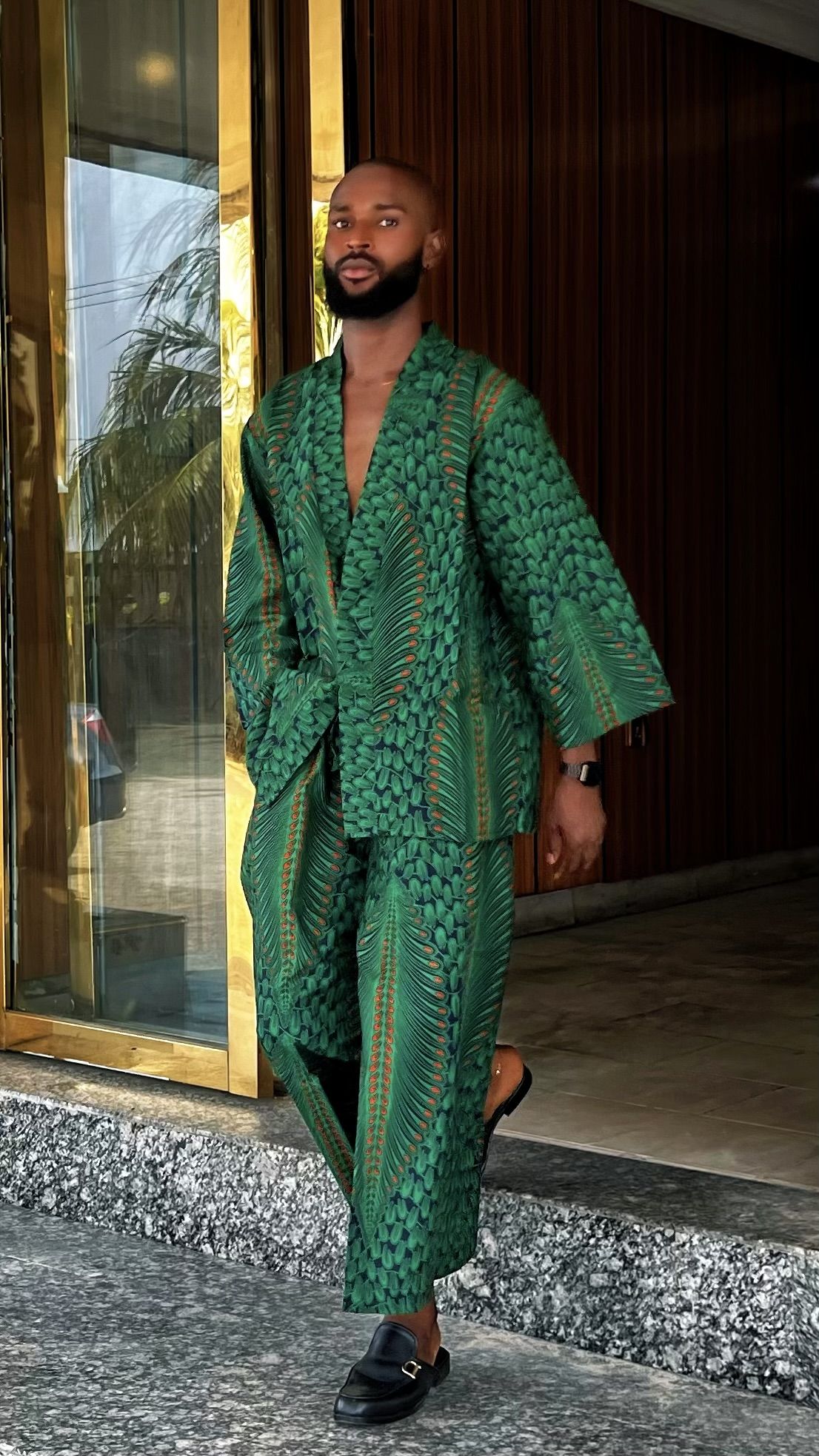
Vlisco’s intellectual property claims over its Ankara print designs create one of the most intellectually contested positions in textile law. The company holds design registrations for specific prints. Hitarget, the Chinese market leader among budget wax print brands, reproduces Dutch designs over which Vlisco claims these rights. Vlisco has repeatedly pursued legal action against counterfeiters and has seized counterfeit cloth across West African markets. The enforcement record is limited. As Nina Sylvanus, a researcher from Northeastern University, argued in an analysis published by Quartz, the historical twists and turns in the European and Chinese reproduction of Ankara challenge the very idea and practice of intellectual property rights. After all, who legitimately creates and who illegitimately appropriates? The Dutch company stole the technique from Indonesia. The Chinese company reproduces patterns that the Dutch company adapted based on feedback from the West African market. The West African women who assigned meanings to those patterns and built the market that made the prints commercially viable hold no IP whatsoever.
The Kente GI, which Ghana formalised in September 2025, provides a model for how a genuinely African textile tradition can be legally protected. The GI framework gives Ghanaian weavers enforceable market differentiation based on origin, technique, and community. Ankara cannot follow the same path because it does not have an African origin to protect. What it has is an African meaning system and an African cultural identity that have been built over 150 years of use, adaptation, and storytelling. That meaning system does not fit existing IP frameworks, which protect origin and technique rather than cultural transformation.
The argument being made here is not that West Africa should legally claim Ankara through a mechanism that does not exist. It is that the fashion industry has been marketing Ankara as an African cultural expression while allowing the structural economics of its production to remain controlled by European and Chinese manufacturers, and that this double standard has not been loudly enough named. Brands that use Ankara in their collections are benefiting from West African cultural meaning-making without contributing to the economic infrastructure needed for West African textile producers to compete in the market that meaning creates.
Also Read:
- Investing in Textile Heritage: The Business Case for Preserving What Western Fast Fashion Cannot Copy
- The Secondhand Market as a Design School: How Kantamanto Graduates Are Dressing Ghana’s Streets
- Kenneth Ize and the Aso-Oke Question: What It Means to Build a Luxury Brand on a Handwoven Cloth
- What African Fashion Brands Get Wrong About Scaling — and the Three That Got It Right
What African Fashion Designers and the Industry Need to Do Differently
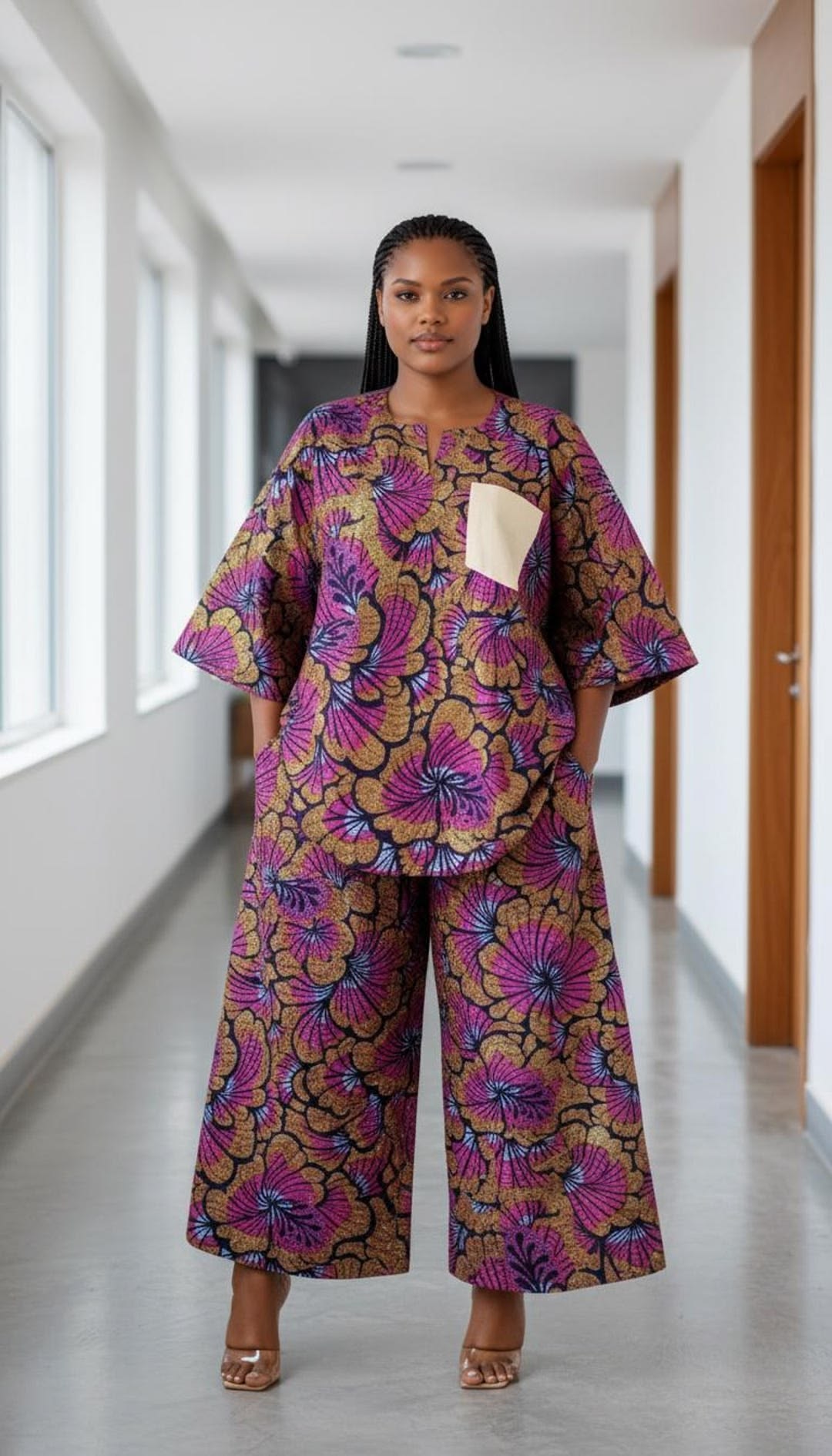
The designers in this series who use Ankara, Abiola Olusola working with Vlisco fabric, the thousands of Lagos tailors sourcing from Balogun Market, and the aso-ebi coordinators whose entire business depends on the fabric’s cultural function, are not doing anything wrong. They are working within a market structure that was established before any of them were born. The structural argument is about that market, not about individual use. What the market requires is not guilt but investment. Specifically: investment in local African wax print manufacturing infrastructure that allows DaViva, the Ghanaian local producers, and any new entrants to compete on quality against Vlisco and on price against Hitarget. That investment requires the same policy framework that Kenya used to develop its textile sector and that Rwanda used to protect its fashion market from secondhand import competition: deliberate government intervention to create the economic conditions in which local production is viable. As Omiren Styles documented in its analysis of Kantamanto, the fashion industry’s consumption patterns have structural consequences for African textile economies that individual purchasing decisions cannot resolve.
The cultural argument is separate and requires a different response. West Africa owns the meaning of Ankara. Not the technique, not the production, not the IP registrations. The meaning: what specific prints communicate between women at a naming ceremony, what aso-ebi coordination says about community solidarity, what the texture of a Vlisco Holland fabric between a grandmother’s fingers signals about value and permanence. That meaning is not legally protected. It does not need to be. It is protected by the communities who carry it, and it will persist regardless of who manufactures the cloth. What the industry needs to stop doing is using that cultural meaning as a marketing tool while leaving the underlying economic question unaddressed.
The Omiren Argument
Ankara is West African. Not in origin, not in technique, not in manufacture, but in the only sense that ultimately matters: in meaning. The cloth that left the Netherlands as an industrialised imitation of Indonesian batik arrived in West Africa as a rejected product and was transformed, through 150 years of use, naming, storytelling, market organisation, and cultural investment by West African communities, into the most recognisable symbol of West African fashion identity in the world. The Dutch company that manufactured it did not produce that transformation. The Chinese companies that now dominate the affordable tier of the market did not produce it. The women of Lomé, Lagos, Accra, Dakar, and Abidjan who built the market’s cultural logic produced it. The ownership question is not legal. It is a question about who is profiting from that cultural labour and who is not.
The fashion industry has been avoiding a direct answer because the answer is commercially inconvenient. Vlisco sells West African cultural meaning at European premium prices. Chinese manufacturers sell West African cultural meaning at Chinese production costs. West African textile producers, squeezed between the two, hold both cultural authority and a production disadvantage. The Kente GI provides a model for how a different future is possible: one in which the legal and economic infrastructure of a textile market is organised around the community that gave that textile its value, rather than around the companies that distributed it. Ankara cannot follow the Kente path directly because it is not of African origin. But the principle that cultural transformation creates ownership claims that deserve legal and economic support is one that the fashion industry needs to apply to Ankara, and it has not done so.
Frequently Asked Questions
Where does Ankara fabric actually come from?
Ankara fabric derives from Indonesian batik, a resist-dyeing technique using wax to pattern cloth before dyeing. During the Dutch colonisation of Indonesia in the nineteenth century, Dutch manufacturers mechanised the batik process. Indonesian consumers rejected the industrialised version. From around 1880, Dutch traders began selling the cloth at West African ports, where it was adopted enthusiastically. The patterns were then adapted to West African market tastes over subsequent decades. The cloth was manufactured in the Netherlands, inspired by an Indonesian technique, and transformed into a cultural symbol by West African communities who neither made it nor held legal ownership of it.
What is the current size of the Ankara wax print market?
Sub-Saharan Africa’s wax print market has an annual retail value of approximately $4 billion, with annual sales volume of 2.1 billion yards and an average production cost of $2.6 billion. Ghana alone consumes approximately 130 million yards annually; local manufacturers produce roughly 30 million yards, and approximately 100 million yards come from smuggled Asian imports, primarily from China. Vlisco Group, which owns the Vlisco, GTP, Woodin, and Uniwax brands, produced 70 million yards in 2014 with a turnover of €300 million.
Who are the main players in the Ankara market and where are they based?
The premium tier is dominated by Vlisco Group, founded in Helmond, Netherlands, in 1846, which produces the flagship Vlisco brand in the Netherlands and owns GTP and Woodin in Ghana and Uniwax in the Ivory Coast. The affordable tier is dominated by Chinese brands, with Hitarget as the market leader. African-owned producers include DaViva in Nigeria, Sotiba Simpafric in Senegal, and the independent operations of ATL and Printex in Ghana. The Vlisco Group brands GTP, Woodin, and Uniwax are produced in Africa but are owned by a Dutch-origin group that was acquired by the UK private equity firm Actis in 2010 for $151 million.
What legal protections does Ankara have, and who holds them?
Vlisco holds design registrations for specific print patterns and has pursued legal action against counterfeiters, including Chinese manufacturers reproducing those designs. The enforcement record has been limited. West African communities hold no IP rights over Ankara despite having created the cultural meaning that drives its market value. The Kente GI, established in Ghana in September 2025, provides a model for IP protection for a textile of genuine African origin. Ankara cannot follow the same route because it does not have an African origin to protect, only an African cultural transformation that current IP frameworks do not recognise as a protectable interest.
What is the Omiren Styles position on the Ankara ownership debate?
Omiren Styles holds that Ankara is culturally West African in the sense that matters most: the communities of West Africa transformed a rejected Dutch industrial product into the most recognisable symbol of West African fashion identity over 150 years of use, naming, and meaning-making. That cultural labour created the market that makes Ankara commercially valuable. The ownership problem is not that West Africa needs legal title to a Dutch product. It is that the fashion industry markets West African cultural meaning at premium prices while allowing the structural economics of Ankara production to remain controlled by European and Chinese manufacturers rather than African ones. Resolving that requires investment in local African textile production infrastructure and policy support for domestic manufacturing, not a legal claim that current frameworks cannot accommodate.
Explore More
Read the full Fashion > Textiles section for in-depth analysis of the textile traditions, ownership debates, and cultural economies that define African fashion from the cloth outward.