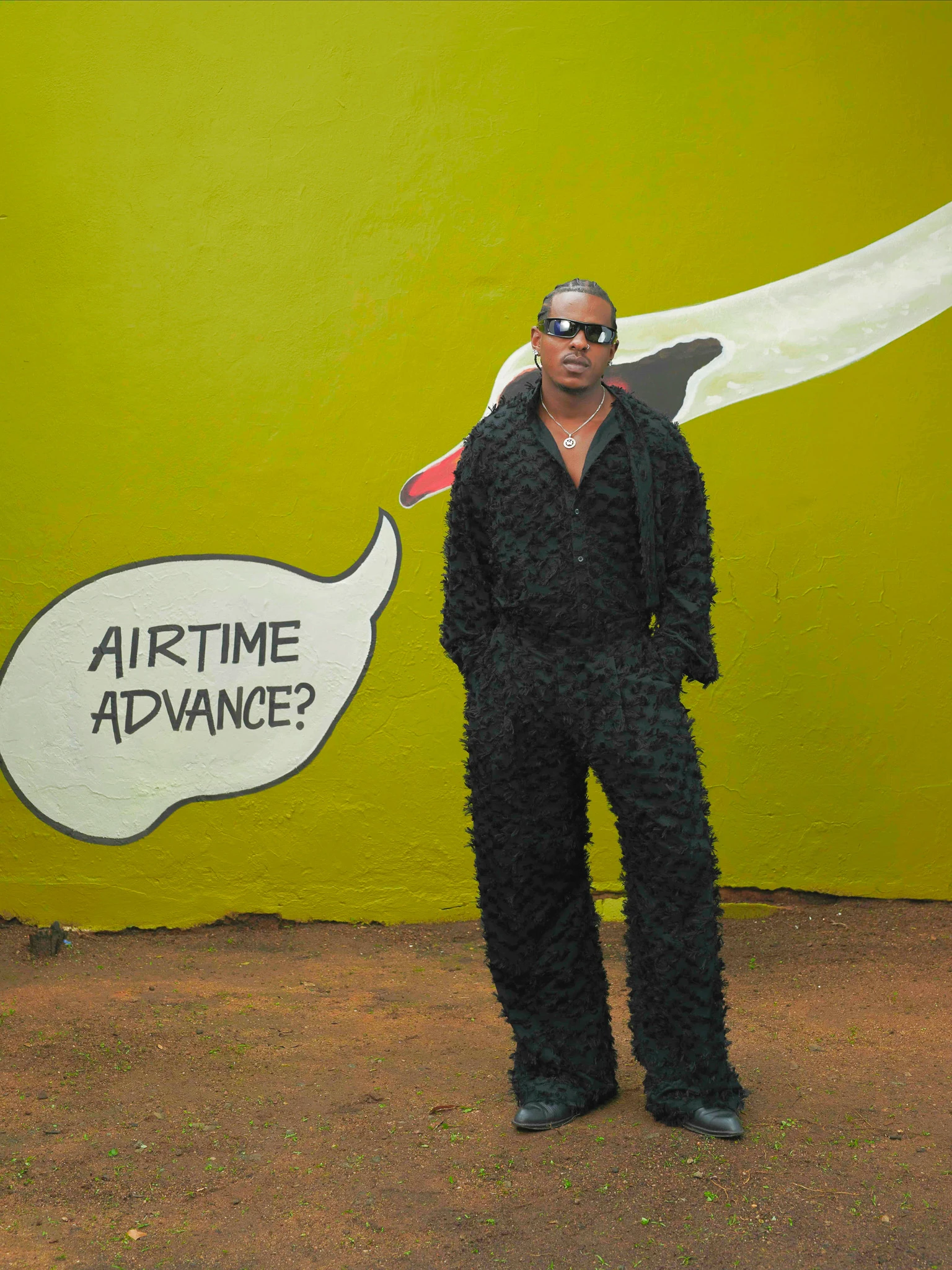
A familiar shirt can become the centre of an outfit without introducing a bright colour, a large graphic or an elaborate accessory. Changing its surface offers another route. With Thebe Magugu’s Tufted Cotton Shirt, the starting point is a recognisable garment whose textile, not an unfamiliar category of clothing, supplies the distinction. The brand describes a tufted cotton jacquard with dropped shoulders, a straight collar and cuffs, and side vents that can be buttoned or unbuttoned. It lists the composition as 100% cotton, describes the fit as relaxed and states that the shirt is made in South Africa using imported fabric. Those details establish the design proposition: retain familiar reference points while changing the surface, shoulder line, and hem options. For the designer’s wider story, see Thebe Magugu: African heritage meets global luxury.
For everyday dressing, the useful question is what those changes ask of the surrounding clothes. Should the trousers provide contrast or continue the texture? Should the shirt’s full outline remain visible? Does adding another layer strengthen the outfit or hide its most interesting feature? These are more productive decisions than simply labelling the garment a statement piece.
How Thebe Magugu’s tufted cotton shirt changes everyday styling through texture, dropped shoulders and adjustable side vents, with three outfit proposals.
Let the surface set the direction.
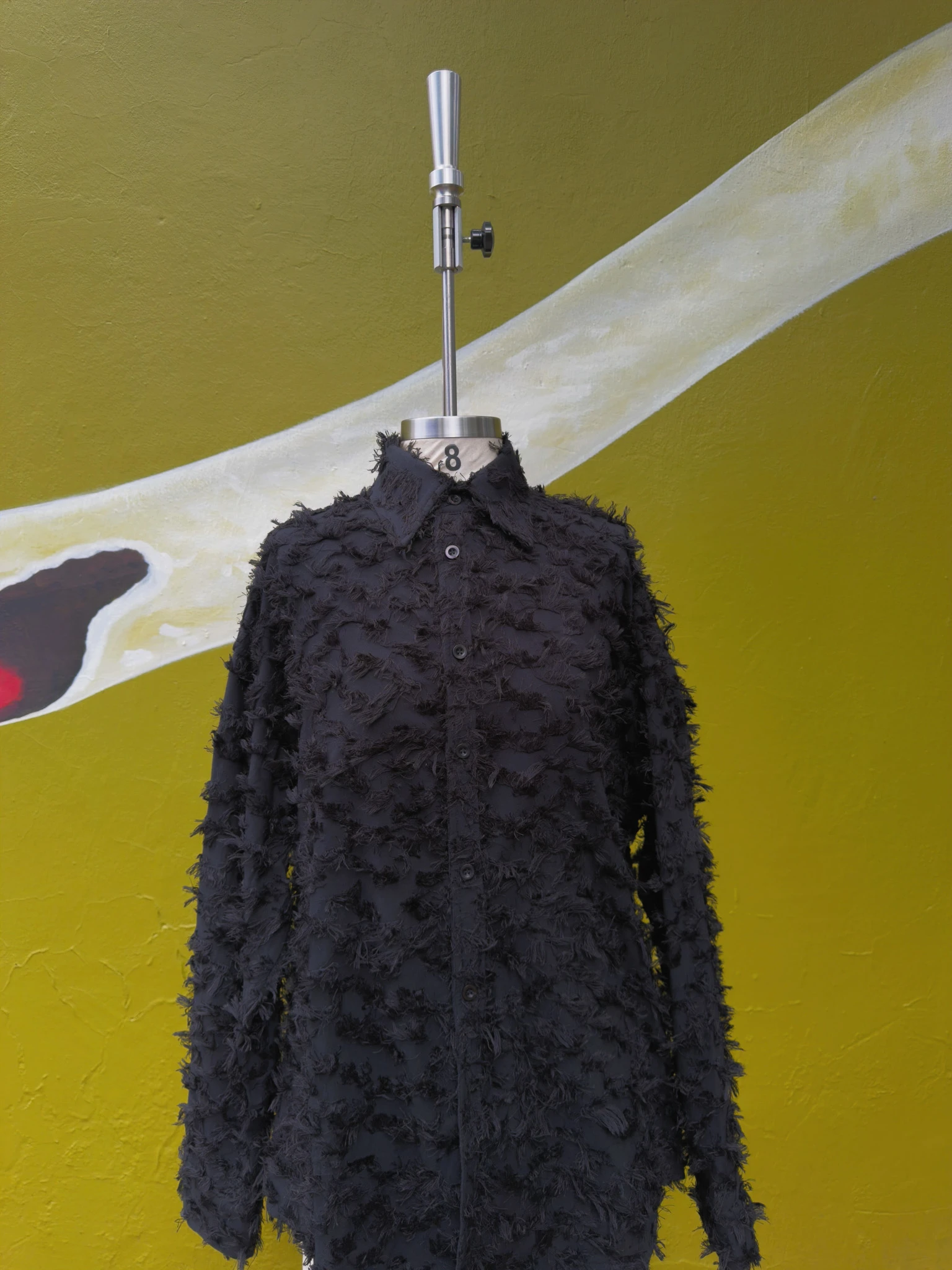
Thebe Magugu introduces the shirt as “a classic shirt revamped with intricate fabrication”. That distinction matters. The design retains a collar and cuffs rather than relying on an unfamiliar shape to announce itself; the tufted jacquard is the principal material intervention. The editorial starting point is to let that surface influence the rest of the outfit. If the aim is to isolate the texture, plain trousers offer a clear contrast. If the aim is a more continuous composition, coordinating textured trousers provide another direction. If the shirt is worn beneath an outer layer, its contribution becomes more selective. None is automatically correct, because each establishes a different hierarchy.
This is where texture becomes useful rather than merely decorative. It gives the wearer something to organise around. Instead of adding detail until an outfit feels complete, begin by deciding whether the shirt already supplies enough. A restrained trouser, shoe and accessory choice can then be deliberate, not an absence of imagination.
“Texture is a decision about how much the rest of the outfit has to say.” Omiren Styles Editorial Intelligence
The shoulder and hem need to be considered together
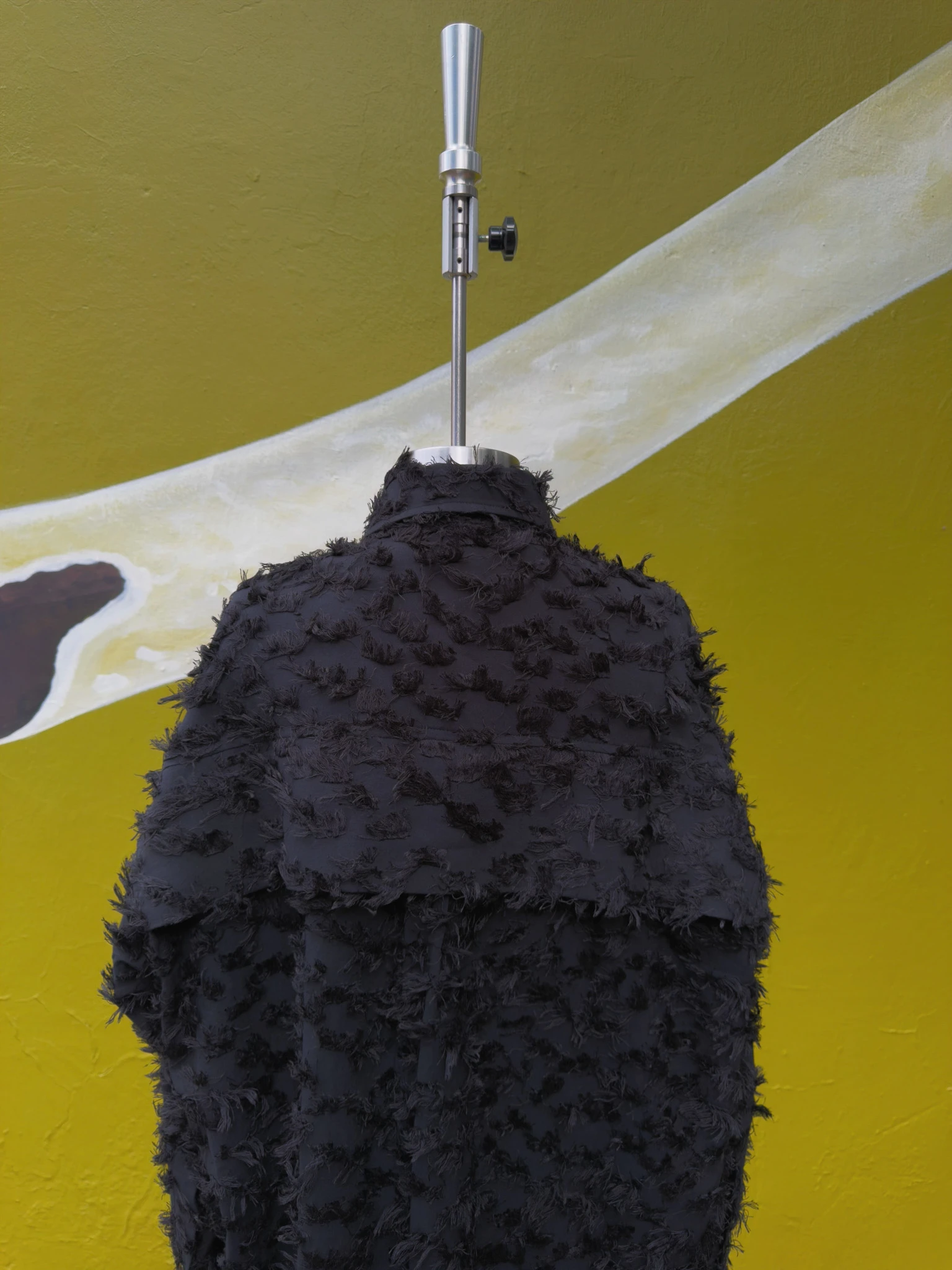
The official description identifies both dropped shoulders and a relaxed fit. These are the brand’s descriptions, not a guarantee of how the garment will sit on every wearer. They nevertheless provide a reason not to approach it automatically as a narrowly fitted formal shirt. Consider the upper and lower outline together. The shoulder detail concerns where the sleeve begins in relation to the body of the garment; the hem concerns where the shirt meets the trousers. Concentrating only on one can make the styling feel unresolved. A trouser may work with the shirt’s width but leave an awkward junction at the waistband, or a tuck may produce the desired waist definition while concealing the side detail.
An untucked starting point is useful because it keeps the hem available for inspection. Look at where it ends relative to the trousers and how much of the lower half remains visible. Then compare the effect of a tuck only if that serves a clear purpose. The question is not whether relaxed shirts “should” be tucked. It is whether changing the hem arrangement improves the particular outfit. Trouser width belongs in the same decision. Straight-leg trousers provide one comparatively restrained starting point; a wider pair develops a fuller overall silhouette. Rather than treating either as a rule, decide whether the lower half should contrast with or extend the shirt’s proportions.
Use the side vents before adding more detail
The side vents are the shirt’s most specific practical styling feature. Thebe Magugu explicitly describes the option of leaving them buttoned or unbuttoned, making their adjustment part of the intended design rather than an improvised alteration. That option deserves attention before introducing another accessory. Begin with the vents fastened and assess the relationship between shirt and waistband. Then unbutton them and check what changes: whether the front and back become more separately defined, whether more of an underlayer is exposed and whether the outfit still has the outline you intended. These are checks for the wearer, not claims that every configuration produces the same result.
The distinction is between using a detail and merely knowing it exists. An adjustable hem gives the wearer another decision, but it does not remove the need to assess the whole outfit. Opening the vents should have a purpose, whether altering the lower outline, revealing a layer or changing the relationship with the trousers, and not simply demonstrate that the buttons can be undone. A full tuck is still an option, but choose it with awareness of what it conceals. If the vent detail is central to the outfit, leaving the shirt outside the waistband gives it a clearer role.
Three ways to build the outfit
The following combinations are proposed starting points. Their purpose is to make three different styling intentions concrete: isolating the texture, extending it and showing less of it.
1. Isolate the texture with plain trousers.
Start with the shirt untucked over plain straight-leg trousers in black or charcoal, add a simple dark shoe and keep accessories limited to one clear element, a watch, for example, rather than several competing pieces. The goal is to keep the shirt as the main source of surface detail. Assess the shirt first with the vents fastened, then compare it with the unbuttoned arrangement. Keep the version that makes the junction with the trousers more deliberate. A belt need not become another focal point if it is mostly hidden; footwear can complete the lower outline without introducing another conspicuous pattern or texture.
This proposal works as a dressing strategy because it limits the number of decisions demanding attention. It is not a claim that plain trousers improve every textured garment. It is a controlled starting point from which to see what the shirt contributes before changing anything else.
2. Extend the texture through a coordinated ensemble
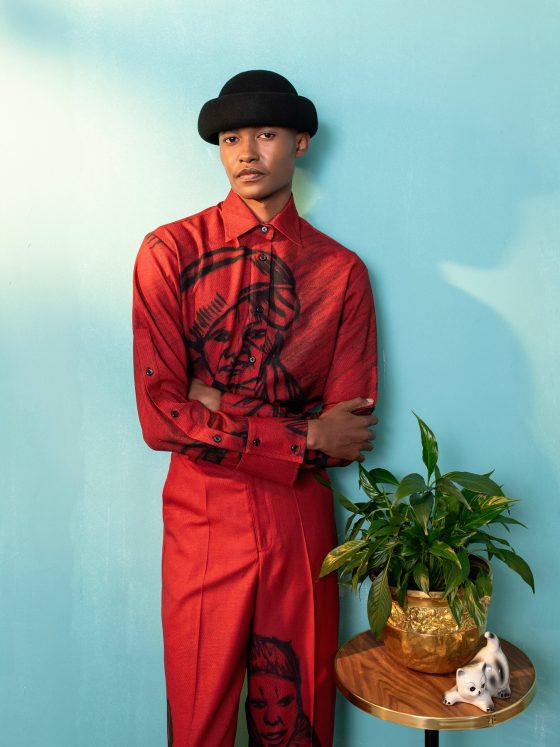
The official product imagery presents the shirt with coordinating textured trousers. That establishes an alternative to treating the shirt as the outfit’s only distinctive item: the textile can become a broader organising idea. For this approach, begin with the coordinated pieces and restrained footwear. Concentrate on the meeting point between shirt and trousers rather than immediately adding a belt or another accessory. An untucked arrangement preserves the shirt’s lower outline; assess any different treatment against the overall proportions and the side-vent detail.
A coordinated ensemble is not automatically simpler to style just because the pieces relate. It shifts the problem. Instead of balancing one textured item against a plain background, the wearer is deciding how much repetition to sustain and where to interrupt it. A quiet shoe keeps the continuity in the clothes; a contrasting shoe becomes a separate emphasis. The useful principle is intention. Repeating texture can be the point of the outfit rather than something that must always be “balanced out.”
3. Make texture a selective detail under a jacket.
For a more contained approach, try the shirt beneath a plain jacket, with straightforward trousers and minimal accessories. The objective differs from the first proposal: rather than displaying the shirt as the main surface, this configuration lets the outer layer frame selected areas. Choose the jacket through an actual try-on rather than assuming that a familiar size or shape will work. The shirt’s dropped shoulders and the brand’s relaxed-fit description make the two garments worth checking. Assess the collar, sleeves and lower hem, including whether the side-vent arrangement introduces an unwanted extra line below the jacket.
If the layers compete, simplifying the arrangement is more useful than adding another styling device. Change the jacket, return to the shirt on its own or reconsider the hem. The intention is not to conceal a distinctive garment out of caution. It is about choosing how much of its texture the outfit needs to show.
What “everyday” means for this shirt
Everyday dressing is personal, not a universal dress code. The useful question is whether the shirt can enter a wearer’s existing combinations without requiring an entirely separate wardrobe. The plain-trouser proposal makes it the principal change within a familiar outfit. Coordinating trousers develop the design into a more complete ensemble. A jacket changes how much of the surface is visible. These are different levels of commitment to the same garment, not a ladder from timid to confident dressing.
Before treating it as an everyday purchase, separate styling potential from ownership requirements. Consult the available measurements and care information, and ask the retailer for clarification where needed. The official statement “made in South Africa with imported fabric” should also remain intact: it identifies garment manufacture without claiming that the textile itself was produced locally.
The Omiren Argument
The shirt shows why personal style does not always require another colour, accessory or trend. Sometimes the more useful decision is to change the surface of a familiar garment, and understand what that asks of everything worn with it. Thebe Magugu’s documented design gives that idea specificity. The tufted jacquard supplies material interest, while the dropped shoulders and adjustable vents make proportion and the hem part of the styling conversation. The shirt offers more than one way to organise an outfit without promising that every configuration will serve every wearer.
The distinction between design and styling matters here. The designer establishes the object and its options; the wearer decides which relationships to emphasise. Omiren’s role is to make those choices legible, not replace them with a declaration that the garment is versatile, essential or transformative. A strong everyday outfit can begin with that smaller, more precise question: what should lead, and what should remain quiet? More from the men’s style desk is at Omiren Styles.
Also Read:
- Meet the African Menswear Designers You Should Know Before the Rest of the World Does
- Top African Menswear Collections Released in 2025
- How African Designers Lead the New Era of Structural Minimalism
- How Menswear Is Finally Having Its Cultural Reckoning on the Global Stage
Frequently Asked Questions
What are the shirt’s documented features?
Thebe Magugu lists tufted cotton jacquard, dropped shoulders, a straight collar and cuffs, and buttoned side vents. The composition is stated as 100% cotton, with a relaxed fit.
Does it have to be worn with coordinating trousers?
No. Coordinating trousers appear in the official imagery, but plain trousers offer an editorial alternative when you want to isolate the shirt’s texture.
Should the side vents be left open?
The brand presents both buttoned and unbuttoned vents as styling options. Choose by assessing the hem, waistband and any visible underlayer rather than assuming one arrangement is always preferable.
Where is the shirt made?
The brand states it is made in South Africa using imported fabric. That identifies garment manufacture and does not claim the textile was produced locally.