The African fashion market is worth 31 billion dollars. Thirty years of trade show history, from the founding of South African Fashion Week in 1997 through to the consecutive Berlin Fashion Week grants and Lagos Fashion Week’s Earthshot Prize in 2025, constitute the institutional architecture through which that market value has been built. The architecture is not a simple growth curve. It is a series of structural decisions made by specific people at specific moments, each of which shifted the conditions for what came after.
This report maps that architecture in verified chronological detail, identifies the four phases through which African fashion’s global market presence has developed, and assesses the current state of the infrastructure against the market opportunity it is designed to serve. The analysis is organised around what each phase built that the previous phase could not, and what each phase left unresolved for the next.
Thirty years of African fashion building trade infrastructure. A verified chronological intelligence report from SAFW 1997 to Berlin and Lagos Fashion Week 2026.
Phase One: The Founding Infrastructure, 1997–2006
The foundational phase of African fashion’s trade infrastructure was established when the international fashion industry had not yet developed a framework for engaging with African design at the commercial level. African fashion existed. It had always existed, but the institutional architecture for connecting African designers with international buyers, the press, and retailers was almost nonexistent. The platforms built during this phase were acts of institutional invention rather than market response.
South African Fashion Week, founded by Lucilla Booyens in 1997, is the first documented fashion week on the African continent. Its founding in the post-apartheid period was simultaneously a commercial decision and a political one: the platform emerged from and contributed to the construction of a post-apartheid South African creative economy in which Black designers could present and trade on equal institutional terms. The designers who showed at SAFW in its early years, including Clive Rundle, Amanda Laird Cherry, and later Sindiso Khumalo and Thebe Magugu, built the professional foundation for South African fashion’s current international profile.
1997: South African Fashion Week, Johannesburg
Founder: Lucilla Booyens. First fashion week launched on the African continent. The post-apartheid context established the platform as both commercial infrastructure and cultural policy. Focus on market-ready collections and buyer access from the first edition. The platform’s 21-year arc, documented by Zeitz MOCAA’s exhibition programme, demonstrates the continuity of institutional investment that distinguishes SAFW from platforms that launched and dissolved within a decade.
2002: Dakar Fashion Week, Senegal
Founder: Adama Ndiaye (Adama Paris). The second major continental African fashion week to achieve sustained operation. Dakar Fashion Week established the West African platform for African design with an explicit emphasis on traditional craftsmanship and Afrocentric collaboration. Where SAFW focused primarily on market-ready commercial collections, Dakar positioned African cultural heritage and artisanal practice as the commercial proposition. The platform’s founding in Dakar was also significant: Senegal’s capital had developed a distinct creative economy that was not oriented toward the post-apartheid South African commercial framework. As Omiren Styles’ analysis of Dakar’s autonomous luxury fashion system confirms, Dakar has been building an independent luxury fashion system that operates on its own terms rather than as an extension of European fashion capital conventions.
Phase Two: Diaspora Platforms and International Reach, 2007–2011
The second phase of African fashion trade infrastructure was characterised by the simultaneous development of platforms on the African continent and in the African diaspora. This phase produced the institutions that remain the most commercially significant in the current period. It produced them within a five-year window that suggests a structural moment of readiness: the first generation of the internet’s impact on fashion visibility coincided with a generation of African and diaspora designers who had professional education and international fashion awareness but no institutional platforms within which to trade.
2007: Arise Fashion Week, Nigeria
Founder: Nduka Obaigbena (Arise Media Group). Grand couture presentations with high-profile celebrity involvement, including documented appearances by Naomi Campbell, Oluchi Orlandi, André Leon Talley, and Lewis Hamilton at various editions. Arise positioned African fashion at the luxury and celebrity end of the spectrum rather than the artisanal or market-ready end. The platform’s media backing, through the Arise group’s pan-African publishing and broadcasting infrastructure, gave it commercial and editorial reach beyond what founder-funded platforms could achieve. The Arise Fashion Week 30 Under 30 competition, launched in 2020, represented an investment in both the talent pipeline and the showcase function.
2010: Tribal Chic Nairobi, Kenya
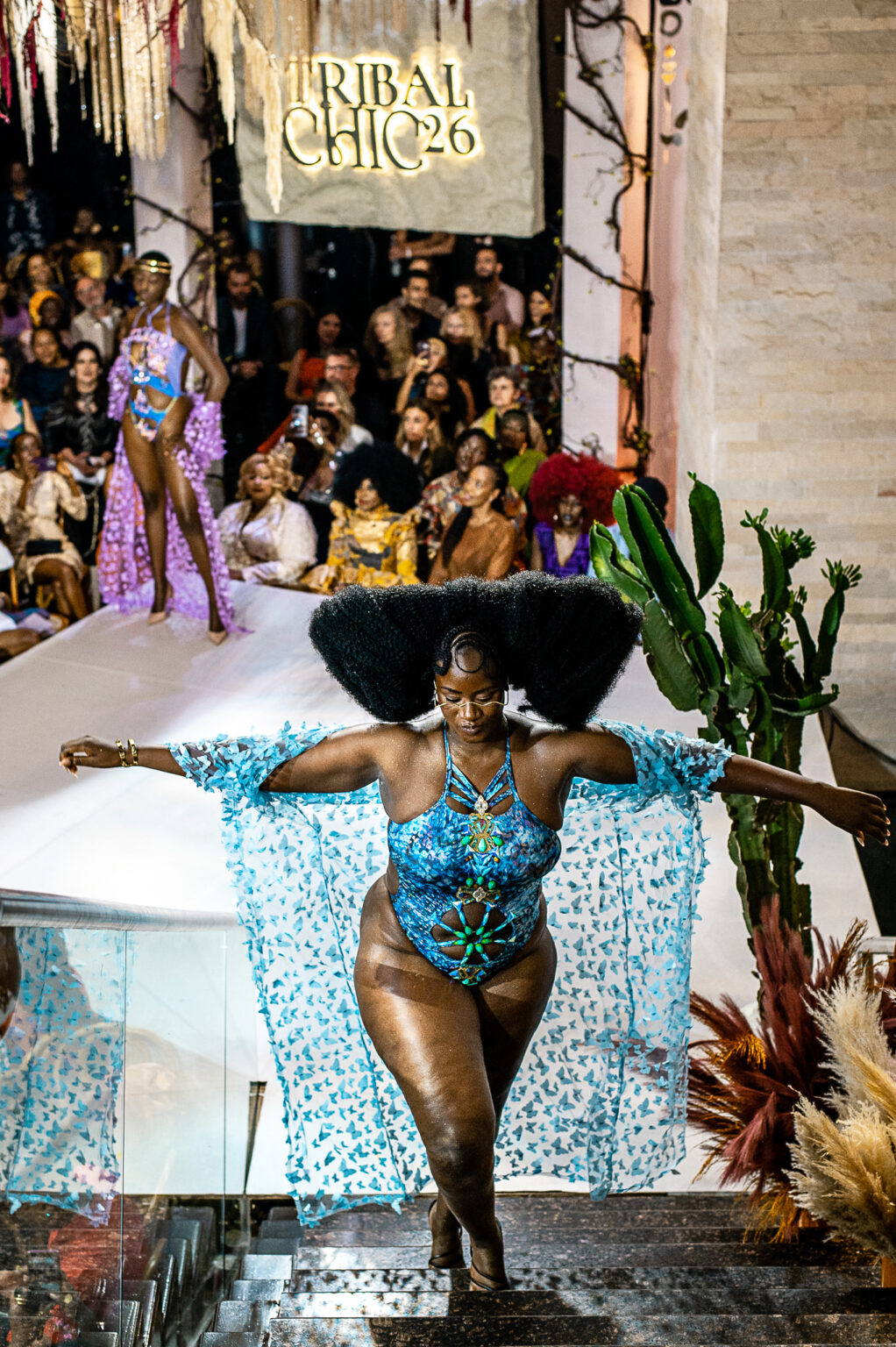
Founded at the Tribe Hotel in Nairobi, Tribal Chic was one of the first platforms to independently develop East Africa’s fashion trade infrastructure, outside the South Africa- and West Africa-dominated continental fashion calendar. It brought designers, including Lisa Folawiyo and Tiffany Amber, to a structured trade audience for the first time, and it relaunched in 2018 in partnership with Naomi Campbell, demonstrating the platform’s resilience over a decade of East African fashion industry development.
2011: Lagos Fashion Week, Nigeria
Founder: Omoyemi Akerele, Style House Files. Lagos Fashion Week is now documented as Africa’s largest fashion event, presenting over 60 Nigerian and African fashion designers to a global audience of more than 40,000 retailers, media professionals, and consumers annually. Its founding in 2011 established Lagos as the commercial centre of African fashion trade infrastructure, and its programme for elevating designers. Orange Culture, Lisa Folawiyo, and Christie Brown are among those whose international recognition was built substantially through LFW platforms: it has produced the deepest designer development programme on the continent. In November 2025, Lagos Fashion Week won the Earthshot Prize for advancing waste-free fashion innovation, the first African fashion week to receive a major international environmental award. As Omiren Styles’ documentation of African fashion infrastructure confirms, the infrastructure for international buyer engagement with African designers is more developed in 2026 than at any previous point, and Lagos Fashion Week’s institutional investment in that infrastructure across 14 years is a primary reason.
2011: Africa Fashion Week London, United Kingdom
Founded by Olori Ronke Ademiluyi-Ogunwusi, Africa Fashion Week London is documented as Europe’s largest African fashion platform. By 2024, its 14 editions had welcomed over 2,700 designers and exhibitors from Africa, Europe, and the Americas, and approximately 90,000 visitors, including buyers, retailers, and industry professionals. The founder sold her house in Totteridge to fund the platform’s early editions when institutional support was not available. Her stated founding rationale documents the structural gap the platform was built to address: in 2011 there were hardly any African designers visible in London, and African fashion was not recognised in the city’s mainstream fashion industry. The 2026 programme introduced Shop The Runway, a retail-focused concept designed to convert catwalk visibility into commercial transactions.
Phase Three: Regional Diversification and Platform Maturity, 2012–2019
The third phase of African fashion trade infrastructure was characterised by geographic and thematic diversification: platforms in East Africa, Central Africa, and the broader diaspora extended the infrastructure into markets that the South Africa, Nigeria, and London axis had not reached. This phase also saw the maturation of the first-generation platforms, with Lagos Fashion Week, SAFW, and AFWL developing more sophisticated commercial programmes within their established platforms.
2016: Rwanda Fashion Week
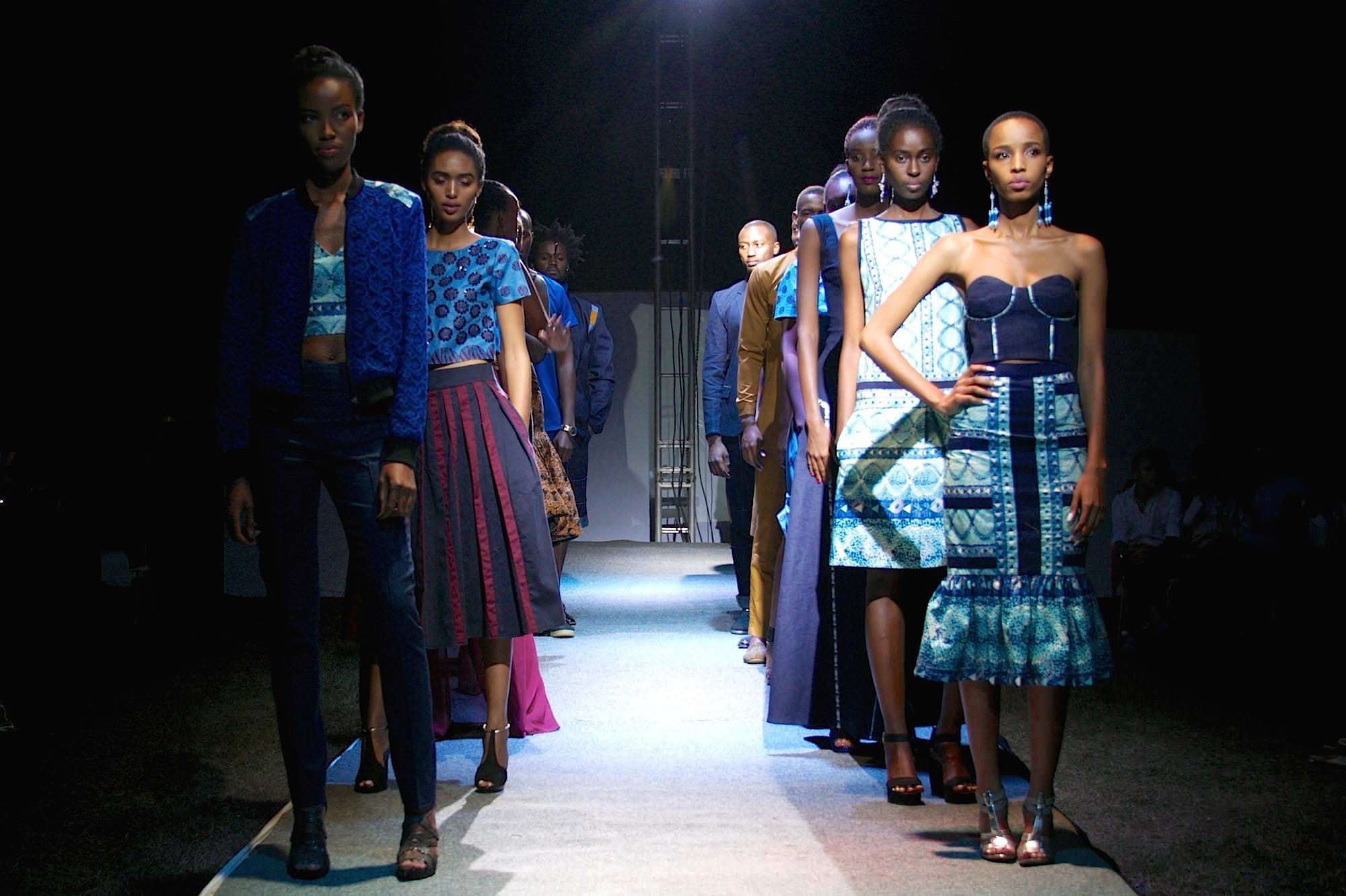
Founded as Collective Rw Fashion Week by East African creatives. The platform brought East African designers including House of Tayo, Haute Baso, Inzuki, K’tsobe Jewels, Moshions, Sonia Mugabo, and Uzi Collect into a structured trade context. Rwanda’s position as one of Sub-Saharan Africa’s most effectively managed economies gave the platform institutional credibility that newer platforms in less stable political environments could not easily replicate.
2017: Lagos Leather Fair, Nigeria
Founded by Femi Olayebi. The first trade event in Africa dedicated specifically to the leather industry. The platform addressed a structural gap in the continental fashion trade infrastructure: no dedicated trade show existed for the leather goods sector despite Nigeria’s position as one of the continent’s largest commercial economies. The Lagos Leather Fair’s founding extended the African fashion trade infrastructure into a specific material and production sector, rather than treating fashion as a single, undifferentiated commercial category.
2018: Industrie Africa Exclusives and Digital Infrastructure
The launch of Industrie Africa’s Exclusives tier represented the entry of digital trade infrastructure into the African fashion market. Industrie Africa operated as a curated digital platform connecting African designers to international buyers, with the Exclusives tier as the highest-curation level for buyer access. IAMISIGO, documented in the Omiren Index 2026, operates within the Industrie Africa Exclusives infrastructure. The digital trade infrastructure that Industrie Africa established addressed the geographic barrier that physical trade shows could not overcome: a buyer in Paris or New York could access African designers’ portfolios and initiate commercial relationships without flying to Lagos, Dakar, or Johannesburg.
Phase Four: International Platform Integration, 2020–2026
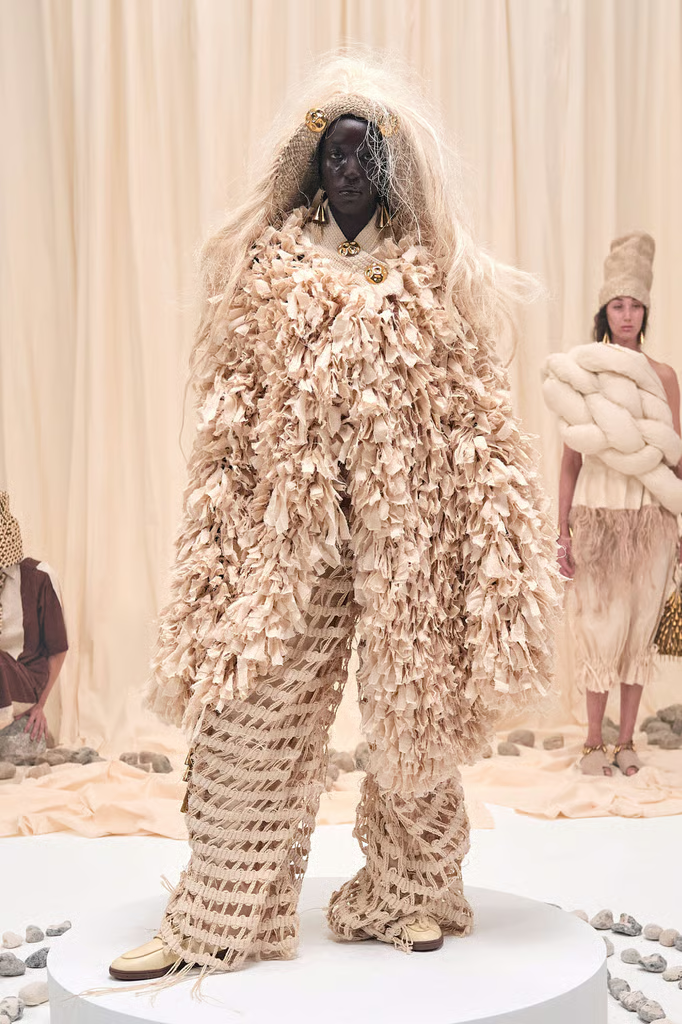
The fourth and current phase of African fashion trade infrastructure is characterised by a shift from dedicated African platforms to integration within established international trade calendars. Where the first three phases built African fashion trade infrastructure primarily through African-specific or African diaspora-specific platforms, the current phase documents African and diaspora designers entering the official schedules of European and North American fashion weeks, trade fairs, and institutional programmes.
2021: Copenhagen Fashion Week: IAMISIGO
IAMISIGO’s official Copenhagen Fashion Week placement in 2021 marked the first confirmed slot for a West African label on a Nordic fashion week schedule. The placement, secured through the Zalando Visionary Award, connected an African label to the Nordic fashion week’s official buyer and press infrastructure for the first time. Copenhagen Fashion Week’s sustainability framework positioned IAMISIGO’s practice within a commercially legible European-values framework without requiring the brand to suppress or translate its cultural specificity.
2023: Pitti Uomo: Wales Bonner
Grace Wales Bonner’s guest designer position at Pitti Uomo for SS23 was the most prominent placement of an African diaspora label at a major European menswear trade fair. Pitti Uomo’s buyer-focused structure, which connects brands to international wholesale accounts rather than press and celebrity audiences, gave the Wales Bonner label trade access of a kind that fashion week runway shows do not consistently produce. The guest designer position at Pitti is commercially significant rather than merely symbolic: it puts the brand in front of buyers rather than cameras.
2025: Lagos Fashion Week Earthshot Prize
Lagos Fashion Week’s win of the Earthshot Prize in November 2025 for advancing waste-free fashion innovation was the most significant international institutional recognition of African fashion trade infrastructure during the report’s 30-year period. The prize is awarded by the Royal Foundation and positions Lagos Fashion Week within the international conversation on environmental sustainability rather than only within the African fashion market. It provides a credibility signal that extends beyond the African fashion industry’s own institutional framework.
2026: Berlin Fashion Week: Consecutive African Label Grants
The Berlin Contemporary programme’s consecutive grants to African labels across AW26 and SS27, with Orange Culture and Kenneth Ize in AW26; Orange Culture, Buzigahill, and Fruché in SS27, represent the most concentrated institutional investment in African ready-to-wear by a European fashion week platform in the period under review. As the Omiren Index 2026 confirms, three Nigerian labels and one Ugandan label received Berlin Contemporary grants in 2026, establishing Berlin Fashion Week rather than London, Paris, or Milan as the European platform most actively investing in African design. This represents a structural shift: the most financially productive European platform relationship for African labels in 2026 is not with the cities that have historically claimed the most influence over global fashion.
2026: Africa Fashion Week London: Shop the Runway
AFWL’s 2026 introduction of Shop the Runway, a retail concept designed to convert catwalk visibility into commercial transactions within the event itself, represents the most direct attempt to close the gap between trade show presence and commercial outcome within a diaspora African fashion platform. The innovation addresses a documented structural problem in fashion trade show infrastructure: runway visibility and buyer conversion are not automatically connected, and platforms that present designers without generating buyer transactions are producing cultural output rather than commercial infrastructure.
Structural Analysis: What Thirty Years Built and What Remains Unbuilt
The thirty-year timeline documents four things that the African fashion trade infrastructure has built: dedicated continental platforms capable of attracting international buyers, press, and media; diaspora platforms in Europe and North America that connect African and diaspora designers to Western markets; digital infrastructure for buyer access without geographic barriers; and individual designer placement at established international trade events.
What the thirty years have not yet built is equally important: a consistently funded, professionally staffed African fashion council analogous to the CFDA, the BFC, or the FHCM with the institutional authority to negotiate collective representation for African labels at global trade platforms; a pan-African trade show database comparable to MAGIC or Texworld that aggregates African textile and ready-to-wear buyers, producers, and suppliers in a single searchable commercial infrastructure; and a credit and investment infrastructure capable of capitalising African fashion businesses at the scale that European and North American competitors receive from domestic investment markets.
The Omiren Index 2026 confirms that ten African labels have demonstrated verifiable international infrastructure. Industrie Africa’s buyer network, Lagos Fashion Week’s continental platform, SAFW’s 28-year track record, and AFWL’s 14 editions have all contributed to that infrastructure. As Omiren Styles’ analysis of the cities that will define African fashion confirms, the cities actively building fashion infrastructure rather than waiting for external validation are the ones whose labels appear in the trade show records above. The infrastructure of the next decade will be built the same way the infrastructure of the first three decades was built: by specific founders making specific institutional decisions in specific cities at specific moments.
The Omiren Argument
Thirty years of trade show history demonstrate that the African fashion market’s 31-billion-dollar scale was not given to it by any external institution. It was built from 1997 onward by Lucilla Booyens in Johannesburg, by Adama Paris in Dakar, by Nduka Obaigbena in Lagos, by Omoyemi Akerele at Style House Files, by Ronke Ademiluyi-Ogunwusi in London, and by every platform, programme, buyer relationship, press placement, and international trade connection that each of those founders built through the four phases documented above. The Berlin Fashion Week grants of 2026, the Copenhagen Fashion Week placement of 2021, the Pitti Uomo guest designer slot of 2023, and the Earthshot Prize of 2025 are not the beginning of African fashion’s international market presence. They are the most recent expressions of a trade infrastructure whose construction began in 1997 and has continued without pause. What remains unbuilt: the collective commercial infrastructure, the investment markets, and the pan-African trade database. This is the work of the next thirty years. The architecture already demonstrates that the work is possible because it documents thirty years during which foundations were laid by individuals who had no institutional template to follow and did so anyway.
Also Read:
- Lagos Fashion Market Report 2026: Retail, Price Points and Growth Categories
- Kampala Has Always Had the Talent. Bold Fashion Week Is Building What Comes Next.
- Eritrean Fashion Designers: A Verified Public Record of Collections and Public Practice
- Week of Fashion South Africa AW26: How Cape Town’s Menswear Platform Is Expanding
Frequently Asked Questions
When did African fashion weeks start?
South African Fashion Week, founded by Lucilla Booyens in Johannesburg in 1997, is the first documented fashion week launched on the African continent. It was followed by Dakar Fashion Week in 2002, founded by Adama Ndiaye (Adama Paris) in Senegal. Arise Fashion Week launched in Nigeria in 2007, followed by Tribal Chic Nairobi in 2010, and Lagos Fashion Week in 2011. By the mid-2010s, fashion weeks had been established in Rwanda, East Africa, and across multiple West African cities, representing a continental expansion from the South Africa-Nigeria axis, where the infrastructure was first concentrated.
What was the first African fashion week?
South African Fashion Week (SAFW) is considered the first fashion week on the African continent, founded by Lucilla Booyens in Johannesburg in 1997. It was established in the post-apartheid period and, from its first edition, focused on market-ready collections and buyer access. Its 28-year track record makes it the African fashion platform with the longest continuous operational history. Among the designers whose careers were developed through SAFW are Sindiso Khumalo and Thebe Magugu, both of whom have subsequently achieved significant international retail infrastructure.
When did Lagos Fashion Week begin?
Lagos Fashion Week was founded in 2011 by Omoyemi Akerele through her fashion business development agency Style House Files. It is now documented as Africa’s largest fashion event, presenting over 60 designers annually to more than 40,000 visitors, including buyers, retailers, media, and consumers. In November 2025, it won the Earthshot Prize for advancing waste-free fashion innovation, becoming the first African fashion week to receive a major international environmental award. The platform has been instrumental in elevating designers including Orange Culture, Lisa Folawiyo, and Christie Brown to international recognition.
What is Africa Fashion Week London?
Africa Fashion Week London (AFWL) was founded in 2011 by Olori Ronke Ademiluyi-Ogunwusi and is documented as Europe’s largest annual African fashion event. By 2024, it had hosted 14 editions and welcomed over 2,700 designers and exhibitors from Africa, Europe, and the Americas, as well as approximately 90,000 visitors. It was founded with the founder’s personal funds after institutional support was unavailable, with Ademiluyi-Ogunwusi selling her house in Totteridge to keep the platform operational in its early years. The 2026 programme introduced Shop The Runway, a retail concept designed to connect catwalk visibility to commercial buyer transactions within the event itself.
How has African fashion grown at global trade shows?
African fashion’s presence at global trade shows has developed through four phases from 1997 to 2026: a founding continental infrastructure phase (SAFW 1997, Dakar 2002); a diaspora platform phase producing the major platforms (Arise 2007, Lagos Fashion Week 2011, AFWL 2011); a regional diversification phase extending infrastructure into East and Central Africa (2012–2019); and a current international integration phase in which African and diaspora labels are entering established European and North American trade calendars. The 2026 season saw Orange Culture, Buzigahill, and Fruché all hold Berlin Contemporary grants simultaneously, representing the most concentrated European institutional investment in African design to date.
Explore More
Read the full Fashion > Industry section for Omiren Styles’ documented intelligence on African fashion trade infrastructure, platform development, and the commercial signals that matter for buyers, investors, and researchers engaging with African fashion markets.
Discover travel and heritage intelligence across Africa at Rex Clarke Adventures.