Most writing about Malawian chitenje bridal styling focuses on the fabric before it addresses the ceremony. That is the wrong order. The chitenje is visible. The wedding tradition that gives it meaning is not. Chinkhoswe, the customary matrimonial agreement ceremony at the centre of Malawian wedding culture, is a family affair in the most precise sense: it is where the parents and relatives of the bride and groom meet, where marriage guardians called ankhoswe speak on behalf of each family, and where the terms of the union are agreed before anything that looks like a wedding begins. As Malawi Nyasa Times documents, Chinkhoswe is purely a family affair rather than a celebration between two individuals. Understanding that is the starting point for understanding what the chitenje is doing in a Malawian wedding.
The chitenje itself is a piece of printed cotton cloth, approximately two metres by one and a half metres, worn as a wrap, headscarf, or baby carrier, and increasingly tailored into formal garments for ceremonies and events. As Asante Lucy Mtenje of the University of Malawi argues, the chitenje is a mode of inclusion and exclusion and about the forging of a distinct African identity in Malawi. It has contradictory meanings that are widely imagined in popular culture. What gives it its wedding-specific meaning is not the fabric’s general cultural weight but its specific role in Chinkhoswe and the coordinated dress practice called Kalala. Those are the elements that make Malawian chitenje bridal styling something more than bridal fashion.
Discover how Malawian chitenje bridal styling reflects an often-overlooked wedding tradition, family customs, and cultural identity in Malawi.
Chinkhoswe: The Family Ceremony that Precedes Everything

Chinkhoswe is often described as an engagement ceremony, but that description understates it. As the African Human Rights Law Journal’s documentation of Malawian customary marriage law confirms, in matrilineal systems there must have been a Chinkhoswe for a customary marriage to be valid. It is not a preliminary social event. It is a legal and cultural requirement in which the families, rather than the couple alone, are the contracting parties.
Two community structures shape how the ceremony operates. Among the Chewa and Yao, who follow matrilineal kinship systems in which lineage and inheritance pass through the mother’s side, the key figures are the ankhoswe, marriage guardians who represent each family. As Encyclopedia.com’s documentation of Chewa marriage practices confirms, a marriage cannot be recognised as valid without the approval of the maternal uncles, who serve as the principal marriage sponsors. The ankhoswe speak on behalf of the bride and groom, discuss the terms of the union, and ensure traditional practices are observed. Their presence makes Chinkhoswe a communal legal agreement rather than a personal celebration.
Malawi also operates two distinct forms of matrilineal marriage: chikamwini, in which the husband goes to live in his wife’s village, and chitengwa, in which the wife goes to live in the husband’s village. As Visit Malawi’s documentation of marriage systems confirms, chikamwini is prevalent in southern Malawi among the Yao, Nyanja, and Lomwe. At the same time, chitengwa is more common in the central region among the Chewa. These structural differences affect how families relate in marriage and how the ceremony is organised. When Chinkhoswe is held, it is within this framework, which explains why relatives and marriage guardians play roles that a Western-style engagement ceremony gives to individuals alone.
Kalala: The Logic of Coordinated Chitenje
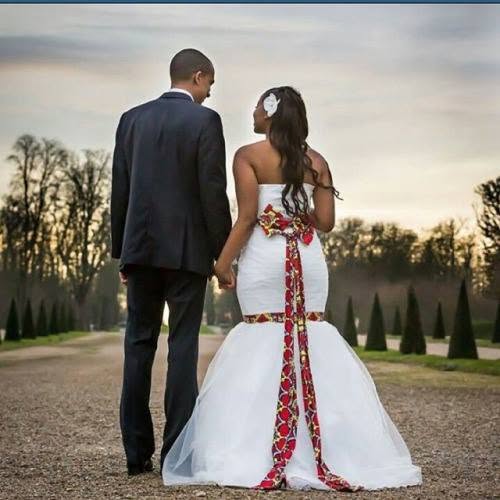
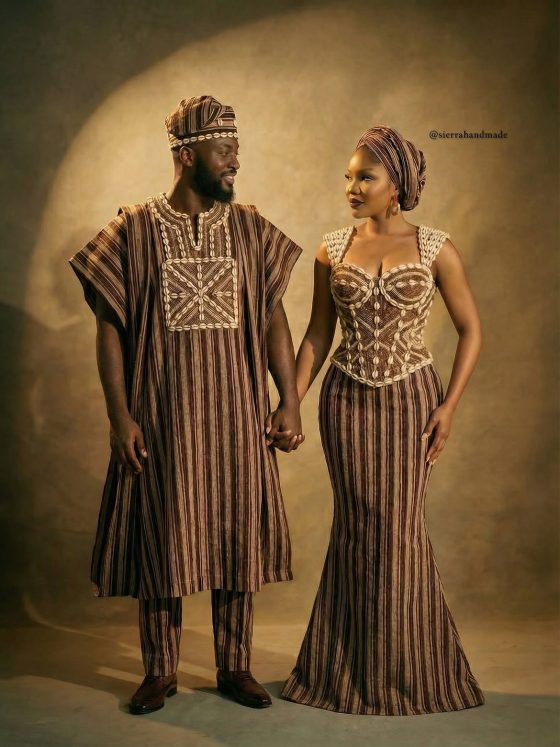
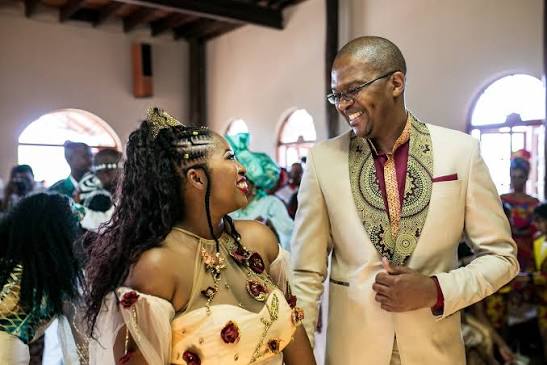
Within this framework, the chitenje does specific work. During Chinkhoswe and wedding celebrations, brides wear tailored chitenje outfits and grooms often wear matching details on their attire. More significantly, members of the bridal party and family representatives on both sides frequently wear outfits from the same or closely coordinated chitenje print. This practice is called Kalala. As Berngosa Safari Tours’ documentation of Malawian cultural traditions confirms, the sight of Malawian women dressed in coordinated chitenje outfits radiates unity and pride: it is an expression of heritage. Kalala makes that unity visually explicit. The matching fabric signals that the people wearing it are part of the same family or community group, and that they are showing up as a collective at a collective occasion.
This is why the chitenje in a Malawian wedding is not primarily a bridal fashion decision. It is a social communication decision. The coordinated cloth declares affiliation in a setting where family affiliation is not incidental but constitutive: the families are the parties to the Chinkhoswe agreement, and the matching fabric makes that structure visible. As Omiren Styles has documented in its analysis of Setswana wedding dress as a ceremonial system, the most culturally specific dress traditions in southern African wedding contexts are those whose significance is carried by the ceremony of collective participation rather than the individual garment alone. Kalala is the Malawian version of that.
Modern Chitenje Bridal Styling: What Has Changed and What Has Not
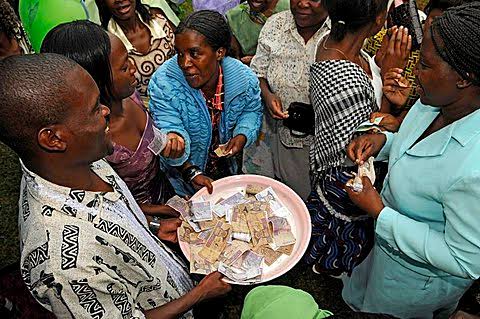
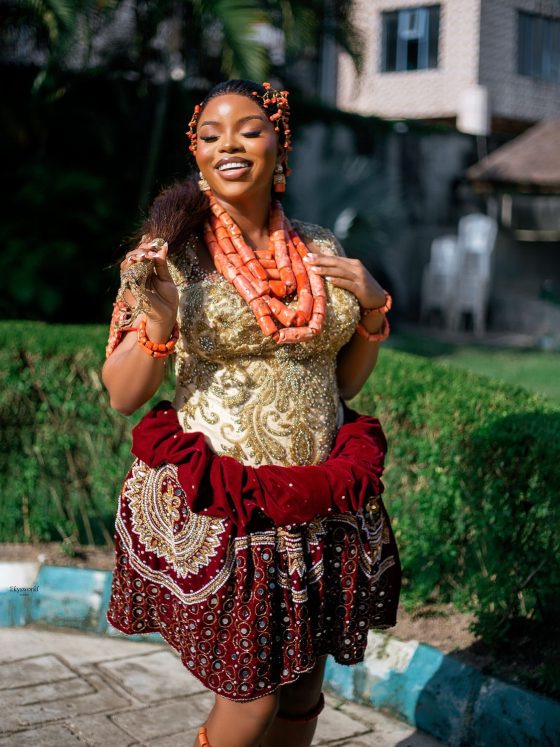
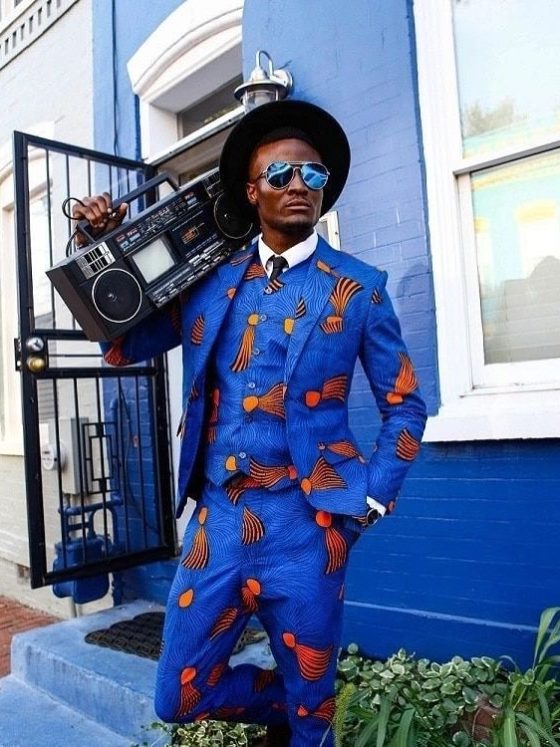
Contemporary Malawian bridal styling works with chitenje across a wider range of formats than earlier generations did. Many brides now work with local dressmakers to create fitted gowns that combine chitenje fabric with satin, lace, embroidery, or beadwork. Grooms wear tailored suits or shirts with matching chitenje details. Couples who hold both a Chinkhoswe and a church or civil wedding often dress differently across the two events, with chitenje featuring more prominently in the customary ceremony. As Asante Lucy Mtenje’s research at the Stellenbosch Institute for Advanced Study documents, dress in Malawi needs to be understood as situational practice: its meaning is shaped by the context and time in which it is worn. The chitenje worn in a customary ceremony and the chitenje incorporated into a modern tailored gown for a church reception are doing related but not identical cultural work.
What has not changed is the purpose of the coordination. Whether the chitenje is worn as a traditional wrap or incorporated into a modern bridal gown, its role in Kalala remains consistent: it marks who belongs together, who is showing up as family, and which occasion this is. The fabric’s form has evolved. The social logic it carries has not. As Omiren Styles has documented in its analysis of Zambian chitenje bridal styling, the dress traditions that survive modernisation most durably are those embedded in the social and ceremonial logic of a community rather than in the specific form of any individual garment.
The Omiren Argument
The argument is simple: people see the cloth first, but the ceremony comes first. Malawian chitenje bridal styling is not primarily a bridal fashion tradition. It is a family participation tradition expressed through fabric. The chitenje is the visible surface of a marriage system in which two families enter a customary agreement through their representatives, in which lineage and inheritance pass through the mother’s side, and in which the wearing of coordinated cloth makes the family structure visible to the community gathered around it. As Asante Lucy Mtenje argues, clothing in Malawi is a mode of inclusion and exclusion and about the forging of a distinct African identity. The wedding context is where that function is most concentrated: Kalala makes visible exactly who is included and on what terms. The chitenje is carrying that argument, not making a fashion statement.
As Omiren Styles has argued, the African dress traditions that carry the deepest cultural authority are those whose visual grammar is internally logical, specific, and learned. Malawian chitenje bridal styling meets that standard. Understanding it requires understanding Chinkhoswe. Understanding Chinkhoswe requires understanding the matrilineal kinship systems in which the ankhoswe role is embedded. The fashion press notices the fabric. The tradition starts three steps earlier.
People see the cloth first. The ceremony comes first. That is the correction this piece makes, and it is the correction Malawian wedding culture has always already made by beginning with the family before the dress.
ALSO READ
- Accra’s Bridal Designers Are Not Modernising Tradition. They Are Correcting a Distortion
- Togolese Bridal Fashion: Kente, Pagne, and the Multi-Stage Social Contract of a Togolese Wedding
- Top 5 Igbo Traditional Bridal Looks for Igba Nkwu in 2026
Frequently Asked Questions
What is Chinkhoswe in Malawi?
Chinkhoswe is a traditional Malawian matrimonial agreement ceremony in which both families of the bride and groom meet through their representatives. As Malawi Nyasa Times documents, it is purely a family affair: the parents and relatives of both sides gather to agree on the terms of the union. Marriage guardians called ankhoswe speak on behalf of each family. In Chewa matrilineal communities, as the African Human Rights Law Journal confirms, a Chinkhoswe is a legal requirement for a valid customary marriage, not simply a social event. The Chinkhoswe typically precedes the wedding itself and is the ceremony at which the family structure of the marriage is formally established.
What does Kalala mean in Malawian weddings?
Kalala is the practice of family members and community groups wearing coordinated chitenje fabrics or colours during important celebrations to signal unity and shared identity. At Malawian weddings, Kalala typically means that the bride’s party, the groom’s family representatives, and close relatives all wear outfits made from the same chitenje print or closely matched designs. As Berngosa Safari Tours’ documentation of Malawian traditions confirms, the coordinated chitenje outfits signal family belonging and collective participation rather than individual fashion choice. Kalala makes the family structure of the Chinkhoswe visible through cloth.
How is chitenje worn at traditional Malawian ceremonies?
Chitenje is worn in several forms at Malawian wedding ceremonies. In traditional contexts, it is worn as a wrapped skirt, headscarf, or outer layer. At Chinkhoswe and wedding celebrations, many brides now wear tailored gowns that combine chitenje fabric with satin, lace, or embroidery, while grooms wear matching chitenje details on their suits or shirts. The choice of which print and how it is worn reflects both personal preference and the social logic of Kalala, the coordinated dress practice that signals family belonging. As Asante Lucy Mtenje’s research confirms, dress in Malawi is situational practice: the same fabric carries different meanings depending on who is wearing it, with whom, and at which ceremony.
What role do the ankhoswe play in a Malawian wedding?
The ankhoswe are marriage guardians who represent each family during the Chinkhoswe ceremony. As Encyclopedia.com’s documentation of Chewa marriage practices confirms, in Chewa communities the principal ankhoswe is typically the maternal uncle, and a marriage cannot be recognised as valid without the approval of the maternal uncles. The ankhoswe speak on behalf of their respective family, discuss the terms of the union, and ensure that traditional marriage practices are observed. Their role reflects the understanding that marriage in Malawi is an agreement between two families rather than solely between two individuals.
How has Malawian chitenje bridal styling changed in modern weddings?
Contemporary Malawian brides increasingly work with local dressmakers to create tailored gowns that incorporate chitenje fabric alongside satin, lace, embroidery, or beadwork rather than wearing chitenje only as a traditional wrap. Many couples now hold both a customary Chinkhoswe and a church or civil wedding, with chitenje featuring more prominently in the customary ceremony. As Visit Malawi’s documentation of marriage practices confirms, customary marriage remains the most common form of marriage across all Malawian regions, and the Chinkhoswe and Kalala practices continue to give the chitenje its specific wedding meaning regardless of the format of the garment in which it appears.