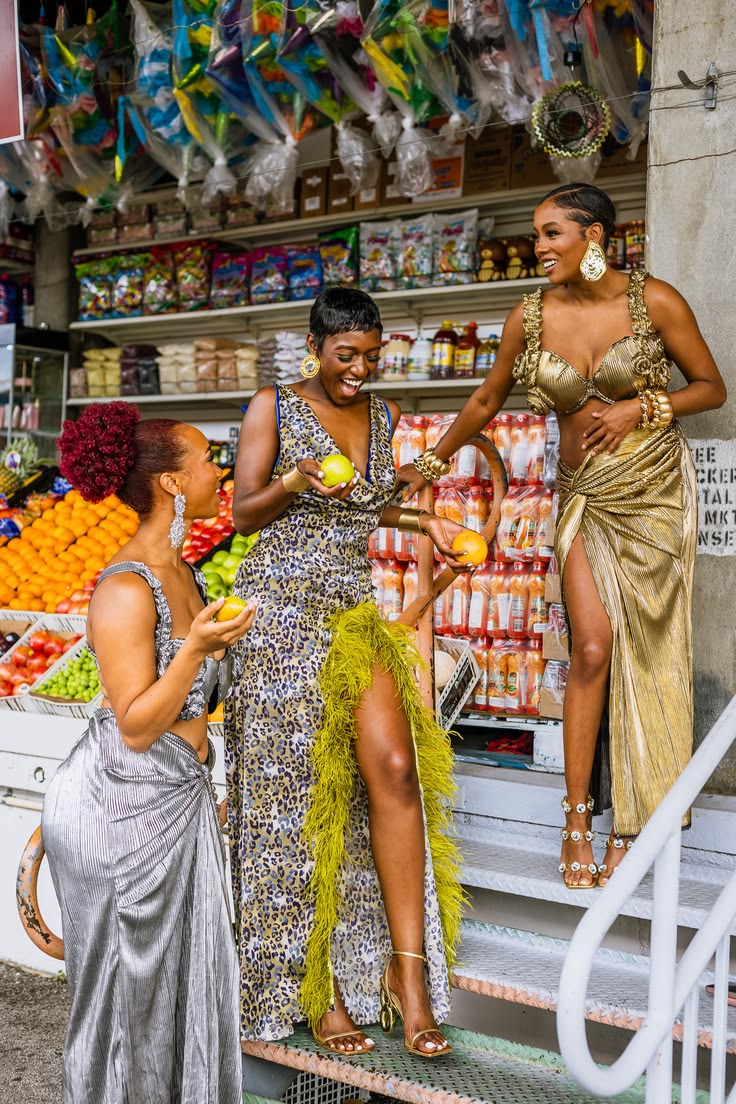
On 22 June 1948, HMT Empire Windrush docked at Tilbury and 492 Caribbean passengers disembarked. A reporter for the Thurrock Gazette recorded that they arrived dressed in an odd assortment of clothes, many wearing ties of dazzling designs. The sentence is revealing twice over: in what it intends to say and in what it inadvertently records. The reporter intended to document foreignness. What the sentence actually records is that the Windrush generation had dressed for their arrival. The ties of dazzling designs were not an odd assortment. They were the deliberate presentation of a generation that understood dressing well as both self-respect and survival strategy.
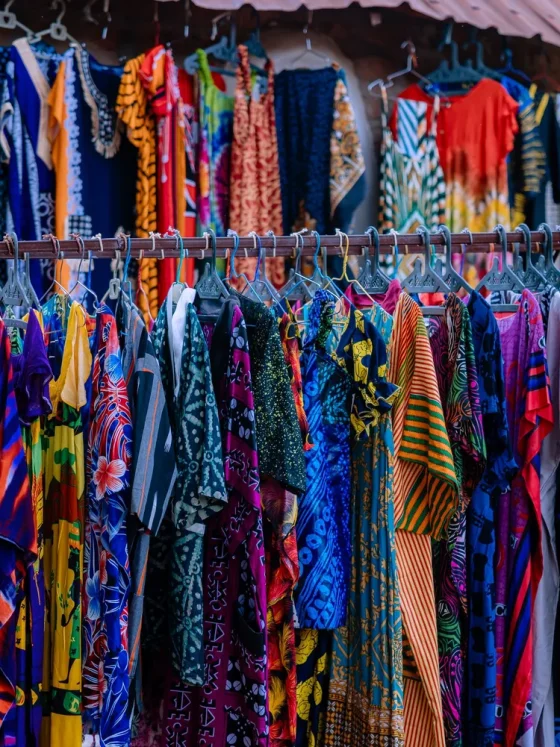
The African fashion market is worth 31 billion dollars. The Caribbean dress culture that arrived in Britain in 1948 and settled, most visibly, in Brixton and the surrounding area of Lambeth in South London, constitutes one of the foundational layers of Black British style. It is not a heritage to be commemorated from a distance. It is a living practice whose tailors, beauty businesses, and dress traditions remain active in the area. As the London Museum’s documentation of Windrush fashion confirms, the creativity, skill and culture that came to London with the Windrush constitutes a significant and underrepresented contribution to British fashion history. The Museum holds a suit made by Winston, a Caribbean tailor who settled in London, alongside oral histories and the contemporary designs of Tihara Smith, whose work shares her grandparents’ Windrush story through clothes. The museum’s collection acknowledges what the newspaper reporter could not: that those dazzling ties were the beginning of something.
The Windrush generation arrived in Britain dressed with intention. Brixton became a site of that dress culture. Here is what the legacy consists of and carries.
Dressing for Dignity: The Windrush Generation and Sunday Best
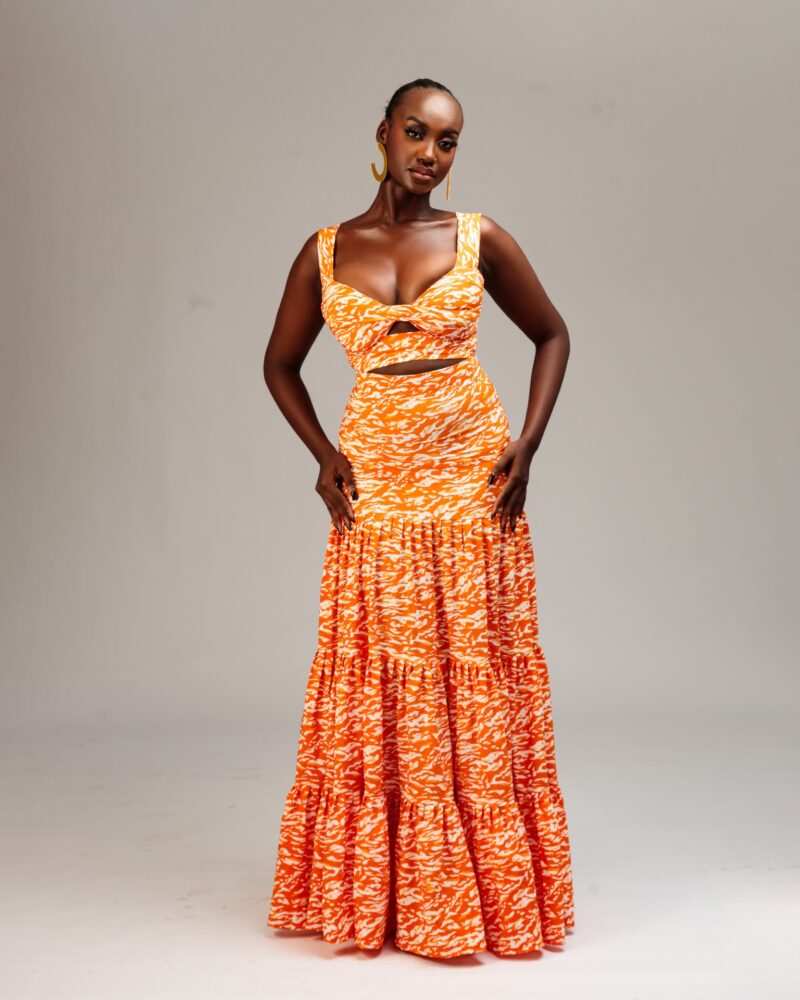
For the Windrush generation, dressing was not simply a matter of personal style. It was, under the specific conditions of mid-20th-century Britain, a practice of survival, dignity, and resistance. Caribbean migrants arrived in a country where housing discrimination, employment discrimination, and racial violence were routine. The landlord signs that read No Blacks, No Dogs, No Irish were not metaphors. They were the administrative grammar of a society that had invited people to rebuild it, only to refuse to receive them as neighbours.
In this context, the Sunday Best suit was not vanity. It was an argument. A tailored suit, fully lined and well-made, produced by a Caribbean dressmaker or tailor from quality materials, was a daily statement that the wearer refused to present themselves as the inferior person that the surrounding society insisted they were. The Windrush generation’s own accounts precisely document the psychological function of this dress: dressing well was the immigrant culture of endeavouring to gain respect and asserting individual flair, mixed with elements of Caribbean heritage. The dazzling tie was not eccentric. It was a signal, legible within the community, that the wearer came from a tradition of colour, pattern, and bold self-presentation that the grey palette of post-war Britain had not extinguished.
They arrived, a 1948 newspaper reported, dressed in an odd assortment of clothes, many wearing ties of dazzling designs. The newspaper meant it as an observation of strangeness. It was recording something else: people who had dressed for the arrival they intended to make, not the reception they would receive.
The Tailor and the Dressmaker: Community Craft Infrastructure
Every Caribbean community had its tailor. Every Caribbean family had, or knew, a dressmaker whose skills could produce a whole outfit: the wedding dress, the christening gown, the church suit, the convention dress. As the London Museum’s documentation of Windrush-era tailoring confirms, this craft infrastructure was embedded in community life rather than in commercial fashion. The grandmother who spent evenings pinning and tacking garment after garment for church members and neighbours was not a boutique business. She was a community service, transmitting both garments and cultural knowledge to the families she served.
The Zoot suit, worn by Caribbean men in Britain in the postwar decades, was another expression of this dress culture: high-waisted, wide-legged trousers worn with a long jacket, a silhouette that had migrated from Harlem through the Black Atlantic cultural network that connected African American, Caribbean, and Black British communities across the mid-20th century. The suit was not imported from a trend forecast. It was part of a visual vocabulary shared across the Black diaspora and adapted in each context to the specific conditions of the wearer’s life.
Brixton’s Caribbean retail and service economy included fabric shops and tailors that directly served this dress culture. The community’s fabric infrastructure was the practical foundation for the tailoring traditions documented above: access to the materials that a wearer needed to produce fully lined, quality garments within a community economy rather than being dependent on the mainstream retail system that was simultaneously discriminating against their customers in other contexts.
Althea McNish and the First Generation of Caribbean Design Recognition
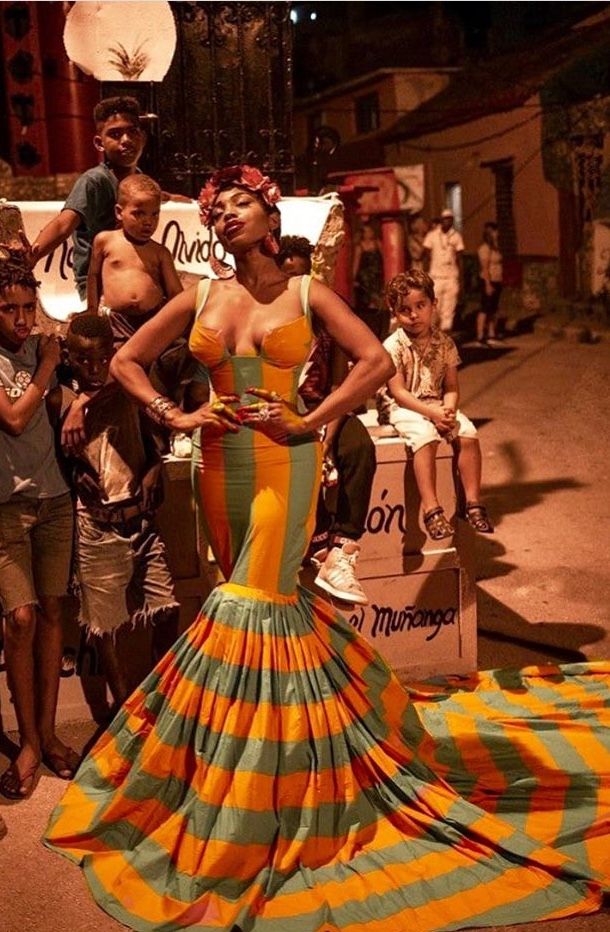
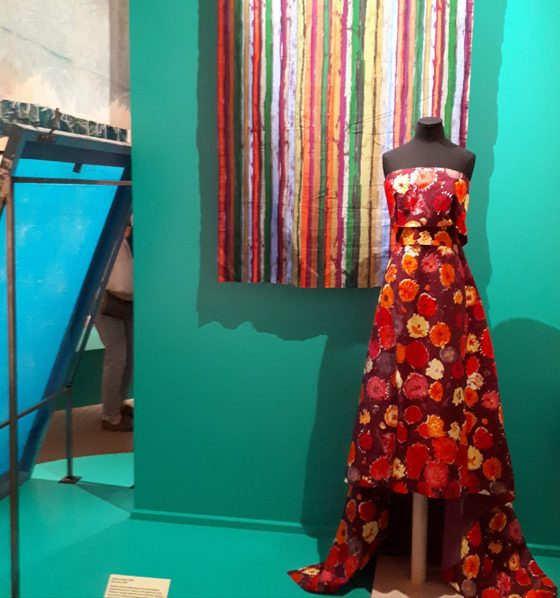
The Windrush generation produced, within its first decades in Britain, one of the most significant textile designers in 20th-century British design history. Althea McNish, born in Trinidad, is documented as the first Afro-Caribbean designer to achieve international recognition. As The Conversation’s December 2025 analysis of how Windrush fashion shaped British style confirms, her work blended cultural references from Trinidad and beyond with contemporary design practices. Her Bezique design, in which she is famously photographed wearing a blouse she designed while sitting among examples of her work, demonstrates the visual vocabulary of a Trinidadian textile intelligence engaging with British design institutions from a position of cultural specificity rather than cultural assimilation.
McNish designed for Liberty and other British textile manufacturers, bringing Caribbean colour relationships, patterns derived from tropical botanicals, and the visual energy of Trinidadian cultural life into the material from which British fashion was subsequently made. Her institutional recognition came through the design establishment rather than through fashion media, which reflects a pattern consistent across the Windrush generation’s cultural contributions: the substance of the contribution preceded and exceeded the institutional recognition it received.
The Afro, the Lovers Rock Party and Political Dress

The late 1960s and 1970s in Brixton saw the political dimension of Caribbean dress become explicit in ways that the Sunday Best generation had maintained as implicit. The Afro hairstyle, documented in Black British communities in this period, was worn not only as a fashion statement but as a form of political and social resistance, rejecting white European standards of beauty and the constraints of being Black in Britain. This is the same argument Steve Biko was making in South Africa in the same decade: that the first act of liberation was to stop presenting oneself according to the coloniser’s aesthetic standards.
The Lovers Rock party culture of Black South London in the late 1970s and early 1980s was a further expression of this dress culture. The parties held in Brixton and surrounding areas, whose fashion and music were documented by Steve McQueen’s 2020 film Lovers Rock, were occasions of carefully considered dress: specific outfits assembled to convey sexual confidence, cultural belonging, and Black beauty on terms defined by the community rather than by the mainstream. Costume designer Jacqueline Durran, who worked on Lovers Rock, described the challenge of recreating precisely the fashion the characters wore: it was not background detail but the point.
Beauty as Infrastructure
Brixton’s Black hair and beauty infrastructure is continuous from the Windrush era to the present. The salon, the braider, the wig specialist, the nail technician: these businesses have served the Caribbean and wider Black community’s beauty needs for decades, and they constitute a form of cultural infrastructure that is as important to the area’s dress culture as its tailors and fabric shops. As Omiren Styles’ documentation of the Caribbean hair shop as diaspora infrastructure confirms, these businesses are not simply beauty service providers. They are community spaces where cultural knowledge is transmitted, where specific hair practices are maintained and developed, and where the specific relationship between Black hair, Black identity, and Black beauty standards is negotiated across generations.
The beauty infrastructure of Brixton operates in the same cultural economy as its tailoring and fabric infrastructure: serving a community whose dress and beauty standards are culturally specific and not adequately met by the mainstream market. The salon that maintains Caribbean hair, the shop that stocks the specific haircare products used in Caribbean households, and the specialist who constructs the specific styles required for Caribbean celebrations are all nodes in the same service network that has sustained Caribbean dress culture in South London for nearly eighty years.
The Living Legacy: Designers and Ongoing Transmission
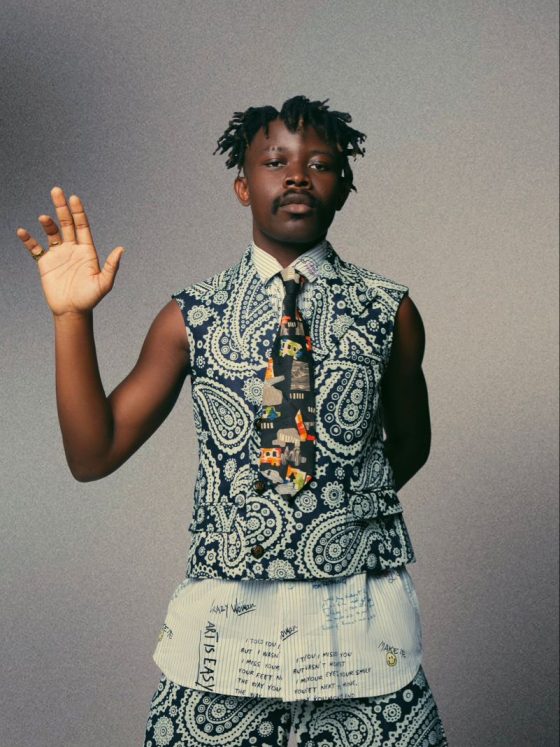
The Windrush generation’s dress legacy is not only historical. It is actively transmitted through the designers, community practitioners, and cultural institutions that continue to work with and from its traditions. Tihara Smith, whose work is held in the London Museum’s collection, shares her grandparents’ Windrush story through contemporary garments. Joe Casely-Hayford built a British menswear practice that engaged Jamaican cultural reference and Black British identity across decades of design work. Nicholas Daley’s practice draws on ska, reggae, and mod connections in ways that make the Windrush generation’s musical and dress culture visible within contemporary British fashion.
In 2019, Lambeth Council held a Windrush-themed fashion event during London Fashion Week, including a catwalk show at Lambeth Town Hall, placing Caribbean dress culture in explicit dialogue with the official fashion calendar. The event was held in contrast to the Windrush Scandal, in which people from the Caribbean who had been invited to rebuild Britain were wrongly denied citizenship and in some cases deported. That political context was not incidental to the fashion event. It was the reason for it: Caribbean dress culture is not separable from Caribbean political history in Britain, because the two have always been made from the same materials.
The Omiren Argument
The Windrush generation arrived in Britain dressed with intention. Their tailors, dressmakers, and the fabric shops that served them built a craft infrastructure in Brixton and South London that has sustained Caribbean dress culture for nearly eighty years. The African fashion market is worth 31 billion dollars. Althea McNish brought Trinidadian textile intelligence into the British design establishment before the British fashion press had developed a vocabulary to describe what she was doing. The Afro hairstyle in 1970s Brixton was the same political argument that Steve Biko was making in South Africa: the refusal of the coloniser’s aesthetic standards as the precondition of freedom. The Lovers Rock party was a fashion event in every sense that matters: carefully assembled dress, cultural self-definition, and the assertion of Black beauty standards in a community’s own terms. The Sunday Best suit was not vanity. It was a letter of intent, addressed to a country that had invited these people to build it and was unwilling to receive them as neighbours. That letter has been passed down, generation to generation, through the designers, tailors, beauty workers, and community practitioners who continue to make and transmit Caribbean dress culture in South London. Brixton’s dress legacy is not a heritage moment. It is an ongoing practice whose depth and continuity the mainstream fashion press has consistently undervalued.
Also Read:
- Peckham’s Diaspora Fashion Economy: Rye Lane, Occasionwear and Creative Production
- Gullah Geechee Women’s Headwrap Traditions, Still Practised Today
- Black Consciousness Made Dress Political: Steve Biko, the Afro Look and Apartheid South Africa
- Caribbean Beauty Rituals That Deserve a Global Stage
Frequently Asked Questions
What is the Windrush generation’s fashion legacy?
The Windrush generation, who arrived in Britain from the Caribbean from 1948 onward, brought a dress culture that used clothing as dignity, self-respect, and resistance in a society practising systematic racial discrimination. Key elements of this legacy include the Sunday Best suit tradition (tailored, fully lined, quality materials) as daily assertion of respectability; the Zoot suit and other Afro-Atlantic silhouettes adopted from the Black diaspora visual vocabulary; a generation of skilled dressmakers and tailors embedded in every Caribbean community; the designer Althea McNish, documented as the first Afro-Caribbean designer to achieve international recognition; the Afro hairstyle as political resistance in the 1960s and 1970s; Lovers Rock party fashion in 1970s-80s Brixton; and the contemporary designers including Joe Casely-Hayford, Tihara Smith, and Nicholas Daley who continue to make the Windrush fashion inheritance visible.
Who was Althea McNish?
Althea McNish was a Trinidadian textile designer who settled in Britain and is documented as the first Afro-Caribbean designer to achieve international recognition. She designed for Liberty and other British textile manufacturers, bringing Caribbean colour relationships, tropical botanical patterns, and Trinidadian visual culture into British design institutions. Her Bezique design, in which she is photographed wearing a blouse she designed while surrounded by her work, is one of the most significant images in the history of Caribbean British fashion. Her career demonstrates how the Windrush generation’s cultural contributions preceded and exceeded the institutional recognition they received.
What is the Lovers Rock fashion connection?
Lovers Rock refers to the reggae music genre and the associated South London Black party culture of the late 1970s and early 1980s. The parties held in Brixton and surrounding areas were occasions of carefully considered dress: specific outfits assembled to convey sexual confidence, cultural belonging, and Black beauty on terms defined by the community. Steve McQueen’s 2020 film Lovers Rock documented this culture, with costume designer Jacqueline Durran researching the specific dress of the period. The Lovers Rock party circuit was a fashion culture whose significance has only recently begun to receive the documentation it deserves.
How did Caribbean tailors shape British fashion?
Caribbean tailors and dressmakers who settled in London from 1948 onward established a craft infrastructure of skilled garment-making within Caribbean communities that served the needs of wedding, church, celebration, and everyday dress. The London Museum holds a suit made by Winston, a Windrush-era Caribbean tailor, as evidence of this craft tradition. The tailoring tradition shaped Black British fashion by establishing the standard of quality, specificity, and cultural knowledge embedded in garment-making. Contemporary designers including Joe Casely-Hayford, whose practice engaged Jamaican cultural references, and Tihara Smith, whose work shares her grandparents’ Windrush story through clothes, are direct inheritors of this tailoring tradition.
How is Brixton connected to Caribbean dress culture?
Brixton in South London became the primary site of Caribbean settlement and community life in London from the late 1940s onward. The area’s fabric shops, tailors, beauty salons, and community networks served the dress culture of the Windrush generation and their descendants from the beginning of Caribbean settlement. Specific aspects of Caribbean London dress culture centred in Brixton and Lambeth include the Sunday Best tradition, the Lovers Rock party fashion of the 1970s-80s, the Afro hairstyle as political statement, and the beauty infrastructure of hair and beauty businesses. In 2019, Lambeth Council held a Windrush-themed fashion event during London Fashion Week with a catwalk show at Lambeth Town Hall, formally connecting the area’s Caribbean dress heritage to the official fashion calendar.
Explore More
Read the full Culture > Heritage & Identity section for Omiren Styles’ documentation of Caribbean dress traditions, diaspora beauty cultures, and the tailoring and craft infrastructures that have sustained Black British fashion from the Windrush generation to the present.
Discover travel and heritage intelligence across the Caribbean and the African diaspora at Rex Clarke Adventures.