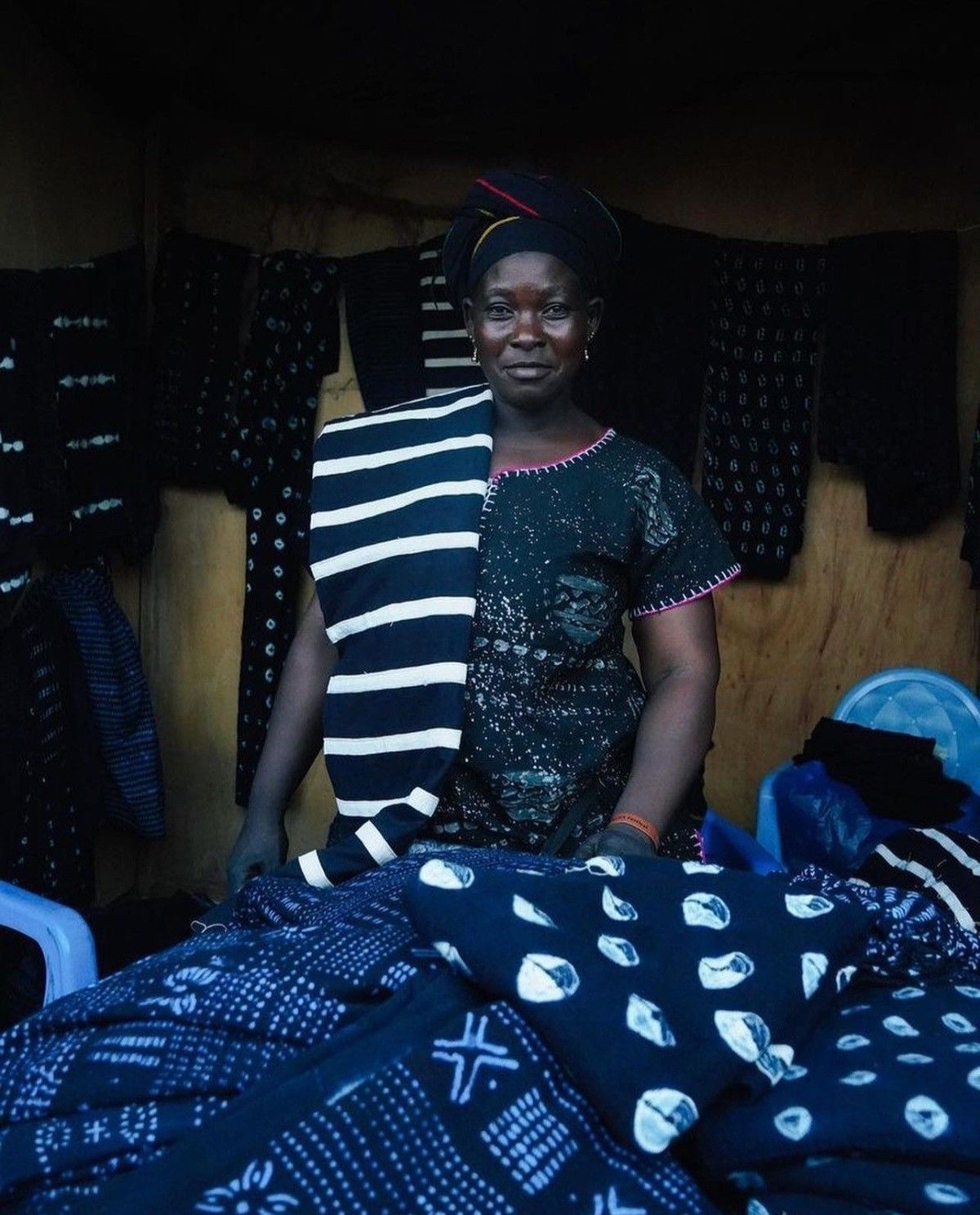
In March 2025, Guinea’s léppi handwoven textile became the first Guinean textile to receive a Protected Geographical Indication from OAPI, the Organisation Africaine de la Propriété Intellectuelle. The award was the result of a process led by Guinea’s National Office for the Promotion of Crafts (ONPA), co-supported by the European Commission, and formally announced on 4 March 2025. It placed léppi within the same legal framework that protects Champagne wine, Parmigiano-Reggiano cheese, and, in the African context, Ghana’s kente and Uganda’s olubugo barkcloth. The protection is real, and the precedent is significant.
The African fashion market is worth 31 billion dollars. The question a GI award answers is specific and limited: it confirms that the product named in the registration has a verifiable geographic origin and that the protected name cannot be used by products that do not meet the registered specification. As Omiren Styles’ analysis of Uganda’s barkcloth GI process confirms, the law cannot create buyer demand, set an export price, or guarantee that the financial return from a higher price reaches the producers who hold the knowledge. The same questions apply to léppi with the same force. The GI is a beginning, not an outcome.
Guinea’s léppi received OAPI GI protection in March 2025. The harder question is what infrastructure must follow for that protection to produce export value.
What the Léppi Is
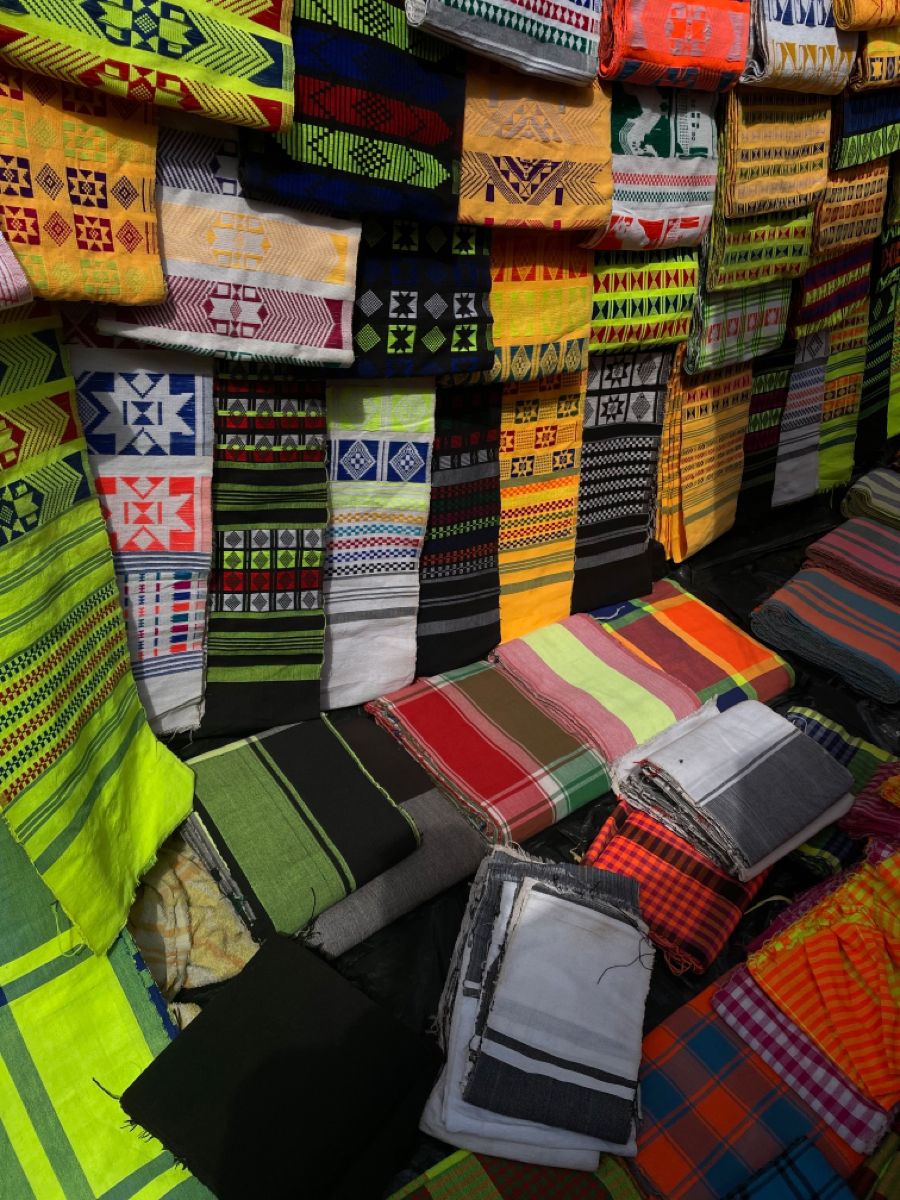
Léppi is the central textile of Fulani life in the Fouta Djallon highlands of Moyenne-Guinée. As Guzang’s April 2026 documentation of Guinea’s textile civilisation confirms, the léppi is handwoven on narrow-strip looms and assembled into larger cloths. It is defined by deep indigo tones achieved through a demanding botanical process: indigo leaves are fermented, oxidised, and layered through repeated dyeing cycles to build depth and durability into the cloth. The geometric patterns that characterise léppi are structured into the weaving rather than printed onto the surface, which is the same production argument that distinguishes kente from kente print or Kuba cloth from Kuba print.
The cloth operates across both social and ceremonial contexts. It is worn at baptisms and marriages, exchanged between families, and used to carry infants. Its presence extends into oral culture. The Fulani proverb confirmed in the Fouta Djallon tradition runs: Si taawi ko a bambiradho woudere leppi ar etein, meaning, if your mother carried you in woven cloth, come and face me. To have been carried in léppi was to have been given strength from the beginning. The textile is not decorative. It is social infrastructure expressed through cloth.
The production is gendered: men weave the base cloth on the narrow-strip looms, assembling strips into larger cloths. The indigo dyeing process requires botanical knowledge, precise timing of fermentation cycles, and consistent technique across multiple dye baths to achieve the depth of tone that distinguishes quality léppi. These are not skills that can be learned in a single season. They are the accumulated output of transmission across generations, and their continued existence depends on the next generation choosing to acquire them.
2,971 léppi weavers were identified in the Fouta Djallon. 50 were selected to lead the Guinea Léppi Group under the GI framework. The gap between those two numbers is not a selection problem. It is a development problem. GI protection tells the world that léppi is authentically Guinean. It does not tell 2,921 weavers how to reach the international buyers who will pay the premium that the protection is intended to support.
The GI Process: What March 2025 Established
ONPA Director General Marie Somparé led the GI registration process. As TRT Afrika’s March 2025 documentation of the OAPI award confirms, the certification process involved selecting 50 producers from the 2,971 identified weavers to lead the project under the Guinea Léppi Group. The authorities announced they will raise awareness among weavers about producing higher-quality léppi for worldwide export. The National Tourist Office of Guinea described the award as marking a major step forward in preserving cultural heritage and promoting Guinean artisanal know-how.
OAPI is the 17-member West and Central African regional intellectual property organisation headquartered in Yaoundé, Cameroon. Guinea is a member. An OAPI PGI is a legally enforceable protection across all 17 member states, covering the majority of Guinea’s immediate trading region. The protection means that a product sold within OAPI’s jurisdiction as léppi that does not meet the registered specification can be subject to legal action. Outside OAPI’s jurisdiction, enforcement requires bilateral recognition arrangements, which Guinea’s government would need to negotiate separately with major export markets including the European Union, the United Kingdom, and the United States.
The European Commission’s co-support for the GI certification process is documented in ONPA communications. This co-funding relationship creates a potential pathway to EU market access through GI recognition, since the European Union’s own GI framework includes mechanisms for recognising third-country GIs through bilateral agreements. However, no such bilateral agreement between the EU and Guinea covering léppi has been confirmed at the time of this report.
The Production Gap: Where the Infrastructure Must Be Built
The most critical structural problem documented in the available evidence is raw-material dependency. The most critical structural problem is raw-material dependency: Léppi weavers depend on imported yarn. Local spinning infrastructure is limited. Economic returns remain low relative to labour, and younger generations are increasingly disengaging from the craft. These three structural problems are connected: if raw materials must be imported, production costs rise, and the margin available to weavers narrows. If economic returns are low relative to labour, younger weavers choose other livelihoods. If younger generations disengage, the knowledge base contracts.
The GI does not address any of these three problems. It provides name protection. It confirms geographic origin. It creates a legal framework within which a premium can be claimed. But the premium is only claimable if: the raw material is available at a cost that permits profitable production; the quality is sufficiently consistent to justify the premium across multiple export transactions; and there is a buyer who understands the GI’s significance and is willing to pay the premium it entails. All three of those conditions require infrastructure that the GI itself does not create.
Selecting 50 producers from 2,971 to lead the Guinea Léppi Group is the clearest indicator of the gap between the GI’s formal scope and its current operational capacity. The group of 50 is presumably the most production-ready, quality-consistent, commercially oriented subset of the wider weaver population. Building those qualities across a larger share of the 2,971 identified weavers is the development task that the GI has identified as a reason to pursue but lacks a mechanism to deliver.
Verified Conditions and Open Market Questions
Verified conditions:
OAPI PGI: awarded 4 March 2025; legally enforceable within 17 OAPI member states.
Production base: 2,971 weavers identified; 50 selected to lead Guinea Léppi Group.
Textile character: handwoven narrow-strip loom; botanical indigo fermentation; geometric patterns structured into weave.
Cultural standing: worn at baptisms, marriages, Eid; used to carry infants; documented oral tradition.
UNESCO inscription: in progress as of April 2026.
Political adoption: Guinea’s CNT requires léppi at plenary sessions and ministerial meetings.
European Commission co-support: confirmed in ONPA documentation.
Open market questions:
Raw material dependency: weavers use imported yarn; local spinning infrastructure is limited.
What export price premium does the OAPI PGI support in practice, and in which markets?
What bilateral GI recognition agreements does Guinea have with its major export markets?
Which quality certification system will verify that Léppi meets the GI specification at export scale?
How will economic returns to the wider weaver community be improved to reverse youth disengagement?
What local spinning infrastructure investment is required to reduce dependence on raw material imports?
What Political Adoption Cannot Do
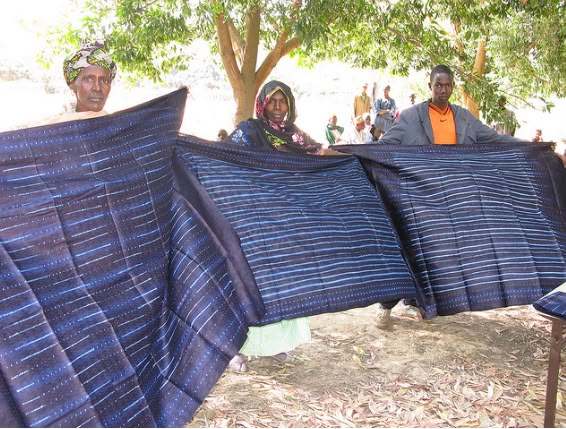
Guinea’s Conseil National de la Transition has required léppi to be worn at plenary sessions of the transitional parliament and at ministerial meetings. This institutional adoption is significant for cultural validation and for domestic market visibility. It demonstrates that the state’s highest decision-making bodies have endorsed léppi as a symbol of national identity rather than treating it as a regional craft tradition with limited political relevance.
But political adoption cannot substitute for commercial infrastructure. The ministers wearing léppi at ministerial meetings are a domestic market signal. They are not an export market. International buyers who might purchase léppi for fashion collections, interior design applications, or luxury retail will not make their sourcing decisions based on the textile’s presence in Guinea’s transitional government chambers, however significant that presence is for Guinea’s internal cultural politics. As Omiren Styles’ documentation of the African textile glossary terms that fashion keeps getting wrong confirms, international buyers need to know what the textile is, how it is made, where it comes from, and why that origin is verifiable. The GI addresses the last two. The first two require documentation, product education, and sustained buyer outreach that the GI process alone does not generate.
The Structural Comparison: Léppi and Olubugo
The comparison with Uganda’s olubugo barkcloth is instructive because both are African textiles that received GI-type protection in 2024-2025 and face similar structural gaps between the protection awarded and the export market outcome it is intended to support. Olubugo received URSB GI initiation in May 2026, building on UNESCO recognition since 2008. Léppi received the OAPI PGI in March 2025, with UNESCO inscription in progress.
Both textiles have active royal or ceremonial functions in their home communities: olubugo is produced by the Ngonge Clan for the Kabaka’s coronation; léppi is worn at Fulani baptisms and marriages and is associated with a proverb that links being carried in it to receiving strength. Both face the raw-material dependency problem: olubugo’s Mutuba tree harvest requires active management to remain sustainable at scale; léppi’s indigo dyeing requires local botanical knowledge, and léppi’s weaving requires yarn currently imported from outside Guinea. And both have the same unanswered question about how the GI premium will be distributed between the producers who hold the knowledge and the export chain that processes and markets the cloth.
The Omiren Argument
Guinea’s léppi received OAPI Protected Geographical Indication status in March 2025. The African fashion market is worth 31 billion dollars. The 2,971 léppi weavers of the Fouta Djallon highlands have built and maintained a handwoven indigo textile tradition whose botanical production process, narrow-strip loom assembly, and geometric visual vocabulary took generations to develop and will require sustained investment to achieve the quality consistency and production scale that export markets require. The GI is the legal framework that makes the claim of that origin enforceable. It is not the commercial infrastructure that converts the claim into a sustained income stream for those 2,971 weavers. The 50 producers selected to lead the Guinea Léppi Group are the beginning of that infrastructure. Building it across the wider weaver community requires solving the raw material dependency, improving economic returns enough to reverse youth disengagement from the craft, establishing the quality certification system that makes the GI specification enforceable at scale, and negotiating the bilateral GI recognition arrangements that bring legal protection into the export markets where the premium is claimable. The OAPI award itself addresses none of those tasks. All of them are necessary for the award to deliver what its announcement promised. Omiren Styles documents this here because the gap between legal protection and a commercial outcome is where the most important decisions about African textile heritage are made.
Also Read:
- Kuba Cloth Is Not a Print: What Designers Need to Know Before Referencing It
- Bogolan Is Not Mud Cloth: Why the Name Matters and Who Benefits From Getting It Wrong
- Who Should Define Cultural Authority in Fashion? Start With the Makers
- West African Dress as a Living Record: What Oral History Reveals About Cloth
Frequently Asked Questions
What is léppi fabric from Guinea?
Léppi is a traditional handwoven textile of the Fulani (Fula/Peul) people of the Fouta Djallon highlands in Moyenne-Guinée, Republic of Guinea. It is woven on narrow-strip looms and assembled into larger cloths, defined by deep indigo tones achieved through a botanical fermentation and repeated dyeing process, and characterised by geometric patterns structured into the weave rather than printed onto the surface. Léppi is worn at baptisms, marriages, and Muslim celebrations of Eid; exchanged between families; and used to carry infants. In March 2025, it received a Protected Geographical Indication from OAPI, the 17-member African regional intellectual property organisation.
What did OAPI award Guinea’s léppi in 2025?
On 4 March 2025, OAPI (Organisation Africaine de la Propriété Intellectuelle) awarded Guinea’s léppi Protected Geographical Indication (PGI) status. This is a legal protection enforceable within OAPI’s 17 member states that formally anchors léppi to the Fouta Djallon region and prevents non-conforming products from using the protected name within the member jurisdiction. The process was led by ONPA (Guinea’s National Office for the Promotion of Crafts) under Director General Marie Somparé and was co-supported by the European Commission.
How many léppi weavers are in Guinea?
The ONPA certification process identified 2,971 léppi weavers in the Fouta Djallon region. Of these, 50 were selected to lead the project under the Guinea Léppi Group, which will manage the GI going forward. This gap between the 2,971 identified weavers and the 50 selected to lead the commercial infrastructure is one of the primary development challenges the GI process has created, but for which it has provided no direct mechanism to resolve.
What is the Fouta Djallon?
The Fouta Djallon is a highland region in the centre of Guinea (Moyenne-Guinée), primarily inhabited by the Fulani (Fula/Peul) people. It is one of the major upland plateaux of West Africa, significant as the source of major West African rivers and as a distinct cultural and ecological zone within Guinea. The léppi textile tradition developed in this specific geographic and cultural environment, and its GI protection formally anchors it there, meaning only léppi produced in the Fouta Djallon region, according to the registered specification, can bear the protected designation.
Can léppi reach export markets?
The OAPI PGI creates the legal framework for an export premium, but several structural conditions must be met before that framework translates into sustained export market presence. The critical gaps include: raw material dependency (weavers currently use imported yarn, as local spinning infrastructure is limited); quality consistency across a large enough production volume to sustain repeat orders; quality certification systems that verify GI compliance at export scale; bilateral GI recognition agreements between Guinea and major export markets (EU, UK, US) where OAPI jurisdiction does not apply; and economic returns sufficient to reverse youth disengagement from the craft. The institutional steps taken in 2025 are necessary foundations. They are not yet sufficient conditions for export market access.
Explore More
Read the full Fashion > Industry section for Omiren Styles’ documented intelligence on African textile GI protection, the gap between heritage recognition and commercial infrastructure, and the market conditions that determine whether protection produces value.
Discover travel and heritage intelligence across West Africa, including Guinea and the Fouta Djallon, at Rex Clarke Adventures.