This series has made the argument. Now the argument needs an instrument.
Across eighteen articles, Omiren Styles has documented the structural pattern: cultural knowledge produced by specific communities under specific historical conditions enters the commercial fashion system, generates commercial value, and the communities that produced the knowledge receive neither proportionate credit nor proportionate commercial return. The pattern repeats across Africa, the Caribbean, Latin America and the Latinx diaspora. The evidence for it is documented. The argument is complete.
What is not complete is the practice. The brands that draw on cultural references, from those whose collections make explicit references to textile traditions to those whose aesthetic sensibility is quietly shaped by visual vocabularies they did not originate, need a practical framework for doing that work responsibly. A show note is not that framework. It is the minimum that distinguishes a named source from an unnamed one.
This checklist is for brands that want to go beyond the minimum. It is organised around six stages: Research, Relationship, Consent, Commercial Structure, Attribution and Accountability. Each stage has specific questions. The questions are not aspirational. They are operational. If the brand cannot answer them, it has not yet built a strategy.
The standard is not to make cultural references impossible. Culture has always moved, and fashion has always involved exchange, adaptation, and reinterpretation. The standard is to make cultural extraction harder to disguise as cultural appreciation, and to build the commercial relationships with originating communities that the fashion industry’s existing tools are capable of building but have not been applied to systematically.
As Omiren Styles has established in its analysis of why cultural credit still rarely becomes licensing revenue, the distinction between credit and licensing is foundational: naming a source after the fact is not the same as securing prior and informed consent before commercial use. This checklist begins before the collection note is written.
Show note names a source. A strategy is the system that determines whether you sought consent before production, commissioned from within the community and built an accountable relationship. This is the checklist.
Stage 1: Research

Before a brand makes a single creative decision involving a cultural reference, it must understand what it is engaging with. The most common failure in fashion’s relationship with cultural knowledge is not malice but ignorance: a designer uses a visual vocabulary they find compelling without investigating where it comes from, what it means, who holds it, or whether their intended use would be understood by the intended community as appropriate.
Research at this stage is not about finding inspiration. It is about building the factual foundation that would allow the brand to make an informed decision about whether to proceed, on what terms, with whom.
RESEARCH CHECKLIST
- Can the brand name the specific community, place, language and historical context from which the reference originates? If not, the research is not complete.
- Has the brand distinguished between a living practice, a historical tradition and a widely disseminated visual motif? These require different approaches.
- Has the brand identified whether the expression is collective or individual? Collective traditions may have different governance structures from individual artists’ work.
- Has the brand investigated whether the expression is restricted, sacred, ceremonial or otherwise inappropriate for commercial fashion use? Some things should not be used commercially, regardless of availability.
- Has the brand consulted sources beyond the internet, including practitioners, scholars, community representatives, specialist publications and primary documentation?
- Has the brand used precise terminology? ‘African print,’ ‘tribal pattern,’ ‘ethnic motif’ and ‘folk aesthetic’ are not precise terms. They are catch-all terms that conceal what the brand does not know.
- Has the brand reviewed existing documentation on the cultural expression, including academic research, community publications, and journalism, before making any creative decisions?
- Can the brand explain what the expression means to the people who created it, not only what it looks like to people who do not share that cultural context?
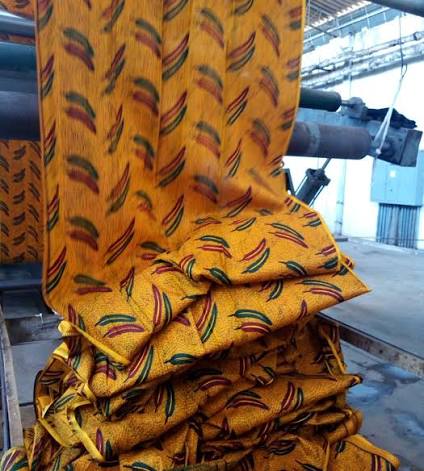
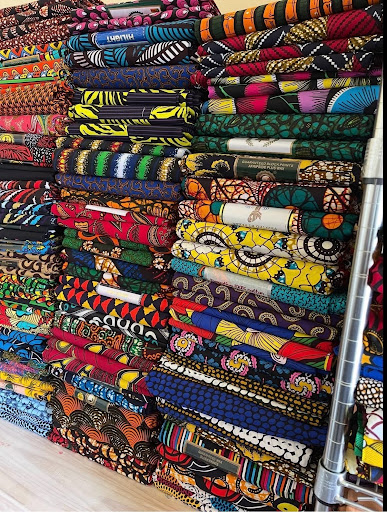
The Omiren Styles African Textile Glossary is one starting point for textile-specific research. It distinguishes wax print, Dutch wax, fancy print, Ankara, kente, kanga, bogolan and other terms that global fashion uses interchangeably but that refer to distinct materials, histories, and cultural contexts. Precision in research is the precondition for precision in attribution.
Stage 2: Relationship
Research identifies the cultural source. Relationship determines who the brand engages with before making a commercial decision. The relationship stage is where fashion practice diverges most sharply between brands that treat cultural knowledge as available inventory and brands that treat it as held by specific people with whom a relationship must be built.
Building a relationship with cultural knowledge holders before a commercial decision is made is not only ethically correct. It is also practically useful: the people who hold the cultural knowledge the brand is interested in are the most accurate available source on whether the proposed use is appropriate, what terms they would set and what form of engagement they would welcome. A brand that builds this relationship before production has better information, fewer risks and a more defensible position than one that builds it after a campaign has been photographed.
RELATIONSHIP CHECKLIST
- Has the brand identified the appropriate knowledge holders? This may be an individual artist, a registered cooperative, a community organisation, a cultural institution, a local authority, or a combination of these. The research stage should have surfaced the relevant parties.
- Has the brand made contact with the appropriate knowledge holders before any sampling, product development, photography or public communication?
- Has the brand presented the proposed use to the knowledge holders clearly and honestly, including the product category, territory, price point, campaign approach, and expected commercial scale?
- Has the brand allowed adequate time for the knowledge holders to consider the proposed use, consult within their community and respond? This cannot be a forty-eight-hour turnaround.
- Has the brand sought local practitioners, specialists or translators where language or cultural barriers make direct communication difficult?
- Has the brand considered whether commissioning practitioners from within the originating community, rather than licensing or referencing their tradition from outside, would be a more appropriate and more commercially productive model?
- Has the brand accepted that ‘no’ is a possible answer, and prepared an alternative direction if the proposed use is not welcomed by the knowledge holders?
As Omiren Styles has established in its analysis of what Africa’s repair economies reveal about fashion infrastructure, community accountability in informal production systems operates through proximity and relationships rather than contractual formality. The insight applies in the opposite direction: a brand that wants to engage with a cultural community responsibly needs to build the relationship that community accountability requires, not only the contractual structure that institutional accountability requires.
Stage 3: Consent
Consent is the stage that most fashion brands skip. It is the stage whose absence makes every subsequent action, however well-intentioned, begin from a compromised position.
Prior and informed consent means that the knowledge holders have been told, accurately and completely, what the brand proposes to do with the cultural reference, have had the opportunity to ask questions and consult within their community, and have agreed to the proposed use before any irreversible creative or commercial decision is made. Consent obtained after an incident has occurred is not prior consent. Consent obtained through an intermediary who does not accurately represent the knowledge holders is not informed consent. Consent obtained under commercial pressure or time constraint is not freely given consent.
CONSENT CHECKLIST
- Has the brand obtained consent before sampling rather than after?
- Has the brand provided the knowledge holders with a complete and accurate description of the proposed use, including the product type, price range, territory, campaign approach, distribution channel, and anticipated commercial scale?
- Has the anticipated consent been documented in a language the knowledge holders understand?
- Have the knowledge holders had the opportunity to consult within their community, without commercial pressure, before responding?
- Does the consent cover the specific use proposed, or is it a general agreement that could be extended to cover uses the knowledge holders have not approved?
- Does the consent include approval rights over the final execution of the reference in the product, the campaign and the brand communications?
- Does the consent specify what happens if the brand wishes to extend the use beyond the original terms, such as through additional products, territories or seasons?
- Is there a withdrawal mechanism: can the knowledge holders withdraw consent, under what conditions, and what happens to products already in market if consent is withdrawn?
Stage 4: Commercial Structure
Once a relationship is established and consent has been obtained, the commercial structure determines how the value generated by the cultural reference is shared. This is the stage that separates a letter of intent from a strategy.
Commercial structure does not mean every cultural reference must generate a royalty payment. Some engagements are appropriately structured as commissioning relationships. Some are sourcing arrangements that generate revenue for producer communities through purchase orders rather than royalties. Some are licensing arrangements with negotiated fees and royalty rates. Some involve equity, profit sharing, infrastructure investment or community development commitments alongside or instead of financial payments. The form should be determined by the nature of the relationship, the scale of the commercial use and the preferences of the knowledge holders.
COMMERCIAL STRUCTURE CHECKLIST
- Has the brand determined which commercial structure is most appropriate for this specific relationship: commissioning, sourcing, licensing, co-creation, profit sharing, community investment, or a profit-sharing model? If commissioning, are the creative practitioners from the originating community being engaged as the authors of the work, with appropriate fees, authorship credits and rights over the work they produce?
- If sourcing, are the terms fair: transparent pricing, realistic lead times, consistent order commitments and respect for production capacity?
- If licensing, does the agreement specify the licence fee or royalty rate, the payment schedule, the territory, the duration, the product categories covered, the exclusivity terms and the renewal or termination conditions?
- Has the brand considered ongoing benefit structures, such as royalties on subsequent uses, rather than one-time payments that do not reflect the reference’s ongoing commercial value?
- Do the knowledge holders understand the commercial terms they are agreeing to, including how the value generated by the reference will be calculated and how payments will be made?
- Are the commercial terms documented in a written agreement that has been reviewed by advisers accessible to the knowledge holders, not only by the brand’s legal team?
- Does the commercial structure include a mechanism for the knowledge holders to audit the brand’s use and verify that the agreed terms are being met?
As Omiren Styles has established, in its analysis of the Chola aesthetic and who kept the credit, the Chicana-owned braeina Rebelde and Bella Doña demonstrate the commercial structure that positions cultural knowledge as the source of commercial authority rather than as raw material for extraction: producing for the community, on terms set by the community, with value that stays within the community. That model does not require a licensing agreement with an external fashion house. It requires investment in community-controlled commercial infrastructure. Both models are available. Both are more accountable than a show note.
Stage 5: Attribution
Attribution is the stage most brands have begun to take seriously, and the stage where the gap between good practice and minimum practice is most legible. A brand that names a cultural source in its collection notes has done more than a brand that names nothing. A brand that names the specific community, the specific place, the specific practitioner, and the specific technique has done more than one that names a region or an aesthetic category.
Attribution should be specific enough to be verifiable and complete enough to be useful to anyone who wants to follow the reference to its source. A reader who sees ‘inspired by West African textile traditions’ in a show note cannot identify the community, the tradition, the specific technique or the region. A reader who sees ‘adapted from the bogolan cloth dyeing practice of the Bambara people of Mali, with fabric sourced from practitioners in Ségou’ has information they can act on.
ATTRIBUTION CHECKLIST
- Does the attribution name the specific community rather than a regional or continental category?
- Does the attribution name the specific place, country, region or city of origin?
- Does the attribution name the specific technique, material, or tradition using the terminology of the originating community rather than a translation for Western audiences?
- If individual practitioners were commissioned or collaborated with, are they named, with their roles specified?
- Does the attribution appear in all public-facing communications: collection notes, lookbook, website product pages, press, social media, and retail descriptions?
- Is the attribution accurate? Has it been reviewed for accuracy by someone from the originating community or with demonstrated expertise in the cultural tradition?
- Does the attribution include a link or reference to the practitioner’s own platform, the community organisation, or a credible resource that would allow readers to learn more about the cultural source?
- Is the attribution persistent: does it remain visible on the product page and in the brand’s archive, or does it disappear after the season ends?
As Omiren Styles has documented in its analysis of the mass costume supply chain behind Caribbean Carnival, the wire benders, seamstresses, and feather workers who produce Carnival costumes do not appear in the photographs the event generates. Attribution in a fashion context should be understood as the commitment to make visible the people whose knowledge and labour made a product possible, not only the event or the aesthetic category from which the product drew.
Stage 6: Accountability

Accountability is the stage that converts every previous stage from a statement of intention into a verifiable practice. A brand that has completed stages one through five has made commitments. Stage six determines whether those commitments were kept and what happens when they are not.
Accountability requires measurement, transparency and consequence. A brand that measures its compliance with the terms it agreed to, publishes enough for external observers to assess that compliance, and establishes consequences for non-compliance within its own supply chain has built accountability into its cultural reference practice. A brand that makes commitments without measurement has made aspirations.
ACCOUNTABILITY CHECKLIST
- Has the brand established internal metrics for its cultural reference practice: what it measures, how often it reports internally and who is responsible for compliance?
- Has the brand published, in its public communications, en enough informationugh information about each collaboration for an external observer to assess whether the stated commitments are being met?
- Does the brand’s supplier and partner code of conduct include expectations around cultural reference practice, and does the brand apply those expectations to its own creative decisions?
- Does the brand have a process for addressing complaints from originating communities about misrepresentation, unauthorised use or failure to meet agreed commercial terms?
- Does the brand’s cultural reference practice apply consistently across all collections, or only to the references that have attracted external attention?
- Does the brand track the commercial outcomes of its cultural reference relationships over multiple seasons, rather than only at the point of the initial agreement?
- Does the brand publicly report on the commercial benefits and opportunities arising from its cultural reference practices, with the same transparency it applies to other supply chain disclosures?
- Is there a named individual or team within the brand responsible for cultural reference practice, with the seniority and authority to make the decisions this checklist requires?
As Omiren Styles has argued, in its analysis of Caribbean fashion policy and the need to measure results, the gap between policy ambition and performance measurement is a persistent feature of creative industry governance. The same gap appears in brand cultural reference practice: commitments are made in collection notes and ethical trade statements, and the commercial outcomes of those commitments are not tracked, not published and not used to improve subsequent practice. Accountability begins with measurement.
When the Answer Is No
The checklist assumes that the brand reaches the end assumptions and two, with the information and the relationship, to proceed. Sometimes the t outcome of the research and relationship stages is a decision not to use the reference.
A community may regard an expression as sacred, restricted, or ceremonially significant in ways that make its use in commercial fashion inappropriate, regardless of how respectful the brand’s intentions are. A research stage that reveals this information is not a failure. The system is working correctly: this brand has the information it needs to make the right decision, which is not to proceed.
Some expressions have been so extensively extracted without compensation or credit that any additional use, however well-structured, is likely to be experienced by the originating community as further extraction rather than as respectful engagement. In those cases, the most appropriate action may be to invest in the community’s own commercial infrastructure rather than to use the expression in a brand collection.
The discipline required to accept ‘no’ as a possible outcome in the research and relationship stages is what separates cultural reference strategy from a compliance exercise. A brand that builds a process for engaging with cultural knowledge holders, completes stages one and two in good faith, and then does not use the reference because the knowledge holders indicated that use was not welcome has demonstrated the practice the checklist is designed to build. The show note never gets written. The strategy worked.
The Minimum, the Standard and the Goal
The minimum that distinguishes responsible from irresponsible cultural reference practice in fashion is prior and informed consent and accurate attribution. A brand that secures consent before production and attributes the source specifically in all public communications is doing more than most brands currently do.
The standard is the full checklist: research that is specific, relationships that are built before production decisions, consent that is documented and free, commercial structures that return value to originating communities, attribution that is persistent and accurate, and accountability that is measured and published.
The goal is the structural change that makes the checklist unnecessary as a corrective and routine as a practice: a fashion industry in which cultural knowledge holders are engaged as partners before production rather than credited as sources after the fact, in which licensing and commissioning relationships with cultural communities are as normal as licensing and commissioning relationships with individual designers and brand collaborators, and in which the commercial value generated by cultural knowledge flows toward the communities that hold it in proportion to their contribution.
As Omiren Styles has established in its analysis of the Afro-Brazilian fashion system, the gap between 3% Black designer representation at São Paulo Fashion Week and a 50%+ Black population in Brazil measures how far the institution is from reflecting the community it claims to represent. The same gap exists in cultural reference practice: a show note that names a cultural source and a commercial relationship that returns value to that source’s community are separated by the entire checklist above. The show note is where most brands currently stop. The checklist is where the strategy begins.
The Omiren Argument, Applied
This series has documented the pattern. This checklist is the operational response.
The wire bender in Port of Spain who shapes Carnival costume frames deserves to be named in the documentation of their work. Their Chier, whose technique appears in a luxury runway collection, deserves a licensing agreement rather than a credit line. The Afro-Brazilian artisan who sources fabric directly from West African producers deserves the commercial infrastructure to scale their innovation. The mas camess who alters costumes at pickup deserves the same documentation, policy attention and commercial recognition that the masquerade she enables receives.
A show note cannot deliver any of those things. A strategy, built through the six stages of this checklist, can begin to.
The Global South made fashion and never got credit for it. The checklist is the tool that changes ‘credit’ from a word in a show note to a commercial commitment. Use it before the collection note is written.
RELATED READING FROM THIS SERIES
- Who Owns the Pattern? Why Cultural Credit Still Rarely Becomes Licensing Revenue
- The Chola Aesthetic Went Global. Who Kept the Credit?
- Fashion’s Value Chain Is Cultural Before It Is Commercial
- Caribbean Madras: From Colonial Textile to Contemporary Creole Fashion
- The People Behind Carnival: The Hidden Fashion Supply Chain of Mas
EXPLORE MORE
Read the full Industry and The Omiren Argument sections at Omiren Styles for ongoing analysis of fashion cultural accountability, the practical frameworks that move cultural reference practice beyond the show note, and the communities whose knowledge and labour make fashion what it is. Discover travel and heritage intelligence across Africa, the Caribbean and Latin America at Rex Clarke Adventures.