
A light-blue denim backpack and a bright-pink dust cover sit together in the Science History Institute’s collection. Made by Suave Kenya and dated approximately 2023, the backpack incorporates denim from trousers sourced at Nairobi’s Gikomba market. The cover was made from a pillowcase. Their previous uses are part of the objects’ recorded history. Denim once intended for clothing became bag material; a household textile became its protective cover. The ensemble brings two kinds of second-hand fabric into a new relationship. For Suave, that approach connects with a longer history of sourcing at Gikomba. Founder Mohamed Awale describes the market as a source of both inspiration and materials, with oversized and discarded denim garments helping shape the idea behind the label.
The museum’s backpack makes that broader story tangible. It is an identifiable object with a maker, an approximate date, recorded materials and dimensions, not simply an example attached to a general claim about sustainable fashion.
A Suave Kenya backpack and pillowcase-derived dust cover reveal a material history that connects Nairobi’s Gikomba market to a finished design object.
A Backpack With a Recorded Past
The Science History Institute identifies Suave Kenya as the backpack’s maker and Kenya as its place of creation. Its catalogue lists denim, leather, metal and nylon among the materials. Expanded, the bag measures 38 centimetres wide, 46 centimetres high and 10.5 centimetres deep. Those details describe a finished accessory assembled from several materials. Within that combination, the catalogue specifically traces the denim to trousers from Gikomba and the dust cover to a pillowcase. The cover adds a second material history to the ensemble. It is not another denim item or simply a repetition of the bag’s source material. Bedding supplies a different component with a different purpose: protecting the finished backpack.
Together, the two objects show why material history deserves attention beyond a product’s main fabric. The backpack and its cover have separate origins, even as they form a set. The approximate date also keeps the object within a particular period of Suave’s work. This is a documented example from around 2023, rather than a description of every bag the label has made.
Gikomba’s Role in Suave’s Sourcing
The backpack’s connection to Gikomba belongs to a wider account of how Suave obtained materials. In a 2021 report, fashion writer Bel Jacobs described Awale finding possibilities among oversized and discarded denim garments at the market. She also reported that Suave had developed relationships with vendors who notified the label when they had excess items that remained unsold. That detail gives the sourcing process a social structure. Materials did not become available solely through a designer browsing and making discoveries. Vendors recognised stock that might be useful to Suave and communicated that availability.
Awale described the opportunity in straightforward terms:
“They can still fulfil a purpose when they’re repurposed and given a new lease of life.”
His statement concerns the remaining usefulness of the clothes. An item that has not found a buyer as a garment can still supply material for another product. The vendor account describes Suave’s broader practice; it does not identify how the museum backpack’s source trousers were acquired. Gikomba’s recurring role as a material source connects the two records.
Beyond a Single Denim Product
Suave’s reported material range extends beyond the fabric in this backpack. In 2022, Afrique Magazine described the label as working with denim, leather, and printed kitenge, producing accessories including travel bags, pouches, shoulder bags, and document cases. That range places the museum object within a wider practice of turning available textiles into different kinds of bags. It also prevents denim from becoming the label’s sole explanation. The useful distinction is between sourcing material and deciding what it should become. An existing garment supplies fabric with its own characteristics and previous purpose. A finished bag puts that material into another form.
The catalogue preserves the result of that change in this particular case. It records a backpack, its material combination and an accompanying cover. It does not provide a workshop account of the cutting or assembly, so the object is best approached here through its documented material history rather than an imagined production sequence.
What an Object Record Makes Visible
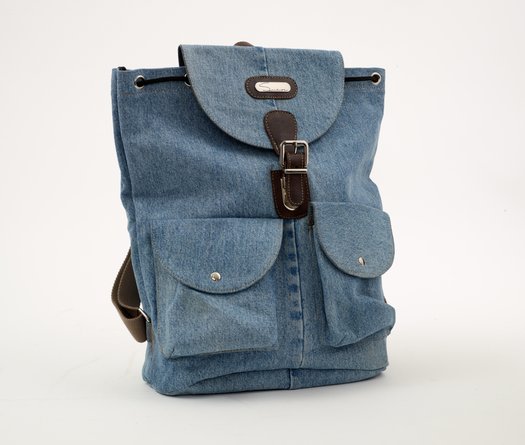
Brand stories often move quickly from a founder’s inspiration to a broad description of the business. An object record slows that movement down. Here, the details matter individually: light-blue denim, trousers sourced at Gikomba, a bright-pink cover made from a pillowcase, an approximate creation date and recorded dimensions. Each adds something specific to the account. They also change the scale of the discussion. Suave does not have to stand for Nairobi design as a whole, and the backpack does not have to demonstrate the environmental performance of an entire product category. Its interest begins with what we can establish about this object.
The sourcing reporting then adds another layer. Gikomba appears not merely as a place name attached to the fabric, but as a market where Suave developed relationships with vendors. The finished accessory and the sourcing network illuminate different parts of the label’s work. This is where the story becomes more substantial than a simple before-and-after transformation. Existing textiles provided the material; people in the market made suitable stock accessible; Suave produced new accessories from these sources.
The Omiren Argument
The most useful idea in this story is resourcefulness, understood as an activity involving more than the designer alone. The backpack records Suave’s transformation of existing textiles into another object. The broader sourcing account identifies vendors who recognised material the label could use. Their role belongs within the story of how that practice operated, even though the history of this particular backpack does not identify individual suppliers. For Omiren, that is the stronger way to approach material reuse: identify the object, trace what is known about its sources and recognise the relationships that make production possible. “Upcycled” names an approach, but the details explain it.
The light-blue backpack and pink cover offer those details at a useful scale. They preserve a connection between second-hand textiles, a Nairobi market and a finished design object, without needing to become symbols for an entire city.
Also Read:
- Nairobi Street Style: How Kenya’s Fashion Capital Builds Its Own Aesthetic Without Asking Permission shows how mitumba shopping and tailoring shape the city’s dress.
- Kenya Mitumba Trade, AGOA Exports, and the Domestic Textile Gap sets out the second-hand clothing trade behind Nairobi’s markets.
- Kenyan Fashion Brands You Need to Know: Designers Putting Nairobi on the Global Map profiles Nairobi designers and labels working in the city today.
- Hamaji Studio and the New Cartography of Fashion looks at a Nairobi label that works with upcycled fabrics.
Frequently Asked Questions
What is the Suave Kenya backpack in the Science History Institute’s collection?
It is a light-blue denim backpack, dated approximately 2023, made by Suave Kenya with denim from trousers sourced at Nairobi’s Gikomba market. Its accompanying bright-pink dust cover was made from a pillowcase. The catalogue records Kenya as the place of creation and lists denim, leather, metal and nylon among the materials.
How does Gikomba connect to Suave’s work?
Published reporting identifies the market as a source of inspiration and materials for founder Mohamed Awale. Bel Jacobs’s 2021 report also describes relationships with vendors who alerted Suave to excess unsold items. That account describes Suave’s broader practice and does not identify how the museum backpack’s source trousers were acquired.
Does Suave work only with denim?
No. Afrique Magazine’s 2022 reporting describes the label working with denim, leather and printed kitenge, producing accessories including travel bags, pouches, shoulder bags and document cases. The denim backpack is therefore one example within a wider practice of turning available textiles into different kinds of bags.
How big is the backpack, and is it documented?
Expanded, the backpack measures 38 centimetres wide, 46 centimetres high and 10.5 centimetres deep, according to the Science History Institute’s catalogue. The catalogue does not provide a workshop account of the cutting or assembly, so the object is best approached through its documented material history rather than an imagined production sequence.