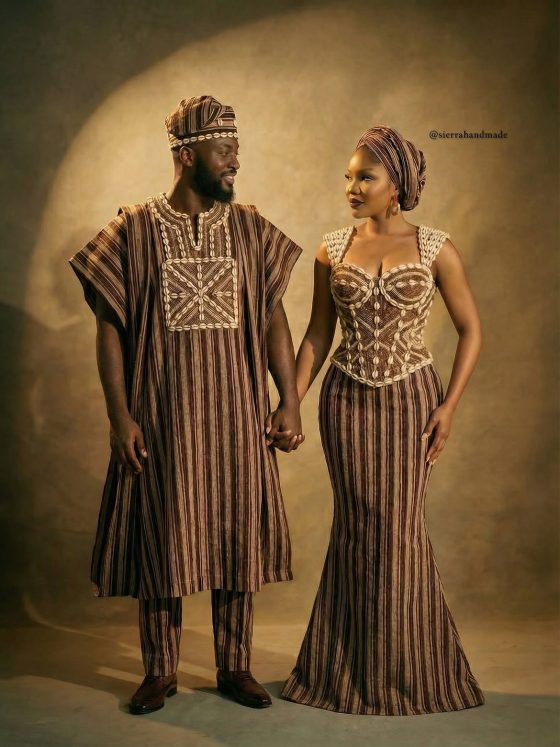
Every July and August, the streets of Moroni fill with people who have travelled thousands of miles to stand in front of their communities dressed in gold-trimmed robes. They are Comorians from France, from Reunion, from Marseille and Le Mans and Lyon, diaspora who have returned for the Grand Marriage. As France24 and AFP reporting from Moroni in August 2025 documents, the Grand Marriage is an essential rite of passage that can be held years after an initial religious wedding, most often during the summer months when France’s significant Comorian migrant community is on holiday. One groom, 55-year-old Issa Mze Ali Ahmed, made his entrance in a turban and robes lined with golden cloth, accompanied by men from his extended family. The clothes are not a costume. They are the ceremony.
The African fashion market is worth 31 billion dollars. Comorian traditional clothing sits inside that figure as one of the continent’s most precisely governed dress systems: a culture in which what you are permitted to wear is determined not by wealth or taste but by what you have formally completed. In Comoros, dress does not express identity. It certifies it.
In Comoros, traditional dress records social achievement. The Grand Marriage, the dragila, and the chiromani turn clothing into earned visibility, not personal expression.
Comorian Traditional Clothing and the Logic of Earned Dress
The Grand Marriage, known in Comorian as the Anda or Dola n’kou, and as ada on Ngazidja and harusi on the other islands, is not simply a wedding celebration. As Every Culture’s documentation of Comorian social structure confirms, the Grand Marriage identifies accomplished men and grants them access to specific garments and spaces. After completing the ceremony, a man may wear a ceremonial coat and a special scarf on Fridays. In some villages, he may enter the mosque through a special door. On the island of Ngazidja, only women who have completed the Grand Marriage may wear the bwibwi, a black garment. These are not decorative distinctions. They are the formal extension of social rank into dress.
This makes Comorian dress culture unusually explicit about what clothing is for. The wardrobe is part of the social system itself: a public record of what has been completed, who has arrived, and what is now permitted. A man who has not undertaken the Grand Marriage is barred from specific garments and specific positions. His clothing makes that visible to everyone present without a word being spoken.
The attire worn at the Grand Marriage deliberately echoes the robes of the pre-colonial sultans. Sultan Chouzour, author of the 1994 book The Power of Honour, described the ceremony plainly: the ceremony is akin to enthroning a new king. Here, everyone can be a sultan. The ambition encoded in that framing is not metaphorical. The clothes are the coronation.
The Dragila: What the Embroidered Tunic Certifies
The most significant garment unlocked by the Grand Marriage is the dragila, a long embroidered tunic that marks the wearer as someone who has completed the ritual. As documented coverage of Comorian fashion culture confirms, after the Grand Marriage, the man is permitted to wear the dragila, which testifies that he has gone through the ritual. That word, testifies, is the key. The dragila is not worn because it is beautiful, though it is. It is worn because it is evidence. It is the visible proof of completion in a society that reads garments as credentials.
The logic is the same as any formal credential system: the garment can only be worn by those who have earned the right to wear it, and its presence on a body in a public space communicates that right to every person in the room who understands the system. In Comoros, that is everyone. The dragila does not need to be explained. It is read.
Sultan Chouzour, author of the 1994 book The Power of Honour, described the Grand Marriage plainly: the ceremony is akin to enthroning a new king. Here, everyone can be a sultan. The clothes are the coronation.
What the Ceremony Wears: Two Weeks of Escalating Declaration
The Grand Marriage is not a single day. An ada on Ngazidja can span two weeks and cost up to €50,000, approximately 74,000 US dollars, with expenses shared between both families and a wider social circle. As the Agence Française de Développement confirms, nearly 400,000 Comorians live abroad, with around 300,000 in France, and their remittances account for 20% of the country’s GDP. The World Bank confirmed remittances rose 5.6% in 2025. Those remittances fund the ceremonies. The economic circuit between diaspora labour and ceremonial dress is direct and explicit.
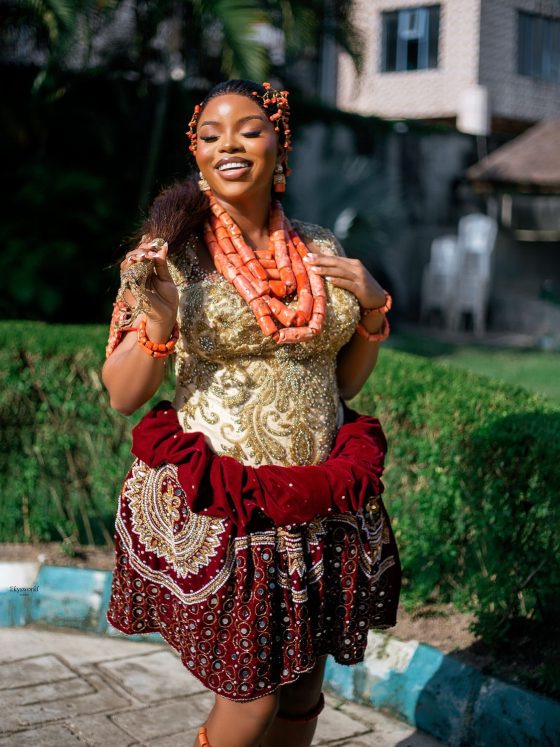
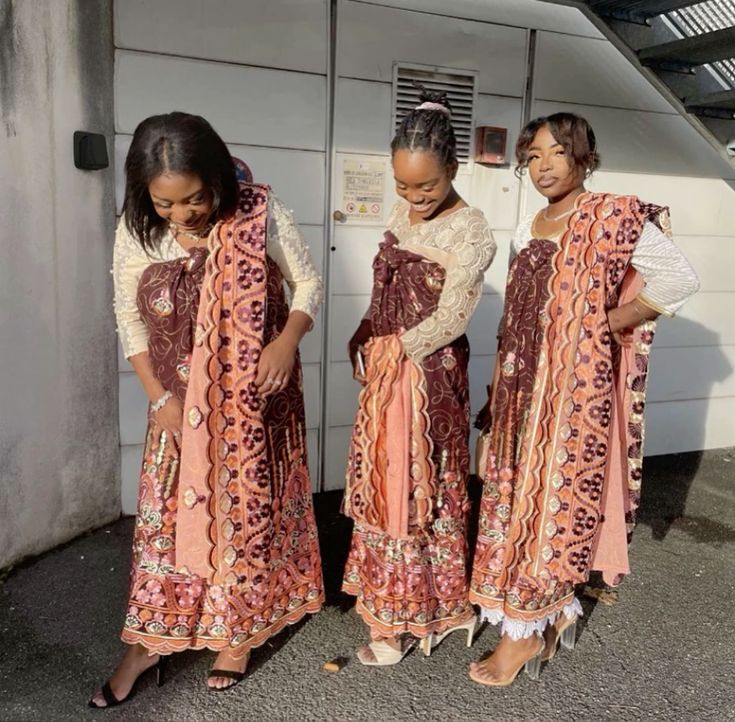
Each stage of the Grand Marriage carries its own dress requirements. The bride arrives in luxurious shiromani wraps and embroidered dresses, in headscarves of gold, red, and green, wearing gold jewellery passed down through generations or purchased specifically for the occasion. Some women begin beauty preparations as many as six months before the ceremony. The henna designs take weeks to plan and apply. The investment in appearance is not vanity. It is the visible record of a lifetime of preparation, displayed at the moment the community has gathered to witness it.
The groom wears different iterations of the kandu through each stage, a garment that shifts in formality as he moves through the ritual. He enters the Madjiliss, the ceremony of religious chanting and dance that formally introduces him, dressed in a turban and robes lined with golden cloth. The whole procession announces his arrival. The clothes make the statement before he speaks a word.
What makes the Grand Marriage particularly significant in the context of African dress culture is that it sits within a matrilineal, matrilocal social structure, rare in the Islamic world. The groom moves into the home and community of his bride. In Comoros, women inherit and own the family home. The dress culture reflects this architecture: women’s ceremonial attire is among the most elaborate and symbolically weighted on the islands, and the entire ceremony marks her elevation as much as his.
Chiromani and the Textile That Maps the Islands
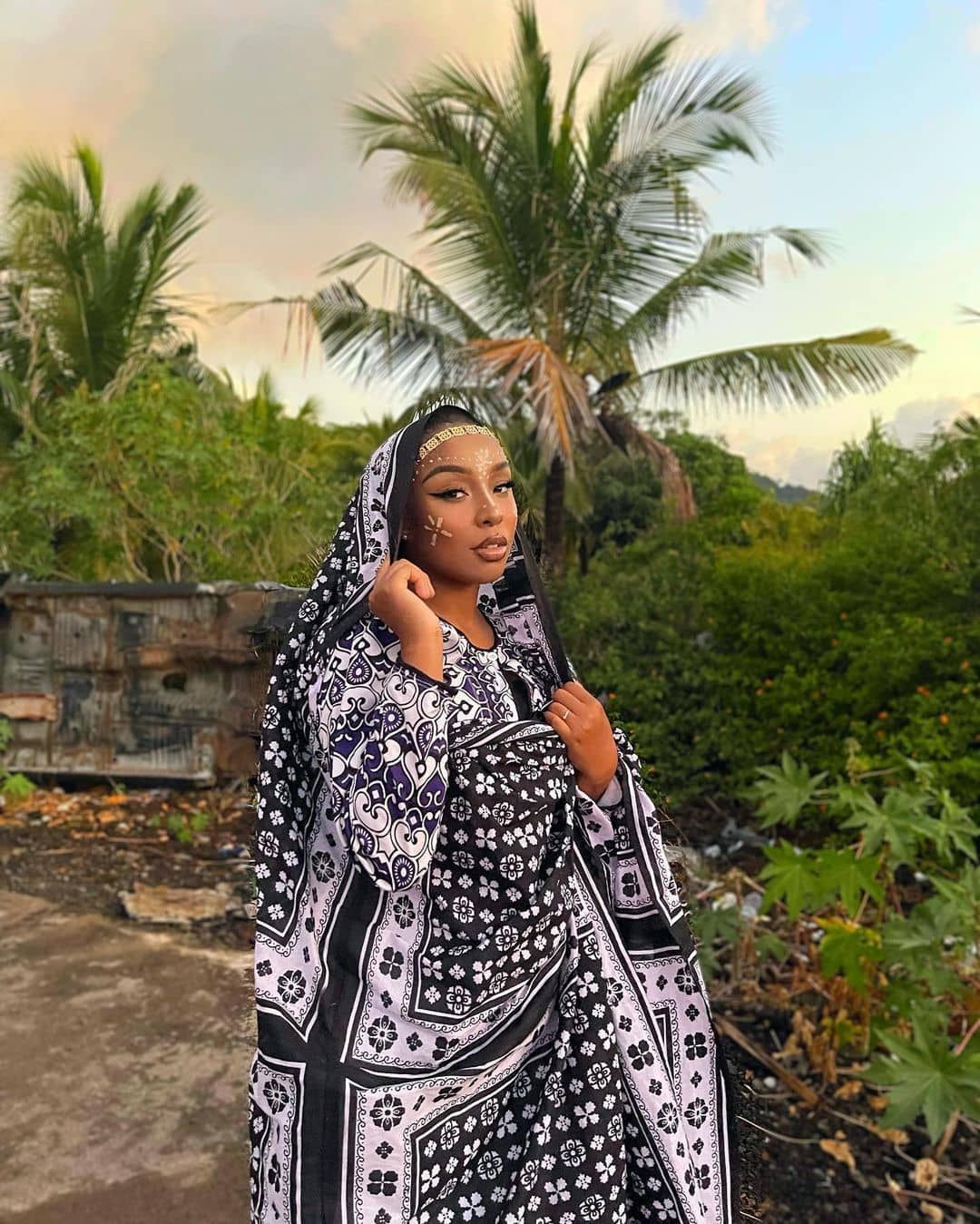
Outside of ceremony, the fabric that anchors Comorian dress life is the chiromani. As D&D Clothing’s documentation of Comorian wedding dress culture confirms, chiromani is a traditional two-tone cotton fabric made up of six tiles repeating the same pattern. Traditionally, its colours are bright red, black, and burgundy, though contemporary production has expanded the palette while preserving the structural identity. It can be worn as a veil, wrapped as a skirt, or styled as a full body covering. On Anjouan, a new chiromani pattern is released almost weekly: the fabric is not frozen in tradition but actively contemporary, a living design practice.
What makes the chiromani more than a fabric is what its tiles encode. The repeating patterns carry the symbols of clove, jasmine, and ylang-ylang, the aromatic plants that gave the Comoros their historical nickname, the Perfumed Islands. Comoros is among the world’s leading producers of ylang-ylang, and the archipelago’s economy has been shaped by its scent for centuries. The chiromani is, in this sense, a map of the islands. It encodes their most defining resource into the daily dress of their people.
Women also wear the leso, a rectangular fabric used as a headscarf or shawl, and the salouva on Anjouan and Moheli, a large cloth tied at the chest. For formal occasions, the muwali steps in: a wrap-and-headpiece combination in bold colours and floral patterns, accessorised with gold jewellery and henna. The dress traditions of East Africa and the Indian Ocean region have always encoded social position, community membership, and ceremonial status into fabric and form. Comorian women’s dress operates within that same logic, with the muwali functioning as the closest equivalent to formal attire in the Comorian system: structured, deliberate, and socially legible to everyone present.
For men, daily dress includes the kofia, a decorated cap, and the kanzu, a long white robe associated with religious observance and spiritual purity. The kanzu is devotional rather than ceremonial in the Grand Marriage sense. Its whiteness is intentional: a daily declaration of faith, distinct from the gilded formality of the Anda.
Beauty as Practice: M’sindanu and the Accumulation of Appearance
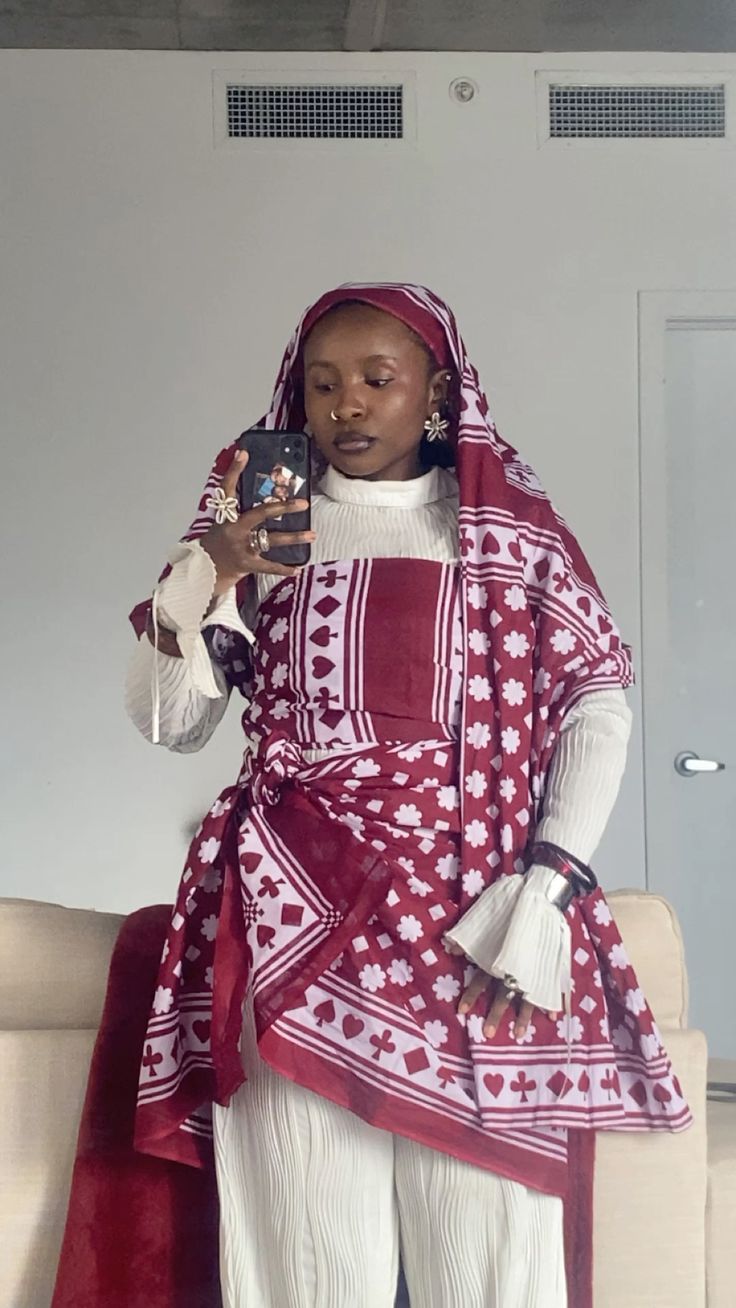
One element of Comorian dress culture that fashion editorial consistently overlooks is m’sindanu, a fine white paste made from ground sandalwood that women apply to their faces. It protects the skin from the sun while serving an aesthetic purpose. In the Comorian context, these two functions are not in competition. Practical protection and aesthetic intention operate as a single act, and both are part of the preparation that dress culture demands.
M’sindanu is part of a broader beauty culture that treats appearance as an ongoing practice rather than an event-driven ritual. The months of henna, skin, and hair preparation before a Grand Marriage reflect a tradition in which beauty is cumulative: built, maintained, refined over time. Like the Grand Marriage itself, it is something you earn through sustained attention rather than something you arrange at short notice.
The Diaspora and the Dress
The Grand Marriage is now a diaspora event as much as a local one. As the World Bank’s 2025 country overview of Comoros confirms, remittances rose 5.6% in 2025 and remain among the primary drivers of household consumption. Those remittances fund the ceremonies. Diaspora families who have spent years in France return dressed in chiromani and shiromani wraps, embroidered kandu, and golden-trimmed robes. Children born in Lyon participate in ceremonies their grandparents performed in Moroni.
Maria Amadi, mother-in-law of a 2025 Grand Marriage groom in Moroni, described what this continuity means: a continuation of our customs is a great joy, especially for children who were born in France, raised in France, educated in France, or working in France, to accept doing what we, as parents and grandparents, did. The dress is the continuation made visible. The garment is the proof that the tradition has crossed the distance.
This dynamic is not unique to Comoros but is among the most fully developed examples of diaspora dress maintenance in the Afrocentric world. East African dress systems have long used garments as archives: objects that carry social memory, community belonging, and cultural continuity across distance and time. The Comorian chiromani that travels from Moroni to Marseille is carrying the same tradition in a different ocean.
What Comorian Dress Tells the African Fashion Record
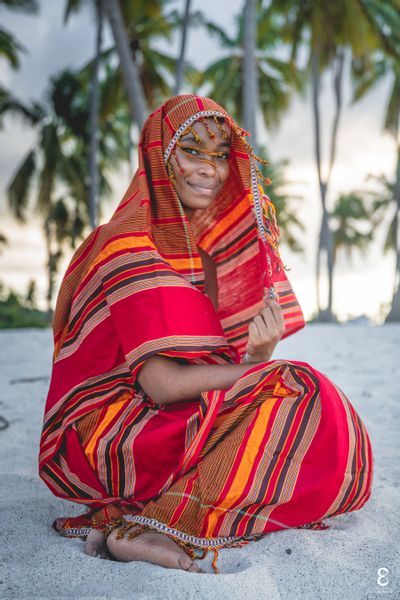
The fashion world has a persistent blind spot for dress cultures that operate outside the vocabulary of trend, season, and personal expression. Comorian clothing does not fit that vocabulary, and that is precisely why it belongs in the African fashion record. West and East African dress traditions consistently function as social contracts: the garment announces not just who you are but what relationship you have entered, what community you belong to, and what you have formally agreed to. Comorian dress takes that logic to its most explicit conclusion.
The dragila is not worn because it looks good. It is worn because it has been earned. The chiromani does not merely cover the body. It encodes the islands’ botanical identity into daily dress. The Grand Marriage does not simply celebrate a union. It turns the act of dressing into a rite of passage that takes a lifetime to prepare for and a community to witness. This is not clothing as self-expression. It is clothing as social architecture, and it is one of the most coherent examples of that logic anywhere on the continent.
The Omiren Argument
Comorian traditional clothing should be read as earned visibility, not personal styling. The Grand Marriage transforms dress into a credential: the dragila certifies completion of the most significant rite of passage in Comorian social life, the bwibwi marks women who have arrived at equivalent standing, and the chiromani keeps daily identity connected to ceremony, place, and the botanical history of the Perfumed Islands. In a dress system this precisely governed, there is no such thing as a casual choice of fabric. The African fashion market is worth 31 billion dollars. Comorian dress culture, practised across three islands and across the diaspora communities of France and Reunion that fund it through remittances worth 20% of the country’s GDP, is one of the most structured contributions to that figure. Omiren Styles documents it here because the fashion record has not.
Also Read
- When Dressing Becomes Declaration: Clothing as Cultural Identity
- Togolese Bridal Fashion: Kente, Pagne, and the Multi-Stage Social Contract of a Togolese Wedding
- Shewa Oromo Cultural Clothing: The Living Governance Document
- East African Textile Untold: Kitenge, Kikoi, and the Coastal Cloth
Frequently Asked Questions
What is Comorian traditional clothing?
Comorian traditional clothing is a dress system governed by social rank and ceremonial completion rather than personal taste. Key garments include the dragila (an embroidered tunic earned through the Grand Marriage), the chiromani (a two-tone cotton fabric worn daily and ceremonially by women), the muwali (a formal wrap with gold accessories), the kanzu (men’s devotional white robe), and the kofia (a decorated cap). Each garment communicates specific social standing and ceremonial status.
What is the Grand Marriage in Comoros?
The Grand Marriage, known as the Anda, ada (Ngazidja), or harusi (other islands), is a rite of passage that marks a man’s full social arrival in his community. It can cost up to 50,000 euros on Ngazidja, unfolds over up to two weeks, and determines what garments and social positions the man is thereafter permitted to occupy. It is held most often in July and August, coinciding with the summer holidays of France’s large Comorian diaspora community.
What is the dragila and why does it matter?
The dragila is a long embroidered tunic worn by men after completing the Grand Marriage. It is earned rather than purchased: no man may wear it without having completed the ceremony. Its presence on a body communicates social completion to everyone in the community who reads the dress system. It is documentary evidence of arrival, not decoration.
What is chiromani fabric?
Chiromani is a traditional Comorian two-tone cotton textile made up of six tiles repeating the same pattern, traditionally in bright red, black, and burgundy, now produced in a full range of colours. Its tiles encode the symbols of ylang-ylang, clove, and jasmine, the aromatic plants central to the Comoros economy and identity. Women wear it daily and ceremonially, as a veil, wrap, skirt, or full body covering.
How does the Comoros diaspora maintain its dress culture?
Diaspora communities, primarily in France and Reunion, return to Comoros in July and August for Grand Marriage ceremonies funded in part through remittances, which account for approximately 20% of Comoros’ GDP according to the Agence Française de Développement. Children born abroad participate in the same ceremonies as their parents and grandparents, wearing the same garments. The dress travels with the community and carries the tradition across distance.
What is m’sindanu?
M’sindanu is a fine white sandalwood paste applied by Comorian women to the face. It protects the skin from the sun while functioning as an aesthetic practice. In Comorian beauty culture, these purposes are not separate. M’sindanu is part of the cumulative preparation, alongside henna and hair work, that Comorian women undertake in the months before the Grand Marriage.
Explore More
Read the full Culture > Heritage & Identity series for Omiren Styles’ documentation of the dress traditions, textile systems, and ceremonial practices through which African communities communicate status, belonging, and what they have built.