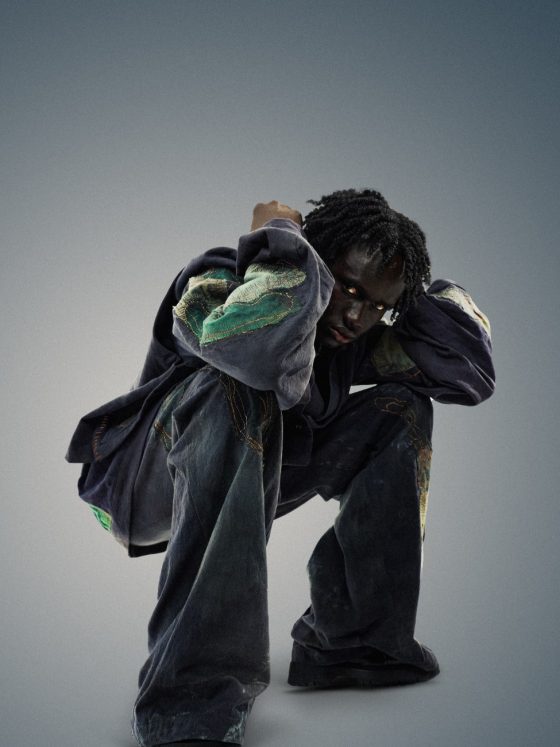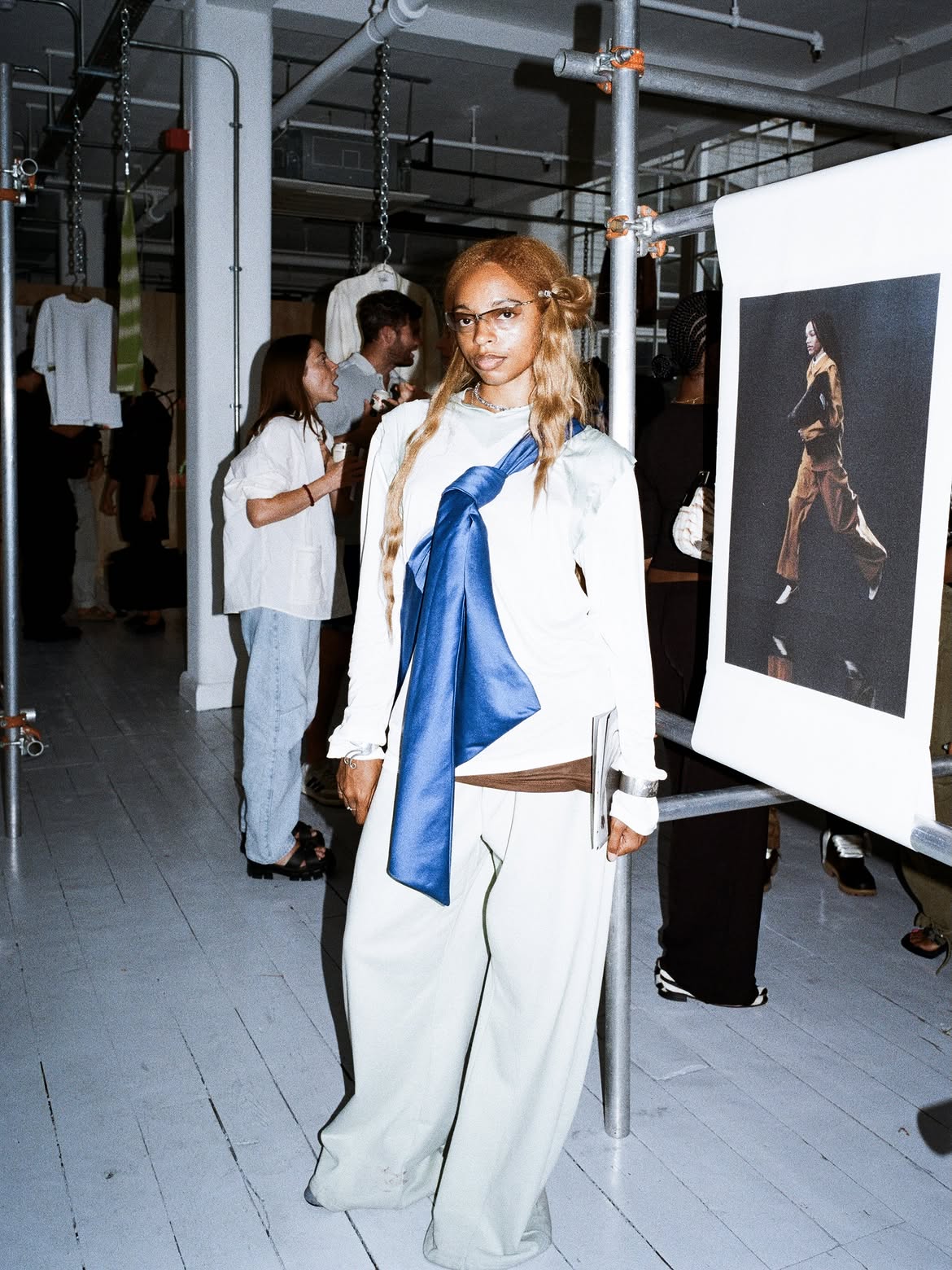
A jacket doesn’t have to stay entirely separate from a shirt. That may sound like a small design decision, but it has real implications for how a wardrobe is meant to be understood. In Bianca Saunders‘s Spring/Summer 2027 collaboration with The Midnight Club, titled Meet You Before Sunrise, the relationship between familiar garment categories becomes the central design proposition. The July 2026 announcement described 30 pieces developed across concept and design with The Midnight Club, a multidisciplinary creative company, with two pieces launching immediately and a full collection planned for January 2027. This feature examines the documented garment relationships and campaign proposition, not a complete runway sequence or an independently inspected product range.
“Jackets merge into shirts, layers cast shadows across the body, and tailoring follows natural lines while subtly extending them through illusion. Bianca Saunders, FashionUnited, July 202
That statement, reported in FashionUnited’s July 13 announcement, gives the clearest design description of the collection. It identifies three distinct ideas: categories that merge, layering that works through shadow rather than simply adding bulk, and tailoring that extends the body’s lines without fixing them rigidly. Those are precise starting points for reading the collection, and they are more useful than a general description of nighttime dressing or fluid silhouettes.
Explore the wardrobe proposition behind Bianca Saunders’s Spring/Summer 2027 collaboration with The Midnight Club through tailoring, layering and contrasting garment categories.
Which Spring/Summer 2027 Project?

It is worth being clear about which collection this article concerns, because Saunders released separate Spring 2027 work that should not be conflated with it. FashionUnited identifies the collaboration as Meet You Before Sunrise, developed with The Midnight Club around the space between night and day and between structure and fluidity. That framing, along with the July announcement date and the specific collaboration credit, sets the boundaries of this project. A separately named womenswear collection covered by Vogue in September belongs to a different presentation and is not part of the argument here.
The official collection page on biancasaunders.com confirms the Spring/Summer 2027 season and identifies exclusive items with The Midnight Club. I could not retrieve its full contents during research. The article therefore does not invent official look numbers, a complete category count or product specifications that the accessible sources do not establish. The evidence used here comes from FashionUnited, Hypebeast’s July 16 campaign report and FashionNetwork’s account of the collaboration and its promotional work.
Tailoring and Shirts: A Boundary Under Pressure
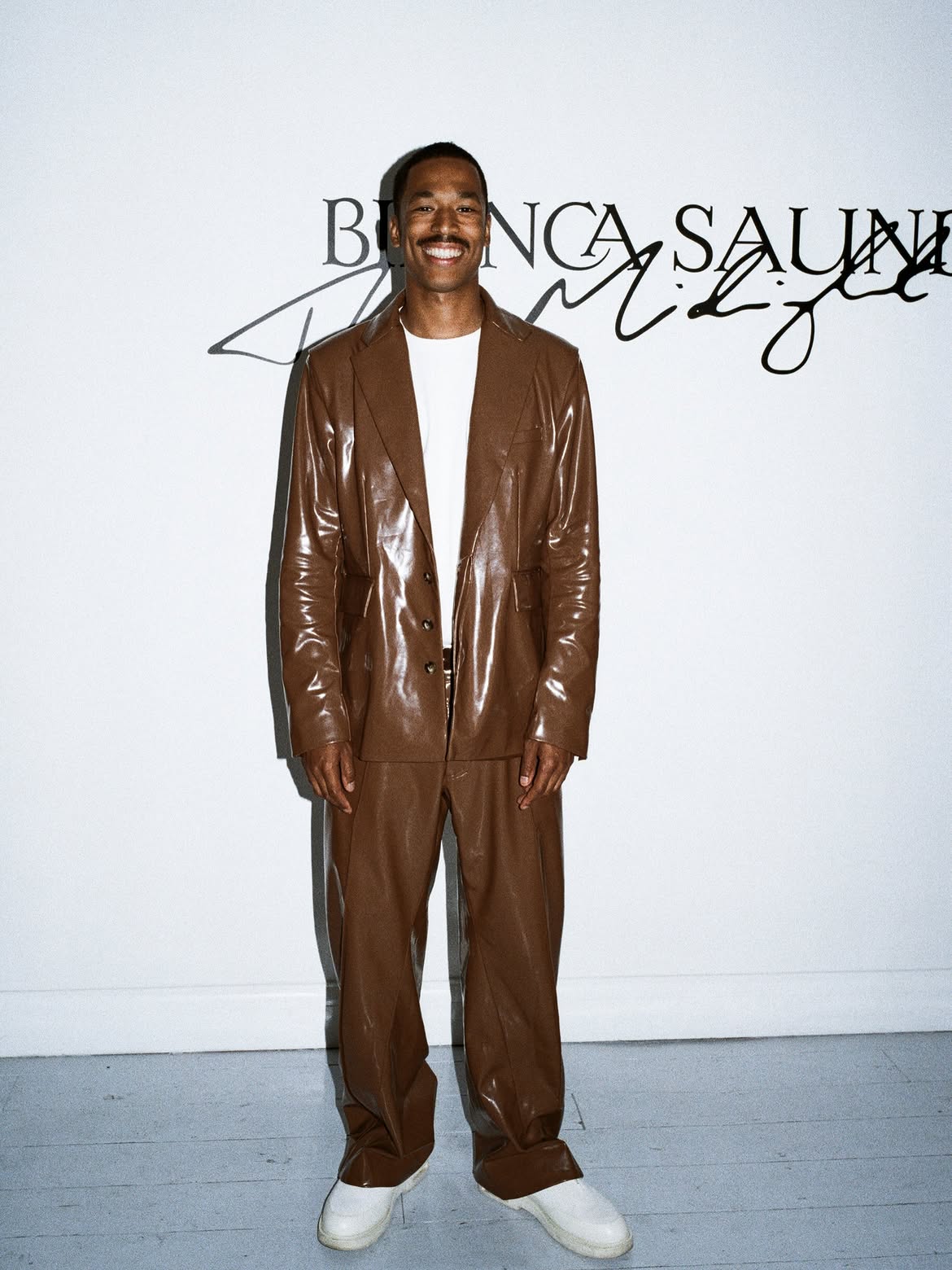
Saunders describes a sculptural approach to classic tailoring in the July announcement. Her more specific explanation says silhouettes “overlap, distort and bleed into one another to create garments that feel in motion. Those are statements of intention rather than garment specifications, and that distinction matters. They identify relationships within and between garments rather than simply announcing a mood or an aesthetic direction.
The jacket-and-shirt connection is the most concrete example of that approach. The word “merge” suggests a design relationship in which familiar categories become less distinct rather than simply being layered one on top of the other. The statement supports that reading, but it doesn’t tell us about a particular hybrid’s fastening, pattern pieces, or internal construction. Those details are not in the sources, and the article does not supply them.
A more useful editorial question is how much recognition each category retains after the merging. Tailoring can remain a legible reference even when its boundaries are deliberately altered. That is more productive than declaring the collection either formal or casual: Saunders’s own account places its interest in the tension between recognisable structure and less settled outlines, and the wardrobe proposition depends on that tension.
Layering as More Than Adding Another Piece
Saunders’s reference to shadows gives layering a function that goes beyond simply adding more garments to an outfit. Her statement describes layers casting shadows across the body, and the campaign develops that idea through its lighting. A layer can therefore contribute to the pictured outline and surface relationships without necessarily being a separate, removable piece in the conventional sense.
This distinction becomes important when reading campaign imagery rather than physically inspecting garments. A shadow visible in a photograph is not automatically a seam, a panel or a permanent colour effect in the cloth. FashionNetwork notes that The Midnight Club created the promotional material through its production company, ZERO. The imagery supports the collection’s presentation without replacing evidence of construction. The sources describe a coordinated interest in overlap and transition; they don’t show how the same layers would read in natural daylight or outside the specific conditions of the campaign shoot.
Oversized Shirts, Draping and Wide-Leg Trousers
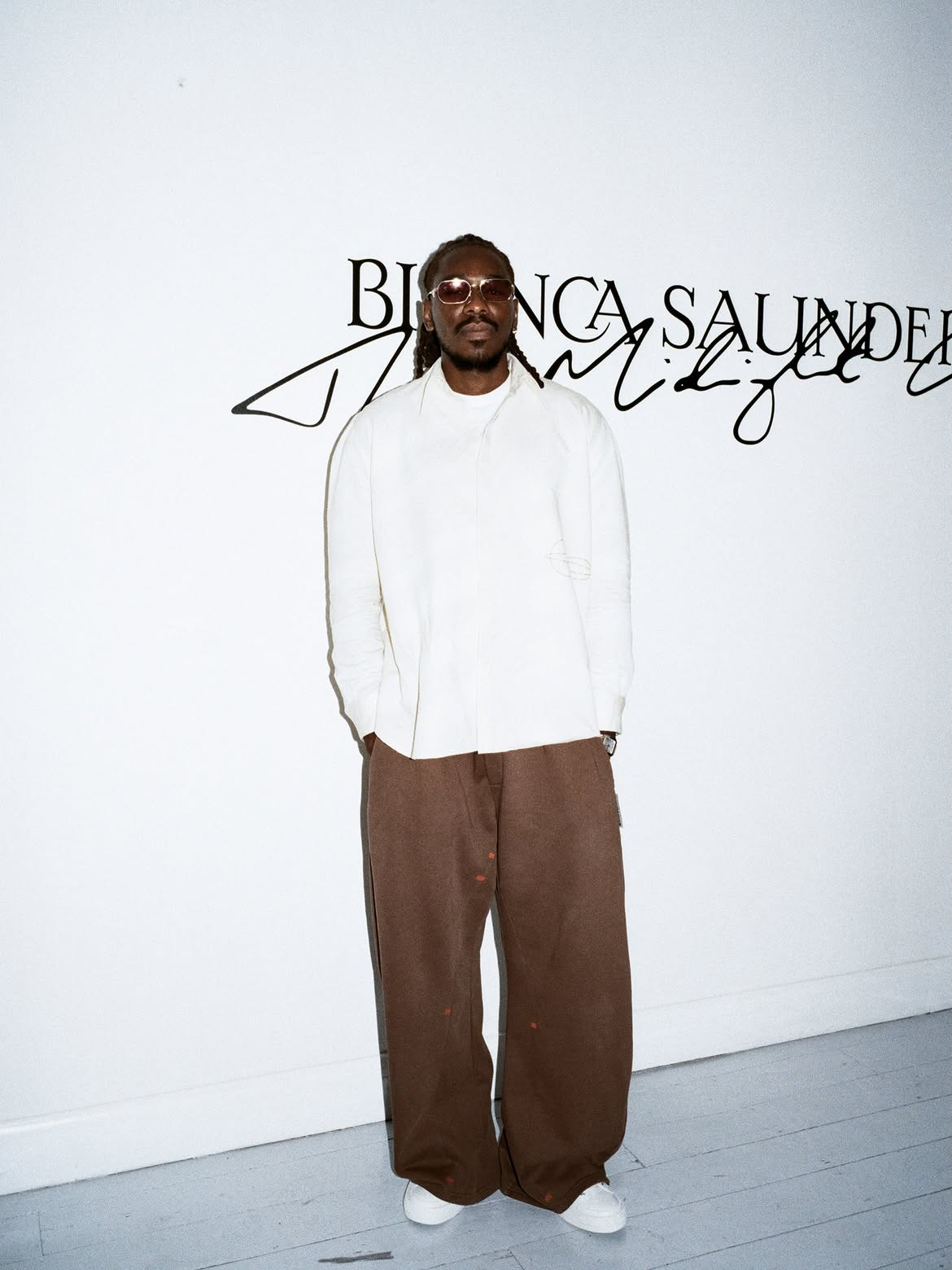
Hypebeast’s campaign report identifies oversized shirts, asymmetric draping and wide-leg trousers among the looks presented. These are the publication’s garment descriptions, not complete manufacturer specifications, and should be read as such. Together, they provide a basis for thinking about proportion across the collection, which is more useful than simply noting the nighttime concept.
The relationship among those three categories is worth careful consideration. Oversized shirts and wide-leg trousers introduce volume in different areas of the body, while asymmetric draping complicates a simple, symmetrical outline. That combination doesn’t produce one uniform silhouette; it offers several ways to distribute volume that share a common vocabulary. The source does not establish whether every shirt was paired with every trouser in the campaign, and the article does not claim otherwise.
The campaign descriptions do support expanded proportions and asymmetry as part of the collection’s visual identity. They do not establish interchangeability between pieces, comfort across different body types or practical suitability for any specific occasion. Readers might reasonably want those answered, and they require more detailed product information than the current sources provide.
Knitwear, Tailored Pieces and Graphic Streetwear
Hypebeast also describes knitwear and tailored pieces juxtaposed with graphic-heavy streetwear staples. This is the third distinct category relationship the sources document, and it most directly challenges the idea of a collection as a series of internally coherent compartments. Distinct categories appear within one presentation rather than being separated into different collection narratives or drops.
That juxtaposition supports a mixed wardrobe vocabulary without requiring the reader to assume that tailoring always signals formality or graphic clothing always signals informality. The sources do not provide a complete list of materials or explain which knitted garments were shown alongside which tailored pieces; a category name alone cannot establish fibre content, weight, or seasonality. The documented juxtaposition is genuinely useful evidence for the wardrobe argument, but it should not become an unsupported claim that every item in the collection offers effortless everyday versatility.
The pairing proposes refusing a strict separation between those registers. Tailoring, knitwear and graphic clothing can contribute to the same collection identity and be shown together without creating a contradiction. Whether the individual garments form a fully interchangeable system remains an open question; the campaign coverage establishes their coexistence and suggests a styling relationship, not an exhaustive set of confirmed combinations.
What the Collaboration Contributes
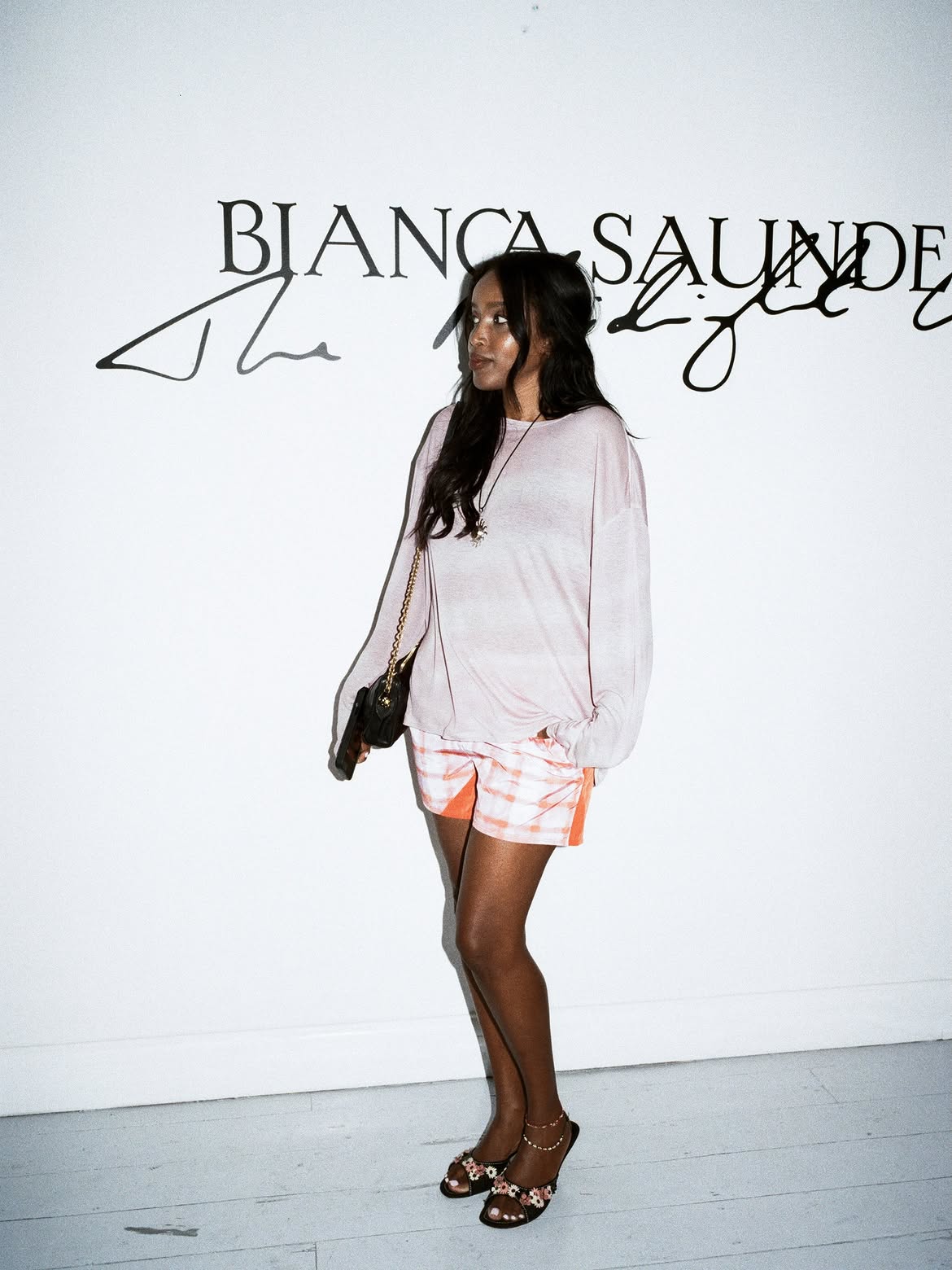
FashionUnited reports that this was Saunders’s first collaboration with a creative company, distinguishing it from other partnerships she may have undertaken. The Midnight Club’s involvement spanned concept, design, and promotional material, making its role far broader than that of a photographer hired to document a finished collection. That breadth matters when considering how the campaign imagery and the garment design relate: they developed together rather than in sequence.
Saunders explains her approach to the partnership in terms worth noting: “After hearing the story of The Midnight Club, duality felt like the natural lens through which to build this collection.” She also describes the collaboration as showing that creativity and commerce need not oppose one another, and as emphasising the importance of taking time to understand a creative partner before beginning work. Those are her stated values and approach, documented in the FashionUnited report. They are not an independent commercial assessment of the partnership’s outcomes, and the article does not present them as one.
The duality concept, between night and day and between structure and fluidity, also serves as the conceptual thread tying the garment relationships together. Jackets merging into shirts, tailoring extending into illusion, layers creating shadows: each of those descriptions is a version of the same underlying interest in two things occupying the same space without fully resolving into one. The concept is doing real design work here, not simply providing a marketing narrative.
What Kind of Wardrobe Emerges?
The strongest proposition in the evidence is a wardrobe organised through relationships between familiar categories rather than rigid separation. Jackets and shirts merge; broader proportions and asymmetric draping sit within the campaign vocabulary; tailoring and knitwear appear alongside graphic streetwear staples. The boundaries between those categories become part of the design conversation rather than fixed constraints.
That does not establish a practical day-to-night capsule in the retail sense. The collection’s nighttime language describes a concept and a presentation context; it does not confirm tested suitability for multiple occasions or guarantee that garments photographed in one lighting environment will perform identically in another. The announced 30-piece total doesn’t reveal how many jackets, shirts, or trousers the collection contains, and answering those questions requires a complete, independently verified product catalogue.
This article can therefore offer a specific but provisional answer. Meet You Before Sunrise suggests overlap among familiar wardrobe components, supported by the designer’s testimony and the published campaign descriptions from FashionUnited and Hypebeast. A fuller garment-by-garment assessment would require identifiable looks and detailed product information. The current evidence supports a relationship-led reading of the collection’s wardrobe logic, not a verdict on the entire range’s wearability or commercial reach.
Omiren Argument
Bianca Saunders is a name that features in Omiren’s interest in Black British designers building a distinct identity in London fashion. Meet You Before Sunrise adds to that picture by showing how a collaboration structured around a creative company, rather than a manufacturing partner, can shape a collection’s design language from concept onwards. The Midnight Club’s involvement in both the concept and the promotional material means the collection’s visual identity was not an afterthought applied to finished garments.
For Omiren’s readers asking how fashion collections communicate their intentions, this collection is also a useful case study in the relationship between a designer’s stated ideas and the garment categories that emerge from them. Saunders describes silhouettes that overlap and blur; the campaign documents oversized shirts, asymmetric draping and the coexistence of tailoring with graphic streetwear. Those two accounts, the designer’s stated intention and the published garment descriptions, are in productive dialogue rather than simply repeating the same information in different registers.
The broader point of Omiren’s coverage of fashion collections and design practice is that a wardrobe proposition is a specific claim that deserves focused examination. “Fluid” and “boundary-blurring” are common enough descriptions in fashion writing. What makes Meet You Before Sunrise worth examining is that Saunders’s own account names the specific relationships at stake, and the published campaign descriptions give those relationships garment-level evidence to work with.
Also Read:
- Five Black British Designers Who Are Building the Future of London Fashion
- Caribbean Diaspora Designers on the Runway
- What a Designer Credit Actually Tells You
FAQs
Is the Whole Collection Already Available?
The July 2026 announcement described two initial releases ahead of a planned full collection launch in January 2027. That was the reported plan at the time of the announcement, not independently confirmed current stock or fulfilment information. Readers should check directly with biancasaunders.com before ordering. Historical launch reporting does not establish that an individual size or garment is currently available.
Does This Feature Cover a Complete Lookbook?
No. It uses attributable designer statements from FashionUnited and published garment category descriptions from Hypebeast’s campaign report. We could not fully inspect the official collection page during research. The feature does not assign unofficial look numbers or claim that all documented categories are interchangeable. A complete outfit-by-outfit comparison would require additional garment-level evidence from the full collection.
Who Is The Midnight Club?
The FashionUnited report describes The Midnight Club as a multidisciplinary creative company. It contributed to Meet You Before Sunrise across concept, design, and promotional materials, with its production company, ZERO, producing the campaign. FashionUnited notes that this was Saunders’s first collaboration specifically with a creative company of this kind. For more on The Midnight Club’s work, readers should consult its published materials directly.