Leslie Williams’s explanation of a fabric print begins before the printing itself. He has inks to prepare, a stand to organise and a colour to choose. In Denielle Miller’s July 2025 report from Bahama Hand Prints, he identifies the green he intends to use and the table where the work will take place. The finished pattern is the destination; his account focuses on the decisions required to get there. “So the next step is to prepare my inks, set up my ink stand, and choose the colours,” Williams tells Miller. “In this case, I’m going with the same green that’s on that print. And we’re printing on this table only.” It is a practical explanation, concerned with a particular task rather than a general celebration of craft.
That specificity is the most useful starting point for understanding Bahama Hand Prints. The phrase “hand-printed fabric” identifies a method, but it can compress several contributions into one attractive description. Following the documented preparation restores some of those distinctions: creating a design, preparing it for printing, organising colour, and carrying out the work are connected, but not interchangeable.
A Bahama Hand Prints workshop demonstration reveals the preparation, colour decisions and people behind the movement from design to printed fabric.
The Design Has to become printable.
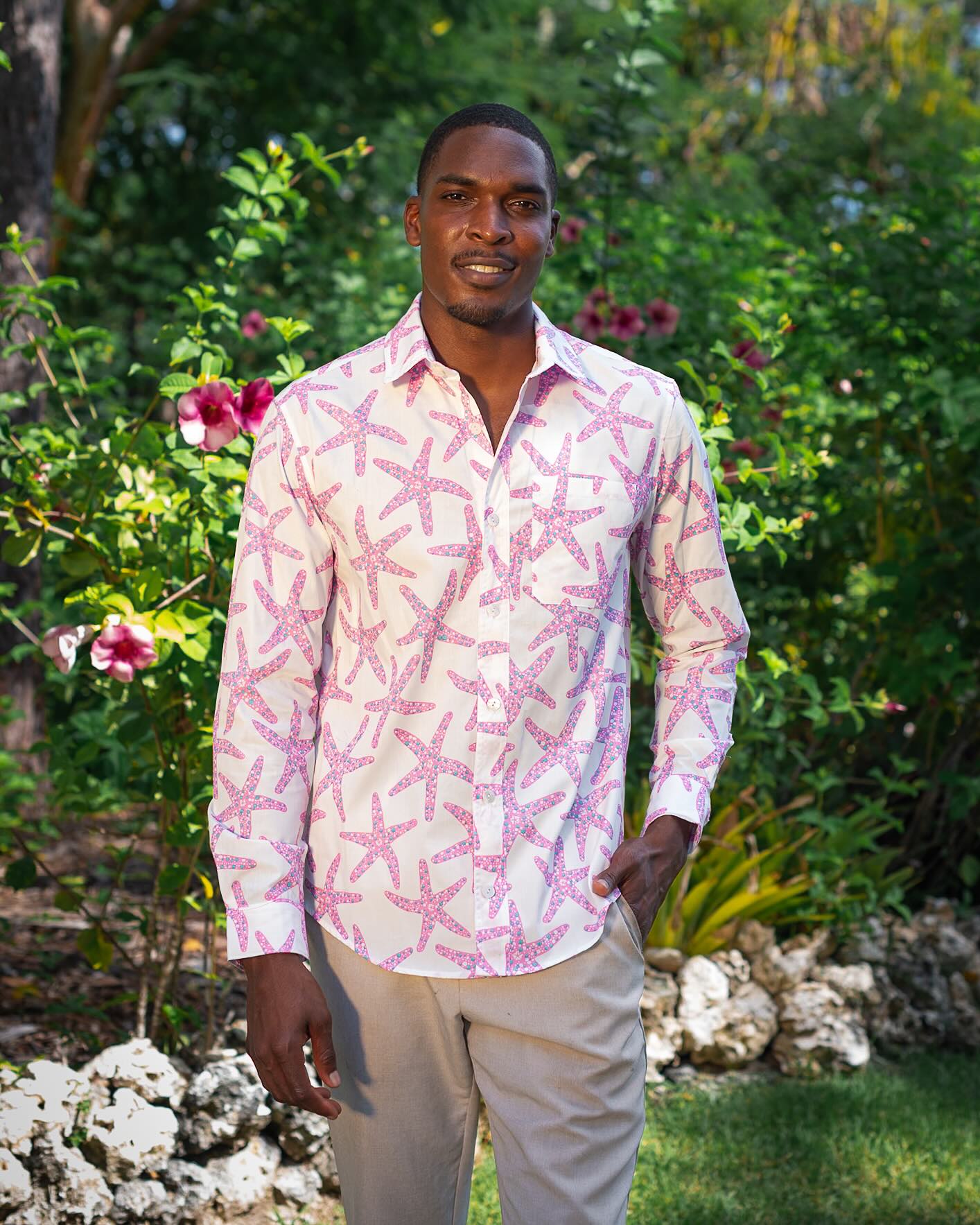
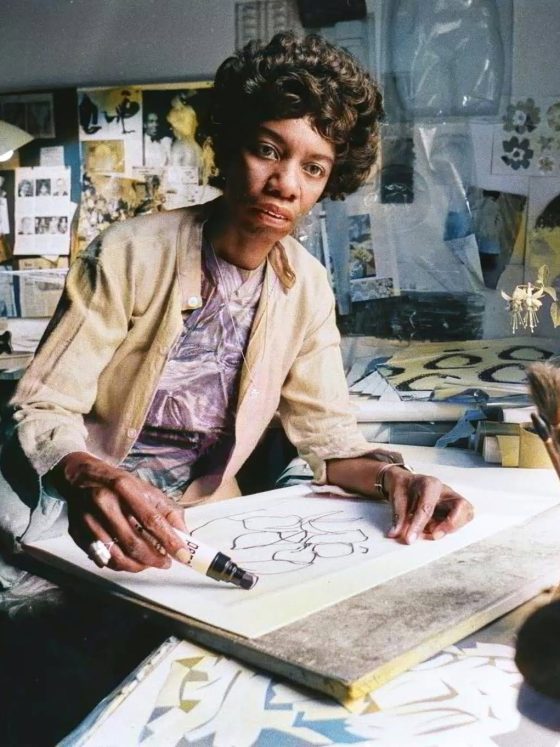
Bahama Hand Prints was founded in 1966 by artists Helen Astarita and Berta Sands, according to the Bahamas Ministry of Tourism’s Tourism Today feature. Their artistic role is part of the company’s history. It should not, however, make every later stage of production disappear behind the designs’ origin. Megan Shepherd’s April 2023 Our News report identifies one important transition. An artist creates a design; Williams then customises the printing screens. The account distinguishes the original image from the preparation required to reproduce it on fabric. It also distinguishes the people responsible for those tasks, even though it does not name the artist behind the particular design shown in Miller’s later demonstration.
This is where the textile becomes more than a drawing on another surface. An image must enter a production arrangement through which it can be printed. The published reporting does not explain every technical operation involved in preparing that arrangement, but it establishes that the transition requires work. The screen is not simply an invisible intermediary between the artist and the cloth.
Preparation Happens Before the Table
Miller’s July 2025 account follows Williams into the art room, where she describes a large hand-drawn stencil. He cleans it, places it outside to dry and subsequently installs it in what the report calls a screen-printing carriage. These are the documented preparations preceding the printing demonstration. The sequence gives preparation its own place in the story. A finished length of cloth does not show the equipment being cleaned, dried or positioned. Yet the report makes those actions part of the job rather than incidental activity around it. Before the printer can concentrate on transferring colour, the means of printing must be ready.
The source’s terminology needs to remain bounded: its use of “stencil” and “screen-printing carriage” does not supply a complete account of screen manufacture. It would be inaccurate to turn this cleaning sequence into a claim about how every new design is prepared. What the report shows is Williams readying an existing printing component for the demonstration, not an exhaustive journey from first sketch to newly made screen.
Colour Is Chosen for a Particular Job
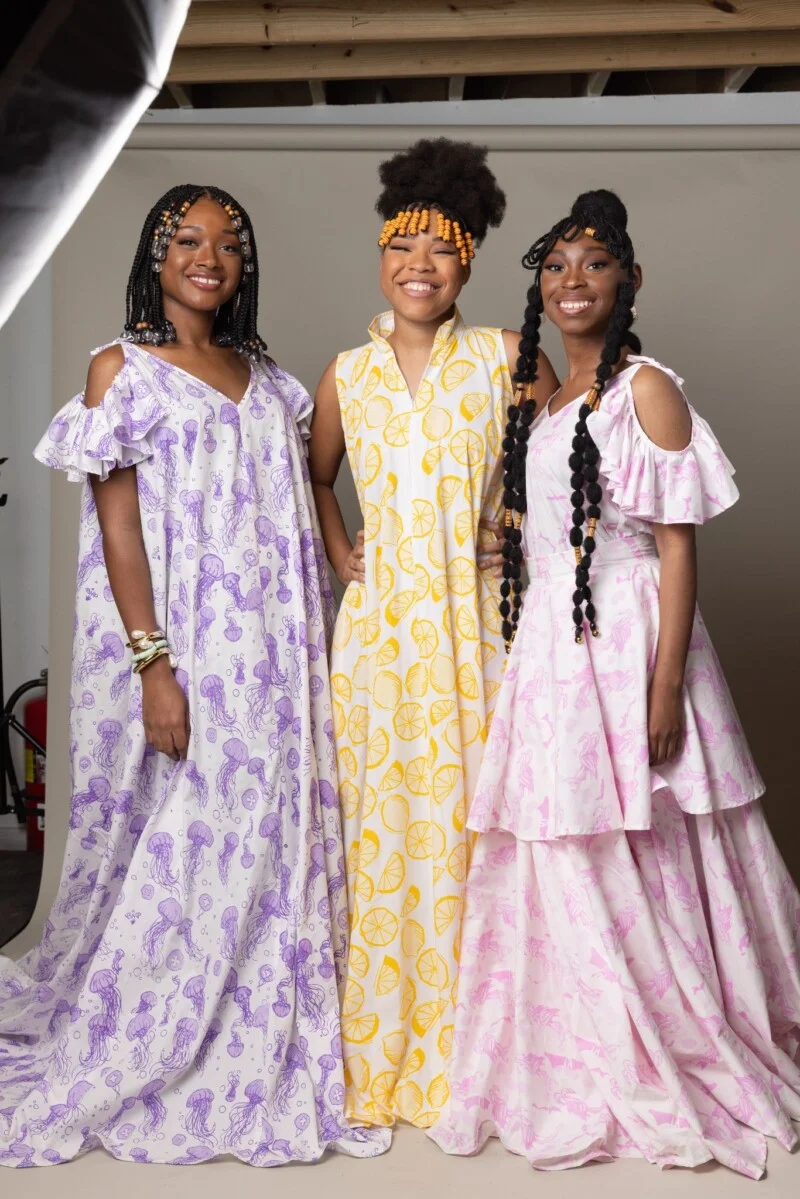
Williams’s reference to “the same green” is modest but revealing. He selects a colour in relation to an existing print, not discussing green solely as an expression of landscape, mood, or national identity. The decision belongs to a working sequence. It connects something already visible with the ink he is preparing to use. That does not establish a formal colour-matching system or a particular mixing formula. The report supplies neither. What it does establish is the printer’s involvement in choosing and organising colour. The cloth’s eventual appearance is therefore not explained by the pattern alone. Colour enters through another attributable decision.
The ink stand and designated table give that decision a physical setting. Williams is organising materials for use at a particular station. His words resist the idea that printing is one effortless gesture after the creative thinking has finished. Preparation, selection and execution appear together in his explanation of the task.
The Printer Is Not an Anonymous Pair of Hands
Miller also attempts the printing technique with Williams’s assistance. Her participation is important to the source’s value: this is reporting from a demonstration, not a visitor directory repeating that printing takes place. Williams guides another person through an activity he has already helped prepare. A short demonstration cannot establish production speed, the frequency of errors or the time needed to become proficient. It can nevertheless identify the practitioner’s contribution. Williams explains the setup, makes the recorded colour decision and assists with the printing. His role becomes legible through actions rather than through an unsupported description of exceptional skill.
Other reporting reinforces the breadth of that role. A separate Our News feature published on 9 July 2025 identifies Williams as supervisor of the printing and art department. Read with Shepherd’s earlier description of screen customisation, the accounts place him across connected artistic and production responsibilities. These are dated descriptions, not confirmation of his present title, but they prevent his contribution from being reduced to the final movement of printing.
Authorship Continues Beyond the Drawing
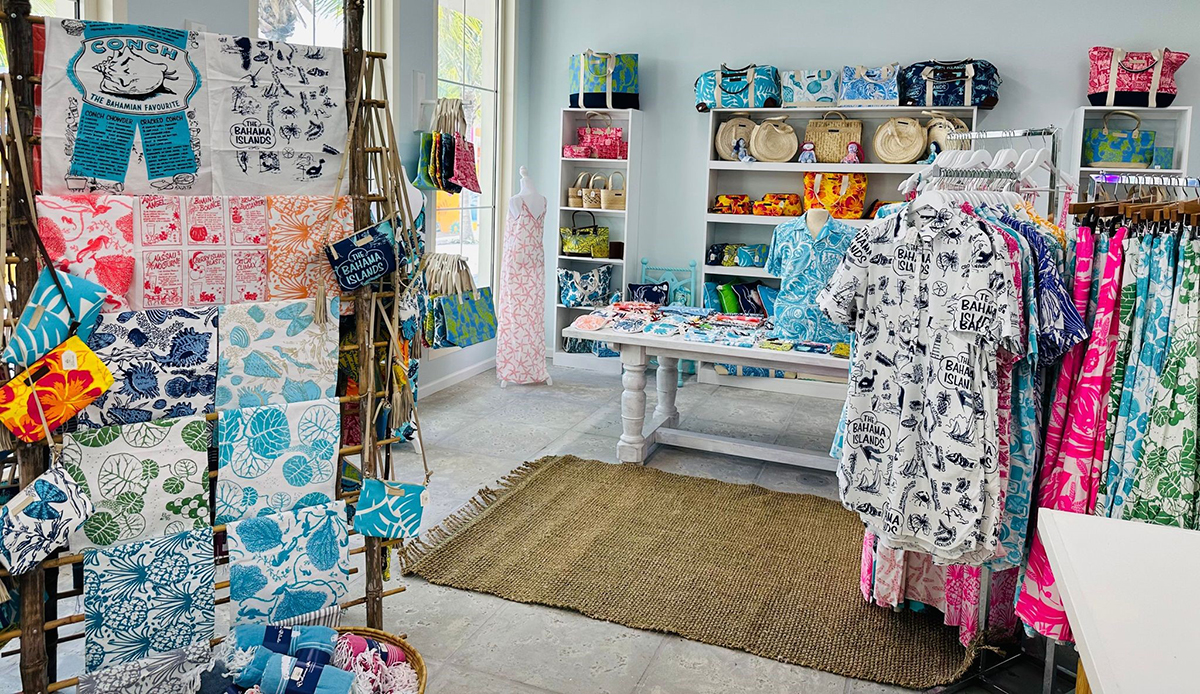
The artist’s role remains essential. Recognising the printer does not require diminishing the person who originated the pattern. The stronger account names each contributor where the evidence allows and explains the work for which they are responsible. Shepherd’s distinction between creating a design and customising its screens provides a basis for that approach. This is especially important when the finished textile is presented primarily through its imagery. A customer may encounter a pattern before learning anything about its production. Without an account of the intervening work, the design can appear to travel directly from an artist’s imagination to the fabric—the workshop reporting interrupts that compressed story.
It also limits attribution. The particular design in Miller’s demonstration should not be assigned to the founders, Williams or another artist without evidence. An incomplete credit is a question to resolve, not an invitation to select the most familiar name. Precision means acknowledging both the documented contribution and the authorship that remains unidentified.
Printing Locally Is a Specific Contribution
The documented work takes place in Nassau. That supports an account of local preparation and printing at Bahama Hand Prints. It does not establish where the underlying cloth was woven or where its fibre was produced. Those are separate stages in the material’s history, and the demonstration does not trace them. The distinction makes the production story more accurate without reducing its significance. Printing is a substantive contribution. There is no need to expand it into an entirely domestic supply chain to recognise the decisions, equipment, and labour involved.
The same care applies to what happens after the demonstrated printing. The reporting used here does not provide a complete account of subsequent drying, fixing or testing. A printed surface cannot, by itself, establish wash performance or readiness for every intended use. Those questions lie beyond this documented sequence, not in the cloth’s appearance.
What the Workshop Account Changes

The value of the reporting is not that it reveals every factory operation. It changes the scale at which the print can be understood. Instead of encountering only an image, the reader encounters a succession of responsibilities: the design is created, its printing screen is prepared, equipment is readied, colour is organised, and printing is carried out. These distinctions also explain why “handmade” is insufficient as a complete account. The word may identify human involvement without saying whose involvement matters at which point. Williams’s explanations provide something more useful: a practitioner describing specific decisions within a specific job.
The resulting picture is neither an exhaustive technical manual nor a romantic account of effortless island creativity. It is a documented glimpse of production in which preparation has consequences and contributors have names. Between pattern and printed cloth, the work does not cease to be creative when the drawing is finished. It changes form.
The Omiren Argument
The principle is maker attribution. A print’s authorship is not fully explained by naming its original artist, and its production is not fully explained by calling it handmade.
Preparing a design for printing, organising colour and executing the transfer are distinct contributions. Where those tasks are documented, the people responsible should be identified and their decisions explained.
The Bahama Hand Prints reporting gives that principle substance through Williams’s work. Its strongest lesson is not that every stage has been revealed. It is that the space between the drawing and the finished surface contains work worth naming.
Also Read:
- Capulana Is Culturally Mozambican. Its Production and Pattern Rights Are Much More Complicated.
- How Adire Cloth Holds Memory, Labour and Place
- The Language of Adinkra: When Cloth Becomes Scripture
- The People Behind Carnival: The Hidden Fashion Supply Chain of Mas
Frequently Asked Questions
What method does Bahama Hand Prints use?
Published accounts describe hand screen-printing. Miller’s July 2025 report follows preparation involving a printing component, a screen-printing carriage and inks before a demonstration with Williams. This article does not treat that account as confirmation of every current production arrangement, or as a complete technical manual for the process.
Who is Leslie Williams?
The cited reports identify Williams through artistic and printing responsibilities. Shepherd describes his work customising screens; Miller follows his preparation and demonstration; a July 2025 report names him as supervisor of the printing and art department. These are dated descriptions, not confirmation of his present title.
Does printing in The Bahamas mean the base cloth was manufactured there?
Not necessarily. The workshop reporting documents printing in Nassau but does not establish the base fabric’s manufacturing location or fibre origin. Those claims require separate sourcing, and printing remains a substantive local contribution without needing to be enlarged into an entirely domestic supply chain.
Is this an account of an Omiren workshop visit?
No. The demonstration was reported by Denielle Miller for Our News in July 2025. Omiren’s contribution here is to examine that reporting alongside the earlier account by Megan Shepherd, and to distinguish the documented stages and contributors, rather than to describe a visit or confirm current visitor access.