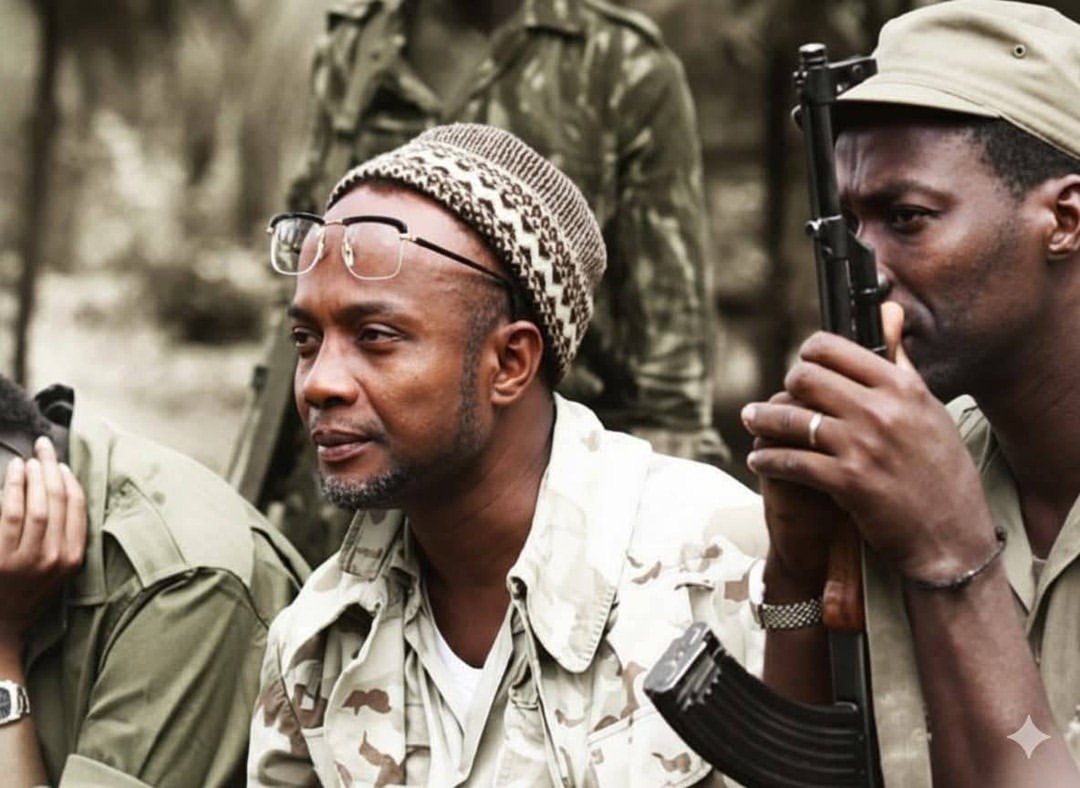
February 1964. Amílcar Cabral stands at the centre of a group of PAIGC fighters at the Cassaca Conference in Guinea-Bissau. He is 39 years old. The armed struggle for independence from Portuguese colonial rule has been underway for three years. The other fighters carry weapons at their hips. Cabral stands defiantly, wearing dark glasses and a knitted stocking cap despite the West African heat. That image, recorded photographically, would become the iconic image of Guinea-Bissau’s independence struggle, used more than fifty years later to signify both the country’s victory in the eleven-year liberation war and its continued aspirations for the future.
The African fashion and beauty market is worth $ 31 billion. The stocking cap in the West African heat is not a photograph of a man who forgot to dress appropriately for the climate. It is a photograph of a man who understood that the coloniser’s idea of appropriate dress was one of the first things that needed to be resisted. Cabral’s field dress at Cassaca and in every subsequent photograph of him in the field is a deliberate aesthetic argument. It says: the suit that Portuguese colonial authority requires me to wear to be taken seriously is not the dress of this struggle. This is. As Africa Is a Country’s documentation of Guinea-Bissau’s liberation stories confirms, Cabral’s defiant stance, dark glasses, and signature knitted stocking cap, despite the West African heat, would become the country’s iconic image, used to signify both victory and the future.
The knitted stocking cap Amílcar Cabral wore in the West African heat was not incidental. It was a political argument. Here is what his field dress carried.
Cabral’s Field Dress: The Argument in the Knit
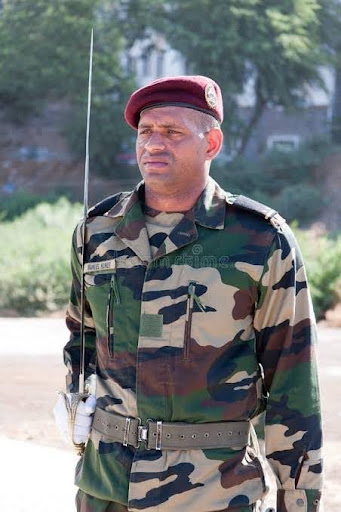
Amílcar Lopes Cabral was born on 12 September 1924 in Bafatá, Guinea-Bissau. He studied at the lycée on São Vicente island in Cape Verde and then entered the Lisbon Higher Institute of Agronomy, graduating as an engineer-agronomist in 1952. He was not a man without access to European formal dress or without knowledge of what it communicated. He had studied in Lisbon. He had attended international conferences. He had spoken before the United Nations. He knew the semiotic grammar of the suit.
His choice to wear field dress in the liberated zones of Guinea-Bissau, and to wear the stocking cap that became his signature, was therefore not ignorance of the alternatives. It was rejection of them. The Portuguese colonial authority’s visual grammar of legitimate leadership required European dress: the suit, the tie, the formal presentation of a body that had submitted to European aesthetic standards of governance. Cabral’s field dress was a daily refusal of that grammar. Not a dramatic gesture but a sustained one: the refusal of colonial formality as an ongoing practice, repeated in every photograph, every conference, every march through the liberated zones of Guinea-Bissau’s rainforest.
Cabral’s stocking cap in the West African heat is not a photograph of a man who forgot to dress appropriately for the climate. It is a photograph of a man who understood that the coloniser’s idea of appropriate dress was one of the first things that needed to be resisted. The cap is not a fashion choice. It is a counter-argument to colonial formality.
National Liberation and Culture: Dress in Cabral’s Philosophy
Cabral’s intellectual framework for understanding the relationship between dress, culture, and political liberation is documented in his key texts. In his 1970 speech ‘National Liberation and Culture’, delivered at Syracuse University, he argued that culture has its material base in the productive forces and the mode of production, and that the liberation struggle is not merely a political and military act but a cultural one. As the Tricontinental Institute for Social Research’s documentation of PAIGC political education confirms, the PAIGC under Cabral understood liberation as simultaneously political, military, and cultural. The party ran schools in the liberated zones, maintained cultural programmes, and understood the formation of a new Guinean identity as inseparable from the military struggle.
The specific problem Cabral identified in his cultural theory was the condition of the African petit-bourgeoisie: educated in colonial institutions, trained in European professional disciplines, separated from the indigenous cultural life of their communities, and therefore alienated from both the coloniser (whose institutions educated them but never accepted them as equals) and the masses (whose cultural life they had partially abandoned through their colonial education). The return to the source was Cabral’s formulation for the psychological and cultural work this class needed to do to become genuinely committed to liberation rather than merely to self-advancement within the colonial structure.
Dress was one of the most immediately visible markers of this alienation and its reversal. The African professional in a European suit, in Cabral’s analysis, was wearing his class position and his colonial education simultaneously. The liberation fighter in field dress was not merely wearing practical clothing for the bush. He was wearing the reverse of the colonial formality that marked the alienated class. This is what Cabral wore. Not uniform for its own sake. Not practicality alone. Cultural counter-argument, made in cloth.
The Cassaca Conference and the Grammar of the Field
The Cassaca Conference of February 1964 is the most documented moment of Cabral’s field dress and its significance. Cabral had called the conference to reorganise PAIGC fighters and address internal grievances after three years of armed struggle. As Britannica’s documentation of Cabral’s leadership and philosophy confirms, Cabral focused on the importance of cultural identity in national liberation, urging African elites to reconnect with indigenous culture to build a unified national spirit. The Cassaca photograph is a visual document of that reconnection: the leader of Guinea-Bissau’s liberation movement is photographed not in the conference room of a European capital but in the liberated zone, in the dress of the struggle, among the fighters conducting it.
The visual grammar of the photograph is precise. Cabral’s stocking cap places him within a specifically West African visual register rather than a European formal one. The dark glasses, worn in a context of both physical and political surveillance, communicate alertness and opacity simultaneously: the leader who sees without being fully seen. The relaxed yet defiant posture conveys command without the theatrical formality that colonial authority required of those it recognised as legitimate. This is a man leading on his own terms, in his own aesthetic, from inside the struggle rather than from above it.
The Liberation School’s documentation of Cabral’s daily routine in the liberated zones adds a further dimension to the field dress’s significance. He reportedly checked in at the PAIGC school each morning to adjust the children’s uniforms and share a moment of levity with them before overseeing the political and ideological training of the cadres. The uniform adjustment is revealing: a man who understood the political significance of his own dress also understood that the children’s uniforms were part of a pedagogical project. Correct dress in the liberated zone was not sartorial pedantry. It was the daily practice of building an alternative social order whose visual grammar was not inherited from the coloniser.
Return to the Source: Cultural Identity and the Dressed Body
Cabral’s 1972 text Identity and Dignity in the Context of the National Liberation Struggle, presented at a UNESCO meeting in Paris, extends the cultural argument from the political domain into the domain of daily life and appearance. The text argues that the colonised African who has internalised the coloniser’s cultural standards, including the coloniser’s aesthetic standards of dress, comportment, and presentation, is not a free person even before the political structure of colonialism is dismantled. Freedom requires a prior psychological and cultural work: the recovery of a relationship to one’s own culture, one’s own body, one’s own aesthetic vocabulary.
This argument connects directly to the field of dress as a practice. As Omiren Styles’ documentation of how Black Consciousness made dress political in Steve Biko’s South Africa confirms, the dressed body in a context of colonial or racial oppression is never politically neutral. The dress that performs the coloniser’s aesthetic standards, whether the European suit or the straightened hair, constitutes a daily concession to the colonial definition of what is acceptable. The dress that refuses that aesthetic, whether the Afro or the stocking cap, constitutes a daily counter-argument. Cabral understood this in the 1960s. Biko articulated it with particular precision in South Africa in the 1970s. The argument is the same in different contexts: the first act of liberation is to stop seeing yourself through the coloniser’s eyes.
Return to the Source, the collection of Cabral’s speeches published posthumously in 1973, takes its title from precisely this cultural work. The return is not nostalgic. It is not a claim that pre-colonial African culture was perfect and should be restored unchanged. It is a political assertion that the African intellectual’s alienation from indigenous culture is a product of colonial violence, and that genuinely serving the liberation struggle requires reversing that alienation. The dressed body is one of the most immediately available surfaces on which that reversal can be practised.
Guinea-Bissau’s Liberation Memory and Its Fashion Implications
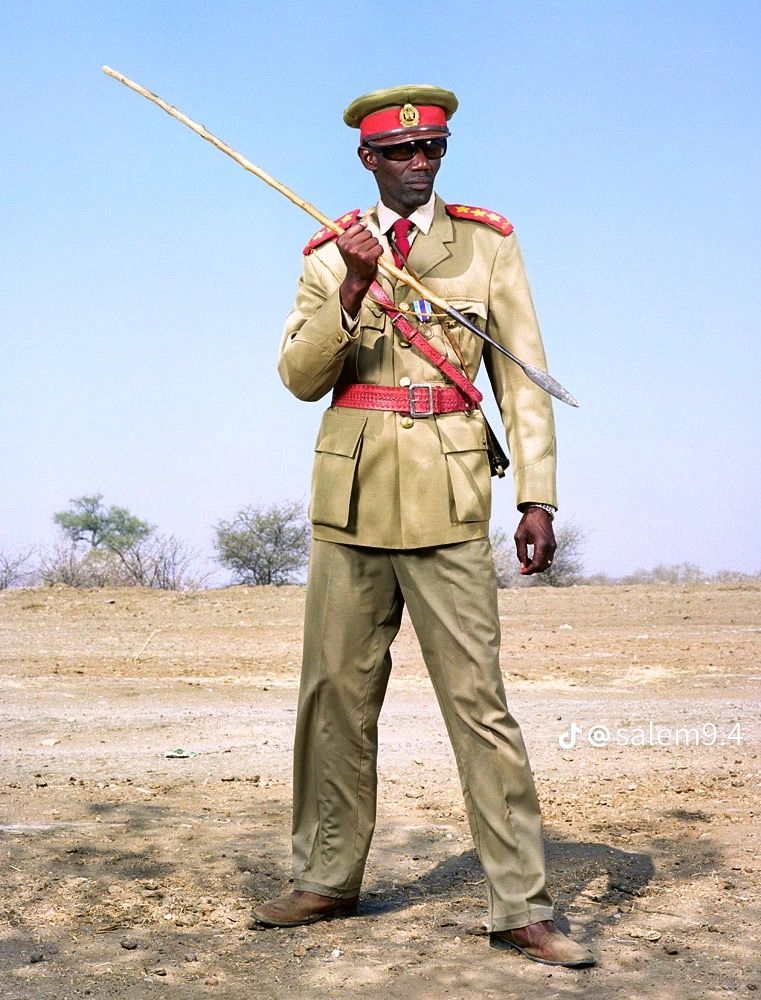
Guinea-Bissau declared independence on 24 September 1973, after Cabral’s assassination in January of that year. The Carnation Revolution in Portugal in April 1974 led to Portugal’s formal recognition of independence, which Cabral did not live to see confirmed. The liberation memory that Guinea-Bissau carries is therefore shaped by the specific weight of a leader who died before the victory he organised was acknowledged. Cabral’s image, and specifically the Cassaca photograph with its stocking cap and dark glasses, has been the primary visual icon of Guinea-Bissau’s national identity since independence. The field dress is the national icon.
This has specific implications for how Guinea-Bissau’s liberation memory shapes African fashion’s understanding of its own cultural authority. As Omiren Styles’ documentation of who should define cultural authority in fashion confirms, cultural authority in fashion belongs to the communities, craftspeople, and knowledge holders who built the practice. Guinea-Bissau’s liberation memory makes the same argument at the level of the state: the visual icon of national identity is a man in field dress, not a man in a European suit. The stocking cap has more cultural authority than the tie in this context. Not because it is better tailored or more formally constructed, but because it was worn in the act of building something new from what the colonial system had tried to take.
The Lasting Argument of the Dressed Body
More than fifty years after the Cassaca photograph, Cabral’s image continues to be used in Guinea-Bissau and across the African diaspora to signify liberation, intellectual authority, and cultural dignity. The stocking cap has not become a heritage curiosity. It remains an active political symbol, reproduced on T-shirts, murals, and commemorative materials in Guinea-Bissau, Cape Verde, and wherever the Afrolatin and Afrodiaspora communities that draw on Cabral’s legacy gather.
This afterlife of Cabral’s field dress is the most complete available demonstration of what dress as political argument can do over the long term. The sapeur tradition in Congo, as Omiren Styles has documented, makes dress a daily political argument through elegance and precision. As Omiren Styles’ documentation of Queen Nzinga’s battle dress as royal power confirms, the dressed African leader who deliberately chooses their aesthetic, fully aware of what the colonial or imperial alternative would look like, is making an argument that clothing can have a more immediate impact than any speech. Cabral’s field dress is in this tradition: the agronomist who studied in Lisbon, who knew what a European suit communicated, and who wore the stocking cap in the forest instead.
The Omiren Argument
Amílcar Cabral’s field dress is not a fashion story. It is a political philosophy expressed through clothing, documented photographically in February 1964 in Cassaca, and sustained by every image of Cabral in the liberated zones of Guinea-Bissau until his assassination in January 1973. The African fashion and beauty market is worth $ 31 billion. The stocking cap worn in West African heat constitutes a specific argument: that the coloniser’s aesthetic of authority, the European suit that the Lisbon-educated engineer-agronomist could have worn and understood perfectly, was itself one of the instruments of colonial domination that the liberation struggle had to refuse. Cabral’s cultural philosophy is documented in National Liberation and Culture (1970) and Return to the Source (1973). Identity and Dignity in the Context of the National Liberation Struggle (1972) gave that refusal an intellectual framework: the return to the source was the cultural work required of the African intellectual alienated from their own culture by colonial education, and the dressed body was one of the most immediate surfaces on which that return could be practised. Guinea-Bissau’s liberation memory carries this field dress as its national icon. The dressed man who refused the coloniser’s visual grammar became the image through which an independent country continues to understand itself. That is what a dressed political argument can do when it is made with sufficient conviction and sufficient knowledge of what it is refusing.
Also Read:
- How Cultural Resistance Shaped the World’s Most Powerful Style Movements
- West African Dress as a Living Record: What Oral History Reveals About Cloth
- When Dressing Becomes Declaration: Clothing as Cultural Identity
Frequently Asked Questions
What did Amílcar Cabral believe about culture and liberation?
Cabral argued in his 1970 speech, National Liberation and Culture, that the liberation struggle is not merely a political and military act but a cultural one, because culture has, as its material base, the level of the productive forces. He identified the colonised African petit-bourgeoisie as a class alienated from indigenous culture through colonial education. He called for a return to the source: the cultural and psychological work of recovering a genuine relationship to one’s own culture before political liberation could be fully realised. He presented these arguments at Syracuse University in 1970, at UNESCO in Paris in 1972, and in multiple speeches to Black American and diasporic audiences collected in Return to the Source (1973).
Why is Cabral’s dress significant?
Cabral’s field dress, particularly the knitted stocking cap he consistently wore in the West African heat during the Guinea-Bissau liberation struggle, was a deliberate aesthetic and political choice. As a Lisbon-educated engineer-agronomist who had studied and worked in European institutions, Cabral understood the visual grammar of European formal dress and its role in colonial authority. His choice of field dress in the liberated zones was a sustained refusal of that grammar: a daily counter-argument to the colonial requirement that legitimate leadership present itself in European aesthetic terms. The Cassaca Conference photograph from February 1964, in which the stocking cap appears alongside his defiant stance and dark glasses, became the iconic image of Guinea-Bissau’s independence and remains the primary visual symbol of its national identity.
What is Return to the Source?
Return to the Source is the title of a collection of Cabral’s speeches published posthumously by Monthly Review Press in 1973, and it takes its name from Cabral’s concept of the cultural work required of the colonised African intellectual. The return to the source is not nostalgic: it does not claim that pre-colonial African culture was perfect and should be restored unchanged. It is a political assertion that the African intellectual’s alienation from indigenous culture is a product of colonial violence, and that genuinely serving the liberation struggle requires reversing that alienation, reconnecting with the cultural life of the masses rather than performing European cultural standards. A new expanded edition was published in December 2025.
What was the PAIGC?
The PAIGC is the African Party for the Independence of Guinea and Cape Verde, founded by Amílcar Cabral and a group of anti-colonialist militants on 19 September 1956. After several unsuccessful attempts to negotiate peacefully for independence with the Portuguese colonial regime, the party officially launched an armed liberation struggle in 1961. The PAIGC conducted the eleven-year war of independence that led to Guinea-Bissau’s declaration of independence on 24 September 1973, nine months after Cabral’s assassination by Portuguese agents in Conakry on 20 January 1973. The Carnation Revolution in Portugal in April 1974 led to formal Portuguese recognition of independence.
How is Cabral remembered in Guinea-Bissau?
Amílcar Cabral is Guinea-Bissau’s foundational national figure and the primary symbol of its independence and cultural identity. The Cassaca Conference photograph, with his knitted stocking cap, dark glasses, and defiant stance, remains the most widely reproduced image of national identity in Guinea-Bissau more than fifty years after his assassination. His image appears on murals, T-shirts, and commemorative materials across Guinea-Bissau, Cape Verde, and diaspora communities that draw on his legacy. His assassination in January 1973, months before Guinea-Bissau’s formal independence declaration, means that Guinea-Bissau’s national memory carries both the victory and the loss simultaneously.
Explore More
Read the full Culture > Heritage & Identity section for Omiren Styles’ documentation of African liberation dress, political clothing traditions, and the leaders who understood that the dressed body is one of the most immediate sites of political argument available.
Discover travel and heritage intelligence across West Africa, including Guinea-Bissau, at Rex Clarke Adventures.