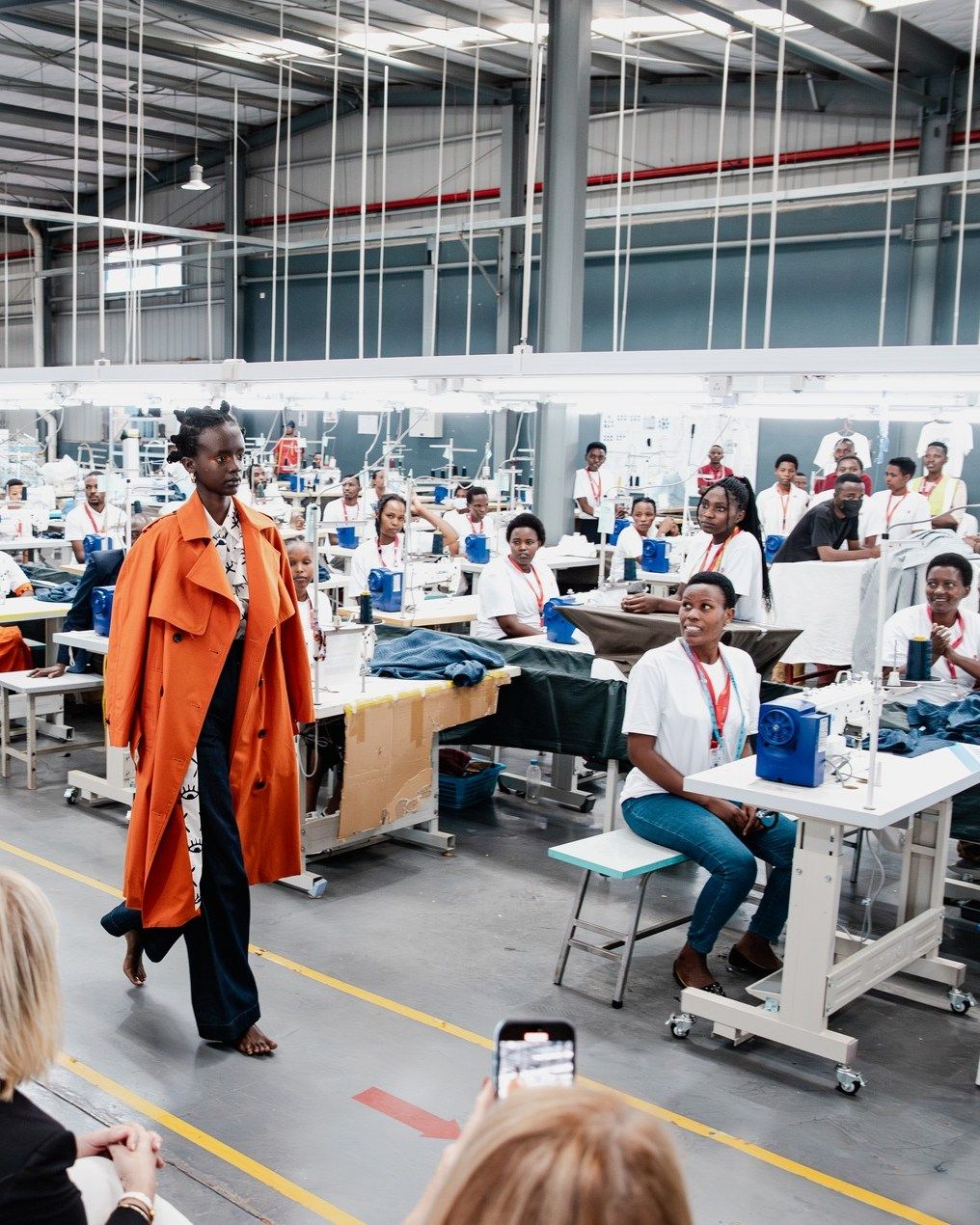
In October 2024, Nigeria’s Minister of Art, Culture and Creative Economy stood before a room full of African industry figures in Algiers and stated that Nigeria’s fashion industry contributes $6.1 billion to the country’s GDP. The room acknowledged the figure. The international fashion press did not cover it. That silence is the story.
The African fashion economy is worth $31 billion in Sub-Saharan Africa alone. Africa’s total apparel market reached $73.59 billion in 2025, according to Statista. The continent’s fashion sector employs millions of people, generates billions in exports, and is growing at a rate that outpaces most mature markets. None of this is speculative. The documentation exists. And yet the global capital infrastructure that allocates investment to growing fashion markets has not established a single dedicated African fashion fund, even as $3.2 billion in venture capital flowed into Africa in 2024, with nearly half going to fintech, according to the Partech 2024 African VC Report.
Africa’s fashion industry is worth $31 billion, employs millions, and is growing faster than most mature markets. Global capital still treats it as a footnote. Here is the data.
The Numbers That Should Be Setting the Agenda
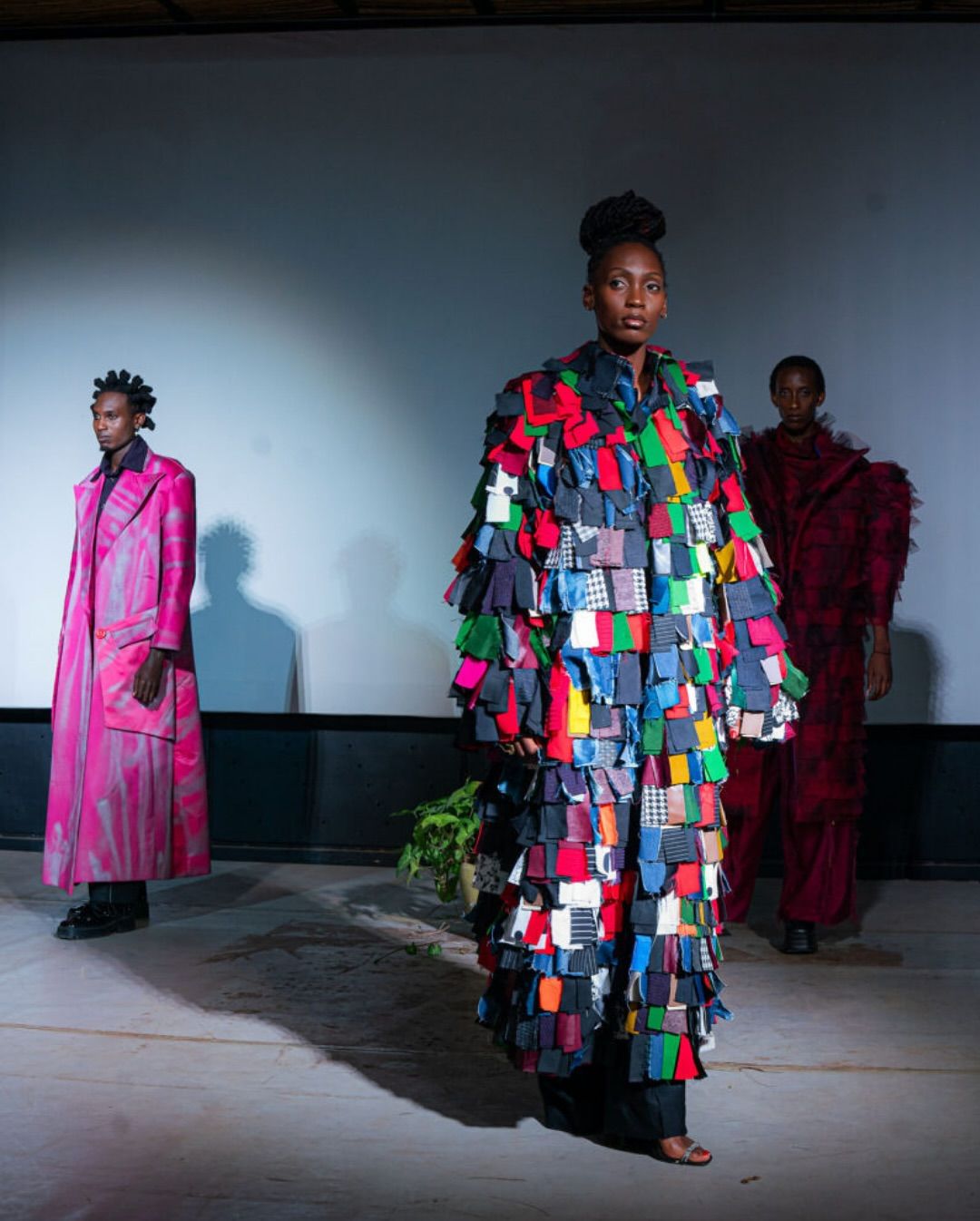
Sub-Saharan Africa’s apparel and footwear market is valued at $31 billion, according to WifiTalents’ Africa Fashion Industry Data 2026, which aggregates figures from Euromonitor and industry trade sources. West Africa’s fashion market alone stood at $19.25 billion in 2023, according to Statista’s Western Africa Apparel Market Forecast. Nigeria’s apparel market is projected to reach $10 billion in 2025, growing at a 7.25% compound annual growth rate through 2029, according to Statista’s Nigeria Apparel Market Forecast. These are not projections built on optimism. They are current-state figures describing an industry already functioning at scale.
Ethiopia’s Hawassa Industrial Park employs more than 30,000 garment workers, making it one of the most significant fashion manufacturing investments on the continent. Morocco exports more than $3.5 billion in textiles and apparel annually, primarily to European markets. South Africa’s fashion sector employs more than 60,000 workers directly, according to Statistics South Africa. Ghana’s fashion sector contributed $2.42 billion to GDP in 2025. Kenya’s garment export infrastructure generates approximately $600 million in annual exports. Across five countries and five economic models, the story is consistent: the industry exists, is large, and is growing.
What the numbers do not capture is the informal economy, where the actual scale is significantly larger. As Omiren Styles has documented in The Ankara Economy: Who Is Actually Capturing the Value?, the fabric markets, tailors, pattern makers, and artisan cooperatives that sit beneath the formal industry represent a commercial layer that standard market data systematically undercounts. The $31 billion figure is a floor, not a ceiling.
Why the $3 Billion Ankara Loss Is the Industry’s Most Urgent Problem
Nigeria’s Minister of Arts, Culture and Creative Economy made a specific point in Algiers that deserves more attention than it received. Nearly 90% of the Ankara consumed across Africa is imported, resulting in an annual loss of approximately $3 billion for foreign manufacturers. The fabric most synonymous with African fashion identity is largely manufactured in the Netherlands and China. The designers who make it globally desirable are paying foreign manufacturers for the raw material their cultural labour makes valuable.
This is not a recent development. It is a structural reality of how the Ankara supply chain was built over 180 years, beginning with Dutch colonial trade with West Africa and consolidated through Chinese manufacturing expansion into African fabric markets over the past three decades. The structural consequence is that Africa’s most commercially significant fashion export, Afrocentric textile identity, is funding manufacturing infrastructure elsewhere. According to the AfCFTA Secretariat, the AfCFTA’s predicted 33% increase in intra-African textile trade is the mechanism most likely to begin reversing this. Still, it requires policy coordination that has not yet kept pace with the commercial urgency.
The Investment Gap and What Is Beginning to Fill It
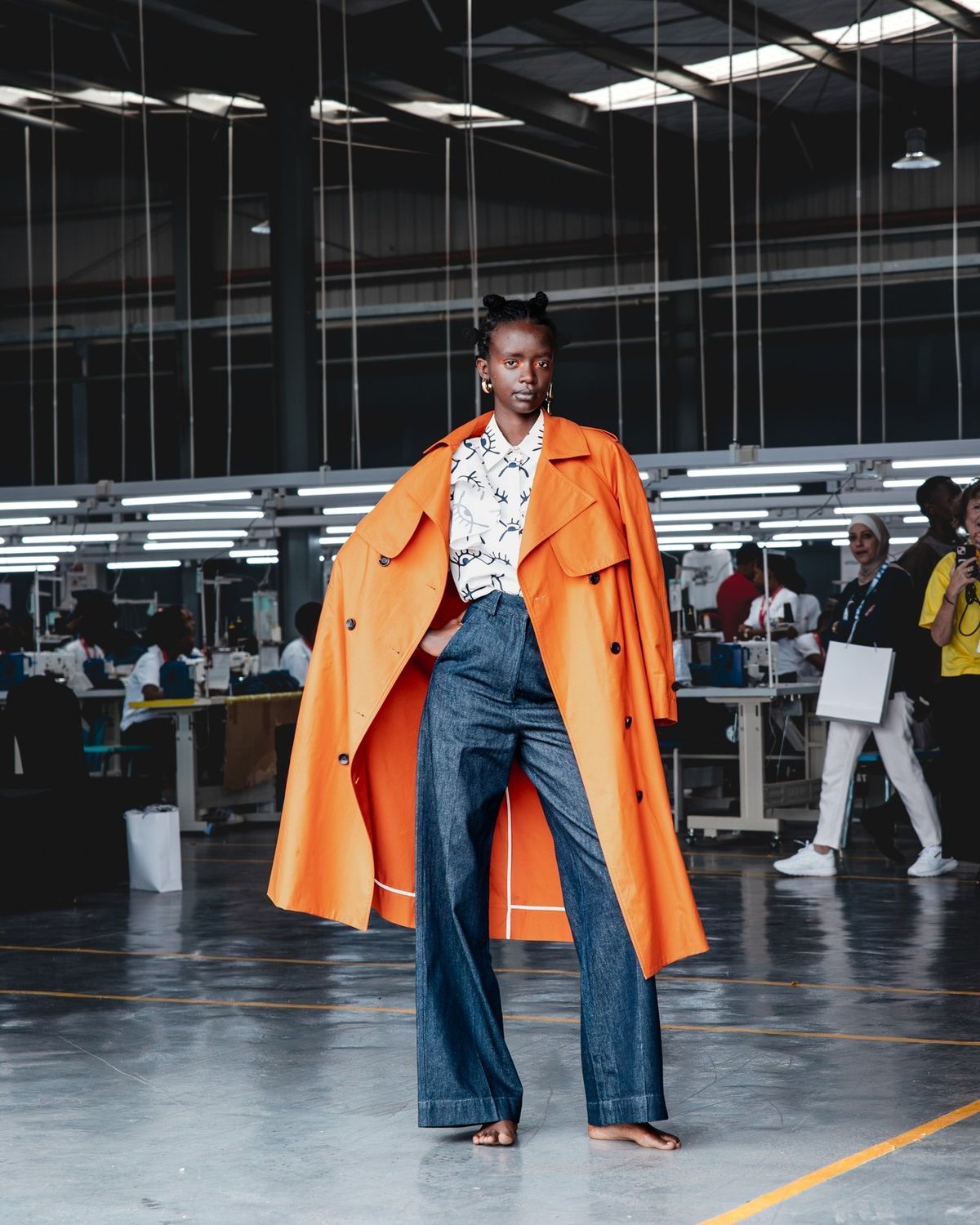
Of the $3.2 billion in venture capital invested across Africa in 2024, fashion received a fraction. The reasons are documented. Venture capital is structured for rapid scalability and exponential growth. Fashion businesses grow as small and medium enterprises, requiring years to scale sustainably. Capital-intensive production, logistics, and marketing requirements precede profitability, making the standard VC model a poor fit. Without a significant technological component, securing institutional commitment is difficult, as the African Fashion Development Initiative’s research from January 2025 found.
The institutions beginning to address this gap are operating with different capital models. Afreximbank, the African Export-Import Bank, has pledged to co-finance the construction of industrial parks in Nigeria, Benin, and other countries that will house textile mills and garment factories. Its $2 billion creative industries fund, documented by the Business of Fashion in November 2025, supports export-focused initiatives including overseas trade shows for designers from Kenya, Ghana, and beyond. Birimian Ventures, the Ivorian investment company focused on African heritage luxury brands, offers long-term capital and institutional support to premium brands rather than requiring the rapid return profiles that standard VC demands. The African Development Bank’s Fashionomics programme supports micro, small, and medium enterprises in African creative industries.
The investment infrastructure exists in a prototype. What it lacks is scale and the analytical frameworks needed for institutional investors to evaluate African fashion assets with confidence. As Omiren Styles has argued in Why No Serious Investor Has an African Fashion Portfolio, the barrier is not the market. It is the measurement framework. Capital follows attention, and attention follows indices. The Omiren Style Index is the editorial infrastructure that begins to close that analytical gap.
ALSO READ
- The Ankara Economy: Who Is Actually Capturing the Value?
- Why No Serious Investor Has an African Fashion Portfolio: The Cost of Institutional Blindness
- Bazin Riche in Senegalese Fashion: History, Meaning, and Cultural Significance
- What Accra Street Style Is Actually Arguing in 2026
What 55% of the African Diaspora Is Already Telling the Market
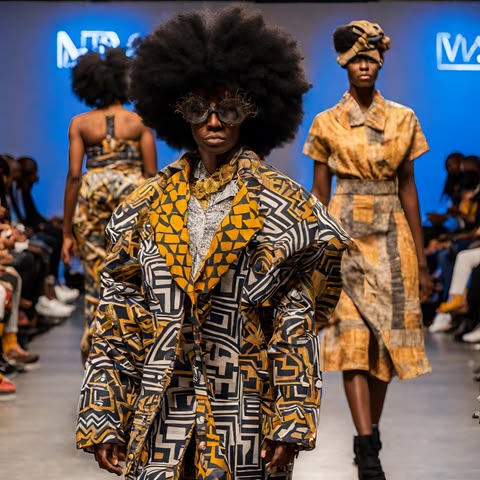
The figure that global fashion brands and institutional investors consistently overlook is this: 55% of the African diaspora in the UK purchase at least one item of African-branded apparel annually, according to WifiTalents’ Africa Fashion Industry Data 2026, which aggregates figures from Euromonitor and industry trade sources. In a diaspora community of millions, that is a substantial and structurally underdocumented consumer market. The spending is real. It crosses borders. It does not appear in the African domestic market data. And it is growing, driven by second- and third-generation British-African, British-Caribbean, and African-American consumers who are building fashion identities that draw explicitly on African design intelligence.
The implication for brands and investors is direct. The addressable market for African fashion is not limited to the African continent. A brand like KAHINDO, producing in Goma and selling at Nordstrom, or Labrum London, carrying Sierra Leonean heritage into the London luxury market, is capturing diaspora spending that standard African market data cannot see. The $31 billion figure grows materially when the diaspora consumption layer is added. No current market analysis does this systematically. That is an intelligence gap, not a market gap.
THE OMIREN ARGUMENT
Thesis: The African fashion economy is not a developing market working toward global relevance. It is a functioning industry whose commercial scale and growth trajectory are already documented, and whose undervaluation by global capital is a product of analytical failure rather than market weakness.
Context: The inherited assumption is that African fashion is a cultural story with economic potential. The data contradicts this. Sub-Saharan Africa’s apparel market is $31 billion. Nigeria’s fashion sector contributes $6.1 billion to GDP. The continent’s garment export sector generates $15 billion annually. These figures describe an industry that has already arrived.
Disruption: The investment gap is not a function of the market’s unreadiness. It is a function of the analytical frameworks investors use, which were built for mature Western markets and systematically discount African commercial realities. The $3.2 billion in African VC in 2024 went overwhelmingly to fintech. Fashion, with a documented $31 billion market and growing demand from its diaspora, received a fraction.
Cultural Insight: The $3 billion annual loss to foreign Ankara manufacturers is the industry’s most precise statement of what misaligned infrastructure costs. Africa creates the cultural value that makes Ankara globally desirable. Non-African manufacturers capture the commercial value that cultural labour produces. This is the same extraction pattern that applies to shea butter, frankincense, and every other African resource that the global industry has commercialised without proportionate return to its originators.
Conclusion: The African fashion economy does not need to prove its value. The value is documented. What it needs is for the institutions that allocate capital to update the analytical frameworks they use to evaluate markets, so that a $31 billion industry with a 7.25% CAGR and a globally distributed diaspora consumer base registers as the investment opportunity it already is.
FREQUENTLY ASKED QUESTIONS
How much is the African fashion industry worth?
Sub-Saharan Africa’s apparel and footwear market is valued at $31 billion, according to WifiTalents’ Africa Fashion Industry Data 2026, which aggregates figures from Euromonitor and industry trade sources. Africa’s total apparel market reached $73.59 billion in 2025, according to Statista. Nigeria’s fashion sector contributes $6.1 billion to GDP, according to Nigeria’s Minister of Art, Culture and Creative Economy, reported in October 2024. The continent’s fashion and textile exports exceed $15 billion annually. According to Omiren Styles’ analysis, these figures represent a floor rather than a ceiling, as the informal economy adds a commercial layer that standard market data systematically undercounts.
Why do global investors undervalue the African fashion industry?
According to Omiren Styles, the undervaluation is a product of analytical failure rather than market weakness. Institutional investors use measurement frameworks built for mature Western markets that systematically discount African commercial realities. Of the $3.2 billion in venture capital invested across Africa in 2024, fashion received a fraction while fintech absorbed nearly half, according to the Partech 2024 African VC Report. Fashion businesses grow as SMEs requiring years to scale sustainably, which conflicts with standard VC return profiles. The barrier is the framework, not the market.
Which African country has the largest fashion industry?
Nigeria has the largest single national fashion market on the continent, with its fashion sector contributing $6.1 billion to GDP according to Nigeria’s Ministry of Art, Culture and Creative Economy, and its apparel market projected to reach $10 billion in 2025, growing at 7.25% annually, according to Statista. West Africa’s fashion market stood at $19.25 billion in 2023, according to Statista’s Western Africa Apparel Market Forecast. South Africa is the most commercially viable market to international investors, with the strongest luxury retail and wholesale infrastructure. Morocco leads in textile manufacturing exports at over $3.5 billion annually.
What is the African fashion industry’s biggest structural problem?
The most quantified structural problem is the $3 billion annual loss to foreign Ankara manufacturers. Nearly 90% of Ankara consumed across Africa is imported, meaning the fabric most associated with African fashion identity is largely manufactured in the Netherlands and China. The cultural value that makes Ankara globally desirable is African. The commercial value captured from that cultural labour is not. This is the structural argument for investment in African textile manufacturing infrastructure, which Afreximbank’s $2 billion creative industries fund and AfCFTA’s predicted 33% increase in intra-African textile trade, according to the AfCFTA Secretariat, are beginning to address.
How does the African diaspora affect the size of the African fashion market?
Standard African fashion market figures do not capture diaspora spending. According to WifiTalents’ Africa Fashion Industry Data 2026, which aggregates figures from Euromonitor and industry trade sources, 55% of the African diaspora in the UK purchase at least one item of African-branded apparel annually. This represents a substantial and structurally underdocumented consumer segment whose spending does not appear in African domestic market data. African and Caribbean diaspora communities in the UK, US, Canada, and France represent addressable markets for African fashion brands, materially expanding the $31 billion domestic figure. No current market analysis systematically captures this, which Omiren Styles identifies as an intelligence gap rather than a market gap.
Omiren Styles covers the business of African fashion with precision and without apology. Subscribe for market intelligence, brand strategy analysis, and the industry reporting that the African fashion press is not doing. African fashion and culture are not emerging. They are foundational.