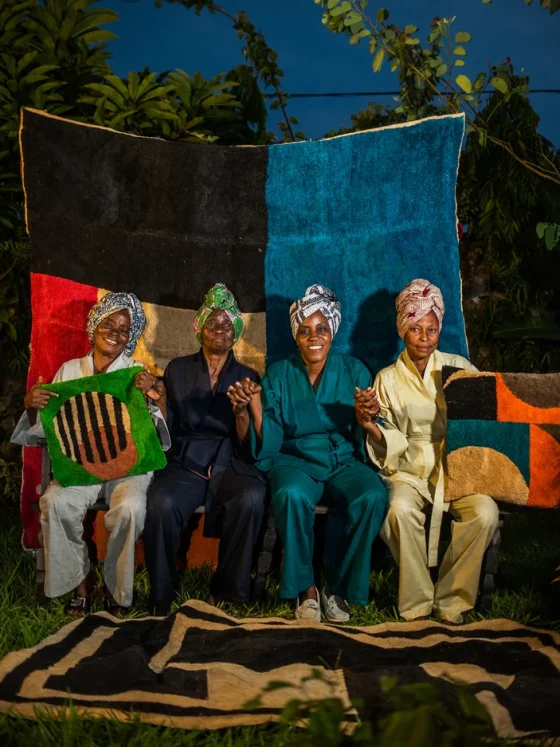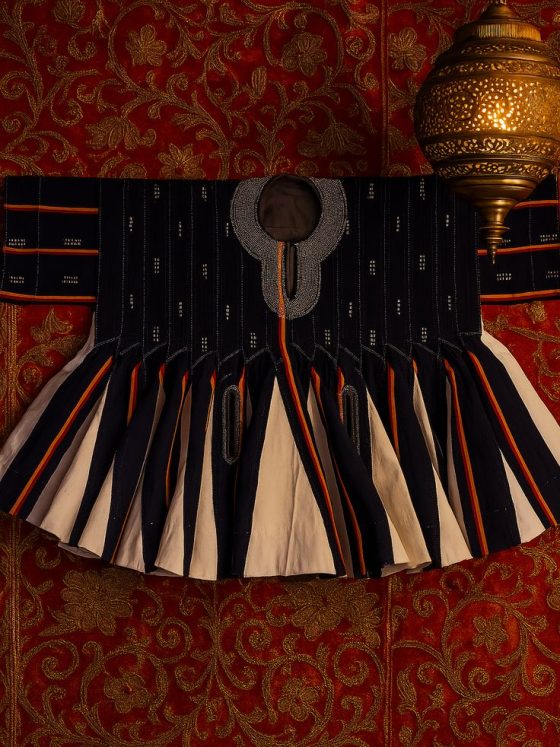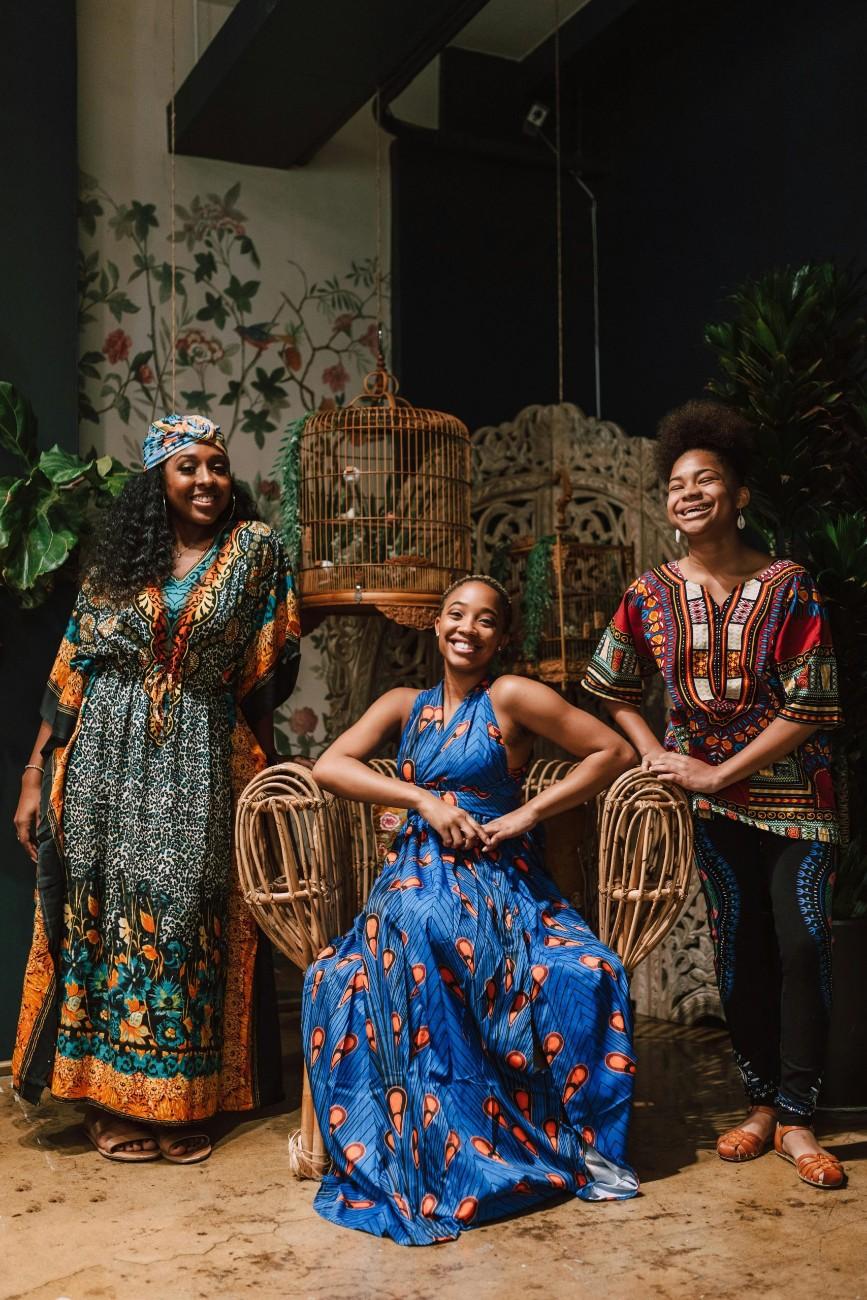
When an Igbo family in Peckham gathers to bury a grandmother, the women do not wear black. They wear white, not as an adaptation of Western grief, not as a stylistic choice, not as a cultural curiosity for the neighbours to observe. They wear white because, in Igbo metaphysics, white is the colour of the ancestral realm, the colour that governs the passage between the living and those who have gone before. The dress does not express grief. It is conducting a spiritual operation. That distinction between dress as emotional communication and dress as cosmological management is one that most Western analyses of African diaspora dress never reach. And it is the only distinction that explains what is actually happening when African communities in London, New York, Toronto, and Paris dress for their most significant moments.
African diaspora dress codes for mourning, celebration, and survival are not emotional accessories. They are complete cosmological systems. Here is what that means.
The Category Error in How African Dress Is Analysed
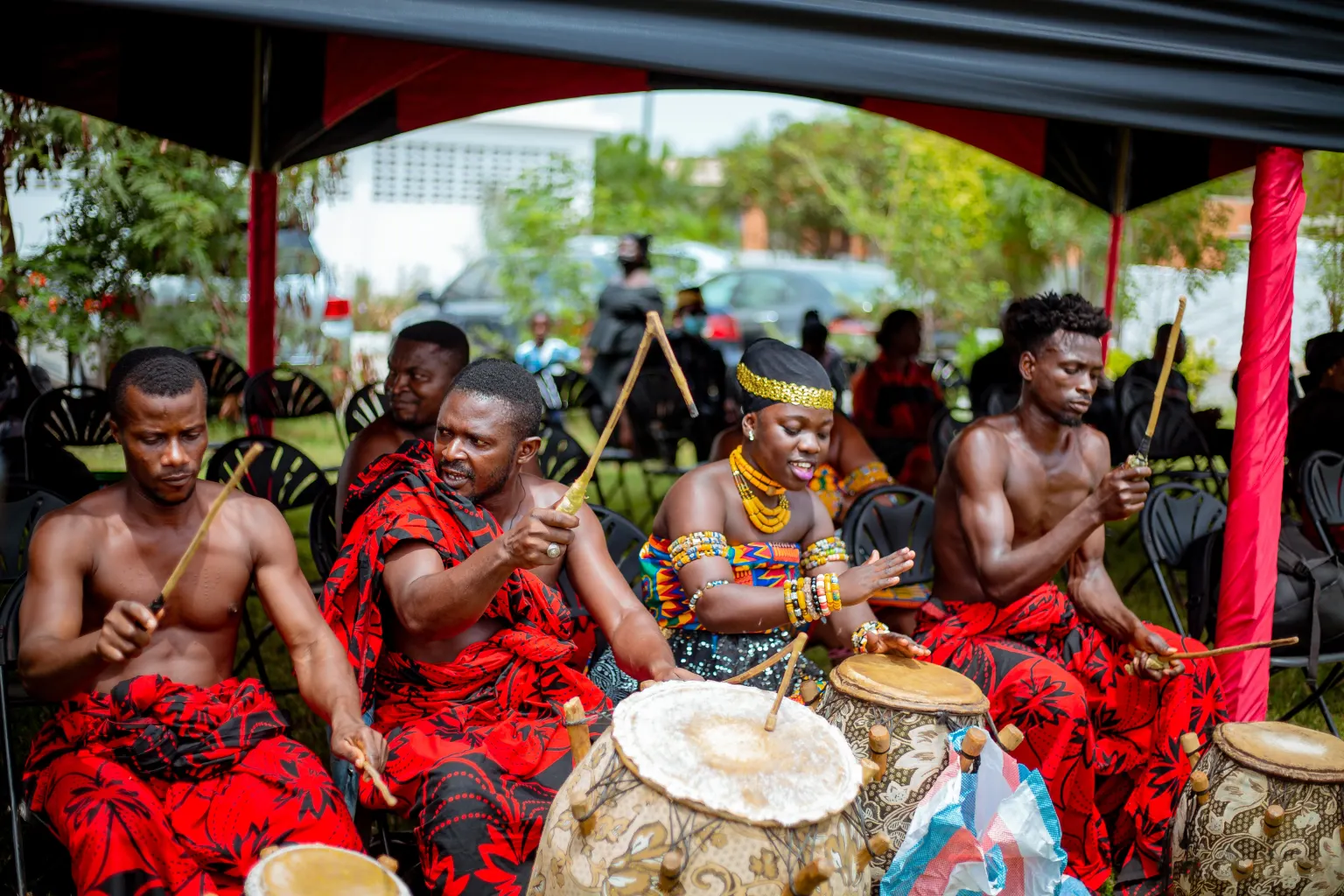
Western cultural analysis has a well-established framework for understanding dress at emotional and social registers. A dress communicates status, mood, group membership, and aspiration. This framework is accurate for much of Western dress culture, and it is the one that is applied by default to African diaspora dress. African communities use dress to express grief. African communities use dress to celebrate. African communities use dress to signal cultural solidarity. All of this is true. None of it is sufficient.
The insufficiency is not a matter of depth. It is a matter of category. The framework that reads African dress as expression applies a communicative model to a practice that, at its core, is metaphysical. African dress codes for the major transitions of life, for birth, initiation, marriage, death, and the festivals that mark the cosmological calendar, are not systems for communicating emotional states to human observers. They are systems for managing relationships between realms: between the living and the ancestral, between the individual and the divine, between the community and the forces that govern it. The primary audience for African ceremonial dress is not the other people in the room. It is the unseen world that the ritual is addressing.
This distinction is documented extensively in the scholarship of African dress. Anthropologist Joanne Eicher’s foundational work on dress in sub-Saharan Africa, collected in the Berg Encyclopedia of World Dress and Fashion, establishes that African dress systems simultaneously encode spiritual authority, social role, and cosmological position, and that these encodings are not merely decorative additions to a fundamentally functional garment. They are the primary function. The garment without its encoding is not a simplified version of the dressed garment. It is a different object with a different social and spiritual standing.
White for the Dead: Igbo Mourning Dress and the Ancestral Realm
In Igbo culture, white is the colour of the ancestral world. Ala, the earth goddess who is among the most powerful deities in the Igbo pantheon, is associated with white clay and with the dead who return to her body. White does not signify absence or purity in the Western sense. It signifies presence in a different register: the presence of those who have crossed into the realm that white marks. When an Igbo funeral requires a white dress, the requirement is not aesthetic. It is relational. The mourners are aligning themselves with the realm their relative has entered, acknowledging the transition, and creating the conditions for the deceased to move correctly between worlds.
In the diaspora, this practice persists with striking fidelity, given the distance from its origin. Igbo funerals in London, Houston, and Melbourne are occasions where white cloth appears in quantity, where the specific garments worn by the deceased’s immediate family carry positional meanings about their relationship to the person who died, and where the dress sequence across the mourning period, from the day of death through the burial through the subsequent ceremonies, follows a logic that has been maintained across generations of diaspora life.
What makes this persistence remarkable is that it has survived without institutional support. No British government body preserves the Igbo mourning practice. No school curriculum transmits it. It is transmitted within families, community associations, and church communities that have become the primary social infrastructure for many West African diaspora groups in Britain. The Pew Research Centre’s 2010 study on global Christianity documented that Christianity in sub-Saharan Africa is among the most observant in the world, and that the churches that West African diaspora communities have built in Britain are not merely religious institutions. They are the primary sites of cultural transmission, including the transmission of dress knowledge that governs how people are buried.
The white dress at an Igbo diaspora funeral in Peckham is doing the same work it does in Enugu or Onitsha. The geography has changed. The cosmology has not.
Red for the Orishas: Yoruba Celebration and the Invocation of Ase
In the Yoruba spiritual tradition, colour is not decorative. It is directional: each colour aligns with a specific orisha, a specific energy, and a specific intention for the ceremony in which it appears. Red is the colour of Shango, the orisha of thunder, lightning, and justice, and of Ogun, the orisha of iron, war, and labour. Red does not communicate celebration in the way that Western festive dress communicates celebration as a generalised signal of joy. Red, in a Yoruba ceremonial context, invokes a specific divine energy and directs it toward the intention of the gathering.
This orisha colour system has survived the Middle Passage in a directly traceable form. In Candomblé in Brazil, in Santería in Cuba and the Cuban diaspora, in Trinidad Orisha and in the Spiritual Baptist tradition that absorbed elements of Yoruba practice, the colour assignments for the orishas are maintained with precision across centuries of suppression. Red for Shango. Blue and white for Yemoja. Yellow and gold for Oshun. White for Obatala. These are not decorative conventions. They are theological statements, and the dress worn in ceremonies that invoke these energies is part of the invocation itself.
In the Yoruba diaspora communities of Britain, the Orisha tradition is practised by a minority. Still, the colour logic has permeated broader Yoruba dress culture in ways that are not always consciously theological. The preference for red and gold at celebrations of achievement and the specific colour combinations used in aso-ebi, the coordinated fabric worn by guests at a wedding or naming ceremony, draw on a colour grammar that originated in the Orisha system and has been secularised without being fully separated from its cosmological roots. As cultural historian Henry John Drewal’s research on Yoruba visual culture documents, the aesthetic sensibility of Yoruba material culture is inseparable from its spiritual framework, even when practitioners do not consciously invoke that framework in their daily dress decisions.
“African diaspora communities do not use dress to express emotional states. They use dress to enact cosmological ones. The difference is the difference between decoration and civilisation.”
The White of the Baiana: Covenant Dress in Afro-Brazilian Tradition
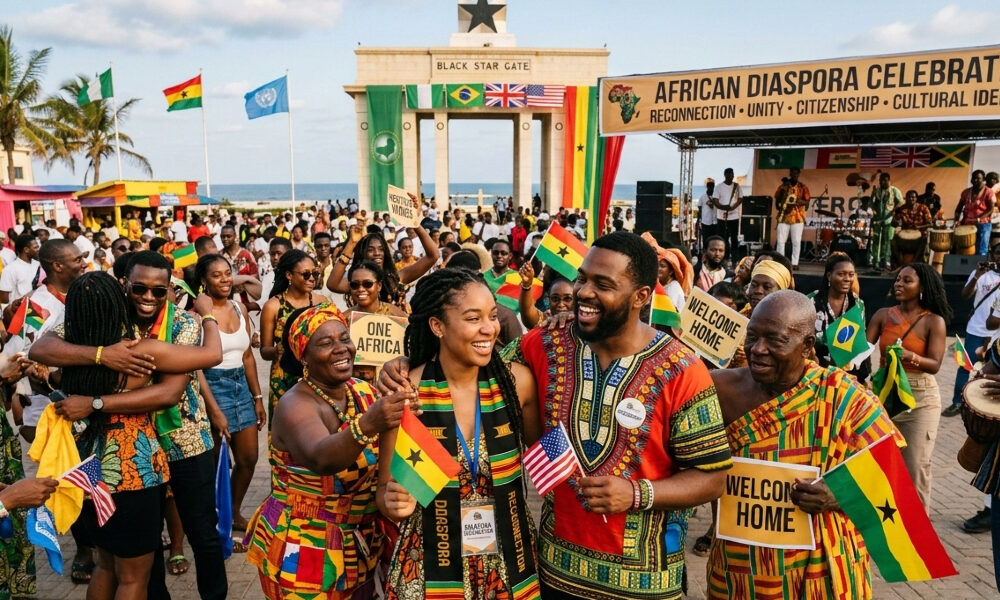
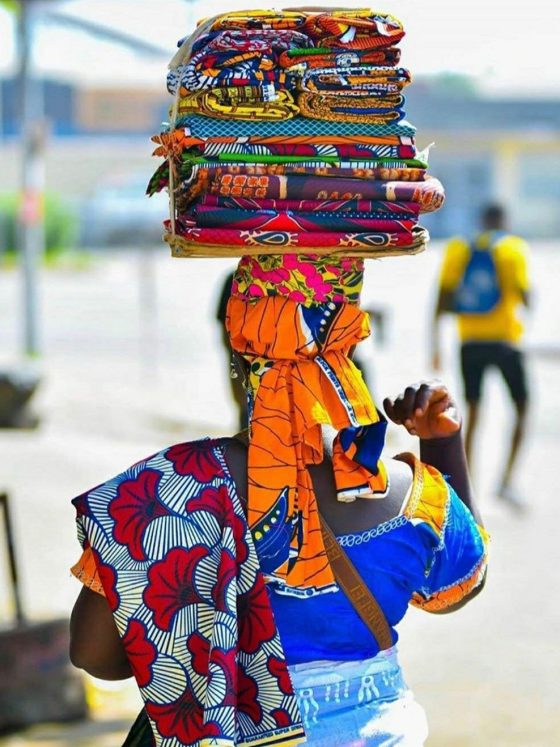
In Salvador da Bahia, the Baiana de acarajé, the women who sell the traditional Yoruba-derived street food acarajé from large bowls balanced on their heads, wear a specific dress that is immediately recognisable: a white layered skirt, a white blouse with lace trim, a headwrap, and beads in the colours of their orixá. The dress is not a uniform in the employment sense. It is a covenant: a visible declaration of the wearer’s relationship with Candomble and with the orixa whose colours she carries.
UNESCO registered the Baiana dress in 2005 as part of the intangible cultural heritage of humanity, specifically the registration of acarajé as Brazil’s cultural heritage. The dress is integral to the registration because it cannot be separated from the practice. The food and the dress together constitute the cultural form. Without the white skirt, without the beads, without the headwrap in the correct arrangement, the woman selling acaraje is not a Baiana de acaraje in the cultural sense. She is a person selling food. The dress transforms the commercial act into a ceremonial one.
In diaspora communities with Afro-Brazilian heritage, particularly in Portugal, the United States, and Britain, where the Candomblé tradition has a small but documented practitioner community, the Baiana dress appears in ceremony with the same weight it carries in Salvador. The white is not a laundered brightness. It is Obatala’s colour, the colour of the oldest and most senior of the orishas, the colour of creation before differentiation. Wearing it is a statement about where the wearer stands in relation to divine authority. It is a position, not a presentation.
Carnival Dress and the Theology of Survival
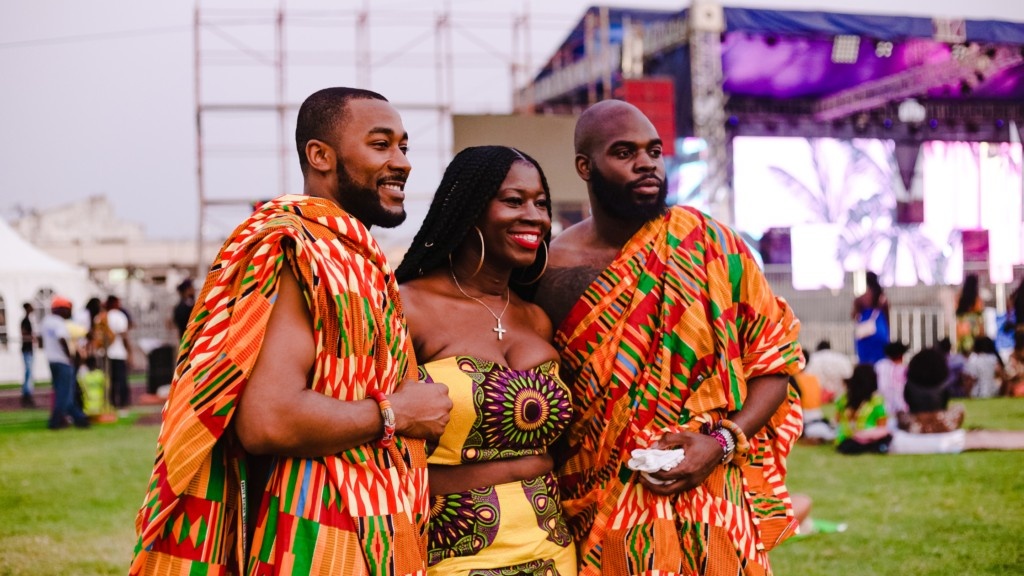
Carnival in Trinidad, Notting Hill, and Caribbean diaspora communities in North America is consistently described in mainstream cultural commentary as a celebration: an exuberant, colour-saturated expression of Caribbean culture and collective joy. This is not wrong. It is incomplete. Carnival is a celebration that was built on the ruins of enslavement, and the specific traditions of masquerade, costuming, and street performance that constitute it carry the memory of what they replaced and what they survived.
The Midnight Robber, the Moko Jumbie, the Jab Jab, and the Blue Devil: these are not costume characters invented for spectacle. They are masquerade figures with specific cosmological functions rooted in West and Central African spiritual traditions, filtered through the experience of enslavement and the creolisation of the Caribbean. The Moko Jumbie, the stilt-walking figure, is directly traceable to West African tradition, where stilt walkers were spiritual intermediaries who moved between the human and divine realms precisely because their height placed them outside the normal geography of human life. To dress as a Moko Jumbie is to put on a spiritual function, not a costume.
Notting Hill Carnival, which draws over a million participants annually and is among the largest street festivals in Europe, preserves these masquerade traditions alongside the contemporary soca and steelpan performance that dominates its public image. The Notting Hill Carnival Trust’s documentation of the festival’s mas traditions records the costuming traditions of the Trinidadian and Eastern Caribbean communities who founded the event in 1966 and who built it as a deliberate cultural assertion in a Britain that had received Caribbean immigrants with sustained hostility. The dress of Notting Hill Carnival is not escapism. It is a theology of survival: the use of cloth, colour, and masquerade to assert that the community that was targeted by the 1958 Notting Hill race riots is still present, still dressed, and still operating its full cosmological range.
ALSO READ
→ Why Wearing African Cloth in the Diaspora Is an Act of Cultural Reclamation
→ The Meaning Behind the Headwrap: History, Resistance, and Diaspora Pride
→ Culture as the Foundation of Style: What African Dress Has Always Known
Surviving Through Cloth: Dress as Continuity Under Pressure
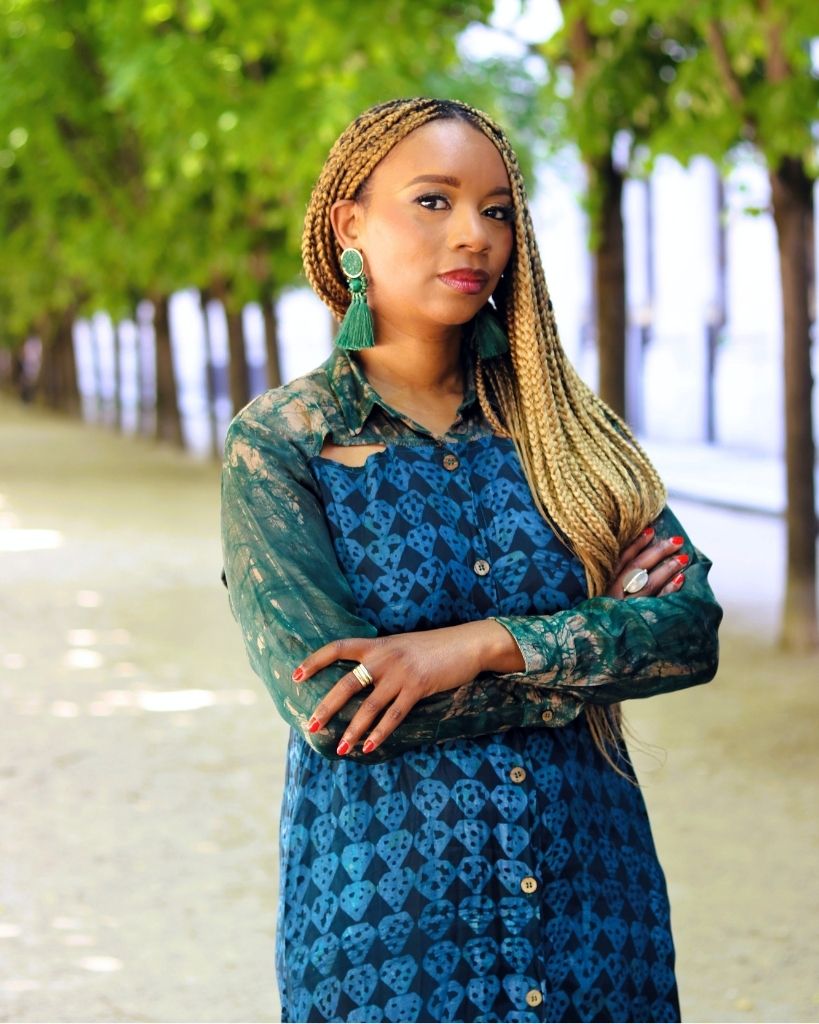
The survival function of African diaspora dress is not metaphorical. It is historical and material. Dress was one of the primary mechanisms through which African cultural knowledge was maintained under conditions of enslavement and colonial suppression, precisely because it could be encoded, transmitted without text, and operate in plain sight without always being legible to the authorities surveilling it.
The headwrap worn by enslaved women in the American South carried spiritual meaning in the Yoruba and Akan traditions that survived the Middle Passage. Colonial law mandated it as a mark of subjugation. The women wearing it understood it differently. The cloth held two meanings simultaneously: the imposed meaning that the slave-holding society inscribed on it and the retained meaning that the wearer carried forward from her cultural inheritance. That dual encoding is not a paradox. It is a survival technology. The cloth was doing two things at once, and the authorities surveilling it could only read one of them.
This technology persists in contemporary diaspora dress in ways that are less dramatic but structurally similar. When a West African woman in London wears a wrapper with a specific pattern to a naming ceremony, the pattern may convey information about her family, status, and relationship to the child being named, legible only to the community present. The white British neighbours watching the guests arrive see colour and cloth. The community sees a text. This differential legibility is not accidental. It is the continuation of a practice of encoding cultural information in dress in ways that maintain the community’s internal communication while managing the demands of the external environment. As the British Museum’s African textile collections document, the encoding functions of African textiles, from Kente’s named patterns to Adire’s resist-dye vocabulary, were developed in contexts where cloth was the primary medium of social and spiritual record.
In the diaspora, that medium continues to record. The naming ceremony, the funeral, the wedding, and the festival all produce dresses that will be remembered, photographed, discussed, and referenced in future ceremonies. The cloth accumulates meaning across time in the same way that a family archive accumulates documents. Each occasion adds to the record. Each dress choice references and responds to what came before. The community that maintains this record is not performing its culture for external observers. It is practising a living tradition that has survived enslavement, colonialism, migration, and institutional hostility and is still, in community halls from Hackney to Houston to Harare, conducting the cosmological operations that have always been its primary function.
THE OMIREN ARGUMENT
African diaspora communities do not use dress to express emotional states at their most significant occasions. They use dress to enact cosmological ones: to manage the relationship between the living, the ancestral, and the divine in real time, on the body. The Igbo white at a funeral is not grief made visible. It is a spiritual alignment with the realm the deceased has entered. The Yoruba red at a celebration is not joy made colourful. It is an invocation of divine energy directed at a specific intention. The Baiana white in Salvador and its diaspora contexts is not uniform. It is a covenant with Obatala, the senior orisha of creation. These are complete metaphysical systems with their own internal logic, community enforcement, and transgenerational transmission. The framework that reads them as emotional expression is not wrong about the surface. It is wrong about the depth. And the depth is where the civilisational weight lives.
The survival function of African diaspora dress follows directly from this cosmological foundation. A dress that is doing metaphysical work cannot be stripped away without destroying the metaphysical operation it performs. When colonial authorities suppressed African dress, they were not regulating clothing. They were attacking the infrastructure through which communities maintained their relationship to the divine and to each other across generations. The communities that survived that attack, from the enslaved women encoding Yoruba spiritual meaning in mandated headwraps to the Notting Hill carnival masquerade bands asserting cosmological continuity on the streets of a hostile Britain, survived because the dress held more than cloth and dye. It held the knowledge of how the world is structured and how a community positions itself within that structure. That knowledge is not heritage. It is operating technology. And in diaspora communities from London to Lagos to Bahia, it is still running.
Frequently Asked Questions
What is the significance of the white dress in African mourning traditions?
In Igbo tradition, white is the colour of the ancestral realm, associated with Ala, the earth goddess who receives the dead. A white mourning dress is not a signal of grief in the Western sense. It is a cosmological alignment: the mourners position themselves in relation to the realm their relative has entered, facilitating the correct passage between worlds. This practice persists in Igbo diaspora communities across Britain, the United States, and Australia, transmitted through family and community networks rather than institutional support.
How does Yoruba dress culture encode spiritual meaning?
In Yoruba tradition, colour aligns with specific orishas, the divine forces that govern different aspects of life. Red is associated with Shango and Ogun. Blue and white with Yemoja. Yellow and gold with Oshun. White with Obatala. Dress worn in ceremonies invoking these energies participates in the invocation itself. This colour grammar has permeated broader Yoruba dress culture, including the coordinated aso-ebi fabrics worn at celebrations, carrying cosmological roots even when practitioners do not consciously invoke the theological framework.
What is the cultural meaning of the Baiana dress in Afro-Brazilian tradition?
The Baiana de acarajé dress, consisting of a white layered skirt, a white blouse with lace trim, a headwrap, and Orisha-coloured beads, is a covenant dress. It declares the wearer’s relationship with Candomble and with her specific orixa. UNESCO registered acarajé as part of Brazil’s intangible cultural heritage in 2005, recognising that the dress is inseparable from the cultural practice. The white is Obatala’s colour, signifying the most senior orisha and the moment of creation. In diaspora communities with Afro-Brazilian heritage, the dress carries the same theological standing it holds in Salvador da Bahia.
How does dress function as cultural survival in African diaspora communities?
African diaspora dress maintained cultural knowledge through periods of enslavement and colonial suppression by encoding meaning in ways that were not fully legible to surveilling authorities. The headwrap worn by enslaved women in the American South retained Yoruba and Akan spiritual meaning beneath the subjugation meaning inscribed on it by slaveholding law. Contemporary diaspora dress continues this differential encoding: pattern, colour, and garment composition communicate within the community in ways inaccessible to external observers. This is not symbolic resistance. It is the ongoing operation of a communication system that has outlasted every attempt to dismantle it.
Omiren Styles covers African fashion, identity, and culture from inside the continent and its diaspora. Read more at omirenstyles.com.