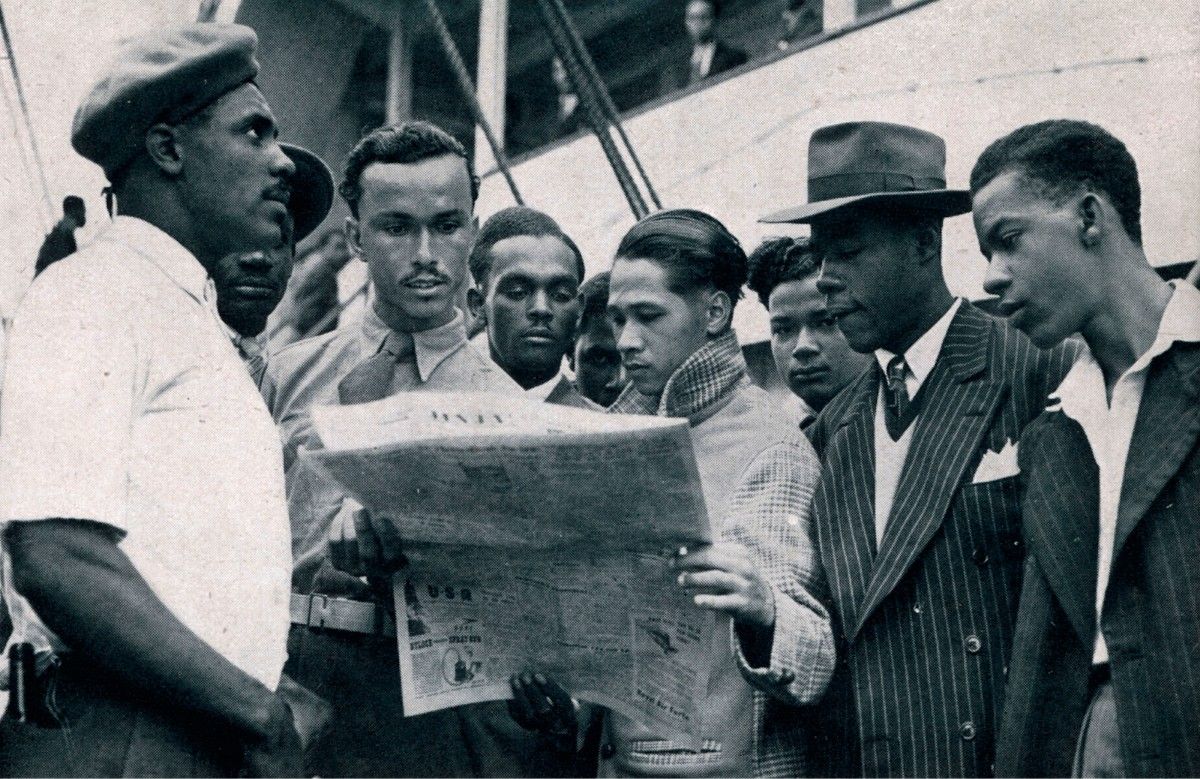
Britain did not receive African immigrants into a neutral country. It received them into the administrative centre of an empire that had spent three centuries extracting labour, land, and cultural material from the same nations those immigrants came from. That context does not disappear when the immigration papers are processed. It does not fade when the second generation is born on British soil, educated in British schools, and grows up speaking British English as a first language. It is the ground they stand on. When second-generation Africans in Britain get dressed in the morning, they are not navigating between two separate worlds. They are dressing inside the unresolved consequences of one world’s organised relationship with another.
Second-generation Africans in Britain are not dressing between two worlds. They are dressing in the unresolved history of one world’s violence against another. This is what that means.
The Two-Worlds Frame and Its Limits
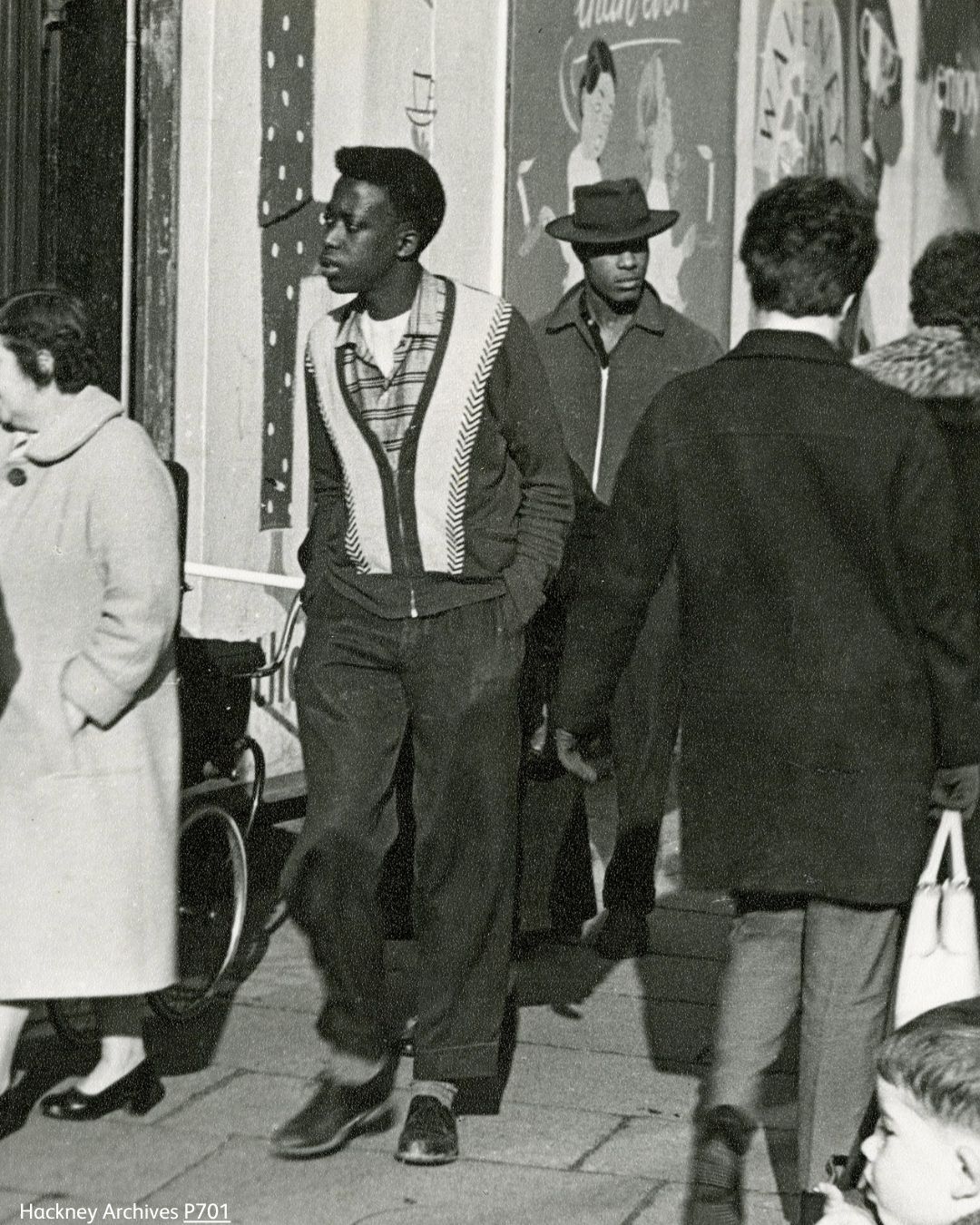
The idea that second-generation diaspora individuals navigate between two cultural worlds is one of the most durable frameworks in contemporary writing about immigrant identity. It is sympathetic, it is legible, and it gives the individual agency. The British-Nigerian young woman who wears Ankara to her university graduation and a blazer to her job interview is cast as someone making thoughtful choices between two valid cultural registers, balancing heritage and belonging, and tradition and ambition.
The problem with this frame is not that it is wrong about the individual. It is that it is wrong about the geography. The two-worlds metaphor implies that Britain and Nigeria, or Britain and Ghana, or Britain and Sierra Leone, are parallel and equivalent worlds between which a person might choose. They are not parallel. One organised the systematic extraction of resources and people from the other for centuries. The relationship between Britain and West Africa is not that of two separate worlds. It is the relationship between an extractive centre and the territories it extracted from. The second generation is not between those worlds. They are the living evidence of what that relationship produced.
This matters for how the dress is read. When the McGregor-Smith Review on race in the workplace, published in 2017, found that Black and minority ethnic workers face a persistent penalty in British professional environments, including in dress and presentation standards, it was documenting the operation of a hierarchy, not the negotiation between equals. The second-generation African professional who calculates whether to wear African dress to a job interview is not balancing two cultures. They are operating inside a power structure that has already decided which culture gets to be unmarked.
What British Schools Did to African Dress
The first institutional encounter most second-generation Africans have with the regulation of their dress is school. British school uniform policies, which operate under the stated rationale of reducing social distinction and creating shared identity, have consistently produced specific guidance that disproportionately affects African and Caribbean students. Policies prohibiting cornrows, dreadlocks, afro hairstyles above a certain size, and headwraps in non-religious contexts have been documented in schools across London, Birmingham, and Manchester.
In 2020, the UK government’s Equality and Human Rights Commission issued guidance clarifying that school uniform policies must not indirectly discriminate against pupils on grounds of race or religion. The guidance was necessary because the discrimination was documented and ongoing. Schools were not penalising African hair and African dress because of a considered policy about cultural equality. They were applying professional European dress norms as though those norms were universal, then treating African presentation as a deviation from a standard that was never built to include it.
What this produces in the second generation is a specific kind of knowledge: the knowledge of which parts of yourself the institution considers acceptable. A British-Nigerian girl who straightens her hair for school photographs and wears her mother’s ankara headwrap at her cousin’s naming ceremony is not moving between two worlds. She is managing the demands of one institution while maintaining her life in the community that the institution does not fully see. That management is not cultural navigation. It is the daily work of surviving a hierarchy.
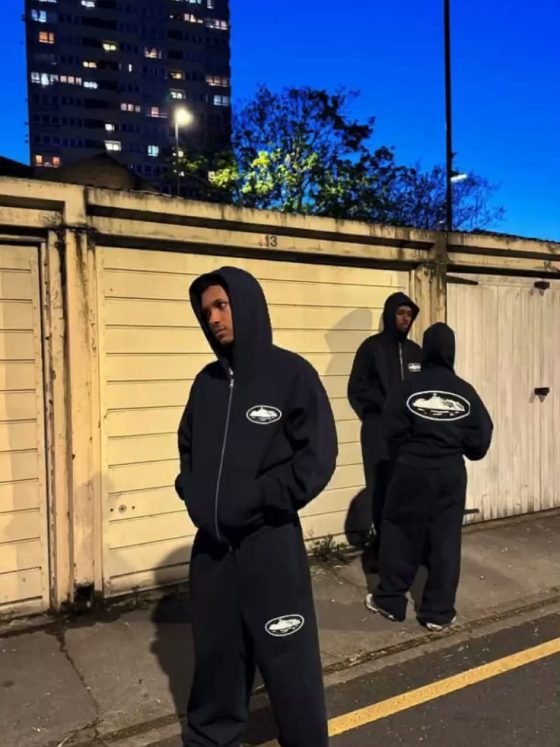
The dress choices of second-generation Africans in Britain are shaped by this schooling experience in ways that are not always conscious. The young man who instinctively reaches for trainers rather than traditional attire for a formal occasion outside his community is not choosing British culture over African culture. He is responding to years of institutional feedback about which presentation attracts friction and which does not. That conditioning is not identity negotiation. It is institutional socialisation, and it belongs to the analysis.
“A British-Nigerian girl who straightens her hair for school photographs and wears her mother’s ankara headwrap at a naming ceremony is not moving between two worlds. She is managing the demands of one institution while maintaining her life in the community that the institution does not fully see.”
The Ankara in the Office and the Agbada at the Wedding
The sartorial split most commonly described in accounts of second-generation African dress in Britain is the distinction between public professional space and private community space. European-coded dress for work, African dress for family events. This is presented as code-switching, a term borrowed from linguistics to describe the way bilingual speakers shift between languages depending on context. Code-switching in dress is real. But the linguistic metaphor depoliticises it. When a bilingual speaker shifts from English to Yoruba depending on their audience, they are responding to the communicative context. When a British-Ghanaian professional shifts from a suit to kente depending on the institution, they are responding to a power context documented by the Runnymede Trust in its research on racial wealth gaps and professional exclusion in Britain. The two things are not equivalent.
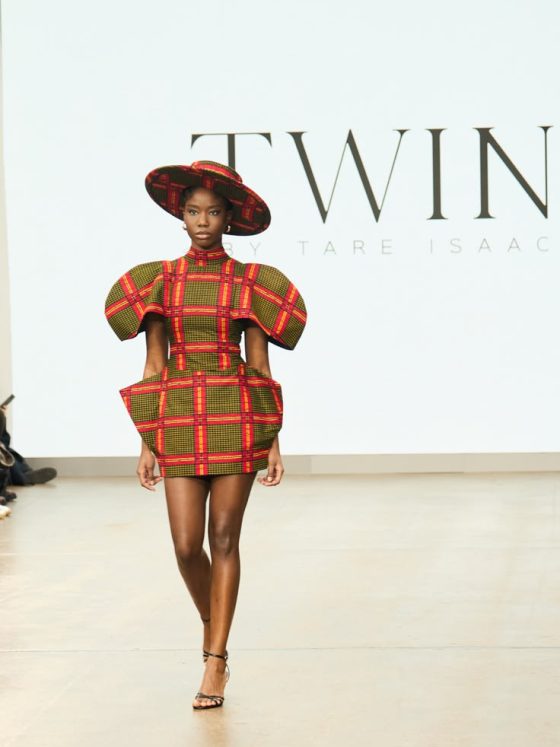
What the Ankara in the office represents, when it appears, is not compromise. It is a decision. The British-Nigerian woman who wears Ankara to her law firm on a Friday is not signalling her hybrid identity. She is deciding that the calculation she has been making since secondary school is no longer worth making, and she is making that decision in a space that was designed to require it of her. The decision is not between two worlds. It is a decision about the terms on which she participates in a world that has always had strong views about how people from her background should present themselves.
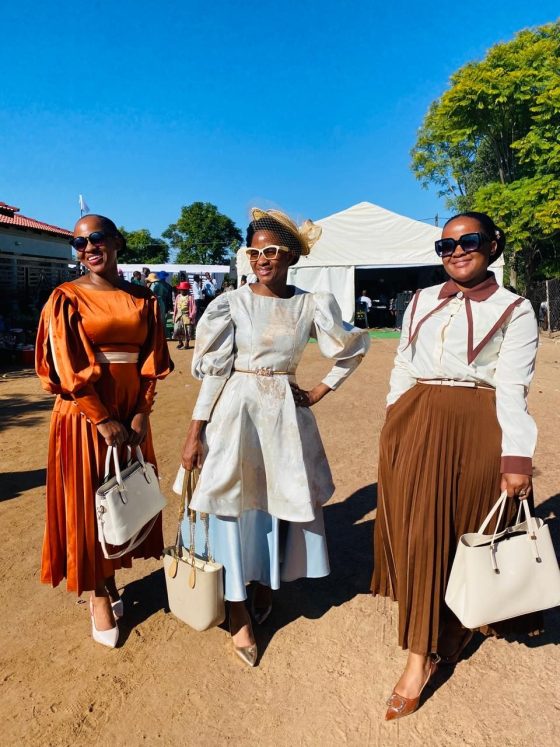
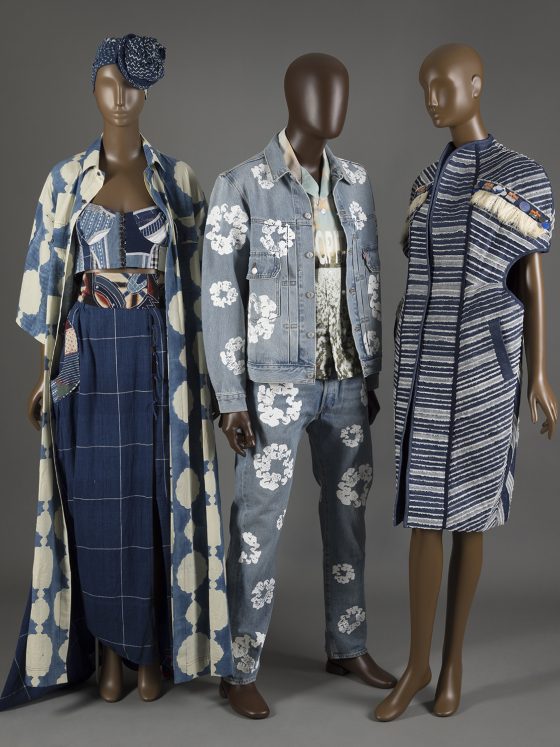
The agbada at the wedding is a different register. Within African community spaces in Britain, dress is not navigational. It is communal, ceremonial, and deeply specific. The Yoruba gele is tied to a particular height for a particular occasion, the Ghanaian kente cloth, whose pattern communicates family lineage, and the Sierra Leonean aso-ebi that marks membership in a specific social unit for a specific celebration. These are not performances of African identity for a British audience. They are the ordinary functioning of dress within a community that has its own internal codes, its own aesthetic authority, and its own standards for what is appropriate. The British audience is not present. It is not relevant.
The Generation That Stopped Explaining
Among second-generation Africans who came of age in Britain in the 2010s, a shift in their relationship to African dress is evident and documented by members of those communities. The generation before them wore African dress to community events and European dress to institutional ones, and frequently encountered African dress as requiring justification when it appeared in unexpected spaces. The current generation, broadly, has stopped explaining.
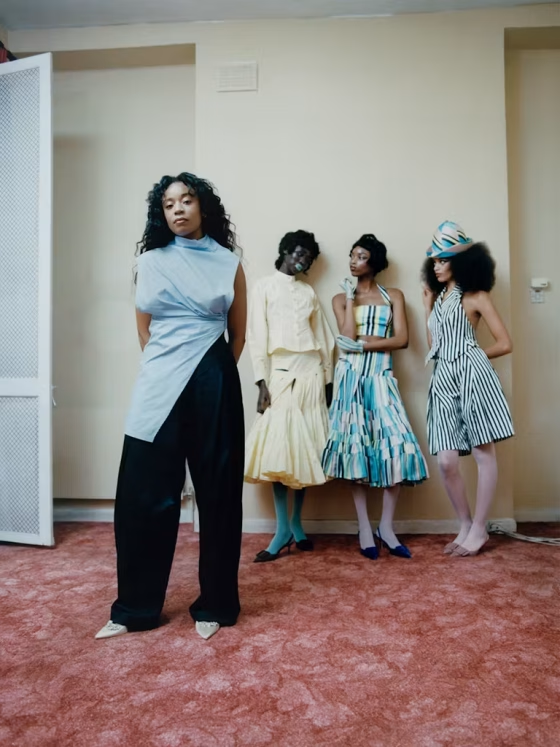
This is connected to a broader shift in Black British cultural visibility. The international reach of Afrobeats, the commercial success of British-African designers, including Labrum London founder Foday Dumbuya, whose collections draw directly on Sierra Leonean textile and tailoring traditions, and the growing presence of African fashion weeks in Lagos, Accra, and Nairobi as internationally recognised events, have created a context in which African dress does not need to justify its presence in global fashion discourse. Second-generation Africans in Britain are inheriting this context. They grew up watching African culture become globally legible on its own terms, not through the mediation of European fashion institutions, and that inheritance changes the calculation.
The change is not uniform. Class, geography, professional sector, and specific national heritage all shape how individual second-generation Africans in Britain navigate their relationship to African dress. A British-Somali woman in Edinburgh faces a different institutional environment from that of a British-Yoruba woman in South London. A second-generation African in financial services faces different pressures than one in the creative industries. The shift is real, but it is not monolithic, and the variation is part of the story.
What is consistent is the direction of travel. The direction is away from justification and toward assertion. The second-generation British African who wears traditional dress to a formal British occasion without framing it as a cultural statement is not making a fashion choice. They are withdrawing from a negotiation that their parents were required to conduct, and that withdrawal is itself a political act, even when it does not feel like one.
ALSO READ:
- → Clothing as Cultural Identity: What African Dress Has Always Communicated
- → Why Wearing African Cloth in the Diaspora Is an Act of Cultural Reclamation
- → Cultural Resistance Movements and the Politics of African Dress
Heritage Dress as Political Infrastructure
In 2019, footballer Raheem Sterling wore a suit to the FIFA Best Awards without incident. In 2022, when Black British athletes and public figures began appearing at state occasions and national ceremonies in African dress, the response in sections of the British media ranged from curiosity to discomfort. The discomfort was not about fashion. It was about legibility. The European suit is invisible in formal British public life because it has been normalised to the point where it carries no cultural weight. African dress is visible because it has not been normalised, and that visibility is read as a statement.
But the statement is not being made by the dress. The institution’s inability to accommodate the dress is being made unremarkable. Every time a British institution treats African dress as requiring comment or explanation, it is revealing the limits of its own definition of belonging. The second generation did not set those limits. They inherited them, and the question of what to do with the inheritance is one each generation answers for itself.
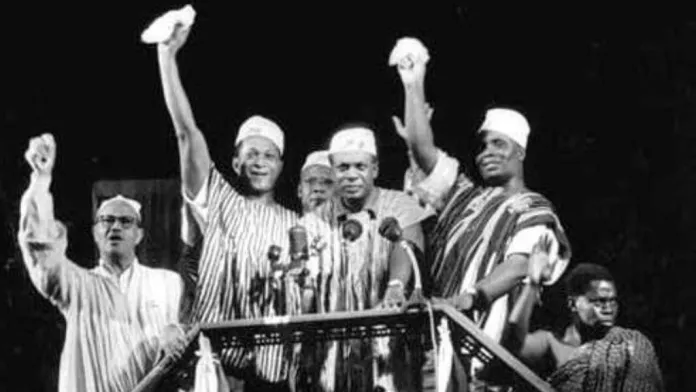
The answer being given by significant numbers of second-generation Africans in Britain in the mid-2020s is to treat African dress as political infrastructure, as Kwame Nkrumah treated kente at independence in 1957: not as a statement that requires explanation but as a position that speaks for itself. The V&A’s 2022 African Fashion exhibition, which drew record attendance from Black British communities who recognised their own family dress traditions on the walls of a national institution, was a marker of that shift. The dress was already present in Britain. What changed was the institution’s willingness to acknowledge it.
THE OMIREN ARGUMENT
Second-generation Africans in Britain are not dressing between two worlds. The two-worlds framework misidentifies the geography. Britain is not a neutral second world that African immigrants entered and now negotiate alongside their heritage. It is the former administrative centre of an empire that organised the extraction of labour, land, and cultural material from the same African nations whose children are now described as navigating British identity. The worlds are not parallel. One built its wealth and institutional architecture partly on the organised disadvantage of the other, and the second generation is not between those worlds. They are living inside the unresolved consequences of their relationship, and their dress choices are position statements made within an inherited geopolitical condition that has never been honestly reckoned with.
When a British-Nigerian young woman wears Ankara to a formal London occasion, she is not balancing Nigeria and Britain. She is deciding where she stands in a relationship that Britain defined and has never formally accounted for. When a British-Ghanaian professional wears Kente to a corporate event, the political charge is not in his choice. It is in the institution’s inability to receive that choice as unremarkable. The two-worlds metaphor gives both worlds equal moral weight and treats the individual as the agent of cultural synthesis. What it obscures is the structural condition: one of those worlds built its institutions around the exclusion of the other, and dressing inside that condition is not the same as moving between two equivalent options. It is the daily act of existing in a country that has extracted from your origins and has not yet decided what it owes you for it.
Frequently Asked Questions
Why do second-generation Africans in Britain dress differently in public and private spaces?
The distinction between African dress in private community spaces and European dress in British institutional spaces is not a matter of cultural preference. It is a response to a professional and institutional environment built around European dress norms and that has consistently coded African presentation as a deviation from a standard that was never designed to include it. Second-generation Africans navigate a hierarchy, not an equivalence. The community event does not require navigation. The corporate office does.
What does African dress mean for second-generation British Africans?
African dress for the British-born children of African immigrants carries multiple simultaneous meanings. Within community spaces, it is ordinary: ceremonial, communicative, and governed by the specific aesthetic codes of the relevant national and ethnic tradition. In British institutional spaces, it carries additional weight because those spaces were not designed to receive it as unremarkable. The meaning in the community space is internal. The meaning in the institutional space is produced by the institution’s response, not by the wearer’s intent.
How has the relationship of second-generation Africans to African dress changed in recent years?
A documented shift has occurred among British Africans who came of age in the 2010s. Whereas the previous generation frequently wore African dress primarily in community spaces and European dress in institutional settings, the current generation is more likely to wear African dress across a wider range of contexts without framing it as a cultural statement. This is connected to the global rise of Afrocentric fashion, the international visibility of British-African designers, and the growing presence of African fashion weeks as internationally recognised events that have made African dress legible on its own terms.
Is code-switching in dress a cultural or political act for second-generation Africans?
It is both, and the distinction between the two is often overstated. When a second-generation African in Britain shifts between African and European dress depending on context, the code-switching is cultural in the sense that it draws on different aesthetic and social traditions. It is political in the sense that the contexts themselves are not neutral: one was designed to include the wearer, and one was not. The political dimension does not cancel the cultural one, but it does determine the conditions under which the cultural choice is made.
Omiren Styles covers African fashion, identity, and culture from inside the continent and its diaspora. Read more at omirenstyles.com.