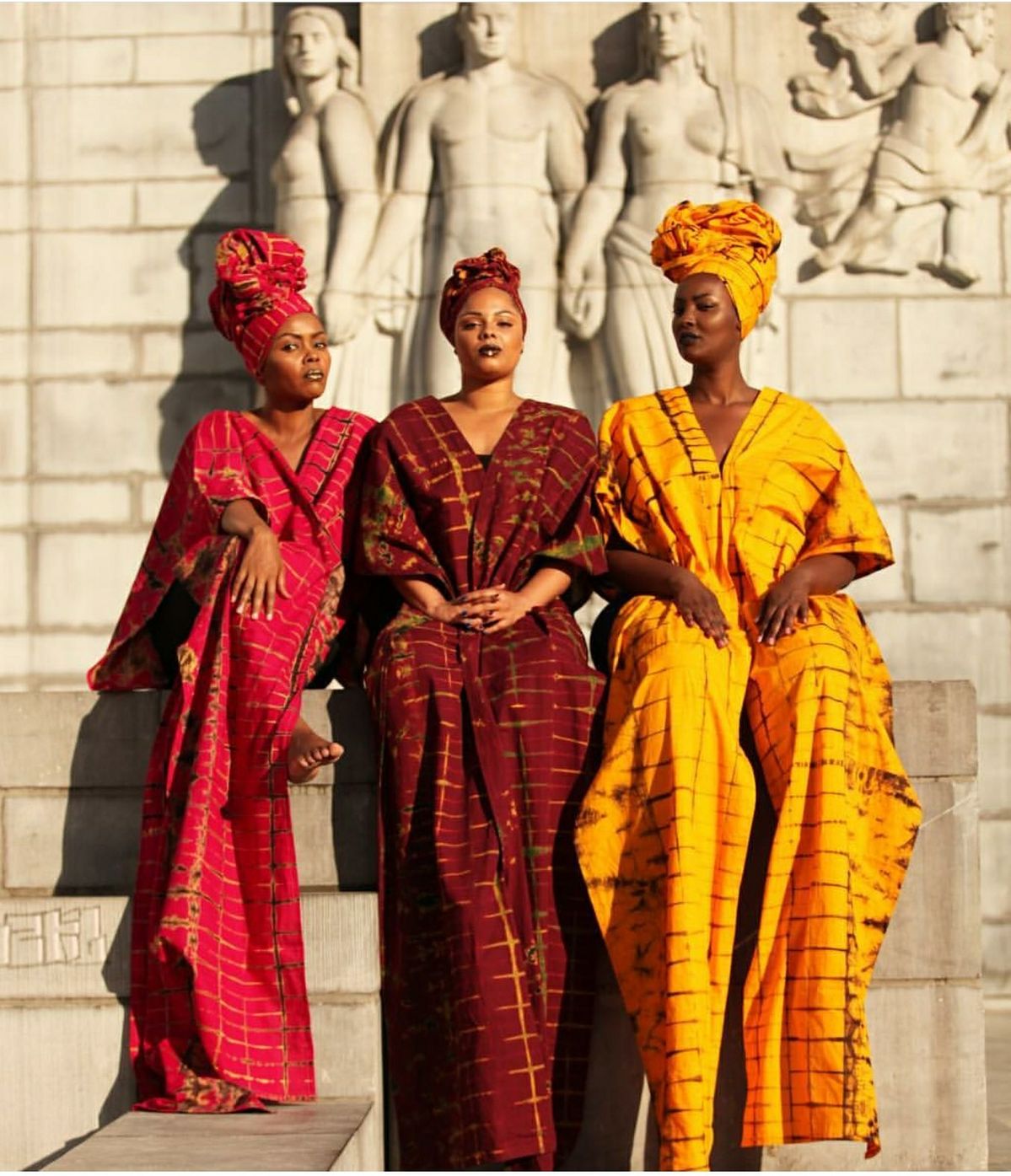
The knowledge was never gone. That is the fact that reframes everything said about African cloth in the diaspora, every conversation about what it means to wear Ankara to a London office, Kente to a New York graduation, or Adire to a Toronto art opening. The dominant frame calls it reclamation. The word implies loss, a gap in transmission, something retrieved from absence. But the knowledge of African dress carried into the diaspora was not absent. It was suppressed, forced underground by legal codes, social violence, and the economic consequences of being visibly African in societies built to penalise that visibility. Suppression and loss are not the same thing. What you suppress, you know, is still alive.
Wearing African cloth in the diaspora is not reclamation. It is surfacing, the refusal of knowledge that was suppressed, not lost. Here is what that distinction changes.
What the Reclamation Frame Gets Wrong
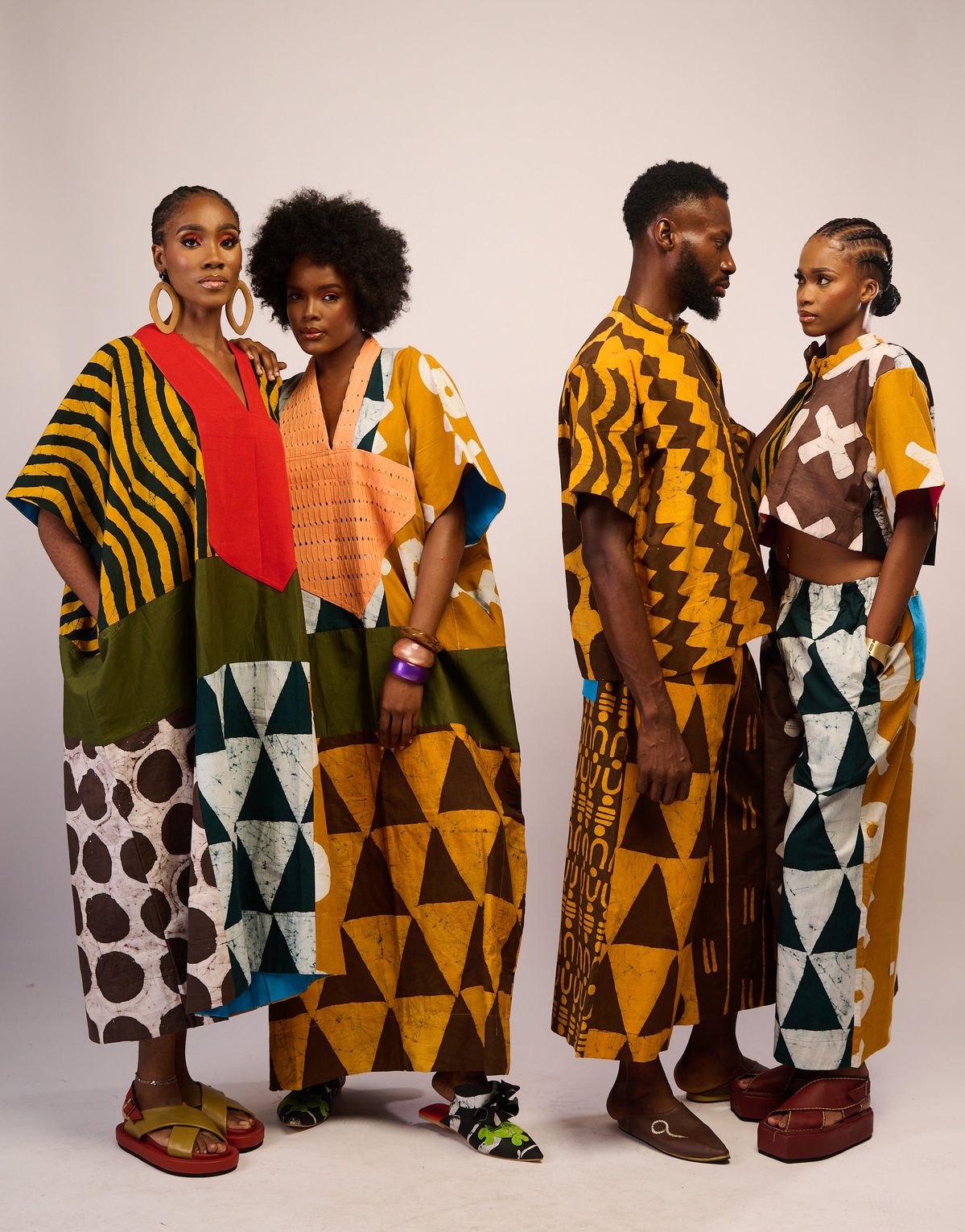
‘Reclamation’ is one of the most powerful words in diaspora cultural discourse. It carries weight and dignity. It frames dress, language, music, and naming practices as acts of recovery from a forced dispossession, and it honours the communities who do that work. But when applied to African cloth in the diaspora, it constitutes a historical error with practical consequences for how that dress is understood, valued, and defended.
The error is in assuming the break was complete. Reclamation requires an absence. It requires that something that was taken is gone and is now being recovered. The history of African dress in the diaspora does not support that. It supports a different story: a story of knowledge held under pressure, maintained in restricted spaces, transmitted in coded form, and passed forward through channels that white colonial authority could surveil but never fully control.
In enslaved communities across the Americas, African dress traditions survived in ceremony. In churches, in burial practices, in the colour logic of mourning and celebration, in the wrapping of cloth around the head that carried spiritual meaning even when colonial law mandated it as a mark of subjugation. The scholarship on this is extensive. Anthropologist Grey Gundaker’s work on African American yard art and material culture documents how African aesthetic systems were encoded into everyday objects precisely because encoding was a survival strategy. The knowledge did not disappear. It became cryptic.
In the Caribbean, similar encoding took place. The Spiritual Baptists of Trinidad and Tobago maintained a West African-derived practice of tying the head during prayer that was so persistent that colonial authorities banned it in 1917 under the Shouter Prohibition Ordinance. The ban lasted until 1951. The practice survived. The cloth survived. The knowledge of what the cloth meant survived. That is not reclamation. That is resistance.
The History of Suppression That Made Cloth Dangerous
To understand what wearing African cloth in the diaspora actually means, it is necessary to understand what the colonial and slave-holding order understood it to mean, because they understood it well enough to legislate against it.
The tignon laws of Louisiana, enacted in 1786 under Spanish colonial governance, required free women of colour to cover their hair in public with a cloth or handkerchief. The law was not about hygiene or modesty. It was about visibility and the political threat posed by Black women whose dress, demeanour, and social presence were perceived as destabilising to the racial hierarchy. The same impulse operated in British colonial Africa, where mission schools and colonial employers mandated European dress as a condition of education and employment, and in apartheid South Africa, where the doek worn by Black women was read as a racial marker and regulated accordingly.
These were not separate events in separate places. They were expressions of a consistent colonial logic: that African dress encoded African identity, that African identity was a political claim, and that political claims needed to be managed. The colonial administration did not suppress African dress because it was indecent. It suppressed it because it was legible. The cloth communicated things the colonial order could not afford to have communicated freely.
That communication continued in the restricted spaces where it was still permitted. West African immigrant communities in Britain maintained dress traditions in churches, in naming ceremonies, in funeral rites, in the community halls of Hackney, Peckham, and Brixton, in spaces that white institutional authority did not monitor with the same intensity as it did workplaces, schools, and public streets. The cloth was not lost. It was repositioned.
“The cloth communicated things the colonial order could not afford to have communicated freely. It was not suppressed because it was indecent. It was suppressed because it was legible.”
What Surfacing Looks Like in Practice
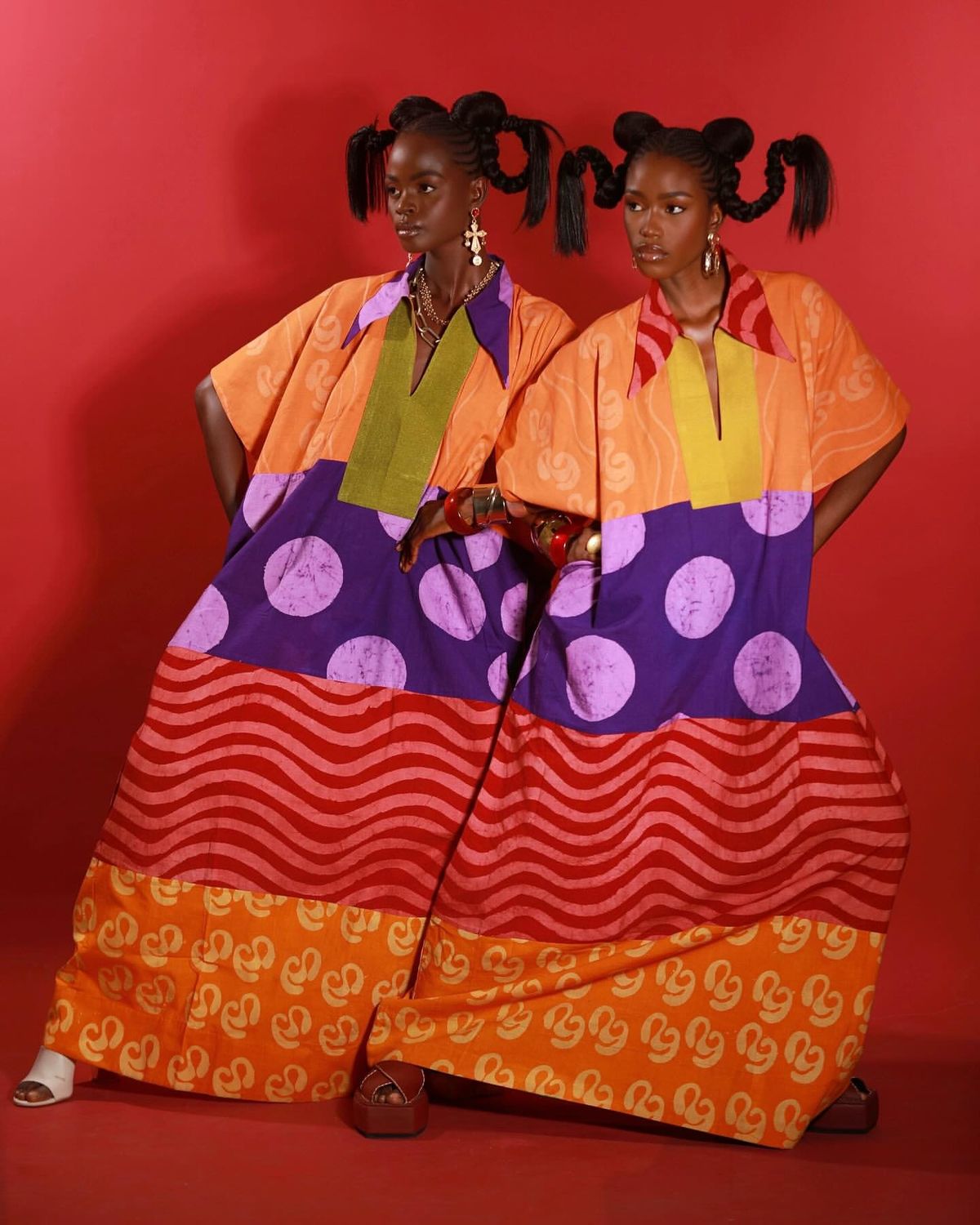
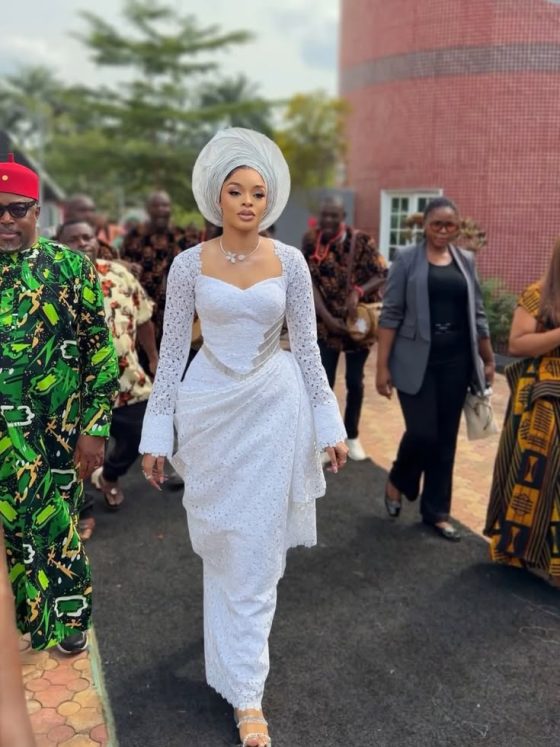
When a British-Nigerian woman wears Ankara to a formal occasion in London, the mainstream interpretation is usually one of two things: cultural pride or fashion statement. Both framings locate the act in the individual, as a personal choice about identity expression. What they miss is the structural dimension: the woman is wearing cloth in a space whose formal dress conventions were written to exclude her presentation, and her presence in that cloth is a form of testimony about what was excluded.
In the 1970s and 1980s, the generation of West African immigrants who built communities in British cities wore African dress primarily within those communities, reserving it for ceremony and private space. The choice was not always a cultural preference. It was often a calculation about which spaces it was safe or economically practical to be visibly African in. That calculation has shifted, not because British society has become welcoming in any complete sense, but because a generation raised on both sides of that experience has decided the calculation is no longer worth making.
The shift is documented in the growth of African fashion presence at London Fashion Week, where designers including Mowalola Ogunlesi and Duro Olowu have brought West African textile traditions into international fashion discourse on their own terms. It is visible in the rise of Afrocentric bridal and formal wear labels across London, Manchester, and Birmingham, where demand has grown significantly since 2015, according to industry observers. It is present in the styling choices of British African public figures who appear at national events, state occasions, and institutional ceremonies in African dress without framing the choice as political, because for their generation, it simply is not a choice that requires justification.
That refusal to justify is itself historically significant. The generation making that refusal grew up watching their parents justify. The act of wearing without explanation is a form of surfacing: the emergence of something always present, made fully visible only by the right conditions.
Cloth as a Living Archive
African textile traditions are not static heritage objects preserved for ceremonial display. They are living archives: accumulations of technical knowledge, aesthetic decision-making, social records, and cultural arguments maintained over time by practitioners who understood that the cloth carries history, whether or not that history is spoken aloud.
Adire, the Yoruba indigo-resist-dye tradition documented by the Smithsonian’s National Museum of African Art, encodes its social and spiritual meanings in the patterns themselves. Different adire patterns communicate different things: a pattern worn by a newly married woman carries different information than one worn for the Egungun masquerade. The pattern is a sentence. The cloth is a text. When a diaspora woman wears adire in London, New York, or Toronto, she is not simply wearing a beautiful fabric of African origin. She is wearing a text that continues to communicate, whether or not the people around her can read it.
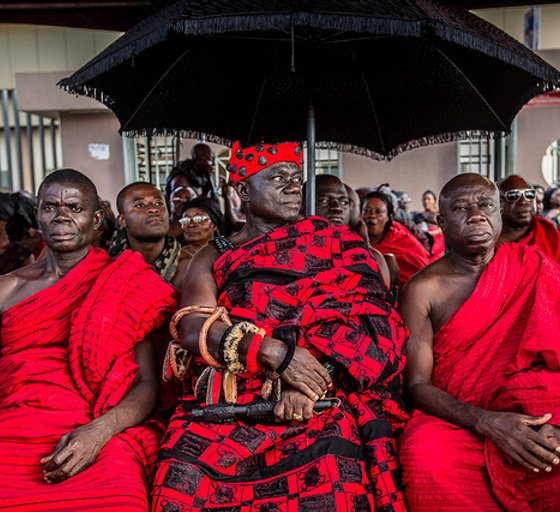
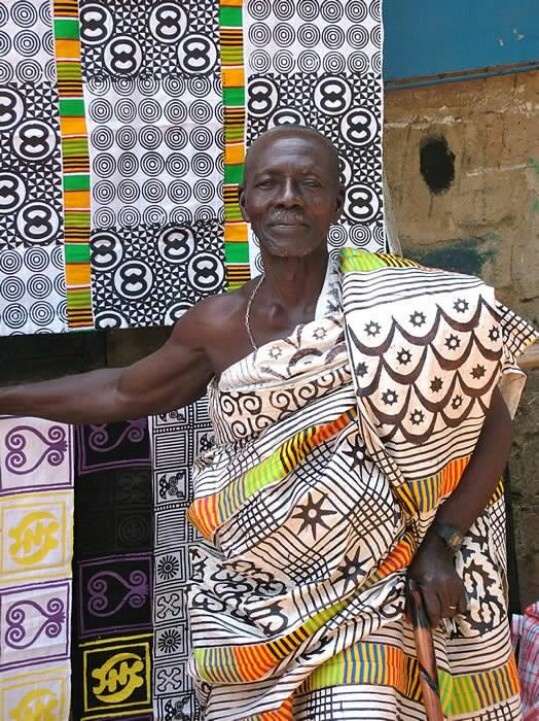
Kente cloth from the Asante and Ewe traditions of Ghana and Togo follows the same logic. Each kente strip pattern carries a name, and each name carries a meaning that references historical events, moral principles, or social relationships. The Oyokoman pattern, associated with the Oyoko royal clan of the Asante, communicates genealogical information. Wearing it is not decorative. It is declarative. In the diaspora, that declarative function continues even when the audience cannot decode it, because the declaration is not addressed to the audience. It is addressed to the ancestors and to the community that can read the cloth.
This is a key distinction that the reclamation frame collapses: the question of audience. Reclamation implies that African dress is being recovered and worn for a diaspora community that needs to reconnect with its origins. Surfacing implies something different: the cloth was always speaking to its primary audience. What changes when it surfaces is that the secondary audience, the one that could not or would not see it, is forced to acknowledge it.
The Political Charge Is Not in the Wearer
A consistent misreading of African diaspora dress in political contexts is to locate the political charge in the individual wearing the cloth, as though the person were committing a deliberate act of political provocation by choosing to dress in a particular way. This misreads the structure of the situation.
The political charge is in the space, not the person. When a British-Ghanaian barrister appears in a London courtroom wearing kente-trimmed attire, the legal chamber has not been politically disrupted by her choice. It has been confronted with the fact that it was never politically neutral, that its conventions of professional dress encoded a specific racial and cultural default, and that this default is now being contested on its own ground. She did not introduce politics into a neutral space. She made the existing politics of the space visible.
This is consistent with the broader argument made by cultural theorist Stuart Hall regarding the politics of representation: that what appears to be a disruption of a neutral norm is often the revelation that the norm was never neutral. In his work on Black British cultural identity, Hall argued that the appearance of Black cultural production in mainstream British space did not insert politics into a politics-free zone. It made legible the politics that had always structured the zone.
When African cloth surfaces in these spaces, it does the same thing. It does not create a political situation. It reveals one. And the revelation is only surprising if the original exclusion was so normalised that it became invisible. For the communities that experienced that exclusion directly, there was never anything surprising about it.
ALSO READ:
- → Clothing as Cultural Identity: What African Dress Has Always Communicated
- → The Headwrap: History, Resistance, and What the Cloth Actually Carries
- → Diaspora Dress and the Western Gaze: Why the Exotic Designation Has No Authority
Why the Distinction Between Reclamation and Surfacing Matters
The difference between reclamation and surfacing is not a semantic dispute. It changes what the story is about.
If wearing African cloth is a form of reclamation, the story is about loss and recovery. It is a story about individuals reconnecting with a severed heritage, and the political valence is primarily personal. The measure of success is the number of diaspora individuals who have recovered their connection to African dress traditions.
If wearing African cloth is surfacing, the story is about suppression and its failure. It is a story about knowledge that was held below the surface by institutional force and is now refusing to stay there. The political valence is structural, not individual. The measure of success is not personal reconnection but the erosion of the conditions that made African dress dangerous to wear in public. And the question that follows is not how do we reclaim what was lost, but what were the conditions that suppressed it, do those conditions still operate, and what does it mean that the cloth is becoming visible again?
That question has more analytical power. It connects the dress to housing policy, employment discrimination, school uniform codes, workplace dress policies, and every other institutional mechanism through which African identity has been managed in diaspora spaces. The cloth is not separate from those mechanisms. It has always been a site where they operate.
THE OMIREN ARGUMENT
Wearing African cloth in the diaspora is not reclamation, and the word matters. Reclamation presupposes a break, a period of genuine absence during which the knowledge was gone and must now be recovered. The history does not support this. In churches, in ceremony, in the back rooms of carnival preparation, in the careful instructions of grandmothers who knew which streets it was safe to wear certain things on, the African dress knowledge was held. It was not transmitted freely because the cost of free transmission was too high. But it was transmitted, underground and in restricted space, across every generation from the Middle Passage to the present. The cloth was always there. Suppression is not the same as erasure. What is suppressed knows it is being held back.
Wearing African cloth in the diaspora is surfacing: the making visible of knowledge that institutional power forced beneath the surface of public life, not by cultural forgetting. The distinction has consequences. Reclamation is an individual act of personal recovery, measured by how many people reconnect with their heritage. Surfacing is a collective act of political exposure, measured by whether the conditions that made African dress dangerous to wear in public have actually changed. To frame it as surfacing is to ask harder questions, of British schools that still issue guidance against non-European dress, of workplaces that still code African hair as unprofessional, of the institutional architecture that once mandated the cloth as a mark of subjugation and has never formally reckoned with what that mandate did. The cloth was always present. What is changing is the willingness of the societies that suppressed it to look at what they did.
Frequently Asked Questions
What does wearing African cloth mean for diaspora communities?
For African diaspora communities, wearing African cloth is an act of cultural continuity rather than novelty. The dress traditions were never fully severed, even under colonial suppression and the violence of slavery. They were maintained in ceremony, in restricted spaces, and in the coded transmission of grandmothers and community elders. When diaspora individuals wear African cloth today, they are continuing a living tradition, not recovering a lost one. The meaning is in the continuity, not the recovery.
Why is African cloth considered political when worn in Western spaces?
African cloth registers as political in Western professional or formal spaces because those spaces were designed around European dress conventions that encoded whiteness as the invisible professional norm. When African cloth enters those spaces, it does not introduce politics into a neutral environment. It makes the existing politics of the space legible. The political charge is in the architecture of the room, not in the cloth or the person wearing it.
What is the cultural meaning behind specific African textiles like Kente and Adire?
Kente, from the Asante and Ewe traditions of Ghana and Togo, encodes meaning in each strip pattern. Pattern names reference historical events, moral principles, and genealogical information. Adire, the Yoruba indigo resist-dye tradition of South-West Nigeria, communicates social and spiritual status through its pattern vocabulary. Both are living archives, not decorative fabrics. The meanings are embedded in the cloth itself and continue to communicate in diaspora contexts, whether or not the immediate audience can decode them.
How did colonial rule affect African dress traditions in the diaspora?
Colonial administration and slave-holding societies consistently legislated against African dress, not because it was indecent but because it was legible as a claim of African identity and cultural authority. The tignon laws of Louisiana, British colonial mission school dress codes, and apartheid South Africa’s regulation of the doek were all expressions of the same logic: that African dress communicated something that white political authority needed to control. The response of African communities was to maintain dress traditions in the spaces that were less heavily surveilled, primarily ceremony, religious practice, and private community life.
Omiren Styles covers African fashion, identity, and culture from inside the continent and its diaspora. Read more at omirenstyles.com.