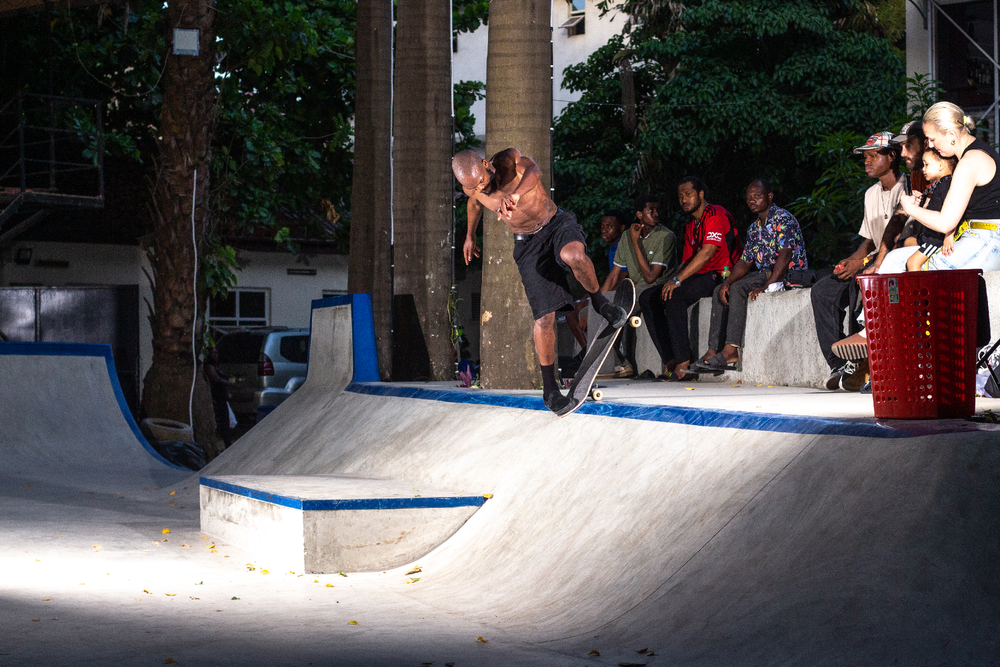
In CNN’s September 2026 account of Lagos skateboarding, Joseph Omojuwa recalled watching WAF Park take shape before he understood what a skatepark was. When he began skating there, he borrowed a board. His coach, Samuel Zakari, remembered him sometimes practising barefoot. Zakari helped arrange a board, wheels and shoes donated by skate companies. “From then I started skating every day,” Omojuwa told CNN. His route into skating involved several things coming together: somewhere to practise, someone to teach him and equipment he could use. The park provided the setting, but the people and organisations around it made participation possible.
Opened in 2024 within Freedom Park on Lagos Island, WAF Park was spearheaded by the skatewear label WAFFLESNCREAM, also known as waf., and realised with construction and design partners. It gave an existing scene a dedicated concrete space. “We had a community before the WAF Park,” Zakari told CNN. “The park helped solidify the community.” That is the starting point for understanding the label’s contribution: not the invention of a scene, but a change in the conditions under which people could practise, teach and gather.
How WAF Park gave Lagos’s existing skate scene a dedicated place to practise, with coaching, equipment support, and collective-led sessions.
Before the Park, Finding Somewhere to Skate
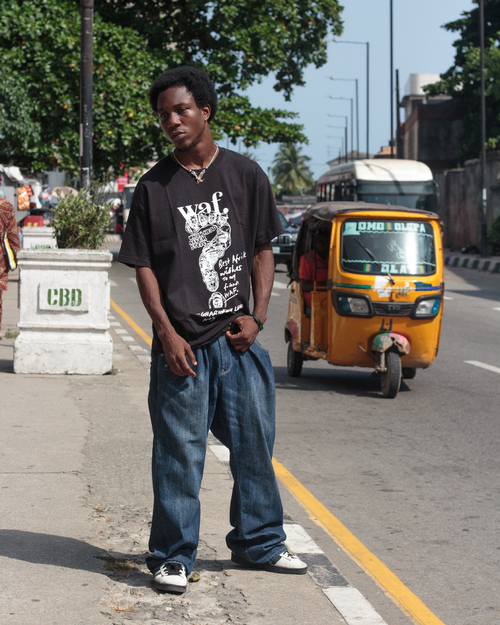
Zakari began with a board and very little guidance. After encountering skateboarding through Tony Hawk video games, he obtained his first board in 2010 without having seen someone skate in person. He used YouTube videos to teach himself and practised on empty basketball courts, looking for an alternative to rough road surfaces. As he met other skaters and creatives, the search for suitable ground became a shared activity. They used parking garages and areas around the National Stadium. Zakari recalled being moved on by security and having boards confiscated. People were already learning, meeting and exchanging knowledge. What they lacked was a consistent place for that activity.
WAFFLESNCREAM’s earlier shop had supplied one kind of gathering space. In a 2017 Vogue report, cofounder Jomi Marcus-Bello described its Victoria Island location as “more like a clubhouse than a store.” Skaters could spend time there and get out of the heat. The park extended that relationship between the label and a physical place. A shop could accommodate conversation, products and company. A purpose-built skatepark could accommodate the skating itself.
Building Within Freedom Park

WAF Park occupies a 600-square-metre site beside the WAF skateshop in Freedom Park. Salad Days of Skateboarding records that it partnered with WAF and skatepark-building organisation Wonders Around the World on the project in spring 2024. CNN reports that local skaters and international volunteers helped build it. Studio Contra’s project record identifies WAFFLESNCREAM as the client, Wonders Around the World as the builder and its own role as design coordination. The credits describe a project assembled through different contributions rather than the work of a fashion label acting alone.
The setting also shaped the design. Freedom Park occupies former colonial prison grounds that now serve as a cultural space. Studio Contra says the skatepark’s layout retained most of the site’s mature trees, which provide shade around the facility. These details place the park within an existing Lagos landscape. It was not simply an empty plot filled with concrete. Its layout had to work with the surrounding site, and its position beside the skate shop brought a dedicated practice space close to the label’s retail presence. For a scene accustomed to searching for smooth surfaces, the result was a fixed location built for the activity.
A Place to Learn, Not Only to Perform
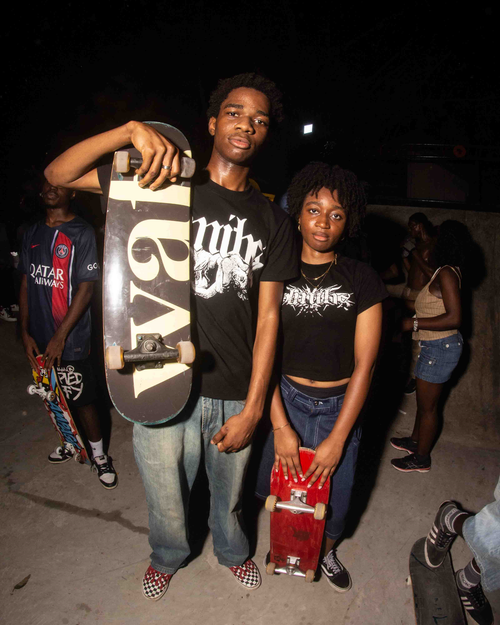
Omojuwa’s experience shows why the surface is only one part of the story. A beginner also needs a board, opportunities to practise and someone willing to explain what to do. Zakari’s mentorship developed alongside his own skating. He told CNN that younger children would watch him and wait for a turn on his board. Having started without an experienced person to guide him, he recognised the value of providing that support himself. “It was a part of me to do this, to empower these kids because when I started, nobody was there to inspire me,” he said.
He now leads Super Glider House, which provides private coaching and athlete management. Separately, CNN reports that he runs weekly group clinics at WAF Park sponsored by WAF. He also described helping children who arrived unable to pay. The arrangements should remain distinct. The agency’s private services are not the same as the label-supported group clinics, and the published account does not specify the sponsorship’s financial terms. What it does establish is recurring instruction at the park. The site is not only a setting for experienced skaters to demonstrate what they can already do. It is somewhere beginners can learn.
In Omojuwa’s case, the support crossed several relationships. Zakari coached him and helped secure equipment; skate companies supplied a board, wheels and shoes; the park gave him a place to return. His statement that he began skating every day brings those contributions together in a concrete account of use.
Different Organisers, Shared Ground
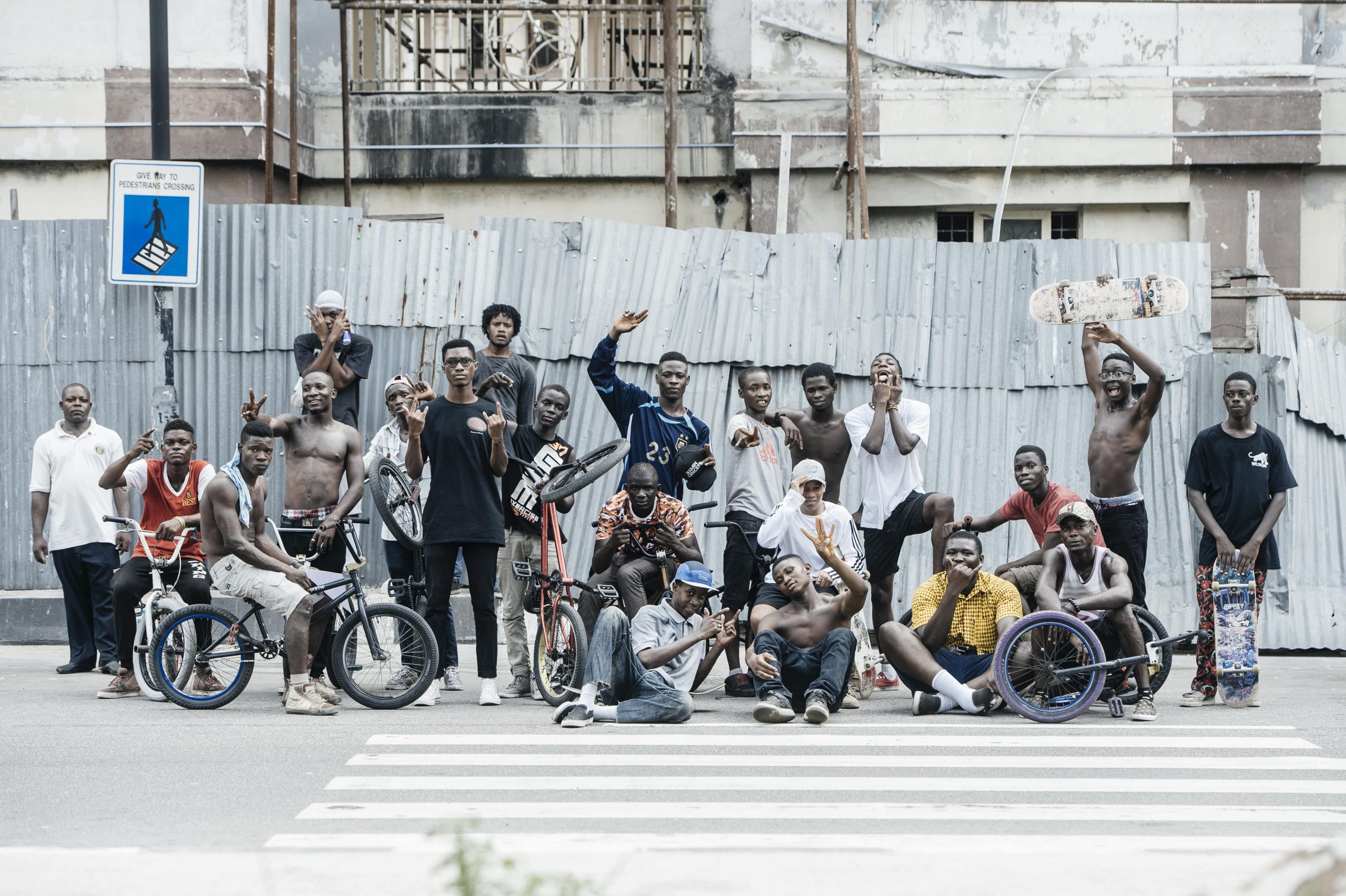
The park’s activity extends beyond Zakari’s sessions. Salad Days of Skateboarding documents youth classes, competitions and events, as well as girls-only sessions hosted by Dencity Skate Collective. Dencity’s involvement adds another organiser to the account. WAFFLESNCREAM helped establish the facility, but other people and groups use it to support their own activities. This distinction matters: providing space is different from directing everything that happens within it. A skatepark can become useful through several overlapping relationships: coaching, collective sessions, informal practice and organised events. The published accounts show those different uses without reducing them to a single brand programme. They also give the park a life beyond its opening. Construction supplied the physical facility; recurring activity made it a place people kept using.
Where the Clothes Re-enter the Story
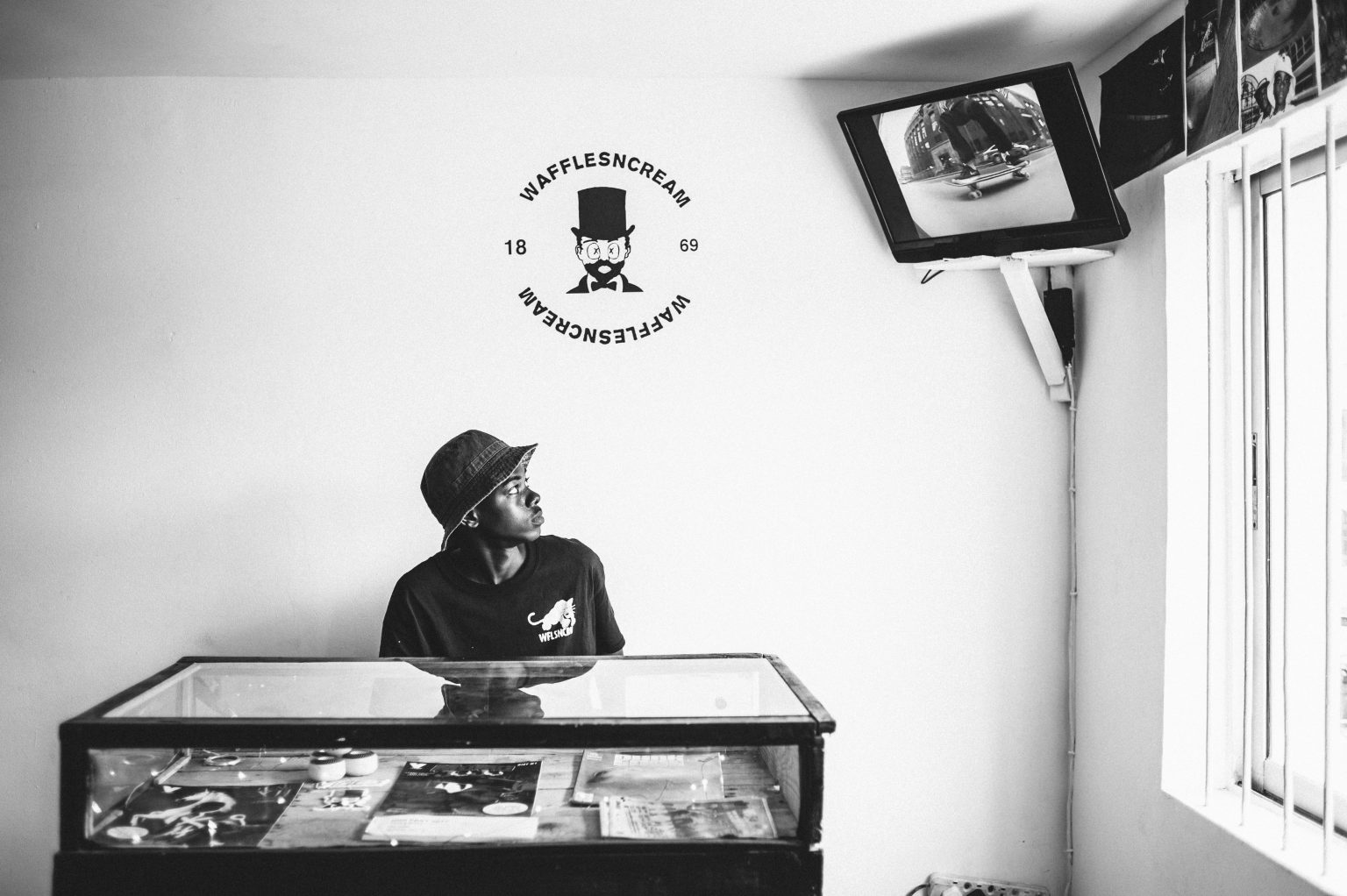
Fashion remains part of this setting. CNN reports that Omojuwa appeared in a WAF. collaboration campaign with Adidas alongside Zakari, a professional skater and original WAF member, Fahd Bello, and Marcus-Bello. Those participants had roles outside the image. They were learning, teaching, skating and helping organise the scene. The campaign brought some of those people into the label’s commercial presentation, but their connection to skating did not begin with the campaign. Omojuwa’s account is especially useful in keeping that sequence clear. Borrowing a board, receiving equipment, and practising regularly are part of his story before its promotional visibility.
The park also continues to have a purpose between releases. Clinics and collective-led sessions are activities in their own right, rather than evidence that matters only when it produces a campaign participant. This gives Omiren a more specific way to examine the relationship between clothing and culture. The garments circulate through an existing network of people, while the label contributes to a place where some of their activity happens.
The Omiren Argument
The clearest contribution here is infrastructure. WAFFLESNCREAM did not create Lagos’s skate community. It helped provide a place where an existing one could practise, teach and organise. Zakari’s account makes that distinction explicit. The park’s value also depends on contributions beyond the label: construction expertise, volunteer labour, coaching, donated equipment and sessions organised by collectives. Keeping those roles visible produces a fuller account of how the space works. It does not diminish WAFFLESNCREAM’s part in establishing it. For Omiren, the question is what exists between campaigns. At WAF Park, the documented answer includes recurring instruction and people returning to skate. That is a substantive relationship between a fashion business and the activity around which its identity is built.
The clothes remain part of the story. The park makes it possible to examine what supports the scene when no new collection is being launched.
Also Read:
- Street Style in Lomé: The Evolution of Youth Fashion in Togo
- Monrovia Streetwear: How Liberian Youth Built an Urban Fashion Culture
- Omiren Index: Independent Fashion Retailers and Showrooms to Watch
- How Lagos Street Style Is Influencing What the Diaspora Wears in New York
Frequently Asked Questions
Where is WAF Park?
WAF Park is within Freedom Park on Lagos Island, beside the WAF skateshop. It occupies a 600-square-metre site on former colonial prison grounds that now serve as a cultural space. Studio Contra says the layout retained most of the site’s mature trees, which provide shade around the facility.
When was WAF Park built?
WAF Park opened in 2024. Salad Days of Skateboarding records that it partnered with WAF and the skatepark-building organisation Wonders Around the World on the project that spring. CNN reports that local skaters and international volunteers helped build the facility.
Who contributed to the project?
Published records identify WAFFLESNCREAM as the client, Wonders Around the World as the builder and Studio Contra as design coordinator, with Salad Days of Skateboarding also partnering on the project. CNN also reports the participation of local skaters and international volunteers, so the park reflects contributions from several groups.
What activities have been documented there?
Published accounts describe weekly WAF. -sponsored clinics led by Samuel Zakari, youth classes, competitions, events and girls-only sessions hosted by Dencity Skate Collective. These accounts are not a current visitor timetable, and the published account does not specify the sponsorship’s financial terms.