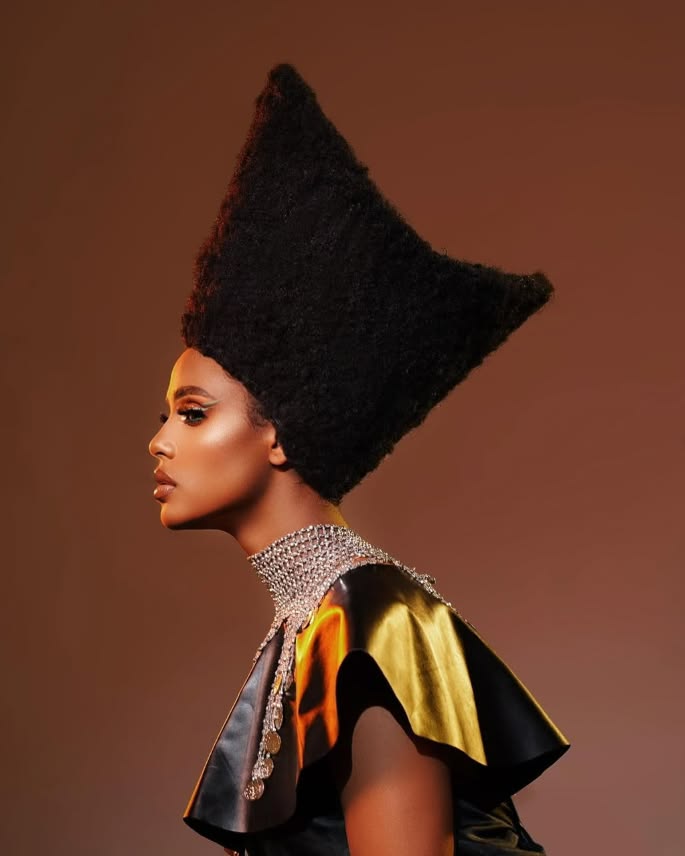
As one of Africa’s most striking hairstyles, the architectural hair artistry of Jimma Oromo women represents a pinnacle of structural sophistication and high-fashion elegance. Far from casual styling or transient trends, these massive, halo-like frames and geometric crowns function as living architecture. Each variation is incredibly fashionable, commanding instant attention with clean geometric silhouettes that convey a woman’s precise position within the Gadaa social hierarchy, her lineage, her wealth, and her specific stage of life.
Explore the architectural hair artistry of Jimma Oromo women: plant-fibre frames, sculpted crowns and the Gadaa social meanings behind each style.
These coiffures reveal an elite philosophy of beauty in which the body serves as a canvas for social communication. In the Kingdom of Jimma, a powerful hub of trade and culture, the head is considered the ultimate seat of personal identity and spiritual presence. Consequently, hair styling is a highly specialised discipline that requires exceptional technical skill, specialised tools, and days of intensive structural engineering. It is an aesthetic culture that celebrates form, balance, and precision, maintaining a legacy of hair design that serves as a masterclass in sculptural fashion.
The visual impact of these crowns is immediate, altering the wearer’s proportions and creating a commanding runway presence. In editorial spaces, the silhouette functions as a powerful statement of cultural autonomy and design literacy. Rather than adapting to outside trends, this style establishes its own distinct rules of proportion, geometry, and texture, making it an endless source of inspiration for avant-garde artists and fashion designers worldwide who seek to understand the limits of hair as a sculptural medium.
The Structural Engineering of the Coiffure
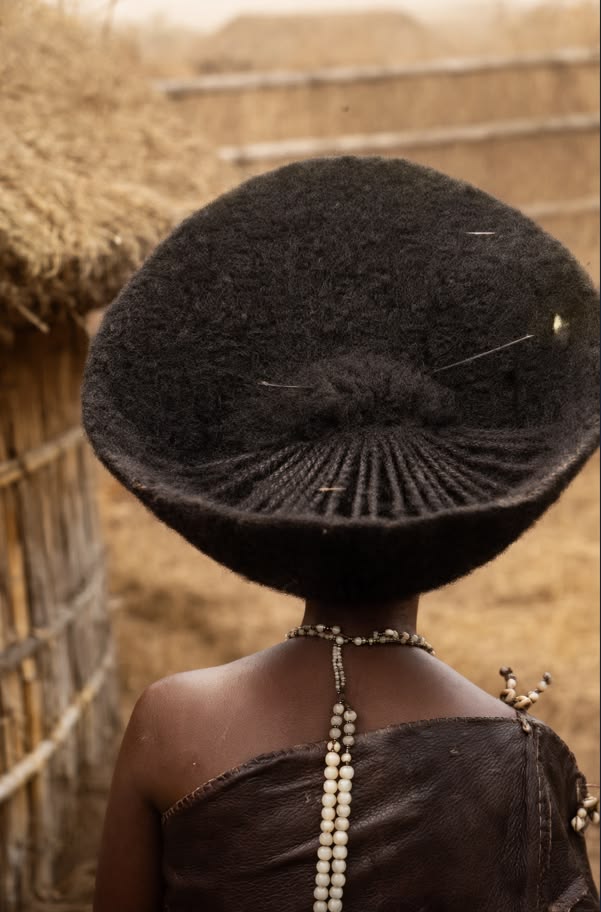
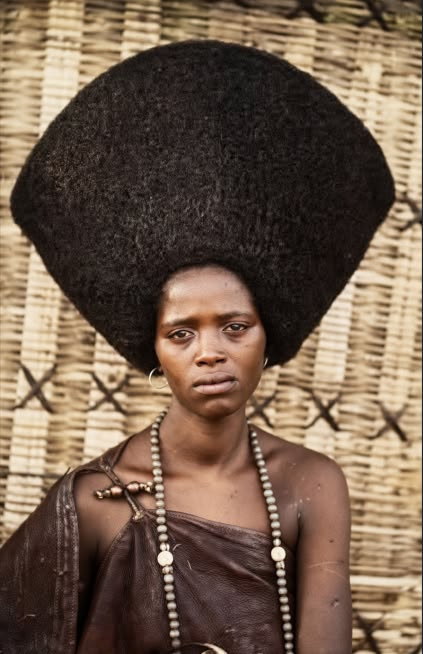
The defining characteristic of the classic Jimma Oromo coiffure is its extraordinary scale and geometric clarity. Women wear their hair extending outward from the scalp in a smooth, continuous, spherical or cylindrical silhouette. These shapes form wide crowns or expansive halos that frame the face with flawless symmetry. Achieving this volume with natural hair requires internal support systems, moving the practice beyond simple grooming and into structural design.
To prevent the massive shapes from collapsing under their own weight, hair technicians utilise an internal scaffolding system. Stylists harvest specific plant fibres, drying and weaving them into lightweight, flexible rings, cylinders, or conical frames. These organic matrices are placed against the head, and the natural hair is meticulously combed, smoothed, or finely braided over the framework. The hair is then bound, coiled, or stitched down using specialised threads and binding techniques to lock the structure into place.
The technical execution requires different stylistic variations depending on the desired silhouette:
- The Spherical Halo: A perfectly rounded, wide structure that extends evenly around the head, creating a seamless frame. This particular style demands an immaculate distribution of weight across the scalp, ensuring that the perfect circle remains balanced from every conceivable angle.
- The Cylindrical Crown: A high, flat-topped variation that rises vertically from the brow, emphasising height, presence, and severe architectural lines. This variation is particularly difficult to achieve, as it requires the stylist to maintain perfectly straight vertical walls along the sides of the head.
- The Cone Profile: An angled, tapered form that projects upward and backward, often associated with specific transitions in age or lineage, adding a dynamic sense of movement to the wearer’s posture.
Maintaining these complex forms requires strict discipline and specialised daily care. Women utilise carved wooden neckrests during sleep to keep the coiffure suspended above the ground, preventing friction, compression, and crushing. A single installation lasts for weeks or even months, requiring periodic smoothing, oiling with clarified butter to maintain a deep lustre, and tightening by expert stylists within the community who hold the specialised technical knowledge required to manipulate the internal scaffolding without damaging the natural hair.
A Social Communication System
In Oromo society, personal presentation is deeply intertwined with the Gadaa system, the traditional, generational framework governing social, political, and economic life. Within this context, a woman’s coiffure serves as a visual passport. Every parting, every choice of volume, and every specific terminology applied to the hair, such as Jigsee, Mataa Lafaa, and Sankofa, carries explicit social meaning, indicating whether a woman is unmarried, newly wedded, a mother, or an elder of high lineage.
Young, unmarried women typically wear styles that emphasise intricate partings and localised density, often leaving sections of the hair closer to the natural scalp line or opting for the buoyant Jigsee style to signal youth, energy, and family prestige. Upon marriage and entry into adult social tiers, the hair transitions into the grander, more permanent Mataa Lafaa or fully scaffolded spherical coiffures. The sudden acquisition of immense volume and architectural height publicly declares a shift in status, demanding physical poise and reflecting the wearer’s new responsibilities, domestic authority, and social leadership within the community.
The symmetry of the hair is paramount to its social function. Asymmetrical or unkempt hair suggests social discord, personal grief, or an imbalance in life. A flawless, balanced crown, conversely, mirrors the Oromo cultural ideal of Safuu, the ethical code of harmony, mutual respect, and cosmic order. Maintaining a perfect coiffure demonstrates respect for oneself, one’s lineage, and the community at large, turning personal style into a daily civic duty that reinforces social cohesion.
Adornment
The architectural hair is never viewed in isolation; it forms the crown jewel of an integrated aesthetic system that includes expertly worked leather garments and symbolic jewellery. Elite women combine their towering coiffures with garments that communicate their clan affiliation, regional pride, and economic standing.
The hair structure is designed to complement the precise lines of traditional leather attire, creating a balanced silhouette from head to toe:
- The Wandabo: A knee-length, finely prepared cowhide wrap-around skirt that provides a structured, tailored lower silhouette. The stiffness of the treated hide contrasts beautifully with the soft texture of the sculpted hair.
- The Gurda: A stiff, heavily beaded leather belt fastened tightly around the waist, anchoring the wide proportions of the hair above and balancing the wearer’s centre of gravity.
- The Qollo: A soft, draped sheep- or goat-skin cloak resting elegantly over the shoulders, softening the transition between the wide coiffure and the structured body garments.
To further elevate the hair, specialised ornamentation is woven directly into the braids or pinned onto the surface of the coiffure. Blue and red glass beads, imported through extensive regional trade networks, are stitched along the margins of the hair to catch the light as it moves. Cowrie shells, universally recognised symbols of wealth, fertility, and divine protection, are arranged in geometric patterns across the crown. Large metal hoop earrings and heavy bead bracelets complete the look, creating a balanced interplay of textures: the matte depth of the hair, the sheen of polished cowhide, and the sharp gleam of glass and metal.
Technical Innovation and Cultural Knowledge
Preserving and continuing Jimma Oromo hair artistry preserves a vital repository of indigenous technology and fashion culture. Far from being mere decorative curiosities, these styles demonstrate that Jimma Oromo women masterfully execute complex formal concepts that challenge global design norms. They understand how to manipulate texture, weight distribution, and internal support to completely alter the human silhouette, long before the global popularisation of avant-garde hair design or the sculptural shapes seen on modern high-fashion runways.
This technical expertise is handed down through generations of women, creating an exclusive lineage of master stylists who serve as the custodians of community identity. While changing trade routes and the introduction of imported cotton textiles influence everyday dress choices in Jimma, the practice of creating these intricate styles remains active. The legacy of the scaffolded crown remains a living cornerstone of Oromo cultural pride, showing how traditional knowledge systems adapt, preserve their core values, and thrive in the modern era.
The Modern Editorial Resonance
Today, Jimma’s coiffures offer profound inspiration for the global fashion and hair industries. In an editorial landscape that increasingly values heritage, authenticity, and sculptural form, these traditional styles challenge standard Western monopolies on high-concept beauty. The Jimma coiffure proves that hair styling is a legitimate form of fine art, fine-tuned over generations to achieve structural perfection and unmatched visual impact.
For the contemporary observer, these styles powerfully remind us of the importance of self-presentation. The women of Jimma do not simply wear their hair; they command space with it. Their grand, symmetrical crowns declare dignity, autonomy, and sophisticated cultural identity. By studying the plant-fibre frameworks, the calculated partings, and the deliberate lines of the Gibe crowns, modern designers and cultural analysts alike connect with a living reality where fashion is not merely superficial adornment but a profound, permanent conversation with culture, pride, and artistic excellence.
Also Read:
- Habesha Hairstyling Traditions and What They Signal in Ethiopian and Eritrean Communities
- Shewa Oromo Cultural Clothing
- Afar Men’s Hair Traditions: Asdago, Dayta and the Art of Buttered Hair in Ethiopia
- African Hair Is a Political Act: The History Nobody Taught You
The Omiren Argument
The Jimma coiffure deserves to be read as structure, not as decoration. A hairstyle held up by a plant-fibre frame, finished by expert stylists and protected at night, is an engineered object, and it carries a social message as precisely as any garment. That is the claim this article makes, and it is a serious one.
Omiren’s position is that this tradition belongs in the same conversation as the leather dress it was designed to sit above. For that wider picture, read our feature on Jimma Oromo women’s dress. The meanings attached to partings, volume and ornament are best understood as a system, and a system is exactly what the women and stylists of Jimma have maintained across generations. Visit Omiren Styles for more heritage reporting.
Frequently Asked Questions
What is the architectural hair artistry of Jimma Oromo women?
It is a tradition of sculpted coiffures worn as wide spherical halos, cylindrical crowns or cone profiles. Plant-fibre frames give the hair its shape, and natural hair is combed, smoothed or braided over them. The shapes also communicate a woman’s status, lineage and stage of life.
How are the large Jimma Oromo hairstyles held in shape?
Stylists dry and weave plant fibres into lightweight rings, cylinders or conical frames. They smooth or braid the hair over the framework, then bind, coil, or stitch it down. Women sleep on carved wooden neckrests to protect the shape, and the style can last weeks or months.
What do the hairstyles signal about a woman’s life stage?
Young, unmarried women typically wear styles with intricate partings, such as the Jigsee. After marriage, the hair moves to grander forms such as the Mataa Lafaa or fully scaffolded spherical coiffures. The increase in volume publicly declares a shift in status and responsibility.
What is worn with the coiffure?
The hair sits within a wider look. It includes the Wandabo cowhide skirt, the beaded leather Gurda belt and the Qollo skin cloak, plus blue and red glass beads, cowrie shells, metal hoop earrings and bead bracelets. Together they communicate clan affiliation, regional pride and economic standing.