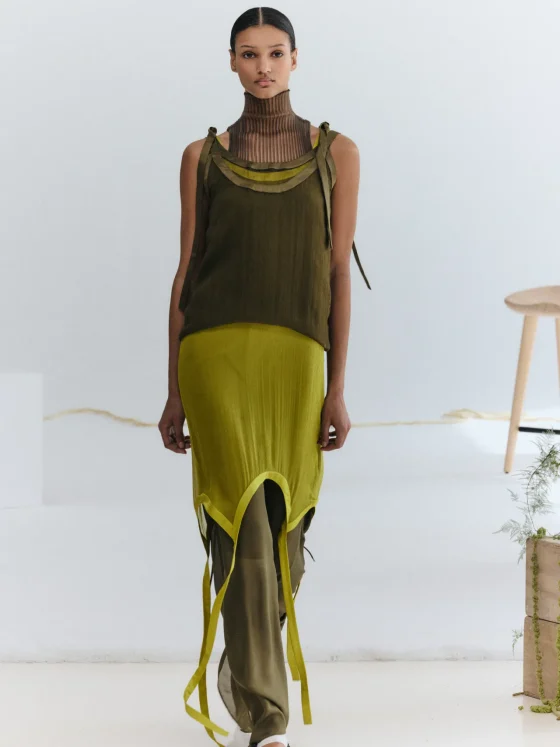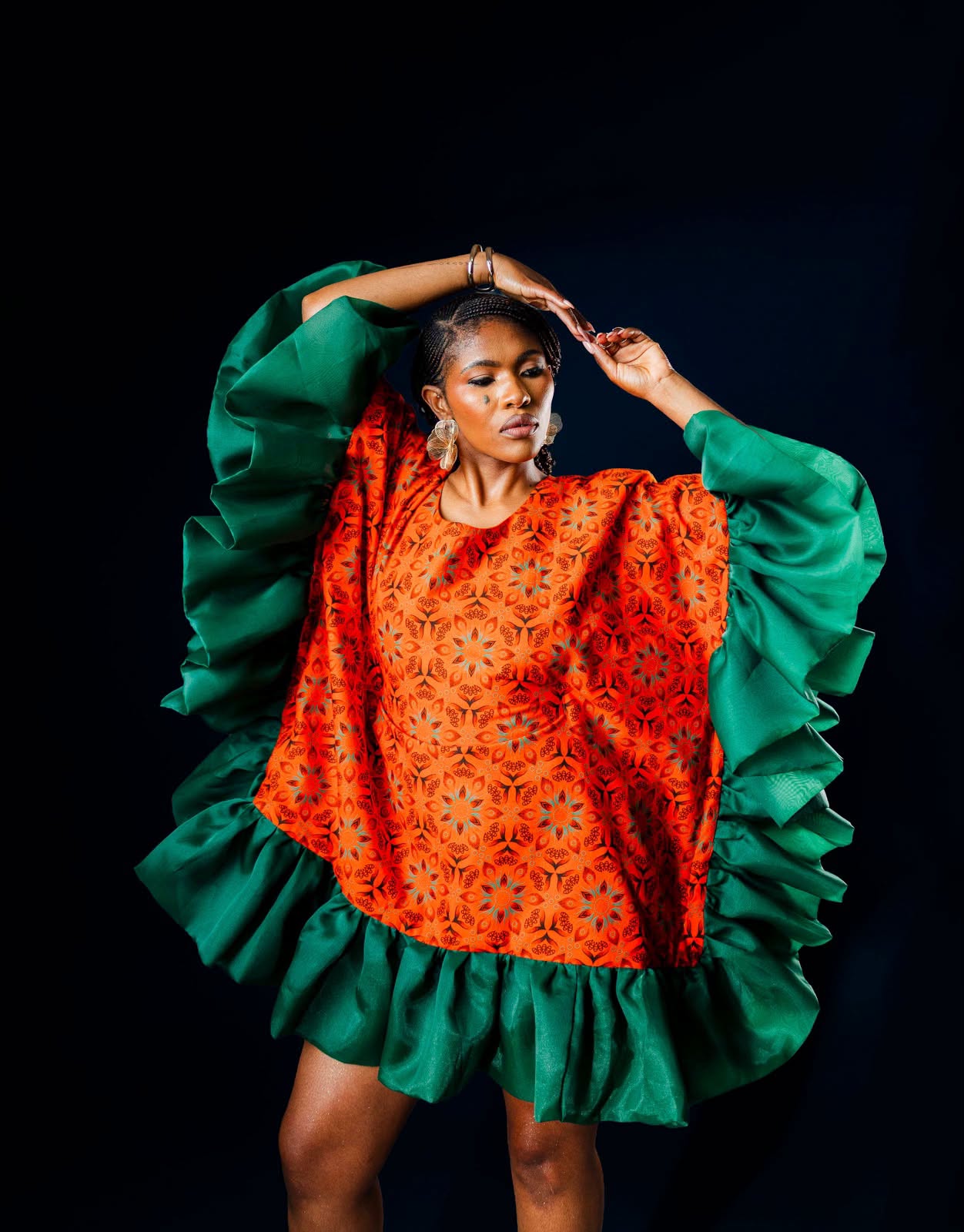
The clearest evidence of Thethana’s interest in wardrobe-building is not the number of categories in its shop. It is the presence of explicitly named combinations: a MARONA Crop Top & PHORORO Skirt Set, a MOFUMAHALI Top & Pants Set, and a PALESA Crop Top & BONOLO Dress Set.
These listings establish that the label sells coordinated propositions alongside individual tops, skirts and dresses.
That is a more specific starting point than assuming that any products appearing together form a coherent wardrobe. Thethana names some relationships between garments rather than leaving every combination to the shopper.
The Maseru-based label’s creative director, Nkotseng Moleko, describes its offer as spanning everyday and formal dressing, with ready-to-wear lines and made-to-order collections. She also identifies versatility and colour as central to the approach.
Those are the designer’s stated intentions, and the retail selection provides an opportunity to examine how the offer is organised around them.
The distinction matters. A catalogue can establish what a label sells and which pieces it groups together, but assessing how convincingly those clothes balance visual character with wear requires a closer account of their proportions, materials and fit.
Thethana’s published record is strongest on the first question and less complete on the second.
Thethana’s founders connect Basotho references with contemporary womenswear. Its retail selection reveals coordinated sets, separates and dresses.
The people directing the work
Moleko and Malerotholi Maseribane established Thethana in 2018. Reporting identifies Moleko as creative director and Maseribane as managing director, with earlier coverage also describing Maseribane’s operational responsibilities.
Their roles make the business more legible. Moleko describes developing concepts, selecting fabrics and working with the production team to oversee manufacture, while Maseribane’s comments in The Reporter address sales, marketing, events and the organisation’s plans.
The distinction is useful without turning the article into a founder biography. A fashion label needs a creative proposition, but it also needs a process through which products reach customers, and the published accounts identify responsibilities on both sides.
Moleko’s background also extends beyond design alone. Bridget Hilton-Barber’s October 2026 profile for Daily Maverick describes experience across production, retail, garment technology and customer care, as well as earlier work for Marion & Lindie and Leopard Frock.
These are reported career details, not evidence that every current garment achieves a particular standard.
“A founder’s résumé explains how a label works. Only the clothes can explain whether it works.” Omiren Styles Editorial Intelligenc
They explain the breadth of experience informing her role. The clothes still need to be considered on their own terms.
Sets make the wardrobe intention explicit.
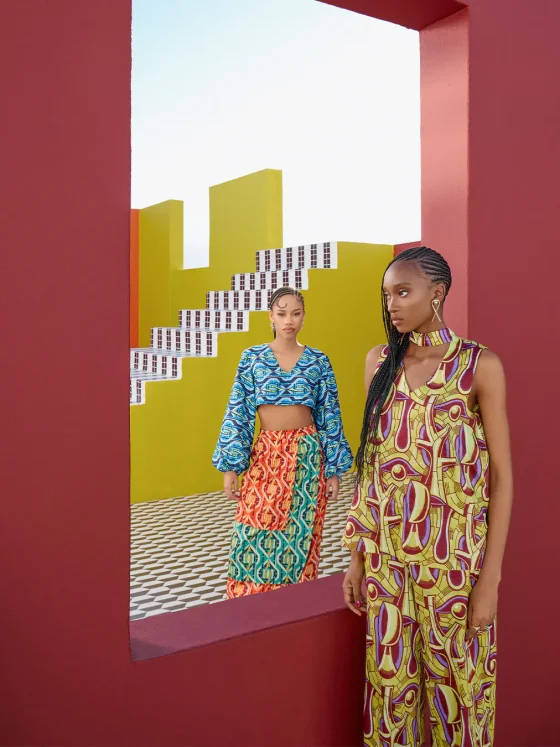
The live retail selection offers several named sets alongside individual garments. The MARONA Crop Top & PHORORO Skirt Set links two pieces, the MOFUMAHALI Top & Pants Set links another, and the PALESA Crop Top and BONOLO Dress Set pair different garment categories.
These listings support a limited but substantive observation: Thethana does not rely entirely on isolated statement pieces. Some of its offer is organised through combinations.
That does not establish how many ways each component can be worn. Nor does the word “set” prove that both parts are sold in every size combination a customer might need, so those practical details require confirmation.
The catalogue nevertheless makes a design intention visible. A coordinated set proposes a relationship before the shopper begins styling, while an individual piece leaves more of that relationship open.
Thethana’s retail structure accommodates both approaches. The MARONA Top also appears as a standalone listing, although the product records do not establish whether it is identical in every respect to the component within the named set.
The careful conclusion is therefore about the offer’s structure, not an untested claim of unlimited interchangeability.
A dress can be a complete proposition.
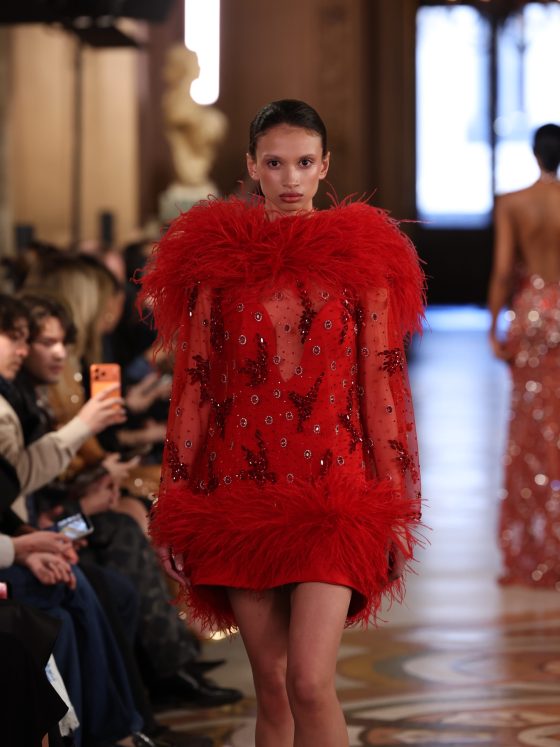
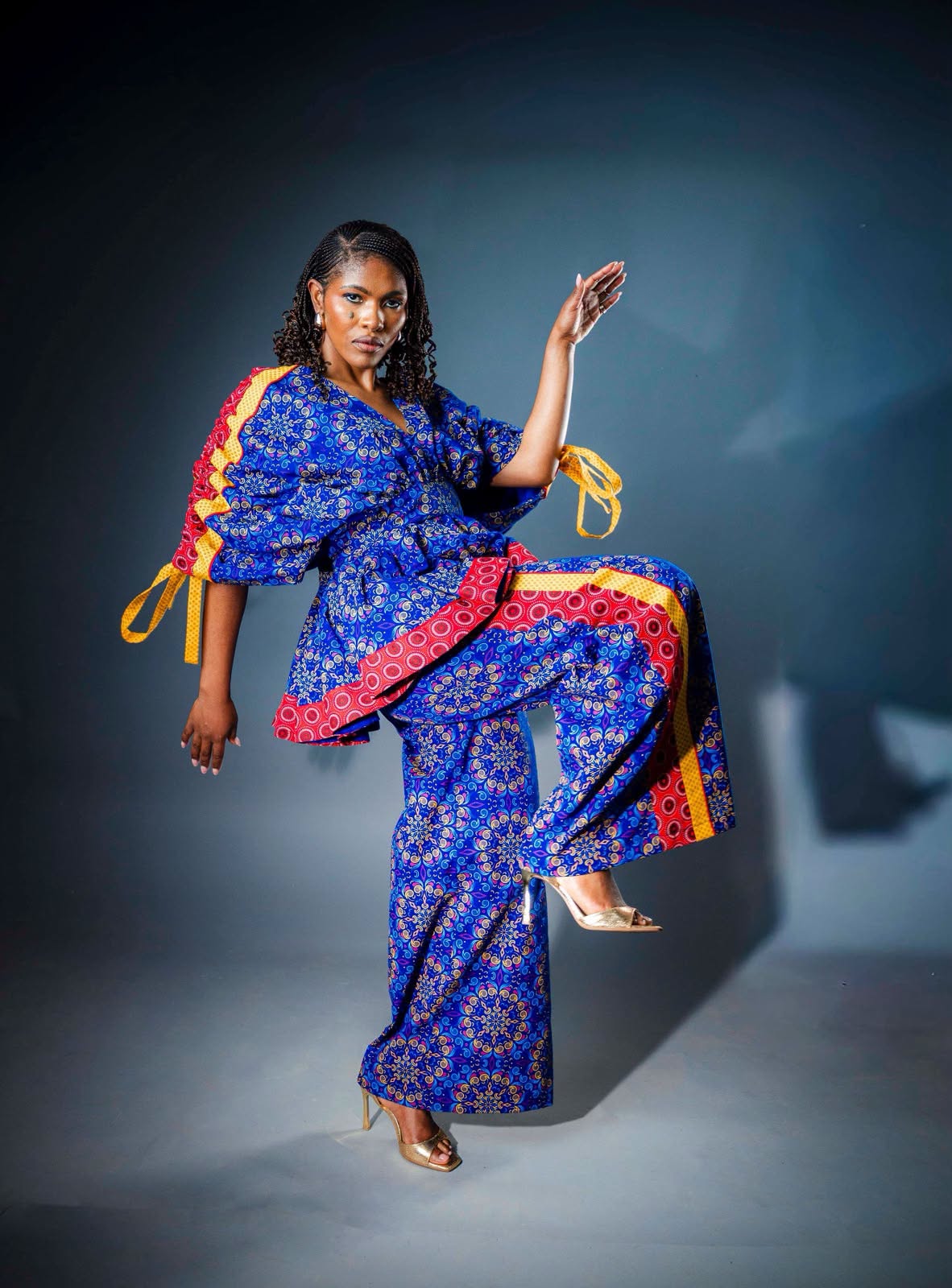
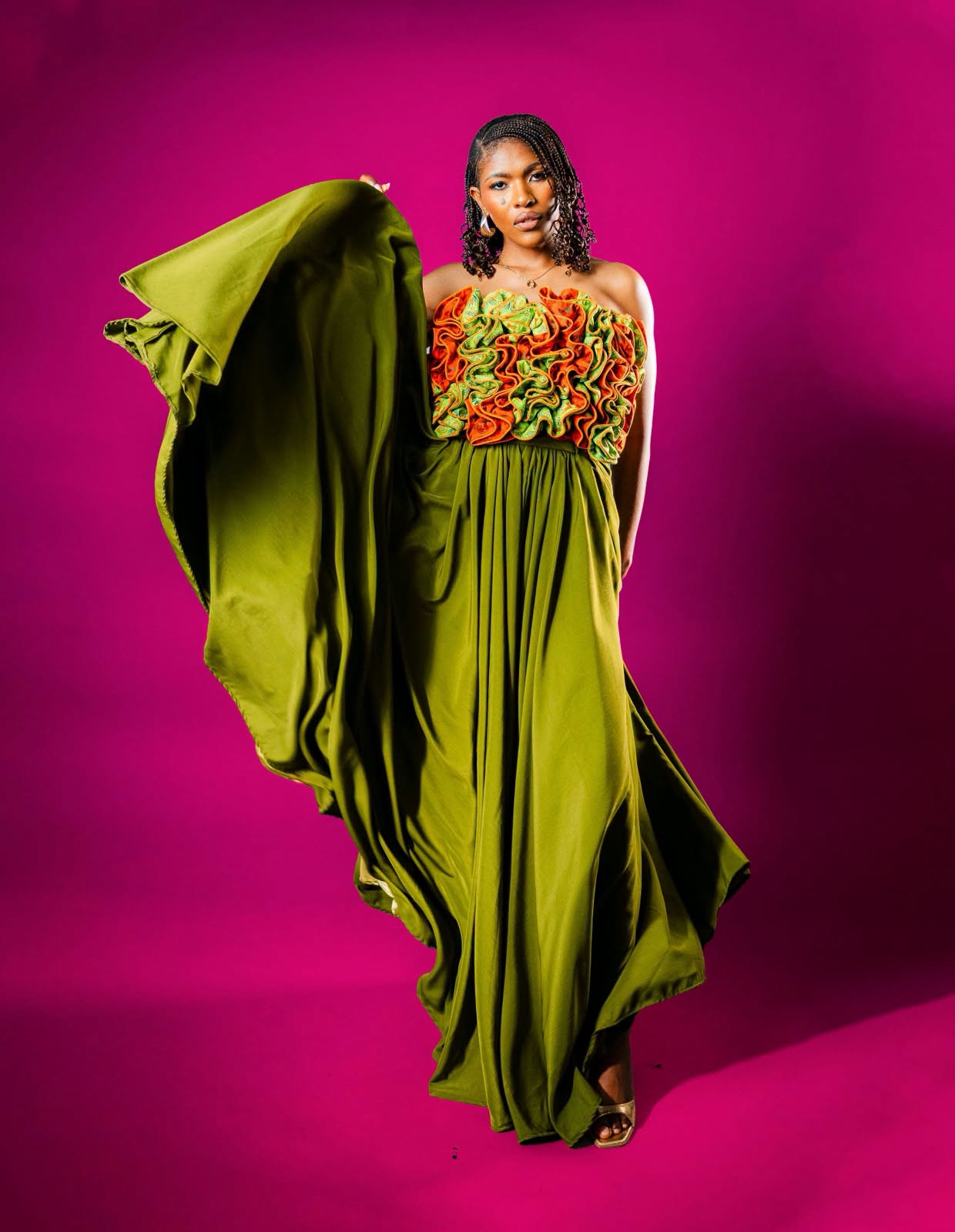
The retail selection also includes the MOFUMAHALI Dress, MOFUMAHALI Maxi Dress, MABOTLE Infinity Tulle Dress and SEILATSATSI Ruffle Satin Dress. These are the label’s product names and should be treated as such, since they are not substitutes for verified fibre compositions or construction specifications.
Their presence matters because wardrobe breadth need not depend only on separates. A complete garment can offer a more concentrated proposition, while a set can divide that proposition between components.
The MOFUMAHALI Maxi Dress has its own product page, with a listed price of R3,650 in South African rand at the time of review. The retrieved page presents size options from XXS to XXXL but marks those variants as sold out or unavailable.
Those details separate three questions that are easily confused: what the product is called, which sizes the page lists and what can currently be ordered.
The price does not establish workmanship, and the size range does not demonstrate fit quality. The listing does, however, provide a product-specific basis for further enquiry rather than a general description of the brand.
Seshoeshoe is a direction, not every garment’s composition.
Published accounts consistently connect Thethana with shoes. The Reporter describes the label as working predominantly with the fabric, while Moleko’s later interview discusses its place in contemporary clothing.
That gives the material a clear place within the label’s stated direction. It should not become an assumption about every product.
The retrieved pages for the MARONA Top, THEBETHA Skirt and MOFUMAHALI Maxi Dress do not provide item-specific fibre compositions. Their product names and photographs should therefore not be used to manufacture a complete material record, a habit we caution against in our guide to verifying a fashion brand’s fabric claims.
The same care applies to cultural meaning. Maseribane describes heritage as the foundation of the business and says it informs the story the founders want to tell.
That is an attributable explanation of intent, not permission to assign a particular historical meaning to every visible detail.
For a garment-led assessment, the next step is to connect a verified textile and a documented reference to a specific decision in the clothes. General heritage language cannot do that work by itself.
Versatility is a claim to examine
Maseribane told The Reporter in 2023 that versatility and different styling options had been part of Thethana’s approach since its inception. Moleko’s 2026 account similarly describes contemporary clothing intended for everyday and formal use.
The continuity between those statements is useful. Versatility is not a new explanation introduced only around the current website; it appears in the business’s earlier public account.
But it remains a proposition to assess rather than a performance result to repeat.
A garment can offer several styling possibilities without being suitable for every occasion. A coordinated set can create a strong complete look without its components necessarily working equally well apart, and a dress can serve a focused purpose without being less accomplished than a multifunctional piece.
The relevant question is whether the design’s character supports its intended use. That assessment needs identifiable views, measurements and material information, and the catalogue establishes some intended combinations without yet establishing their performance on a wearer.
Availability is part of the retail story
Thethana’s product pages also show why a wardrobe article should distinguish design from access. The retrieved MARONA Top and THEBETHA Skirt pages display size selections from XXS to XXXL, with each marked sold out or unavailable.
This should not be interpreted as evidence of strong demand, limited production or a permanent discontinuation. A stock label does not explain why a variant is unavailable.
Equally, a listed size range should not be presented as immediate availability. A shopper needs to establish whether the item can be purchased, ordered or produced through another route.
Moleko describes both ready-to-wear and made-to-order within the business, but that general statement does not confirm that Moleko can commission any unavailable retail item.
For practical coverage, the next question belongs to the particular product: is it available now, and under what terms? The answer cannot be supplied from the category name alone.
Maseru is a working context.
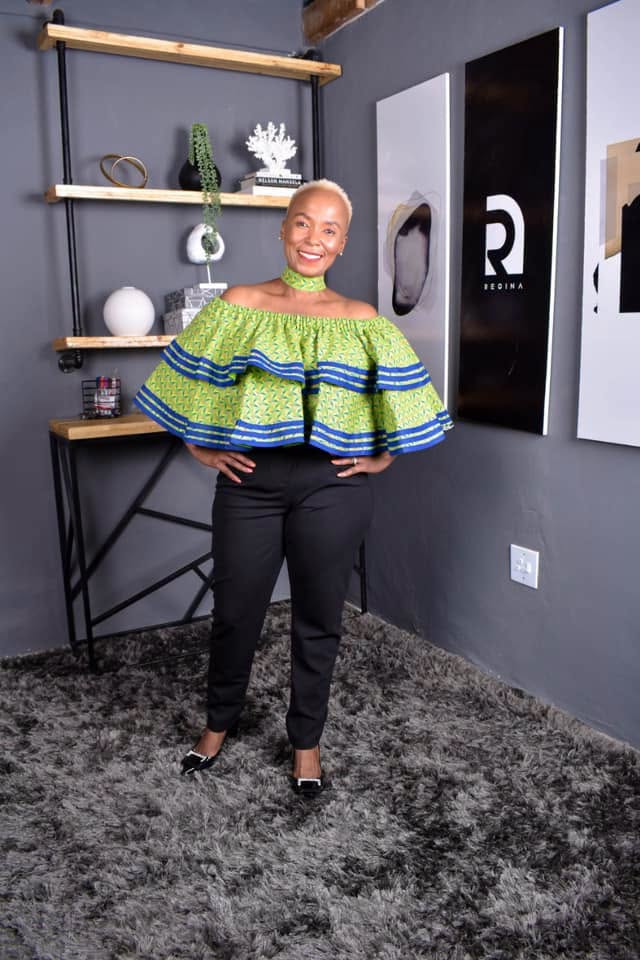
Daily Maverick reports a factory workshop and a retail store at Maseru Mall. That gives the city a practical place in the account: it is associated with production and customer contact, not merely used as a geographical introduction.
Earlier reporting also describes local pop-ups as occasions for showing products, meeting customers and seeking orders. Maseribane explained that a 2023 Africa Day event included shopping vouchers and the launch of a winter collection.
Her comments about attendance and support remain her account of that event, not independently measured sales results.
This retail context helps keep Thethana’s story grounded. International visibility may be part of the founders’ ambition, and the label is listed among Lesotho’s designers for Africa Fashion Week London 2026, but the business also addresses customers through local spaces and practical transactions.
Neither activity makes the label representative of all Lesotho fashion. It is one business with particular creative priorities, products and operational choices, and its Basotho references should sharpen that identity rather than impose a national burden on every garment.
The Omiren Argument
The strongest documented wardrobe idea in Thethana’s retail selection is coordination. Named top-and-skirt, top-and-trouser, and top-and-dress sets make some relationships between garments explicit, while standalone pieces offer a different route into the label.
That is a more defensible observation than treating category breadth alone as proof of a coherent wardrobe.
The remaining test concerns execution: how the pieces relate through proportion, material, styling and fit. The current product record doesn’t answer all those questions, and the brand’s statements about versatility shouldn’t be used to answer them by proxy.
Thetheta deserves an assessment grounded in its clothes. Its published offer establishes an intention to move between complete looks and individual pieces.
Whether that intention becomes a convincing balance of visual character and wear must be demonstrated garment by garment, not awarded through heritage language or assumed from a catalogue. More of our writing on African textiles and labels is at Omiren Styles.
Also Read:
- The Geometry of Heritage: Why Shweshwe Still Defines South African Fashion
- Thabo Makhetha-Kwinana and the Basotho Blanket: Sovereignty Woven into Cloth
- African Textile Glossary: 20 Terms Fashion Keeps Getting Wrong
- The State of African Fashion 2026: A Data Portrait Across Investment, Manufacturing, Retail, and Export
Frequently Asked Questions
Who founded Thethana?
Published reporting identifies Nkotseng Moleko and Malerotholi Maseribane as the founders and dates the business to 2018. Moleko is described as creative director and Maseribane as managing director.
Is this article about one seasonal collection?
No. It examines a selection from Thethana’s live retail catalogue. The products have not been established as belonging to one release or season.
Does Thethana sell coordinated sets?
Its catalogue names several, including the MARONA Crop Top & PHORORO Skirt Set and MOFUMAHALI Top & Pants Set. The listings do not independently establish every component’s fit or separate styling possibilities.
Are the listed sizes currently available?
Availability must be checked directly. The retrieved MARONA Top, THEBETHA Skirt and MOFUMAHALI Maxi Dress pages list sizes but mark their variants as sold out or unavailable.