Women were already buying Bianca Saunders’s menswear. The problem, she told Sarah Mower in Vogue, was that the clothes had been made for a different body.
Her Spring 2027 womenswear collection begins with that practical distinction: an existing customer’s interest did not mean the existing fit was sufficient.
Titled She Was the Most Beautiful Woman I’ve Ever Seen, in admiration of her mother, Yvonne, the collection also draws on Saunders’s own preference for fitted, feminine dressing. Its stated starting point is therefore both customer-led and personal.
The significant shift is not simply that Saunders has added another category. She has identified a reason to reconsider who the clothes are designed to fit.
Bianca Saunders explains the fit question behind her Spring 2027 womenswear, alongside personal references to her mother and her own style.
Interest is not the same as fit.
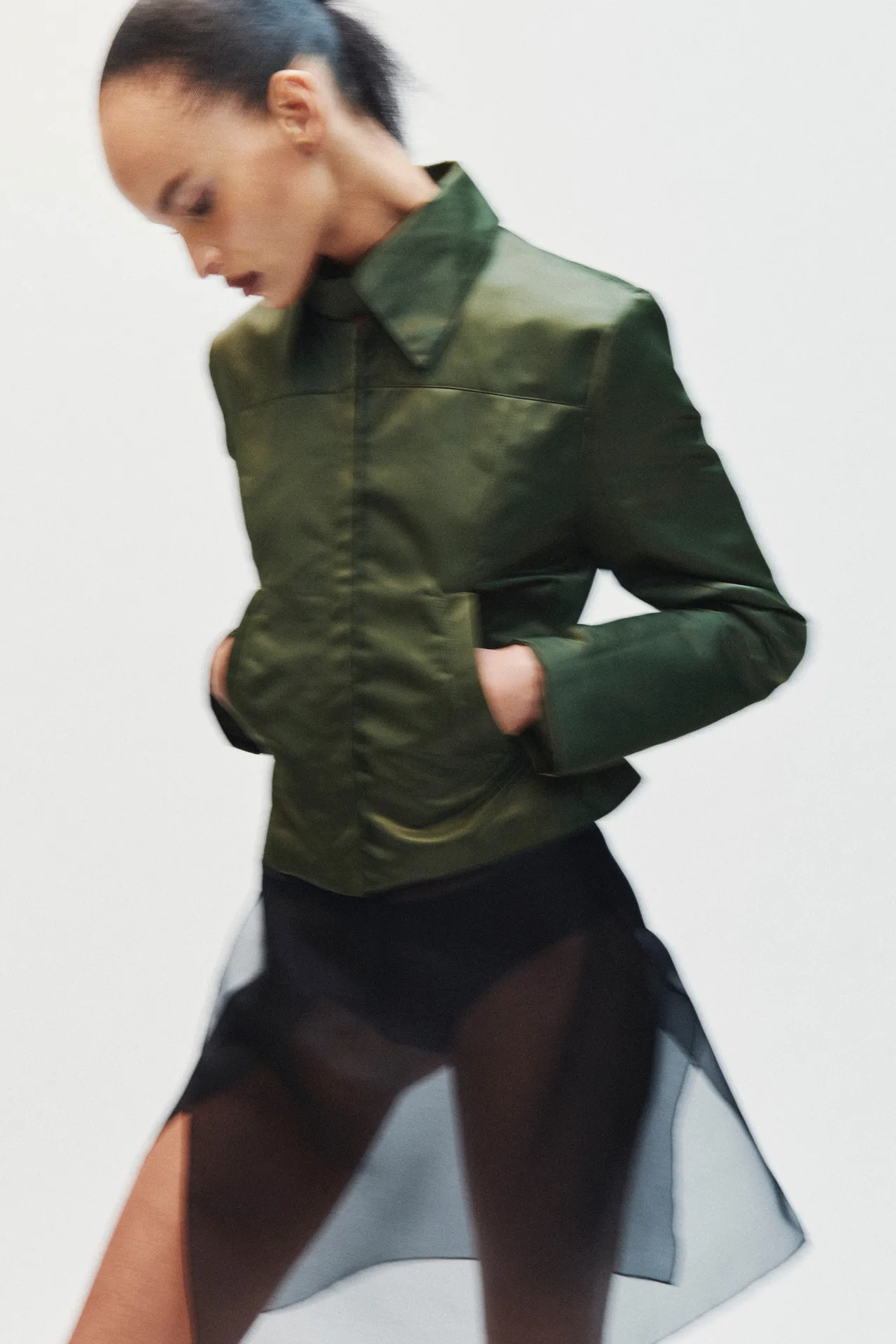
In Mower’s Spring 2027 report for Vogue, Saunders explains the limitation women encountered when buying her menswear:
“It doesn’t fit so well because it was made for a man’s body.”
The context sharpens the point. The Fédération de la Haute Couture et de la Mode describes Saunders as a menswear designer and creative director born and based in London, who graduated in menswear from the Royal College of Art in 2017 and launched her brand in 2018, so a womenswear line is a new direction for the label.
The distinction is useful because it separates two questions that can too easily be collapsed. A customer may respond to a garment’s appearance without finding that its proportions work as intended on her body.
Buying across categories does not eliminate the practical consequences of how those categories were developed. Dedicated womenswear gives Saunders a different starting point.
Rather than treating women’s adoption of her menswear as a complete answer, she identifies it as evidence of an unresolved design question. That is a statement of intention, not proof of the collection’s fit performance.
The published account provides no comparative measurements, fitting records, or wearer testing. It establishes the problem Saunders says she is addressing.
Continuity without a direct transfer
The move into womenswear does not require Saunders to abandon every recognisable element of her existing practice.
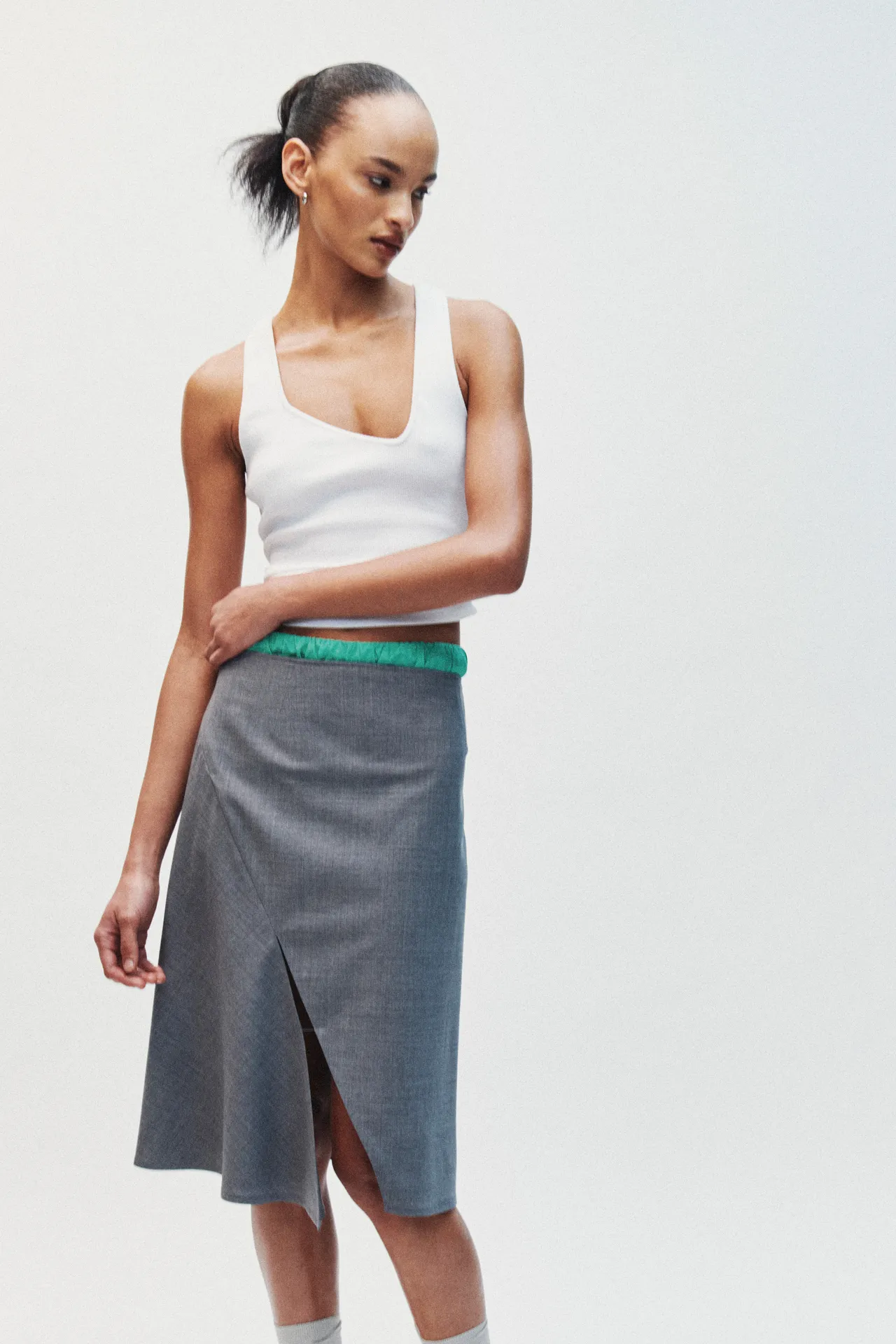
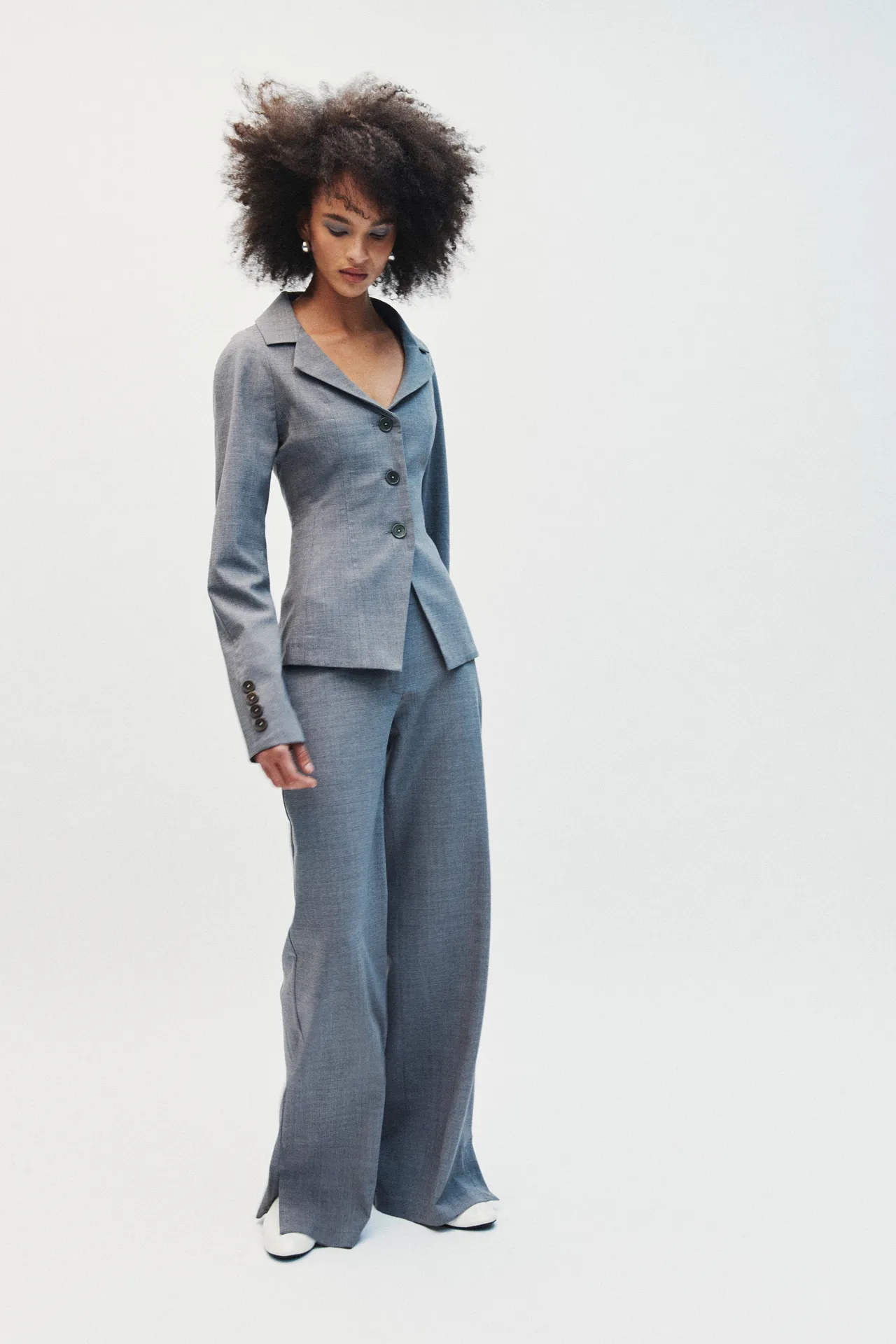
Mower identifies an asymmetric tank neckline and a softly fitted grey suit as points of continuity with the designer’s menswear. Her account also records a hot-pink slip dress and draped jersey within the collection.
These are Mower’s garment observations, rather than an independent technical assessment by Omiren.
Read alongside Saunders’s comments, they describe continuity without suggesting that the womenswear is simply a resized version of an existing wardrobe. Familiar design interests sit within a collection whose stated fit question has changed.
“Recognition can stay in the clothes without asking the wearer to accept proportions made for someone else.” Omiren Styles Editorial Intelligence
The distinction should remain precise. A recognisable neckline or tailored garment can connect one body of work to another, but it does not reveal the underlying pattern development.
The available reporting does not establish exactly which measurements, blocks or construction methods Saunders altered. The stronger conclusion is narrower: Saunders presents womenswear as an opportunity to retain aspects of her design language while addressing a different wearer more directly.
The designer as a starting point
Saunders’s own approach to dressing is part of that change. Speaking to Mower, she describes enjoying fitted clothes, changing her hair and feeling sexy, and she frames the collection as a form of self-discovery.
Those comments complicate the idea that her womenswear should be explained only through her menswear. They introduce a personal preference that can’t be reduced to a customer borrowing from another category.
They also make room for a more specific account of femininity. Saunders describes how she likes to present herself, not prescribing how every woman should dress or claiming that fitted clothing defines womenswear.
Her personal style supplies a perspective within the design process. It does not establish a universal customer profile.
Yvonne’s influence
The collection title places Saunders’s mother at its emotional centre. Mower’s report connects that dedication to photographs of Yvonne, including one showing her in a canary-yellow jacket for work in the mid-1990s. It identifies Yvonne as a hairdresser and business owner.
The working wardrobe reference gives the dedication specificity. It concerns a woman dressing for a particular life, rather than an abstract idea of maternal elegance.
It should not, however, become an unverified account of the garments. The published report does not establish that the yellow jacket was reproduced or that each look corresponds to a family photograph.
The useful relationship is between the person honoured by the title and the collection’s stated interest in women’s dressing. Yvonne’s image offers one perspective, and Saunders’s own preferences offer another, and neither needs to explain every piece.
Jamaica through personal images
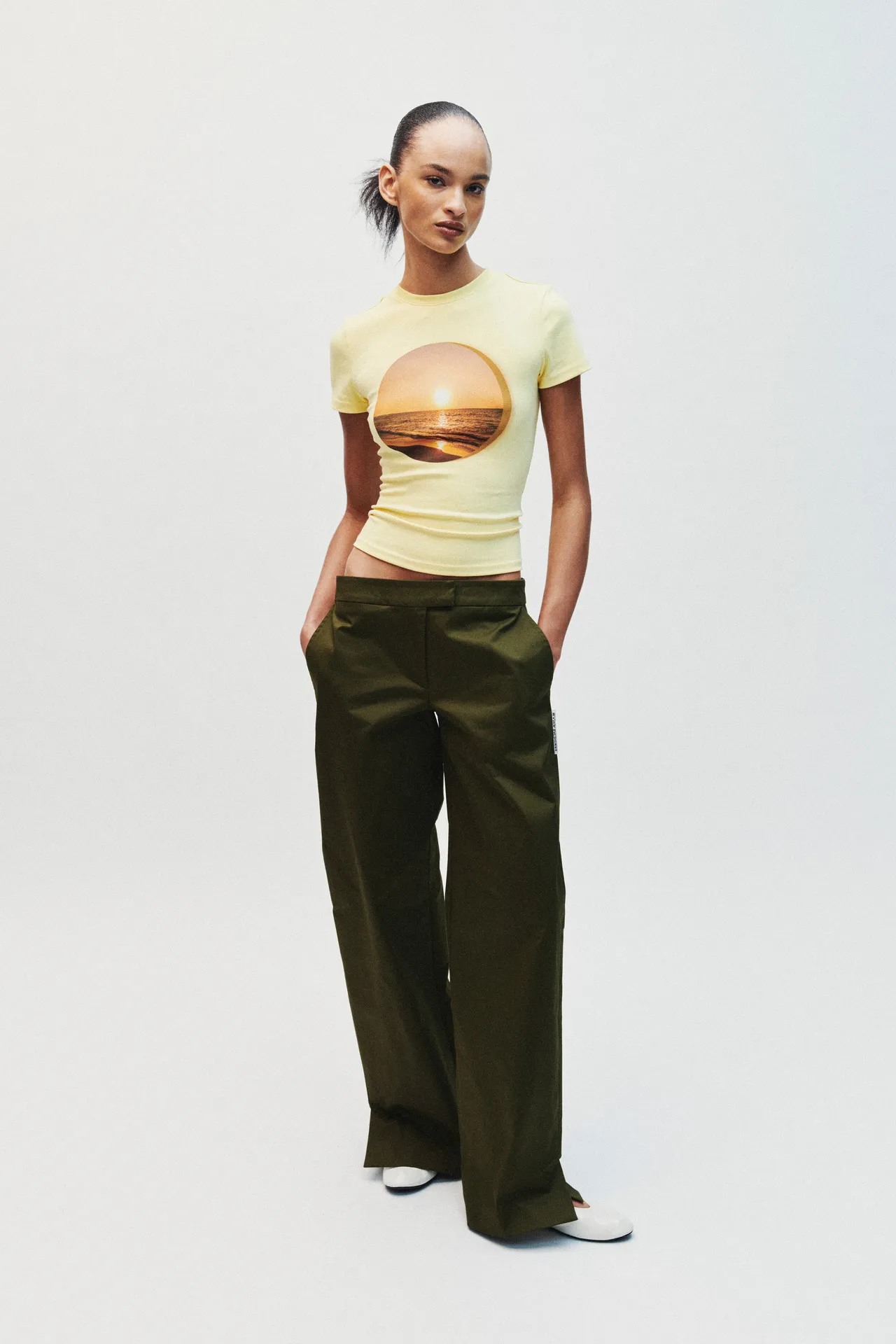
The collection also includes prints drawn from photographs of Jamaican sunsets that Saunders took while visiting relatives, according to Vogue. This creates a documented link between personal experience and a visual element of the work.
Its specificity matters: these are the designer’s photographs from a family visit, not an unspecified claim of tropical inspiration. For wider context on how Caribbean and African heritage shows up in everyday British dress, see our report on what African and Afro-Caribbean communities are wearing in 2026.
The reference should remain at that scale. It does not establish that the photographs represent Jamaica as a whole, nor does it explain the construction or print placement of individual garments.
Together with the family photographs, the sunset images show how Saunders’s account of the collection moves between the people she knows, the places she visits and the way she dresses herself.
A separate Spring 2027 project
This article concerns She Was the Most Beautiful Woman I’ve Ever Seen, the womenswear collection discussed by Mower. It should not be conflated with Meet You Before Sunrise, Saunders’s separate Spring/Summer 2027 collaboration with The Midnight Club.
FashionUnited reports that the collaboration is a 30-piece collection of classic tailoring with a sculptural approach, with two pieces launching on Saunders’s website on 13 July 2026 and the full collection due in January 2027. It describes her as a menswear designer, which reinforces why this separate womenswear collection stands apart.
The distinction preserves the central question of this collection: why develop dedicated womenswear when women are already buying the menswear? Saunders’s answer begins with fit, then expands through her own style and personal references.
That is a different proposition from treating the collection as another exercise in combining garment categories.
What would show whether the fit question is solved?
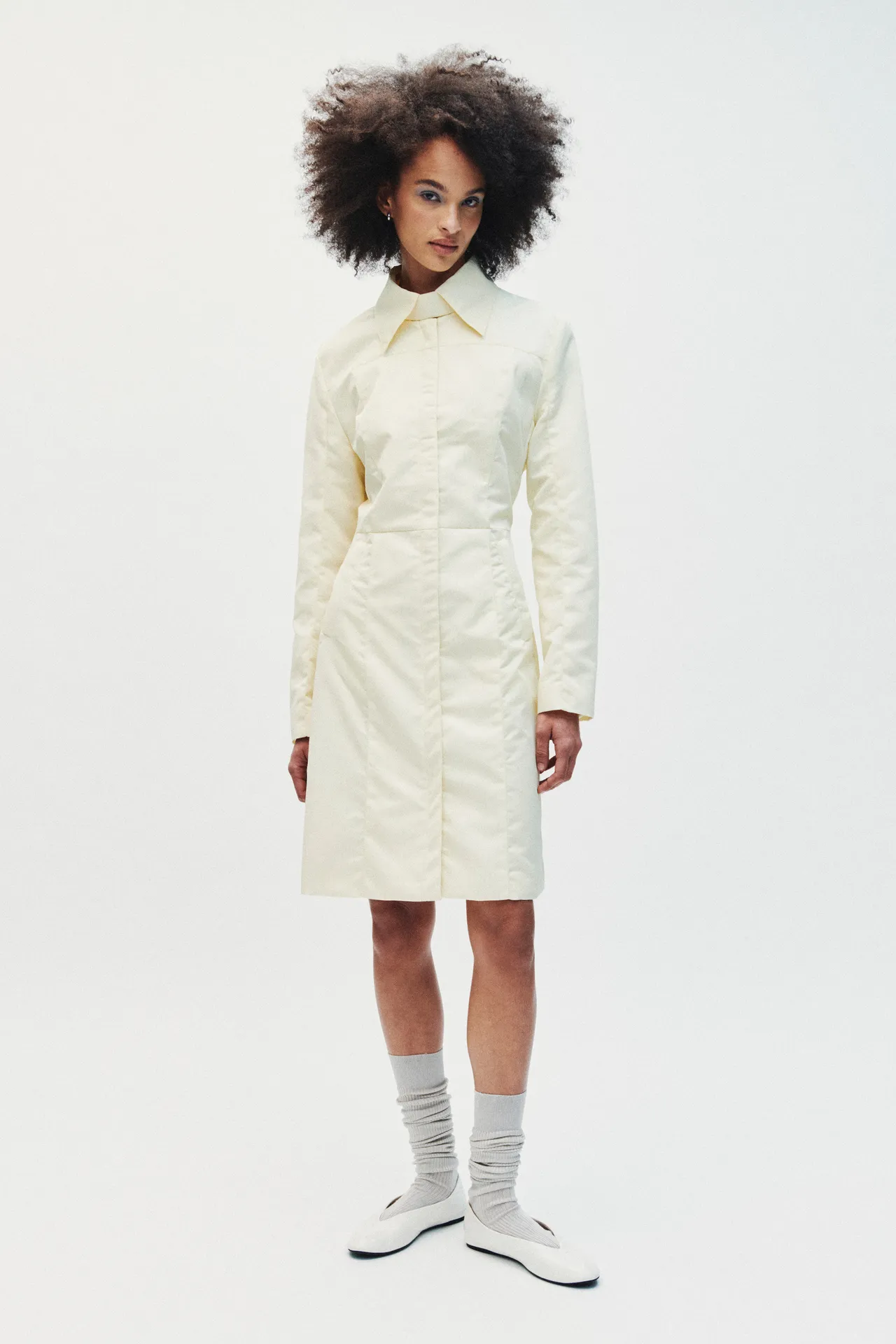
A fit claim is only as good as the evidence that follows it. Measurements, fitting notes, the number of sizes offered and feedback from the women who wear the clothes would all show whether the womenswear solves the problem Saunders describes.
The Vogue interview gives the diagnosis and the intention, which is a valuable record in itself. The treatment, in the form of pattern and grading decisions, is not yet visible, and tailoring credits belong in that account too, as we argue in what a heritage fashion product page should clarify.
Until then, the collection is best read as a designer correcting a mismatch she noticed in her own business. That is a modest, practical origin, and it is more convincing for being so.
The Omiren Argument
Saunders identifies a specific reason for dedicated womenswear: women’s interest in her menswear didn’t solve the problem of fit. Her Spring 2027 account combines that customer question with her own approach to feminine dressing and a dedication to her mother.
The meaningful shift is an explicit change in whom the design process addresses. Recognition can remain in the clothes without requiring the wearer to accept proportions developed for someone else.
Whether the finished garments resolve that problem requires closer evidence of the garment and fit than the published interview provides. What Saunders’s account makes clear is that crossing a retail category and designing for a wearer are not the same thing.
Also Read:
- Grace Wales Bonner at Hermès: The First Black Woman to Lead Menswear at a Major European Luxury House
- Imperfection as Intention: Why “Undone” Dressing Defines 2026 High Fashion
- African and Diaspora Fashion in London: Designers, Institutions and Community Style
- “Emerging Designer” Has Become Fashion’s Most Limiting Compliment
Frequently Asked Questions
What is Bianca Saunders’s Spring 2027 womenswear collection called?
The collection is titled She Was the Most Beautiful Woman I’ve Ever Seen, in admiration of her mother, Yvonne, according to Sarah Mower’s Vogue report.
Why did Saunders develop dedicated womenswear?
Saunders told Mower that women were buying her menswear but struggled with the fit because it was made for a man’s body. She also connected the collection to her own preference for fitted, feminine dressing.
Is this the same project as Meet You Before Sunrise?
No. Meet You Before Sunrise is a separate Spring/Summer 2027 collaboration with The Midnight Club. It should not be treated as the title or concept of this womenswear collection.
What inspired the prints and pieces in the womenswear collection?
Mower reports that the prints are drawn from Saunders’s photographs of Jamaican sunsets, taken while visiting relatives, and reflect her dedication to her mother, Yvonne, a hairdresser and business owner. She records garments including an asymmetric tank neckline, a softly fitted grey suit, a hot-pink slip dress, and a draped jersey.