A costume change introduced a tribute to Latin music. Karol G’s words explained its significance; designer Fausto Puglisi’s subsequent account identified a collaboration that included stylist Zerina Akers.
“These are the colours of my flag.”
When Karol G returned to the Coachella stage after a costume change on 17 April 2022, she explained the reference herself. “I am from Colombia,” she told the audience before introducing a tribute to songs she credited with helping make her own appearance on that stage possible.
Her custom Roberto Cavalli outfit combined oversized trousers, a matching crop top and long-sleeved fingerless gloves. A published description identified an ombré treatment moving through bright yellow, violet and fire red.
“A meaningful reference tells you what a look is for. It does not tell you who made it.” Omiren Styles Editorial Intelligence
The colour reference was therefore not something a critic needed to infer from the photograph alone. Karol G supplied its meaning. The design question is what the clothes contributed to that statement and whose work made the look possible.
That second question is the one this piece spends most time on. A stage look has two stories: the one the performer tells from the stage, and the one the people who made it tell afterwards. Here we have both, and they sit side by side comfortably.
Karol G’s custom Cavalli look framed a Colombian tribute at Coachella. Her remarks and Fausto Puglisi’s account reveal the collaboration behind the moment.
A Change of Clothes Introduces a Change of Emphasis
The outfit belonged to a specific moment in Karol G’s Coachella debut.
HOLA’s contemporary report describes her leaving the stage while a video montage acknowledged songs including Ritchie Valens’ “La Bamba”, Santana’s “Oye Como Va” and Gloria Estefan’s “Conga”. She then returned, linked the colours to her Colombian flag, and introduced a musical tribute.
The medley began with Selena’s “Como La Flor” and continued through songs by Ricky Martin, Celia Cruz, Daddy Yankee, Shakira, and other artists. Remezcla’s account of the set lists the same artists.
That sequence gives the costume change a role beyond variety. It marked a transition from performing her own catalogue towards acknowledging a musical lineage.
The national and wider references remained distinct. Colombia was the country Karol G named as her own. The tribute connected her presence with artists and songs from different places. Her statement linked those scales without requiring them to represent one uniform identity.
What the Outfit Added
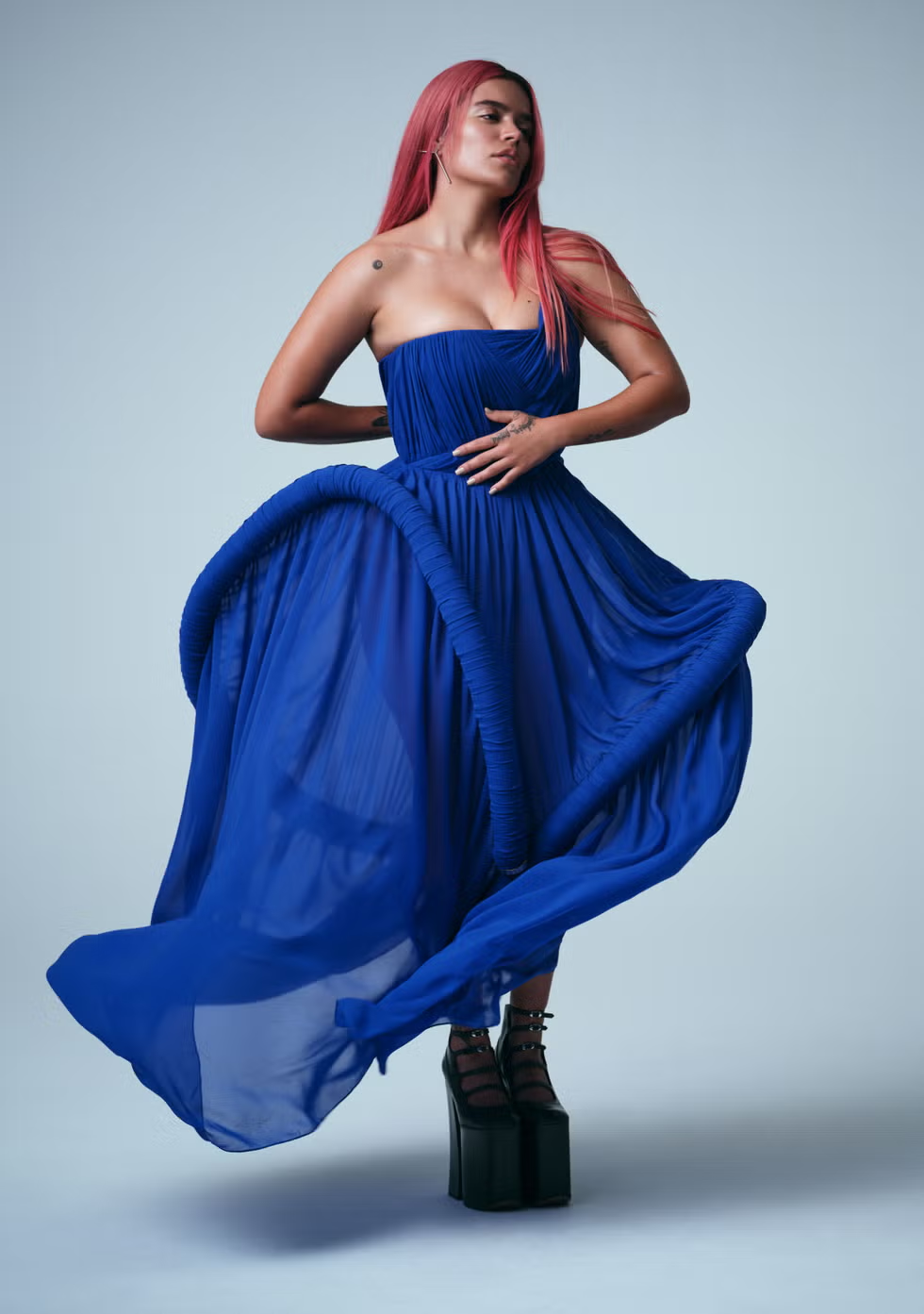
The look translated the reference into separate stage garments rather than presenting a flag as a single object. The matching crop top, oversized trousers and long gloves distributed the colour treatment across the body.
That distinction matters. The performer’s words established what the colours meant, while the coordinated garments made the reference part of an outfit she could inhabit.
The ombré description also identifies a particular treatment: colours graduating into one another rather than appearing only as sharply separated blocks. Read alongside Karol G’s explanation, the effect can be understood as an interpretation of the reference, not a literal reproduction.
This is a visual reading, not a claim about who proposed the treatment. The published sources do not attribute the colour arrangement, proportions, or individual components to any particular collaborator.
Nor does a meaningful reference settle the outfit’s aesthetic success. It establishes the proposition the look was serving. Assessing the design still requires attention to how its parts relate, rather than treating national significance as a substitute for criticism.
The Designer’s Account
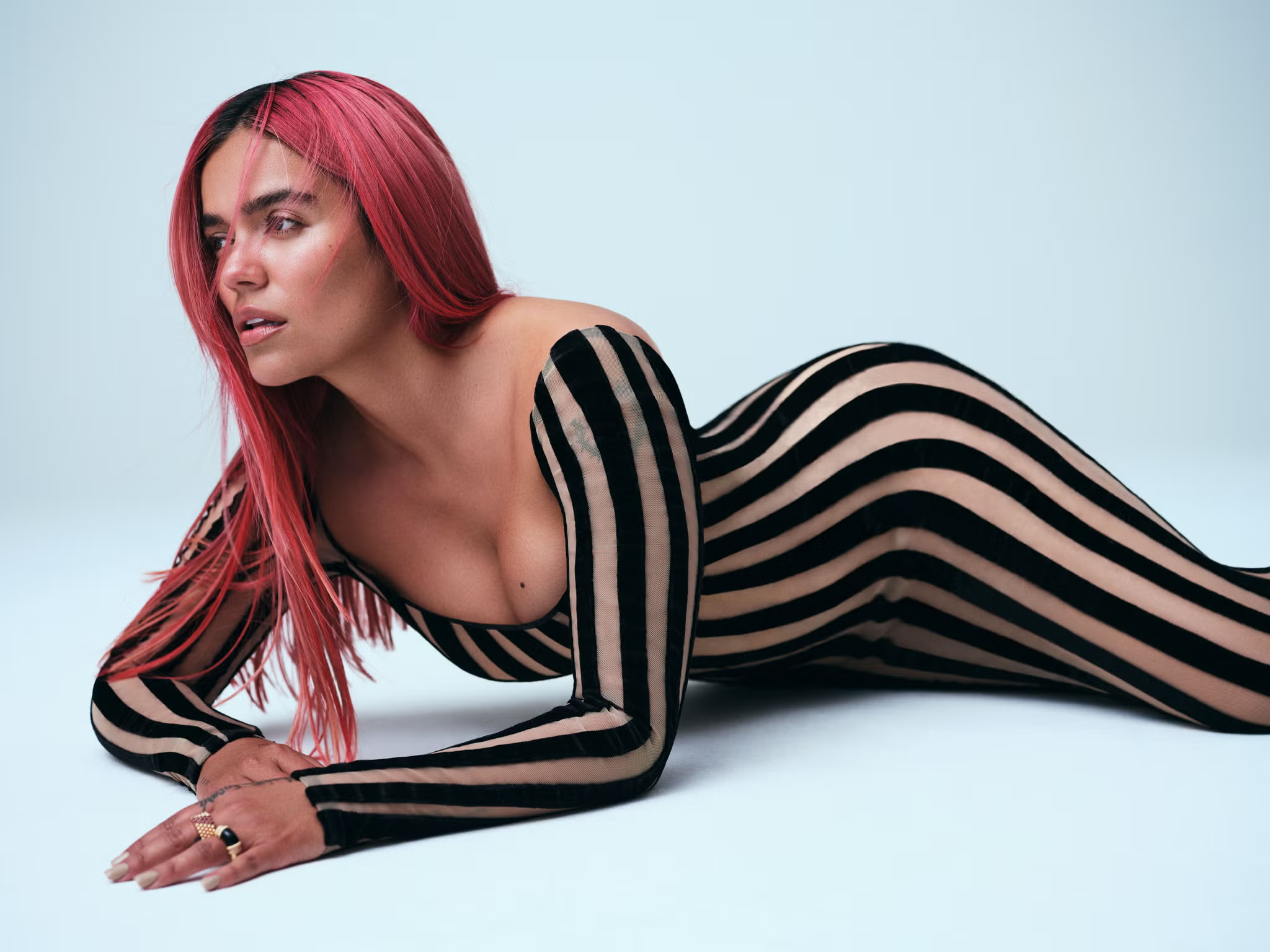
In a May 2022 interview with V Magazine, Roberto Cavalli’s Fausto Puglisi discussed the custom looks his team created for Karol G, Anitta and Doja Cat at Coachella.
Describing those projects collectively, he called them a matter of passion and “a continuous dialogue with the artists themselves and their stylists”. He said work began at the end of February, while he was also preparing the house’s Milan show. Those comments concern the group of commissions, not a separately documented timeline for Karol G alone.
Asked whether he had met the performers beforehand to discuss the looks, Puglisi said he hadn’t had time and described a dialogue between Milan and Los Angeles.
His account makes the collaboration less simple than a designer privately imagining a costume and delivering it to a singer. Communication across locations formed part of the process.
However, it does not reveal every brief, alternative or revision. Those stages should not be filled in with assumptions about how a custom fashion commission usually works.
Why Zerina Akers Belongs in the Story
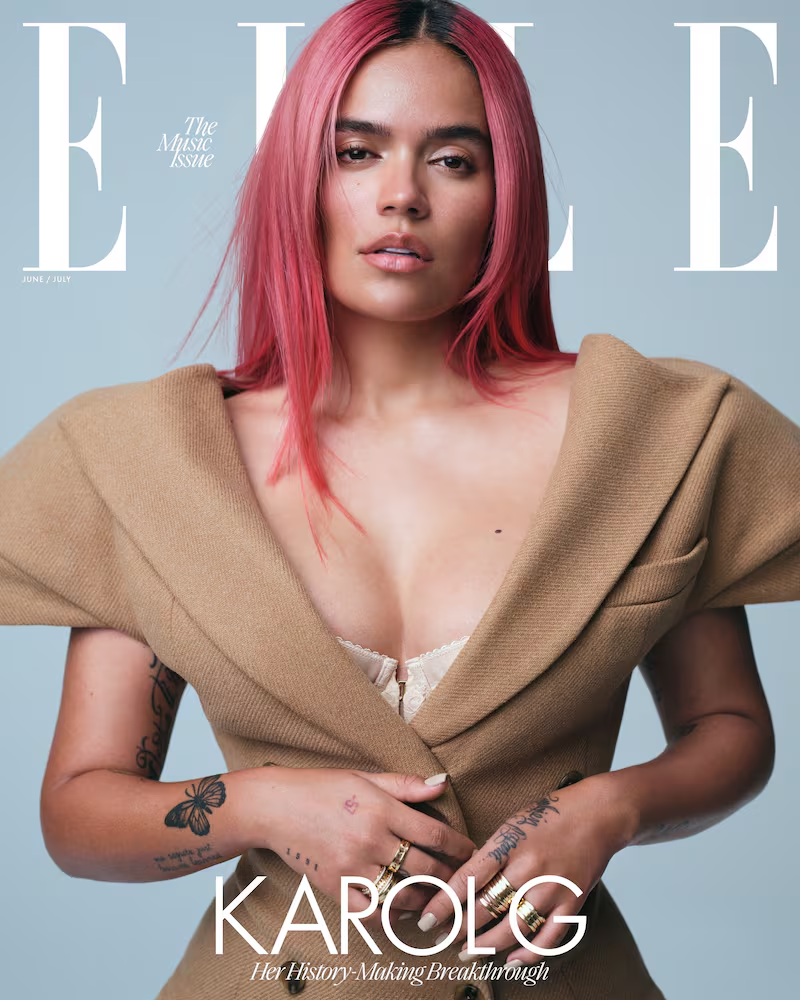
Puglisi was specific when the interview turned to Karol G.
“I was so excited to have worked with Zerina Akers on it,” he said, recalling that he had first met the stylist through an earlier Beyoncé project.
That acknowledgement is central to the credit. Describing the look only as “Karol G in Cavalli” identifies the wearer and house but omits a collaborator the designer explicitly named.
At the same time, the credit does not establish which decisions were Akers’s. The interview does not say who originated the colour concept, selected the proportions or determined the final combination.
The accurate account therefore preserves her involvement without inventing a division of labour. Authorship is collaborative here, but the published record is not a complete map of it. Getting that balance right is a recurring concern for us, and we explore it in our guide to crediting makers on a heritage fashion product page.
The Performer’s Message and the Designer’s Interpretation
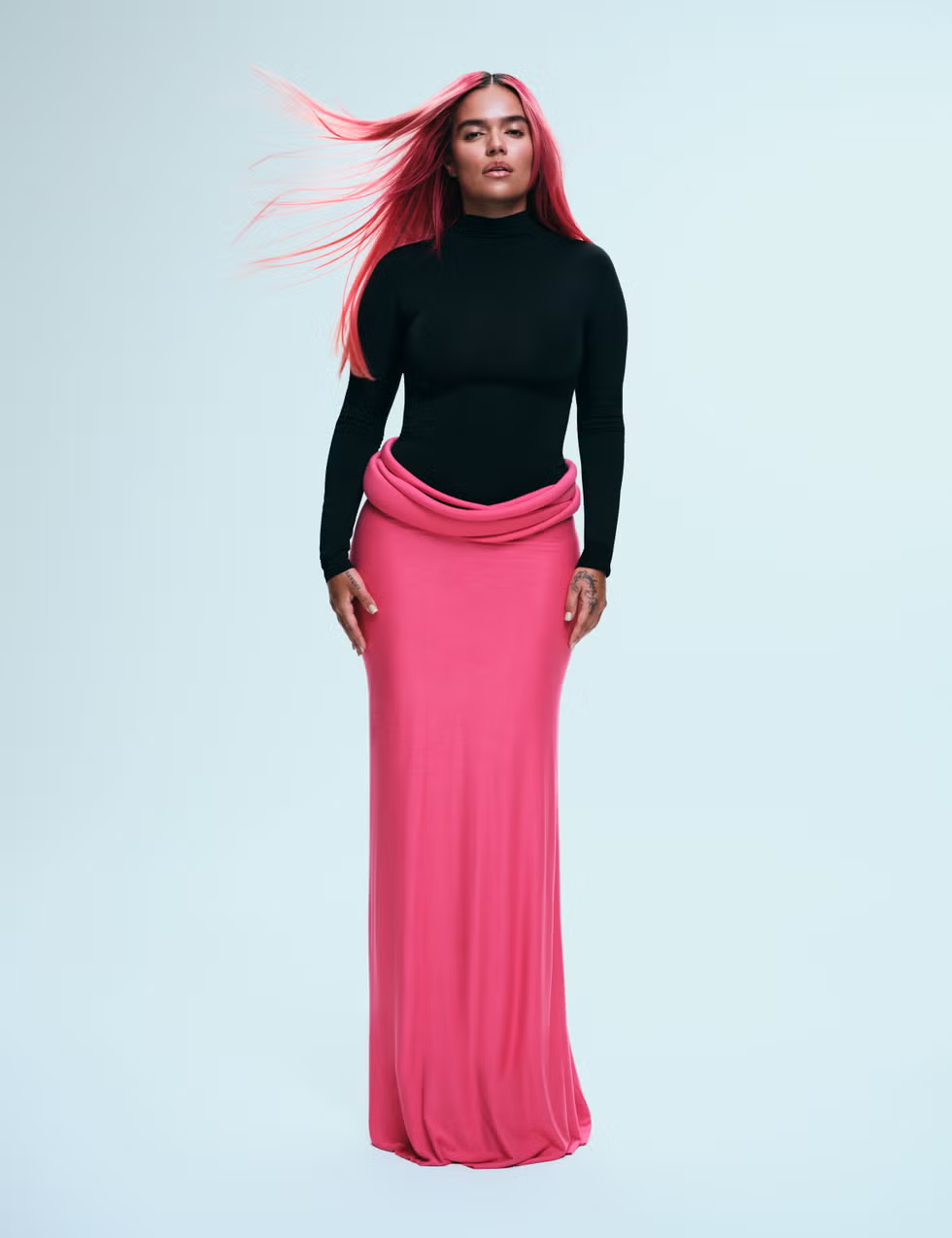
Karol G’s onstage explanation focused on representation and acknowledgement. She named her country and connected the tribute to songs that had helped create the opportunity for her to perform there.
Puglisi’s response to the interview’s question about the Colombian homage was broader. He spoke enthusiastically about Colombian musicians, what he saw as a renewed sense of pride, and his interest in cross-cultural dialogue.
These are different emphases, not evidence of disagreement.
The performer explained the moment’s public purpose. The designer offered his interpretation of the cultural energy surrounding the collaboration. His comments should remain his perspective, not an authoritative assessment of Colombia.
Reading the accounts together adds understanding precisely because neither is asked to explain everything.
The Omiren Argument
Our argument is that stage clothing should be read within the performance that gives it a task. Here, the costume change, video montage, spoken introduction and musical medley formed a connected sequence. The outfit did not merely appear during a tribute: its introduction helped mark the passage into one. Contemporary reporting supports that relationship.
The second principle concerns what design contributes beyond a stated message. The coordinated crop top, oversized trousers and long gloves made the colour reference part of a complete outfit, while the ombré treatment gave it a specific surface expression. Karol G’s words established the reference; the garments gave it a wearable form. These are related contributions, not interchangeable evidence.
Finally, creative credit should follow the record rather than the most visible names. Puglisi’s acknowledgement of Akers makes her involvement essential to the story. It does not authorise a writer to invent her decisions. A stronger account names the confirmed collaboration, explains the resulting look and leaves private negotiations unassigned.
A Look Within a Larger Performance
Karol G’s Coachella outfit is most informative when neither its message nor its making is reduced to a label.
The performer explained the Colombian reference and connected it with a wider musical tribute. The published clothing description identifies how the reference took form. Puglisi’s interview adds a named stylist and an account of collaborative work across locations.
Together, those sources support a specific conclusion: this stage-fashion moment was both an act of public expression and the result of a creative network. Understanding it requires attention to the clothes, the performance and the credits.
Also Read:
- Textile Provenance: How to Protect the Cloth Makers Behind the Fabric
- How to Verify a Fashion Brand’s Fabric Claims
- After Africa Fashion Week London 2026: What Converted Into Orders, Stockists, Press or Partnerships?
- What Happens After a Fashion Showcase? The Measures That Prove Market Access
FAQs
When did Karol G wear the look?
The tribute discussed here took place during her Coachella debut on 17 April 2022. Contemporary reporting records the costume change and her subsequent explanation of the flag reference.
Who designed and styled it?
The look was a custom Roberto Cavalli under Fausto Puglisi. In his V Magazine interview, Puglisi explicitly credited stylist Zerina Akers with Karol G’s outfit. The source does not assign every individual decision.
What did Karol G say the colours represented?
She identified them as the colours of her flag, named Colombia and said she was proud to represent her country and the Latino community.
How did the outfit relate to the musical tribute?
She returned in the look after a costume change and video montage, explained the reference, and then introduced a medley, acknowledging songs she said helped make her appearance possible. The costume change framed that transition.