Owning a beauty brand, running a shop and controlling commercial premises confer different kinds of power. Peckham’s businesses need to be understood through those relationships, not reduced to a single ownership label.
Reporting note: This is a provisional contextual analysis, not the commissioned field investigation. No physical shelf census, new business interviews or independent ownership-record checks have been completed. It makes no findings about current product placement, retailer margins or the comparative treatment of Black-owned brands.
Peckham Palms describes an ownership structure that immediately complicates who owns a business space. According to its website, Southwark Council owns the building, while a majority-Black, female-owned company operates it. The organisation states that co-founder Paul Smyth transferred 60% of its shares to co-founder Cyndi Anafo in 2022. These are its published statements, not findings independently checked against property and company records for this analysis.
“Ask who owns the building, who runs the shop and who owns the brand on the shelf. They are three different questions.” Omiren Styles Editorial Intelligence
That distinction is more than a technicality. The building owner, operating company, and businesses occupying the premises each hold a different position. None of those relationships, on their own, identify who owns the brands used or sold inside. A description such as “Black-owned space” may communicate something meaningful about the operator, but it cannot explain every business or transaction taking place there.
The same need for precision applies across Peckham’s hair-and-beauty economy. A retailer can serve Black customers without that establishing its ownership. A salon can use a product without selling it. A Black-owned brand can secure distribution through a separately owned retailer. Understanding who benefits requires following those relationships rather than assuming that one ownership category explains the whole chain.
From Rye Lane retailers to Peckham Palms, understanding the local beauty economy means separating property, business and brand ownership.
Keeping a Business in Place Is One Form of Support
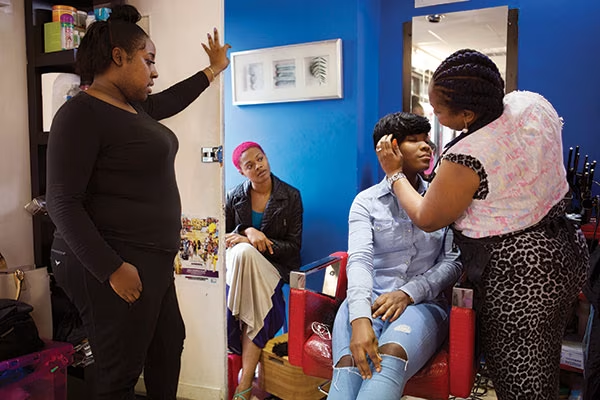
Peckham Palms emerged from a redevelopment context. Its own history describes an initiative to support the micro-business community around Rye Lane, including businesses associated with Blenheim Grove. At its 2019 opening, it described a new location for stylists affected by redevelopment around Peckham Rye station. Providing a place to keep trading was therefore central to the project’s formation.
The organisation’s stated mission links that purpose to the barriers Black women face when seeking finance and commercial premises. Local reporting published in October 2025 also included tenant accounts describing the value of a supportive environment for Black women entrepreneurs. Those accounts establish intentions and individual experiences; they do not independently demonstrate the affordability, security or financial performance of every tenancy.
This history matters because access to premises is a distinct economic relationship. A practitioner needs somewhere to work, and the conditions attached to that space can shape her business. But securing workspace is not the same as securing shelf access for a product brand. The former concerns the ability to operate; the latter concerns selection, supply and selling. Both belong in an account of Peckham’s economy, but evidence of one cannot stand in for evidence of the other.
That distinction also prevents Peckham Palms from carrying more analytical weight than the available reporting supports. Its public account explains the organisation’s model more fully than directory listings explain neighbouring retailers. This difference in available information should not be mistaken for evidence that one type of business behaves better than another.
A Shopfront Does Not Explain the Buying Decision
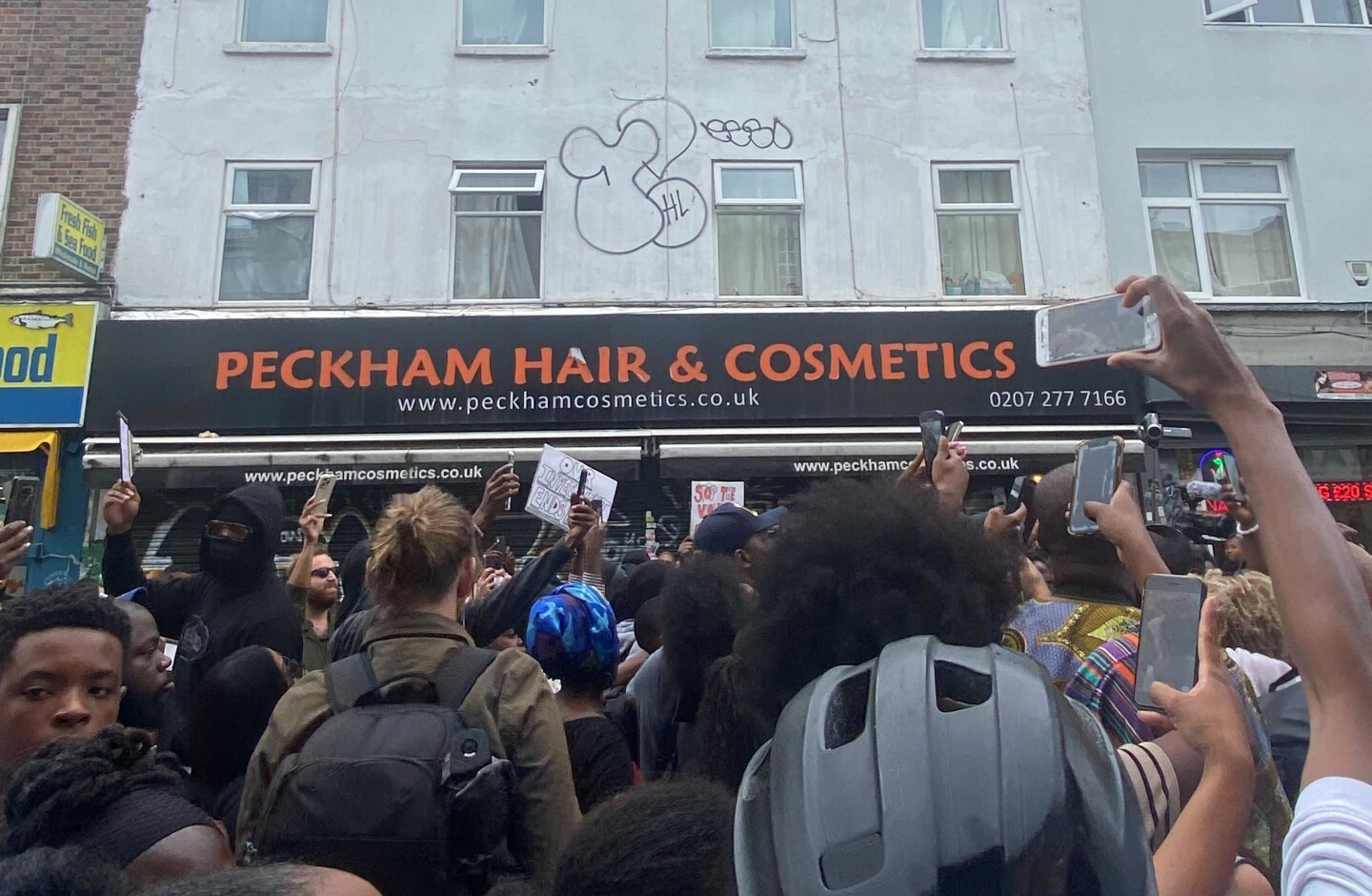
Published sources identify product-retail locations along Rye Lane. Clear Essence’s stockist locator lists Peckham Cosmetics Ltd at 79–81 Rye Lane, while a separate directory lists Juliet’s Afro Cosmetic Superstore at 120 Rye Lane. These are advertised locations, not independently verified accounts of current ownership, inventory or purchasing arrangements.
The distinction between retailer and brand is essential. A product company and the shop selling its goods are separate businesses, even when customers encounter them through a single purchase. A stockist listing can identify a potential route to customers, but it does not reveal who chose the range, how products were supplied or what conditions govern the relationship. Nor does a shop’s name or customer base establish ownership.
Brand ownership requires its own verification. A founder’s identity and a company’s current ownership are not automatically the same. Marketing imagery and reputation may provide leads, but they should not determine the categories used in an investigation. Where current ownership cannot be established, the accurate description is “unconfirmed”, not an assumption based on appearance.
Even a verified ownership category cannot explain commercial conduct on its own. It does not establish which suppliers receive favourable terms, how staff advise customers or why one product occupies a prominent position. Those questions require evidence from the specific business; otherwise, an ownership investigation risks replacing one broad assumption with another.
The Shelf Shows an Outcome, Not Its Cause
A physical shelf offers concrete evidence: a named product is present, has a price, and occupies a specific position at a recorded time. That is a useful starting point, but it doesn’t explain it. An item’s absence could reflect a buying decision, temporary demand, a delayed delivery or another circumstance. A prominent display could have several origins. Observation records the outcome; interviews and documents are needed to establish the decision behind it.
The measures used also affect what you can conclude. Counting brands describes the breadth of representation. Counting distinct products describes the range within those brands. Counting shelf facings describes display exposure. Recording height, location and promotional signs describes placement. These should remain separate rather than being combined into an unexplained judgement about “visibility”.
For the commissioned Peckham investigation, the sample therefore needs clear boundaries. The sample must identify selected stores, product categories, and visit dates, and record exact variants, pack sizes, and promotional conditions consistently. A limited census could establish what was available at those sites during those visits. Without further evidence, it could not represent every Rye Lane retailer or demonstrate a permanent pattern.
Price requires equal care. Comparing different pack sizes or promotional conditions can create an apparent disparity that does not describe a like-for-like purchase. More importantly, a retail price does not establish margin. Without acquisition costs and relevant commercial terms, the investigation cannot calculate what the retailer earns or infer why the price was set.
Salons Influence Products Through a Different Relationship
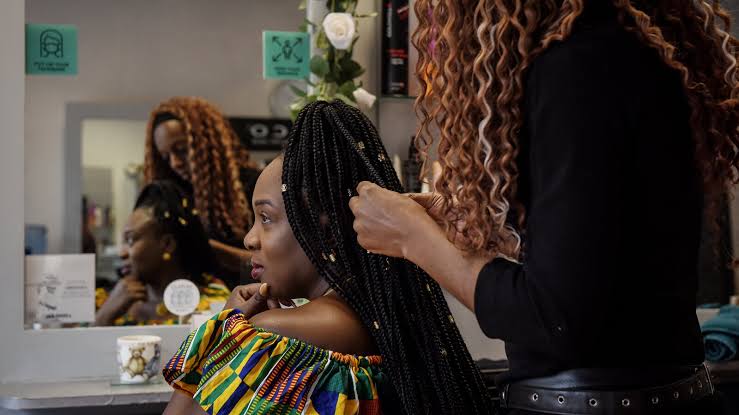
Peckham Palms’ public directory describes businesses offering services including braiding, locs, wigs, cutting and colour. That service-based setting should not be treated as interchangeable with a product superstore. A practitioner’s professional supplies, take-home retail range and recommendations to clients may involve different products and commercial arrangements.
A bottle at a workstation is not proof of retail availability. Equally, a recommendation may direct a customer to a purchase elsewhere rather than generate a sale for the salon. To understand that influence, the reporting must establish who chooses products, where they are sourced and whether the practitioner receives revenue from selling or recommending them. The general directory cannot answer those questions for individual tenants.
The customer relationship also needs to be described, not assumed. An appointment, a product purchase and a request for advice may connect one person with several businesses. The investigation should not assume that a particular ownership model automatically produces greater trust, better advice or more local economic benefit. Those are separate claims requiring testimony and, where appropriate, transaction evidence.
This analysis has no verified wholesale invoices, sales records or commercial agreements from the selected retailers or salons. It consequently cannot establish their margins or calculate how much of a customer’s spending remains within Peckham. Ownership can identify who has a business interest, but it can’t replace an account of where money goes.
Put plainly, a good ownership story is a place to start asking questions, not a place to stop. Each business in this picture sits at a different point in the chain, and the useful work is describing what each one actually controls.
The Omiren Argument
Peckham’s hair-and-beauty economy is better understood through the distribution of control than through a single ownership label. Different parties may control premises, product selection, presentation, and payment. Peckham Palms’ published structure illustrates some of those distinctions; Rye Lane stockist and directory listings identify places where further reporting can begin. Neither source type establishes the complete relationship behind a sale.
The commissioned investigation must connect a defined shelf census with accounts from retailers, practitioners, brands and suppliers. It should establish what customers could buy, how they selected those products, and what the participating businesses can substantiate about the terms behind them.
Until that work is completed, there is no defensible verdict about who “gets the shelf” across Peckham. The narrower conclusion still matters: property ownership, business ownership, and brand ownership describe different forms of participation, and none should be used to prove more than the evidence supports.
Also Read:
- The Beauty Retail File: What Is Required by Law, and What Is Required by a Buyer?
- Òlan London: Everyday Dressing, Bridalwear and a Name Rooted in Family
- After Africa Fashion Week London 2026: What Converted Into Orders, Stockists, Press or Partnerships?
- The Maker-Credit Test: What a Heritage Fashion Product Page Should Clarify
FAQs
Who owns the Peckham Palms building?
Peckham Palms states that Southwark Council owns the building. It separately describes its operating company as majority Black female-owned. These statements have not been independently verified against ownership records for this article.
Does a stockist listing establish current availability?
It identifies an advertised retail relationship or location, not a dated inventory. For example, Clear Essence’s listing for Peckham Cosmetics Ltd does not show which individual products are currently on its shelves.
Can salons be assessed in the same way as product superstores?
Not without distinguishing their activities. Peckham Palms’ directory describes service businesses, whose professional product use, take-home sales and recommendations need separate investigation.