Three shoes offer three different ways into Brother Vellies.
The Erongo Vellie begins with brown kudu suede. The Summer Huarache in Midnight foreground is braided leather. The Tree of Life Doodle Mule introduces illustration as part of the shoe’s identity. Their product descriptions emphasise different materials, processes, and production locations.
What connects them is not a single silhouette. It is a method: give a recognisable footwear form a particular character through its surface.
That is a more useful starting point for this brand spotlight than a list of founder achievements. It lets us ask what the shoes do as designs, how much they rely on material, where construction becomes visually important and when decoration takes the lead.
Aurora James founded Brother Vellies in 2013. The company says its original goal was to maintain traditional African design practices while creating and sustaining artisanal jobs. Its story now also includes production beyond Africa. The selected products make that breadth concrete. A South African vellie and a Mexican huarache carry different histories; an illustrated mule introduces another register altogether. Their differences don’t obstruct a coherent brand. They are the starting point for understanding its range.
Suede vellies, braided-leather huaraches, and illustrated mules show how Brother Vellies gives recognisable footwear different characters.
The Erongo Vellie: Letting the Material Lead
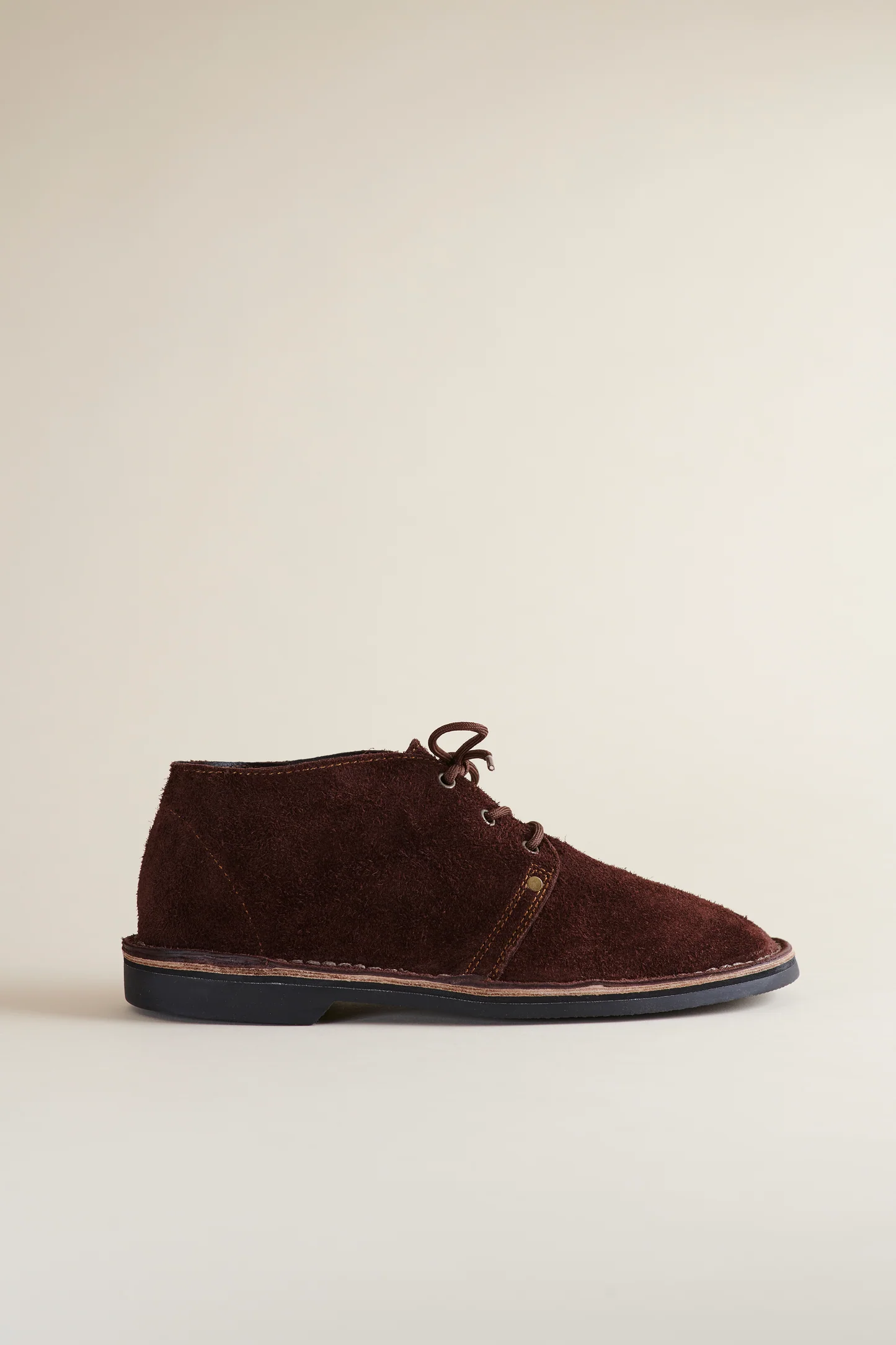
The Erongo Vellies in Brown Suede is the quietest proposition in this selection.
Brother Vellies identifies the form as a version of the South African veldskoen, or vellie. The product page specifies brown kudu suede, an outsole-stitched rubber sole and manufacture in South Africa.
The interest begins with that material description. Suede provides character without needing an illustrated motif or elaborate decoration.
This matters to the wider comparison. A footwear range becomes less convincing if every product must deliver the same level of spectacle. The Erongo establishes another possibility: recognisability through a relatively restrained combination of form, material and construction.
The brand’s emphasis on an outsole-stitched rubber sole also gives the description a physical basis. It describes the shoe as an object, rather than relying entirely on the atmosphere of a campaign.
That does not establish performance. This spotlight has not worn the shoe, tested the sole or assessed its durability. The narrower design judgement is more useful: within this selection, the Erongo allows material to take the lead. It shows that the brand’s vocabulary includes restraint, not only ornament.
The Huarache: Construction as the Identifying Feature
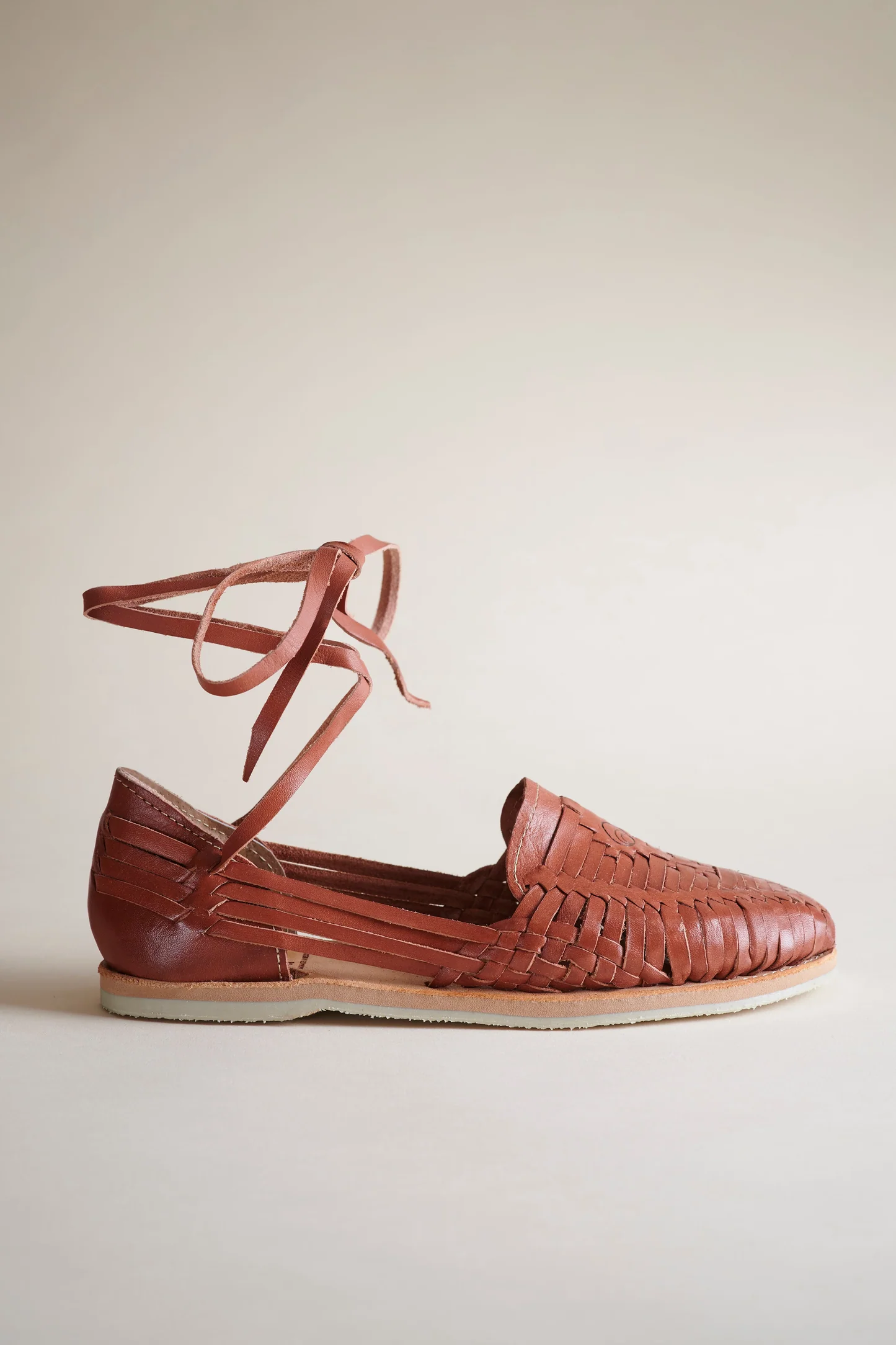
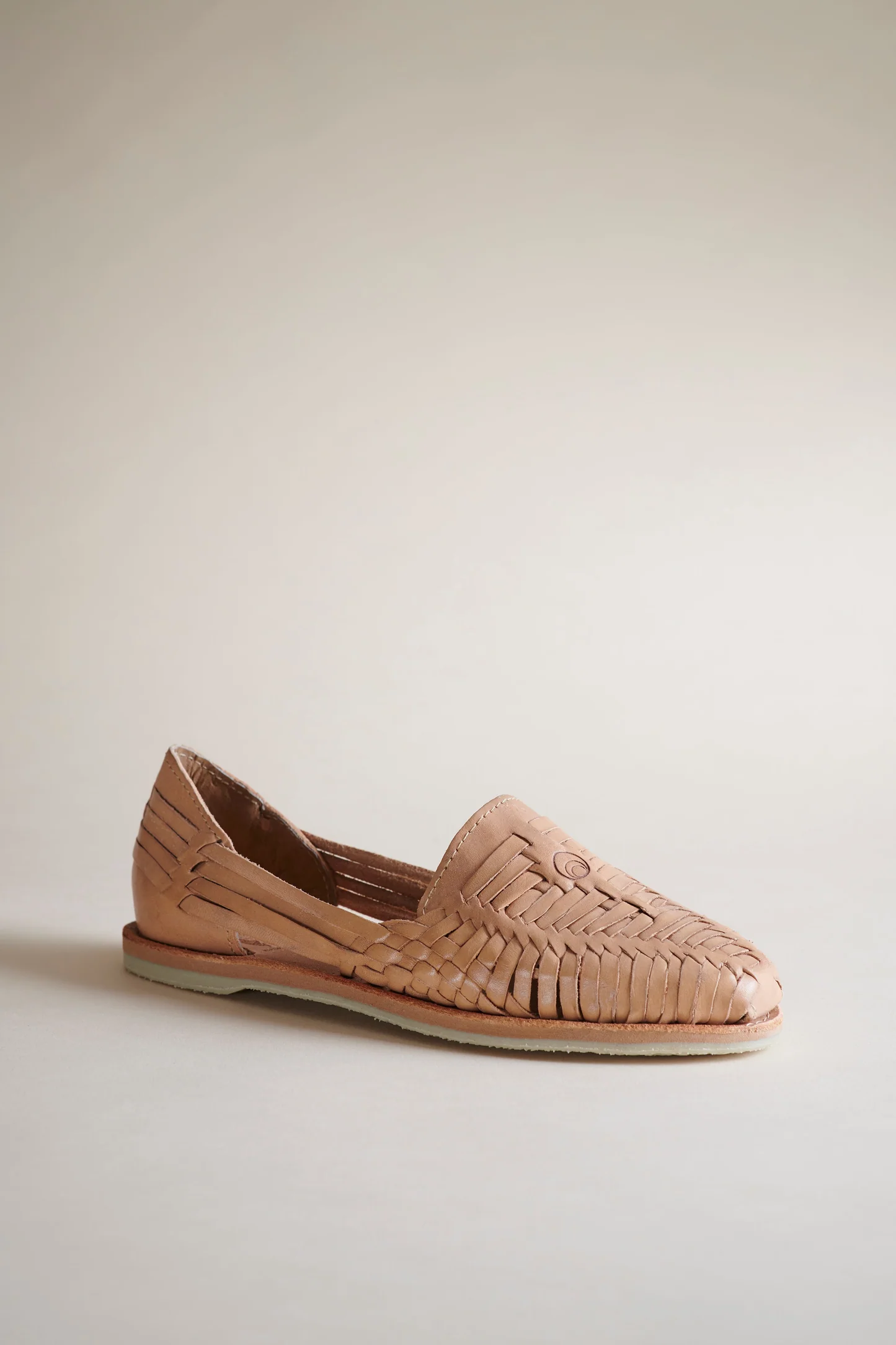
The Summer Huarache in Midnight changes the relationship between leather and the upper.
Its description identifies handwoven braided leather and production in Michoacán, Mexico. The brand also connects “huarache” to kwarachi in the Purépecha language spoken in the region’s highlands.
Here, the process is central to the product’s identity. Braiding is not simply an embellishment applied to an otherwise separately described shoe; the listing foregrounds it as construction.
Placed beside the Erongo, the huarache shows why material names alone aren’t enough. Both products use leather, but how it is handled changes the proposition. One emphasises suede; the other emphasises interlacing.
The colour family adds another layer. Brother Vellies describes the Whisky and Nutmeg versions as naturally vegetable-dyed and states that their colour darkens over time. These are product-specific claims from the company. They introduce the idea of a continuing form with a changing finish: the shoe’s identity need not depend on remaining visually unchanged.
For this spotlight, the important distinction is between variation and reinvention. Different finishes can extend a recognisable family without requiring an entirely new silhouette for each release. The huarache also establishes a limit to the brand’s founding narrative. It should be described through the Mexican context attached to this product, not absorbed into a general account of African craftsmanship.
The Doodle Mule: The Shoe Carries a Graphic Identity
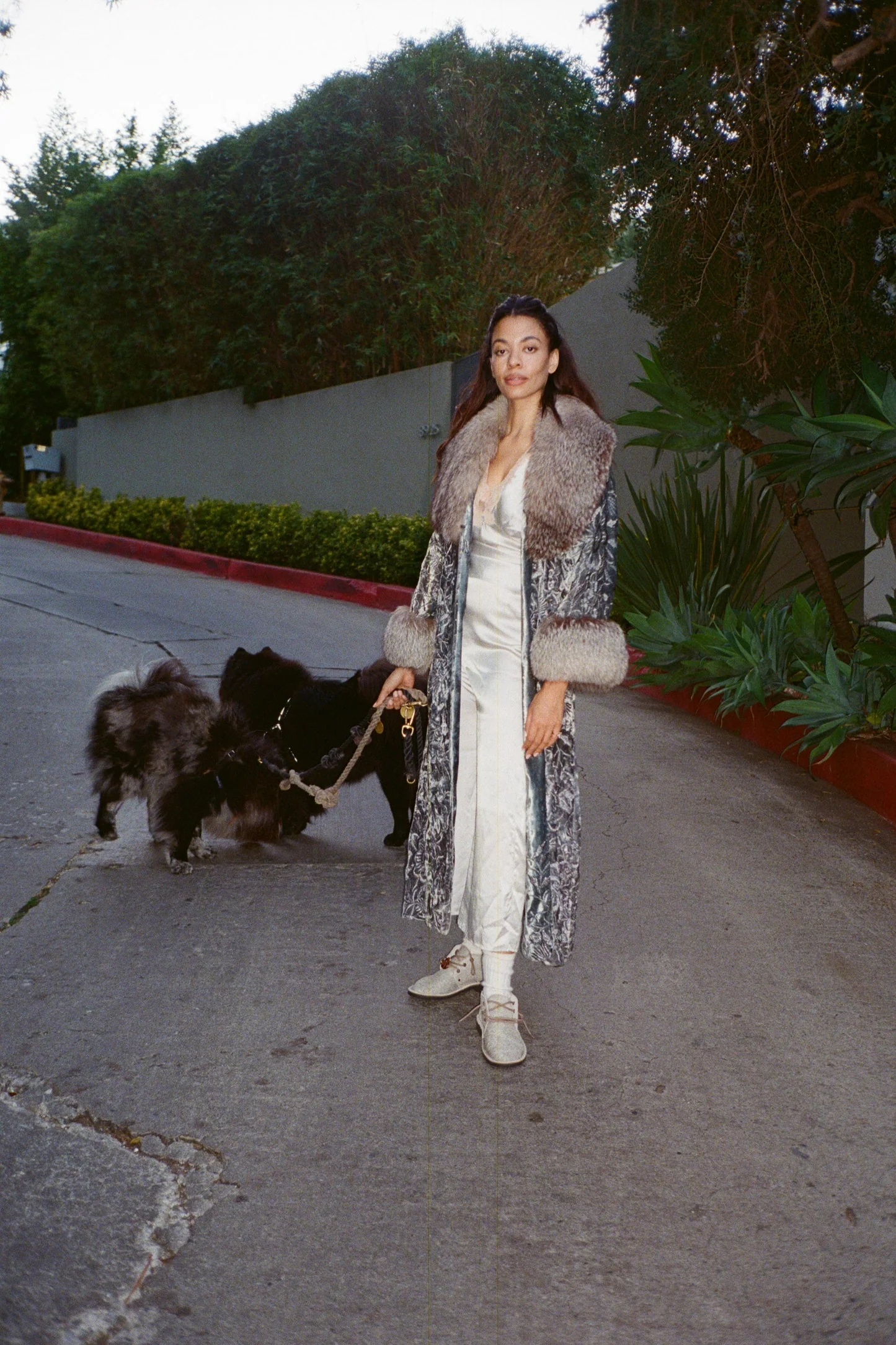
The Tree of Life Doodle Mule is more explicit about decoration.
Its listing connects it to Brother Vellies’ Doodle boots and describes the footwear as handmade and hand-painted by artisans in Mexico. The wider Doodle collection includes names such as Mermaid, Yin Yang and Eve. Imagery and language therefore shape how the product family is organised and distinguished.
That creates a different relationship with the wearer. The Erongo’s material supplies its principal character. The huarache’s braided construction supplies another. A Doodle shoe adds a graphic element that can become the immediate reason for recognition.
The design opportunity is clear: a recurring illustrated treatment can move across footwear categories. The listing’s connection between boots and mules suggests a vocabulary that is not confined to one shape.
The critical challenge is equally clear. A memorable image does not automatically make a memorable shoe. The illustration needs to match the object’s scale and form. If it becomes the only distinguishing feature, the footwear risks functioning chiefly as a support for graphics. That is the standard by which this family should be judged: not simply whether the drawing attracts attention, but whether its relationship with the shoe produces a convincing whole.
A Vocabulary Built Through Differences
These three products do not justify a claim that every Brother Vellies shoe follows one design formula. They do establish a productive comparison.
The Erongo emphasises named suede and construction. The huarache foregrounds braided leather. The Doodle mule introduces illustration and the possibility of a graphic family extending across forms.
This gives the selection different degrees of visual intensity. Not every pair needs to perform the same role. A restrained shoe can establish material character. A woven upper can highlight construction. An illustrated surface can introduce a more overt identity.
The shared vocabulary lies in the relationship between a recognisable category and a distinctive treatment. That is more precise than saying the brand combines heritage and modernity. Such language may describe an intention, but it does not explain which decisions make one product different from another.
The selected shoes also suggest where the vocabulary could become weaker. If surface treatment alone supplies distinction, the underlying form may become too neutral. Omiren has examined this dynamic more broadly in its coverage of how the Global South’s design contributions are attributed to the strongest designs needing both a coherent shoe and a treatment that supports it.
Keep the Cultural Descriptions Specific
The product information identifies separate contexts. The Erongo is presented as a South African veldskoen. The midnight huarache is described as made in Michoacán, with a name connected to the Purépecha language. Doodle footwear is described as handmade and hand-painted in Mexico.
These details should not be treated as interchangeable evidence of “global craft”. Their value is that they help distinguish the products. A place, technique or footwear name becomes useful when attached to the relevant object.
The company’s founding account can provide context, but it cannot stand in for every shoe’s history. Nor does a product description fully explain the development of the form it references. Omiren has consistently held this position: in its coverage of Caribbean diaspora designers and elsewhere, cultural specificity matters more than a generalised heritage claim. This spotlight stays at the scale of the evidence: the brand names, the material or process it specifies, and how those details inform a comparison of the selected designs.
Manufacturing Information Is Not an Impact Verdict
Brother Vellies’ product pages provide manufacturing locations and selected construction details. Its broader account states an ambition to sustain artisanal jobs. Those are different kinds of information.
A location identifies where the company says it makes a product. A construction term identifies a process. A social-impact statement makes a larger claim about outcomes.
The Erongo page also uses the description “by-product or environmentally conscious materials”. The wording remains the company’s claim; the consulted material does not provide a complete environmental assessment of the selected pair.
None of this requires the design discussion to stop. It requires the article to avoid turning admiration into certification. The shoes can be examined for their materials, forms and decoration while broader employment and environmental outcomes remain unverified.
Why This Selection Matters
Omiren’s earlier overview of Black luxury entrepreneurs introduces Brother Vellies through Aurora James and the brand’s positioning. This spotlight adds a different kind of knowledge: the distinctions between identifiable products.
The strongest finding is not a universal signature silhouette. It is a range of approaches to the surface. Suede, braiding, and illustration give familiar categories different characters. The products retain their individual contexts while offering a coherent entry point into the brand.
The selection is strongest where treatment and form support one another. The broader design question is whether each new variation contributes more than another finish or motif. That is a more demanding way to assess a footwear vocabulary: what changes, what remains recognisable, and what each pair adds.
Omiren Argument
A brand spotlight should make the products easier to understand. For Brother Vellies, that means distinguishing a suede vellie from a braided-leather huarache and an illustrated mule, rather than grouping them under one broad story about luxury or craftsmanship.
The selected products suggest a vocabulary built through changing surfaces and recognisable forms. Their strength lies in the different roles they can play within a range.
Omiren’s position is that design assessment and impact endorsement should remain separate. The founder’s purpose provides context; the shoes provide evidence of design decisions. Wider claims require wider verification. The most useful introduction to this brand begins with what the footwear makes tangible.
ALSO READ
- Black Luxury Entrepreneurs: Six Fashion Brands Worth Watching
- Brother Vellies: Our Story
- Brother Vellies Huaraches Collection
- The Global South Made Fashion. It Just Never Got Credit.
Frequently Asked Questions
Which products does this spotlight examine?
Erongo Vellies in Brown Suede, Summer Huarache in Midnight and the Tree of Life Doodle Mule, with related family and colour references.
Where does the company say they are made?
The article describes the selected Erongo as made in South Africa, the Midnight Huarache in Michoacán, Mexico, and the Doodle footwear by artisans in Mexico.
Does this article assess comfort or durability?
No. It is a product-led design discussion based on published descriptions, not a wear test.
Does it verify the brand’s environmental or employment impact?
No. The company’s broader impact statements remain attributed claims, separate from the design assessment.