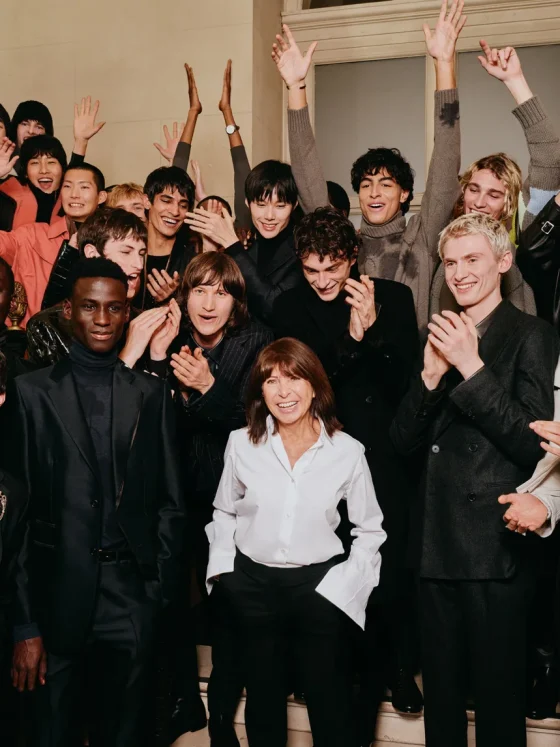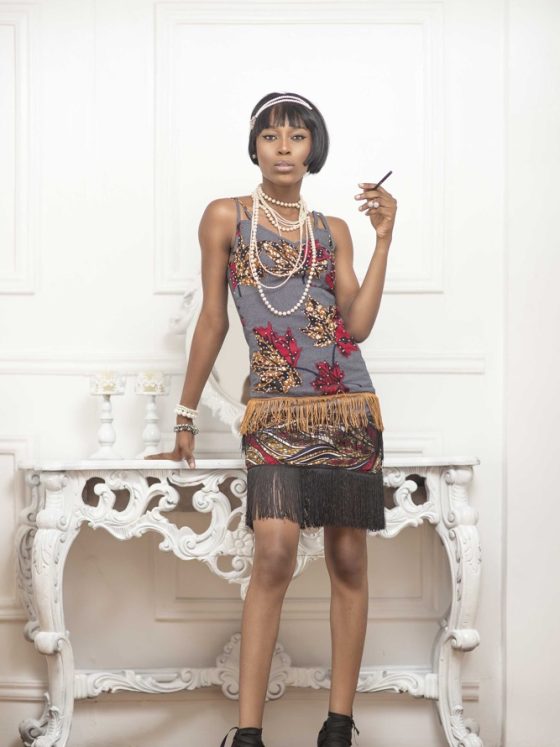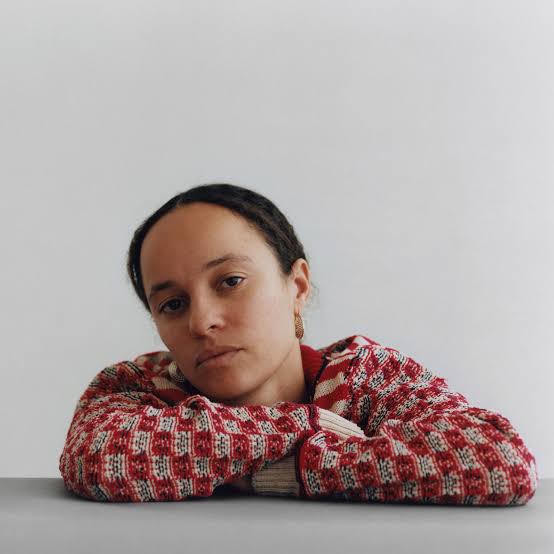
There is a Yoruba story about Yemoja that most people know and a dimension of it that most people miss. Everyone knows she governs the ocean, is the mother of waters, and is one of the most powerful orishas in the Ifa tradition. What gets less attention is the specific quality of that power. Yemoja is not the ocean’s surface. She is its depth. The part that cannot be seen. The part that has outlasted everything that has ever lived on land. The part that is patient in a way nothing above the waterline can afford to be.
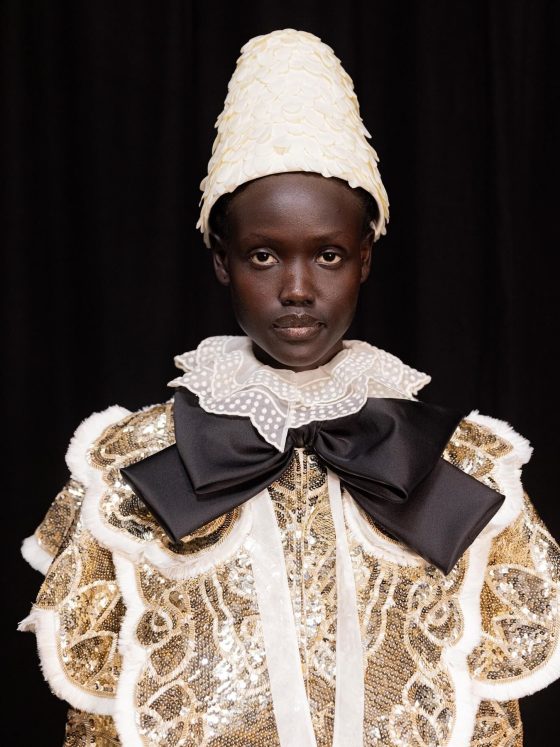
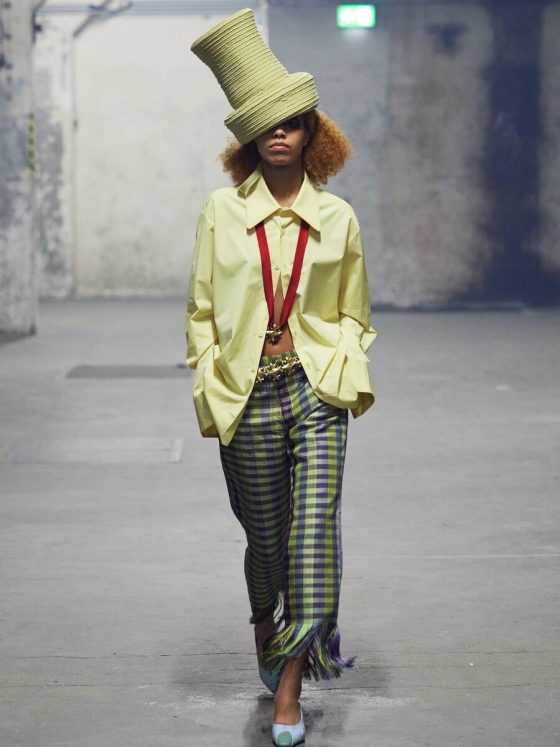
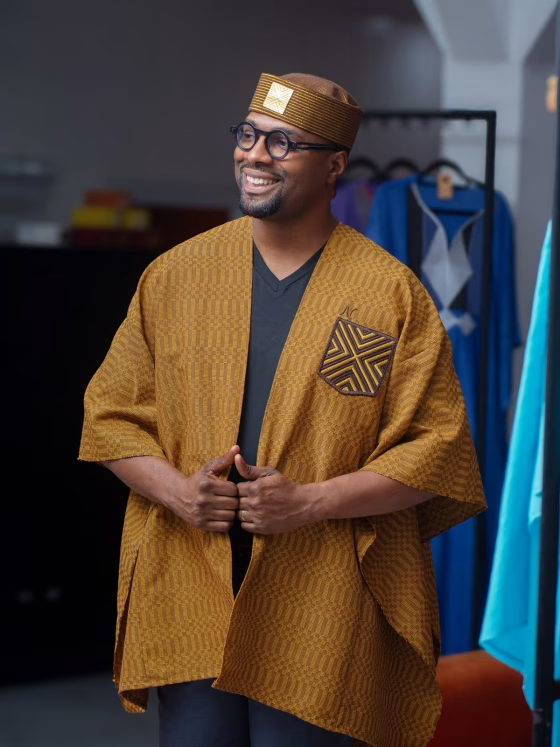
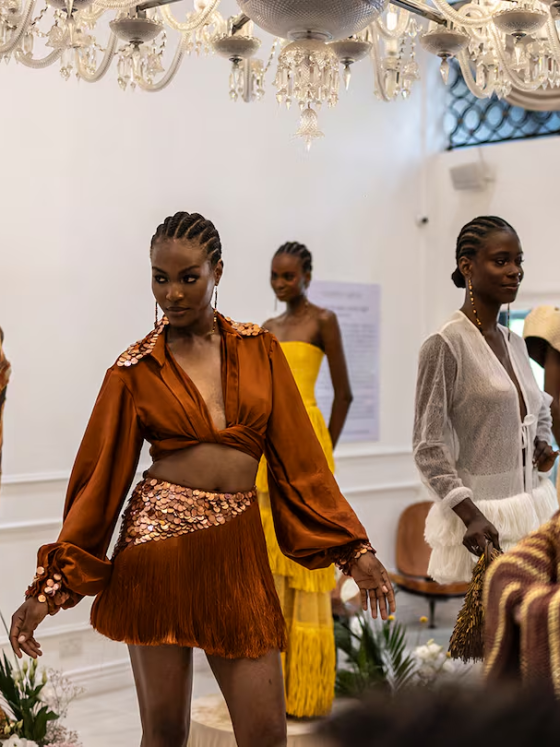
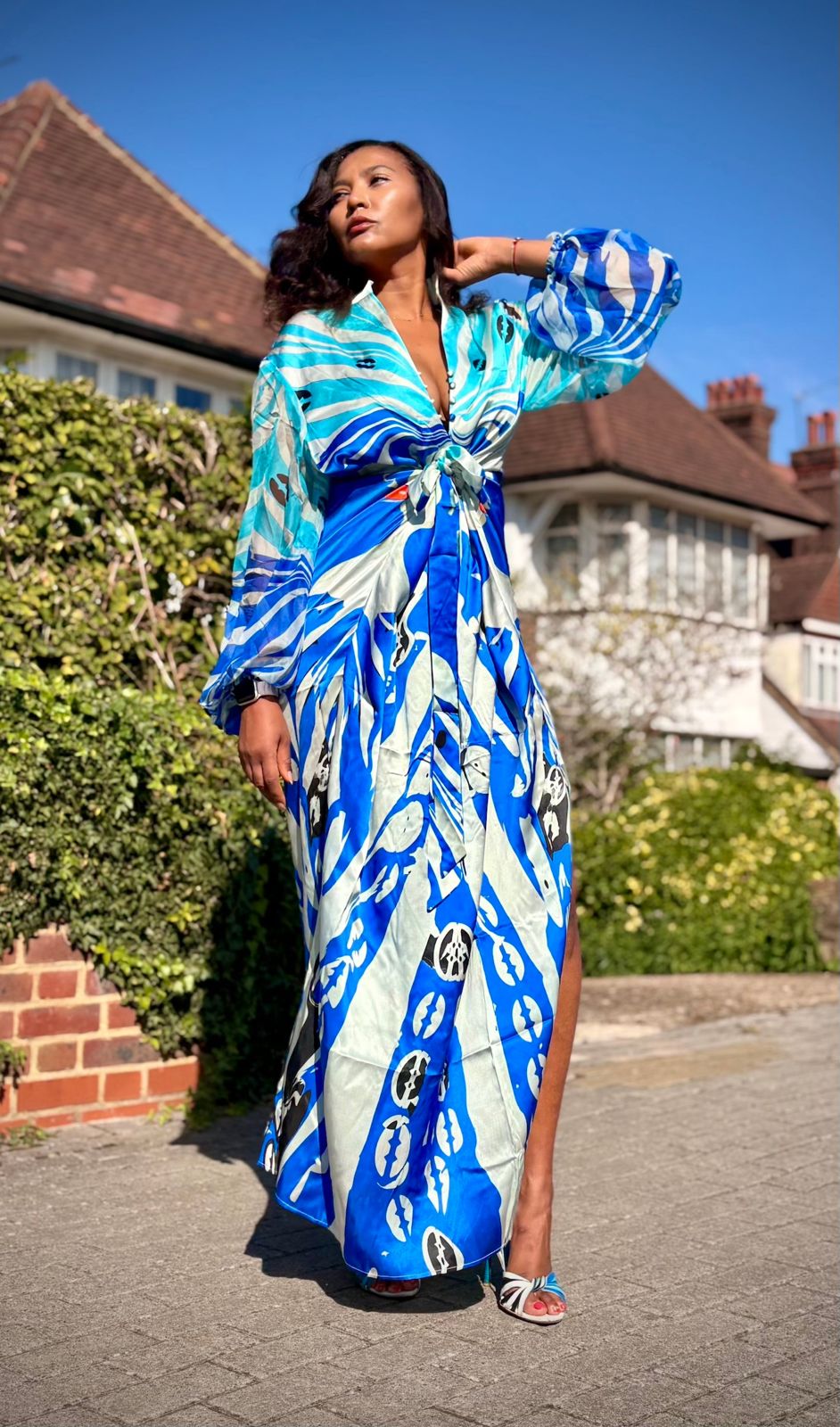
When Hazel Eki Osunde, founder of EKI SILK, takes silk to the water, she is not making a decorative choice. She is working in the same register as that story. Her ocean-themed work does not reach for the postcard version of the water, the bright blue tropical shallows, or the beach at noon. It reaches for what is underneath. The Mariana Trench. The abyss. The tranquil darkness that holds more life than most people know exists. That is a Yemoja argument dressed in Mulberry silk, and it has been building across several seasons of Lagos Fashion Week.
EKI SILK and Yemoja share the same argument: depth is not danger; it is power. This piece reads Hazel Eki Osunde’s work at Lagos Fashion Week through the lens of the Yoruba orisha who governs the ocean.
What Yemoja Means and Why It Belongs Here
Yemoja is not a metaphor in Yoruba culture. She is a specific force, a living presence in the Ifa cosmological system, and she governs water in all its forms: the ocean, rivers, rain, and the fluid that sustains life before birth. She is associated with blue and green, with depth, with the power that comes from knowing that what is beneath the surface is larger than what is visible above it. Her praise names speak of water no one can exhaust, a river that eats the shore without being asked.
In the context of Nigerian fashion at Lagos Fashion Week, invoking Yemoja is not a gesture toward spirituality as an aesthetic. It is a positioning. It says: this collection knows where it comes from. It knows what power looks like in this tradition. And it is making an argument about depth, about what is real beneath the surface of things, using the fabric and the print and the runway as the instruments for that argument.
EKI SILK has earned the right to be read in this frame. The brand was founded in 2009 by Hazel Eki Osunde, who was born near the Swiss border in Germany, raised in Nigeria and is now based in London. From the beginning, the brand’s commitment has been to tell African stories through African-owned prints on natural fabric. “I want people to think about the prints too; they tell stories,” Osunde has said. The print is never decoration. It is the argument.
The Brand That Went to the Water
EKI SILK has been at Lagos Fashion Week since the inaugural 2011 edition, making it one of the longest-standing fixtures on the calendar. Each collection has been built around a story that the print carries: nature, culture, travel, heritage, always filtered through Osunde’s specific lens as a Nigerian designer working between cultures. The brand’s commitment to 100% natural Mulberry silk is not incidental. Silk catches light the way water does. It moves with the body the way water moves with whatever it contains. The material and the message have always been aligned.
When the brand’s creative direction turned to the ocean, it was not a trend response. It was a logical extension of what the brand has always done: finding the African cultural story that belongs to the material and making it visible in print. The ocean is everywhere in Yoruba spiritual life. It is in the orishas, in the naming traditions of coastal communities, and in the fishing cultures of the Niger Delta and Lagos Island. It was always going to arrive in an EKI SILK collection eventually. When it did, it came with the full weight of what the tradition knows about water.
Silk and the Ocean: What the Fabric Does
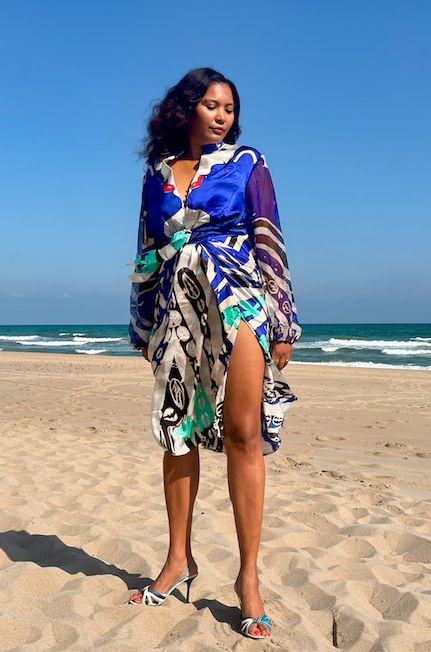
Silk and water themes work together in EKI SILK’s collections for a practical reason, and it is worth naming before discussing the cultural dimension. Mulberry silk has a lustre that no other fabric replicates. In the right light, it looks wet. It reflects the room’s ambient light the way a body of water reflects the sky above it. When you print blues, greens, and blacks onto silk, the colours are not flat. They shift with the angle of the light and the movement of the body, like water shifting as the wind moves across it.
Osunde designs all of EKI SILK’s prints herself. This matters because the print is not a licence purchased from a third party or a pattern borrowed from an existing archive. It is a new image made by a Nigerian designer to carry a specific story. When that story is the ocean, the print has to do the conceptual work of representing something that is not static, something that moves and changes depth and light continuously. Silk is the only fabric that can carry that without fighting against it.
The brand uses digital printing, which requires significantly less water than traditional textile printing methods. This is worth noting in a collection whose subject is water: the technique conserves what the concept celebrates. That kind of internal coherence, the material values matching the conceptual values, is one of the things that makes EKI SILK’s water work feel like a position rather than a season’s theme.
Lagos Fashion Week and the Ocean Moment
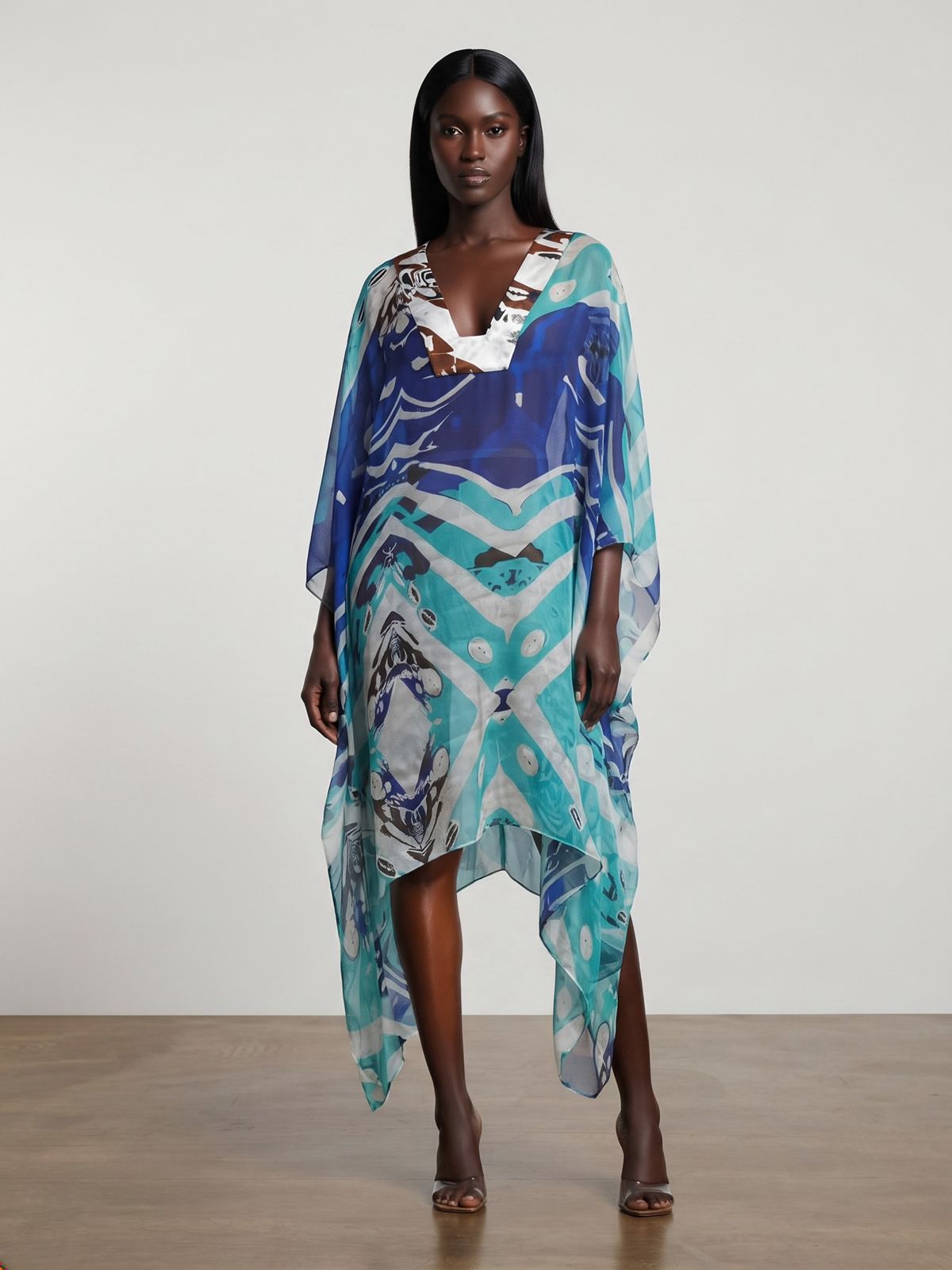
At Lagos Fashion Week 2024, something remarkable happened. Four designers independently brought the ocean to the runway. Banke Kuku tackled marine conservation directly. Desiree Iyama used the tides as a metaphor for resilience. LFJ’s Shores told a story of migration through the ocean’s edge. And EKI SILK took the audience to the Mariana Trench. The day before those shows, Lagos streets flooded. Guests waded through water to reach the Federal Palace Hotel. The city was literally underwater, and designers used the water as their primary creative vocabulary.
EKI SILK’s contribution to that moment was the most conceptually specific. Osunde described the collection in her own words: “Inspired by the calming depths of the ocean. I take you on a journey through the depths of the ocean; through the shades of blue and green; from the bright shallow waters to the tranquil abyss.” The palette was blue, green and black, working through those colours the way seaweeds work through water. She took the Mariana Trench, the deepest geography in the world’s oceans, and made it into a print.
The collection was called ‘Each piece in this collection was designed for the modern woman, graceful, calming, and flowy,’ Osunde said. That description is doing specific cultural work. Graceful, calming and flowy are not passive qualities. They are the qualities of something that cannot be stopped, that moves around obstacles rather than breaking against them, that holds its direction without announcing its force. That is precisely what Yemoja embodies in the Ifa tradition. The connection is not incidental.
The ocean that Yemoja governs is not the ocean of tourism posters. It is the ocean that has been here longer than memory and will be here after memory ends. That is the ocean EKI SILK prints onto silk and sends down the runway. Depth is not decoration. It is the argument.
What the Yemoja Frame Reveals
Reading EKI SILK’s work through the Yemoja framework reveals something that a purely aesthetic reading of the collection misses. The choice to focus on depth rather than surface, on the tranquil abyss rather than the bright shallows, is a philosophical choice about what power looks like. In the Ifa tradition, Yemoja’s power is not aggressive or visible. It is patient and total. The ocean does not need to announce itself. It simply is, and everything else accommodates it.
EKI SILK’s collections make the same argument about African fashion. The brand does not reach for the international calendar’s validation. It shows at Lagos Fashion Week, consistently, season after season, building a body of work that accumulates its authority through the quality of what it makes and the specificity of what it says. That is a Yemoja approach to fashion: not aggressive visibility but unignorable depth.
Hazel Eki Osunde has spoken directly about why this approach matters. “Many of the fabrics we wear and are accustomed to calling African are owned by European or Asian companies,” she has said. “With Hazel Eki, I wanted to narrate stories through the lens of an African and owned by a local.” That is an act of reclamation that the Yemoja framework understands: claiming the depth, the origin, and the power that was always there, without asking permission.
The EKI SILK Collection and Edo Heritage
Osunde has returned to her Edo heritage more than once in her design work. In one behind-the-runway account published on the brand’s website, she described weeks immersed in the richness of Edo culture, absorbing its artistry, symbolism and grace. “With Eki Silk’s delicate fabrics, I chose not to recreate the red beadwork but to reinterpret its spirit,” she wrote. That phrase, reinterpreting the spirit rather than reproducing the surface, is the method that makes EKI SILK’s cultural work valuable rather than decorative.
The Edo tradition and the Yoruba Yemoja tradition are not identical, but they share a West African cosmological framework in which the natural world carries spiritual authority. Water in particular is rarely neutral in these traditions. It is the boundary between worlds, the medium through which ancestors communicate, and the element associated with the most powerful forces in the spiritual landscape. When EKI SILK uses water as its central theme, it draws on a reservoir of cultural meaning that the West African traditions it works within have developed for centuries.
This is what heritage textiles do at their best. They do not simply carry a pattern. They carry knowledge systems, cosmological frameworks, and ways of understanding the relationship between the human body and the natural world. EKI SILK’s silk prints are wearable versions of that knowledge: the ocean’s depth, the Edo colour tradition, the Yoruba spiritual vocabulary, all translated into something a modern woman can put on her body and take with her into the world.
What Lagos Fashion Week Gains From This Work
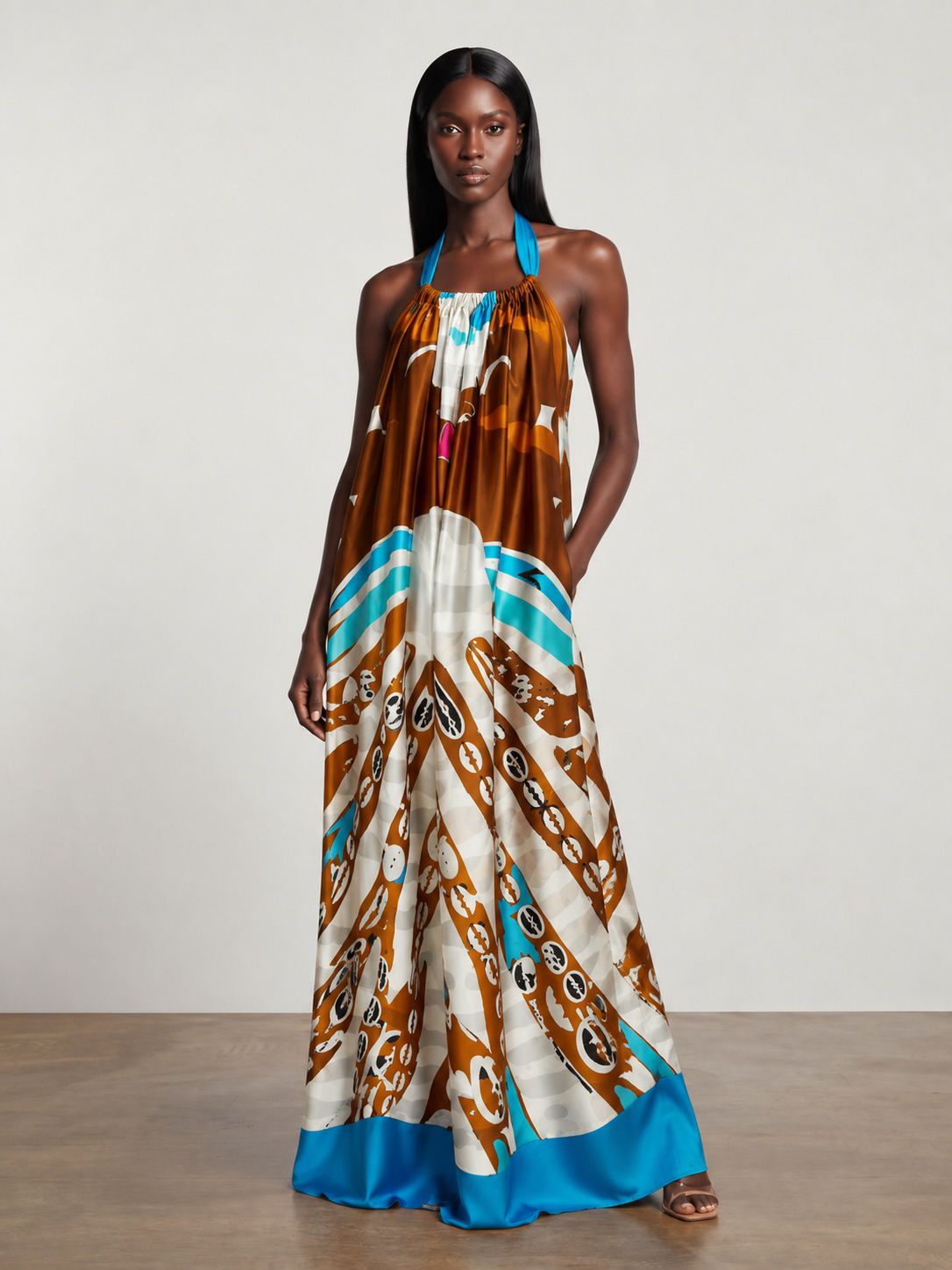
Lagos Fashion Week has hosted EKI SILK since 2011. Across that time, the event and the brand have grown alongside each other. The fashion week has become one of Africa’s most internationally recognised fashion platforms. EKI SILK has become one of its most consistent voices, building a body of work that accumulates meaning across seasons rather than starting from zero each year. That continuity is itself a statement about how African fashion should operate: not chasing seasonal trends but building a vocabulary that grows richer with time.
The water theme, read through the Yemoja framework, adds to that vocabulary. It tells the Lagos Fashion Week audience, and anyone who follows its coverage internationally, that African fashion works with conceptual resources that go far deeper than the aesthetic surface. The print is not just beautiful. It is the Mariana Trench. The colours are not just blue and green. They are the shades of depth that most people never see because they stay at the surface. The collection invites you to go further down.
African fashion has been doing this work for decades, and the credit for it has not always followed. EKI SILK is one of the brands that has insisted on building its own record, on its own terms, from within the tradition it comes from. The Yemoja framework names what that record contains: the depth, the patience, and the unignorable authority of something that has been here longer than the categories used to describe it.
Why the Name Fits
Yemoja has not been officially claimed as a collection name by EKI SILK in any press material available to Omiren Styles at the time of publication. What we are doing here is something different and, we think, more interesting: applying the Yemoja framework as an editorial reading of what EKI SILK’s water work has been building toward. The argument is that the brand’s sustained engagement with the ocean, its insistence on depth over surface, and its use of the water’s most patient and powerful qualities as the conceptual core of its collections already make a Yemoja argument. The name simply makes explicit what the work has been saying.
When a brand’s creative vision aligns this precisely with a cultural framework, it matters; the editorial job is to name the alignment. That is what this piece does. If Hazel Eki Osunde were to call a future collection Yemoja, we would not be surprised. The groundwork for that collection has already been laid in silk, in blue and green and black, on the runway at the Federal Palace Hotel, on a day when the streets of Lagos were flooded, and the city was asking its designers to tell it something true about the water.
ALSO READ
- Can Heritage Textiles Scale Without Losing Their Meaning?
- The Maker-Credit Test: What a Heritage Fashion Product Page Should Clarify
- The Global South Made Fashion. It Just Never Got Credit.
Frequently Asked Questions
Who is Hazel Eki Osunde?
Hazel Eki Osunde is the founder of EKI SILK, a London-based luxury fashion house specialising in 100% natural Mulberry silk garments with African heritage prints. She was born near the Swiss border in Germany, raised in Nigeria and is now based in London. She designs all of EKI SILK’s prints herself, building each collection around a specific story drawn from African culture, nature or travel.
What is EKI SILK’s connection to Yemoja?
EKI SILK has not officially named a collection Yemoja. This article applies the Yemoja framework as Omiren Styles’ editorial reading of what EKI SILK’s water-themed work has been building toward across multiple Lagos Fashion Week seasons. Yemoja is the Yoruba orisha of the ocean, associated with depth, patience and the power that holds more beneath the surface than is visible above it. EKI SILK’s ocean collections, with their focus on the deepest rather than the shallowest water, work within precisely that cultural register.
What has EKI SILK shown at Lagos Fashion Week?
EKI SILK has shown at Lagos Fashion Week since the inaugural 2011 edition, making it one of the event’s longest-standing participants. Confirmed collections include the ocean-themed work shown in 2024, which used a blue, green and black palette to represent the Mariana Trench on Mulberry silk, and the gold and red Africa On Silk collection shown at the 2025 edition, which marked Lagos Fashion Week’s 15th anniversary.
What fabric does EKI SILK use?
EKI SILK works exclusively with 100% natural Mulberry silk. The brand uses digital printing, which requires significantly less water than traditional textile printing methods. Hazel Eki Osunde designs all prints herself, with each collection built around a specific cultural or natural story that the print is designed to carry.
Why does Omiren Styles connect EKI SILK to Yemoja?
Yemoja, the Yoruba orisha of the ocean, is associated with depth, patience, the power that does not announce itself and the understanding that what lies below the surface is greater than what is visible above it. EKI SILK’s water-themed collections consistently focus on depth rather than surface: the Mariana Trench rather than a beach, the tranquil abyss rather than the bright shallows. That creative focus is a Yemoja argument, and naming it as such is Omiren Styles’ way of reading the cultural vocabulary that EKI SILK’s work has been building.
Where can I buy EKI SILK pieces?
EKI SILK is available directly through ekisilk.com, where the brand sells kaftans, trouser suits, dresses, scarves and accessories in its heritage print range. Prices run from £30 for accessories to £395 for full garments. Made-to-measure pieces can be requested by emailing mail@ekisilk.com.