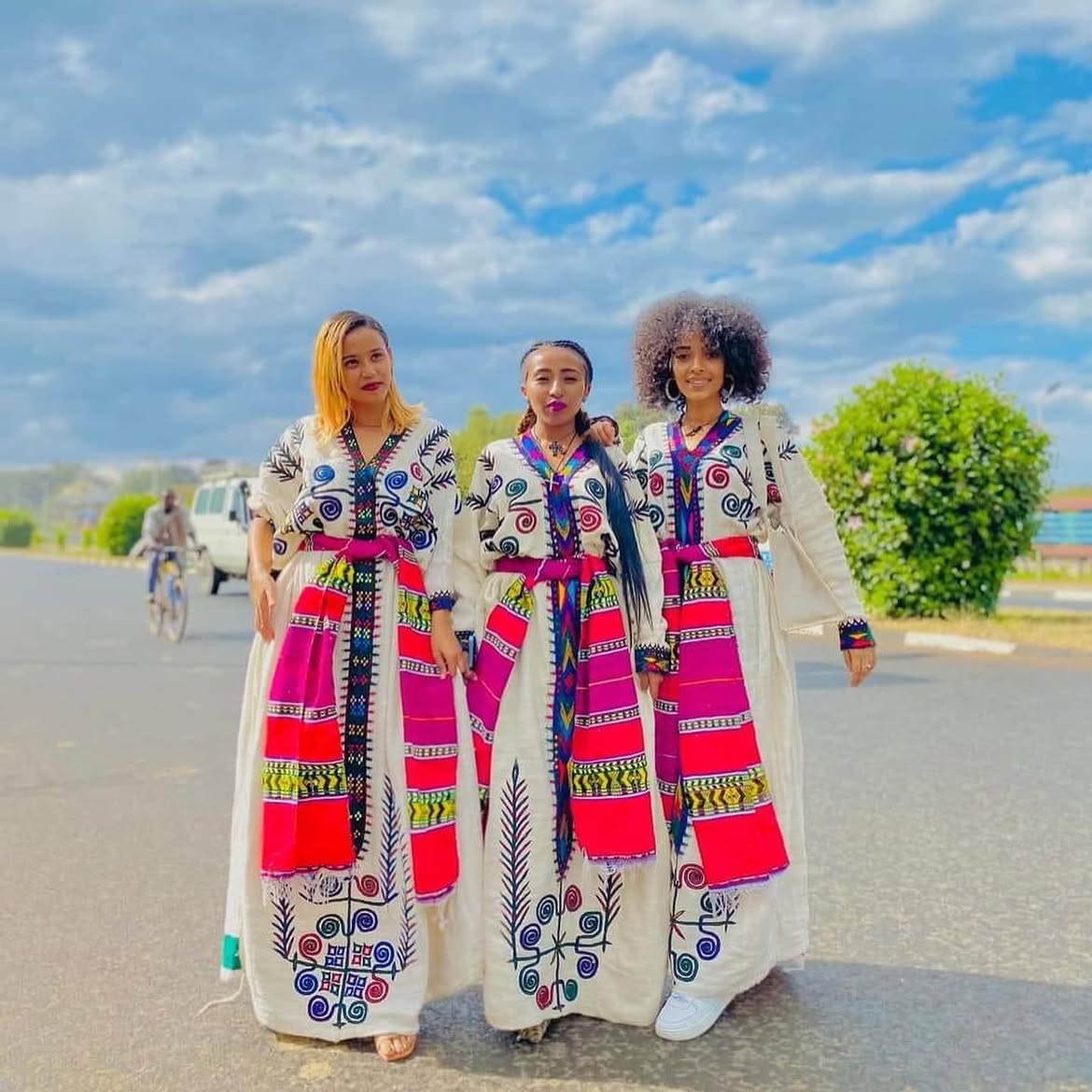
A dress without a meqenet is not yet dressed. That is the logic of the Amhara ceremonial garment system in Ethiopia’s highlands, where the waist belt is not an optional accessory or an afterthought to the kemis but the structural element that transforms an everyday garment into a ceremonial one. The meqenet defines the silhouette, anchors the layering and, in its woven patterns, announces the occasion and the wearer’s place within it.
To understand the meqenet is to understand how a dress system communicates in a tradition where no one writes down the grammar. The knowledge is held in the hands of the weavers who make the cloth, in the eyes of the women who drape it, and in the social understanding of everyone who gathers at the ceremony where it appears. What follows is an account of that system written from the outside but built from the records of scholars and practitioners who have spent time inside it.
The meqenet is the structural belt at the centre of the Amhara women’s ceremonial dress system. This article examines its construction, woven pattern vocabulary, and what it communicates about occasion, regional identity, and social standing to those trained to read it.
What the Meqenet Is
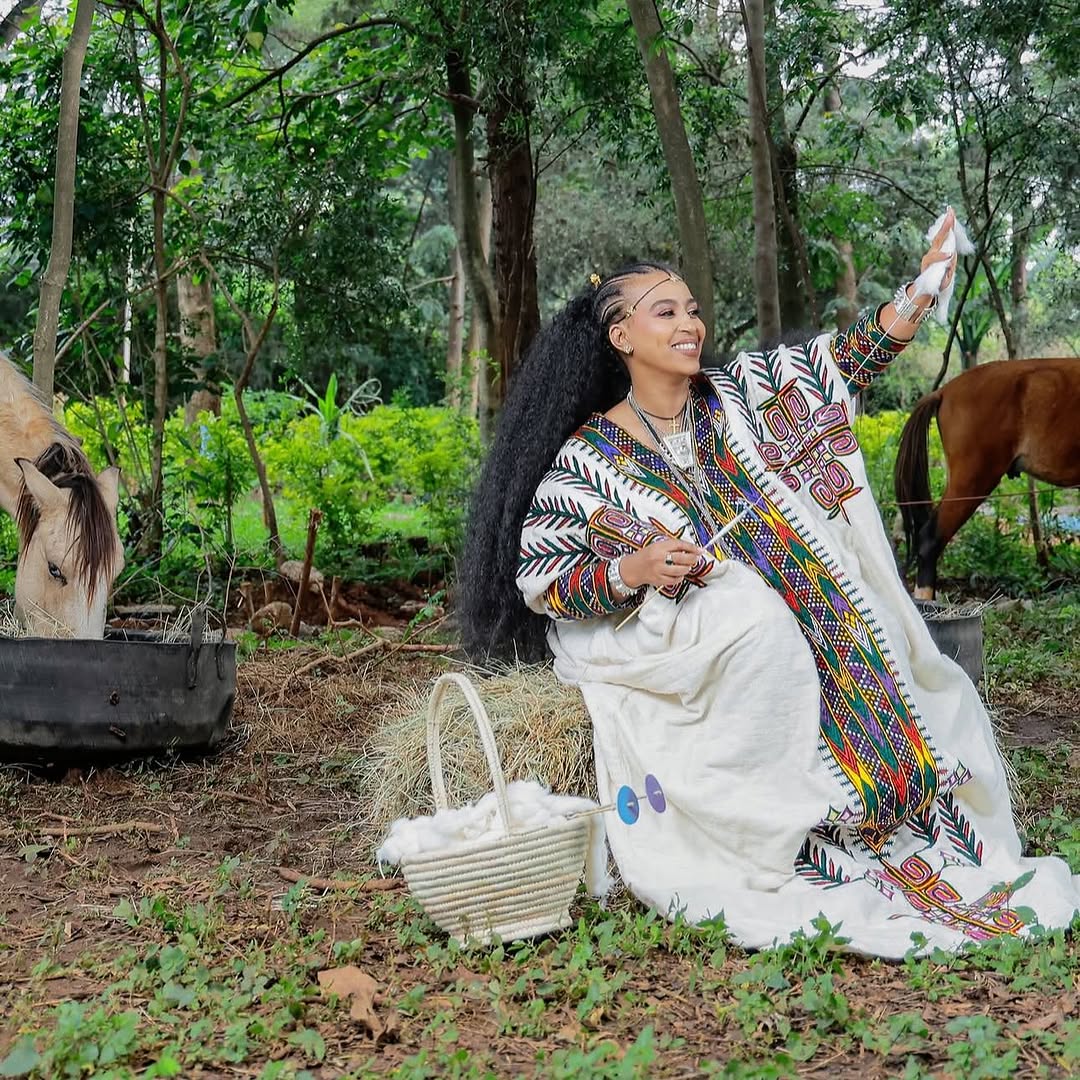
Published research on Ethiopian indigenous weaving traditions describes the meqenet as a cloth worn as a belt twisted around women’s waists over their kemis, about three metres long and about seventy centimetres wide. It features coloured woven patterns either concentrated at the ends or distributed as thin stripes and simple geometric patterns across the whole cloth. The research, published in TEXTILE: Cloth and Culture in 2021 by Biruk Fentahun Adamu and Dereje Berihun Sitotaw, situates the meqenet alongside other foundational Amhara textile garments, including the kemis, the netela, the gabi, and the jano, as part of a coherent dress system whose components each have a specific function.
As Omiren Styles has established in its detailed account of the Gojjam Amhara Fetel dress, the meqenet in the Gojjam tradition is a heavy, sculptural fabric belt that anchors the waistline. In that tradition, it is not just an accessory; it is simultaneously a structural necessity and a definitive marker of high fashion – the element whose presence or absence determines whether the full ceremonial statement is being made. The Gojjam description is specific to one regional variant within the wider Amhara tradition; the meqenet appears across Amhara dress with regional variations in weight, width, pattern density and the specific occasions for which each version is appropriate.
The kemis, the ankle-length white cotton dress beneath the meqenet, is made from shemma: hand-spun cotton cloth produced by weavers working on narrow looms. The netela, the shawl worn over the shoulders and sometimes drawn over the head, completes the three-part foundation layer. Together, the kemis and netela form the base of Amhara women’s dress across occasions ranging from everyday wear to church attendance to formal ceremony. The meqenet is what marks the transition from the everyday to the ceremonially complete.
The Cotton Foundation: Why the Amhara Region Matters
The meqenet is a textile object before it is a social one, and the textile it is made from has a specific geographic and agricultural history. The Amhara region is Ethiopia’s primary cotton-producing territory, with small-scale artisanal farmers accounting for the overwhelming majority of the cultivated area in the highland cotton zones. This is not commercial farming at an industrial scale. It is household- and community-level production, where women spin cotton by hand, and men weave on narrow looms, passing the skill across generations within the same communities that produce the garments.
This agricultural foundation connects the meqenet to the land in a specific way that distinguishes it from imported textile traditions. The shemma cloth at the base of the Amhara dress system is grown, spun, woven and worn within the same regional economy. The cotton farmers who cultivate the fields, the women who spin the thread, the weavers who convert it into cloth, the embroiderers who add the tilf patterns at the hem and cuffs, and the women who drape the meqenet at the ceremony are participants in the same continuous material practice.
This is one reason why the meqenet’s patterns carry social meaning that imported textiles cannot replicate in the same way. The cloth is identified with its place of production; the patterns are identified with their regional and community origin; and the knowledge of how to produce each correctly is held by the specific communities whose dress the meqenet belongs to.
The Pattern Vocabulary: Tilf, Tilet and Regional Distinction
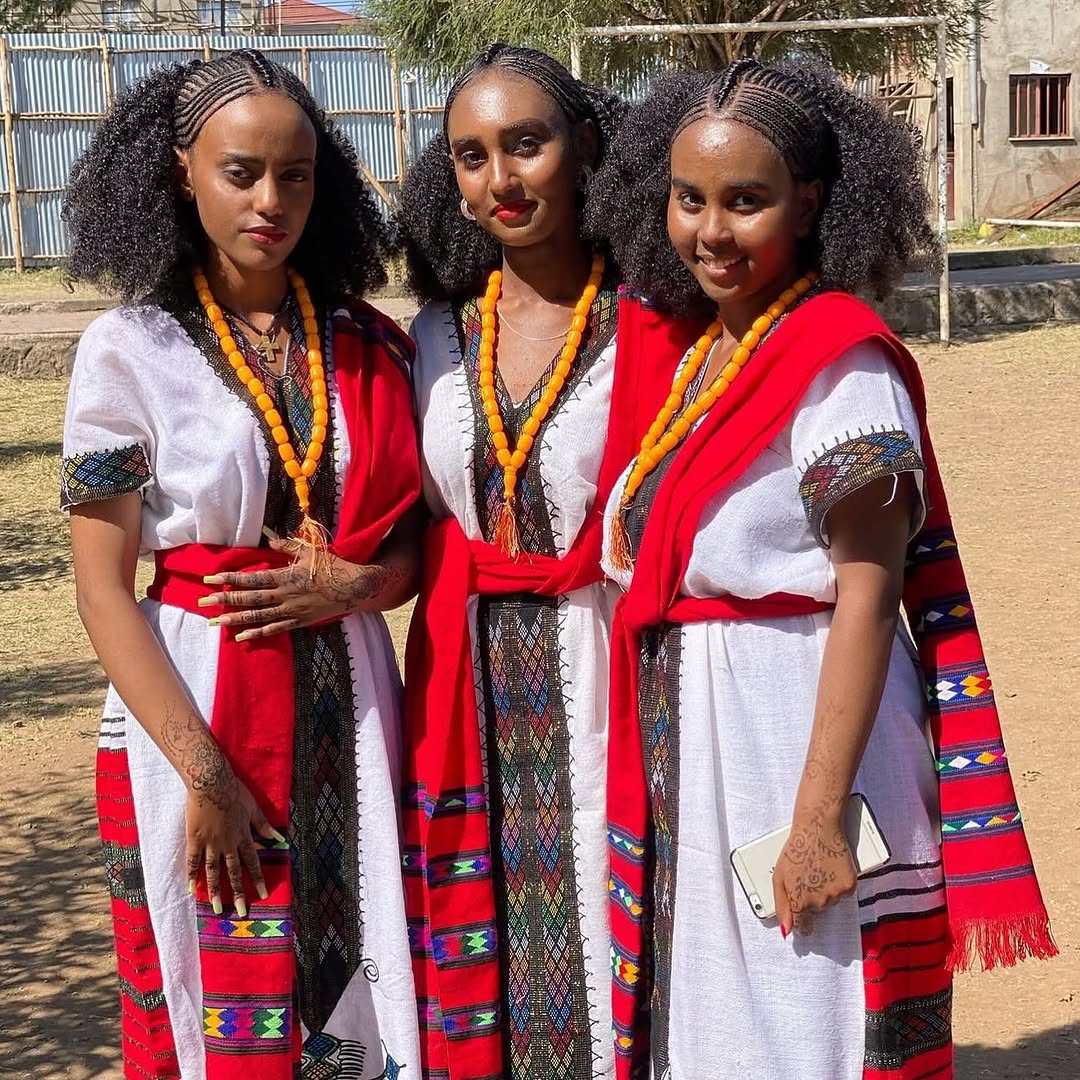
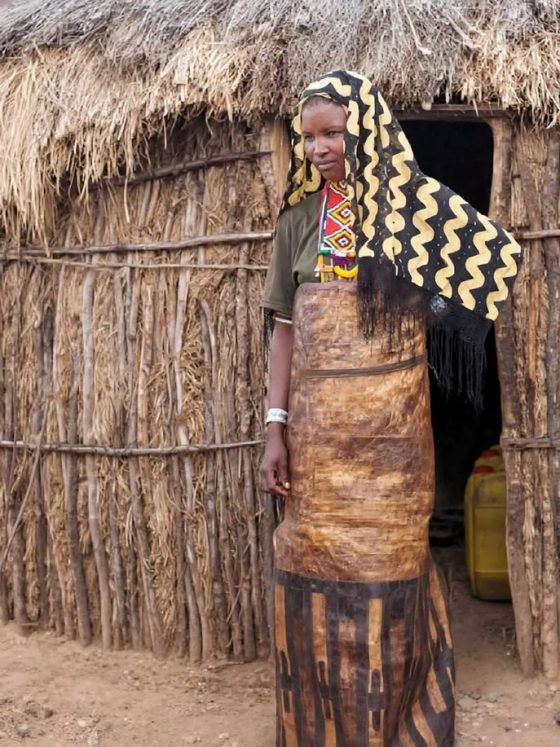
The coloured woven patterns that appear in the meqenet and in the tilf bands of the wider Gojjam dress are not purely decorative. They are a system of regional and ethnic identification that those within the tradition can read with considerable precision. Embroidery pattern, hairstyle, and jewellery choice together identify the wearer’s ethnic group and region to an informed Ethiopian viewer, providing a level of specificity that the garment’s white cotton base alone cannot supply.
The tilf, the complex geometric bands woven or embroidered into the hem, cuffs and middle of the dress, represents one layer of this identification. The jano fabric, a woven cloth with red tilet borders specific to the Gondar area of the Amhara region, represents another. The meqenet’s patterning varies in density and distribution depending on the tradition it belongs to and the occasion for which it was prepared. A meqenet whose patterns are concentrated at the ends is a different statement from one whose patterns run across the whole cloth, and the wearer and viewer of each understand that difference without explanation.
The Ethiopian Orthodox cross appears as a pattern motif in the kemis of Orthodox wearers, connecting the visual system to religious identity. In Amhara dress, the distinction between garments appropriate for church attendance, weddings, naming ceremonies, and everyday wear is carried partly by garment type, partly by the quality and weight of the cloth, and partly by the density and character of the embroidered or woven decoration. The meqenet is central to this system because its presence or absence and the quality of the cloth used to make it communicate directly about the register of the occasion.
The Meqenet in the Context of the Complete Ceremonial Dress
The complete Amhara ceremonial dress is a system of layered garments in which the meqenet plays a structural anchoring role. The kemis provides the foundational silhouette. The netela adds the shawl layer, whose draping carries its own social code: drawn more or less tightly and positioned more or less formally over the shoulders or head, it communicates different registers of modesty, participation, and social position. The meqenet, twisted and tied at the waist, creates the structural definition that transforms the layered shawl-and-dress combination into a silhouette whose formality is visible from a distance.
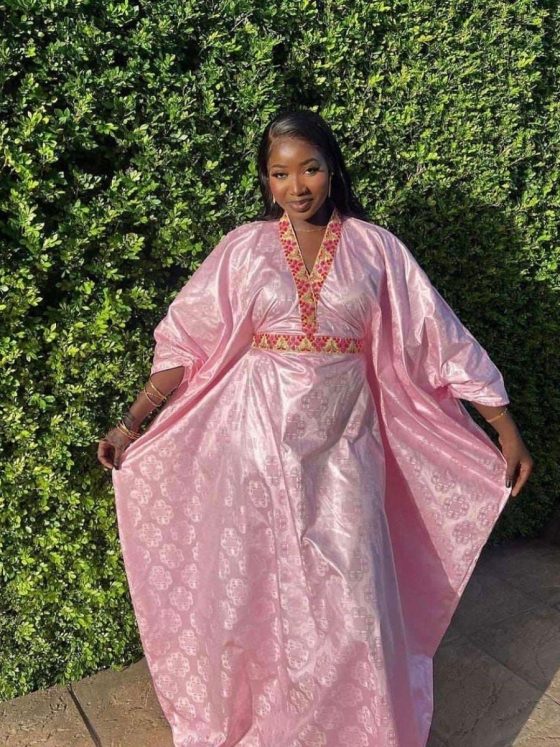
The meqenet’s visual function in the complete ceremonial ensemble is analogous to what embroidery does at the collar and pocket of the grand boubou in West African dress: it marks the threshold between the garment as everyday clothing and the garment as ceremonial communication. Without it, the same dress serves a different social purpose.
The ye-bir gubgub, miniature silver spheres hand-stitched directly onto the tilf, adds a further material layer to the most formally complete versions of the dress. Their presence announces the full ceremonial investment – the weeks of weaving, the hand embroidery, the silver work – that the occasion warrants. Their absence from a dress that otherwise carries a tilt indicates a different level of occasion. The meqenet occupies its place in this graduated system, its presence marking that the wearer has made a full commitment to ceremonial dress rather than a partial or everyday version.
The Amhara Dress in Contemporary Ethiopian Fashion
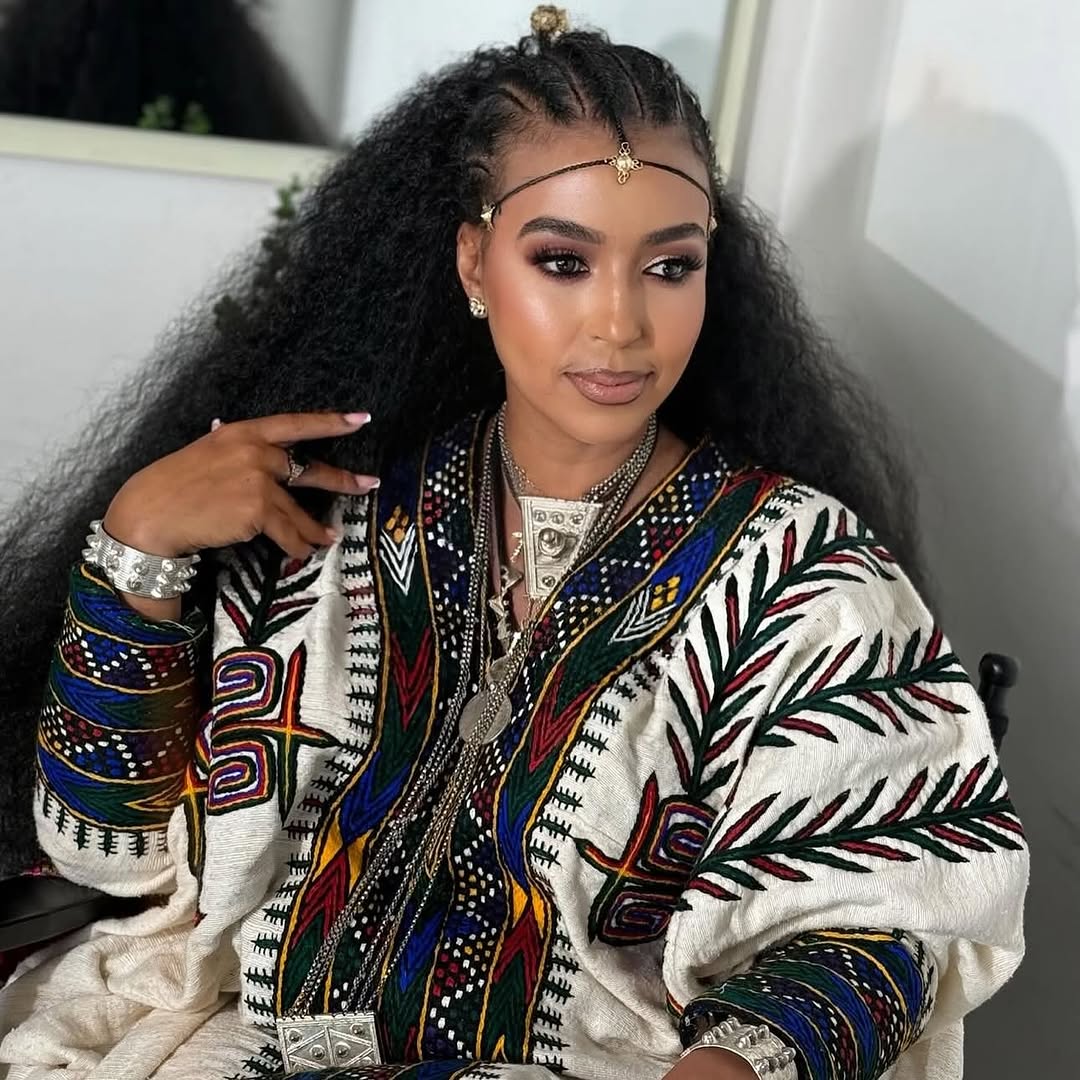
Contemporary Ethiopian fashion, particularly in Addis Ababa, occupies a specific position in relation to the Amhara dress tradition: neither purely derivative nor wholly separate, but engaged in a continuing conversation with a heritage that is alive in the city as well as in the highlands from which it comes.
As Omiren Styles has established in its analysis of what Addis Ababa’s street style owes to its fashion weeks, the Habesha kemis appears on the street in Addis Ababa because it is genuinely worn, not because a designer has revived it. The dress tradition is a living practice rather than a historical reference. The meqenet, as the ceremonially completing element of that practice, is similarly active: present at weddings, at church, at naming ceremonies and at significant family occasions in a way that confirms its continued social function rather than treating it as heritage costume.
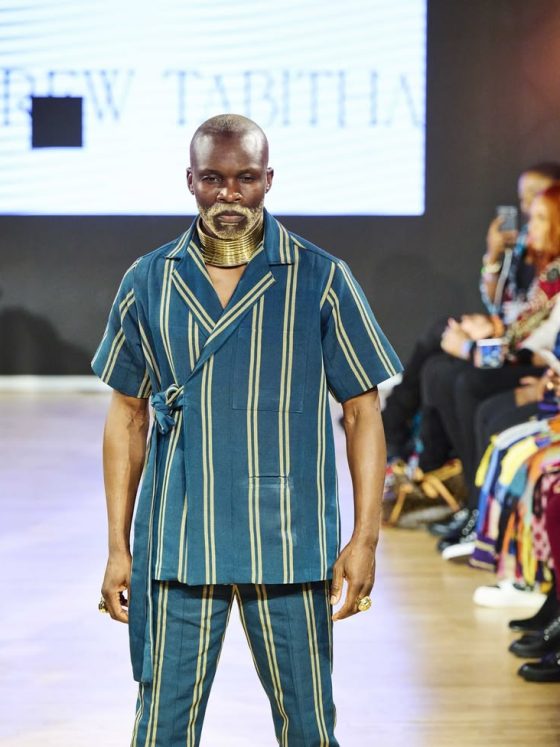
Fikirte Addis, founder of Yefikir Design, established in Addis Ababa in 2009, draws on family heirloom-tailored garments and traditional Ethiopian beading and embroidery, adapting the heritage vocabulary for contemporary contexts. In her own words: ‘It is important for me not to lose the connection I have to my culture, just giving it a modern twist and bringing it to the international fashion arena.’ The fabrics used throughout her collections are handmade cotton, grounded in the same material tradition as the meqenet’s shemma cloth base. This is not a stylistic choice alone; it acknowledges that the cultural authority of Ethiopian dress is inseparable from the material knowledge that produces it.
The challenge for contemporary Ethiopian fashion working in this territory is the same challenge that faces every tradition-engaged practice: how to extend a vocabulary without either flattening it into decoration or treating it as untouchable. The meqenet’s grammar is held by the people who make and wear it, not by the designers who reference it. A contemporary garment that quotes the meqenet’s pattern vocabulary without understanding the social system that gives the patterns meaning makes a different kind of statement from the one the tradition makes.
What the Meqenet Is Not
The word ‘couture’ appears in some descriptions of the meqenet and the broader Amhara dress tradition. It is worth examining what the word does and does not serve here. Couture, in its French industry definition, refers to high-end custom-made clothing produced by licensed fashion houses to specific technical standards. Applying it to the meqenet, it imports a category from a different cultural and commercial system into a tradition that has its own entirely adequate vocabulary for quality, occasion, and social distinction.
The meqenet tradition distinguishes between everyday and ceremonial, between coarser and finer cloth, between simple and densely patterned embroidery, and between occasions that warrant the full dress system and those that do not. It has its own hierarchy of quality and formality, and those within the tradition understand it without needing a borrowed term to validate it. Describing the meqenet as ‘traditional couture’ does not add information to the description. It substitutes an external validation for a tradition that has been self-sufficient for centuries.
This is not a criticism of those who use the term. It is an argument for precision. The meqenet’s social and aesthetic authority rests on what it actually is and what it actually communicates to the people among whom it is worn. That authority does not require comparison to French luxury standards; it requires documentation on its own terms.
The Omiren Argument
The meqenet is three metres of hand-woven cotton, twisted around the waist over the kemis, carrying woven patterns that tell an informed viewer about the occasion being attended and the region and tradition the wearer belongs to. This is a complete and specific communication system. It does not require the word ‘couture’ to be taken seriously, and it does not require a comparison to European fashion traditions to be understood as sophisticated.
What it requires is documentation that treats it on its own terms: the names of the garments, the knowledge of the weavers, the grammar of the patterns, and the graduation from everyday to ceremonial that the meqenet’s presence marks. This article has tried to supply that account. The Gojjam article on Omiren Styles supplies a more detailed account of one regional variant. The weavers, dyers, and embroiderers of the Amhara highlands provide the practice that all accounts ultimately depend on.
As Omiren Styles has argued throughout its coverage of heritage dress traditions, the Global South made fashion and never got credit. The Amhara dress system, whose agricultural foundation, material knowledge and social grammar are entirely indigenous, is one of the clearest available examples of that argument: a centuries-old dress tradition whose sophistication is carried in the hands and eyes of the community that made it, and whose documentation in its own terms is the work that the credit requires.
ALSO READ
- The Gojjam Amhara Fetel Dress: Construction, Textile and Ceremonial Grammar
- What Addis Ababa’s Street Style Owes to Its Fashion Week – and What It Doesn’t
- The Grammar of Volume: How African Ceremonial Dress Communicates Status
- The Senegalese Boubou and Bazin Riche: What the Grand Dress Communicates and How
- The Global South Made Fashion. It Just Never Got Credit.
Frequently Asked Questions
What is the meqenet?
Academic research on Ethiopian indigenous weaving traditions describes the meqenet as a cloth worn as a belt, twisted around women’s waists over their kemis. It is approximately three metres in length and seventy centimetres wide, featuring coloured woven patterns either concentrated at the ends or distributed as thin stripes and simple geometric patterns across the whole cloth. In the Amhara dress system, the meqenet is the structural element that transforms the everyday kemis-and-netela combination into a ceremonially complete ensemble. Its presence marks the occasion as formal; its pattern vocabulary communicates regional identity and social standing within the tradition.
What is the kemis, and how does it relate to the meqenet?
The kemis is the ankle-length white cotton dress that forms the foundational layer of Amhara women’s dress. It is made from shemma, the hand-spun and hand-woven cotton cloth produced by weavers in the Amhara region. The meqenet is worn over the kemis, twisted around the waist to define the ceremonial silhouette. The netela, a light shawl, is worn over the shoulders, often drawn over the head in formal contexts. Together, the kemis, netela and meqenet constitute the complete foundational ceremonial ensemble, to which the tilf embroidery bands and, in the most formal versions, silver ornamentation such as the ye-bir gubgub are added.
What does the tilf communicate in the Amhara dress?
The tilf is the complex geometric band woven or embroidered into the hem, cuffs and panels of the Amhara dress. Its patterns, along with the wearer’s hairstyle and jewellery choices, communicate ethnic group and regional origin to an informed Ethiopian viewer. Different sub-regions of the Amhara area, including Gondar, Gojjam, Wollo and Shewa, have distinct embroidery motif traditions. The jano fabric, with its distinctive red tile borders, is associated specifically with the Gondar area. The meqenet’s own patterning participates in this regional identification system: the character and distribution of the woven patterns communicate both the occasion and the specific tradition the garment belongs to.
Why does this article recommend against describing the meqenet as ‘traditional couture’?
‘Couture’ is a French luxury-industry term with a specific commercial and technical definition. Applying it to the meqenet, it imports a category from a different cultural system into a tradition with its own vocabulary for quality, occasion, and social distinction. The Amhara dress tradition distinguishes between everyday and ceremonial, between coarser and finer cloth, and between simple and densely patterned work, with a graduated system of quality and formality understood within the tradition without requiring external comparison. Describing the meqenet as ‘traditional couture’ substitutes a borrowed validation for a tradition that has been self-sufficient for centuries. The more precise approach is to describe what the meqenet is, what it communicates and what its quality markers mean within the system that produced it.
How are contemporary Ethiopian designers engaging with the meqenet tradition?
Contemporary Ethiopian designers, particularly in Addis Ababa, work in an active relationship with the Amhara dress heritage rather than treating it as a historical reference. Fikirte Addis of Yefikir Design, founded in 2009, draws from family heirloom garments and traditional Ethiopian beading and embroidery, using handmade cotton as her primary material. She says her approach is to stay connected to her culture while adapting its vocabulary for contemporary contexts. The key challenge for any designer working in this territory is distinguishing between extending the tradition’s vocabulary – which requires understanding the grammar – and quoting its surface patterns as decoration, which does not require that understanding and produces a different kind of work.
EXPLORE MORE
Read the full Heritage Clothing and Ethiopian Dress coverage at Omiren Styles for ongoing documentation of Ethiopian and East African dress traditions, their material foundations and the knowledge systems their makers and wearers maintain. Discover travel and heritage intelligence across Ethiopia, East Africa and the wider African diaspora at Rex Clarke Adventures.