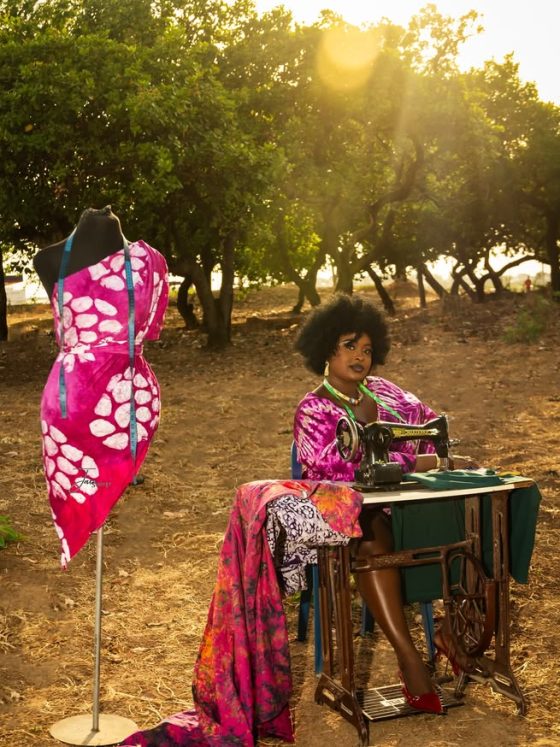
Pick up a garment. Read the label. If it says ‘handmade,’ you know something and nothing at the same time
You know that whoever wrote the label wanted you to believe that a human hand was involved in making this piece. You do not know whose hand. You do not know what part of the production process the hand was involved in. You do not know how many hours of hand production went into the piece, at what rate the hand was paid, under what conditions the hand worked, or whether the hand whose work made the piece handmade was the same hand that assembled the components that a machine cut, dyed and finished.
You do not know these things because the label is not required to tell you. The word ‘handmade’ in fashion has no standardised legal definition in either the United Kingdom or the United States, no required evidence threshold, and no verification mechanism that allows a customer to independently confirm that the claim is accurate to the level of specificity required for a purchasing decision based on it.
This article is about what a customer should be allowed to ask when a brand makes a handmade claim, and what a brand making a handmade claim should be able to answer.
‘Handmade’ is not a regulated term in fashion. A garment whose components were machine-cut, machine-dyed, machine-embroidered and machine-pressed, then assembled by hand, is ‘handmade’ in one reading. A garment whose entire production process was performed by a single artisan using only hand tools is also ‘handmade.’ Both carry the same word. Neither carries an explanation of which one they are.
“Handmade” is one of fashion’s most commercially powerful and least-regulated terms. There is no standardised legal definition, no evidence threshold and no verification mechanism. This is what a customer should be allowed to ask – and what a brand claiming handmade should be able to answer.
The Legal Gap

As GB Labels documented in its guide to what qualifies as ‘handmade’ under UK law, there is no single, universally agreed legal definition of ‘handmade’ in the UK. Businesses can describe a product as handmade if it has been largely made by hand, though consumer protection laws require that the claim be accurate, clear, and not misleading. The absence of a statutory definition means that the boundary between ‘largely made by hand’ and ‘partially made by hand’ is set by the brand rather than by any regulatory authority.
In the United States, handicrafts and handmade products are generally subject to the same compliance requirements as mass-produced goods, but the term ‘handmade’ itself is not a regulated designation for apparel. One US state definition in commercial law defines ‘handmade’ as made by the vendor in their primary residence, generating less than $50,000 per year in revenue – a definition built for a craft-market context that bears no relation to a fashion brand producing handmade garments at volume through artisan workshops.
The legal gap is not an oversight. It reflects the fact that fashion labelling law has historically addressed composition (what the garment is made of), country of manufacture (where it was made) and care instructions (how it should be treated) rather than production method (how it was made). The ‘handmade’ claim occupies a category that labelling law has not systematically addressed, meaning the brand’s claim is constrained only by the general prohibition on misleading commercial communications, rather than by a specific standard against which ‘handmade’ can be measured.
That general prohibition is nothing. In the UK, the CMA’s Green Claims Code establishes that product claims must be accurate, clear, not misleading, substantiated and not omit important information. The same consumer protection framework that applies to environmental claims applies, in principle, to any product claim that could influence a purchasing decision. A brand that claims ‘handmade’ without the ability to substantiate what ‘handmade’ means in its specific production context is making a claim that the CMA’s general consumer protection framework could reach, even without a specific ‘handmade’ standard.
The CMA secured landmark changes from ASOS, Boohoo and George at Asda in March 2024 following an investigation into environmental claims in the fashion retail sector. The changes addressed the use of broad or general terms, the criteria for deciding which items were included in sustainable ranges, and the accuracy of claims that could mislead consumers. The same framework that required these brands to substantiate their sustainability claims could, as enforcement priorities develop, be applied to production claims including ‘handmade.’
What ‘Handmade’ Is Currently Allowed to Mean

In the absence of a regulated definition, ‘handmade’ in fashion currently spans a range so wide that it is commercially almost meaningless as a description of production method.
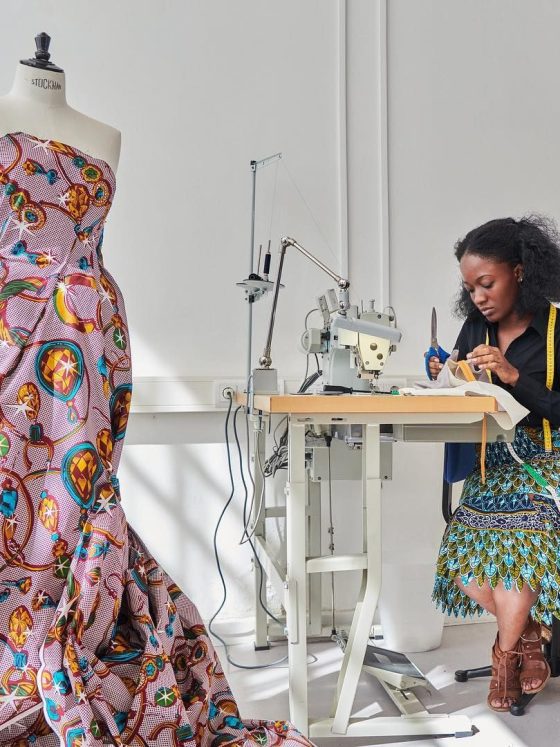
At the most labour-intensive end: a garment entirely produced by a single artisan from material preparation to finishing, using only hand tools and techniques, with no mechanical input at any stage. A piece of kente cloth woven over several weeks in Bonwire, or a Wollo tiftif dress whose back panel took many hours of needle-and-thread embroidery, falls here. The handmade claim at this end of the spectrum describes a production process whose entire commercial value rests on the skill, knowledge and time of the specific human being who made it.
At the least labour-intensive end: a garment whose components (fabric, lining, buttons, zip) were produced entirely by machine, cut by machine, and were assembled by a worker in a factory whose production line includes hand-sewing as one step among many in a primarily industrial process. The hand-sewn buttonhole on an otherwise machine-produced garment can support a ‘handmade details’ claim. The garment with a hand-tied belt is ‘includes handmade elements.’ Both use ‘handmade’ in a way that is technically accurate and practically misleading.
Between these ends, the word is applied to: garments where the fabric is handwoven but the construction is machine-sewn; garments where the construction is hand-sewn but the fabric is industrially produced; garments where the embellishment is hand-applied but the base garment is factory-made; garments where ‘handmade’ describes the finishing process rather than the construction; and garments where ‘handmade’ describes the designer’s intention rather than the production method.
The customer reading the label cannot tell which of these they are looking at.
What the Price Implies and Why It Is Not Enough
A common defence of the commercial use of ‘handmade’ without definitional specificity is that the price signals the level of hand production involved: a genuinely hand-produced garment costs more to produce and is priced accordingly, while a garment with ‘handmade elements’ is priced in a range that reflects the limited hand-production involved.
This defence fails on two counts.
The first is documented in Omiren Styles’ analysis of the price of craft and how fashion brands cost handmade work without erasing labour: the most consistent financial failure in fashion’s relationship with handmade production is applying an industrial costing framework to artisan work without adjustment, paying for time but not for knowledge, and accepting the artisan’s willingness to accept an inadequate price as evidence that the price was adequate. A garment that is genuinely handmade but priced as though it were industrially produced does not signal the level of hand production in its price. It signals the level of commercial leverage the artisan producer held in the negotiation.
The second is that the price is the brand’s claim, not independent evidence. A brand can price a machine-assembled garment with handmade finishing elements at a premium that implies full artisan production, and the price alone gives the customer no way to verify the claim. Price is correlation evidence at best. It is not verification.
The Six Questions a Customer Should Be Allowed to Ask
The argument for what a customer should be allowed to ask is not that brands should face unlimited interrogation about their production methods. When a brand makes a commercially significant claim, that claim should be supported by evidence at the level of the claim.
For a ‘handmade’ claim, the evidence at the level of the claim must answer six specific questions that a customer making a purchasing decision based on that claim can access.
1. Which production stages were performed by hand?
The handmade claim should specify which stages of the garment’s production it covers: weaving the fabric, cutting, construction, embellishment, finishing, or a combination of these. A claim that specifies ‘hand-woven fabric, machine-constructed’ is a more honest claim than ‘handmade’ alone, and it allows the customer to make a purchasing decision based on the specific production element whose handmade quality they value.
2. By whom?
The handmade claim implies a maker. The customer should be able to know, at minimum, whether the maker is a named individual artisan, a named workshop or cooperative, or an unnamed workforce in a named country. The difference between ‘hand-sewn by a named Yoruba artisan in Lagos’ and ‘handmade in Nigeria’ is the difference between a verifiable claim about a specific person and a geographic claim about an entire country. Both are more honest than ‘handmade’ alone.
3. What is the production time?
As Omiren Styles has established, in its analysis of the price of craft, the production time of a genuinely handmade piece is the primary evidence of its handmade character: a garment whose back panel requires many hours of skilled hand embroidery is quantifiably different from a garment whose handmade element is a hand-tied sash that takes minutes. The production time claim does not require exact hours, but a brand that cannot provide an honest estimate of the production time for the handmade element of its garment has a handmade claim that is not grounded in what makes handmade production valuable: the time of a skilled human being.
4. What is the maker paid?
This is the question brands find most uncomfortable and, therefore, the most important to ask. A handmade garment commands a price premium in the market because handmade production is more expensive than industrial production. If the premium reaches the customer but the additional cost does not reach the maker, the handmade premium is a marketing extraction rather than a fair reflection of production economics. The customer who understands this and wants to make a purchasing decision based on the ethical premise of the handmade claim should be able to ask whether the maker was paid at a rate that reflects the skill and time they invested. The brand that cannot answer this question should not be making the claim.
5. Can the claim be verified?
Verification does not require a customer to travel to the production site. It requires that evidence of the handmade claim exists in a form that can be checked by an independent party. A named artisan whose production can be confirmed. A workshop that has been visited and documented. A production record that includes the maker’s name, the production date and the time invested. A handmade claim without verifiable evidence is not a claim. It is an assertion.
6. Is ‘handmade’ describing the whole garment or a part of it?
The customer should be able to determine whether the handmade claim covers the entire garment or a specific element, and whether the element covered by the claim is the one for which they are paying the premium. A handbag with a hand-stitched strap and a machine-pressed body is ‘handmade’ in one element and industrially produced in another. The customer paying for the handmade quality of the stitching should know that the claim concerns the strap. The customer who assumed ‘handmade’ meant the whole bag has made a purchasing decision based on a claim whose scope they did not know.
What a Brand Claiming ‘Handmade’ Should Be Able to Answer
The six questions above describe what a customer should be allowed to ask. They are also, from a different angle, the minimum evidence base that a brand should have before making a handmade claim.
As Omiren Styles has established in its analysis of the documentation gap in fashion supply chains, the fashion supply chain consistently fails to record the knowledge, skills, cultural practices, and specific human labour that make a product what it is. The handmade claim is the commercial expression of those things. A brand that claims ‘handmade’ without having recorded whose hands, for how long, at what rate, and through what process made a product makes a claim that is downstream of a documentation failure.
The brand that has documented its handmade production does not experience the six questions as an interrogation. It experiences them as an opportunity: each question has a specific, honest answer that distinguishes its genuinely handmade garment from the crowd of ‘handmade’ claims whose evidence base is a label.
The brand that cannot answer the six questions is in one of two positions. Either it knows the answers and has chosen not to publish them, in which case the question of why is significant. Or it does not know the answers, in which case it does not know enough about its own production to make the claim it is making.
As Omiren Styles has argued, in its analysis of what a fair fashion contract should protect before the first sample is made, the commercial document through which the brand’s supply chain claims are established is the production contract, not the marketing label. A brand whose production contracts record the maker, production method, time, and rate has the evidence required by the handmade claim. A brand whose production contracts do not record these things has made a claim on the label whose commercial basis is in the marketing rather than in the production record.
The Case for a Handmade Standard

The argument this article makes is not that ‘handmade’ should be banned from fashion marketing, nor that every garment with a handmade element should be required to meet an artisan standard that most production cannot meet. The argument is that the claim should be specific enough to be meaningful and testable.
A graduated vocabulary would serve both brands and customers better than the current single term. A garment that is ‘hand-finished’ is a different claim from ‘hand-constructed,’ which is different from ‘hand-produced from materials preparation to finishing,’ which is different from ‘hand-produced by a named artisan in a named community using traditional techniques.’ Each of these is a more honest claim than ‘handmade’ alone, and each enables the customer to understand what they are purchasing rather than requiring them to trust a word for which the market has provided no tools for verification.
The closest existing model is the Geographical Indication, which requires that a product’s name be supported by specific criteria for origin and production rather than a general claim. GI-protected kente cloth from Ghana must meet defined production criteria to carry the kente name. The customer who buys authenticated kente is buying something whose claim is verifiable because the standard exists. The customer who buys ‘handmade fashion’ is buying a claim with no comparable standard.
As Omiren Styles has established in its analysis of material traceability and what brands need to know before they claim provenance, a provenance claim is worth making when it can be proven at the level of the claim. The handmade claim is a provenance claim about the production method: it says something about where the garment’s value came from and who put it there. It should be provable at the level it claims to be.
The Omiren Argument
When a brand says ‘handmade,’ a customer should be allowed to ask whose hands, for how long, at what rate, through what process and whether any of this is documented in a form that can be confirmed.
These are not unreasonable questions. They are the questions that the handmade claim implies answers to, and for which the market has not built a system. The regulatory direction, from the CMA’s consumer protection enforcement to the EU’s greenwashing standards, is toward requiring that commercial claims be substantiated rather than merely asserted. ‘Handmade’ is currently outside that enforcement focus. It will not remain outside it.
For African fashion brands, the handmade question carries an additional dimension that this series has been documenting throughout: the artisan whose labour makes the garment handmade is almost always the Global South producer whose name is not in the commercial record, whose payment is not in the published supply chain, and whose skill is the thing being claimed without the claim being traceable to their specific person. The handmade brand that has named its maker, documented the production time, confirmed the wage rate, and published the evidence is not only meeting consumer expectations. It is doing what the ethical claim it is also probably making actually requires.
As Omiren Styles has argued throughout this series, the Global South made fashion and never got credit. The handmade label is the most direct available expression of that argument: the word ‘handmade’ travels to the customer with the commercial premium it carries, and the hand that made the garment may not even be named. What a customer should be allowed to ask is the beginning of requiring that the hand be named. The hand has a name. The question should be allowed to find it.
ALSO READ
- The Price of Craft: How Fashion Brands Can Cost Handmade Work Without Erasing Labour
- The ‘Ethical’ Label Is Not a Business Model
- What a Fair Fashion Contract Should Protect Before the First Sample Is Made
- Material Traceability in Fashion: What Brands Need to Know Before They Claim Provenance
- The Global South Made Fashion. It Just Never Got Credit.
Frequently Asked Questions
Is “handmade” a legally regulated term in fashion?
As GB Labels documents, there is no single, universally agreed legal definition of ‘handmade’ in the UK, and the term has no standardised regulatory definition in US fashion labelling either. Businesses can describe a product as handmade if it has been largely made by hand, subject to general consumer protection requirements that the claim must be accurate, clear and not misleading. There is no specific standard against which ‘handmade’ is measured, no required evidence threshold and no verification mechanism available to customers. The claim is constrained only by the general prohibition on misleading commercial communications rather than by a specific handmade standard.
What does ‘handmade’ actually mean in fashion?
Without a standardised definition, ‘handmade’ in fashion spans a range from fully artisan-produced garments in which every stage of production is performed by a named maker using hand tools, to garments with a single hand-finished element among otherwise industrially produced components. A garment entirely woven, cut, constructed, embellished and finished by a single artisan over many hours is ‘handmade.’ A garment with a hand-tied belt and machine-produced everything else is also, by common commercial usage, described as ‘handmade.’ Both carry the same word. Neither label tells the customer which description applies to the garment in their hands.
What questions should a customer ask a brand that claims handmade?
Six questions give a customer the information that a meaningful handmade claim requires: which production stages were performed by hand; by whom specifically (named artisan, named workshop, or named country); what is the approximate production time for the handmade element; what rate was the maker paid; whether the claim can be verified through independent evidence; and whether ‘handmade’ describes the whole garment or a specific element of it. A brand that can answer these questions has the evidence its handmade claim requires. A brand that cannot is making a claim based on the label rather than on the production record.
Why is the price of a garment not sufficient evidence of its handmade quality?
As Omiren Styles has established, in its analysis of costing handmade work, the most consistent financial failure in fashion’s relationship with handmade production is applying an industrial costing framework to artisan work without adjustment. A genuine handmade garment may be priced inadequately because the artisan producer lacked commercial leverage in the negotiation, not because the production was less labour-intensive. Conversely, a garment with minimal hand-production elements may be priced at a premium that implies full artisan production. Price is correlational evidence, not independent verification of a production-method claim.
Should there be a legal standard for ‘handmade’ in fashion?
A graduated vocabulary would serve both brands and customers better than the current single unregulated term. ‘Hand-finished,’ ‘hand-constructed,’ ‘hand-produced,’ and ‘hand-produced by a named artisan using traditional techniques’ are each more specific claims than ‘handmade’ alone, and each helps customers understand what they are purchasing. The closest existing model is the Geographical Indication, which requires specific origin and production criteria to be met before a name can be applied. The GI for kente cloth in Ghana is the fashion-relevant example: a customer who buys authenticated kente is buying something whose production claim is verifiable because a defined standard exists. A customer who buys ‘handmade fashion’ is buying a claim with no comparable standard.
EXPLORE MORE
Read the full Opinion and The Omiren Argument sections at Omiren Styles for ongoing editorial analysis of fashion production claims, consumer accountability and the commercial standards that would make “handmade” mean something the customer can verify. Discover travel and heritage intelligence across Africa, the Caribbean and Latin America at Rex Clarke Adventures.