A garment becomes a device at the moment it collects data.
Until that moment, a garment is a textile object: it covers, protects, signals identity and communicates cultural meaning. It is subject to fashion regulation, textile care labelling requirements and, under the EU’s Digital Product Passport framework, product lifecycle documentation. When the garment is embedded with a sensor that measures the wearer’s heart rate, a conductive yarn that transmits data to a smartphone, or a chip that records location and movement, it crosses a regulatory and commercial threshold that most fashion practitioners are not prepared for. It has become, in many regulatory jurisdictions, a device, a medical device in some classifications, an IoT-connected consumer product in others, and a data processor in almost all.
The smart textiles market is growing at rates that reflect this regulatory complexity: different market research firms produce substantially different size estimates depending on whether they are measuring the narrower smart textiles for wearable technology segment, the broader smart clothing market or the widest e-textiles category. What all estimates agree on is that the growth rate is significant and that the primary drivers are healthcare, defence and performance sports, in that order, rather than consumer fashion. The fashion dimension of smart textiles is real but it is not where most of the commercial action currently is.
This guide names the categories, documents what smart textiles actually do at each level of functionality, addresses the challenges that the technology creates for designers, manufacturers and consumers, explains the regulatory landscape that turns a garment into a device, and asks what this technology category means for fashion practitioners in Africa, the Caribbean, Latin America and the Latinx diaspora.
Smart textiles are moving from novelty fabrics to data-generating platforms that combine advanced fibres, conductive yarns, flexible electronics, sensors, software, and connectivity. Adoption is accelerating as healthcare providers, sports organisations, defence agencies, industrial employers, and consumer brands seek continuous, comfortable, and noninvasive ways to collect physiological and environmental data. That trajectory, from novelty to platform, is the key structural shift. A smart textile is not a fashion object that happens to have a sensor. It is a data platform that happens to be worn.
Smart textiles turn a garment into a data-collecting device. This guide explains what smart textiles are, the three categories of smart functionality, the regulatory and privacy challenges they create, and what the category means for fashion practitioners in the Global South.
What Smart Textiles Are: Three Categories

As Heuritech documented in its March 2026 analysis of fabric innovation trends, the smart textiles market has officially entered a period of hyper-growth. The evolution marks a definitive shift from simple Active Smart wearables, which merely sense the environment, to Ultra Smart integrated systems capable of self-adaptation and real-time response. Three functional categories characterise the smart textile landscape:
Passive Smart textiles are fabrics whose material properties serve a functional purpose without requiring electronics or sensors. Phase-change materials that absorb and release heat to regulate body temperature, moisture-wicking fabrics that manage perspiration, UV-protective weaves that block UV radiation, and antibacterial fibres that reduce odour and microbial growth are all examples of passive smart textiles. The functionality is embedded in the material itself rather than in an electronic system. These are already widely used in performance sportswear, workwear and military applications, and they do not trigger device classification or data privacy regulation.
Active Smart textiles are fabrics that sense the wearer’s environment or physiological state and respond to it. Temperature-sensitive colour-changing textiles that shift colour in response to body heat, garments with embedded sensors that detect posture deviations and provide haptic feedback, and fabrics with conductive yarns that transmit electrical signals generated by body movement are examples of Active Smart textiles. The sensor is built into the fabric. The data generated is used in real time to drive a response within the garment itself or transmitted to an external device for display or analysis.
Ultra Smart textiles are the most complex category: fabrics that sense, respond, and adapt based on both sensory input and processing intelligence, communicate with external systems, and are capable of updating their own behaviour through software. A shirt that monitors ECG data, transmits it to a clinical monitoring system, receives processing from a cloud-based algorithm, and adjusts its compression level in response to a clinical recommendation is an Ultra Smart textile whose regulatory classification as a medical device in most jurisdictions is unavoidable. Google Project Jacquard’s integration of touch-sensitive conductive yarn into standard denim fabric, allowing the garment to control a smartphone with touch gestures, is an Ultra Smart application in a consumer fashion context.
The Market: Who Is Actually Buying Smart Textiles

As Span Global Services documented in its April 2026 analysis of smart clothing technology, the global e-textiles and smart clothing market is valued at USD 22.08 billion in 2025, is forecast to reach USD 29.23 billion in 2026, and is projected to reach USD 274.99 billion by 2034, at a CAGR of 32.34%. Healthcare holds roughly 35% market share of smart textile applications, making it the single largest revenue concentration in the category. Defence and heavy industry represent the unsexy but highest-margin corners of the market. Consumer fashion and performance sports account for the aesthetically dominant but commercially smaller share.
The structure of who is buying smart textiles matters for fashion practitioners trying to understand where the commercial opportunity lies. The healthcare buyers are Chief Medical Officers at hospital systems, heads of clinical research at pharmaceutical companies and procurement teams at medical device manufacturers. Their sales cycles run nine to eighteen months. Regulatory and validation credentials do 80% of the selling. The defence buyers are procurement officers at government agencies whose requirements are security-classified and whose commercial engagement is not accessible to independent fashion brands.
Consumer fashion buyers are the segment of the market that fashion media covers most prominently and that independent fashion practitioners can realistically engage with. CuteCircuit, which designs garments that change shape or glow in response to environmental conditions, and Myant, which specialises in electronic textiles that connect wearable electronics to cloud data for health and performance tracking, represent the most commercially developed fashion-facing smart textile practices. Nike, Under Armour and Adidas have moved their smart textile pilots from experimental to commercial in performance sportswear. These consumer fashion applications are growing, but from a base that is substantially smaller than the healthcare and defence segments driving the aggregate market numbers.
When a Garment Becomes a Device: The Regulatory Threshold
 The question this article poses has a specific regulatory answer that varies by jurisdiction but follows a common logic: a garment becomes a device when it performs a function that regulations assign to the device category.
In the United States, the FDA classifies wearable health-monitoring garments as medical devices when their intended use includes diagnosing, treating, monitoring, or preventing disease or medical conditions. A garment that monitors ECG data and is marketed for clinical heart rhythm monitoring is a medical device requiring FDA clearance before it can be sold. A garment that monitors heart rate and is marketed for fitness performance optimisation is a general wellness product that does not require FDA clearance. The distinction between clinical monitoring and wellness monitoring is the regulatory line. Crossing it without FDA clearance creates substantial commercial and legal liability.
In the European Union, the Medical Device Regulation (MDR) applies the same intended use test. A smart textile whose labelling, marketing,g or intended purpose indicates clinical use is a medical device subject to clinical evidence requirements, CE marking obligations,s and post-market surveillance responsibilities, with costs and timelines substantially beyond those of a standard fashion product launch. The EU’s Digital Product Passport framework adds an additional classification layer: a garment with electronic components is classified by its primary function. A bag with embedded electronics is primarily a textile product. A clinical monitoring garment is primarily a medical device.
As Omiren Styles has established in its analysis of the EU Digital Product Passport and what it could change for fashion, a bag with electronic components falls under the textile delegated act when its primary function is that of a textile product. The same classification logic applies across the smart textile category: the regulatory treatment of a garment depends on its primary intended function, and the boundary between fashion functionality and device functionality is the same as the boundary between fashion regulation and medical device or electronics regulation. A fashion brand that launches a smart textile product without understanding which side of that boundary its intended use falls on has created a regulatory risk that no amount of design sophistication resolves.
The Data Problem: What Smart Textiles Collect and Why It Matters
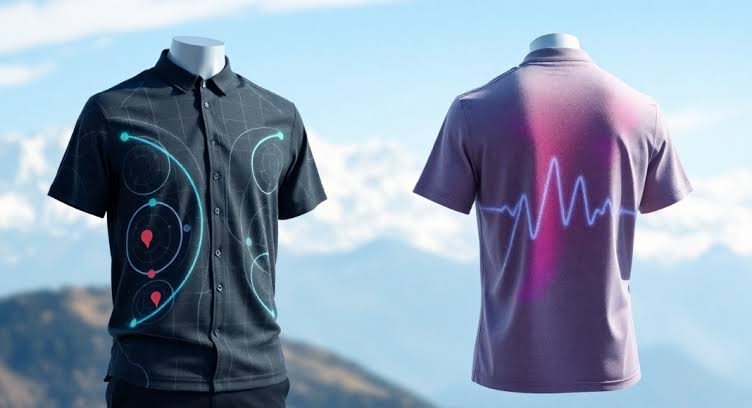
A smart textile that collects biometric data, including heart rate, respiratory rate, body temperature, ECG signals, posture data, hydration levels, or movement patterns, collects health data whose handling is governed by data protection law wherever the wearer is located and wherever the data is processed.
In the European Union, biometric and health data is a special category of personal data under GDPR, subject to more restrictive processing rules than ordinary personal data. Collecting it requires explicit consent from the data subject, a lawful basis for processing, clear privacy documentation, data security measures appropriate to the sensitivity of the data, and compliance with data subject rights, including the rights to access, correct, and delete the data collected. A fashion brand that launches a garment with biometric sensors and fails to build a GDPR-compliant data-processing infrastructure has created a regulatory liability whose potential financial consequences dwarf any revenue the smart textile product is likely to generate.
In the United States, the CCPA (California Consumer Privacy Act) and a growing set of state-level data protection laws impose similar obligations on brands that collect personal data from California residents and residents of an expanding list of other states. The location of the data subject, not the location of the brand, determines which data protection law applies. A brand based in Lagos that sells a smart textile product to a consumer in California is subject to the CCPA.
The data problem compounds in contexts where the garment’s data is shared with third parties, such as a health insurance company, a fitness platform, an employer monitoring workforce health, or a clinical research programme. Each data-sharing relationship requires its own legal basis, consent mechanism, and contractual framework with the third party. The fashion brand that thought it was launching a product is now operating a data business whose regulatory obligations are substantially different from those of its core fashion operations.
The Technical Challenges That Have Not Been Solved
The smart textiles market’s impressive growth projections coexist with technical challenges whose incomplete resolution limits the technology’s mass consumer fashion applications in ways that market size figures do not capture.
Washability is the primary unsolved challenge. A garment that contains electronics, conductive yarns, sensors or connectivity components must survive the mechanical stress, heat and moisture of regular laundering. Most smart textile components are damaged by standard machine washing conditions. Some can survive hand washing at low temperatures. Very few can withstand the washing conditions a consumer expects a garment to endure over its lifetime. Brands whose smart textile products carry washing instructions that substantially restrict consumers’ ability to clean the garment in the normal way face a consumer acceptance problem that the technology has not yet resolved.
Power supply is the second major unsolved challenge. Active Smart and Ultra Smart textiles require power for their sensor, processing and connectivity functions. Current solutions include small battery packs integrated into the garment’s design, energy harvesting from the wearer’s movement or body heat, and inductive charging through contact with a charging surface. Each of these solutions adds weight, bulk, complexity or fragility to the garment. The battery pack that runs out during the day and must be removed for laundering represents a user experience whose inconvenience competes directly with the functionality the battery enables.
Firmware and software updates are a challenge specific to smart textiles that has no equivalent in conventional garment design. A garment whose functionality depends on software is one whose functionality can change, degrade, or break as the software ages, connectivity protocols evolve, or the cloud services the garment depends on are discontinued. The consumer who buys a smart garment in 2026 and finds that its functionality has been reduced or eliminated by a software update in 2028 has a consumer protection complaint with a novel legal basis and an unclear practical resolution.
Durability of the garment’s electronic components throughout the wear cycle, not just the laundering cycle, is the fourth major technical challenge. Conductive yarns that break with repeated bending and flexing, sensors that detach from the fabric substrate under normal movement stress, and flexible circuits that crack under repeated mechanical stress all create garments whose smart functionality degrades faster than the fabric itself. A garment whose fashion lifecycle significantly exceeds its electronic lifecycle generates electronic waste embedded in textile waste, a disposal problem that neither the fashion industry’s nor the electronics industry’s waste frameworks were designed to address.
What Smart Textiles Mean for Global South Fashion Practitioners
The smart textiles category presents a specific set of opportunities and barriers for fashion practitioners in Africa, the Caribbean, Latin America and the Latinx diaspora, and the mainstream wearables coverage almost never addresses either.
The opportunity is not in competing in the healthcare, defence, or high-technology sportswear segments, where most of the commercial activity and R&D investment currently sits. Independent fashion practitioners from the Global South are not positioned to develop clinical ECG monitoring garments or military adaptive camouflage systems. The opportunity lies in the aesthetic and cultural design intelligence that smart textile technology could amplify: the possibility of embedding cultural symbolism, colour change, light, or interactive functionality into garments that carry specific cultural meaning, in ways that technology enhances rather than displaces.
CuteCircuit’s garments that glow or change shape in response to environmental conditions represent the most advanced form of aesthetic smart textile application. The same approach, applied to West African wax print whose colour-shift properties are amplified by temperature-reactive dyes, or to Caribbean Carnival costume whose light-emission properties are extended by embedded LED arrays powered by energy harvested from the wearer’s movement, would be a smart textile application rooted in specific cultural aesthetic practice rather than in the generic technological novelty that characterises most consumer fashion smart textile launches.
The barriers are real and specific. The electronics component of a smart textile is subject to regulatory and certification requirements, product liability law, data protection compliance, and technical support obligations that most independent fashion brands lack the institutional infrastructure to manage. The capital cost of developing a smart textile product is substantially higher than that of a conventional fashion product: the prototype requires electronics engineering capability alongside textile and garment construction capability, and the compliance journey to market is longer and more expensive than for a conventional garment.
As Omiren Styles has established in its analysis of the case for specialist manufacturing in African fashion, that specialist manufacturing at small-batch scale is the correct production model for most African fashion brands at their current commercial stage. Smart textile production requires a production model that combines textile-specialist knowledge with electronics manufacturing capabilities within a supply chain whose components are currently separated across different industrial sectors and regulatory frameworks. For a brand building its first factory floor relationship, smart textile production is not the right next step. It is the step several stages further along a commercial development path whose foundations must be built first.
The most practically accessible entry point for Global South fashion practitioners into the smart textile category in 2026 is the Passive Smart tier: performance fabrics, UV-protective weaves, moisture-management materials, and thermoregulating fibres whose functional value is embedded in the material itself, without requiring electronics, sensors, software, or data processing. These materials are commercially available, technically accessible and do not trigger device classification, data privacy regulation or software update obligations. Building expertise in performance material properties, fabric selection, and construction techniques that maximise passive functionality is the production intelligence investment that lays the foundation for eventual Active Smart exploration when institutional conditions support it.
The Omiren Argument
The question of when a garment becomes a device is not only a regulatory question. It is a design question, a commercial question and an ethical question.
A garment that collects biometric data from its wearer has entered into a relationship with the wearer’s body whose implications go beyond the aesthetic, the cultural, and the functional. The data that smart textiles collect, including heart rate, movement, sleep quality, body temperature and physiological stress responses, is among the most intimate available documentation of a human being’s physical and emotional state. The consent frameworks that govern its collection, the data security practices that protect it, and the commercial relationships that determine who has access to it and on what terms are questions whose answers are not currently visible to the consumer who wears the garment.
For Global South fashion practitioners, the data dimension of smart textiles has a specific resonance: the extractive relationship between technology platforms and users’ personal data in Africa, the Caribbean, and Latin America has a well-documented history, and its implications for smart textile adoption deserve more attention than the market growth projections receive. A smart textile that collects health data from consumers in Lagos or Kingston and processes it on servers in California or Dublin is not a neutral technology product. It is a data-extraction relationship whose regulatory protections for consumers depend on the jurisdictional framework of their location and the brand’s compliance infrastructure.
The most important question a fashion practitioner should ask about smart textiles is not what the technology can do. It is what the technology does with what it knows. The answer to that question determines whether a smart textile is a fashion innovation that serves its wearer or a surveillance infrastructure that its wearer happens to find comfortable.
As Omiren Styles has argued throughout this series, the Global South made fashion and never got credit. Smart textiles whose cultural aesthetic derives from Global South fashion practice, whose wearers are primarily from Global South communities, and whose data is processed outside the regulatory frameworks that protect those communities, represent the technological amplification of the series argument: the value is extracted from the community, and the community receives neither the credit nor the protection. The fashion practitioner in the Global South who engages with smart textiles on terms that keep the data within a regulatory framework that protects their community and the credit within a commercial framework that attributes it correctly is engaging with the technology on terms that the series has been building toward.
ALSO READ
- Fashion Technology: A Guide to the Systems Changing What We Wear
- Virtual Sampling and 3D Design: Can Fashion Reduce the Physical Sample?
- AI in Fashion: Creativity, Copyright, Jobs and the Problem of Speed
- What Is a Digital Product Passport and What Could It Change for Fashion?
- The Global South Made Fashion. It Just Never Got Credit.
Frequently Asked Questions
What are smart textiles and how do they differ from conventional fabric?
As Design News documented in August 2026, smart textiles are fabrics embedded with sensors, flexible electronics, and Internet connectivity that enable them to monitor health, enhance athletic performance, adapt to various environments, and even harvest energy. They differ from conventional fabric in that they are active systems rather than passive materials: they collect data, process input or respond to conditions rather than simply covering and protecting the body. Smart textiles fall into three categories: Passive Smart, which provides functional benefits through material properties without electronics; Active Smart, which senses and responds to the wearer’s environment or physiological state; and Ultra Smart, which senses, responds and adapts using processing intelligence connected to external systems. The category the garment belongs to determines its regulatory classification, data privacy implications and production complexity.
When does a garment become a medical device?
A garment becomes a medical device when its intended use, as communicated through labelling, marketing and design specifications, includes diagnosing, treating, monitoring or preventing a disease or medical condition. In the United States, the FDA applies this intended-use test: a garment marketed for clinical heart rhythm monitoring is a medical device requiring FDA clearance, whereas the same garment marketed for fitness performance is a general wellness product. In the European Union, the Medical Device Regulation applies the same logic. The regulatory line runs between clinical monitoring and wellness applications. Crossing it without the appropriate regulatory clearance creates commercial and legal liability whose consequences substantially exceed any revenue the smart textile product is likely to generate. Fashion brands developing smart textile products should establish the intended use and corresponding regulatory classification before committing to a product development path.
What data do smart textiles collect and what are the privacy implications?
Smart textiles with biometric sensors can collect heart rate, respiratory rate, body temperature, ECG signals, posture data, hydration levels and movement patterns. Biometric and health data is classified as a special category of personal data under GDPR in the European Union, subject to more restrictive processing rules than ordinary personal data. Collecting it requires explicit consent, a lawful basis for processing, clear privacy documentation, and compliance with data subject rights. In the United States, CCPA and a growing set of state laws impose similar obligations. The relevant law is determined by the data subject’s location, not the brandis location. A brand in Lagos that sells a smart textile product to a consumer in California is subject to the CCPA. Fashion brands whose smart textile products collect biometric data must build a data-protection compliance infrastructure before launching, the cost and complexity of which are substantially beyond conventional fashion product launch requirements.
What are the main technical challenges that smart textiles have not yet solved?
The four major unsolved technical challenges for smart textiles are: washability, with most electronic components not surviving standard machine washing conditions; power supply, with current battery pack, energy harvesting and inductive charging solutions adding weight, bulk and inconvenience to the garment; firmware and software updates, where a garment’s functionality can degrade or be discontinued as software ages or cloud services are terminated; and durability of electronic components across the wear cycle, where conductive yarns, sensors and flexible circuits may fail faster than the fabric itself. These challenges are most significant for Active Smart and Ultra Smart textiles. Passive Smart textiles, whose functionality is embedded in material properties rather than electronics, are not affected by these challenges, which is why they are the most commercially established and practically accessible category for independent fashion brands.
What is the most accessible entry point into smart textiles for independent fashion practitioners?
As Omiren Styles has established in its guide to the fashion technology systems changing what we wear, the technology investment sequence that makes sense for fashion practitioners in the Global South should be calibrated to their current commercial stage and infrastructure context. For smart textiles specifically, the most practically accessible entry point is the Passive Smart category: performance fabrics, UV-protective weaves, moisture-management materials, and thermoregulating fibres whose functional value is embedded in the material itself, without requiring electronics, sensors, software, or data processing. These materials do not trigger device classification, data privacy regulation or software update obligations. They are commercially available and technically accessible at small batch production scale. Building expertise in Passive Smart material properties lays the foundation for eventual Active Smart exploration when commercial-stage, institutional infrastructure, and regulatory-compliance capabilities support it.
EXPLORE MORE
Read the full Industry and Intelligence sections at Omiren Styles for ongoing analysis of smart textiles, wearable technology and the specific implications of fashion-technology convergence for practitioners in Africa, the Caribbean and the Global South. Discover travel and heritage intelligence across Africa, the Caribbean and Latin America at Rex Clarke Adventures.