Fashion’s AI conversation has a clarity problem.
When a fashion media article discusses artificial intelligence, it typically utreatsit as a single category ,coverlookingseveral distinct developments twithdifferent implications, dffected parties ,and dvailable responses. The AI tool that helps a designer generate a mood board image is a different technology from the AI system that forecasts demand at SKU level. The copyright question that arises when an AI system is trained on runway photographs without the photographers’ consent is a different legal problem from the authorship question that arises when a garment design is generated entirely by an AI and carries no human creative input. The job displacement that automated pattern making creates for pattern drafters is a different employment problem from the job transformation that AI styling tools create for editorial stylists.
The conflation of these problems into a single AI-and-fashion story makes it harder to address any of them specifically. It produces coverage that is simultaneously too broad to be actionable and too general to be honest about who is actually affected by each specific development. This article separates the four main problems that AI generates in fashion, treats each on its own terms, and asks what each means specifically for fashion practitioners in Africa, the Caribbean, Latin America and the Latinx diaspora.
Designers questioned whether using AI-generated outputs trained on unconsented images scraped from online fashion lookbooks, runway photography, or cultural artefacts would inadvertently reproduce IP violations or raise ambiguity about authorship. This tension complicates the integration of AI into commercial contexts, where ownership and accountability must remain clear. That description, from CHI 2026 research on generative AI in fashion design practice, identifies the core of the copyright problem. The training data question and the authorship question are related but separate. Each requires a different legal response.
The AI in fashion conversation conflates four distinct problems: creativity, copyright, jobs and speed. Each has different answers and different affected parties. This article separates them, sources them and asks what each means for fashion practitioners in the Global South.
The Creativity Problem: What AI Does and Does Not Create

The creativity problem is the question of what role, if any, artificial intelligence plays in generating original fashion design, and what that role means for the humans who work in fashion design.
The evidence from research and industry practice is more nuanced than either the optimistic or the alarmed version of the AI creativity story. By 2025, around 70% of fashion companies were deploying AI tools to streamline creative and manufacturing processes, and McKinsey has estimated that up to 25% of AI’s potential in fashion lies in creative applications, enabling brands to generate multiple design options, reduce waste and test ideas before physical sampling. AI is being used, at significant scale, to assist in creative processes across the fashion industry.
The specific nature of that assistance matters. Research published in the ACM CHI Conference proceedings in 2026, based on field studies with fashion designers, found that junior designers with three to five years of experience were more receptive to AI-generated ideas and more likely to adopt generative AI tools. However, their limited experience and weaker design control made it difficult for them to fully exploit AI-generated suggestions. Experienced designers were more cautious, more selective in their use of AI, and better able to filter AI-generated content through their own developed aesthetic judgement and copyright awareness.
The practical implication is that AI in fashion design is most useful as a creative accelerator for designers with sufficient design knowledge to evaluate and direct AI-generated outputs. It is less useful, and potentially misleading, as a creative substitute for designers who have not yet developed the design judgement to distinguish between AI outputs that are original, appropriate and commercially viable and those that inadvertently reproduce existing work, miss cultural context or produce aesthetically undifferentiated results.
For Global South fashion designers whose aesthetic development has been shaped by specific cultural knowledge, textile traditions and community practice, the creativity problem has a particular dimension: AI tools trained primarily on Western runway imagery, editorial photography and mainstream fashion data are not well-positioned to assist with design work whose aesthetic authority comes from cultural specificity that is underrepresented in the training data. An AI tool that generates Afrocentric fashion designs from a training set dominated by European runway photographs is producing a simulation of cultural aesthetics rather than a creative contribution to them. The designer from that culture, whose judgement the AI lacks, cannot be replaced by the AI that lacks their judgement.
The Copyright Problem: Training Data, Ownership and Consent
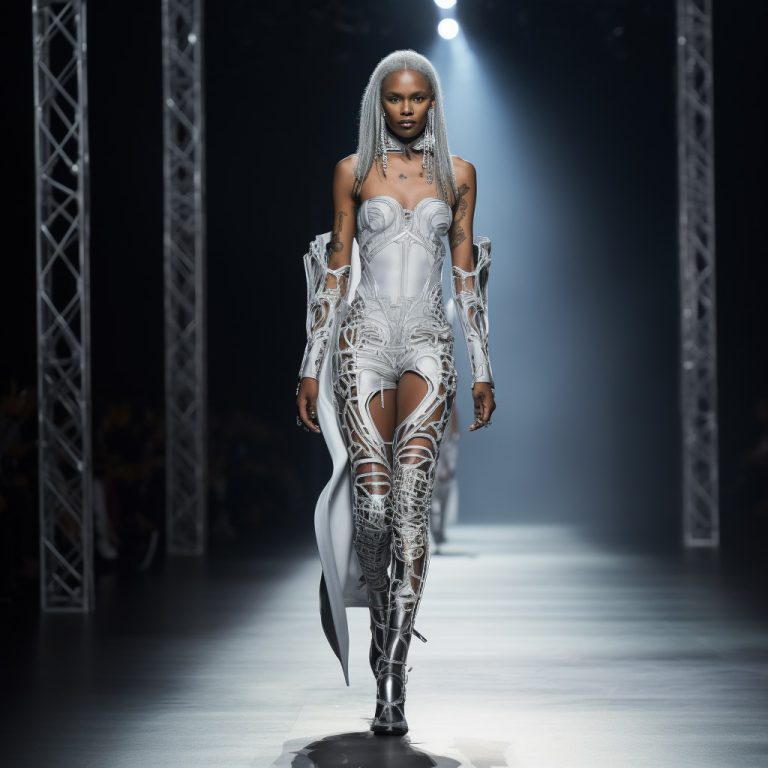
The copyright problem is three overlapping questions: Who owns the outputs an AI generates? Is it legal to train an AI on copyrighted images without the creator’s consent? And what happens when an AI generates something that reproduces or substantially resembles a copyrighted design?
On the first question, current US law is settled. The US Copyright Office has confirmed that copyright requires human authorship. AI systems cannot be authors or copyright owners under current US law, regardless of how sophisticated they become. An AI-generated design with no human creative input is not copyrightable in the United States. The designer who uses an AI tool to generate a concept and then makes sufficient creative choices to transform it into a specific design may have a copyright claim in the human creative contribution, but not in the AI-generated starting point itself.
In the legal analysis of AI and intellectual property in fashion, the landmark Getty Images v. Stability AI case (2023-2025) represents one of the most significant ongoing legal developments for the fashion industry: it challenges whether training an AI system on copyrighted images without the copyright holder’s consent constitutes infringement. The outcome of this and similar cases will determine whether the current model of AI training, which depends on large-scale scraping of internet images including fashion photography, runway documentation and brand campaign materials, can continue without copyright permission from the creators whose work comprises the training data.
As the National Law Review reported in May 2026, The Fabricant, a digital fashion studio, has taken a public stance against using copyrighted runway images for AI training data and has published an AI Ethics FAQ that forecasts future AI regulation requiring copyright permissions for training data. New York State passed legislation in 2025 that prohibits model management companies from creating, altering or manipulating a model’s digital replica without clear written consent. Some fashion companies are beginning to build the consent infrastructure for AI training that the current regulatory environment does not yet require.
On the second question, the legal landscape is unsettled. The debate over whether scraping publicly available images for AI training constitutes fair use is ongoing in multiple jurisdictions. Adobe’s Firefly model, trained exclusively on licensed and ethically sourced data, represents an alternative approach: building an AI creative tool whose training data is confirmed to be consensually provided. That model is more expensive and more logistically complex than mass scraping, which is why most AI systems have not adopted it. The regulatory pressure and litigation outcomes over the next two to three years will determine whether the consensual training model becomes the industry standard or a competitive outlier.
As the Oxford Journal of Intellectual Property Law and Practice documented in October 2025, the copyright analysis of AI-assisted fashion design is complicated by a specific industry practice: the widespread ‘remaking’ of commonplace designs, in which fashion brands routinely adapt existing silhouettes, patterns, and aesthetic conventions from prior collections. The question of when AI-assisted design crosses from this customary practice into copyright infringement is unresolved, and the courts’ pending decisions on works of applied art and originality assessment will shape how the fashion industry uses AI creative tools in commercial contexts.
For Global South fashion designers, the copyright problem has a specific form that mainstream coverage rarely addresses: the designs, textiles, patterns and cultural visual languages that African, Caribbean and Latin American fashion practitioners use in their work are among the most extensively scraped, remixed and reproduced materials in the AI training data that powers the tools that mainstream fashion brands use. The community whose aesthetic vocabulary feeds the training data is not the community receiving copyright protection or the commercial benefit when that data produces commercially successful AI-generated designs.
As Omiren Styles has established in its analysis of why cultural credit still rarely translates into licensing revenue, the gap between credit and licensing is fundamental. The AI training data problem is the technological amplification of that gap: cultural visual languages are ingested into training data without consent, reproduced in AI outputs without attribution and used commercially without compensation. The fashion industry’s pre-existing cultural credit problem is not solved by AI. It is accelerated by it.
The Jobs Problem: Which Roles Are Changing and Which Are Disappearing

The jobs problem is the most discussed but least precisely specified of the four AI problems in fashion. The question of whether AI is replacing fashion jobs cannot be answered in the aggregate. It is answerable only role by role, function by function, and only by distinguishing between roles that AI is changing and those it is eliminating.
The roles that AI is changing are those in which human judgement and creative intelligence remain essential, but the volume and speed of supporting tasks can be handled by AI. A trend forecaster whose work involves synthesising large volumes of social media and market data into seasonal predictions is doing work in which AI can significantly accelerate the data-processing and pattern-recognition elements without replacing the human judgement about which patterns are commercially significant, culturally meaningful, and actionable for a specific brand’s context. A visual merchandiser whose work involves testing different product arrangement options across a store floor is doing work where AI simulation can reduce the number of physical tests required without replacing the human judgement about how a customer will experience the space.
The roles that AI is most likely to reduce or eliminate are those in which a specific, bounded task previously done by a human is now performed more efficiently by a software system. Technical pattern grading, which involves scaling a garment pattern across multiple sizes according to defined rules, has been software-assisted for decades and is increasingly automated. Certain types of production photography that were previously done with human models and photographers can now be done with AI-generated imagery at a fraction of the cost. Quality control visual inspection, which previously required a human eye to identify defects in finished garments, is now performed at an industrial scale using AI computer vision systems whose accuracy exceeds that of human inspection.
For fashion graduates and emerging practitioners, the practical implication of the jobs picture is specific: the AI-resistant value in fashion careers lies in human cultural knowledge, aesthetic judgement, and relationship intelligence that cannot be reproduced by a system trained on historical data. A designer whose value lies in their specific cultural knowledge and community connection, the Togolese designer whose tie-and-dye technique is embedded in lived practice, the Chicana designer whose aesthetic authority comes from within the community whose visual language she is working in, the Caribbean stylist whose cultural knowledge of the occasions and communities she is dressing is not available in any training dataset, has an AI-resistant value whose source is precisely its irreducibility to data.
As Omiren Styles has established, in its analysis of the Chola aesthetic and who kept the credit, the aesthetic built over five decades by working-class Mexican-American women in East Los Angeles carried a cultural authority whose source was lived practice within a specific community. That authority cannot be reproduced by an AI trained on images of the aesthetic. The community knowledge that makes the aesthetic authentic is precisely what distinguishes a practitioner who holds it from a tool that simulates it.
The Speed Problem: Acceleration, Homogenisation and the Fashion Cycle
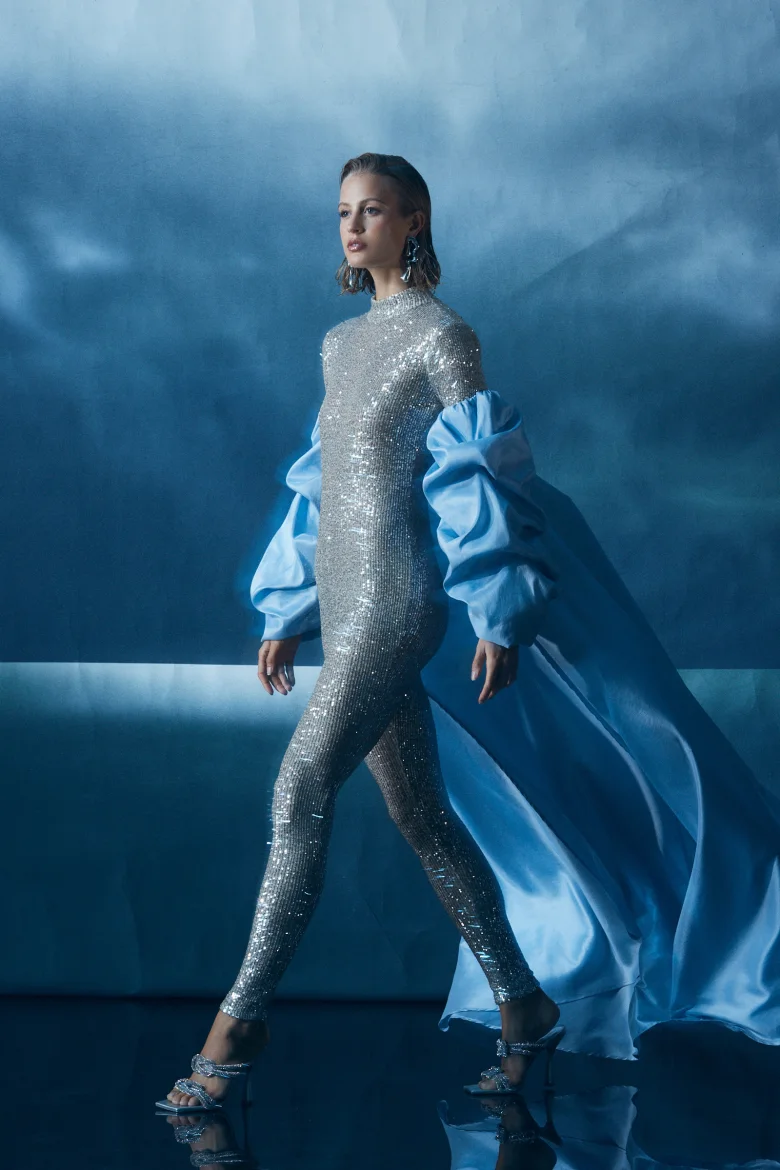
The speed problem is the least discussed and potentially the most consequential of the four AI problems in fashion.
AI tools can compress the fashion design cycle substantially: from concept to digital sample in days rather than months, from trend identification to collection proposal in hours rather than weeks. For brands operating in competitive fast fashion markets, that acceleration is a commercial advantage. For the fashion system as a whole, the speed problem is what happens when every brand has access to the same acceleration, is trained on the same data, and produces the same trend predictions.
If AI trend forecasting tools draw from the same data sources, the same social media signals, the same runway archives and the same purchase behaviour datasets, they will converge on the same aesthetic predictions. A fashion industry in which every brand-forecasting AI has identified the same emerging silhouette, the same colour direction and the same material trend, an industry that has used the most sophisticated data-processing tools available to produce the most homogeneous seasonal output in its history. The diversity of aesthetic outcomes that distinguishes fashion from commodity production depends on the diversity of inputs into the design process. Homogeneous training data produces homogeneous outputs, regardless of how efficiently those outputs are generated.
For Global South fashion practitioners, the speed problem takes a specific form: the AI acceleration that compresses design cycles from months to days is available primarily to brands with the capital, technical infrastructure, and team capability to deploy it. An independent designer in Lagos or Lomé who does not have access to enterprise AI design tools, who cannot afford the subscription costs of trend forecasting AI platforms, and whose infrastructure environment does not reliably support the cloud-based systems these tools require, is not competing in the same accelerated design cycle as the large brands whose AI investment has been documented at hundreds of millions of dollars. The speed advantage is unevenly distributed. Its consequences are not.
The consequence for independent designers who cannot match the AI-accelerated design cycle of the brands they compete with for buyer and press attention is not primarily that they will design more slowly. It is that they will be perceived as designing too slowly for a seasonal collection that would have been competitively timed before AI acceleration, now that AI-assisted brands have already identified and acted on the trend direction the independent designer’s collection addresses. In a market where speed is increasingly a proxy for commercial relevance, the designer without access to AI is at a structural disadvantage that compounds with each season.
What Responsible AI Adoption in Fashion Looks Like
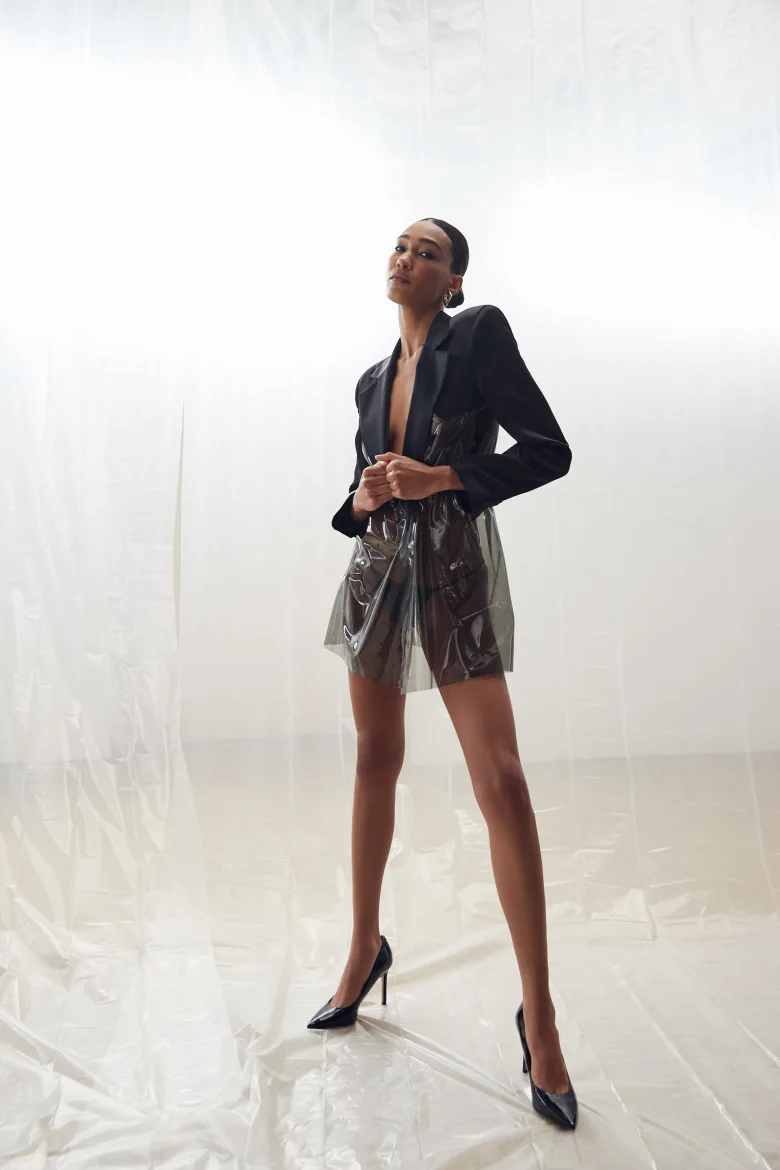
The four problems that AI generates in fashion are distinct, but they share a common feature: each is more manageable when the decision-maker is specific about what they are deploying AI for, what the evidence says about its effects in that specific application and what accountability they accept for those effects.
On creativity: responsible AI adoption means using AI as a creative accelerator for designers with sufficient design knowledge to critically evaluate its outputs, rather than as a creative substitute that reduces the designer’s role to curating AI-generated proposals. It means being honest, in collections and communications, about which elements of a design process were AI-assisted and which were human-originated.
On copyright: responsible AI adoption means understanding the current legal landscape and its uncertainties, not assuming that training data practices that are currently unregulated will remain unregulated. For brands whose collections draw on cultural visual languages from specific communities, this means addressing the consent and attribution question raised by the training data problem, independently of whatever the courts decide about the copyright question.
On jobs: responsible AI adoption means being honest about which roles in the organisation are being changed by AI deployment, which are being eliminated, and what obligations the organisation has to the people whose roles are changing. It means investing in reskilling that enables fashion practitioners to work alongside AI, rather than assuming that practitioners whose roles change will adapt without support.
On speed: responsible AI adoption means recognising that the competitive advantage of AI acceleration diminishes as adoption becomes universal, and that the sustainable competitive advantage in fashion lies in the human cultural knowledge, community connection, and aesthetic specificity that AI cannot replicate. The brands that are building for sustainable competitive position are the ones investing in human knowledge alongside AI tools, not the ones treating AI acceleration as a substitute for the human judgement that makes fashion meaningful.
As Omiren Styles has established in its guide to the fashion technology systems changing what we wear, the technology decisions that matter most for a fashion practitioner are those calibrated to the problem they are actually solving at the stage they are actually at. For AI specifically, the calibration question is which of the four problems, creativity, copyright, jobs or speed, is the most pressing at the practitioner’s current commercial stage, and what specific action that problem requires. A designer who conflates all four problems will address none of them specifically. A designer who identifies which problem they are actually facing can respond to it with the specificity it requires.
The Omiren Argument
AI in fashion is not one story. It is four stories running simultaneously, affecting different people in different ways, with different legal frameworks, commercial implications, and available remedies.
The creativity story is about who designs fashion when AI is part of the design process, and what human creative intelligence is worth in a world where some of its supporting tasks are automated. The copyright story is about who owns what AI generates and whether the communities whose cultural visual languages are feeding the training data will receive any acknowledgement, let alone compensation, for their contribution. The jobs story is about which fashion practitioners are most protected from AI displacement by the irreducibility of their specific human knowledge, and which are most exposed because their roles can be performed more efficiently by AI. The speed story is about whether the AI acceleration of design cycles produces better fashion or only faster fashion, and who benefits from the speed and who is left further behind by it.
For Global South fashion practitioners, all four stories have dimensions that mainstream AI and fashion coverage consistently misses. The creativity story matters because AI trained on underrepresented cultural data produces simulations of cultural aesthetics rather than creative contributions to them. The copyright story matters because the training data that powers mainstream fashion AI includes cultural visual languages extracted from communities that have not consented to their use and will not receive compensation from their commercial applications. The jobs story matters because the AI-resistant value in fashion is precisely the cultural knowledge and community connection that Global South designers hold and that no training dataset contains. The speed story matters because the AI acceleration advantage is unevenly available and its commercial consequences compound across seasons.
As Omiren Styles has argued throughout this series, the Global South made fashion and never got credit. AI does not solve that problem. In its current form, in its reliance on training data that includes cultural visual languages without consent, in its acceleration of design cycles that disadvantage practitioners without access to AI, and in its reproduction of aesthetic conventions from underrepresented communities without attribution or compensation, AI risks amplifying the structural conditions that produce the credit gap. Understanding the four problems that AI generates in fashion, specifically and separately, is a precondition for addressing each of them in a way that does not widen the credit gap.
ALSO READ
- Fashion Technology: A Guide to the Systems Changing What We Wear
- Who Owns the Pattern? Why Cultural Credit Still Rarely Becomes Licensing Revenue
- The Chola Aesthetic Went Global. Who Kept the Credit?
- What Is a Digital Product Passport and What Could It Change for Fashion?
- The Global South Made Fashion. It Just Never Got Credit.
Frequently Asked Questions
Can AI-generated fashion designs be copyrighted?
As legal analysis of AI-generated fashion imagery confirms, under current US law, copyright requires human authorship. AI systems cannot be authors or copyright owners, regardless of how sophisticated they are. A purely AI-generated design with no human creative input is not copyrightable. A designer who uses an AI tool to generate a concept and then makes sufficient creative choices to transform it into a specific design may have a copyright claim in the human creative contribution, but not in the AI-generated starting point. The specific threshold of human creative input required to establish copyright in an AI-assisted design is not yet definitively settled in law, and the outcome of ongoing litigation, including Getty Images v. Stability AI, will shape how courts treat AI-assisted creative work in the fashion context.
Is it legal for AI systems to train on fashion photographs and runway images without consent?
As the National Law Review documented in May 2026, this question is legally unsettled. The debate over whether scraping publicly available images for AI training constitutes fair use is ongoing in multiple jurisdictions. Most AI systems have been trained on large-scale datasets that include fashion photography, runway images, and brand campaign materials without the explicit consent of the creators. Some companies, notably Adobe with its Firefly model, have adopted an alternative approach: training only on licensed and ethically sourced data. Regulatory pressure and litigation outcomes over the next two to three years will determine whether the consensual training model becomes the industry standard or remains a competitive outlier. Brands whose collections draw on the visual languages of specific communities face an additional consent question, independent of the copyright determination.
Which fashion roles are most at risk from AI automation?
The fashion roles most exposed to AI displacement are those in which a specific, bounded task previously done by a human can now be performed more efficiently by software: technical pattern grading, certain types of production photography, quality-control visual inspection, and some elements of trend data processing. The roles most protected from AI displacement are those in which human cultural knowledge, aesthetic judgement and community connection are the primary source of value. A designer whose work is rooted in specific cultural practice, a stylist whose knowledge comes from deep familiarity with the community, a cultural practitioner whose aesthetic authority derives from lived experience within the tradition they work in: each has an AI-resistant value whose source is its irreducibility to data. The practical implication for fashion practitioners is that the most sustainable career investment is in the human knowledge and cultural intelligence that AI cannot replicate, alongside the technical AI literacy that allows practitioners to use AI tools productively without losing their human competitive advantage.
What is the risk of homogenisation in AI fashion, and why does it matter?
Homogenisation in AI fashion refers to the risk that, if AI trend-forecasting tools draw from the same data sources, they converge on the same aesthetic predictions, and brands that act on those predictions produce collections that resemble each other more closely than before AI was involved. The diversity of aesthetic outcomes that distinguishes fashion from commodity production depends on the diversity of inputs into the design process. Homogeneous training data produces homogeneous outputs, regardless of how efficiently those outputs are generated. For the fashion industry, the risk of homogenisation means that AI acceleration may make fashion faster without making it more diverse or more interesting. For practitioners in the Global South whose design work is rooted in specific cultural aesthetics that are underrepresented in mainstream AI training data, the risk of homogenisation is also an opportunity: the cultural specificity and aesthetic distinctiveness that AI cannot replicate is precisely the differentiation that the market increasingly cannot produce through AI-generated design.
What does responsible AI adoption look like for a fashion brand in the Global South?
As Omiren Styles has established, in its guide to fashion technology systems, the technology investment sequence that makes sense for Global South fashion brands depends on their current commercial stage and infrastructure context. On AI specifically, responsible adoption means being specific about which of the four problems, creativity, copyright, jobs or speed, is the most pressing at the brand’s current stage. For a brand at an early commercial stage, the most valuable AI applications are likely to be accessible creative acceleration tools and documentation assistance, rather than enterprise trend-forecasting platforms. The copyright question means being aware of which AI tools are trained on consensual data and which are not, and being honest about the cultural visual languages the brand draws on and whether their AI-assisted reproduction requires attribution. The jobs question means investing in the human design knowledge that AI cannot replicate rather than treating AI as a substitute for it. And the speed question means recognising that the AI acceleration advantage is less important than the cultural specificity advantage for a brand whose competitive position is built on the latter.
EXPLORE MORE
Read the full Industry and Intelligence sections at Omiren Styles for ongoing analysis of AI in fashion, the copyright and cultural credit implications of AI training data, and the specific applications most relevant to fashion practitioners in the Global South. Discover travel and heritage intelligence across Africa, the Caribbean and Latin America at Rex Clarke Adventures.