“Everyone wants to look like a chola, but they don’t want to give credit or learn about the culture that it came from.”
That observation, delivered by a historian in a 2022 NowThis Impact video, is the clearest available summary of what happened to one of the most globally influential visual identities produced by a working-class community of colour in the 20th century. The Chola aesthetic, built by Mexican-American women in the barrios of East Los Angeles and Southern California over five decades of cultural production under conditions of racial discrimination, economic marginalisation and active suppression of Chicano identity, became a reference point for runway designers in Paris, pop performers in London, beauty brands across multiple continents, and a subculture in Japan that adopted the look wholesale. The communities of East LA, whose creativity, resilience, and, specifically, Chicana politics produced the aesthetic, received none of the luxury brand revenue, none of the runway credit, and very little of the commercial return that the global fashion industry generated from their visual work.
Cholos created the baggy pants. That fact belongs in the history of fashion, not as a footnote to a runway review that credits a designer for discovering what a Chicana from East LA built in the 1970s. Willy Chavarria has said as much. The industry has mostly declined to hear it.
As Lampoon Magazine documented in its April 2026 analysis of Latin American fashion and its global reach, Chola femininity produced a specific and deliberate visual politics: tight pencil skirts, crop tops, body-hugging dresses, black eyeliner, large hoops, dark lip liner, slicked-back hair. Tough and deliberate. A politics of presence. That aesthetic has since travelled far from its origins. Willy Chavarria remains its most authoritative translator. Casablanca’s S/S 2025 collection paid explicit homage to Chicano culture. Riccardo Tisci built a “Victorian Chola” show for Givenchy A/W 2015. Jeremy Scott offered his interpretation at Moschino Resort 2017. In each case, the aesthetic travelled. The credit stayed in Paris, New York, or wherever the designer issuing the press release was located.
The Chola aesthetic was created by working-class Mexican-American women in East LA. It became a global visual identity. The communities that built it received neither credit nor commercial return proportionate to its reach. This is the extraction argument.
Where the Aesthetic Came From

The Chola aesthetic has a specific origin and a traceable genealogy. It did not emerge from a general “Latino culture” that fashion brands can reference without specificity. It was built in a specific place, by specific communities, under specific conditions of political and economic marginalisation, and it carries the marks of all three.
The genealogy begins with the pachuca of the 1940s: Mexican-American women in El Paso and East Los Angeles who adopted elements of the zoot suit tradition, wearing big hair, heavy eyeliner and dark lipstick at a moment when the Mexican Repatriation programme had forcibly expelled hundreds of thousands of Mexican-Americans from the United States, and when the remaining Chicano communities were navigating life under conditions of institutional racism that were legally enforced and culturally pervasive. The pachuca wore her hair and her make-up as a statement of presence in a society that was actively trying to make her invisible.
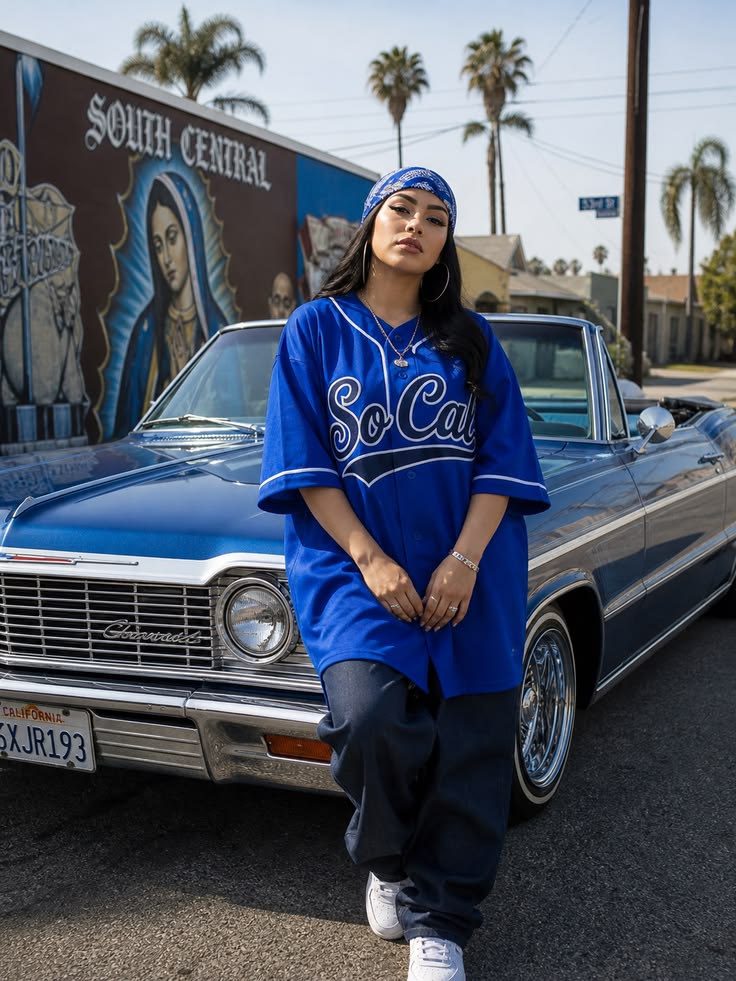
By the 1960s, the style had evolved into what would become recognised as distinctively Chola: an aesthetic built from the specific material conditions of working-class Chicana life in Southern California. Baggy khakis, most often Dickies brand, worn low on the hips. Pendleton shirts. Flannels buttoned only at the top or tied at the waist. White or black tank tops as base layers. Creepers or platform shoes. Gold hoop earrings. Crucifixes. Bandanas. The make-up was equally specific: heavily winged eyeliner, dark lip liner with a lighter or nude fill, gelled-down baby hairs arranged in precise swirls and loops at the hairline, cut-crease eyeshadow, and an arched brow that required a specific pencil technique. Every element was practical for daily life in the barrio, affordable on a service-industry wage and simultaneously a precise aesthetic statement about who you were and where you came from.
The publications that documented this aesthetic from inside the community, Teen Angels, Lowrider magazine and Mi Vida Loca, were not fashion publications in the commercial sense. They were community records: documentation of a visual culture produced by and for the communities that created it, before the mainstream fashion industry noticed it existed. Chicano studies scholar Dr Rosa-Linda Fregoso, author of the 1995 article “Pachucas, Cholas, and Homegirls in Cinema,” documented how American Latina women were being simultaneously stereotyped and erased in mainstream media while building a visual culture of extraordinary specificity and self-determination in the barrio.
When Fashion Noticed
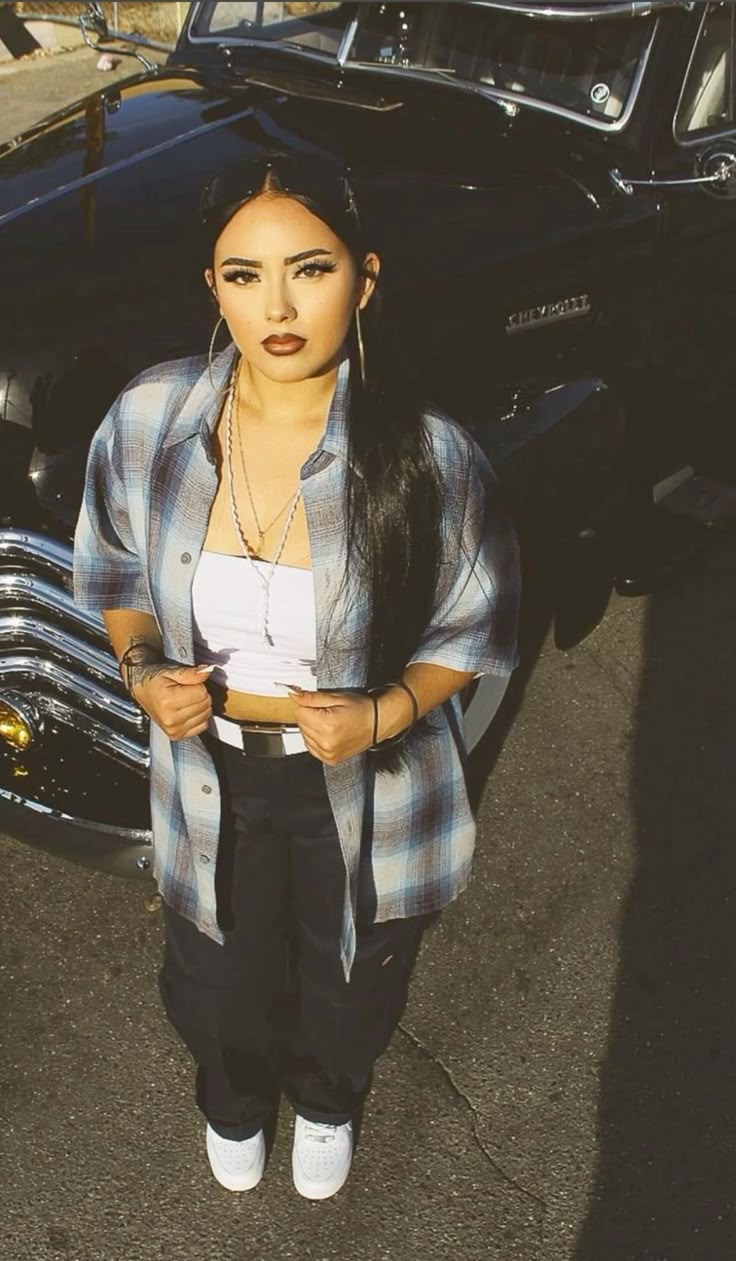
The global fashion industry’s engagement with the Chola aesthetic follows a pattern that this series has documented in multiple territories: the aesthetic is extracted from the community that built it, translated into a luxury or mainstream commercial format, credited to the translating institution rather than the originating community, and sold back into a global market from which the originating community receives no proportionate commercial return.
Riccardo Tisci’s “Victorian Chola” collection for Givenchy A/W 2015 is the most frequently cited example. Models appeared on the Paris runway in gelled baby hairs and braided hair loops, a styling that required specific knowledge of Chicana hair practice to execute and that was described in Tisci’s show notes using the word “Chola” as an aesthetic descriptor rather than as an acknowledgement of the community whose aesthetic he was drawing on. The show generated international fashion press coverage that described the look as Tisci’s creative direction rather than as a Chicana aesthetic tradition that had been practised in East LA for five decades. The Blonds presented a similar moment in New York: gelled baby hairs, cat-eye wings, gold appliqué teardrops, and a decision to describe the models as “gangsta genies,” translating a specific Chicana aesthetic into a luxury novelty for an audience that had never had to navigate the conditions under which that aesthetic was built.
Gwen Stefani’s decade-long engagement with Chola aesthetics during No Doubt’s 1990s era is a different but related case. Regina Merson, founder and CEO of Chicana-owned beauty brand Reina Rebelde, has described the situation with precision: Stefani’s cultural positioning as someone who grew up in Southern California creates a “fine line” of proximity that does not resolve the fundamental question of whether proximity to a culture entitles someone to build a commercial career on its aesthetics without acknowledgement or return to the communities that produced it. “We love it when our culture gets love and appreciation,” Merson has said, “but it’s important to respect cultures without appropriating them into a temporary trend or fad.” The Chola aesthetic was not a trend for the communities that built it. It was a survival practice, a politics and a form of self-authorship under conditions designed to deny it.
The global spread of the aesthetic extends to Japan, where a Chola subculture that began decades ago through exposure to lowrider culture, East LA films and the influence of artists like Selena has produced communities of Japanese women who adopt the visual vocabulary of East LA Chicana style. The Japanese Chola phenomenon is the most geographically extreme expression of the aesthetic’s global reach, and it illustrates with particular clarity the gap between the reach of a cultural aesthetic and the commercial return to the community that built it: an aesthetic developed under conditions of racial discrimination and economic marginalisation in East Los Angeles has become a vehicle for identity assertion in a Japanese social context so different from its origin that the political meaning of the original practice is almost entirely absent.
The Chicana-Owned Brands and What They Built
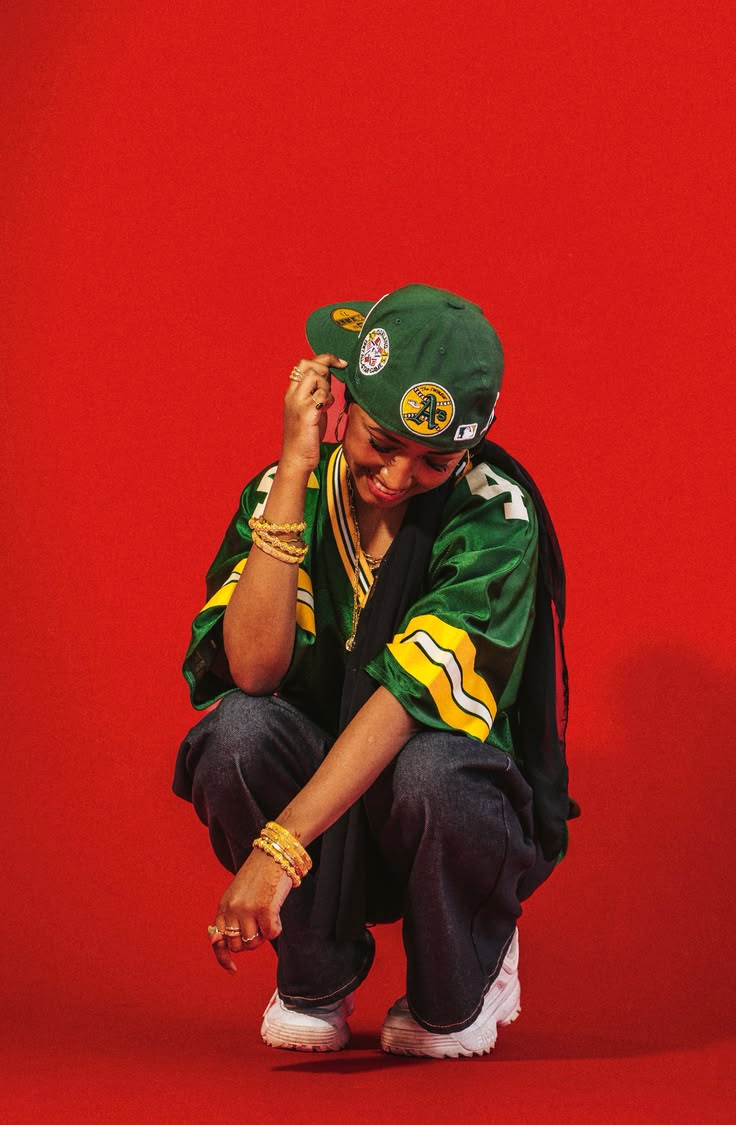
As The Zoe Report documented in its 2024 and 2026 analyses of Mexican lowrider culture’s lasting impact on the beauty industry, beauty brands have now emerged that specifically address the Chola aesthetic from within the community that built it. Reina Rebelde, founded by Regina Merson, produces beauty products explicitly designed for and by women who identify with Chicana aesthetic traditions. Bella Doña and Sweet Street Cosmetics represent similar commercial responses: Chicana-owned businesses that have built brands around the specific make-up practices that the mainstream beauty industry extracted and repackaged without acknowledgement.
The Chicana-owned beauty and fashion brands building from within the aesthetic tradition are doing something structurally different from the mainstream brands that have commercialised Chola aesthetics. They are not translating the aesthetic for an external audience. They are producing for the community that built it, on terms set by that community, and building commercial relationships whose value stays within or close to the originating community. The commercial scale of these brands relative to the global beauty industry is a measure of the structural gap: the brands that extracted the aesthetic without acknowledgement are valued in the billions; the Chicana-owned brands building from within the tradition are building from much smaller capital bases into markets that the mainstream industry simultaneously draws from and underserves.
The publications that have consistently documented the aesthetic from the community’s perspective, from Teen Angels through to contemporary Chicana media, have built a record that the global fashion industry has drawn on without citation. That record matters both as historical documentation and as the intellectual property of a community whose creative work it represents. The mainstream fashion industry’s habit of treating community cultural records as open-source reference material whose credit can be dissolved into a designer’s “inspiration” is not specific to the Chola aesthetic. It is the operating model for every instance of working-class community aesthetic extraction documented by this series.
Willy Chavarria and the Difference
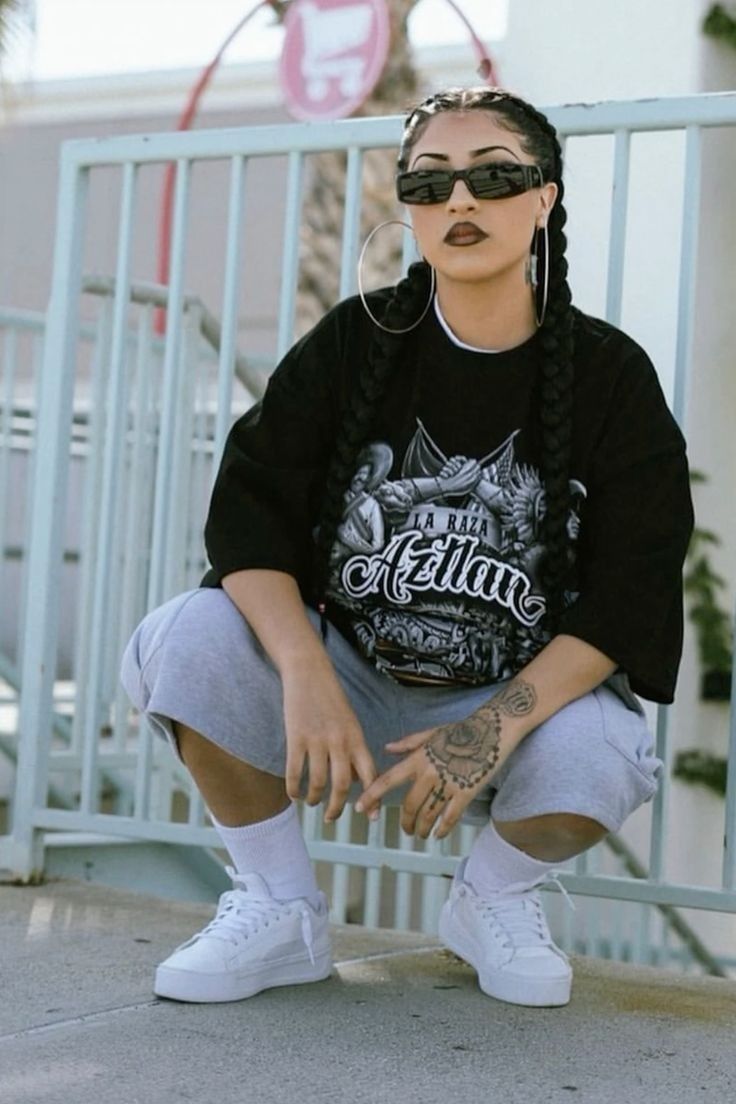
Willy Chavarria’s Spring 2025 collection at New York Fashion Week represents a structurally different kind of engagement with the Chicano aesthetic than the Givenchy or Moschino presentations that preceded it. Chavarria is a Chicano designer whose practice is built from within the culture rather than translated from outside it. His statement that “Cholos created the baggy pants” is not a footnote to his collection notes. It is the position from which he designs: an insistence that the aesthetic authority behind garments his collection draws on belongs to the communities of East LA and Southern California who built it, not to the fashion institutions that noticed it several decades later. Vogue described his work as “quotidian style no less regal and elevated,” which is accurate and precisely what the originating community has always known it to be.
Chavarria’s practice demonstrates that the distinction the fashion industry needs to make is not between appreciation and appropriation in the abstract. It is between designers who come from the community and those who translate it; between commercial structures that return value to the originating community and those that extract it; and between editorial credit that names the source of an aesthetic tradition and editorial credit that names only the designer who borrowed it. The Givenchy runway credit listed Riccardo Tisci as creative director. The East LA women whose aesthetic he was translating were not mentioned. Chavarria’s runway does not have that gap because the tradition and the designer are not separated by extraction.
The Structural Argument
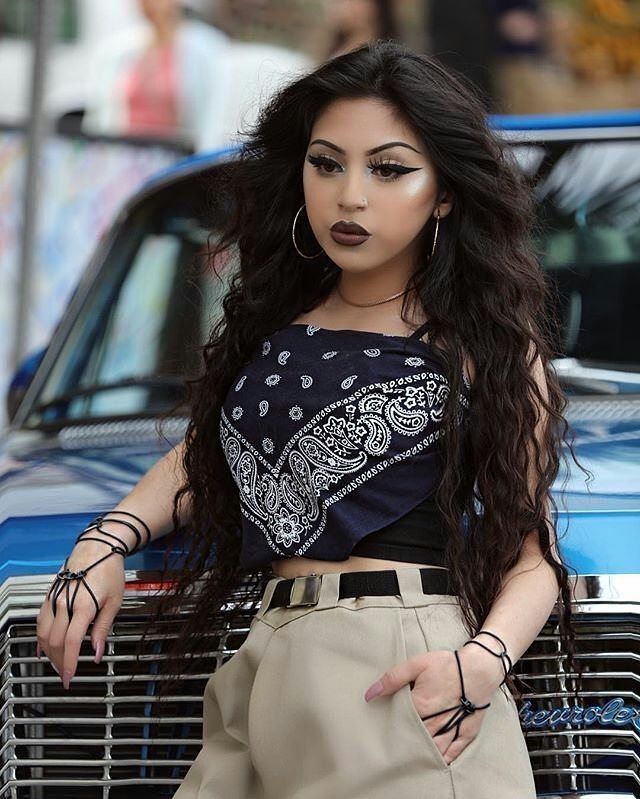
As Omiren Styles has established in its analysis of the Afro-Brazilian fashion system and the gap between cultural contribution and commercial participation, the extraction of a marginalised community’s aesthetic authority into a commercial fashion system whose ownership, investment and editorial direction remain concentrated elsewhere is a structural feature of the global fashion economy rather than a series of individual creative decisions. The Chola aesthetic case makes this argument in its clearest available form because the extraction is so precisely documented: a specific aesthetic, built by a specific community, adopted by specific institutions, with a specific gap between the credit assigned to those institutions and the credit withheld from the originating community.
The structural argument operates at three levels. The first is credit: the specific aesthetic practices that the Chola tradition developed, the baby hair technique, the dark lip liner method, and the specific proportions of the winged liner, were developed within a community over decades of practice. When those techniques appear in a fashion editorial, a runway show or a beauty campaign without acknowledgement of their origin, the person or institution presenting them receives the creative credit for the result. The originating community receives nothing.
The second level is commercial return. When a luxury fashion house produces a collection that draws on Chola aesthetics and sells those garments at luxury prices to a global market, the revenue from that commercial transaction does not flow back to the working-class barrio communities whose creative practice generated the aesthetic authority the collection draws on. The fashion house captures the margin. The originating community receives no royalties, no licensing fees, and no commercial recognition for the intellectual property it holds.
The third level is the most durable and the most damaging: the systematic absence of Chicana designers, Chicana brand owners and Chicana creative directors from the institutional leadership of the fashion and beauty industries that have drawn most heavily on the Chola aesthetic. If the extraction of the Chola aesthetic into the mainstream fashion system had been accompanied by the inclusion of Chicana practitioners in the editorial, investment, and brand-ownership structures of that system, the aesthetic’s global reach would have translated into commercial power for the community that built it. That inclusion did not happen at scale, and its absence is the structural fact that credit mentions and appreciation statements do not address.
As Omiren Styles has documented in its analysis of African make-up artistry and the credit gap in beauty, the gap between calling something “inspiration” and crediting it as practice is a commercial and intellectual property decision that benefits the institutions using it and costs the practitioners whose knowledge made it possible. The Chola aesthetic case is the same argument in a different territory. “Inspired by Chola culture” in a press release is a very different statement from “this technique was developed by Chicana women in East LA, we are crediting that origin, and we are building commercial relationships with Chicana-owned brands and practitioners as a condition of using it.”
The Omiren Argument
The Chola aesthetic is one of the most precisely documented cases in the history of fashion of an aesthetic built by a working-class community of colour, extracted by mainstream and luxury fashion institutions, and returned to its originators as recognition without commercial substance.
The Pachuca women of the 1940s, who built the aesthetic’s foundations under conditions of mass deportation and institutional racism, were not producing work for the fashion industry. They were asserting their presence in a society that was trying to remove them. The Chicana women who developed the Chola aesthetic in the 1960s, 1970s, and 1980s in the barrios of East LA were not creating trend content. They were building a visual identity specific to their class, their culture, and their political situation as Mexican-American women in a city whose mainstream fashion industry would not have hired most of them for any role above the factory floor. The aesthetic they built was sovereign: self-referential, internally validated, developed for the community rather than for external consumption.
The moment that aesthetic became visible to the mainstream fashion industry, it was no longer treated as sovereign. It became “inspiration.” It became a “Victorian Chola” show at Paris Fashion Week. It became the baby hairs on a runway model who had been briefed to evoke a look whose originating community was not named in the press notes. It became a beauty trend whose commercial value accrued to brands, publications and institutions that did not build the tradition and owe their use of it to a community that received no proportionate return.
As Omiren Styles has argued throughout this series, the Global South made fashion and never got credit. The Chola aesthetic case extends that argument into the specific geography of the American barrio: a working-class community of colour that is domestic to the United States but structurally marginalised within it, built an aesthetic of global reach and received neither the credit nor the commercial return that reach should have generated. Willy Chavarria is building the argument from within the tradition that it belongs to. The fact is that institutions that extracted the aesthetic without acknowledgement have not yet built the structural responses that would match that argument in commercial terms: investment in Chicana-owned brands, editorial credit that names originating communities, and supply chain relationships that return value to the barrio rather than extracting from it.
ALSO READ
- Brazil’s Fashion System Has Not Matched Its Afro-Brazilian Reality
- Africa Grows the Cotton. Its Designers Still Buy Back the Value.
- The Global South Made Fashion. It Just Never Got Credit.
Frequently Asked Questions
What is the Chola aesthetic, and where did it originate?
The Chola aesthetic is a visual identity developed by Mexican-American women in the barrios of East Los Angeles and Southern California, with roots tracing to the pachuca culture of the 1940s. The pachuca emerged during the Mexican Repatriation, when Mexican-American communities were navigating institutional racism and mass deportation, and expressed presence through big hair, heavy eyeliner and dark lipstick drawn from the zoot suit tradition. By the 1960s, the aesthetic had evolved into the distinctively Chola visual vocabulary: baggy khakis (most often Dickies brand), Pendleton shirts, flannels worn open or tied at the waist, gold hoop earrings, crucifixes, gelled baby hairs arranged in precise loops at the hairline, dark lip liner, heavily winged eyeliner and an arched pencilled brow. Every element was developed within the specific community context of working-class Chicana life in Southern California, practical for daily barrio life and rooted in a deliberate politics of visibility.
Which mainstream fashion and beauty brands have drawn on the Chola aesthetic?
Riccardo Tisci presented a “Victorian Chola” collection for Givenchy A/W 2015 in Paris, with models styled in gelled baby hairs and braided hair loops, explicitly referencing Chola aesthetics in show communications without proportionate acknowledgement of the originating community. The Blonds presented a New York collection featuring gelled baby hairs, cat-eye wings, and gold appliqué teardrops, describing the models as “gangsta genies.” Gwen Stefani incorporated Chola aesthetics throughout No Doubt’s 1990s era. Jeremy Scott offered an interpretation at Moschino Resort 2017. Casablanca’s S/S 2025 collection paid explicit homage to Chicano culture. The global beauty industry has incorporated the Chola make-up vocabulary, including the baby hair technique, dark lip liner, and winged liner, through editorial styling, beauty tutorials, and product development, without systematic acknowledgement of the Chicana community that developed these techniques.
Who is Willy Chavarria and why does his practice matter for this argument?
Willy Chavarria is a Chicano designer whose Spring 2025 New York Fashion Week collection centred the stories of immigrants, labourers and marginalised communities within the Chicano tradition. His statement that “Cholos created the baggy pants” makes a specific pants-related intellectual property claim: that a garment form attributed in mainstream fashion history to various designers and institutions was developed by working-class Chicano communities in Southern California. Chavarria’s practice is structurally different from that of non-Chicano designers engaging with the same aesthetic because he works from within the tradition rather than translating it from the outside, and because his editorial and commercial positioning consistently credits the originating community rather than positioning himself as the creative origin of the aesthetic he draws on. Vogue described his work as “quotidian style no less regal and elevated,” which is an accurate description of what Chicana communities have always known their aesthetic to be.
What is the Chicana-owned brand’s response to the commercialisation of Chola aesthetics?
As The Zoe Report documented, Chicana-owned brands, including Reina Rebelde, founded by Regina Merson, Bella Doña, and Sweet Street Cosmetics, have built commercial practices around the Chola makeup aesthetic from within the originating community. These brands produce products specifically designed for Chicana women, on terms set by Chicana founders, and build commercial relationships whose value stays within or close to the originating community. The structural gap between these brands and the mainstream beauty industry that extracted the same aesthetic is significant: mainstream brands that commercialised aesthetics operate at a scale many times larger than the Chicana-owned brands that built the tradition. That disproportion is the commercial form of the credit argument.
How did the Chola aesthetic spread to Japan?
A Chola subculture has existed in Japan for several decades, originating from exposure to lowrider culture, East LA films such as Mi Vida Loca, and the cultural influence of Mexican-American artists whose work reached Japanese audiences. Japanese women who wanted to challenge their own society’s expectations of femininity adopted the visual vocabulary of East LA Chicana style as a vehicle for self-expression and cultural resistance within their own context. The Japanese Chola phenomenon illustrates the global reach of the aesthetic with particular clarity: a visual identity developed under specific conditions of racial marginalisation and economic hardship in East Los Angeles became, in a completely different social context, a vehicle for identity assertion by Japanese women navigating a different set of societal constraints. The aesthetic travelled. The credit and the commercial return to the East LA communities that built it did not follow.
EXPLORE MORE
Read the full Heritage and Diaspora sections at Omiren Styles for ongoing analysis of Chicana and Latinx fashion aesthetics, the structural credit gap in the global fashion industry and the communities building commercial practices on their own terms. Discover travel and heritage intelligence across Latin America and the diaspora at Rex Clarke Adventures.