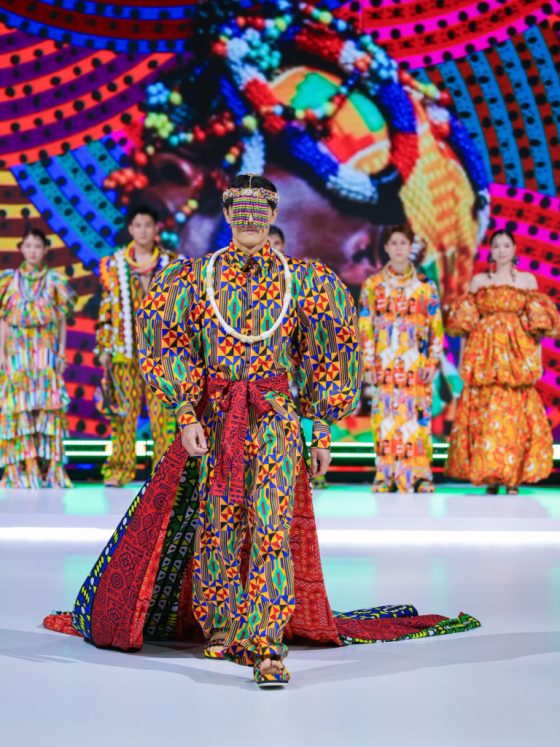
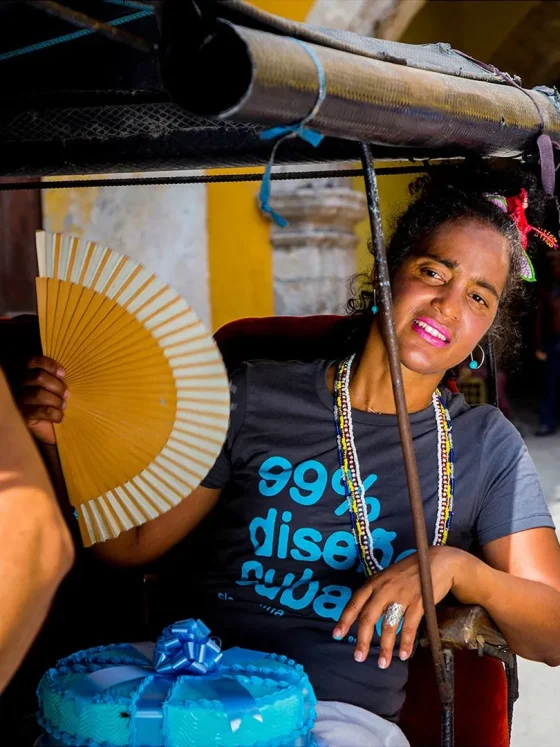
The fashion industry has learned to say the words.
“Inspired by the textile traditions of West Africa.” “In conversation with Indigenous craft communities.” “Drawing on the visual language of the diaspora.” “Honouring the heritage of the Somali Region.” “A celebration of Afrocentric cultural identity.”
The language has improved. The industry has learned, under sustained pressure from communities, critics, journalists and designers whose work was absorbed without acknowledgement, that naming a source is the minimum acceptable standard. That naming creates a record. That a record can be compared against the economic outcome it generates.
That comparison is the problem the industry has yet to solve.
Credit is not compensation. Naming a source gives it historical recognition. It does not give it a share of the commercial value generated from what was taken. It does not give the source community control over how the reference is used next. It does not require the company doing the naming to return any of the revenue that the cultural knowledge helped it earn. It does not create a relationship. It creates a footnote.
A brand can credit a weaving community in its collection notes, use the visual language of that tradition to sell a season, and receive every dollar of the resulting revenue without the community’s involvement, consent or financial participation. The credit is real. The compensation is absent.
This article is the synthesis of a long argument that has moved across this series through Ankara and its contested ownership, through Oaxacan weaving and the legal frameworks trying to protect it, through dancehall’s visual grammar travelling globally without commercial return, through the makers of Aba doing industrial fashion work the industry refuses to call industrial, through the scent knowledge of West African ceremony being absorbed into a wellness category that does not pay the women who built it. The series has argued throughout that the Global South made fashion and never got credit for it. This article argues the next position: that credit, even when it arrives, is not sufficient. What the fashion industry owes beyond naming a cultural source is a commercial relationship.
The fashion industry has learned to say the words. It names sources and celebrates heritage. What it still refuses to build is the commercial structure that turns acknowledgement into obligation.
The Credit Economy and What It Produces

The credit economy is the set of practices through which fashion acknowledges the cultural sources it draws from while retaining control over the commercial outcomes those sources enable. It is efficient, relatively low-cost and produces genuine cultural value in the narrow sense of making the historical record more accurate.
A brand that credits the batik tradition of Java in its collection notes, the wax-resist dyeing techniques of West African textile culture, or the draped garment systems of the Horn of Africa is doing something more than a brand that credits nothing. The credit can be found. Researchers can follow it. Communities can point to it. Students can learn from it. The cultural record becomes marginally more truthful.
But the credit economy has limits that become clear the moment you ask what it requires the crediting party to do next. It requires nothing. A credit note creates no licensing obligation. It generates no royalty. It does not require consent before the next use. It does not give the credited community a say in how the reference extends through subsequent collections, collaborations, fast-fashion copies, brand licensing agreements, or the trend-forecasting databases that turn a one-season reference into a multi-year commercial template.
The credit economy is therefore, at its best, a more honest version of the extraction economy. It names what it takes. It does not change the taking.
As After Attribution: Who Owns the Commercial Life of a Cultural Reference? established, the commercial life of a reference extends far beyond the press release in which it is credited. The reference enters wholesale agreements, retail listings, brand licensing, fast-fashion reproduction chains, editorial archives, mood boards, trend-forecasting tools and the collective memory of the global fashion industry. At each of those points, someone captures value. The community that created the reference is present at the first point in the chain, in the credit note. It is absent at every subsequent point where value is being generated.
What Compensation Actually Looks Like

Compensation is not a vague ethical aspiration. It is a set of specific commercial relationships, each of which can be structured, negotiated, documented and enforced. The fashion industry has access to all of them. It has chosen not to apply them systematically to its use of Global South creative knowledge.
The first form of compensation is sourcing. A brand that draws on the visual, textile, or craft traditions of a specific community can choose to source its materials, production, or creative services from within that community. This creates a direct economic relationship between the commercial outcome and the originating community. It is not charitable. It is commercially rational: the brand gets authenticity, quality, traceability and a story that its customers increasingly want. The community gets economic activity rather than aesthetic extraction.
The second form is licensing. A community or its representative body can set the terms under which commercial entities may use its cultural references: at what price, for what duration, for what purposes, and in which markets. Licensing is how the music industry converts cultural knowledge into recurring revenue for creators. There is no structural reason it cannot be applied to the use of culturally significant textile traditions, design elements or craft techniques in fashion. The collective ownership question makes administration more complex than for individual copyright, but that complexity is a design problem, not an impossibility.
The third form is co-creation with equity. A brand engages the originating community not as a cultural validator or a production source, but as a commercial partner with a genuine share of the outcome. This requires real power-sharing: the community participates in the design process, reviews how the reference is used, approves final commercial application and holds a documented economic stake in the result. It is harder to structure. It produces durable relationships rather than repeated extraction cycles.
The fourth form is institutional investment. A brand that derives sustained commercial value from a community’s cultural traditions has an obligation extending beyond the collection in which the reference appears. It should invest in the infrastructure that allows those traditions to remain economically viable for the people who sustain them: funding for craft apprenticeship programmes, investment in production equipment, support for intellectual property registration, contribution to the logistics infrastructure that allows community-based production to compete in global markets.
As the African Development Bank’s Fashionomics programmes have recognised, fashion businesses in communities across Africa need access to capital, training, market connections and export infrastructure. A brand that derives sustained commercial value from African aesthetic traditions has a stronger obligation than a credit footnote: it has an obligation to invest in the infrastructure that allows those traditions to be economically self-sustaining for the people who carry them.
The Legal Frameworks That Are Building the Case
A legal one has increasingly joined the ethical argument for compensation beyond credit.
Ghana’s Geographical Indication status for Kente at WIPO means that only cloth woven using traditional techniques in approved Ghanaian communities may legally carry the name in jurisdictions that recognise the designation. Guinea’s Protected Geographical Indication for Léppi creates an equivalent legal basis for the Fulani weaving communities of the Fouta Djallon. Mexico’s Federal Law for the Protection of the Cultural Heritage of Indigenous and Afro-Mexican Peoples goes further: it requires free, prior and informed consent before a third party may use cultural heritage elements commercially, and mandates that any authorised use be onerous, temporary, and involve fair and equitable distribution of benefits. That is not a credit requirement. That is a compensation requirement, backed by criminal penalties for non-compliance.
Cambridge scholarship on cultural appropriation and the global fashion industry has documented a structural gap: conventional intellectual property frameworks designed for individual authorship and short commercial timelines do not adequately protect collective, intergenerational, community-based creative knowledge. The legal architecture is being rebuilt in specific jurisdictions. The fashion industry’s response has been to treat those jurisdictions as compliance risks rather than as a model worth applying more broadly.
The industry should treat them as the minimum emerging standard. A brand that waits to be legally compelled to obtain consent and share benefit in Mexico, and then behaves differently in communities where no equivalent law yet exists, is not acting ethically. It is arbitraging legal geography. The communities whose knowledge is being used in unregulated jurisdictions have not consented to being treated differently simply because their governments have not yet built the legal framework to compel better behaviour.
Where Every Argument in This Series Ends Up

This series has moved through many specific cases. They all arrive at the same place.
The ownership argument over Ankara ends here: the cultural meaning of Ankara was built by West African communities. The commercial value generated from that meaning has flowed primarily to manufacturers, distributors and brands that were not those communities. Credit notes do not redistribute that value. Sourcing commitments, licensing agreements and investment in African textile production would.
The Oaxacan weaving argument ends here: the legal requirement for consent and benefit-sharing exists in Mexico and is being ignored by brands that operate across the legal boundary. The remedy is not a credit note. It is consent before use, a documented commercial relationship, and enforceable benefit distribution.
The dancehall argument ends here: Kingston’s visual grammar has shaped global fashion for half a century without a formal commercial structure through which that contribution generates economic return. Kingston to Milan: The Aesthetic Export With No Export Deal named the gap. What closes it is licensing infrastructure, commissioning pipelines that pay Jamaican creatives as authors rather than as cultural references, and investment in Jamaican fashion industry infrastructure.
The Aba argument ends here: Aba is a manufacturing ecosystem the global fashion industry has refused to document accurately because it does not fit the categories of either luxury or craft that fashion uses to assign value. The remedy is not a credit. It is buyer engagement, investment in production infrastructure, legal support for original design, and fair trade terms that allow Aba’s makers to compete on the commercial terms their skill deserves.
The West African fragrance argument ends here: the knowledge behind shea butter’s ceremonial use, the preparation of thiouraye, the selection of specific oils for a naming ceremony, has been absorbed into a global wellness market that credits Africa as a mood and compensates African harvesters at rates that bear no relationship to the commercial value the knowledge generates. The remedy is fair pricing in the supply chain, documentation of knowledge holders, and benefit-sharing requirements that reach the women who hold the knowledge rather than the European brands that sell it.
The kanga argument ends here: the fabric was authorship. The jina was a declarative statement made in cloth by women whose formal public voices were restricted. The commercial global fashion industry has treated the kanga’s named-print system as a decorative surface and has missed its entire communicative logic. African oral tradition and textile knowledge are economic capital, as that analysis demonstrates. The fashion industry has converted that capital into product and retained the proceeds. The remedy begins with understanding what the fabric is before using it, and extends to sourcing relationships that return value to the communities who built its meaning.
The three-designers argument ends here: Thebe Magugu, Kenneth Ize and Adebayo Oke-Lawal have built internationally recognised practices under conditions that required exceptional resilience. The industry should not be celebrating their resilience. It should be changing the conditions. Resilience is not a fair exchange for infrastructure. Institutional recognition is not a fair exchange for production support, trade finance, compliance advice and equitable buyer terms.
The Kalu Putic argument ends here: a young designer from Mekelle, Ethiopia reached 1.5 million combined followers in weeks. The commercial infrastructure that would allow him to convert that reach into durable economic power was not automatically provided by the visibility. Visibility Is Not Market Power has been this series’s most repeated argument. It applies to every case where recognition has substituted for relationship.
The London retail route argument, the Africa Fashion Week London accountability argument, the wholesale buyer assessment argument in How Buyers Assess an Independent Label, and the UK infrastructure argument all end here: the fashion industry has enough talent. What it lacks is the commercial will to build the infrastructure that distributes opportunity proportionately to where the talent is. The remedy is range, margin, delivery, fit and retail readiness supported by institutional infrastructure rather than individual resilience.
And the argument about the African diaspora in London ends here: diaspora aesthetics carry specific histories and cultural knowledge that have been consistently extracted by the mainstream without credit or compensation. The designers building practices that reject the extraction model are doing so under conditions that should not require such refusal. The extraction should have been replaced already by a relationship.
The Omiren Argument: A Scorecard

This series has been building a scorecard. It is now possible to state it directly.
A fashion industry that has moved from no credit to some credit has made real progress. Credit is better than silence. A record is better than erasure. A footnote that names a weaving community, a music scene, a textile tradition or a craft knowledge system gives future researchers something to follow. It changes the history that gets written. That matters.
It is not sufficient.
The scorecard for what the industry owes beyond credit has the following categories.
Acknowledgement — is the source named specifically enough to be followed? Not “African heritage” but “the Zapotec weavers of Teotitlán del Valle.” Not “West African print tradition” but “the Ankara naming culture built by women traders in Lagos and Lomé.” Specificity is the difference between a credit that respects a community and a credit that uses it.
Documentation — is the knowledge system behind the reference documented at the level of specificity that preserves its meaning? A press release that mentions a weaving tradition without explaining its history, its makers, its social function or its intellectual content is not documentation. It is decoration.
Consent — did the community agree to this use? Consent before use is the principle Mexico’s law has codified. It should apply universally as an industry standard regardless of whether a domestic law requires it. A brand that seeks consent only when legally compelled has not adopted a standard. It has avoided prosecution.
Compensation — does the community receive economic benefit from the commercial use? A licensing fee, a royalty, a sourcing commitment, an investment in community infrastructure, a co-creation equity arrangement: any of these constitutes compensation. A credit note does not.
Commissioning — when the brand’s work draws on a cultural tradition, does it commission practitioners from within that tradition? A brand that photographs a Jamaican model in dancehall-coded clothing as a campaign, without paying Jamaican stylists, photographers, directors and cultural consultants from within the community, has used the culture without paying the people who built it.
Continuity — is the relationship sustained across seasons rather than treated as a single discovery moment? A brand that sources from a Ghanaian weaving community for one collection and then switches supplier for cost reasons has used a community’s cultural knowledge as a trend reference. A brand that builds a multi-year sourcing relationship, invests in production capacity, and returns across seasons has built a commercial relationship.
Accountability — can the brand demonstrate all of the above with documentation that can be independently verified? An acknowledgement that cannot be checked is not accountable. A sourcing claim that cannot be traced to a named producer is not credible. Accountability requires a chain of documentation from the cultural source to the commercial outcome.
The scorecard is not utopian. Every one of its categories is achievable within existing commercial infrastructure. Licensing frameworks exist. Geographical Indication systems exist. Co-creation partnership models exist. Sourcing traceability systems exist. Commissioning pipelines can be built. Continuity requires a business decision, not a structural innovation. Accountability requires documentation, which every legitimate commercial operation already produces.
What the scorecard requires is will. The fashion industry has demonstrated that it can implement commercial standards when those standards serve its interests: sustainability certification, supplier auditing, carbon footprinting, diversity reporting. It has not demonstrated equivalent will to implement standards that require it to share commercial value with the communities whose knowledge it has used to build that value.
That is the argument this series has been making. Credit is the beginning. Compensation is the obligation. The industry knows how to build it. The question is when it will decide to.
ALSO READ
- After Attribution: Who Owns the Commercial Life of a Cultural Reference?
- The Global South Made Fashion. It Just Never Got Credit.
- Who Really Owns Ankara?
- Kingston to Milan: The Aesthetic Export With No Export Deal
- Visibility Is Not Market Power: Why Global Attention Still Fails Independent African Fashion Brands
- Aba Is a Supply Chain, Not a Craft Village
Frequently Asked Questions
What is the difference between credit and compensation in fashion?
Credit is historical recognition. When a brand names the cultural source of a reference in its collection notes or press materials, it creates a record that can be found, followed and compared against the economic outcome it generates. Compensation is economic participation. It means the source community receives financial benefit from the commercial use of its cultural knowledge: through licensing fees, royalties, sourcing commitments, co-creation equity or institutional investment. A brand can credit a community precisely and receive every dollar of the resulting commercial value without the community’s economic participation. Credit corrects the cultural record. Compensation changes the economic relationship. Only one of them constitutes an obligation. The other is a choice.
What are the seven categories in the Omiren credit and compensation scorecard?
The scorecard has seven categories. Acknowledgement: is the source named specifically enough to be followed, naming the particular community and tradition rather than a vague geographical or cultural reference? Documentation: is the knowledge system behind the reference explained at a level that preserves its meaning and educates rather than merely decorates? Consent: did the community agree to this specific commercial use before it took place? Compensation: does the community receive economic benefit from the use, through licensing, royalties, sourcing, equity or investment? Commissioning: does the brand hire practitioners from within the originating community as paid authors rather than unnamed references? Continuity: is the relationship sustained across seasons rather than treated as a single discovery moment? Accountability: can all of the above be demonstrated with independently verifiable documentation?
What legal frameworks now require compensation beyond credit?
Mexico’s Federal Law for the Protection of the Cultural Heritage of Indigenous and Afro-Mexican Peoples, which entered into force in January 2022, requires free, prior and informed consent before any third party may use cultural heritage elements commercially, and mandates that authorised uses be onerous, temporary and involve fair and equitable benefit distribution, with criminal penalties for non-compliance. Ghana’s Geographical Indication status for Kente at WIPO prevents producers outside approved Ghanaian communities from legally selling cloth under the Kente name in jurisdictions that recognise the designation. Guinea holds equivalent protection for Léppi. Cambridge scholarship on fashion and cultural appropriation documents how conventional IP frameworks fail to account for collective knowledge. These jurisdictions represent an emerging legal minimum that brands should apply universally as a standard rather than only where law compels them.
What does compensation look like in practice for a fashion brand using cultural knowledge?
Compensation takes four primary practical forms. Sourcing: the brand purchases materials, production or creative services from within the originating community, creating a direct economic relationship between the commercial outcome and the community’s economy. Licensing: a community body sets terms, prices and permitted uses for its cultural references and receives recurring fees from brands that use them. Co-creation with equity: the community participates as a commercial partner with a genuine stake in the outcome, including involvement in design decisions, approval of commercial applications and a documented share of revenue. Institutional investment: the brand funds apprenticeship programmes, production equipment, intellectual property registration or logistics infrastructure that allows the community’s cultural knowledge to remain economically self-sustaining. Any of these constitutes compensation. A credit note does not.
Why is “inspired by” an insufficient standard for fashion brands using Global South aesthetics?
“Inspired by” acknowledges a direction of aesthetic travel without specifying what was taken, from whom, at what scale, through what commercial chain, and with what economic consequence for the community. A brand can claim to be inspired by Oaxacan weaving, produce a collection that uses its visual logic, sell that collection internationally, license it to a fast-fashion manufacturer, and see the aesthetic reproduced at industrial scale, while the Zapotec weavers whose design tradition was the source receive nothing from any point in that chain. “Inspired by” performs acknowledgement. It does not create a commercial relationship, require consent, mandate benefit-sharing, or prevent subsequent uses that further dilute the connection between the aesthetic and its source. The standard the fashion industry should apply is: what did the community receive, and can that be independently verified?
What does this series argue fashion owes to Global South creative communities?
This series has argued across more than two dozen articles that the fashion industry owes Global South creative communities a commercial relationship rather than a cultural gesture. Specifically: it owes the accurate documentation of cultural knowledge on the knowledge system’s own terms rather than as trend content; it owes consent before commercial use rather than credit after; it owes economic participation through licensing, sourcing, co-creation or investment rather than acknowledgement notes; it owes commissioning of practitioners from within the originating community as paid authors rather than as aesthetic references; it owes sustained relationships across seasons rather than discovery moments; and it owes accountability with documentation that can be independently verified. These obligations are achievable within existing commercial infrastructure. They require the industry to decide that the communities whose knowledge has built its most valuable aesthetic properties are commercial partners rather than cultural resources.
EXPLORE MORE
Read the complete The Lens and Fashion > Power series at Omiren Styles: the full argument on cultural authorship, commercial ownership, credit, compensation and the structural conditions that determine whether Global South creative communities receive the economic return their knowledge creates. Discover travel and heritage intelligence across Africa at Rex Clarke Adventures.