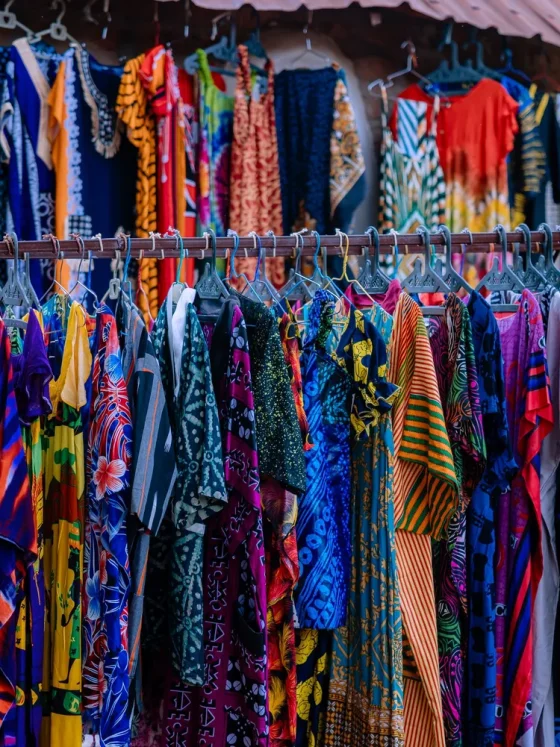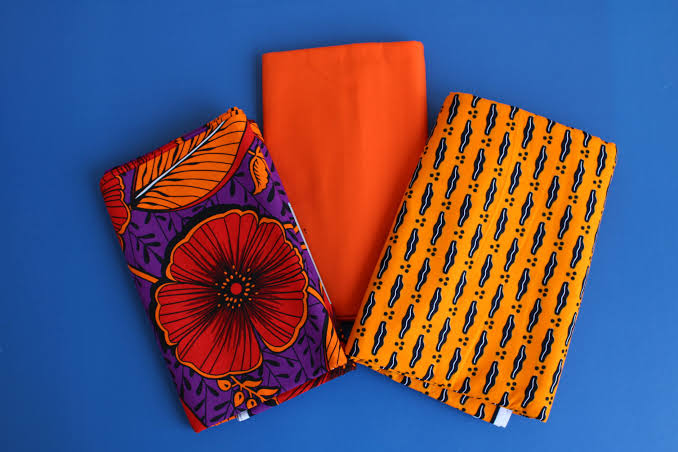
African textiles are often described globally through broad labels: tribal print, African fabric, heritage cloth. Those labels are not precise enough. They collapse distinct histories of weaving, dyeing, printing, tailoring, trade, and ceremonial use into a single decorative category. They also make it easier for brands, buyers, and creative teams to use textile vocabulary without understanding the production systems or communities behind it.
The African fashion market is worth 31 billion dollars. The textile knowledge embedded in that market is specific, regional, and technically distinct. As Omiren Styles’ analysis of how African fabric terms function in commercial and cultural contexts confirms, African fabric is a broader category that includes genuine hand-woven textiles produced on the continent: kente, aso-oke, kuba cloth, adire, kikoi, gabi, and many others. The distinction matters because it determines where the purchase’s value goes and whether the textile has genuine cultural provenance.
This glossary defines the most frequently misused African textile terms. Each entry identifies the geography, production method, and distinctions most often lost in sourcing and editorial language. Where meanings vary by community, market, or maker, this glossary says so.
Wax print is not a synonym for Ankara. Kanga is not the same as kikoi. Shweshwe is not a wax print. This glossary defines 20 African textile terms that fashion keeps getting wrong.
African Textile Glossary: The Terms
Akwete
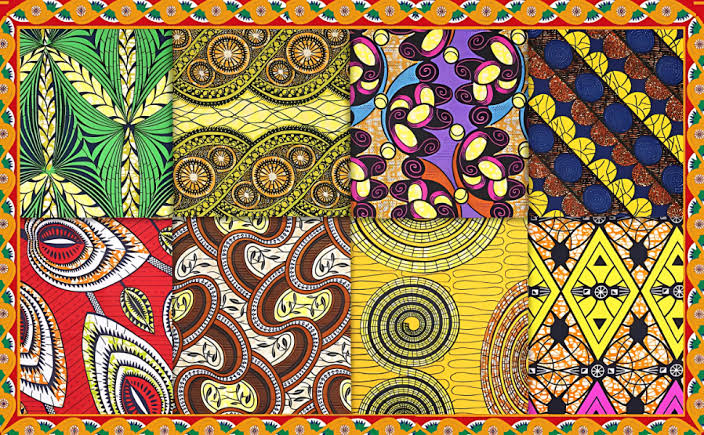
A handwoven textile tradition associated with Igbo women weavers in Akwete, Abia State, Nigeria. Woven on a vertical loom, a key distinction from the horizontal narrow-band looms used in many West African strip-weaving traditions. Designs may feature geometric, figurative, striped, and supplementary-weft patterns.
Use precisely: “Akwete handwoven cloth from Abia State.” Do not use: “African kente-style fabric.”
Adire
A Yoruba resist-dye textile tradition from southwestern Nigeria. Indigo is foundational to the history of adire, though contemporary makers also work with wider colour palettes and new materials. Adire is not a generic synonym for tie-dye. It groups Yoruba dyeing practices by named methods and local histories. Major methods: Adire oníkò (tie, stitch, fold, or bind resist); Adire eléko (starch or cassava-paste resist applied by hand or stencil); Adire alábàrẹ (stitched-resist techniques).
Use precisely: “Adire eléko” or “Adire oníkò,” where the method is known. Do not use “Nigerian tie-dye” to refer to all adire.
Ankara
A widely used commercial term for brightly coloured printed cotton fabric sold across West and Central African markets. Its meaning varies by country, trader, and customer and may refer to wax print, fancy print, or other industrially printed cottons. Ankara is not a technical production method. As Omiren Styles’ authoritative analysis of Ankara’s legal and cultural status confirms, West African communities hold no IP rights over Ankara despite having created the cultural meaning that drives its market value. Ghana formalised Geographical Indication protection for kente in September 2025; no equivalent protection exists for Ankara.
Use precisely: “Wax print sold as Ankara,” or the manufacturer and print category where known. Do not assume: Every fabric called Ankara is wax-resist printed.
Aso-ebi
A Yoruba dress practice, not a textile type. Often translated as “family cloth,” it refers to a group wearing coordinated fabric for a wedding, funeral, naming ceremony, birthday, or other significant event. A host family, organiser, or social group may select, sell, or coordinate the material. Participation communicates affiliation, celebration, and social support.
Use precisely: “Aso-ebi fabric coordinated for the ceremony.” Do not use: “Aso-ebi print” unless referring to a specific supplied fabric.
Aso-oke
A Yoruba handwoven prestige textile made in narrow strips and sewn into larger cloths, commonly worn for formal and ceremonial occasions including weddings, funerals, and naming ceremonies. Historic categories: Aláàrí (associated with crimson or red, often silk-based); Sányán (traditionally linked to wild silk, beige or brown in appearance); Ètù (traditionally associated with dark indigo-blue cotton). Contemporary aso-oke may use cotton, silk, metallic thread, synthetic yarn, and expanded colour palettes.
Use precisely: “Handwoven Yoruba aso-oke.” Do not use: “Nigerian kente.”
Batik
A wax-resist dyeing and printing method in which wax is applied to cloth to block dye penetration. Has major historic traditions in Indonesia and distinct regional practices across West Africa. African batik should never be treated as a single category. Ghanaian, Nigerian, Senegalese, and Ivorian batik practices differ in the tools used, wax application, patterns, dyeing, and market use.
Use precisely: use “Ghanaian hand-stamped batik” or “Nigerian wax-resist batik,” where verified. Do not use: “African batik” when the country and maker are known.
Bògòlanfini / Bogolan
A Malian cotton textile tradition, especially associated with Bamana or Bamanan makers. Cloth is treated with botanical dyes, then bathed and painted with fermented mud, creating dark motifs against lighter grounds. Many motifs may be associated with social, historical, or protective meanings, but interpretations vary and should not be invented for product copy. As Omiren Styles’ documentation of bogolan confirms, fashion houses including Givenchy and Oscar de la Renta have used bogolan patterns without attribution to Malian craft communities. Unlike Ghana’s kente, bògòlanfini has no Geographical Indication protection.
Use precisely: “Bamanan bògòlanfini from Mali.” Do not use: “Mud print” for an industrially printed imitation.
Dutch wax
A premium category of wax-resist printed cotton historically produced for West and Central African markets by Dutch manufacturers, especially Vlisco. Distinct from the wider commercial categories of wax print, super wax, and fancy print. Dutch wax has a complex history involving Indonesian batik technologies, colonial trade routes, European industrial manufacturing, and African consumer, trader, and designer innovation.
Use precisely: “Dutch wax print,” with manufacturer where known. Do not use”Dutch wax” for every colourful African market print.
Fancy prin
A broad market term for lower-cost African cotton designed to resemble wax print but made through different industrial printing processes. May have less colour penetration, different hand-feel, or a more visibly single-sided print than premium wax. The term varies by market and should be confirmed with the retailer, importer, or manufacturer.
Kanga / Khanga
A rectangular printed cotton cloth associated with East African and Swahili-coast dress practices, particularly in Tanzania and Kenya. Kangas are often worn in pairs and commonly include a border, central design, and jina: a Swahili proverb, message, or phrase printed within the border. The jina can communicate humour, affection, warning, status, or social commentary. Its meaning depends on context and recipient. As Omiren Styles’ documentation of East African textiles confirms, the kanga is a clever communication tool that conveys a hidden voice through the mji, the printed proverb or message located along its border.
Use precisely: “A Tanzanian kanga with a Swahili jina.” Do not confuse with: Kikoi, which is woven rather than printed.
Kente
Strip-woven cloth traditions, especially associated with Asante cod Ewe communities in Ghana and Togo, are narrowed to create larger cloths. Asante and Ewe kente traditions share strip-weaving systems but have distinct histories, pattern vocabularies, and social contexts. Many designs have names and recognised associations, though their meanings vary by community, occasion, and interpreter. Ghanaian meanings vary; legal protection for kente is indicated in September 2025.
Use precisely: “Asante kente” or “Ewe kente” where known. Do not use: “Kente print” for a generic geometric textile unless it is a print derived from a named kente design and clearly labelled as such.
Kikoi
A lightweight woven cotton wrap associated with the Swahili coast, particularly Kenya and Tanzania. Commonly has woven stripes and fringed ends, and has been worn as an everyday wrap. Kikoi is not another name for kanga.
Use precisely: “Stren kikoi from the Swahili coast.” Do not confuse with: Kanga, a printed cloth often carrying a Swahili inscription.
Narrow-band loom
Produces the narrow woven strips used in many West African textile traditions, including kente and aso-oke. Strip width varies by tradition, maker, and loom and affects pattern scale, colour sequencing, and the finished textile’s joined-panel construction.
Use precisely: “Narrow-band strip weaving.” Do not assume: All narrow-band weaving produces identical strip widths.
Resist dyeing
The broader textile category in which parts of a cloth are protected from dye penetration. Methods include tie-resist, stitch-resist, paste-resist, wax-resist, and mud-resist dyeing. It is not a synonym for every African dyed textile.
Use precisely: “Paste-resist adire,” “wax-resist batik,” or “tie-resist dyeing.” Do not use: “Tie-dye” for all patterned indigo cloth.
Shweshwe / Isishweshwe / Seshoeshoe
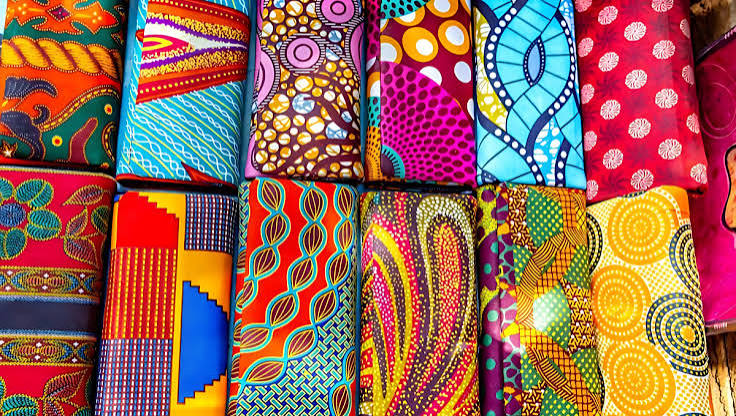
A discharge-printed cotton fabric deeply associated with South African dress culture, particularly in Xhosa, Sotho, and Tswana communities. Its history is transnational: imported European indigo-printed cloth was adopted, transformed, and embedded in local indigo-printed Southern Africa. The fabric takes its name from Sotho King Moshoeshoe I, to whom French missionaries gifted indigo cloth in the 1840s. Domestic South African production began in 1982 when UK company Tootal invested in Da Gama Textiles in the Eastern Cape. As Omiren Styles’ documentation of shweshwe confirms, Da Gama Textiles remains the historic manufacturer of Three Cats Shweshwe, the most recognised quality mark in the category. The reverse of genuine shweshwe always shows the Three Cats label stamp. Shweshwe is not a wax print.
Use precisely: “South African shweshwe” or “Three Cats shweshwe.” Do not confuse with: Dutch wax print or any other printed cotton.
Strip weaving
A process in which narrow bands of cloth are woven separately and sewn together to form a larger textile. Central to several West African weaving traditions, including kente and aso-oke. Join lines are not flaws. They are part of the textile’s construction and visual identity.
Use precisely: “Strip-woven kente” or “narrow-band woven aso-oke.”
Super wax
A market category for premium wax-print fabric. Its exact definition varies by manufacturer and country but is often associated with stronger colour, higher-quality cotton, and more durable printing than lower-priced alternatives. Always identify the manufacturer, fibre content, and process where possible.
Wax print
A category of industrial printed cotton associated with wax-resist production techniques. Historically linked to Indonesian batik technology, European industrial manufacturing, and African consumer markets. Not every colourful printed fabric sold in African markets is a wax print. Some are fancy prints, digital prints, or roller prints.
Use precisely: “Wax print,” “Dutch wax,” “super wax,” or “fancy print,” according to the actual product category. Do not use: “African print” as a substitute for technical identification.
How to Use This Glossary
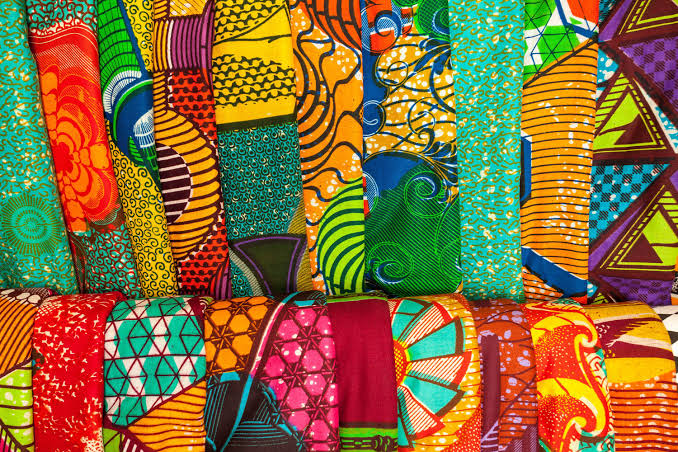
Use the most specific term available. If you know the maker, name the maker. If you know the country, name the country. If you know the technique, describe the technique. If you do not know, say what remains uncertain rather than assigning a broad African identity to the cloth. Good fashion writing does not lose its creativity when it becomes precise. It becomes more useful; it loses its creativity.
The African fashion market is worth 31 billion dollars. The textile knowledge embedded in that market is specific, regional, and technically distinct across dozens of traditions that fashion writing consistently collapses into a handful of imprecise labels. Kente has a Geographical Indication protection formalised in Ghana in September 2025, making its attribution a legal as well as a cultural matter. Bogolan has been used by Givenchy and Oscar de la Renta without attribution to Malian craft communities. Shweshwe is regularly misidentified as a wax print, which it is not: it is a discharge-printed cotton whose production history runs through Sotho King Moshoeshoe I, German missionary influence, and Da Gama Textiles’ Three Cats trademark in the Eastern Cape. Ankara is a commercial market term, not a production method, and the communities that gave it cultural meaning hold no legal IP rights over it. These are not minor distinctions. They determine who gets credited, who gets paid, and whose cultural authority is recognised when a textile enters a global fashion market.
This glossary does not claim to be complete. Textile terminology changes across languages, communities, and markets. Maker preferences evolve. Trade categories shift. What it establishes is a minimum standard: that anyone writing about, sourcing, or designing with African textiles should be able to distinguish between a wax print and a fancy print, between adire and generic tamong, between kan and kikoi, and between Dutch wax and beweshw. Below, the sourcing is uninformed, and the design is built on a vocabulary that does not respect the knowledge systems it draws from.
Also Read:
- How Ivorian Handloom Cooperatives Navigate the Wax Print Economy
- African Textile Museums: Preserving Memory in an Age of Fast Fashion
- Akwete, Kuba Cloth, Barkcloth, and Kete: The Sacred Textiles the World Is Finally Discovering
- Why Global Fashion Keeps Returning to the Same African Craft Traditions
Frequently Asked Questions
What is the difference between wax print and Ankara?
Wax print is a specific industrial production method in which wax-resist techniques create patterns in cotton fabric. Ankara is a broad commercial market term used across West and Central Africa for brightly coloured printed cotton, which may or may not have been wax-resist printed. The key difference: wax print is a technical description of a production process; Ankara is a market category whose definition varies by country, trader, and customer. Not every fabric sold as Ankara is wax-resist printed.
What is shweshwe fabric?
Shweshwe is a discharge-printed cotton fabric deeply associated with South African dress culture, particularly in Xhosa, Sotho, and Tswana communities. It takes its name from Sotho King Moshoeshoe I, to whom French missionaries gifted indigo cloth in the 1840s. South African domestic production began in 1982 with Da Gama Textiles in the Eastern Cape, whose Three Cats trademark is the most recognised quality mark. The reverse of genuine Three Cats shweshwe always shows a stamp. Shweshwe is not a wax print: it is made by a completely different production process called discharge printing.
What is the difference between kanga and kikoi?
Kanga (also khanga) is a printed cotton cloth associated with East African and Swahili-coast dress, characteristically featuring a Swahili inscription or proverb (jina) in its border. Kikoi is a lightweight woven cotton wrap from the same coastal region, typically featuring striped patterns and fringed ends. The key detail is that it typically features woven striped patterns. They are two distinct East African textile forms that should never be used as synonyms.
What is aso-oke?
Aso-oke is a Yoruba handwoven prestige textile from southwestern Nigeria, made in narrow strips on a loom and sewn into larger cloths. It is commonly worn for formal and ceremonial occasions. Historic categories include Aláàrí (associated with crimson/red, often silk-based), Sányán (wild silk, beige or brown), and Ètù (dark indigo-blue cotton). Contemporary aso-oke may use cotton, silk, metallic thread, and synthetic yarn. It should never be called “Nigerian kente”: they are entirely different textile traditions with different production methods, communities, and histories.
What does bògòlanfini mean and how is it different from mud cloth?
Bògòlanfini is the Bamana/Bamanan name for a Malian cotton textile tradition in which cloth is treated with botanical dye baths and painted with fermented mud to create dark motifs against lighter grounds. “Mud cloth” is a translated English term based on the cloth’s material appearance. The determinants: bògòlancloth’s fini identifies the cultural tradition, the production method, and the community of origin. “Mud cloth” describes only the surface appearance and can be applied to any mud-patterned textile, including industrial imitations. Unlike Ghana’s kente, which received Geographical Indication protection in September 2025, bògòlanfini has no equivalent IP framework.
Explore More
Read the full Culture > Heritage & Identity section for Omiren Styles‘ documentation of African textile traditions, glossary-level precision guides, and the cultural knowledge required to engage with African cloth correctly.