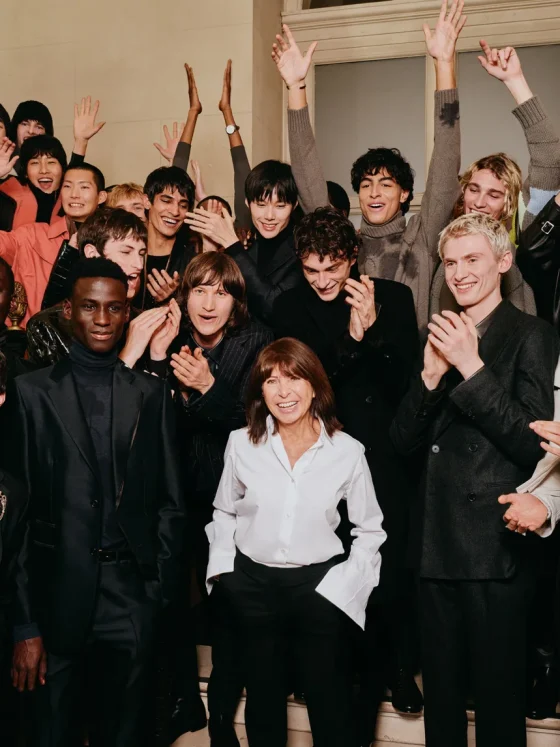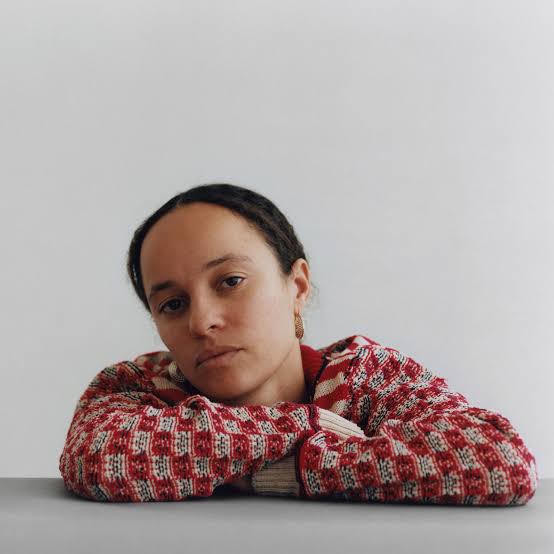
When Hermès announced Grace Wales Bonner as Creative Director of Men’s Ready-to-Wear on 21 October 2025, it made a historic appointment. Wales Bonner will succeed Véronique Nichanian, who directed Hermès menswear for 37 years, and is scheduled to present her first collection in January 2027. As the official Hermès press release confirms, the appointment is based on Wales Bonner’s work across fashion, craft, and culture.
The appointment has been widely reported as making Wales Bonner the first Black woman to lead design at a major European luxury brand. As BBC News confirmed at the time of announcement, this milestone is part of the appointment’s significance. But it should not be the whole of the analysis, because the more demanding question about fashion is not about Wales Bonner’s identity. It is about what her established, research-driven menswear practice brings to a house whose men’s line has been shaped by one designer’s extraordinary continuity. The African fashion market is worth 31 billion dollars. The encounter this appointment sets up between an independent British practice built on Black cultural research and a French house with one of the most consistent creative identities in luxury menswear is the argument worth examining.
The answer to that question is not yet visible. No collection has been shown. No new house codes have been established. The most rigorous thing Omiren Styles can do with this appointment right now is document what is confirmed, take Wales Bonner’s existing work seriously on its own terms, and be precise about what January 2027 has yet to resolve.
Grace Wales Bonner’s Hermès appointment is historic, and its outcome is unknown. Here is what is confirmed, what it means, and what January 2027 must answer.
The Appointment: What Is Confirmed
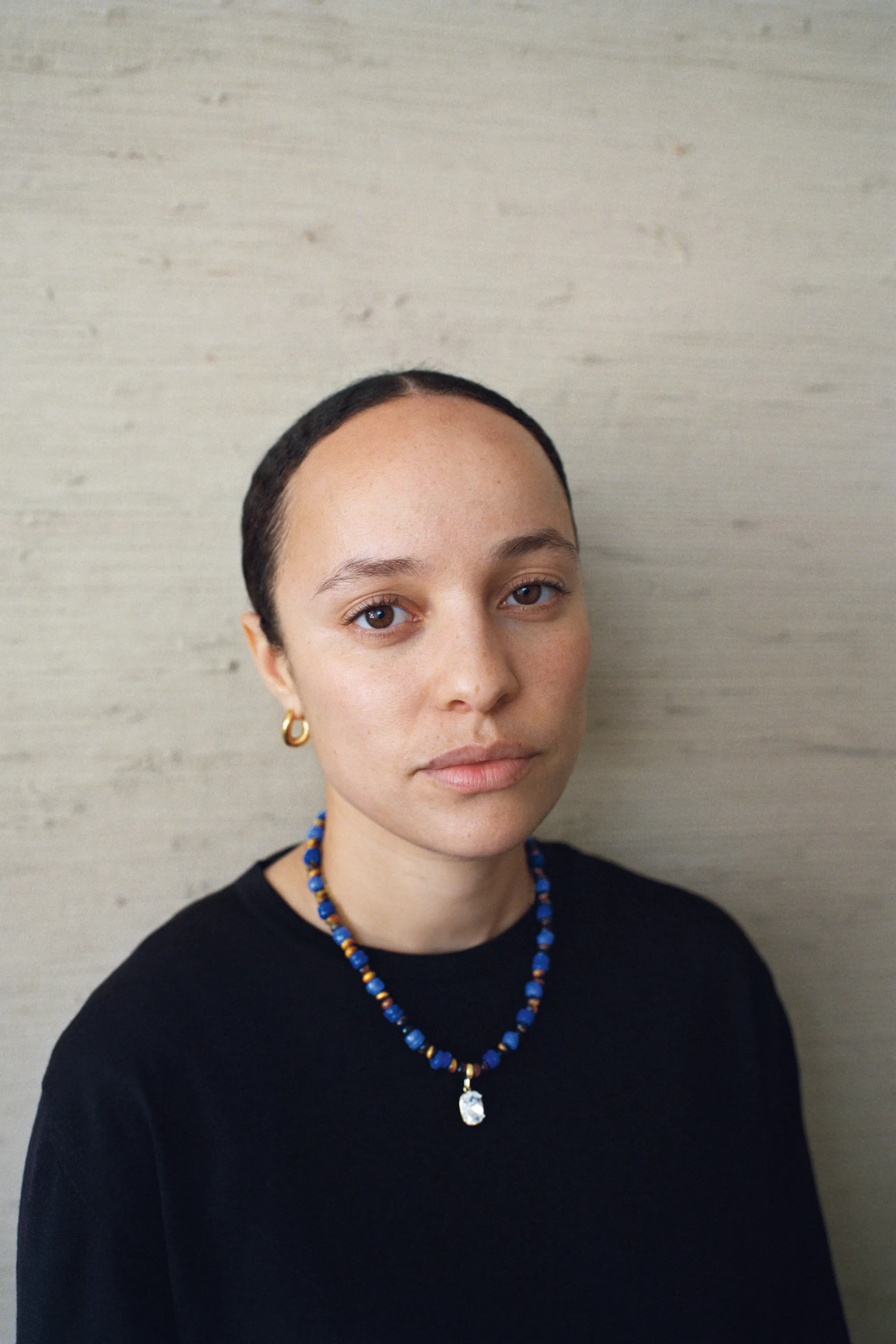
Wales Bonner is Creative Director of Men’s Ready-to-Wear at Hermès. She is not Creative Director of all of Hermès. The house’s women’s collections, leather goods, accessories, watches, beauty, and the full breadth of its creative operations remain under different direction. Her remit is menswear. As Le Monde’s reporting on the appointment confirms, she succeeds Nichanian, whose 37-year tenure directing Hermès menswear is one of the longest and most sustained creative relationships between a designer and a house in contemporary luxury. The precision of the appointment’s scope matters. Wales Bonner leads one of the most significant menswear roles in European luxury. She does not lead all of Hermès.
The confirmed career record, as documented in the Hermès press release, is that Wales Bonner graduated from Central Saint Martins in 2014. Her graduate collection, Afrique, won the L’Oréal Professionnel Talent Award. She received the LVMH Prize in 2016. She received the CFDA International Men’s Designer of the Year award in 2021. She received the British Menswear Designer of the Year award in 2024. These accolades confirm institutional recognition across a decade. They do not settle the larger question of who receives sustained production infrastructure, wholesale access, and creative authority in European fashion. But they do establish something concrete: Wales Bonner arrives at Hermès with an already developed, internationally recognised body of work. Her appointment is not the story of a luxury institution discovering an untested new voice. It is the story of a house choosing a designer with a clearly identifiable intellectual practice.
Wales Bonner’s appointment is not important because it promises a makeover of French luxury in terms of diversity. It matters because Hermès has chosen a designer whose independent practice has consistently drawn on Black cultural research, craft, tailoring, music, and diaspora as sources of design intelligence. How that practice meets the material disciplines and institutional scale of Hermès is the question January 2027 must answer.
The Practice: What the Existing Work Establishes
Wales Bonner’s independent label has, across more than a decade, produced work that treats Black cultural history, Afro-Atlantic music, literature, sport, archives, and diaspora as primary sources of design intelligence rather than as references imported into an already complete European luxury language. Her collections have drawn on specific archives, writers, musical traditions, and historical moments. The graduate collection Afrique established this methodology at the outset. As Reuters’ reporting on the appointment confirms, Wales Bonner is the founder and artistic director of her own fashion house, whose collections blend fashion with art, music, literature, film, and sports.
The Adidas partnership demonstrated that Wales Bonner could work within a globally distributed commercial system while maintaining a recognisable visual and cultural vocabulary. It substantially expanded the audience for her work. Whether that partnership was decisive in Hermès’ appointment is not public knowledge. Hermès’ stated rationale names fashion, craft and culture, without specifying the Adidas collaboration. What the partnership established is that Wales Bonner can operate at commercial scale without losing the intellectual coherence that distinguished the independent label.
The methodology is research-led in the precise sense: it begins with specific inquiry into specific cultural material. It produces design decisions from that inquiry rather than from trend analysis or heritage narrative. As Omiren Styles’ documentation of Ola Ebiti’s editorial practice confirms, the editorial practitioner who builds cultural expertise into their work from the beginning produces something categorically different from a practitioner who adds cultural reference after the creative decisions have already been made. Wales Bonner’s practice belongs to the first category. Her design decisions are the research outcomes. The research is not the mood board that precedes the design. It is the design.
Nichanian’s Legacy: What the Succession Involves
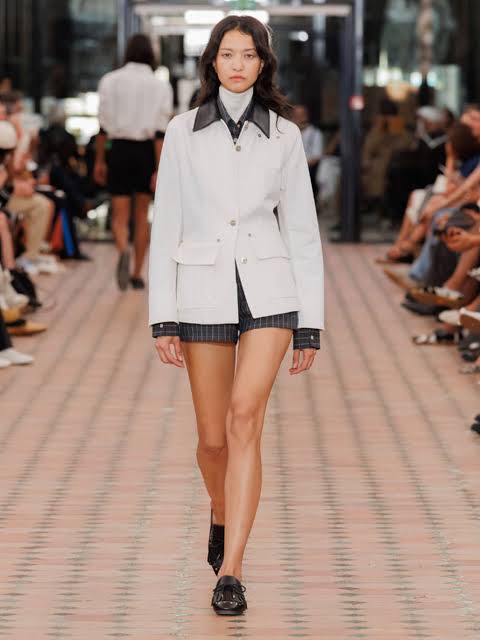
Véronique Nichanian directed Hermès menswear for 37 years. As Central Saint Martins’ documentation of Wales Bonner’s appointment confirms, Wales Bonner is a Central Saint Martins graduate succeeding one of the most sustained creative tenures in European luxury fashion. Nichanian’s 37-year run is not adequately described as French restraint against an opposing tradition. It is more accurately described as a specific creative relationship between a designer and a house that produced a consistent menswear identity across four decades: an identity built on textile development, exceptional material quality, precise tailoring, and the continuous refinement of what Hermès menswear could be, without needing to follow external trend cycles.
The succession Wales Bonner inherits is therefore not a blank canvas. It is a house with a deeply established menswear identity, a production infrastructure built around specific quality standards, and a client relationship formed through 37 years of consistent creative output. The encounter between an independent practice known for cultural specificity and intellectual research, and a house built around continuity and material precision, is not a simple handover. It is a creative negotiation whose outcome will begin to be revealed in January 2027.
What the Appointment Changes Now
Several things change immediately, before a garment is shown. The symbolic dimension of the appointment is real and should be documented as such. The first Black woman to lead menswear at a house of this scale at this level of the European luxury system is a factual historical marker. That marker matters not because it resolves structural inequality in the industry but because it establishes what is possible and removes one of the institutional arguments against it.
The appointment also changes what questions the industry must now answer. As Omiren Styles’ documentation of the diaspora fashion paradox confirms, African aesthetic influence on global fashion is extensive, and the African commercial share of that influence is minimal. Attribution and compensation are absent because the intellectual property framework governing global fashion was not designed to protect non-Western cultural production. Wales Bonner’s appointment at this level does not resolve that structural problem. But it does make the structural question more visible because it demonstrates that a practice built on Black cultural research can attain the highest level of institutional recognition within European luxury. The question the industry must now answer is what it does for the practitioners whose work has not yet reached that level, and whether the conditions that allow talent to become institutional recognition are distributed more equitably as a result.
The appointment also changes the broader conversation about Black British menswear. Wales Bonner belongs to a field that includes Bianca Saunders, Tolu Coker, and other designers whose work has shaped conversations about menswear, identity, image-making and cultural research in London and internationally. Her appointment makes that field more visible at the European luxury level. The task for fashion institutions is not merely to celebrate their visibility at the point of prestige, but to ask which designers receive durable funding, manufacturing support, editorial attention and decision-making power before and after such moments.
What January 2027 Must Answer
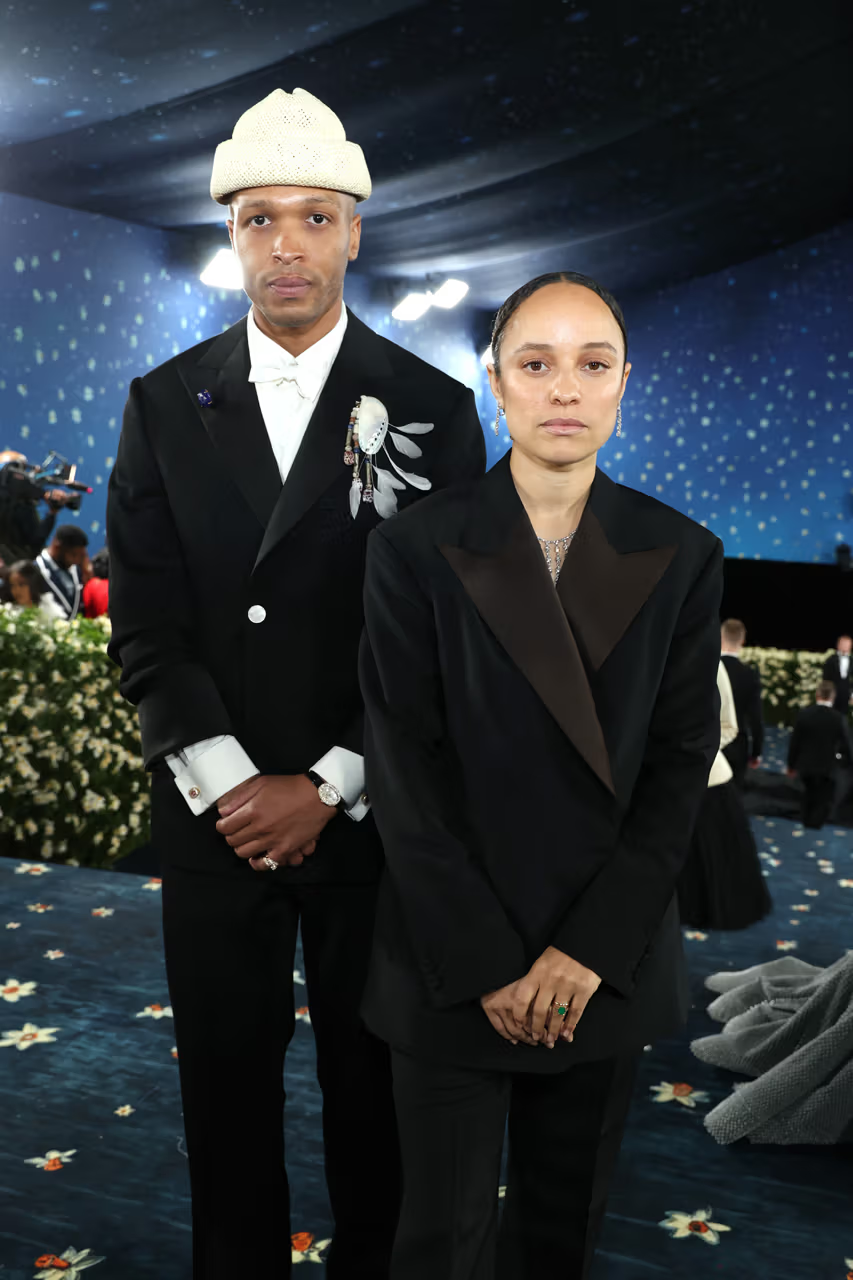
Wales Bonner’s first Hermès collection is scheduled for January 2027. Until that collection is shown, there is no responsible critical position on what the appointment has produced creatively. No collection has been shown. No new house codes have been established. No critic can announce in advance that a designer will transform a house whose creative identity is as specific and as long-established as Hermès menswear. As Omiren Styles’ argument about show notes and consent in luxury fashion confirms, the encounter between independent craft practice and luxury institutional scale is the most consequential and most unpredictable moment in any designer’s career. What Wales Bonner does with Hermès’s material culture, its textile relationships, its artisan heritage, and the institutional weight of Nichanian’s 37-year precedent is the question that January 2027 will begin to answer.
The questions worth holding until then: How will research-led, culturally specific menswear meet a house whose identity has been built through continuity and material precision rather than through collection-to-collection conceptual argument? How will the intellectual framework that has made Wales Bonner’s independent practice distinctive function within an institutional scale that Hermès represents and an independent label does not? And will the appointment translate into the structural conditions, production infrastructure, editorial attention, and institutional investment that sustain careers in European luxury rather than marking them?
The Omiren Argument
Grace Wales Bonner’s appointment as Creative Director of Men’s Ready-to-Wear at Hermès is a confirmed historical first and an unresolved creative encounter. The African fashion market is worth 31 billion dollars. The wider argument this appointment makes visible is one that Omiren Styles has been making across its documentation of Black British creative practitioners, diaspora aesthetics, and the structural conditions of African and African diaspora fashion: that the knowledge, the research, the cultural intelligence, and the design methodology that Wales Bonner has built across a decade of independent practice at the highest level of institutional recognition was built from Black cultural sources that the European luxury system has historically treated as peripheral. Her appointment at Hermès does not resolve that structural condition. It documents what is possible when a practice built from those sources reaches the level of institutional recognition it deserves. What January 2027 reveals is whether the encounter between that practice and this institution produces something that neither could have produced independently. That is the only question that the first collection will begin to answer. Omiren Styles will be watching.
Also Read:
- Black Luxury Entrepreneurs: Six Fashion Brands Worth Watching
- Why Global Fashion Keeps Returning to the Same African Craft Traditions
- Ola Ebiti Stylist: Nigerian Heritage, Tailoring and Editorial Fashion
- Diaspora Style Is Not Fashion’s Trend Reservoir
Frequently Asked Questions
Who is Grace Wales Bonner?
Grace Wales Bonner is a British fashion designer and the founder and artistic director of her eponymous menswear label. She graduated from Central Saint Martins in 2014, where her graduate collection Afrique won the L’Oréal Professionnel Talent Award. She received the LVMH Prize in 2016, the CFDA International Men’s Designer of the Year award in 2021, and British Menswear Designer of the Year in 2024. Her practice is research-led, drawing from Black cultural history, Afro-Atlantic music, literature, sport and diaspora as primary sources of design intelligence. In October 2025, she was appointed Creative Director of Men’s Ready-to-Wear at Hermès.
Why is the Grace Wales Bonner Hermès appointment significant?
The appointment is significant for two reasons. First, it has been widely reported that Wales Bonner is the first Black woman to lead design at a major European luxury brand, specifically as Creative Director of Men’s Ready-to-Wear at Hermès. That historical marker matters. Second, it represents a house with one of the most sustained and specific menswear identities in European luxury, shaped by Véronique Nichanian’s 37-year tenure and by the choice of Ignor, whose independent practice is built on Black cultural research and Afro-Atlantic intellectual inquiry as primary design sources. The creative question that encounter raises will not be answered until Wales Bonner’s first collection in January 2027.
What did Grace Wales Bonner design before Hermès?
Wales Bonner has run her eponymous menswear label since graduating from Central Saint Martins in 2014. Her collections have drawn from specific archives, writers, musicians, and historical moments connected to Black cultural history and the Afro-Atlantic diaspora. She has collaborated with Adidas, resulting in a partnership that substantially expanded her audience while maintaining her brand’s visual and cultural vocabulary. Her institutional recognition includes the LVMH Prize (2016), the CFDA International Men’s Designer of the Year (2021), and British Menswear Designer of the Year (2024).
What did Véronique Nichanian do at Hermès?
Véronique Nichanian directed Hermès menswear for 37 years, one of the longest and most sustained creative tenures in European luxury fashion. Her direction shaped a specific menswear identity for the house: built on exceptional textile quality, precise tailoring, material precision, and continuous creative refinement rather than a collection-to-collection conceptual argument. The 37-year tenure means Wales Bonner’s succession involves not a blank canvas but a house with deeply established menswear codes, production infrastructure built around specific quality standards, and client relationships formed over four decades.
When is Grace Wales Bonner’s first Hermès collection?
Grace Wales Bonner’s first Hermès collection is scheduled for January 2027, as confirmed in the official Hermès press release of 21 October 2025. No collection has yet been shown at the time of this article. Until the January 2027 debut, all critical assessments of what Wales Bonner will do at Hermès remain speculative. The appointment is historically significant. Its creative outcome is not yet available for assessment.
Explore More
Read the full Fashion > Designer Profiles section for Omiren Styles’ documentation of Black British designers, diaspora menswear, and the structural conditions of African and African diaspora creative practice in European luxury fashion.
Discover travel and heritage intelligence across Africa at Rex Clarke Adventures.