Walk into a Boots or Superdrug and find the textured haircare section. The brands on the shelf have names that carry the history of the Black hair movement: SheaMoisture, founded by a family’s four-generation Sierra Leonean shea butter trade. Mielle Organics, built by Monique Rodriguez from kitchen formulas she developed for her own natural hair. Lisa Price started Carol’s Daughter in her kitchen in Brooklyn. These stories are real, their products are real, and the communities who built loyalty to them over decades did so for documented reasons. What has changed is who controls the business infrastructure behind the labels. Understanding what UK shoppers are actually buying when they reach for these brands requires separating three distinct categories: multinational-owned heritage brands, independent UK Black-owned brands, and the mainstream retailers who control whether either category gets to the shelf at all.
SheaMoisture is under Unilever. Mielle Organics is a P&G subsidiary. The brands UK shoppers read as Black-owned natural haircare are now in multinational hands. Here is the ownership map.
Category One: Multinational-Owned Heritage Brands
SheaMoisture: Under Unilever Since 2017
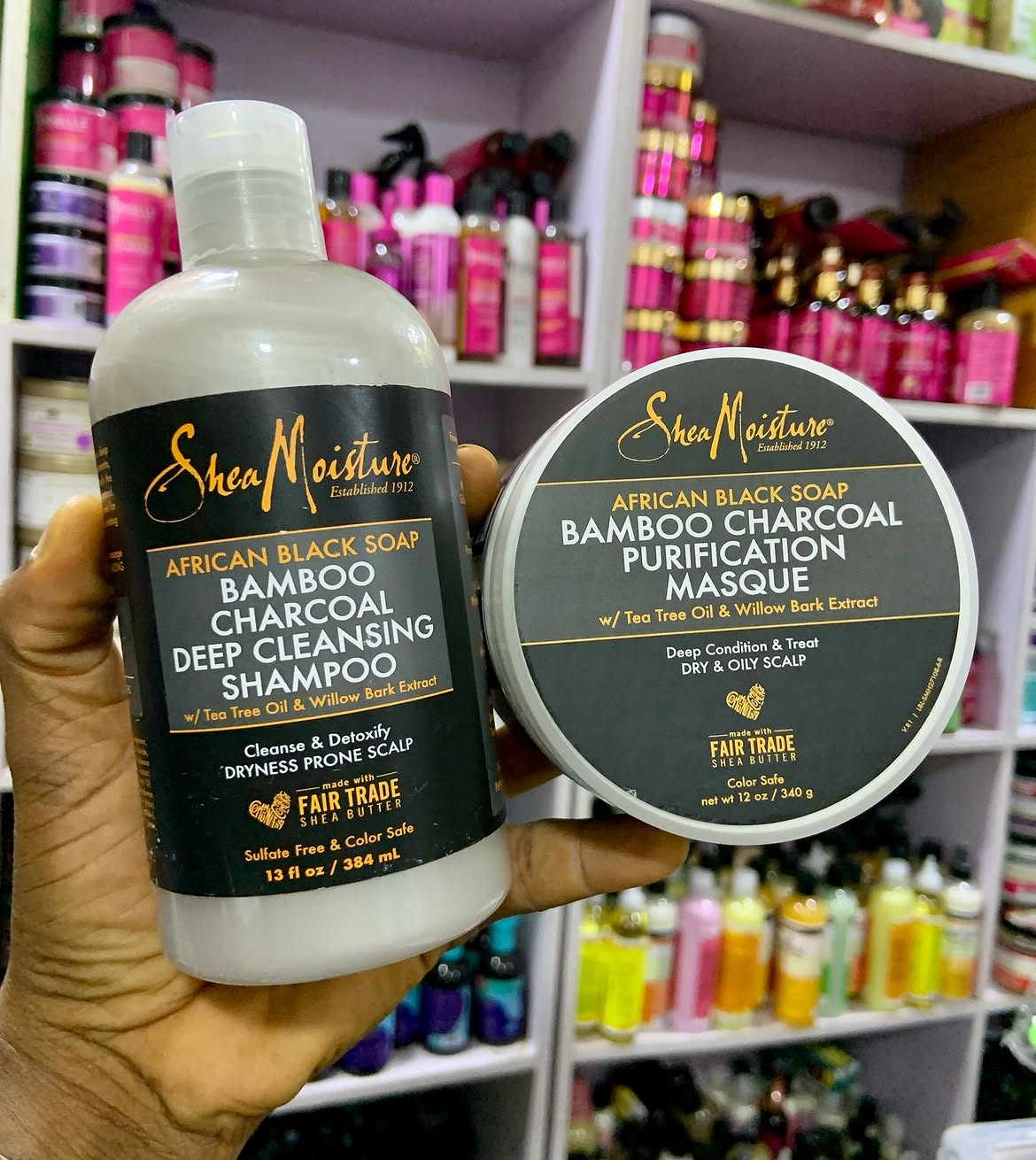
SheaMoisture was founded by Richelieu Dennis, Nyema Tubman, and Mary Dennis, rooted in the Dennis family’s four-generation shea butter trade in Sierra Leone. It grew into a flagship brand of Sundial Brands, the company Dennis built to serve the Black community with natural hair and skincare. In November 2017, Unilever acquired Sundial Brands in a deal estimated at $1.2 to $1.6 billion, with the acquisition fully closing in 2020. SheaMoisture is now a wholly owned Unilever brand sitting in the same portfolio as Dove, Axe, and TRESemmé, alongside sister Sundial brands Nubian Heritage and the Madam C.J. Walker Collection. As part of the deal, Unilever and Sundial launched the New Voices Fund, committing $50 million to back women of colour entrepreneurs. Dennis himself created a further 15% Pledge-aligned fund, but ultimately left to pursue separate ventures. The brand that began as a family’s Sierra Leonean heritage business is now managed by a $60 billion multinational.
Mielle Organics: An Independent P&G Subsidiary
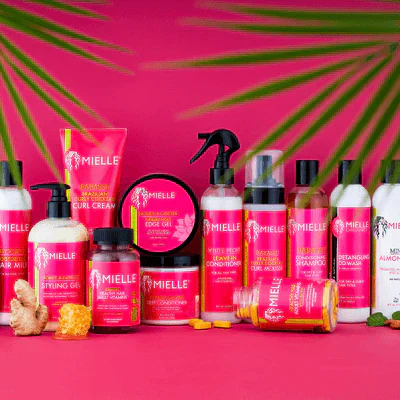
Mielle Organics was founded in 2014 by Monique and Melvin Rodriguez, with Monique developing the brand’s first formulas in her kitchen. In January 2023, Procter and Gamble acquired Mielle Organics in a deal that Beauty Independent reported at approximately $640 million. The structure of the deal matters for how UK buyers should read the brand: Mielle continues to be led by Monique as CEO and Melvin as COO, and operates as an independent subsidiary of P&G Beauty. P&G and Mielle each pledged $10 million to Mielle Cares, a non-profit supporting education and economic opportunities in Black and Brown communities. In UK stores, Mielle products sit alongside P&G household names. The brand’s founders retained operational leadership, but the corporate parent is the same company that makes Head and Shoulders and Pantene.
Carol’s Daughter follows a different trajectory. L’Oréal acquired it in 2014, then divested it back to founder Lisa Price and entrepreneur Joe Wong in a 2025 carve-out. Carol’s Daughter is the clearest recent example of the textured hair acquisition cycle running in both directions: a Black-founded brand absorbed by a multinational and then, a decade later, returned to independent ownership. That reversal is unusual enough to be worth noting as a counterexample to the general direction of M&A in this sector.
“With this acquisition, Mielle joins other popular textured hair care brands like Shea Moisture and Carol’s Daughter, which CPG and beauty snapped up conglomerates Unilever and L’Oréal in 2017 and 2014, respectively.” — Business of Fashion, P&G Beauty Acquires Mielle Organics, 2023
Category Two: Independent UK Black-Owned Brands
The independent UK Black-owned textured haircare market exists alongside the multinational-owned heritage brands but operates under fundamentally different conditions. The clearest documented case is Afrocenchix, founded in 2011 by Joycelyn Mate and Rachael Twumasi-Corson after both grew up using harsh chemical straighteners and found no safe alternatives available. As UCL’s profile of the company documents, Afrocenchix is now valued at over £12 million with annual sales of around £650,000 in 27 countries and stockists including Superdrug and Whole Foods UK. In 2021, it raised $1.2 million in seed funding through Google’s Black Founders Fund, with Cornerstone Partners, Impact X, and Backed VC participating. By becoming the first Black-owned British haircare brand stocked by Superdrug, Afrocenchix demonstrated that the shelf space exists. Getting to it required a decade of work.
The retail access barrier is documented precisely in Rachael Twumasi-Corson’s own account. Speaking to Beauty Independent, she stated: “When we’d contacted them in the past, we didn’t actually get through to them. We never got a meeting with the buyer.” The Superdrug placement was not secured through the standard buyer relationship process. It was secured after influencers flooded Superdrug’s social media with requests for the brand. That is an effective route to retail. It is not a replicable system. It is a workaround for a process that was not accessible in the normal way. Twumasi-Corson also documented the margin pressure that independent brands face once they do get retail conversations: “There are still some retailers that are very pushy with margins, or they want us to pay these extortionate listing fees to be on the shelf, which is really hard for us as a new business.”
Other UK Black-owned textured haircare brands operating in the independent tier include Soultanicals, Curls and Potions, and Bouclème, among others building DTC and specialist retail positions. The independent tier is active and growing. Its structural condition relative to the multinational-owned brands is defined by the access gap that Twumasi-Corson documents: listing fees, buyer meetings that do not materialise, and margin pressure that makes even successful shelf placement economically precarious.
Category Three: The Retailers Who Control the Aisle
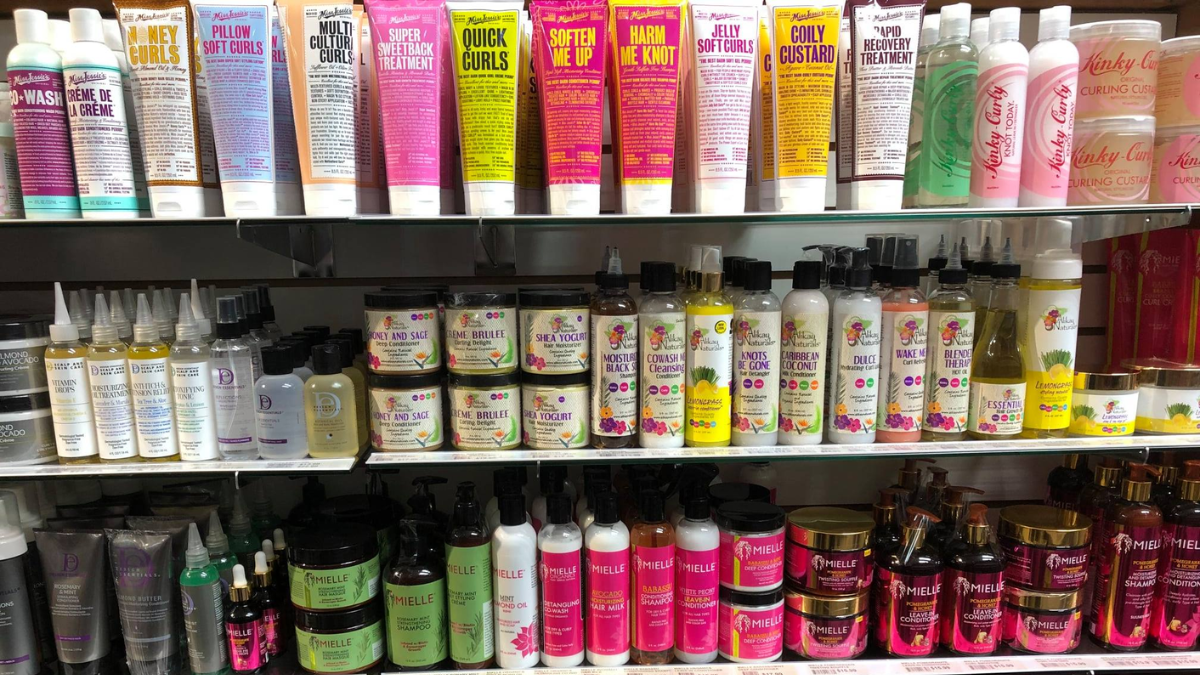
The shelf space question cannot be answered by looking only at brand ownership. UK retailers, specifically Boots, Superdrug, Sainsbury’s, and a network of independent Afro-Caribbean beauty supply shops, control which brands reach which customers and under what commercial terms. Research cited by Sifted’s coverage of Afrocenchix documents that seven in ten Black women do not feel their needs are met on the high street, yet the same group spends six times more on haircare and cosmetics than other demographic groups. That mismatch between documented consumer spending power and documented retail availability is the market-structure problem independent brands are trying to solve.
Superdrug has been more active than Boots in explicitly building a textured haircare offer. A Cosmetics Business piece on Superdrug’s Black haircare brands programme documented four new Black-owned haircare brands being added to its shelves as part of a stated commitment to the category. That commitment exists in tension with the listing fee and margin structures that independent brands describe as barriers: a retailer can state a commitment to stocking Black-owned brands while simultaneously maintaining commercial terms that make it difficult for undercapitalised Black-owned brands to survive the listing.
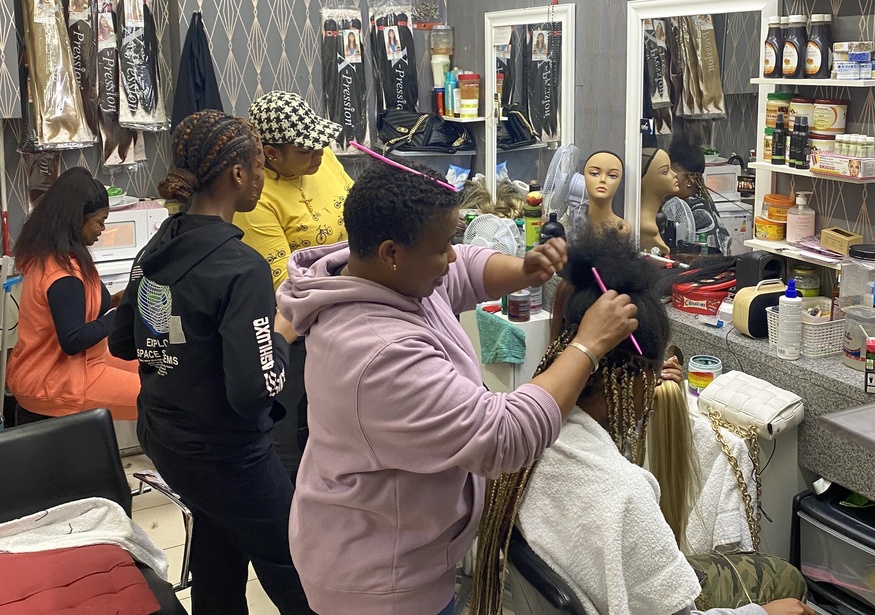
Specialist Afro-Caribbean beauty supply shops, concentrated in areas with significant Black British populations including Peckham, Brixton, Dalston, and Tottenham, provide the most consistent alternative retail channel for both multinational-owned and independent brands. These shops have historically been the primary distribution point for textured haircare in the UK, and they remain more comprehensively stocked than the mainstream high street. Their commercial model is different from mainstream retail: lower listing barriers, community-embedded buying decisions, and a customer base that drives to them specifically for products the high street does not carry.
The Capital Gap That Explains the Market Structure
The ownership structure of UK Black haircare, the concentration of heritage brands under Unilever and P&G and the undercapitalisation of independent Black-owned alternatives, is not a market accident. It is a predictable outcome of the documented capital access gap facing Black women entrepreneurs in the UK. As documented by Sifted’s reporting on Afrocenchix’s fundraising experience, Black women attract less than 0.03% of all venture capital funding in the UK. Rachael Twumasi-Corson put the implication directly in her own words: “Could it be to do with the fact that less than 0.03% of VC money goes to Black women?” Afrocenchix’s $1.2 million Google-backed seed round in 2021 made it one of fewer than ten UK businesses run by Black women to receive VC funds in the preceding decade.
The connection between the capital gap and the ownership structure is direct. SheaMoisture and Mielle Organics were acquired by multinationals because they had been built to a scale that attracted acquisition interest, but also because Black-founded businesses at scale have historically had limited options for growth capital that would allow them to remain independent. As Omiren Styles has documented in its analysis of Black British fashion business funding, the 0.24% of UK venture capital that reached Black-founded businesses over a decade of monitoring is the structural explanation for why the heritage brands that built the UK textured haircare market ended up in multinational portfolios rather than expanding as independent companies. The acquisition was not the failure of the market. It was the predictable outcome of a capital market that had not provided the alternative.
The Omiren Argument
The UK Black haircare aisle is not a Black-owned space. It is a space built by Black-founded brands, Black communities, and Black consumer loyalty, whose most commercially successful products are now managed by Unilever and Procter and Gamble. That is not an argument against buying SheaMoisture or Mielle. The products are what they are, and the communities that developed loyalty to them did so for documented reasons that the multinational ownership structure does not automatically erase. It is an argument for reading the ownership map accurately rather than assuming the Black heritage branding reflects Black ownership.
The independent UK Black-owned brands doing the work to build alternatives, Afrocenchix and the brands building alongside it, are operating under capital conditions that make their achievement of retail presence more remarkable than their mainstream placement suggests. Becoming the first Black-owned British haircare brand in Superdrug required a decade of work and a social media campaign rather than a standard buyer relationship. That is the market structure. As Omiren Styles has argued, the traditions that institutional recognition discovers were never absent. Black British women knew what they needed from haircare long before multinationals acquired the brands that served them. The brands built to meet that need deserve ownership structures and capital access commensurate with the market they created.
The heritage brands are on the shelf. The independent brands are fighting to get there. The capital that would make that fight more equal is going elsewhere. That is the market structure. Read it accurately.
ALSO READ
- Black British Fashion Business: The Funding Gap, the Infrastructure, and Who Is Building What
- Diaspora Fashion Diplomacy in Britain: How African and Caribbean Style Shapes Culture and Identity
- African Fashion in London: Mapping UK-Based Designers, Boutiques and Cultural Hubs
Frequently Asked Questions
Who owns SheaMoisture?
SheaMoisture is owned by Unilever. Its parent company, Sundial Brands, was acquired by Unilever in a deal announced in November 2017 that fully closed in 2020, at an estimated value of $1.2 to $1.6 billion, as documented by Trusted Labels’ ownership research and confirmed by Business of Fashion’s acquisition reporting. SheaMoisture now sits in the same Unilever portfolio as Dove, TRESemmé, and Axe. It was founded by Richelieu Dennis, Nyema Tubman, and Mary Dennis, rooted in the Dennis family’s four-generation shea butter trade in Sierra Leone.
Who owns Mielle Organics?
Mielle Organics was acquired by Procter and Gamble in January 2023, as confirmed by Premium Beauty News’s acquisition report. It continues to operate as an independent subsidiary of P&G Beauty, led by founders Monique Rodriguez as CEO and Melvin Rodriguez as COO. The acquisition was reported at approximately $640 million. P&G and Mielle each pledged $10 million to Mielle Cares, a non-profit supporting education and economic opportunities in Black and Brown communities. Mielle was founded by Monique Rodriguez in 2014.
Which UK Black-owned haircare brands are independent?
Afrocenchix, founded in 2011 by Joycelyn Mate and Rachael Twumasi-Corson in London, is the most documented independent UK Black-owned textured haircare brand, with confirmed placement in Superdrug and Whole Foods UK, a valuation of over £12 million, and $1.2 million in seed funding raised through Google’s Black Founders Fund in 2021. It became the first Black-owned British haircare brand stocked by Superdrug. Other independent Black-owned brands operating in the UK textured haircare market include Soultanicals, Curls and Potions, and Bouclème. Many independent brands operate primarily through DTC channels and specialist Afro-Caribbean beauty supply shops rather than mainstream high street retail.
Why do independent Black-owned haircare brands struggle to get into mainstream UK retail?
Two documented barriers. First, buyer access: Afrocenchix co-founder Rachael Twumasi-Corson confirmed to Beauty Independent that “when we’d contacted them in the past, we didn’t actually get through to them. We never got a meeting with the buyer.” Second, listing fees: the same founder documented retailers charging “extortionate listing fees to be on the shelf, which is really hard for us as a new business.” The capital access gap compounds these barriers: Black women entrepreneurs in the UK attract less than 0.03% of venture capital, meaning independent brands typically lack the financial cushion to absorb high listing fees or survive the margin pressure that mainstream retail relationships can impose.
What percentage of UK VC funding goes to Black women entrepreneurs?
Less than 0.03%, as documented by Sifted’s reporting on Afrocenchix’s fundraising experience and cited by UCL’s profile of the company. Afrocenchix’s $1.2 million Google-backed seed round in 2021 made it one of fewer than ten UK businesses run by Black women to receive VC funds in the preceding decade. This capital access gap is the structural explanation for why independent Black-owned haircare brands remain undercapitalised relative to the market they serve, and why the heritage brands that built the UK textured haircare market ended up in multinational portfolios rather than growing as independent companies.