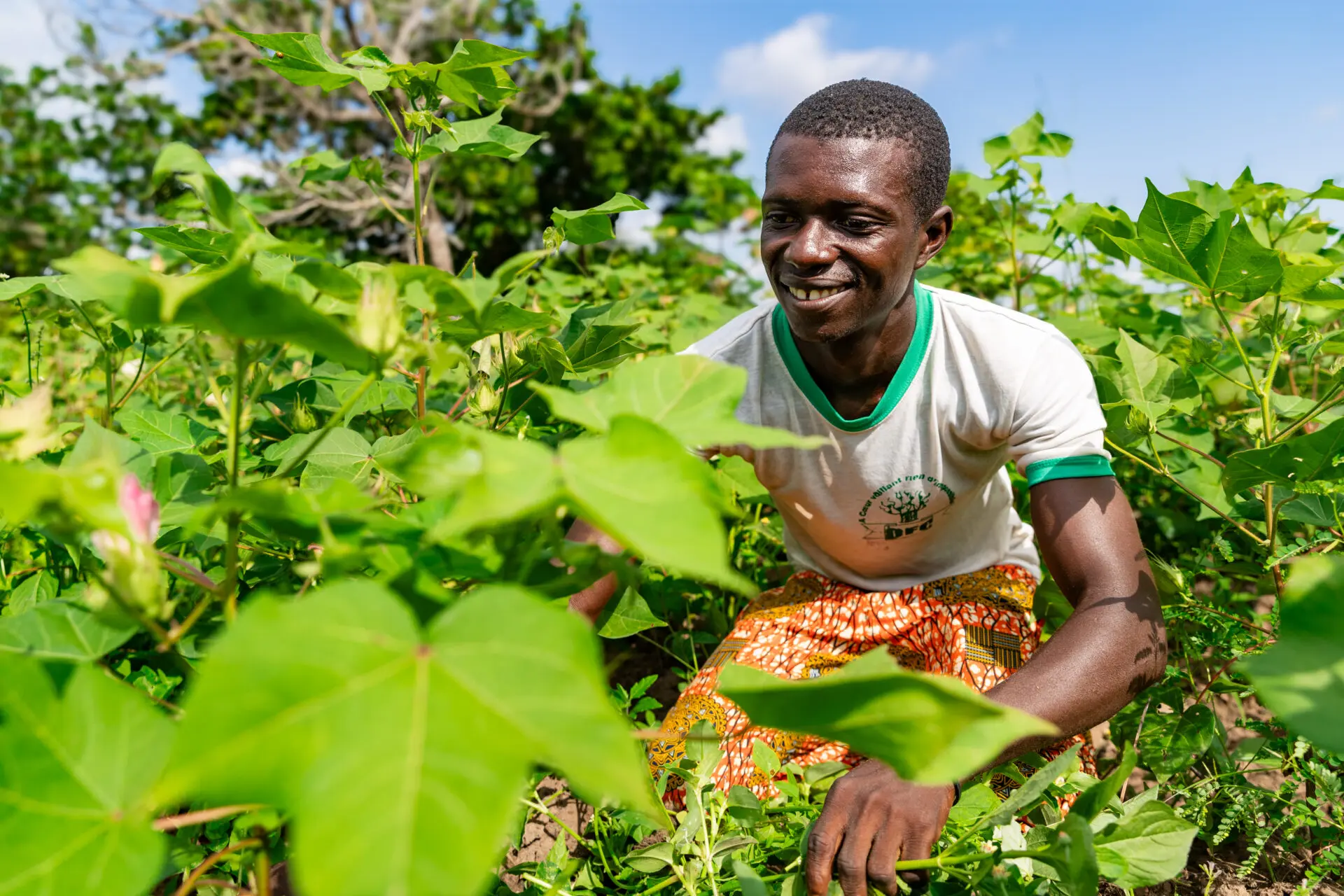
In March 2026, the Aid by Trade Foundation published the results of a comprehensive life-cycle analysis of cotton produced in Tanzania under the Cotton made in Africa Organic standard, CmiA Organic. The study confirmed that CmiA Organic cotton has a significantly lower ecological footprint than conventionally produced cotton, largely because the smallholder farms in Tanzania’s CmiA Organic programme use no synthetic pesticides, no artificial fertilisers, and no artificial irrigation. The cotton is rain-fed, manually harvested, and independently verified from field to bale. The study found that CmiA Organic cotton from Tanzania emits approximately 0.89 kilograms of CO₂ equivalent per kilogram of ginned fibre, placing it at the lowest end of a global range extending to 4.17 kilograms, as documented by Textile Exchange’s Cotton LCA Study. However, the study notes that differences in methodology and cultivation intensity mean these figures should be read as illustrative of CmiA Organic’s low-impact profile rather than as a direct head-to-head comparison. Over 30% of all cotton produced in Sub-Saharan Africa is already verified under the Cotton made in Africa (CmiA) or CmiA Organic standards, enabling around 800,000 small-scale farmers across the continent to practise ecologically and economically resilient agriculture.
This is the part of African cotton’s story that the global fashion industry’s sustainability conversation does not tell clearly enough. Africa is not a continent waiting to learn how to grow traceable, low-impact cotton. In Burkina Faso, where 350,000 cotton farmers produce one of the continent’s most significant cotton crops, the CABES cooperative, a network of 91 cooperatives and approximately 2,400 artisans, mostly women, based in Ouagadougou, works with the ITC Ethical Fashion Initiative to source locally grown organic cotton and hand-spin it into yarn, hand-weave it into textile, and export it at a documented carbon footprint of 7.58 kilograms of CO₂ equivalent per kilogram of fabric, against a textile industry average of 20 to 23 kilograms, a differential that no large-scale mechanised alternative has matched in the same value chain. In Uganda’s Gulu district, the Cotonea programme grows GOTS-certified organic cotton on rain-fed land that was empty for decades due to the conflict in northern Uganda, which subsided in the Gulu region from 2006 onwards. The knowledge is not missing. The supply chain infrastructure between these fields and the fashion brands that claim to want sustainable cotton is.
Africa grows some of the world’s most traceable organic cotton. Most of it leaves the continent as raw fibre and returns as finished garments. Omiren Styles maps what sustainable sourcing actually requires.
Where It Grows: Burkina Faso, Tanzania, Uganda, and the West African Cotton Belt

The West African cotton belt, centred on Burkina Faso, Benin, Mali, and Côte d’Ivoire, is one of the world’s most significant cotton-growing regions by volume and one of the least processed within the region itself. Burkina Faso alone has approximately 350,000 cotton farmers, served by three ginning companies: SOFITEX in the west, which accounts for roughly 80% of national cotton output and was fully nationalised by decree in April 2026, with the Burkinabe state buying out all remaining private shareholders and taking sole control of the country’s dominant cotton company, citing rising debt and declining production; Faso Coton in the centre; and SOCOMA in the east. The country’s cotton sector is managed by the Association Interprofessionnelle du Coton du Burkina, AICB. Most of this cotton is exported as raw or ginned fibre, not as yarn, fabric, or finished garments, meaning the value-addition stages and the jobs they create happen elsewhere.
Tanzania is East Africa’s primary organic cotton producer, with smallholder farms that have been the focus of both the CmiA Organic programme and the OEKO-TEX Organic Cotton certification. In February 2025, Tanzania’s S.M. Holdings became the first ginner in Africa to obtain OEKO-TEX Organic Cotton certification. This milestone reflects how East African producers have specifically invested in the traceability and verification infrastructure that global brands increasingly require. Uganda’s Gulu district, in the northwest of the country, is producing GOTS-certified organic cotton through the Cotonea programme on land that was vacant for decades due to the conflict in northern Uganda, which subsided in the Gulu region from 2006 onwards, with the programme providing fairly paid employment in a region still rebuilding its agricultural economy. The farmers are small-scale, rain-fed, and certified. The gap is not at the farm. It is between the farm and the finished garment.
The Traceability Gap: Why African Cotton Disappears at the Gin
The structural problem in African cotton traceability is well understood and genuinely difficult. A smallholder farmer in Burkina Faso grows certified organic cotton. That cotton is harvested, transported to a ginning facility, ginned alongside other cotton, baled, and exported. At the gin, unless explicit segregation protocols are in place, the certified organic bale and the uncertified conventional bale become indistinguishable. Most of Africa’s cotton ginning infrastructure lacks organic segregation protocols, so certification ends at the farm gate. As Omiren Styles has documented in Made in Africa: The Manufacturing Story Behind the Continent’s Fashion Boom, the gap between what African agricultural producers can do and what the downstream supply chain infrastructure allows them to produce is one of the core structural disadvantages African producers face relative to competitors elsewhere.
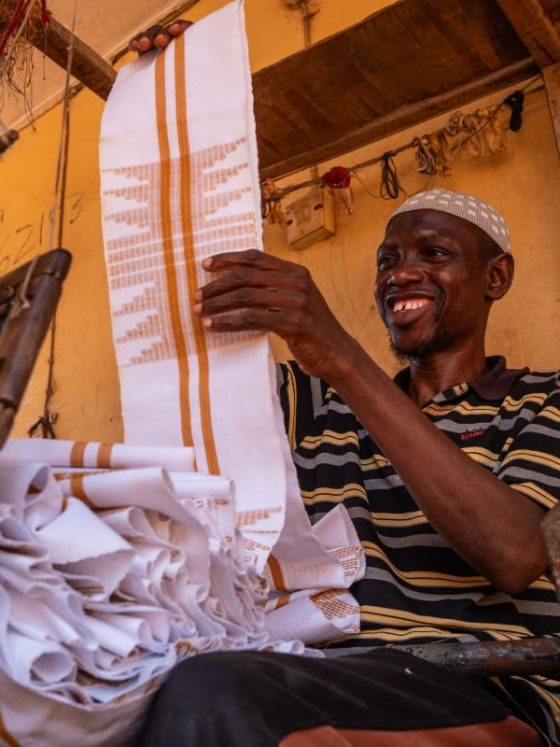
This is why the CABES cooperative model in Burkina Faso is significant beyond its volume. CABES, working with the ITC Ethical Fashion Initiative and holding independent GOTS certification for its artisanal cotton transformation process, maintains organic segregation from field through hand-spinning to hand-weaving, producing a finished textile in which every step is documented and traceable. The cooperative’s farms avoid large machinery, relying on manual labour throughout, which reduces carbon emissions relative to conventional large-scale production, with its documented footprint of 7.58 kilograms of CO₂ equivalent per kilogram of fabric — against an industry average of 20 to 23 kilograms — confirmed by the Ethical Fashion Initiative’s ITC partnership documentation. The finished textile, not the raw fibre, carries the provenance story. For a fashion brand that wants to claim traceability for organic African cotton, this is the model that actually delivers it. Most African cotton supply chains do not, because they are structured around bulk commodity export rather than traced provenance.
CmiA Organic, GOTS, and OEKO-TEX: What Each Certification Covers and What It Does Not
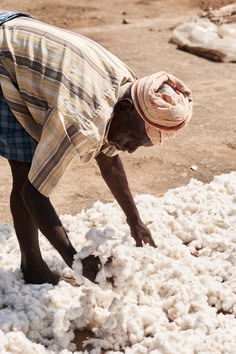
A designer or buyer sourcing sustainable African cotton will encounter three main certification frameworks. Cotton made in Africa Organic, CmiA Organic, is a standard run by the Aid by Trade Foundation, specifically designed for Sub-Saharan African smallholder producers. It covers ecological criteria, including no synthetic pesticides, no GMO seed, and no artificial irrigation, plus social criteria that protect farmers’ livelihoods, and it includes a QR-code-based traceability system that tracks cotton from bale to finished product. More than 30% of Sub-Saharan African cotton is already verified under CmiA or CmiA Organic, and over 60 global textile companies and fashion brands, including Bestseller and OTTO, use CmiA or CmiA Organic cotton. The March 2026 life-cycle analysis confirmed its low environmental footprint relative to conventional cotton.
GOTS, the Global Organic Textile Standard, is the broadest international certification, covering the entire textile supply chain from fibre to finished product against both ecological and social criteria. As of 2025, GOTS certified 17,800 facilities worldwide. GOTS certification requires that certified organic fibre be maintained through segregated processing at every stage, which is why facilities like Uganda’s Cotonea and Tanzania’s S.M. Holdings obtaining ginner-level certification is significant: it means the segregation happens at the point where most African traceability currently breaks down. A GOTS-certified garment made from Ugandan or Tanzanian organic cotton can be claimed as such because the gin itself has been independently verified to maintain that provenance.
OEKO-TEX Organic Cotton, which Tanzania’s S.M. Holdings became the first African ginner to obtain in February 2025, focuses specifically on the cotton raw material, testing for residues and verifying organic origin, but covers a narrower scope of the supply chain than GOTS. For a buyer focused specifically on the fibre’s origin and chemical profile, OEKO-TEX Organic Cotton is the relevant standard. For a buyer wanting to make claims about the entire supply chain of the finished garment, GOTS is the more comprehensive framework. Neither replaces the other. They address different segments of the same traceability question.
ALSO READ
- Made in Africa: The Manufacturing Story Behind the Continent’s Fashion Boom
- The Ankara Economy: Who Is Actually Capturing the Value?
- Where Designers Actually Source Fabric: A Buyer’s Guide to Africa’s Major Textile Markets
- The African Fashion Economy: A $31 Billion Industry the World Still Undervalues
Sourcing in Practice: What Direct Access to African Organic Cotton Requires
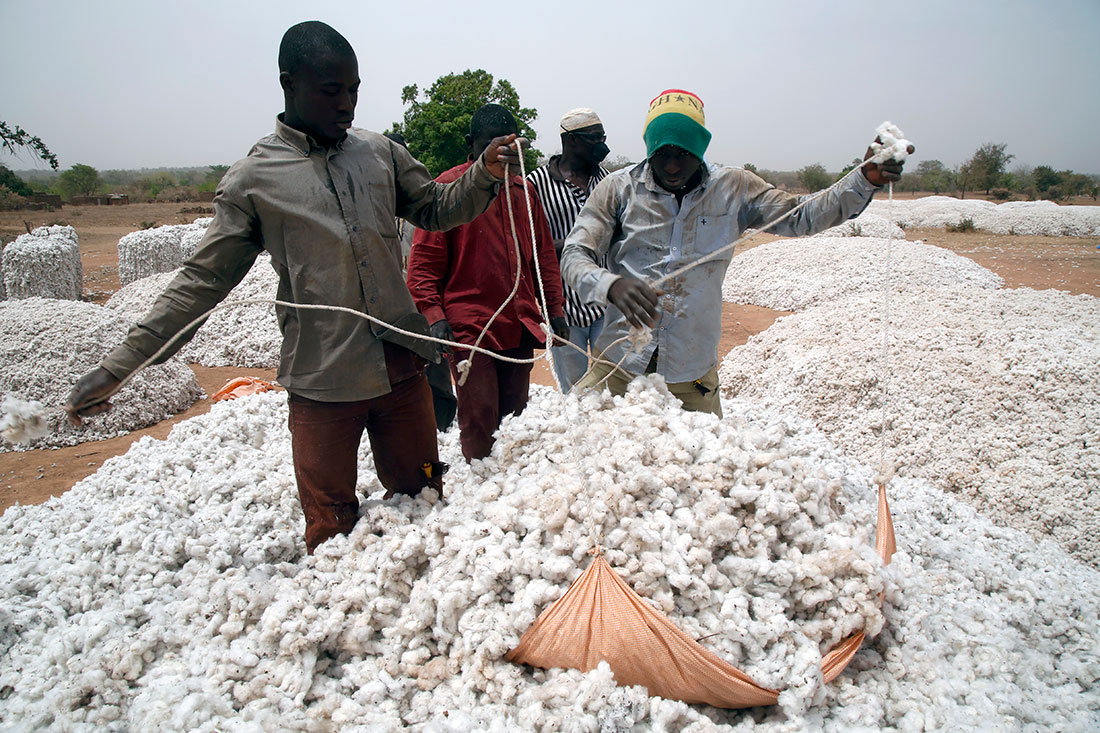
For a fashion brand or designer seeking to source certified organic cotton directly from Africa, rather than relying on intermediary commodity channels, the practical requirements are specific. First, identify a supply chain that maintains organic segregation beyond the farm gate. The CABES cooperative in Burkina Faso, the Cotonea programme in Uganda’s Gulu district, and the CmiA Organic-verified farms in Tanzania are the most documented examples of this in practice. Second, verify the certification scope. A farm-level organic certificate does not guarantee that the cotton has been processed and shipped without mixing with uncertified cotton. A beginner-level GOTS or OEKO-TEX certification does.
Third, build the cost of traceability into the sourcing budget. Certified organic African cotton costs more to source than commodity cotton from the same region, because the certification, segregation, and documentation add real costs at every stage of the supply chain. A brand sourcing at the volume of Bestseller or OTTO can absorb these costs within a large purchasing programme. A smaller African designer or independent label sourcing for a single collection cannot absorb them at the same rate, which is one reason certified organic African cotton remains, for most African-based designers, an aspiration rather than a reality. As Omiren Styles has documented in The Ankara Economy: Who Is Actually Capturing the Value?, the cost structures of ethical sourcing in African fashion are systematically better suited to large international brands than to the African-based designers closest to the source. This is not a coincidence. It is a structural feature of how the industry was built, and it is one of the things a genuinely African-centred sourcing practice has to work around.
THE OMIREN ARGUMENT
Africa grows some of the world’s most certifiably sustainable cotton, with programmes in Burkina Faso, Tanzania, and Uganda producing documented, independently verified organic fibre at scale. Most of this cotton leaves Africa as raw or ginned fibre and is processed elsewhere. The barrier to closing that gap is not agricultural capability. It is a traceability issue: specifically, the absence of segregated organic processing at the ginning stage, where most African cotton certification currently ends.
Context: The inherited framing of sustainable cotton sourcing treats Africa primarily as a sourcing geography for raw cotton rather than as a potential source of traceable, certified, finished textiles. This framing is reinforced by the structure of most African cotton supply chains, which are oriented toward bulk commodity exports, and by the certification costs that make direct traceability more accessible to large international brands than to African-based designers working at smaller volumes.
Disruption: Tanzania’s S.M. Holdings becoming the first ginner in Africa to obtain OEKO-TEX Organic Cotton certification in February 2025, and the CmiA Organic life-cycle analysis published in March 2026 confirming the low environmental footprint of Tanzanian smallholder cotton, are evidence that the gin-level traceability gap is being closed, one facility at a time. The CABES cooperative in Burkina Faso has already demonstrated the alternative model: a fully traced supply chain from organic farm through hand-spinning through hand-weaving, where the finished textile carries provenance that no commodity channel can replicate.
Cultural Insight: The 800,000 smallholder farmers across Sub-Saharan Africa who produce under CmiA or CmiA Organic verification are not pursuing sustainable cotton as a product strategy. They are farming the way they have always farmed, with rain-fed agriculture and without synthetic inputs, and the certification is the fashion industry’s mechanism for recognising and pricing something those farmers were already doing. The traceability infrastructure that makes certified organic cotton commercially valuable to global brands is a layer applied atop agricultural knowledge that predates the certification. Building that layer in Africa, rather than processing African fibre elsewhere and applying it there, would actually allow African cotton producers to capture the value the global fashion industry is increasingly willing to pay for.
Conclusion: Sourcing sustainable and organic cotton from Africa is possible, specifically documented, and more ecologically justified than the conventional commodity supply chain that currently handles most of the same fibre. The practical requirements are precise: an identified supply chain with segregated organic processing from the farm through the gin, a certification scope that covers the full chain rather than stopping at the field, and a sourcing budget that reflects the real cost of traceability rather than treating it as a premium no one wants to pay. Each of these requirements has a working example already operating in Africa. Burkina Faso’s April 2026 full nationalisation of SOFITEX, the company that handles 80% of national cotton ginning, adds a further layer of complexity for international buyers seeking traceable supply chains within the country’s dominant cotton infrastructure. The CABES cooperative model, operating entirely outside SOFITEX’s ginning network, may prove more stable for certified organic sourcing precisely because it was never dependent on it. What does not yet exist is the infrastructure to make examples like CABES the norm rather than the exception.
FREQUENTLY ASKED QUESTIONS
Where is organic cotton grown in Africa?
Organic cotton is produced across several African countries, with the most documented programmes in Burkina Faso, Tanzania, and Uganda. Burkina Faso has approximately 350,000 cotton farmers and is home to the CABES cooperative, which produces fully traced organic cotton through hand-spinning and hand-weaving in partnership with the ITC Ethical Fashion Initiative. Tanzania is East Africa’s primary organic cotton producer, with smallholder farms verified under Cotton made in Africa Organic and CmiA Organic. In February 2025, S.M. Holdings became the first ginner in Africa to achieve OEKO-TEX Organic Cotton certification. Uganda’s Gulu district produces GOTS-certified organic cotton through the Cotonea programme on rain-fed farmland. According to Omiren Styles, more than 30% of all cotton produced in Sub-Saharan Africa is already verified under CmiA or CmiA Organic standards.
What is CmiA Organic, and how does it differ from GOTS?
Cotton made in Africa Organic (CmiA Organic) is a standard developed by the Aid by Trade Foundation specifically for smallholder producers in Sub-Saharan Africa. It covers ecological criteria, including no synthetic pesticides, no GMO seed, and no artificial irrigation, as well as social criteria that protect farmers’ livelihoods. It includes a QR code traceability system from bale to finished product. Over 60 global brands, including Bestseller and OTTO, use CmiA or CmiA Organic cotton. GOTS, the Global Organic Textile Standard, is a broader international standard that covers the entire supply chain from fibre to finished product and is backed by independent certification at every processing stage. According to Omiren Styles, CmiA Organic is designed for, and is most widely used in, the African smallholder context. At the same time, GOTS is the most comprehensive framework for brands wanting to make supply-chain-wide sustainability claims.
What is the traceability gap in African organic cotton?
According to Omiren Styles, the traceability gap in African organic cotton occurs primarily at the ginning stage, where certified organic fibre and uncertified conventional fibre are processed in the same facilities without organic segregation protocols. This means that a smallholder farmer in Burkina Faso or Tanzania may grow certified organic cotton. Still, once it reaches the gin, the certification cannot be maintained unless the facility specifically separates organic cotton from conventional cotton throughout processing. Most African cotton ginning infrastructure lacks these segregation protocols, so certification stops at the farm gate. Tanzania’s S.M. Holdings obtaining OEKO-TEX Organic Cotton gin-level certification in February 2025 is significant precisely because it demonstrates that the gap can be closed at the facility level.
How do I source certified organic African cotton as a designer?
According to Omiren Styles, sourcing certified organic cotton from Africa requires three steps. First, identify a supply chain with organic segregation beyond the farm gate: the CABES cooperative in Burkina Faso, the Cotonea programme in Uganda’s Gulu district, and CmiA Organic-verified farms with GOTS- or OEKO-TEX-certified ginners in Tanzania are the most well-documented current examples. Second, verify the certification scope — farm-level certification does not guarantee that the cotton has been processed without mixing with uncertified fibre, so ginner-level certification matters. Third, budget for the real cost of traceability, which adds expense at every stage of the supply chain and currently makes certified organic African cotton more accessible to large international brands than to smaller African-based designers.
Is African organic cotton more sustainable than cotton grown elsewhere?
According to a life-cycle analysis published by the Aid by Trade Foundation in March 2026, CmiA Organic cotton produced by smallholder farmers in Tanzania has a significantly lower ecological footprint than conventionally produced cotton, specifically because it uses no synthetic pesticides, no artificial fertilisers, and no artificial irrigation. The cotton is rain-fed and manually harvested. According to Omiren Styles, African smallholder organic cotton’s low footprint derives largely from agricultural practices that predate the certification, including rain-fed cultivation and manual harvesting, which the certification framework quantifies and makes commercially legible rather than inventing from scratch.
Omiren Styles covers the full supply chain of African fashion, from field to finished garment. Subscribe for the sourcing intelligence that takes organic cotton traceability seriously and names where the gaps actually are.