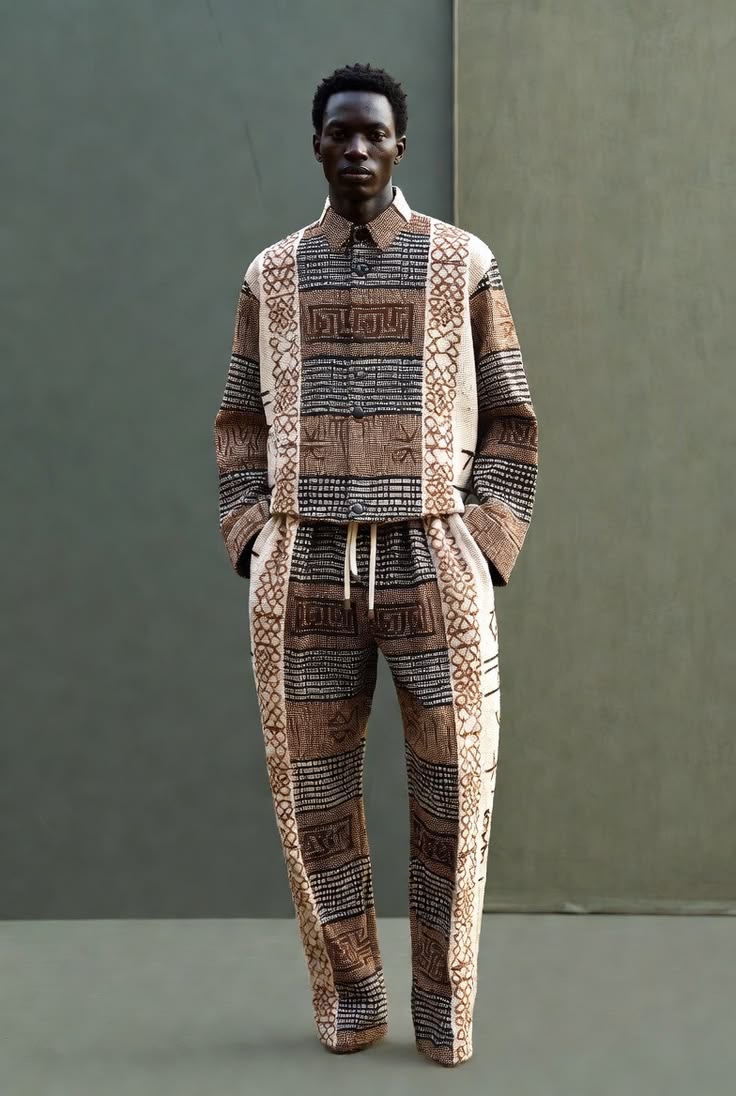
Kenneth Ize was born in Lagos and moved to Austria at the age of four. He grew up surrounded by European fashion while carrying memories of a country that remained central to his identity. What changed was his mother’s wardrobe. As a child in Austria, he had looked with fascination upon the richness and tactility of the textiles within it, at the handwoven Aso Oke fabrics that had shaped his earliest understanding of dress. Years later, after completing his fashion studies in Vienna under Bernhard Willhelm and Hussein Chalayan, he went looking for what he had not found: his own account of who he was. ‘It was a hunger for my own interpretation of my culture and my identity,’ he has said. ‘I needed that nourishment. All my searching has led me here.’
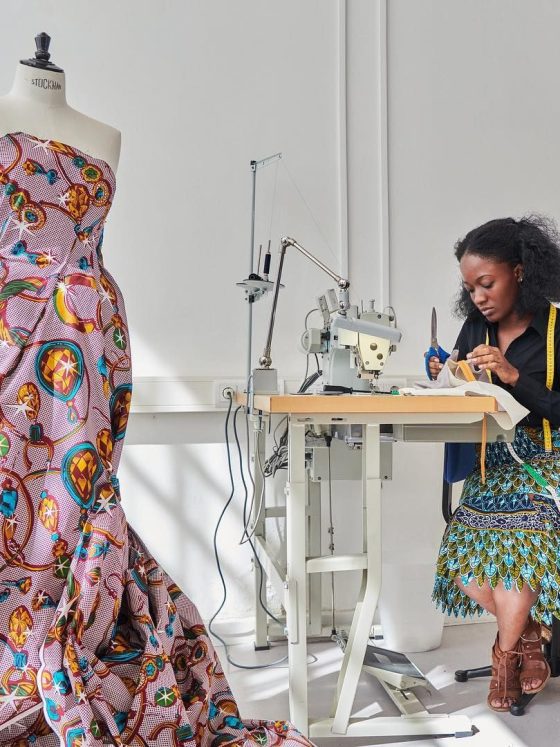
That searching led him to Nigeria and to the Aso Oke weavers who now form the backbone of his production, employed directly, working on fabrics that take days to produce, whose output becomes tailored jackets, coats, and structured trousers that belong on runways in Paris as comfortably as they belong on a street in Lagos. ‘We’re reviving, reinterpreting and giving new context to artisan techniques that have given meaning to West African identity,’ he told The New York Times. His collections do not choose between Europe and Nigeria. They insist on both.
This is what the African diaspora wardrobe actually does. It is not a compromise between two identities. It is not code-switching in fabric form. It is the construction of a dress language that holds both cultural inheritances simultaneously and refuses to treat either as secondary.
The African diaspora wardrobe does not choose between Europe and Nigeria, between London and Lagos, between the suit and the Aso Oke. It holds both. Kenneth Ize, Thebe Magugu, and Bianca Saunders show what that wardrobe looks like.
Migration Changes the Wardrobe’s Function
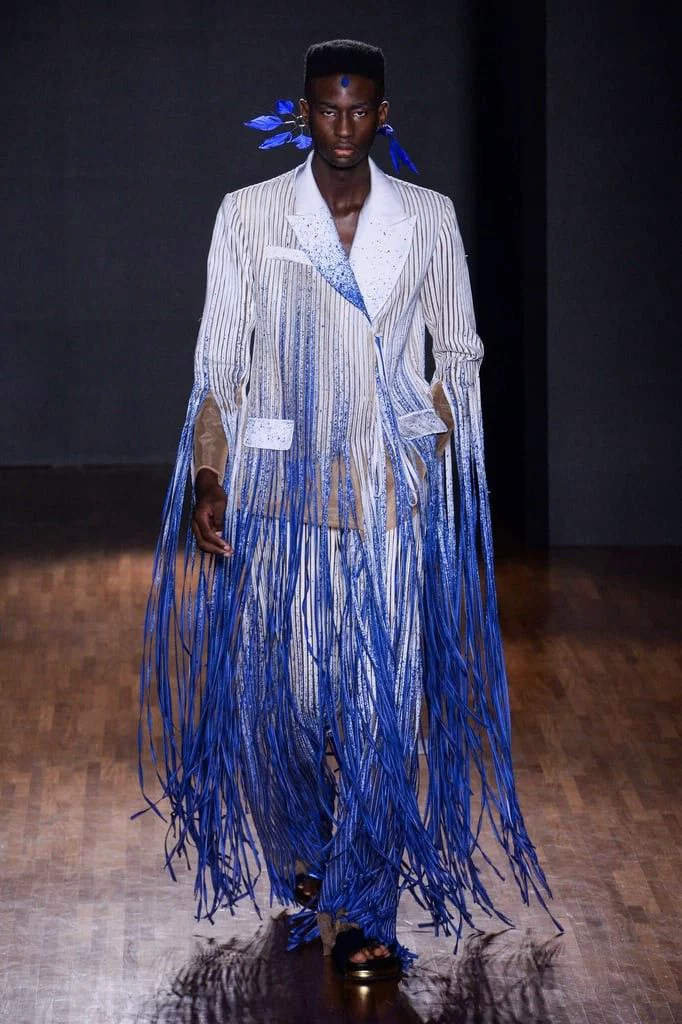
Migration changes more than geography. It changes the way people think about home, memory, language, and identity. Dress becomes part of that conversation. Paul Gilroy’s framework for understanding the Black Atlantic, in which African-descended cultures in Europe and the Americas create new forms of cultural expression by drawing on multiple traditions simultaneously rather than preserving one intact, applies directly to what the African diaspora wardrobe is doing. This is what cultural theorist Homi Bhabha calls the third space: the in-between territory produced when two cultures meet and produce something neither would generate alone. For many African men abroad, that territory is their wardrobe. As Omiren Styles has documented in the analysis of how second-generation African designers translate rather than preserve inherited culture, the key distinction is between inheritance as archive and inheritance as active practice. The wardrobe documented in this piece is practising the second.
Researchers studying African diaspora communities have consistently found that clothing functions as a cultural language, helping people maintain connections with family traditions, communicate belonging within their communities, and introduce younger generations to customs they may never have experienced firsthand. Garments become reminders of history and identity. Rather than serving only aesthetic purposes, they bear the weight of what migration risks losing.
Ize has described what clothing did for him during his years in Austria with unusual directness: ‘Being a queer person and moving from Nigeria to Austria, I had trouble integrating with people; all I had was clothes. But at the time, there was nothing in the world that gave me confidence as those clothes did.’ He has also described the formative power of dressing up in childhood: ‘Dressing up made me think beyond where I was to where I wanted to be in life. It made me dream.’ That is not a nostalgia claim. It is a description of what dress does at the intersection of migration, identity, and aspiration, holding the person together across cultural territories that do not always hold together on their own.
The Third Space Wardrobe
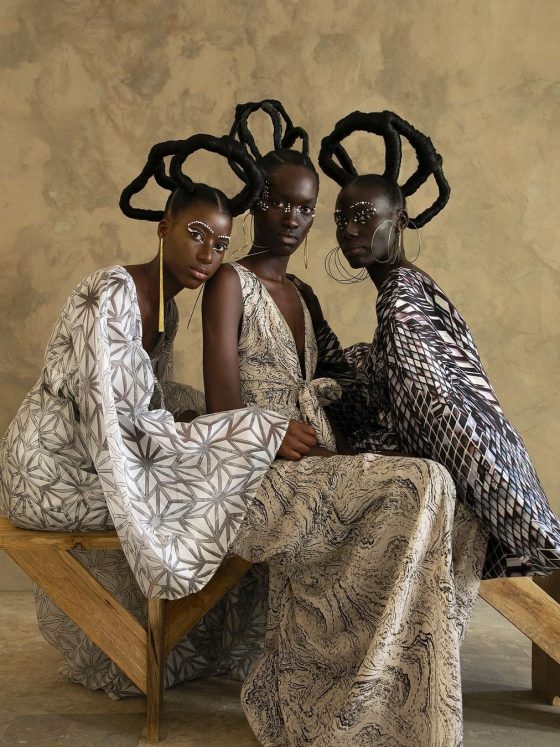
What many diaspora men build across years is not a wardrobe with a Western side and an African side. It is a wardrobe built from the third space, where both inheritances are present and neither is dominant. Handwoven Aso Oke textiles appear in bomber jackets and tailored trousers. Kente cloth is incorporated into minimalist blazer linings. Adire fabrics find new life in contemporary overshirts. Bogolanfini appears in structured coats. A solicitor may wear a navy business suit to the office during the week and choose an embroidered agbada for a family celebration at the weekend. Another professional may commission a blazer made from handwoven fabric specifically because it allows him to acknowledge his heritage within a corporate environment.
These choices are rarely accidental. They reflect the realities of living between cultures where identity is negotiated rather than inherited unchanged. Fashion, in this context, becomes less about following trends and more about maintaining continuity.
Bianca Saunders, whose label is rooted in British-Jamaican identity and the social world of Anglo-Caribbean relations, approaches the same territory from the Caribbean side of the diaspora. Her menswear explores Black masculinity and self-expression with a precision and restraint that reflect what it means to carry a Caribbean inheritance through a British upbringing, the same double accountability that Ize carries through a Nigerian and Austrian one. The wardrobes these designers build for diaspora men are not attempts to represent two cultures alternately. They are attempts to make a single garment that does not require its wearer to choose.
Clothing no longer asks them to choose between two identities. Instead, it allows them to express themselves with confidence.
ALSO READ
- How African Identity Is Styled Differently Across Continents
- African Fashion Weeks Were Never Trying to Beat Paris. They Were Solving a Different Problem.
Second-Generation African Designers Are Not Borrowing From Heritage. They Are Translating It. - The Diaspora Did Not Preserve African Style. It Redesigned It.
- African Menswear Does Not Start With a Sketch. It Starts With a Question.
Designers Creating Clothes for Men Who Belong to More Than One Place
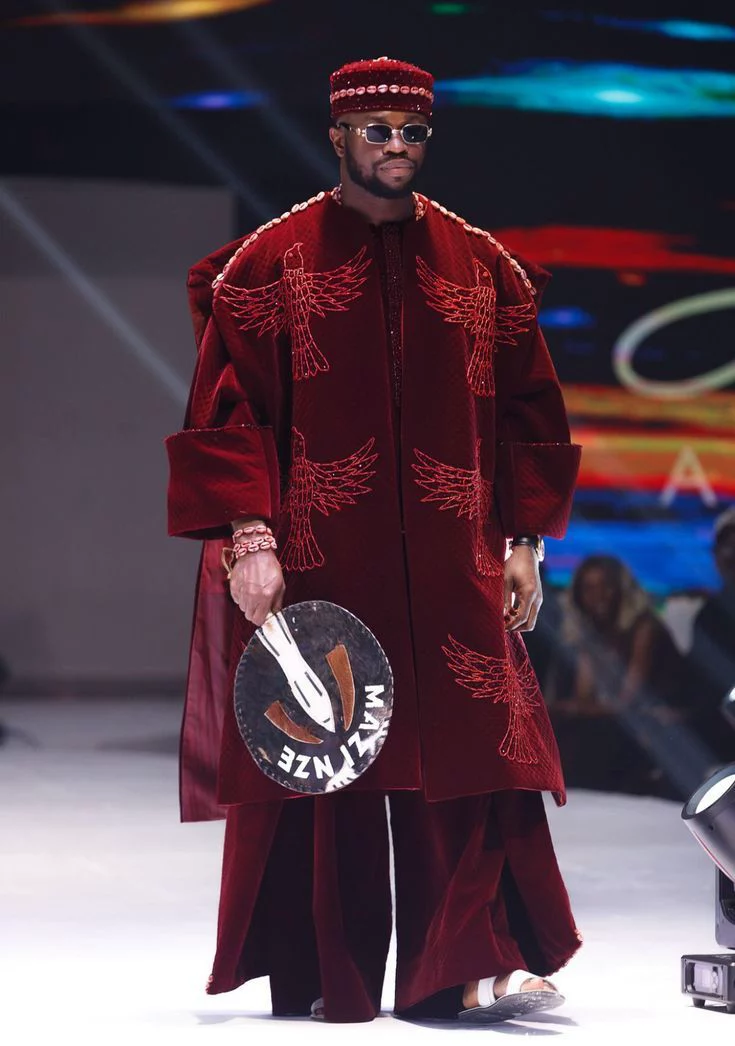
The growing confidence of the African diaspora is reflected in the work of designers who understand what it means to live between cultures. Kenneth Ize’s approach, combining European tailoring precision with handwoven Aso Oke produced by a team of artisans in Nigeria and Ilorin, creates garments that are neither traditional Nigerian dress nor conventional Western menswear. They are a new visual language shaped by both experiences. As Omiren Styles has documented in the analysis of the African menswear design process and how artisan collaboration is central to that process, the fabric that goes into a Kenneth Ize garment is made by people whose knowledge is the design. The European tailoring houses that frame the cloth’s contemporary silhouette are one inheritance. The Yoruba weavers who produced the cloth are another. The garment holds both.
Thebe Magugu, whose research-driven South African collections draw on family memory, political history, and cultural identity, works the same territory from a different angle. His collections do not present heritage as something fixed in the past. They treat it as a living resource that continues to evolve in each new collection. The garments he builds carry both the history of South African dress and the intellectual ambition of contemporary European fashion, not because he is trying to bridge a gap but because those two inheritances are already his.
Getting Dressed for Work
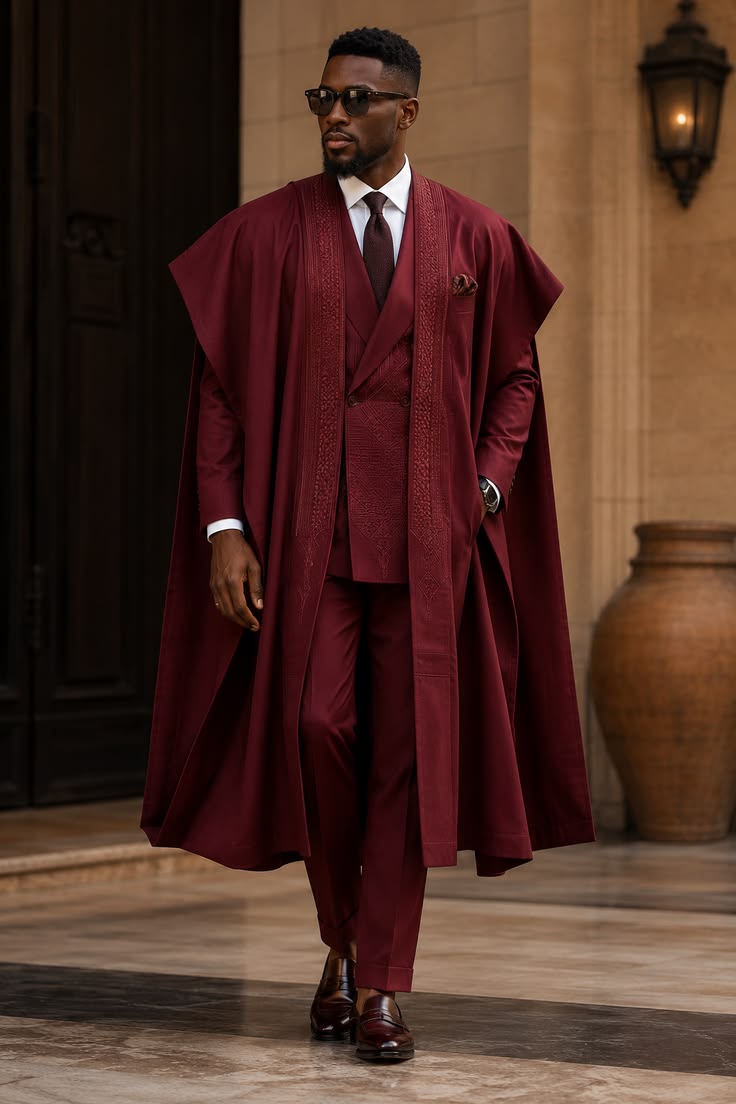
For many African men in the diaspora, the workplace is where questions of identity become most visible. Professional environments often come with expectations about appearance shaped by Western ideas of business dress. Dark suits, plain shirts, and conservative colours have long been treated as symbols of professionalism, leaving little room for cultural expression.
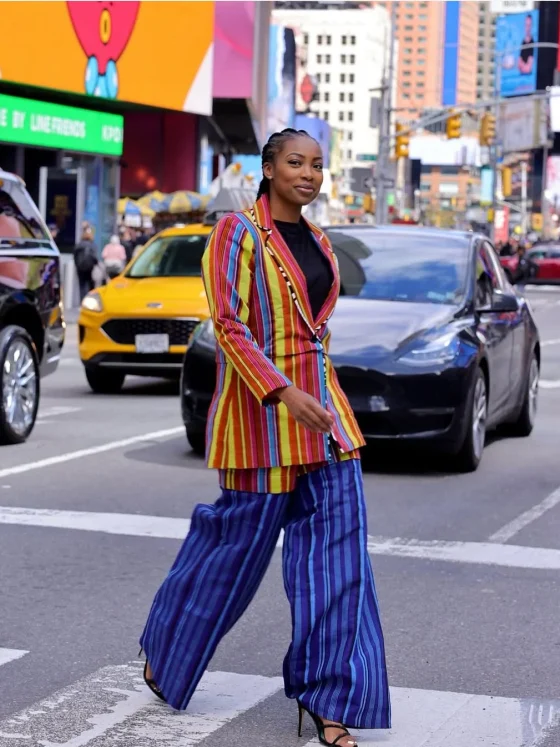
Across industries, more professionals are finding ways to incorporate their heritage into everyday workwear without treating it as a special occasion. A handwoven Aso Oke tie, a jacket lined with Kente cloth, a tailored shirt made from locally woven cotton, or a contemporary tunic worn beneath a structured blazer allows cultural identity to exist alongside professional standards. These choices may seem subtle, but they carry significance. They allow individuals to remain visible without abandoning the environments in which they work.
This shift reflects growing confidence among younger professionals who no longer see cultural expression and career success as opposing goals. Heritage has become something to celebrate publicly rather than protect privately.
What the Wardrobe Is Actually Carrying
The story of the African diaspora wardrobe is not about choosing between tradition and modernity. It is about recognising that identity can hold both at the same time.
Every jacket woven with indigenous textiles, every contemporary kaftan worn to the office, and every tailored garment inspired by African craftsmanship reflects a conversation between past and present. These clothes do more than dress the body. They carry memory, migration, family history, and the confidence to belong in more than one place without surrendering either identity. That is why contemporary African menswear resonates so strongly with the diaspora. It does not ask men to leave one world behind to embrace another. As Omiren Styles has argued in the full analysis of how the diaspora redesigns inherited style rather than simply preserving it, the act of building a wardrobe that holds two cultures simultaneously is not a compromise. It is a discipline as demanding and as precise as any other form of design intelligence.
The most meaningful garments are not those that choose one culture over another. They are the ones who prove both can exist together, woven into the same fabric with honesty, pride, and purpose.
FAQs
How do African men in the diaspora express their cultural identity through fashion?
Many African men in the diaspora express identity by combining contemporary menswear with heritage elements such as handwoven textiles, traditional tailoring, indigenous embroidery, or culturally significant accessories, building wardrobes that hold both their African heritage and their host-country experience simultaneously rather than choosing between them. Kenneth Ize, born in Lagos and raised in Austria, describes this as a hunger for his own interpretation of his culture and identity. His collections, built from Aso Oke handwoven in Nigeria and tailored in contemporary European silhouettes, are the most documented design expression of that hunger in current African menswear.
Why is fashion important to African men living in the diaspora?
Clothing functions as a cultural language, helping people maintain connections with family traditions, communicate belonging within their communities, and introduce younger generations to customs they may never have experienced firsthand. Ize has described what dress did for him during his years in Austria: ‘Being a queer person and moving from Nigeria to Austria, I had trouble integrating with people; all I had was clothes. But at the time, there was nothing in the world that gave me confidence as those clothes did.’ That is not a marginal experience. It is what the wardrobe does for many African men navigating life between cultures.
How are African fashion designers creating clothing for the diaspora?
Designers such as Kenneth Ize, Thebe Magugu, and Bianca Saunders create collections that combine contemporary tailoring with African craftsmanship, textiles, and storytelling. Ize combines European tailoring precision with handwoven Aso Oke produced by artisans in Nigeria, creating garments that are neither traditional Nigerian dress nor conventional Western menswear but a new visual language shaped by both. Magugu uses research into family memory and political history to build collections that treat heritage as a living resource. Bianca Saunders examines Black masculinity through the lens of British-Jamaican identity, producing menswear that carries Caribbean inheritance through a British design education.
Can African heritage clothing be worn in professional workplaces?
Yes. Many professionals incorporate African heritage into business attire through details such as handwoven Aso Oke ties, jackets lined with Kente cloth, tailored shirts made from locally woven cotton, or contemporary tunics worn beneath structured blazers. These choices allow cultural identity to exist alongside professional standards without treating African identity as something reserved for weddings or cultural festivals. The shift reflects growing confidence among younger professionals who no longer see cultural expression and career success as opposing goals.
What does it mean to have an Afropolitan style?
Afropolitan style refers to a contemporary fashion identity shaped by African heritage and global influences. Rather than following a single cultural dress code, it blends traditional craftsmanship, modern tailoring, and international fashion to reflect the experiences of Africans living across different parts of the world. It corresponds to what cultural theorist Homi Bhabha calls the third space: the creative and identity territory produced when two cultures meet and generate something that neither would produce alone. For diaspora African men, the Afropolitan wardrobe is the most visible expression of that territory, built from Aso Oke, Kente, Adire, Bogolanfini, and contemporary tailoring used together in the same garment.
How do African textiles influence modern menswear in the diaspora?
African textiles, including Aso Oke, Kente, Adire, and Bogolanfini, are increasingly incorporated into contemporary menswear through tailored jackets, shirts, trousers, coats, and accessories, allowing traditional craftsmanship to remain relevant in modern wardrobes without losing its cultural significance. Kenneth Ize’s production model, in which a team of artisan weavers in Nigeria and Ilorin produce the Aso Oke that becomes the cloth of his European-silhouette tailoring, is the most documented example of this integration. ‘No two are the same,’ he has said of his hand-loomed fabrics. ‘There’s a romance to it, the thought that someone has hand-woven your trousers or jacket.’
Why are more young Africans in the diaspora embracing their cultural heritage through clothing?
Many younger Africans have grown up with greater access to African designers, digital communities, and cultural conversations that celebrate heritage rather than minimising it. Social media has made it easier to discover brands from Lagos, Johannesburg, Accra, and Nairobi. International retailers now stock collections by African designers, while luxury fashion has become more open to indigenous textiles and craftsmanship. As a result, wearing African-heritage clothing is increasingly viewed as an expression of confidence rather than difference. Heritage has become something to celebrate publicly instead of protecting privately, and the wardrobe has become the most personal and most visible site of that shift.