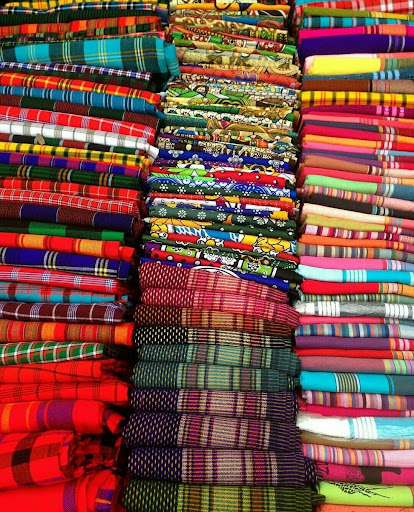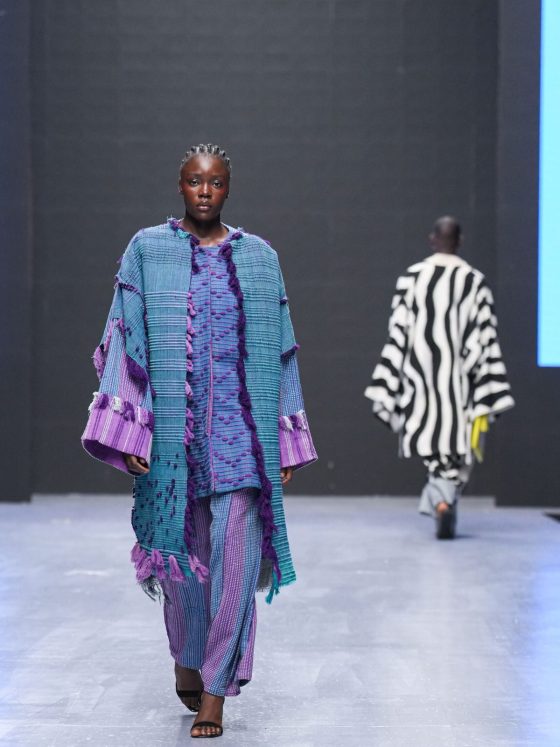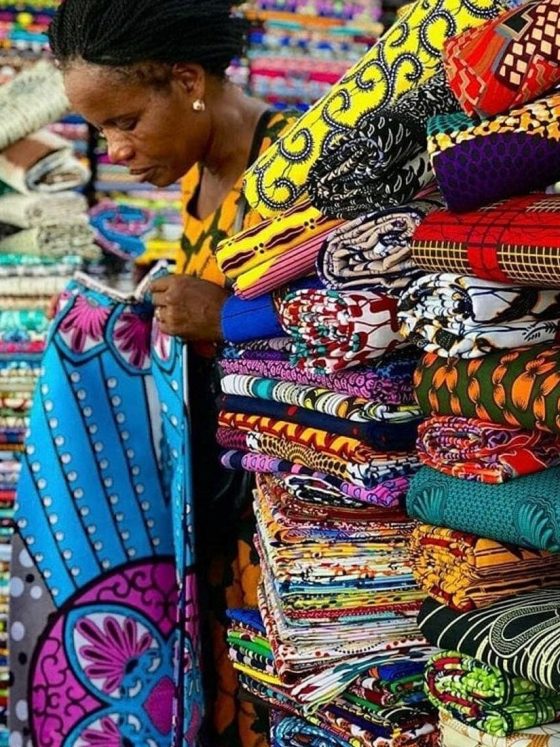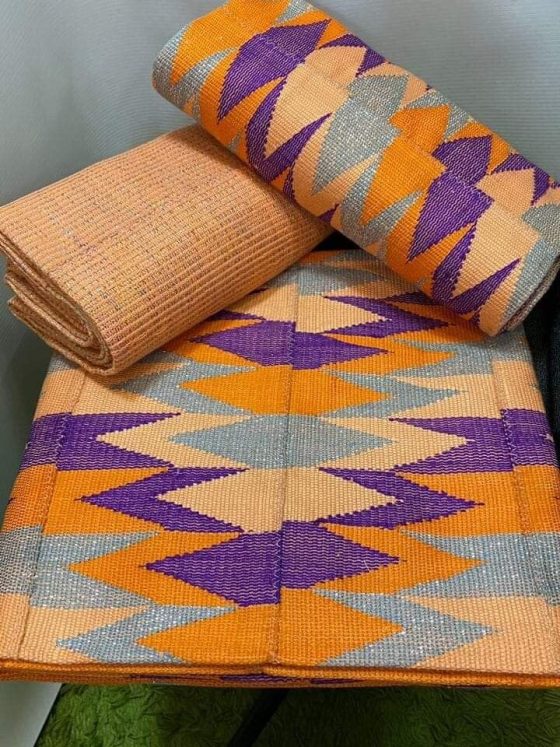
In 2023, Dédé Rose Gamélé Creppy died in Lomé at the age of 89. She had been the youngest member of the original Nana Benz, the generation of Togolese women traders who controlled West Africa’s wax print fabric market from the 1950s through the 1980s and who built personal fortunes large enough to buy Mercedes-Benz cars and lend them to the government. She was the last of them. The women who came before her had already gone. The women who came after her had already built something else.
Those women are the Nanettes. The name is a diminutive: little Nanas, the daughters of the mothers who ran the market. But the name understates what the Nanettes actually did. They did not simply step into the Nana Benz’s boutiques and continue the trade. They went to China. They inserted themselves into the manufacturing process that had destroyed the Nana Benz’s business model. They commissioned their own designs, built their own brand names, and redistributed fabric across West Africa under their own labels. Up to 60 Nanettes are documented as active in the trade, according to peer-reviewed research by University of Manchester and University of Edinburgh researchers who conducted over 100 interviews with traders, sellers, and port agents in Lomé.
The Nanettes are the women who inherited Togo’s wax print trade from the legendary Nana Benz. Meet the generation reinventing the fabric business from Lomé to China.
The Omiren Arg researchers at the moment:
The Nanettes are not the Nana Benz’s success, the Nana Benz’s answer. The Nana Benz controlled a market through exclusive distribution rights with European manufacturers. When Chinese imports destroyed those rights, the Nanettes went to China and became part of the manufacturing chain themselves. That is not inheritance. That is improvisation at the supply chain level, and it deserves to be read as the commercial intelligence it is.
What the Nana Benz Left Behind
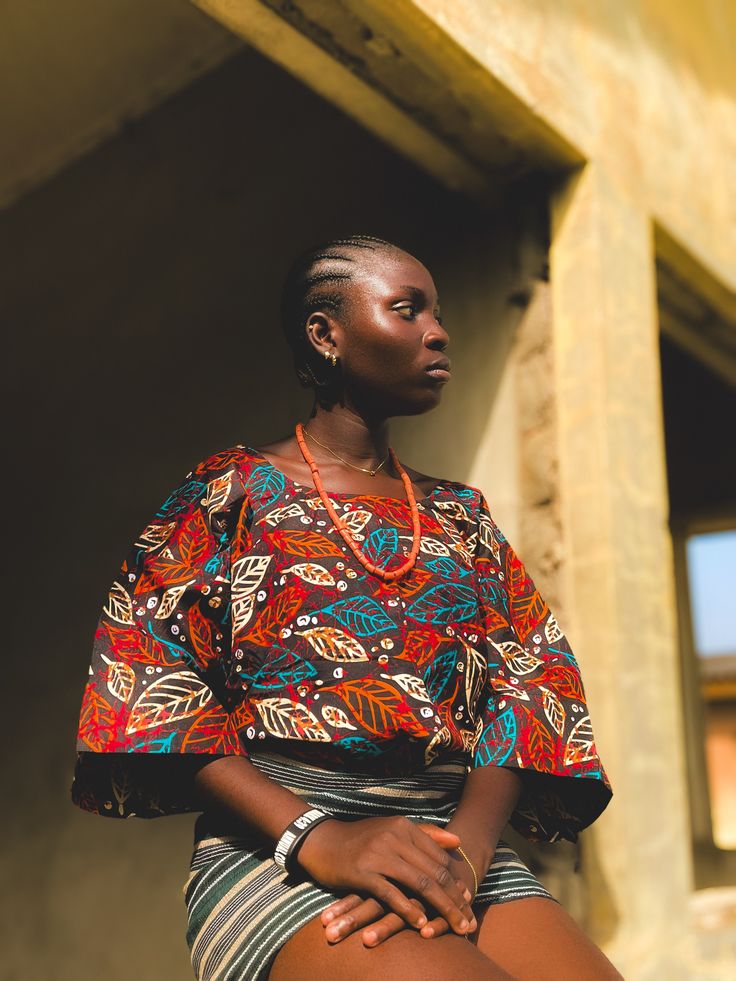
The Nana Benz that survived the structural collapse of the 1990s did not disappear from the Grand Marché. They remained in it, but under fundamentally altered conditions. The approximately 20 surviving original Nana Benz now operate under contract as retailers for Vlisco, subject to strict rules governing pricing and sales. Vlisco opened its first boutique in Lomé in 2008, followed by Cotonou and Abidjan, and the women who had once been the company’s independent wholesale distributors became, instead, its contracted retail agents. The commercial relationship that had made them wealthy was restructured into one that constrained them.
Togolese singer King Mensah recorded a song called Nana Benz to immortalise them, which NPR correspondent Emmanuel Akinwotu heard playing through the Grand Marché during his reporting visit in January 2026. Dozens of Vlisco boutiques in the market carry the names and likenesses of the Nana Benz who founded them, as archival images of four generations of the founding families on the walls. The material culture of their success is still visible. The commercial power is not.
The anthropologist Nina Sylvanus of Northeastern University, whose book Patterns in Circulation: Cloth, Gender, and Materiality in West Africa is the most rigorous scholarly study of the Nana Benz and their successors, wrote the obituary for Maman Creppy in The Conversation. Her observation about Creppy’s legacy applies to the entire first generation: their legacy is preserved in the cloth patterns they co-designed, which continue to circulate across the continent. What the Nana Benz created was not only a trade network. It was a design vocabulary, and that vocabulary outlived the economic conditions that produced it.
Where the Nanettes Came From: The Street to Shenzhen Pipeline
The Nanettes did not come from the Nana Benz’s families. They came from below. Research from the University of Manchester and the University of Edinburgh, conducted through over 100 interviews across the Lomé fabric trade ecosystem, confirms that the Nanettes were former street sellers of textiles and other petty commodities. They were not inheriting boutiques. They were working at the bottom of the fabric trade, selling from market stalls, when they identified the opportunity created by Chinese manufacturing.
That opportunity was specifically this: European manufacturers had left a price gap so large that it restructured the entire market. Chinese wax print fabric sold for approximately 9,000 CFA francs for six yards in Lomé’s Assigamé market, the research team’s field observations showed. Vlisco Wax Hollandais sold for 50,000 CFA francs for the same quantity. The difference was more than fivefold. A consumer who could not tell the difference between the two fabrics by looking at them had an overwhelming financial incentive to buy the Chinese version. The researchers estimate that by 2019, approximately 90 per cent of African-print textiles arriving at Lomé port were from China.
The Nanettes were the women who recognised that if China was going to produce the fabric anyway, there was value in being the Togolese women who told China what to produce. Beginning in the early to mid-2000s, they started travelling directly to China, to manufacturing centres where African print textiles were being made for the West African market, and inserting themselves into the design and commissioning process. They were not buying what Chinese factories had already made. They were advising on what Chinese factories should make and for which markets.
The Business Model: From Distribution to Co-Production
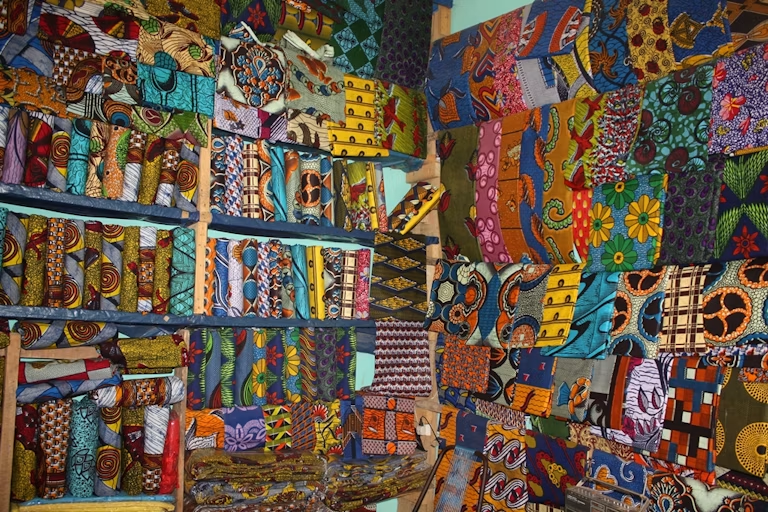
The Nanette business model has two tiers. The majority of orders from established Chinese brands of African print fabric are distributed wholesale to local traders and sellers, and to regional buyers from Ghana, Benin, Nigeria, Burkina Faso, and beyond. Lomé’s position as a low-tariff redistribution port, documented in the fabric trade literature as a deliberate commercial advantage the Nana Benz cultivated through their lobbying of customs police, remains an asset that the Nanettes inherited. The fabric still moves through Lomé because Lomé is where the commercial infrastructure to move it exists.
The second tier is more significant: some Nanettes own and market their own brand names. The peer-reviewed research confirms the presence of a set of brands that have become well-known across Lomé and the wider West African market. These include Femme de Caractère, Binta, Prestige, Rebecca Wax, GMG, and Homeland. Each is a Chinese-made African-print fabric that carries a Togolese trader’s brand identity. The Nanette that holds that brand name controls the intellectual property associated with it in a way that mirrors, on a smaller scale and through a different mechanism, the pattern exclusivity that defined the Nana Benz era.
Nina Sylvanus’s research documents one particularly instructive case. A Nanette referred to as Antoinette in her fieldwork collaborated with textile engineers in Hong Kong and China to produce the first imitation of Dutch superwax — what the market called super-soso — and a Chinese-made wax print sold under the brand name Mondial. Antoinette did not simply buy Chinese fabric and resell it. She participated in the technical process of creating a product that would be competitive with European wax at a fraction of the price, and built a brand around it. That is a different kind of commercial intelligence from distribution.
Wina Wax: The Nanette Brand Built for the Next Era
The most documented named Nanette brand in English-language sources is Wina Wax, founded by Marlène Adanleté-Djondo, a descendant of the Nana Benz. As she explained to Jeune Afrique, reported by Asaase Radio: Wina Wax is designed in Lomé and manufactured in China because the absence of reliable electricity in Togo makes domestic manufacturing at a competitive scale impossible. “We do not want such a future for Wina Wax,” Adanleté-Djondo said, referring to the fate of regional manufacturers like Univax in the Ivory Coast and GTP in Ghana, which Vlisco acquired due to financial difficulties.
Wina Wax represents the Nanette model in its most developed form: a Togolese brand identity, designed in Lomé, manufactured in China, distributed through Togolese commercial networks. The design is locally rooted. The production is internationally contracted. The brand is Togolese. This is not the Nana Benz model, which put a Togolese trader between a European manufacturer and the West African market. This model puts a Togolese designer between the West African consumer and a Chinese factory. The commercial logic is structurally similar. The power dynamics are different.
The infrastructure problem Adanleté-Djondo identifies — that unreliable electricity makes domestic manufacturing uncompetitive — is significant for understanding what the Nanettes can and cannot do from Lomé. They can design, commission, brand, and distribute. They cannot manufacture at scale. Until that constraint changes, the Wina Wax model will continue to depend on Chinese production even as it roots its creative identity in Togo.
ALSO READ
- The Nana Benz of Lomé: How Togolese Women Traders Built West Africa’s Wax Print Empire
- The Grand Marché de Lomé: West Africa’s Most Important Fabric Market
- What Do People Wear in Togo? A Complete Style Guide
The Pressure the Nanettes Face: Competition Within Competition

The commercial environment the Nanettes operate in is considerably more challenging than the one the Nana Benz faced at their peak. The Nana Benz competed with each other but did so within a system that gave each of them a defined territory and product range through pattern exclusivity. The Nanettes have no exclusivity infrastructure. They compete with each other, with direct Chinese traders who have now entered the Lomé distribution market, and with the declining purchasing power of a consumer base managing the ongoing impact of structural adjustment and economic pressure. The peer-reviewed research is direct about this: the Nanettes “too are increasingly threatened by Chinese competition, more recently within trading and distribution as well.”
The margin pressure is structural. The volumes traded by the Nanettes are large, but the margins on each unit are small because the final retail price of Chinese wax print is a fraction of the Vlisco prices the Nana Benz charged. A trader moving large volumes of low-margin fabric generates less wealth per unit than a trader moving smaller volumes of high-margin premium fabric. This is the mathematical reality of the Nanettes’ position: they occupy the market that Chinese imports created, not the market the Nana Benz controlled.
The political dimension of the Nana Benz era has also not transferred to the Nanettes. The Nana Benz’s economic scale gave them the leverage to finance political parties, lobby customs policy, and receive government appointments. The research notes that the Nanettes have “lower economic and political stature.” This is not a judgment on the Nanettes’ capabilities. It is a description of the market conditions in which they operate. Political influence at the Nana Benz’s level required the kind of monopolistic market control that the Nanettes do not have and that the fabric market, as currently structured, does not allow.
What the Nanettes Prove
The Nana Benz story is usually told as a story of rise and fall. The Nanettes complicate that narrative. They demonstrate that the commercial intelligence that made the Nana Benz powerful — the ability to insert Togolese women into the supply chain at the point where value is controlled — survived the collapse of the specific supply chain it had built. The Nanettes found a new supply chain and inserted themselves into it in the same way, at a smaller scale and with smaller margins, but with the same fundamental strategy: be the Togolese women in the middle.
The brands they have built — Femme de Caractère, Wina Wax, Mondial — are not copies of Vlisco. They are a different kind of intellectual property claim: brand identities that the Nanettes own and that Chinese manufacturers do not. As Cambridge Core’s review of Sylvanus’s research notes, to guard against poor-quality copies of their own Chinese-made fabrics, Nanettes have created brands that claim national heritage, using the image and name of Nana Benz on some of their own products. They are not only trading in fabric. They are trading on the authority that the Nana Benz name still carries, a specific kind of brand intelligence that only Togolese women with direct connections to that history can exercise.
The full story of the Nanettes has not yet been told in English-language fashion in an editorial. The French-language documentary record, France 24 Reporters, Jeune Afrique, and the peer-reviewed research by Ebia and Horner, published by the University of Manchester and the University of Edinburgh, provide the foundation. This article is the beginning of the English-language record. What the Nanettes build from here will require the kind of sustained documentation that Omiren Styles exists to provide.
“The Nanettes are not the Nana Benz’s successors. They are the Nana Benz’s answer. When Chinese imports destroyed the exclusivity model, the Nanettes went to China and became part of the manufacturing chain themselves. That is not inheritance. That is improvisation at supply chain level.”
Frequently Asked Questions
Who are the Nanettes of Togo?
The Nanettes, also called little Nanas, are the generation of Togolese women fabric traders who emerged after the decline of the original Nana Benz. Where the Nana Benz controlled West Africa’s wax print trade through exclusive distribution rights with European manufacturers, primarily Vlisco, the Nanettes source fabric directly from Chinese manufacturers. Up to 60 are active in the trade, according to peer-reviewed research. They began travelling to China in the early to mid-2000s, commissioning and advising on the production of African print textiles and distributing them across Lomé and the wider West African market. Some have built their own fabric brands manufactured in China under Togolese brand names.
How do the Nanettes differ from the Nana Benz?
The Nana Benz held power through exclusive wholesale distribution rights for premium European-manufactured wax print fabric, primarily Vlisco. A successful Nana Benz could control more than 60 distinct patterns within her territory. The Nanettes operate without exclusivity. They source cheaper Chinese-manufactured African print fabric, advise on its design and production, and distribute it wholesale. Their margins are smaller because fabric prices are lower. Their political influence is also less significant: the Nana Benz financed political parties and received government appointments; the Nanettes operate at a lower level on the economic and political scales. However, some Nanettes have built their own brand names for Chinese-manufactured fabric and function as partial brand owners rather than purely as traders.
What brands have the Nanettes created?
Some Nanettes have moved beyond distributing established Chinese brands to commissioning and owning their own brand names for Chinese-manufactured African print fabric. Confirmed brand names documented in academic research include Femme de Caractère, Binta, Prestige, Rebecca Wax, GMG, and Homeland. Wina Wax, founded by Marlène Adanleté-Djondo, a Nana Benz descendant, is a documented example: designed in Lomé and manufactured in China due to the absence of reliable electricity for domestic production at scale. Nina Sylvanus’s fieldwork also documents a Nanette called Antoinette who co-produced the first Chinese imitation of Dutch superwax, sold under the brand name Mondial.
What challenges do the Nanettes face?
The Nanettes face three documented structural challenges. First, margin pressure: Chinese wax print fabric sells for approximately 9,000 CFA francs for six yards in Lomé, compared to 50,000 CFA francs for Vlisco Wax Hollandais, leaving smaller margins per unit than the Nana Benz era. Second, escalating Chinese competition: Chinese traders have begun entering the Lomé distribution market directly, competing with the Nanettes in their own commercial space. Third, infrastructure constraints: the absence of reliable electricity in Togo makes it impossible to manufacture at a competitive scale domestically, forcing brands like Wina Wax to manufacture in China even when they design locally.
What happened to the original Nana Benz?
The original Nana Benz were displaced from their dominant position by the combination of the 1994 CFA franc devaluation, Chinese imports, and Vlisco’s restructuring of its distribution relationships. An estimated 20 of the original 50 Nana Benz survived in the trade, but now operate under contract as Vlisco retailers rather than independent wholesale distributors, subject to strict pricing and sales rules. Vlisco opened its Lomé boutique in 2008 under this model. Dédé Rose Gamélé Creppy, the youngest and last surviving original Nana Benz, died in Lomé in 2023 at the age of 89.
Where can I find Nanette-branded fabric in Lomé?
Nanette-branded and Nanette-distributed fabric is available throughout the Grand Marché de Lomé, also called Assigamé, which remains the primary fabric market in Togo’s capital. The market’s textile district is an almost entirely female commercial space where several generations of traders operate alongside each other. Vlisco boutiques carrying the Nana Benz legacy are also located throughout the market. Researchers estimate that approximately 90 per cent of African print textiles arriving at Lomé port are of Chinese origin, and this fabric is widely available across the market at prices significantly below Vlisco’s premium products.
Explore more from our Culture section, where Africa’s textile trade histories are documented as the fashion intelligence they are.