At the peak of their power in the 1970s, a group of Togolese women traders controlled at least 40 per cent of Togo’s informal commercial sector. The phosphate industry, the country’s official primary revenue source, produced less economic activity than it did. They financed political parties, lobbied customs policy to protect their supply chains, and were appointed to government positions despite, in some documented cases, being unable to read or write. They drove Mercedes-Benz cars through the streets of Lomé at a time when that was an extraordinary public statement of wealth.
They were the Nana Benz. The name is the story in two words. Nana means “mother” or “grandmother” in several West African languages, a title given to women of authority and wisdom. Benz is the car. Together: women of such authority that they could afford what governments could not. The Nana Benz were not market women who happened to get rich. They were the architects of a commercial intelligence system built around the most coveted fabric in West Africa, shaping what the entire region wore for three decades.
The Nana Benz of Lomé built West Africa’s wax print empire and drove Mercedes while doing it. The untold fashion and economic story of Togo’s most powerful women.
The Omiren Argument:
The Nana Benz did not build a textile empire. They built a control architecture. The fabric was the vehicle. What they actually controlled was access, and the history of their rise and displacement is a precise lesson in what happens when forces outside the market restructure that access.
What the Nana Benz Actually Sold: Access, Not Fabric
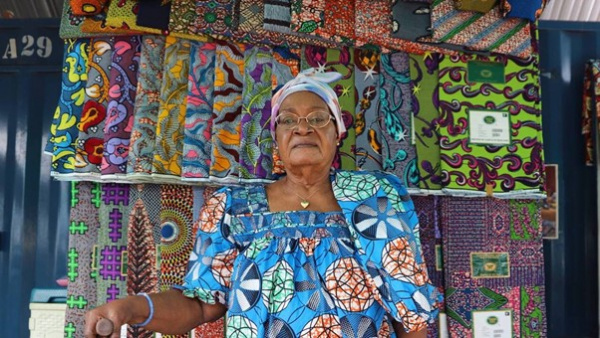
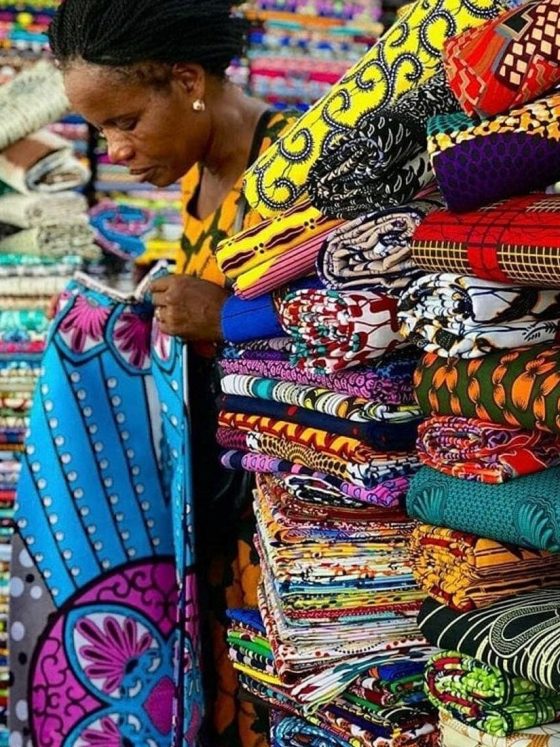
The fabric at the centre of the Nana Benz empire was Dutch wax print, known locally in Lomé as tchigan. It was produced primarily by Vlisco, the Dutch textile company, along with British firms including GB Ollivant and the French Société Générale du Golfe de Guinée. The Victoria and Albert Museum’s documentation of this trade confirms that the Nana Benz served as a bridge between European manufacturers and local consumers, buying in bulk and distributing goods across the region.
What made the Nana Benz powerful was not the quantity they moved but the exclusivity they secured. European manufacturers distributed specific wax print patterns only to specific women. Scholar Nina Sylvanus, whose research on the Nana Benz is widely cited in the academic literature on this trade, documented that a successful Nana Benz could hold exclusive wholesale rights to more than 60 distinct patterns. If a trader in Ghana, Nigeria, Senegal, or Togo wanted a specific design controlled by a particular Nana Benz, there was no other way to obtain it. She was the pattern. The pattern was hers.
This exclusivity created something that functions in fashion the same way intellectual property functions in technology: a moat that competitors cannot cross without permission. And because the patterns had names, those names circulated culturally alongside the fabric. The Vlisco pattern known as Santana, officially catalogued as VL03686.024, was named after Madame Santa Anna Nelly, a Togolese trader who had secured exclusive rights to sell it. The fabric carried the trader’s identity into every market where it appeared. The Nana Benz were not selling cloth. They were licensing their own cultural authority at scale.
The Rise: From Market Stalls to Political Appointments
The foundations of the Nana Benz trade were laid in the 1950s, before Togolese independence. As the Yale University doctoral researcher Marius Kothor documented through oral history interviews with surviving Nana Benz, women like Mama Afi began as market traders selling household goods in rural markets before relocating to the port city of Lomé in search of the larger commercial networks that the capital offered. NPR correspondent Emmanuel Akinwotu, reporting from Lomé in January 2026, described them as working-class fabric traders who shot to fame in the 1950s by importing wax fabrics that exploded in popularity across West Africa.
What accelerated their power was Togo’s specific commercial geography. Neighbouring Ghana introduced import restrictions as part of its post-independence industrialisation strategy, which constrained the fabric trade there. Togo, by contrast, maintained open trade conditions and a low-tariff port. Lomé became the redistribution hub for the entire coastal corridor, and Nana Benz was the woman who controlled it. Regional buyers arrived from Ghana, Benin, Nigeria, the Ivory Coast, and further afield because Lomé was where the fabric was, and the Nana Benz were the ones who had it.
By the 1970s, the scope of their commercial operations had surpassed that of Togo’s phosphate industry in economic significance. Between 1976 and 1984, an estimated 40 per cent of the commercial business in Togo’s informal sector was in the hands of the Nana Benz. They used that economic weight directly: financing political parties, lobbying for customs policies that favoured their import-heavy business model, and building relationships with President Gnassingbé Eyadéma’s government. One of their number, documented by Afrolegends as Madame A. Amedome, was appointed Minister of Social Welfare in 1977. Their commercial power had translated into formal state authority.
These were not women operating at the margins of the economy. They were the economy, in the specific sector that mattered most to the daily material culture of West Africa. And they were building it from positions that formal institutions had not designed for women, through networks that formal institutions could not replicate or regulate.
The Pattern System: How Fabric Became a Financial Instrument

The Nana Benz commercial system operated through pattern exclusivity at a level of sophistication now associated with luxury brand licensing in the fashion industry. The V&A’s documentation confirms that the women worked closely with European manufacturers, helped influence colour palettes and motif development, and secured exclusive rights to specific designs in specific markets. A pattern that a Nana Benz had secured could not be sold wholesale by anyone else in her territory.
The patterns themselves carried social and cultural meaning that amplified their commercial value. Dutch wax prints had names that functioned as proverbs, statements, and social commentary. Patterns referenced love, politics, ambition, rivalry, and respect in ways that buyers understood immediately. Choosing a fabric was not a neutral aesthetic decision. It was a communication, and the Nana Benz were the women who controlled the communication channels.
The logistical system behind this was equally sophisticated. The Nana Benz travelled internationally on buying trips, maintained relationships with manufacturers in the Netherlands and Britain, and built supply networks that extended across the entire West African coastal corridor. They operated between the highest levels of European industrial production and the most local levels of African retail, and they did so with resources and commercial intelligence that many formal businesses at the time could not match.
The Afropolitain’s documentation of the trade describes their profits going into property portfolios, their children’s education, and quiet but decisive political influence. The wealth was not merely conspicuous consumption. The Mercedes was the signal. What it pointed to was a disciplined commercial operation reinvesting in the next generation’s capacity.
The Decline: Three Forces and One Devaluation
The Nana Benz’s dominance rested on three structural conditions: Togo’s open trade environment, Vlisco’s dependence on exclusive regional distributors, and the absence of a cheaper alternative to Dutch wax print at the quality level the market expected. When all three conditions changed simultaneously in the early 1990s, the empire could not hold. The Conversation’s academic documentation of this transition is the most precise account available: the 50 per cent devaluation of the CFA franc in January 1994 doubled the price of all imported goods overnight, including the Dutch wax fabric on which the Nana Benz had built their business.
The devaluation did not just reduce the Nana Benz’s margins. It pushed Dutch wax pricing beyond the reach of the consumer base that had sustained the market for three decades. Into that gap came Chinese manufacturers producing wax-print fabric at a fraction of Vlisco’s price. The price differential was not marginal. Chinese wax print sold for approximately 9,000 CFA francs for six yards. Vlisco Wax Hollandais sold for approximately 50,000 CFA francs for the same quantity. The difference was more than fivefold, and in a market suddenly impoverished by devaluation, the cheaper option absorbed the demand.
Vlisco’s own strategic response to the Chinese challenge, which the company internally called “Fighting the Dragon” after 2003, involved restructuring its distribution relationships, opening flagship retail outlets in West African cities, and pushing its distributors toward exclusivity arrangements that changed the terms on which the Nana Benz had always operated. The institutional relationships that had defined the Nana Benz’s commercial power were being reorganised by the same institutions that had built them.
The January 2013 fire that destroyed significant sections of Lomé’s central market delivered a further blow to women who were already operating in severely compressed commercial conditions. France 24’s Observers documented the fire as a defining moment for a trade community that was already struggling to hold its position against forces its founding generation had not anticipated, and its succeeding generation had not yet developed the tools to counter.
ALSO READ
- The Nanettes: Togo’s Next Generation of Wax Print Traders
- What Do People Wear in Togo? A Complete Style Guide
- The Grand Marché de Lomé: West Africa’s Most Important Fabric Market
The Nanettes: The Succession That Changed the Terms

The generation that emerged from the Nana Benz’s displacement called themselves Nanettes, or “little Nanas.” As The Conversation’s research confirms, up to 60 Nanettes have been active in the trade, compared to the approximately 50 Nana Benz who operated at the trade’s peak. The numbers are similar. The terms are fundamentally different.
While the Nana Benz secured exclusive distribution rights for premium European fabric and maintained their commercial advantage through pattern monopolies and long-term manufacturer relationships, the Nanettes entered a market defined by Chinese competition, price pressure, and the absence of exclusivity. They began travelling to China in the early 2000s to commission African print fabric manufactured to their specifications. Some developed their own brand names for their Chinese-manufactured prints, including Femme de Caractère, Binta, Prestige, Rebecca Wax, and Homeland, which are now known across Lomé and the wider West African market.
This is a different kind of commercial intelligence from the one the Nana Benz practised. The Nana Benz controlled access to fabric produced elsewhere by negotiating the terms of that production’s distribution. The Nanettes commission fabric directly, own the brand names they create, and compete on design and pricing rather than exclusivity. It is a move from gatekeeping to creating, and it carries different risks. The Chinese manufacturers who produce fabric for the Nanettes can and do produce for multiple clients, undermining the kind of territorial exclusivity that made the Nanettes structurally powerful.
The NPR report from Lomé in January 2026 captured this transition through direct testimony: the Nana Benz interviewed described their successors’ situation with the mixture of pride and sorrow that belongs to anyone who has watched an institution they built be replaced by something faster, cheaper, and fundamentally less exclusive. The achievements of the original generation remain in the region’s material culture: in the fabric patterns that bear women’s names, in the commercial infrastructure of the Grand Marché, and in the political precedent of women who converted market dominance into ministerial appointments.
What the Nana Benz Built That Cannot Be Measured in Revenue.
The economic history of the Nana Benz is measurable: 40 per cent of Togo’s informal commercial sector, trade exceeding that of the phosphate industry, and a 5.5-times price premium over Chinese competition that the market sustained for three decades before it could not. What is harder to measure but equally important is the cultural infrastructure that the Nana Benz built alongside the commercial one.
They established Lomé as the textile hub of the West African coast, a positioning that the Grand Marché retains to this day. They demonstrated, in a region and period where formal institutions consistently excluded women from economic authority, that commercial intelligence, network-building, and political navigation could generate wealth and power at a national scale from a position entirely outside the formal economy. They developed a pattern-naming practice that turned fabric into a living social text, creating a material language that millions of West African women used daily to communicate meaning about their lives.
The Togolese government’s reported plans for a Nana Benz museum, documented by the Guardian Nigeria, reflect an institutional acknowledgement that what these women built deserves permanent public documentation. The France 24 Reporters documentary from 2019, which won the Rotary Young Reporter Award in 2018, is one of the most complete visual records of the living Nana Benz and their Nanette successors. The NPR feature from January 2026 reached a global English-language audience with its story at a moment when search traffic for the Nana Benz was at its highest point in years. This article is part of the record that should match that interest with the depth it deserves.
“The Nana Benz did not build a textile empire. They built a control architecture. The fabric was the vehicle. What they actually controlled was access, and the history of their rise and displacement is a precise lesson in what happens when forces outside the market restructure that access.”
Frequently Asked Questions
Who were the Nana Benz of Lomé?
The Nana Benz were a group of Togolese women traders based at the Grand Marché de Lomé who established a dominant position in the West African wax-print fabric trade from the 1950s through the 1980s. The name combines nana, meaning mother or grandmother in several West African languages, with Benz, a reference to the Mercedes-Benz cars they drove as symbols of their considerable wealth. At their peak in the 1970s, they controlled at least 40 per cent of Togo’s informal commercial sector and generated more economic activity than the country’s phosphate industry. Their power rested on exclusive distribution rights for Dutch wax print fabric, primarily produced by Vlisco, across West and Central African markets.
What is Dutch wax print, and why did the Nana Benz trade it?
Dutch wax print, known locally in Lomé as tchigan, is a resist-dyed cotton fabric originally produced by Dutch manufacturers, primarily Vlisco, for West African markets. Its production dates to the 19th century. In West Africa, the fabric became deeply embedded in social and ceremonial life, with specific prints carrying names that functioned as social commentary, proverbs, or messages. The Nana Benz traded it because they had secured exclusive wholesale distribution rights for specific patterns in specific territories, giving them control over which designs buyers could access and at what price. A successful Nana Benz could hold exclusive rights to more than 60 distinct patterns simultaneously.
Why did the Nana Benz decline?
Three forces converged in the early 1990s to undermine the Nana Benz trade. The 50 per cent devaluation of the CFA franc in January 1994 doubled the price of all imported goods, pushing Dutch wax fabric beyond the reach of many consumers. Chinese manufacturers then entered the market with wax-print fabric priced at approximately one-fifth of Vlisco’s cost. Simultaneously, Vlisco restructured its distribution relationships in ways that eroded the exclusive terms under which the Nana Benz had historically operated. Political instability and economic sanctions in Togo in the early 1990s compounded these pressures. The January 2013 fire in Lomé’s central market added further damage to an already compressed trade.
Who are the Nanettes, and how do they differ from the Nana Benz?
The Nanettes, or little Nanas, are the generation of Togolese women fabric traders who succeeded the Nana Benz. Where the Nana Benz held exclusive distribution rights for European-produced Dutch wax fabric and derived their power from a pattern monopoly, the Nanettes source fabric directly from Chinese manufacturers, often commissioning designs under their own brand names. Up to 60 Nanettes have been documented as active in the trade. Their commercial position is less exclusive than their predecessors: Chinese manufacturers supply multiple clients, which limits the territorial control that made the Nana Benz structurally powerful. Some Nanettes have developed well-known brand names for their Chinese-manufactured prints, including Femme de Caractère, Binta, and Prestige.
What political power did the Nana Benz hold?
The Nana Benz converted their commercial dominance into direct political influence through several documented channels. They financed political parties and lobbied for customs and currency policies that favoured their import-heavy business model. Under President Gnassingbé Eyadéma, several were appointed to leadership positions in the women’s wing of the ruling Rassemblement du Peuple Togolais. One, documented as Madame A. Amedome, was appointed Minister of Social Welfare in 1977. Their wealth gave them the means to shape policy decisions that would otherwise have been made entirely without them.
Where is the best place to learn about the Nana Benz today?
The most comprehensive recent coverage in English is the NPR feature by Emmanuel Akinwotu, published in January 2026, which included direct testimony from Nana Benz members and their successors in Lomé. The 2019 France 24 Reporters documentary, which won the Rotary Young Reporter Award, provides the most detailed visual documentation of the living trade. Academic research by scholars, including Nina Sylvanus and Yale doctoral researcher Marius Kothor, provides the most rigorous historical and economic analysis. The Grand Marché de Lomé remains the physical centre of the trade for anyone visiting Togo.
Explore more in our Culture section, where Africa’s material and economic histories are documented as fashion intelligence rather than background context.