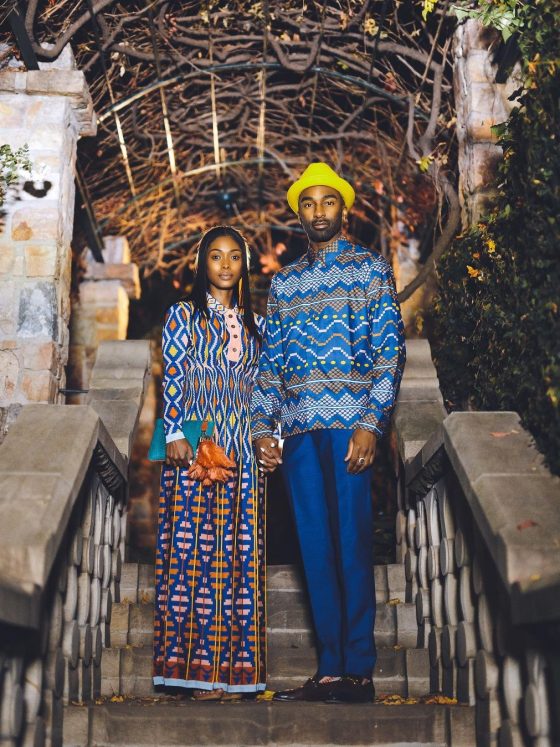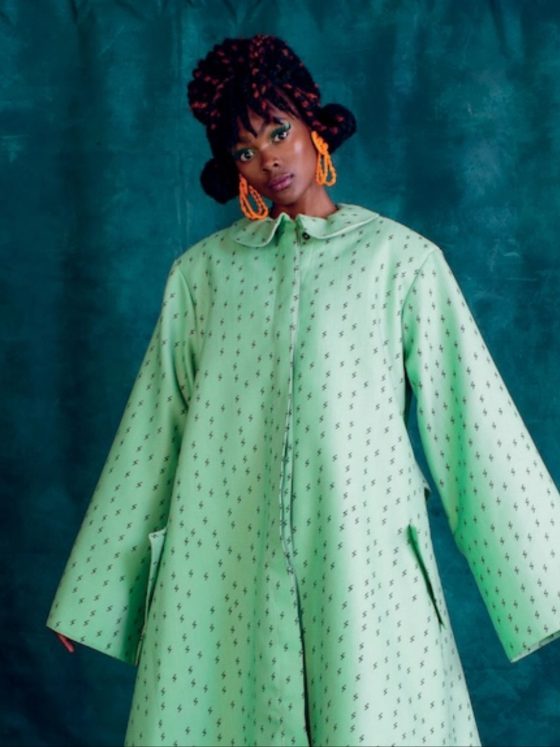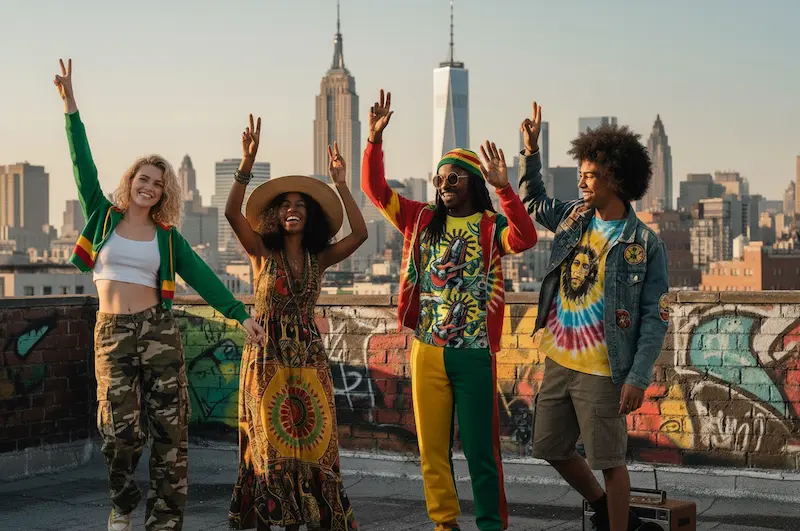
Claudia Jones, the Trinidadian journalist and activist, organised the first indoor Caribbean Carnival festivals at St Pancras Town Hall, starting in January 1959, in part as a response to the racial tensions and discrimination that Caribbean immigrants to London faced in the years after the Notting Hill race riots of 1958. Seven years later, in 1966, community worker Rhaune Laslett organised the first outdoor street festival in Notting Hill. That event drew around 500 people. In 2026, Notting Hill Carnival is Europe’s largest street festival, drawing more than two million people over the August bank holiday weekend, and generating nearly £400 million for the UK economy annually. The costumes that move through the Notting Hill streets, the masquerade designs, the body jewellery, the colour and craft on display, are not a parade outfit category. They are the visible output of one of the largest and least formally recognised design industries connecting London, Toronto, and the Caribbean. In March 2026, the Mayor of London intervened with £4.66 million in emergency funding to ensure the carnival’s 60th anniversary could proceed after Kensington and Chelsea Council threatened to cut its contribution, a measure of how far institutional recognition of the carnival’s economic scale still lags behind its actual value.
Carnival costume design, mas band production, and the broader Caribbean diaspora style economy operate across three cities that fashion coverage treats separately and that function, in practice, as one connected design and production network. London’s Notting Hill Carnival, Toronto’s Caribana, and Trinidad’s Carnival in Port of Spain are not three local events with a shared cultural reference. There are three markets in the same industry, sharing designers, costume producers, fabric suppliers, and an audience that moves between all three.
A carnival costume is treated as a parade outfit. It is a design industry generating hundreds of millions of pounds across London, Toronto, and the Caribbean. Omiren Styles names what it actually is.
Notting Hill Carnival: From a Response to Discrimination to a £300 Million Industry
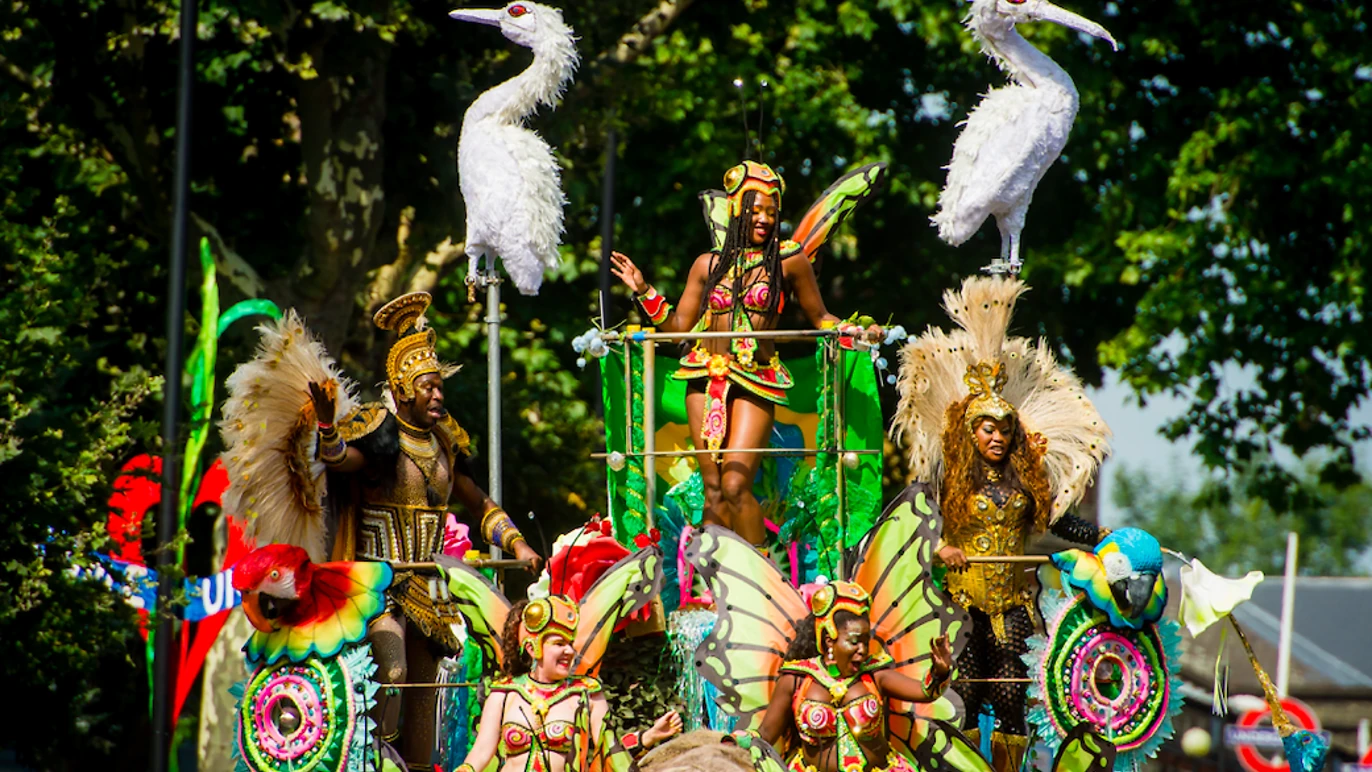
Carnival’s two founding figures, Claudia Jones, who created the indoor Caribbean festivals at St Pancras Town Hall from 1959, and Rhaune Laslett, who organised the first outdoor street festival in 1966, built the event from a position of community resilience: a way for Caribbean immigrants who had faced significant hostility in 1950s and 1960s London to claim public space, assert cultural presence, and create a sense of home in a city that had not made them welcome. Sixty years later, the carnival’s scale has changed completely. What has not changed is that the costumes are still made by and for the Caribbean diaspora community, using design and construction techniques carried from Trinidad, Jamaica, and the wider Caribbean and adapted across generations in London.
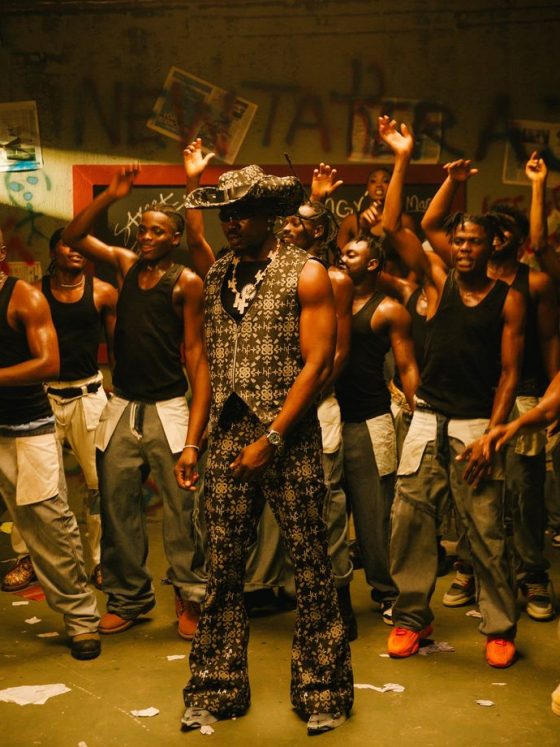
At Notting Hill Carnival 2025, the fashion on display fused classic Caribbean style markers, string vests, flag bikinis, body jewellery, with the current codes of London street style, camo cargo shorts, athletic trainers, and streetwear collaborations. This fusion is not dilution. It is precisely the third culture that Omiren Styles has documented across British-African diaspora style: a design language that draws simultaneously from Caribbean inheritance and London’s contemporary street codes, producing something that belongs fully to neither source and fully to the people who wear it.
Carnival costume is not a parade outfit with cultural significance attached. It is a design and manufacturing industry generating hundreds of millions of pounds annually, built and sustained almost entirely by Caribbean diaspora communities, that the fashion industry has never counted as fashion.
Caribana Toronto: North America’s Largest Caribbean Carnival as the Costume Industry
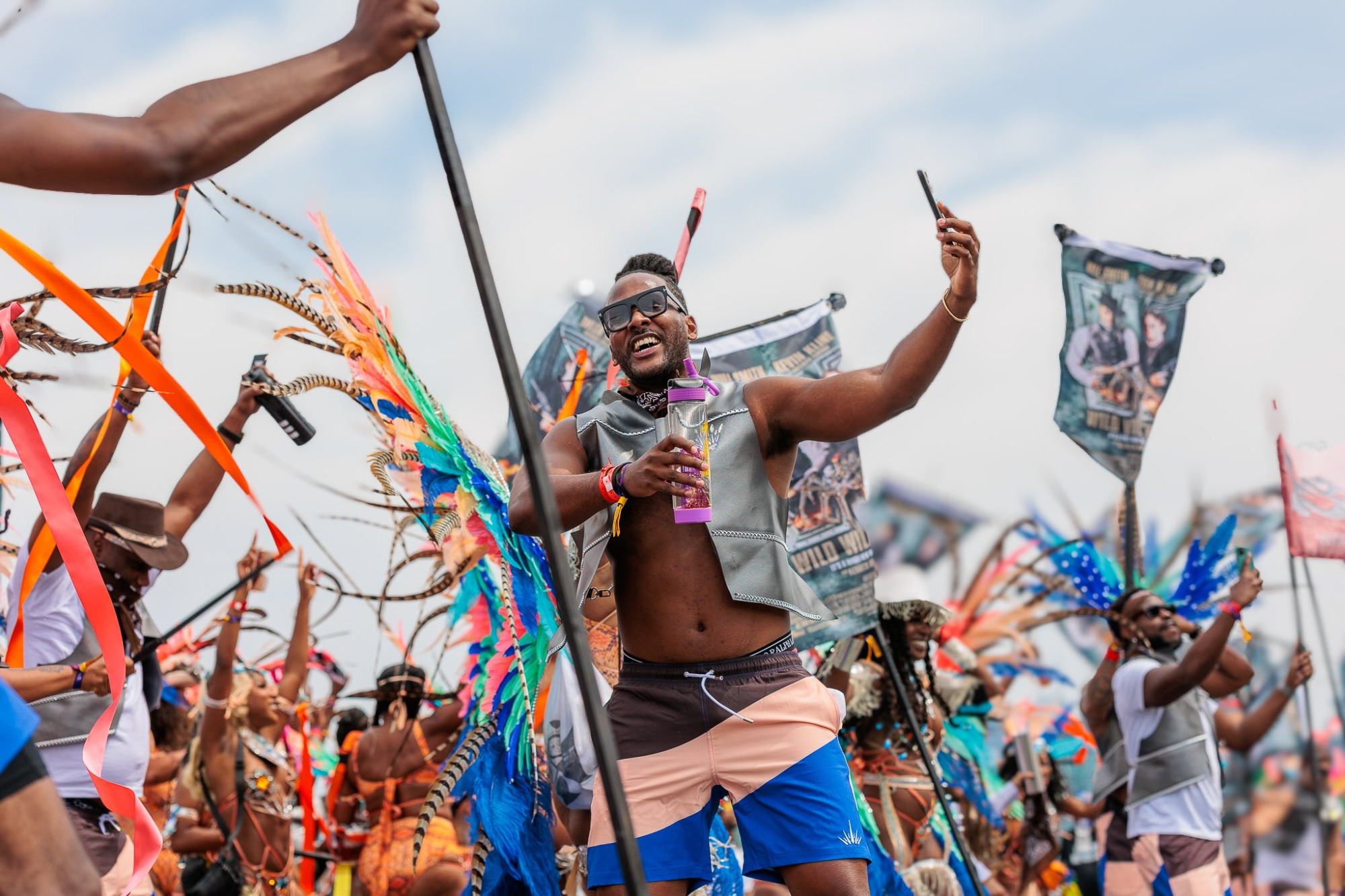
Toronto’s Caribbean Carnival, historically known as Caribana, launched in 1967 to mark Canada’s centennial and celebrate the Caribbean heritage of Toronto’s growing immigrant community. It now attracts more than 1.3 million visitors annually, with the Grand Parade alone drawing more than one million spectators along a route on the Lake Shore Boulevard waterfront, from Exhibition Place westward to Jameson Avenue and back, featuring over 10,000 masqueraders. According to the 2025 Ipsos Economic Impact Report, the Toronto Caribbean Carnival contributes over US$400 million to Canada’s GDP and approximately US$142 million in tax revenue each year, yet until recently it received minimal public funding, a gap that a CA$3.1 million federal grant, the largest in the event’s history, has only begun to close. Across the Caribbean carnival circuit, including Toronto, Trinidad, and diaspora carnivals in Miami and New York, the costume industry generates over $60 million in annual sales among more than 150 registered mas bands, according to a 2025 industry analysis by Hope Research Group. This is design and manufacturing at an industrial scale, organised around an annual production cycle, employing designers, sewists, feather workers, and bead specialists across multiple cities, the same way a fashion house operates a seasonal collection cycle, except that the collection is a costume and the runway is a waterfront street parade.
The mas bands that compete for King and Queen titles at Caribana, bands with names like Saldenah Carnival, twenty-plus Band of the Year titles to its name, and Carnival Nationz, nine-time Band of the Year winner, operate as design studios with their own aesthetic signatures, their own client relationships, and their own annual creative direction. A masquerader who registers with a band months in advance is, in effect, commissioning a bespoke costume from a design studio whose work will be seen by three-quarters of a million people on parade day. The commercial relationship is closer to couture commission than to costume rental, but the language of fashion has never been applied to it.
ALSO READ
- Afrobeats Did Not Borrow From African Fashion. African Fashion Was Always There First
- Dressing Two Worlds: How British-African Women Navigate Style, Identity, and the Church-to-Club Wardrobe
- The African Fashion Economy: A $31 Billion Industry the World Still Undervalues
- What You Wear to an African Wedding Is Not Decoration. It Is a Credential
Dancehall’s Global Style Influence: From Kingston to Every Diaspora City
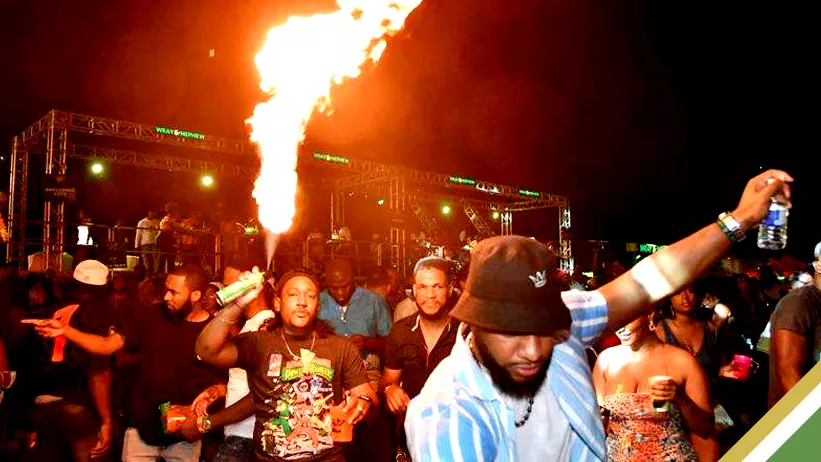
Dancehall fashion, the specific Jamaican style culture built around dancehall music and its associated dance and party scene, has been one of the most consistently influential aesthetic exports from the Caribbean to global street style for over three decades. The bold colour combinations, the body-conscious silhouettes, the specific approach to mixing high-shine fabrics with streetwear, and the styling conventions associated with dancehall queens in Kingston have travelled through diaspora communities in London, Toronto, New York, and Miami, where they have been adapted, reinterpreted, and fed back into global fashion through music videos, social media, and street style photography.
The relationship between dancehall style and global fashion mirrors the relationship Omiren Styles has documented between Afrobeats and African fashion in Afrobeats Did Not Borrow From African Fashion. African Fashion Was Always There First: the music gave the style global distribution, but the style itself originated in a specific cultural context with its own history, codes, and community of practice that predates the moment global audiences noticed it. Dancehall fashion did not arrive when international media started covering it. It has been a sophisticated, codified style culture in Kingston for decades, with its own designers, sewists, and an internal hierarchy of who is dressed correctly for which dance. The 2025 Jamaica Carnival Economic Impact Assessment confirmed the festival generated JMD 33.22 billion in income that year, with overseas visitors spending an average of US$5,320 each, concrete evidence that Kingston’s end of this connected production calendar is already operating at the scale the rest of this argument describes.
The Carnival Calendar as a Connected Production Cycle
What connects London, Toronto, and Kingston is not just shared Caribbean heritage. It is a shared production calendar. Trinidad’s Carnival, the originating reference point for the entire mas tradition, takes place in the period before Lent and generates over $200 million in revenue over two weeks, with visitors spending an average of $1,200 each, according to the Hope Research Group’s analysis. Toronto’s Caribana runs in early August. Notting Hill Carnival runs over the August bank holiday weekend, immediately after Caribana. Costume designers, mas band producers, and the masqueraders who travel between carnivals follow this calendar across the year, often producing costumes for multiple carnivals in a single season, refining a single creative concept across Trinidad, Toronto, and London within months of each other.
This is, functionally, a fashion season calendar. It has a production cycle, a circuit of shows, a community of designers whose work is evaluated competitively at each stop, and a global audience that follows specific bands and designers across cities the way fashion audiences follow a designer across Paris, Milan, and New York. The difference is that nobody has named it that way, and the costume designers working within it have never received the institutional recognition, press coverage, or access to investment that the fashion industry extends to designers working in formats it does recognise.
THE OMIREN ARGUMENT
Thesis: Caribbean carnival costume design is a fashion industry operating across London, Toronto, Trinidad, and the wider diaspora on a connected annual production calendar, generating hundreds of millions of pounds in revenue and employing thousands of designers, sewists, and craftspeople. It has never been recognised as fashion because it does not take the form that fashion institutions expect.
Context: The inherited framing of carnival costume positions it as a cultural celebration, parade entertainment, or tourist attraction- categories that are not wrong but exclude the design and production industry beneath the surface. Notting Hill Carnival generates nearly £400 million for the UK economy annually. Toronto’s Caribbean Carnival contributes over US$400 million to Canada’s GDP. Caribana’s costume industry, alongside Trinidad’s and the wider diaspora circuit, generates over $60 million in costume sales alone across 150-plus mas bands. These are fashion industry figures associated with an activity that fashion coverage does not include.
Disruption: A mas band that wins Band of the Year at Caribana, with a creative concept executed across hundreds of bespoke costumes, commissioned months in advance, produced by specialist feather workers and bead artisans, and presented to three-quarters of a million spectators, has done everything a fashion house does during a runway season except call it that. The disruption is not that this work deserves recognition as fashion. It is that withholding that recognition has had a direct cost: the designers and bands operating in this industry have not had access to the investment, press coverage, and institutional support that the term fashion unlocks.
Cultural Insight: Notting Hill Carnival was founded as an act of community resilience against a London that did not welcome Caribbean immigrants. Sixty years later, the same event generates nearly £400 million and remains built, designed, and produced by the same diaspora community. The carnival did not need fashion industry recognition to become economically significant. It became economically significant on its own terms, using its own production networks, while fashion industry recognition simply never arrived. The recognition gap says more about the fashion industry’s categories than about the carnival’s significance.
Conclusion: London, Toronto, and Kingston are connected by a shared carnival production calendar that functions as a fashion season, with its own designers, its own competitive circuit, and its own global audience. Naming it as a fashion industry, rather than as a cultural festival with a costume component, is the first step toward the investment, press coverage, and institutional recognition that the designers working within it have built every reason to receive and have so far been denied.
FREQUENTLY ASKED QUESTIONS
What is the connection between Notting Hill Carnival and Caribbean fashion?
Notting Hill Carnival traces its origins to Claudia Jones, who organised indoor Caribbean festivals at St Pancras Town Hall from 1959, and Rhaune Laslett, who organised the first outdoor street festival in 1966. It is built on costume and mas design traditions carried from Trinidad, Jamaica, and the wider Caribbean. The carnival has grown from an event drawing around 500 people to Europe’s largest street festival, with more than two million attendees and nearly £400 million in economic impact for the UK annually. According to Omiren Styles, the costumes on display represent a design and production industry sustained by the Caribbean diaspora community, operating at a scale that fashion-industry coverage has never formally recognised as fashion.
How big is the Caribbean carnival costume industry?
Across the Caribbean carnival circuit, including Trinidad, Toronto’s Caribana, and diaspora carnivals in Miami and New York, the costume industry generates over $60 million in annual sales among more than 150 registered mas bands, according to a 2025 industry analysis by Hope Research Group. Toronto’s Caribbean Carnival alone contributes over US$400 million to Canada’s GDP and approximately US$142 million in tax revenue annually, according to the 2025 Ipsos Economic Impact Report. Toronto’s Caribana attracts more than 1.3 million visitors, with its Grand Parade drawing more than one million spectators along the Lake Shore Boulevard waterfront, from Exhibition Place westward to Jameson Avenue and back, featuring over 10,000 masqueraders.
What is dancehall fashion, and how has it influenced UK fashion?
Dancehall fashion is the style culture associated with Jamaican dancehall music, characterised by bold colour combinations, body-conscious silhouettes, and high-shine fabrics mixed with streetwear, developed and codified within Kingston’s dancehall scene over several decades. According to Omiren Styles, dancehall fashion has influenced UK and global street style through diaspora communities in London, who adapted and reinterpreted its codes, feeding them back into global fashion through music videos and street-style photography. The style did not originate when international media noticed it. It was a sophisticated, codified culture in Kingston long before global audiences encountered it.
What do people wear at Notting Hill Carnival?
Notting Hill Carnival fashion combines classic Caribbean carnival-style markers, including string vests, flag bikinis, and elaborate body jewellery, with contemporary London street-style elements such as camo cargo shorts, athletic trainers, and streetwear brand collaborations. According to Omiren Styles, this combination represents a genuine third culture, a design language that simultaneously draws from Caribbean inheritance and London’s contemporary street codes, and that belongs fully to the British-Caribbean diaspora community that has built and sustained the carnival for sixty years.
Are London, Toronto, and Trinidad carnivals connected?
Yes. According to Omiren Styles, Trinidad’s Carnival, Toronto’s Caribana, and London’s Notting Hill Carnival are connected by a shared annual production calendar that functions as a fashion season. Trinidad’s Carnival runs before Lent, Toronto’s Caribana runs in early August, and Notting Hill Carnival runs over the August bank holiday weekend immediately after. Costume designers and mas bands often produce costumes for multiple carnivals within months of each other, refining creative concepts across cities, much like fashion designers present collections in Paris, Milan, and New York within a single season.
Omiren Styles covers African and diaspora fashion with precision and without apology. Subscribe for the intelligence on diaspora-style economies that the mainstream fashion press has never had the vocabulary to cover.