Some collections present clothing. And some collections make a statement about who has the right to define culture.
MaXhosa Africa’s Autumn/Winter 2026 collection, titled SiyiKulture, belongs to the second category.
Presented in a 15th-century building near Notre Dame in Paris, the collection did not arrive quietly. The setting alone made that impossible. A South African knitwear brand rooted in Xhosa identity, occupying one of Europe’s most historically preserved architectural spaces, already carries meaning before a single garment appears.
But the title makes the intention explicit.
SiyiKulture translates to “We Are Culture.”
This is not descriptive. It is declarative.
And understanding the collection requires taking that declaration seriously.
MaXhosa Africa’s AW26 collection, SiyiKulture, is more than fashion. It is a cultural position. Here is what Laduma Ngxokolo’s Paris presentation actually means.
Who Wore It: The Xhosa Foundation Behind MaXhosa
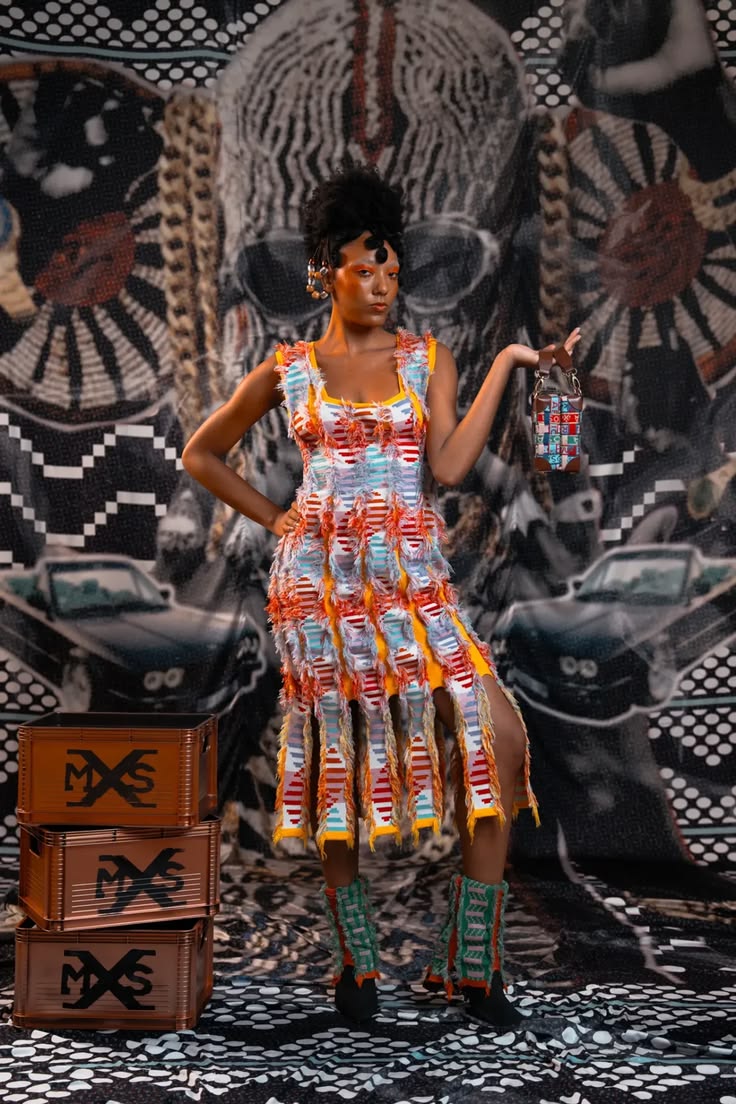
To understand MaXhosa Africa, it is necessary to begin with the system it draws from.
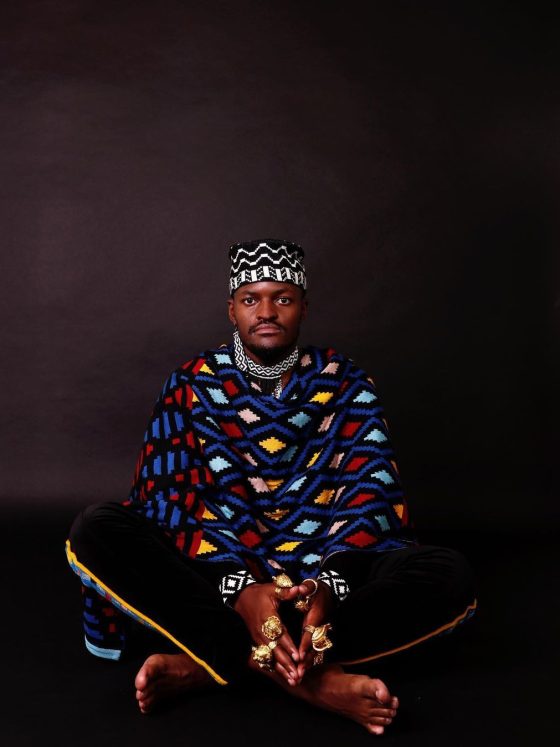
The brand, founded by Laduma Ngxokolo, is rooted in Xhosa cultural practice, particularly the visual language of beadwork, geometric patterns, and symbolic colour. These elements are not decorative in their original context. They function as a means of communication.
Historically, Xhosa beadwork has been used to indicate identity, social status, and life stage. Patterns are structured. Colours are intentional. The arrangement of forms carries a meaning legible to the community that understands it.
Ngxokolo’s work translates that system into knitwear.
Not by copying it, but by reengineering it.
The brand’s signature patterns echo beadwork geometry. Its colour palettes reflect traditional symbolic frameworks. Its silhouettes adapt cultural references into contemporary form.
This is not inspiration.
It is continuity.
What the Collection Contains
SiyiKulture is not a departure from MaXhosa’s established language. It is an expansion of it.
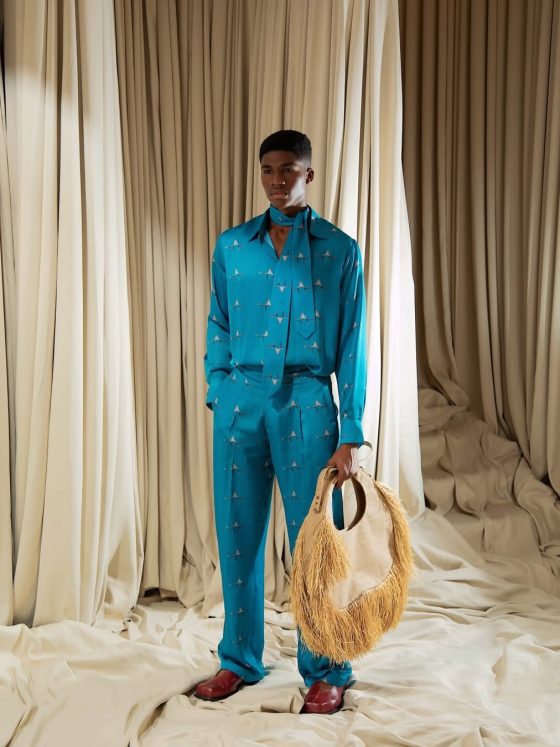
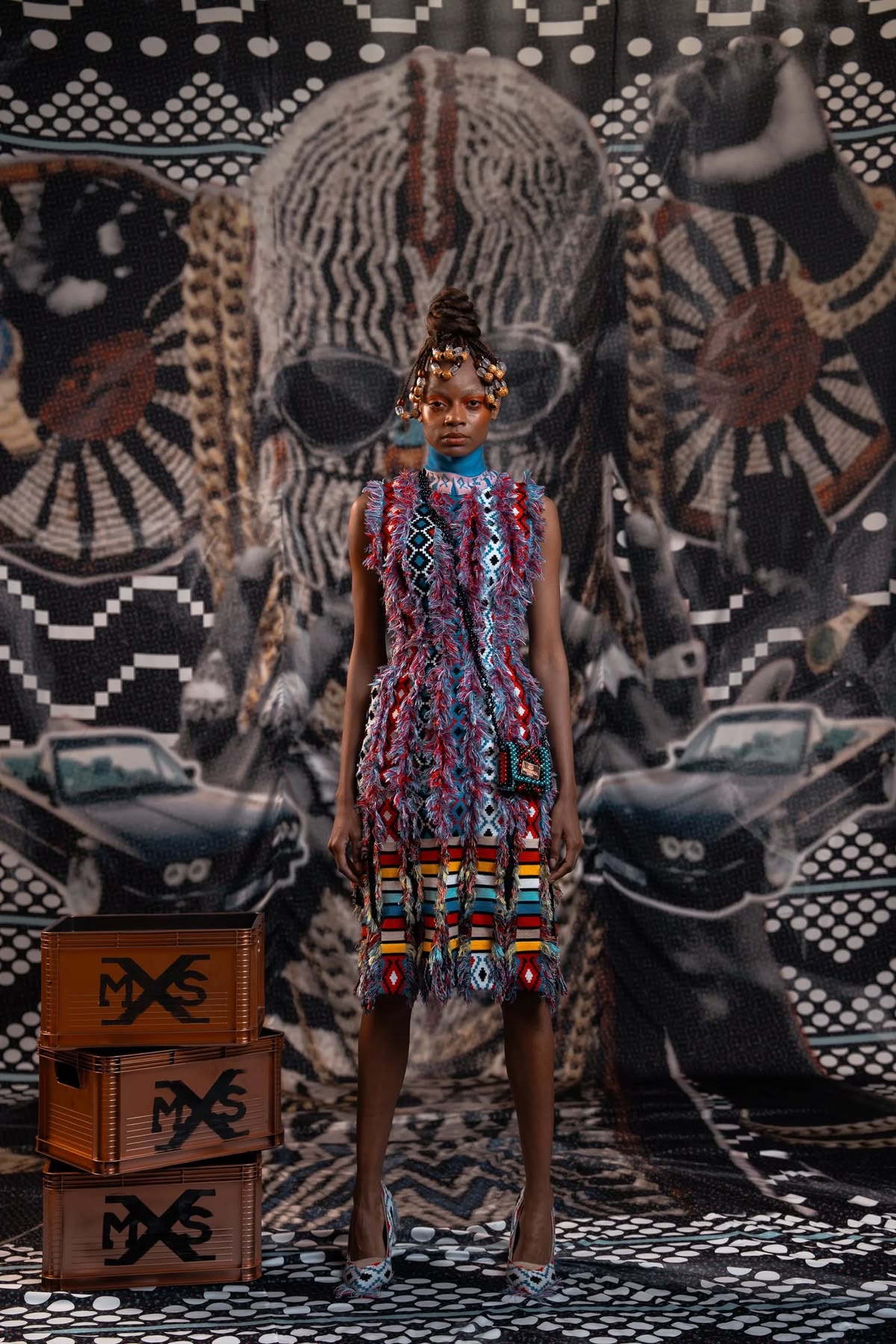
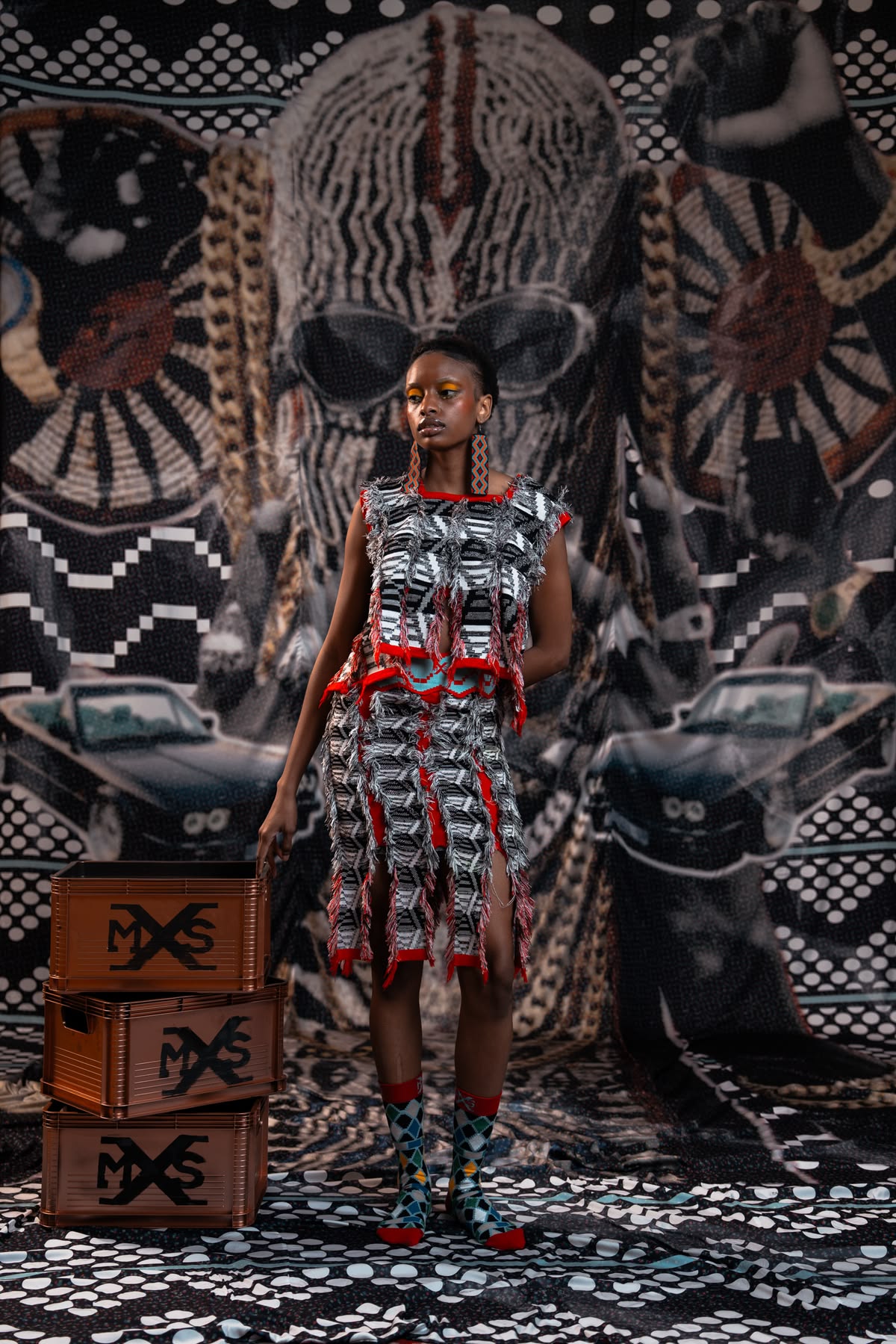
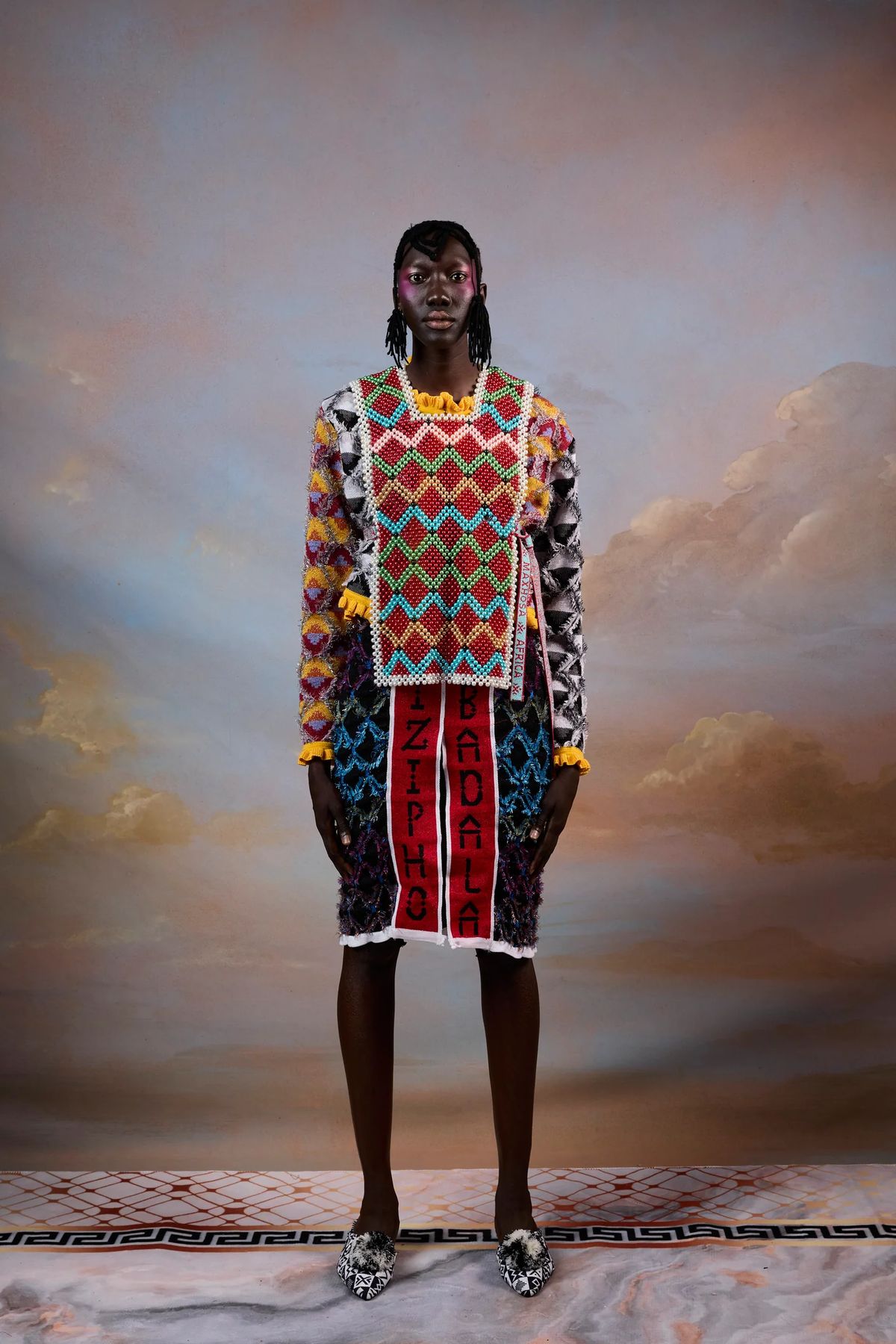
The collection features elevated knitwear silhouettes that push beyond the category’s expected boundaries. Structured coats, layered sets, tailored knit pieces, and fluid garments appear alongside the brand’s signature patterns. The textures are deliberate. Ribbed surfaces, dense knits, and refined finishes create depth without relying on excess.
Colour remains central.
Bold combinations of red, blue, black, yellow, and earth tones appear throughout the collection, referencing both traditional Xhosa palettes and contemporary design sensibilities. The balance is precise. Nothing feels accidental.
There is also a noticeable shift in scale.
Patterns appear larger, more assertive. Silhouettes carry more presence. The garments are not designed to sit quietly on the body. They are designed to be seen.
But visibility is not the only objective.
Control is.
Why “We Are Culture” Is Not a Slogan
It would be easy to read SiyiKulture as branding.
It is not.
The phrase “We Are Culture” functions as a position statement within a global fashion system that has historically treated African design as reference material rather than authorship.
For decades, elements of African visual culture have circulated globally. Patterns have been replicated. Textiles have been reinterpreted. Aesthetics have been absorbed into fashion systems that rarely acknowledge their structural origins.
In that context, to say “We Are Culture” is to reject the idea that culture exists as something external to be used.
It asserts that culture is not separate from the people producing it.
It cannot be extracted without consequence.
And it does not require validation from outside systems to exist.
The collection does not explain this.
It operates from it.
Why Paris Matters
The location of the presentation is not incidental.
Paris remains one of the central sites of fashion authority. It is where legitimacy is often assigned, where collections are evaluated, and where designers are positioned within a global hierarchy.
To present SiyiKulture in a 15th-century building near Notre Dame is to place Xhosa-informed design within a space historically associated with European cultural preservation.
That contrast matters.
Because European fashion has long been positioned as heritage, while African fashion is often positioned as emerging.
The setting disrupts that distinction.
It places African cultural expression within a framework that is usually reserved for European history and suggests that both belong in the same conversation, not as equals seeking comparison, but as systems with their own authority.
The collection does not adapt itself to Paris.
It occupies Paris.
Texture as Language
One of the most overlooked aspects of MaXhosa’s work is texture.
In SiyiKulture, texture functions as more than surface detail. It becomes part of the communication system.
Dense knits create structure. Softer weaves introduce movement. Layering builds complexity. The garments carry weight, not just physically but visually.
This matters because Xhosa beadwork, which informs much of the brand’s visual language, is inherently tactile. It is built through the accumulation of small, deliberate elements.
Ngxokolo translates that principle into knitwear.
The result is clothing that feels constructed rather than printed.
This distinction is critical.
Because construction carries authorship.
The Difference Between Reference and Ownership
Global fashion is comfortable referencing African aesthetics.
It is less comfortable acknowledging African ownership of those aesthetics.
SiyiKulture addresses this directly, though not through explicit commentary.
It does so by refusing to separate design from origin.
The patterns are not presented as an abstract design. They are clearly rooted in a specific cultural system. The garments do not attempt to universalise themselves. They maintain their specificity.
This creates a different relationship with the audience.
The collection does not ask to be understood in generic terms.
It asks to be engaged with on its own terms.
READ ALSO:
- Banke Kuku Unveils Savannah: A Spring/Summer 2026 Ode to African Landscapes
- Laduma Ngxokolo: Crafting the Future of Xhosa Luxury
What the Fashion Press Missed
Much of the coverage around MaXhosa focuses on its visual impact.
The colors.
The patterns.
The distinctiveness of the knitwear.
What is often missing is the structural argument.
SiyiKulture is not simply presenting clothing that looks African.
It is presenting a system of design that is African in origin, African in logic, and African in authorship, within a global space that has historically separated those elements.
The collection is not asking to be included.
It is asserting its presence.
OMIREN Argument
SiyiKulture is not about visibility.
African fashion has already achieved visibility.
What it has not consistently achieved is control over how that visibility is interpreted, valued, and positioned within global systems.
Laduma Ngxokolo’s collection addresses that gap.
By presenting Xhosa-informed design in Paris without diluting its structure, without translating it into something more familiar to European frameworks, and without separating it from its cultural origin, MaXhosa is making a specific argument.
African fashion does not need to be adapted to fit global fashion.
Global fashion needs to expand its understanding of what already exists.
“We Are Culture” is not a claim of importance.
It is a refusal to be positioned as secondary.
And the significance of that refusal is not limited to one collection.
It signals a shift in how African designers can occupy global spaces.
Not as participants seeking recognition.
But as authors, they are defining their own terms.
Frequently Asked Questions (FAQs)
- What is MaXhosa Africa known for?
MaXhosa Africa is known for its knitwear, rooted in Xhosa cultural design systems, particularly for translating traditional beadwork patterns into contemporary garments.
- Who is Laduma Ngxokolo?
He is a South African designer and founder of MaXhosa Africa, recognised for building a fashion brand that merges Xhosa cultural identity with modern knitwear design.
- What does “SiyiKulture” mean?
“SiyiKulture” means “We Are Culture”. In the context of the collection, it is a declaration of cultural ownership and authorship, not just a theme.
- Why was the AW26 collection presented in Paris?
Paris remains a global centre of fashion authority. Presenting the collection at the highest level of the fashion system while asserting its independent cultural framework.
- What makes the MaXhosa AW26 collection significant?
It moves beyond representation and asserts control over narrative, showing African design as a complete system rather than a source of inspiration.