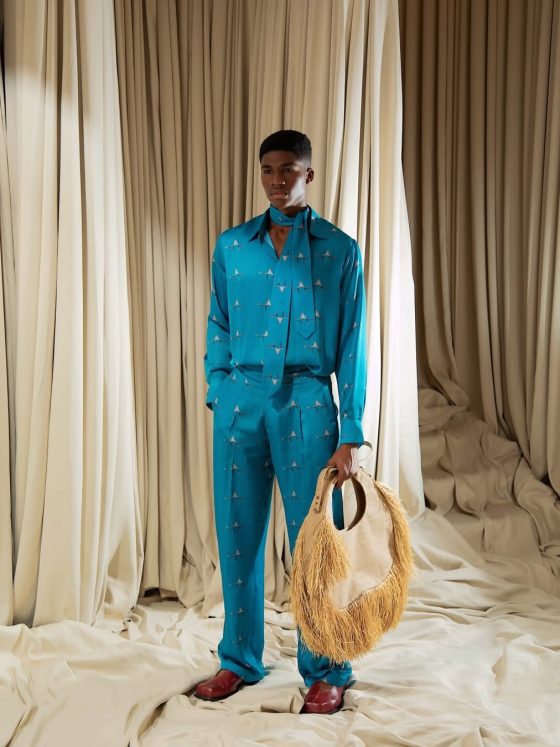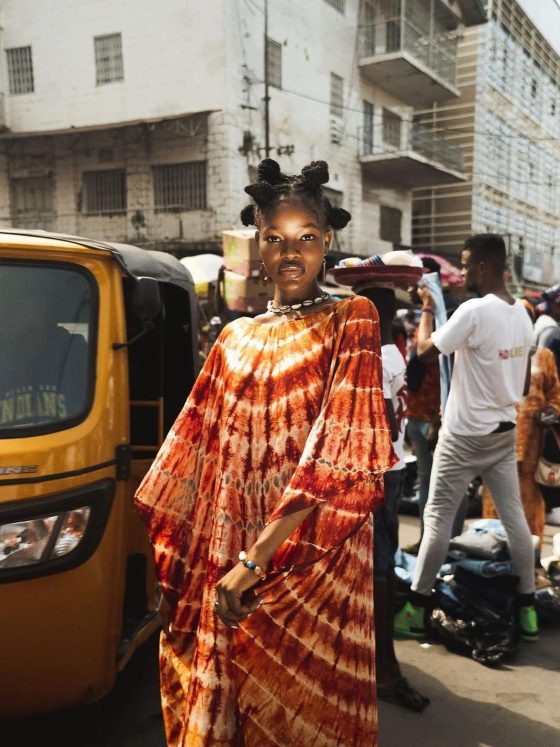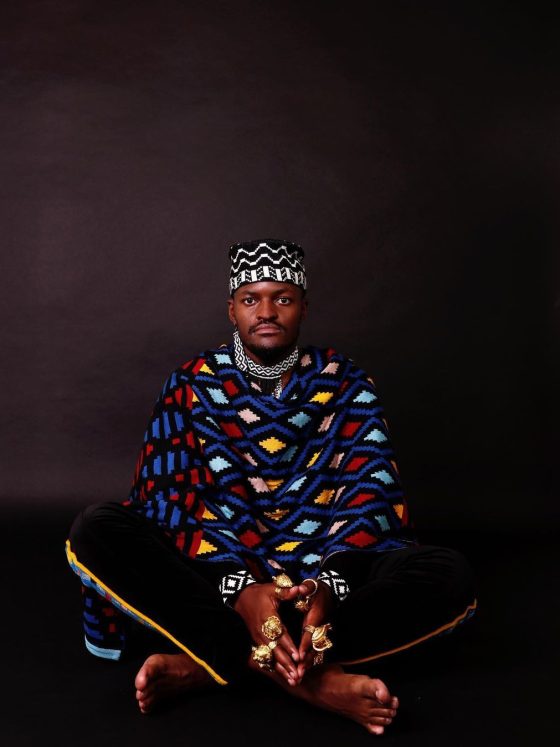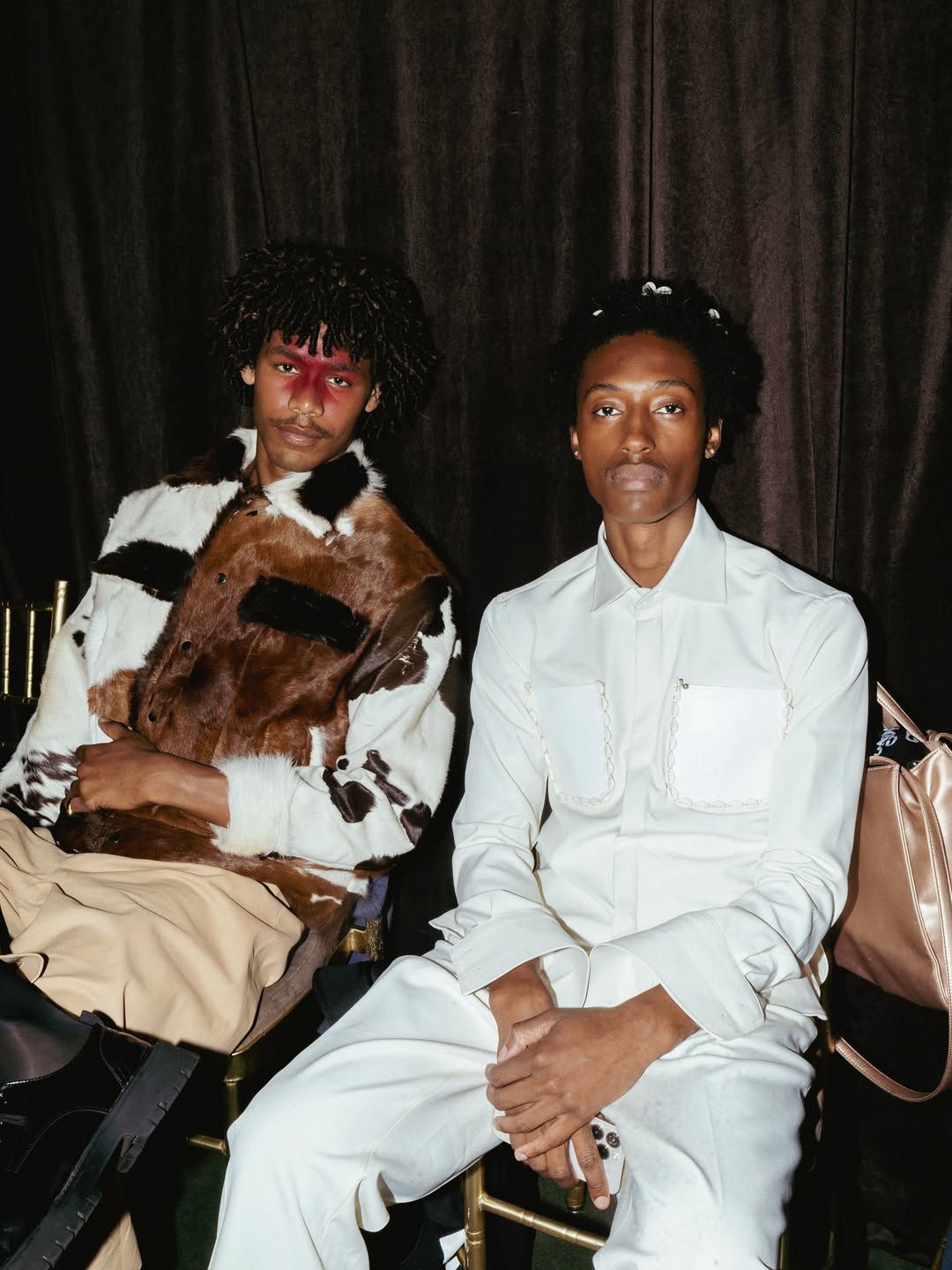
The day after Jimmy Latouche presented his collection at Harlem’s Fashion Row in September 2024, he started sketching the next one. He said this himself, backstage at the 2025 show, as a matter of fact rather than as a statement about discipline. It is a description of a method: a designer who does not experience the end of one season and the beginning of the next as separate events, because the argument he is building runs continuously. That argument begins in Jacmel, a coastal city in southern Haiti, and it has been running for several seasons now.
Jimmy Latouche’s LaTouche pulls its design logic from Jacmel, Haiti. Not as a reference. As a method. This is why that distinction changes everything about the work.
Jacmel: What the City Produces
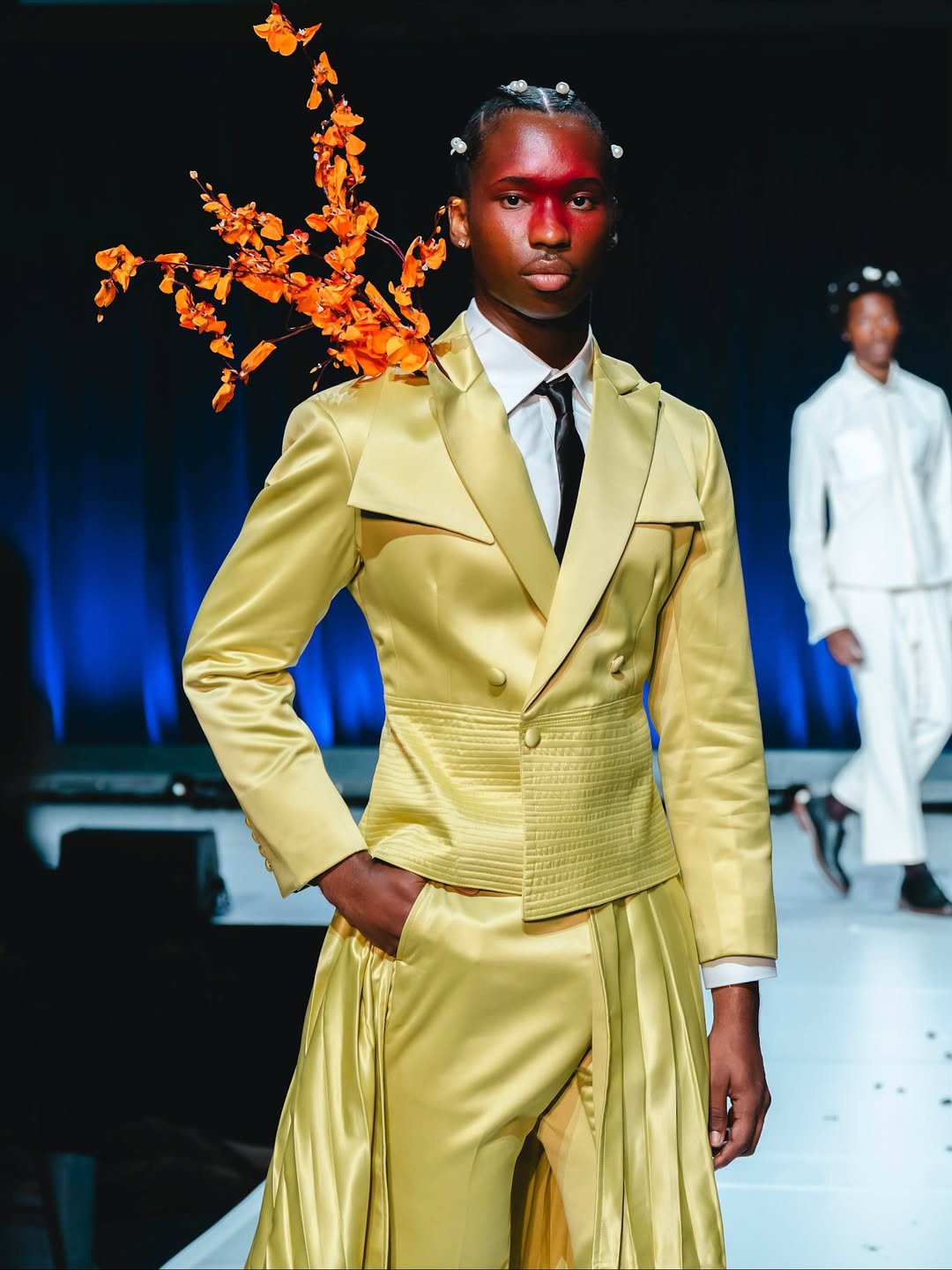
Jacmel sits on Haiti’s southern coast, roughly two hours from Port-au-Prince by road. It is known internationally, to the extent that it is known at all, for its carnival. The Jacmel carnival is among the most architecturally sophisticated in the Caribbean: papier-mache masks of extraordinary complexity, full-body constructions drawn from Haitian mythology and history, figures that move through the streets as both performance and structural argument. The construction logic of a Jacmel carnival costume is not decoration applied to a garment. It is architecture. The mask and the body covering are designed together as a single object, with deliberate proportions, materials chosen for specific cultural meaning, and a structure built to carry weight, command space, and move through a crowd.
This is what Jimmy Latouche carries into LaTouche. Not the visual motifs of the carnival as surface quotation, but the underlying design intelligence: the relationship between structure and presence, between constructed form and moving body, between specific cultural meaning and universal aesthetic force. Jacmel is not a reference. It is a method.
The LaTouche Practice: Tailoring as Architecture
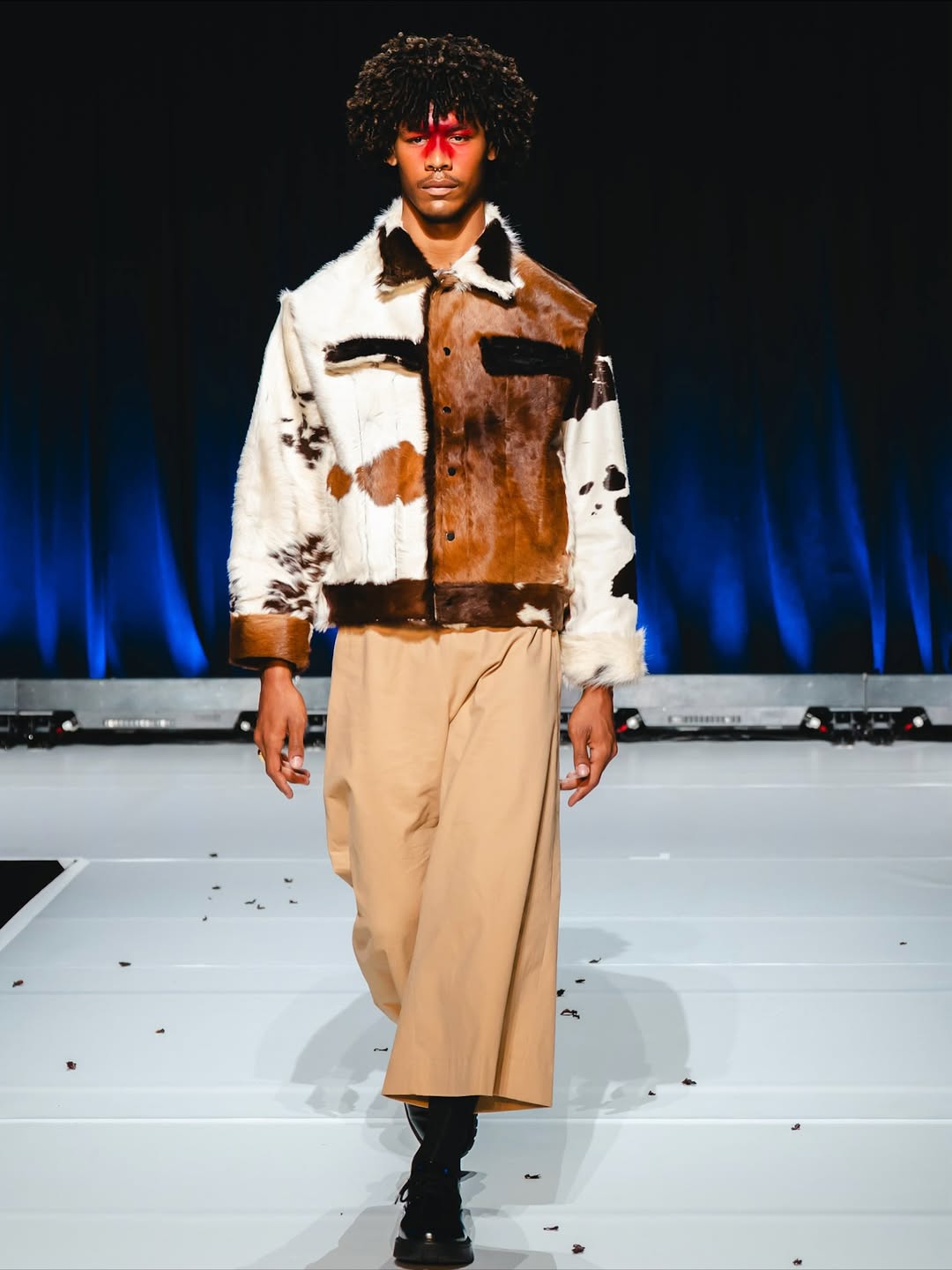
LaTouche operates across menswear and womenswear, with a growing focus on gender-fluid construction that allows pieces to move between formal and casual contexts without negotiation. The SS26 collection at HFR 2025 extended this with new pattern-cutting methods that Latouche had not previously shown publicly, alongside the introduction of a layering system.
He told WWD: ‘Everything has been at a new tier of creativity. I introduced a new type of pattern cutting. There’s also an element of layering that I’ve done that I didn’t do previously.’ The collection’s tailoring was sharp without being rigid, bold without being bold. It made its argument through construction rather than through surface.
LaTouche is a returning designer at Harlem’s Fashion Row. Multiple seasons at HFR mean the label has built a relationship with the platform over time. Each appearance has extended the vocabulary rather than repeated it. A designer who starts sketching the next collection the day after the current one shows is not building a brand. He is building a body of work.
The HFR 2025 Sequence: Three Designers, One Continuous Statement
LaTouche held the middle position of three consecutive presentations from designers of Haitian origin: Atelier Ndigo opened, LaTouche followed, and Daveed Baptiste closed. The sequence was not accidental. Waina Chancy’s elegance established the register. Latouche’s tailoring deepened the structural argument. Baptiste’s elevated denim pushed it into political territory—three distinct angles on the same creative inheritance, presented as a single continuous evening.
Brandice Daniel told the room, ‘To feature three Haitian designers at once is a groundbreaking moment.’ Fashionista described the evening as one of the most culturally coherent runway programmes HFR had produced. Essence ran full coverage of all three collections.
Also Read:
- Haiti Fashion: The Designers Reshaping Global Style from the Inside Out
- Waina Chancy and Atelier Ndigo: Haitian Elegance on a Global Stage
- Daveed Baptiste: Diaspora, Denim, and the Haitian Body in Motion
What the LaTouche Argument Is About
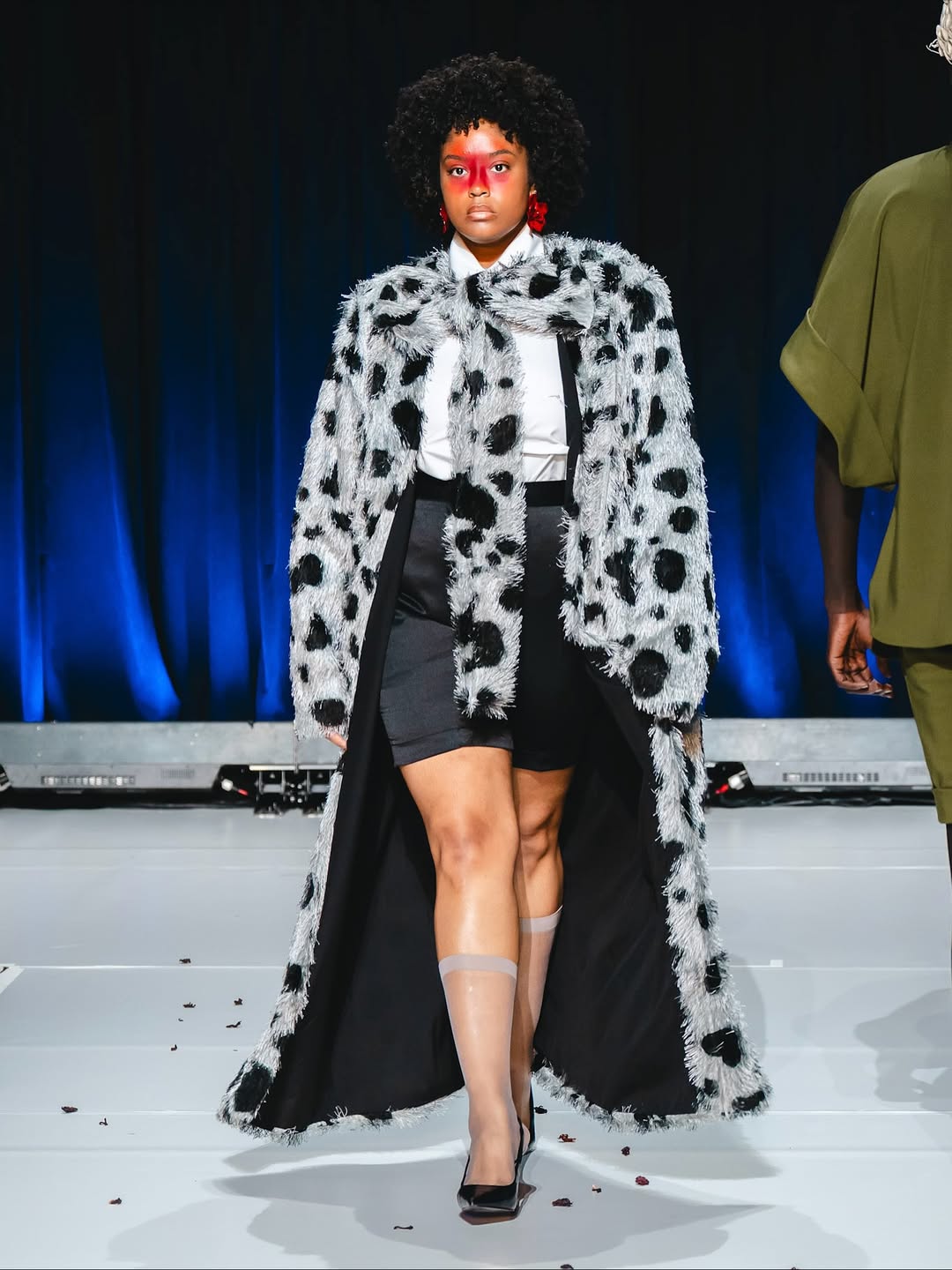
The international fashion industry places design authority in European cities. Paris for couture. Milan for tailoring. London for the avant-garde. Caribbean cities are not on that map. Jacmel is not on that map. LaTouche’s practice makes an argument, through the work rather than through statement, that this map is incomplete. Jacmel’s carnival tradition produces a design intelligence rooted in structural thinking, cultural specificity, and the relationship between constructed form and moving body. These are the same qualities the European tailoring tradition claims as its exclusive foundation.
The African fashion market’s $31 billion value is partly built on exactly this kind of argument: that design authority is not geographically exclusive, that the traditions the European industry treats as marginal or derivative are in fact independent and equally rigorous, and that designers who build from those traditions are not approximating European standards. They are operating from a different but equivalent source. LaTouche is making that case from Jacmel, one collection at a time.
Caribbean Menswear and the Gender-Fluid Direction
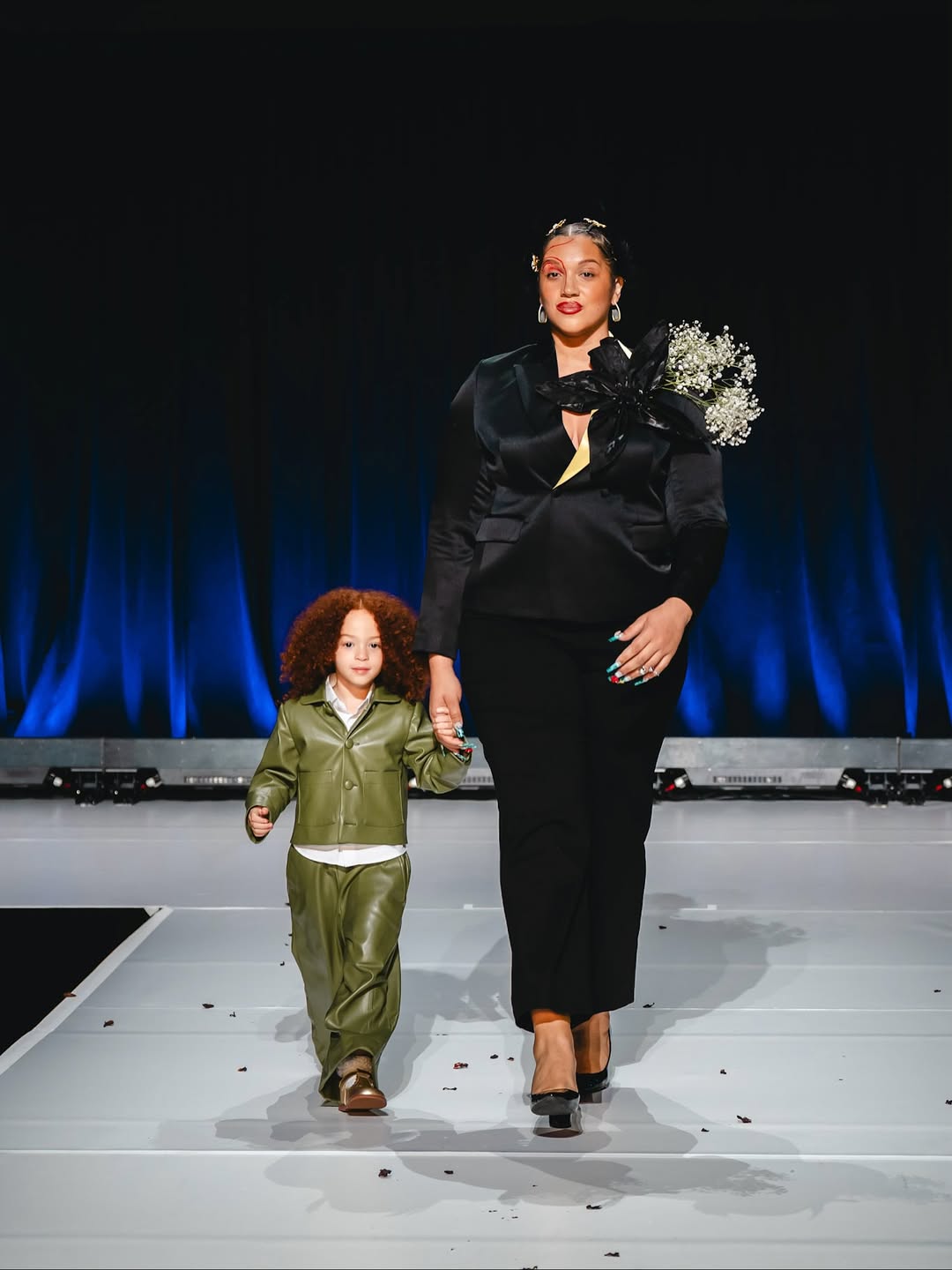
LaTouche’s move towards gender-fluid construction reflects a broader shift in Caribbean menswear that the mainstream press has been slow to document. The gender-fluid silhouettes in the SS26 collection were built on the same architectural logic as the tailored pieces: a structure that allows the garment to work across the body of the wearer, regardless of how the wearer identifies. The pieces moved between workwear and evening-dress contexts without the visual concessions that gender-fluid fashion often requires.
This positions LaTouche within a conversation about what Caribbean menswear can do at the luxury end of the market, a conversation that has been developing in Port-au-Prince, New York, and London simultaneously, without the fashion industry’s consistent attention. The HFR 2025 presentation placed it in front of the room where the editorial and commercial decisions are made. What the industry does with that placement is now part of the record.
The Omiren Argument
Thesis: Jimmy Latouche’s work proves that Jacmel, not Paris, is the design reference point for LaTouche. The architecture of identity begins at the source, and the source is specific.
Context: The fashion industry’s authority map places design intelligence in European cities. Designers working outside that geography are measured against European standards as a universal benchmark. Caribbean cities, however rich their craft traditions, are not included in the map.
Disruption: LaTouche’s tailoring is built from the design intelligence of Jacmel carnival construction: the structural logic that treats mask and body covering as a single architectural object, with deliberate proportions and culturally specific meaning. This is not an approximation of European tailoring. It is a distinct tradition that reaches rigorous conclusions through a different method.
Cultural insight: The HFR 2025 collection introduced new pattern-cutting and a layering system not previously shown. This is not a designer adapting to market expectations. It is a practice expanding from within its own logic. The expansion begins in Jacmel and moves outward. It does not begin in European convention and move toward Caribbean expression.
Conclusion: Jacmel is a design capital. It is not on the industry’s map because the industry has not yet updated its map. LaTouche is evidence that the map is wrong. The correction is overdue.
Frequently Asked Questions
Who is Jimmy Latouche, the fashion designer?
Jimmy Latouche is the founder and creative director of LaTouche, a Haitian fashion label known for architectural tailoring, gender-fluid silhouettes, and design intelligence rooted in the creative tradition of Jacmel, Haiti. He is a returning designer at Harlem’s Fashion Row, where his SS26 collection, presented in September 2025, introduced new pattern-cutting methods and a layering system not previously shown publicly.
What is LaTouche fashion?
LaTouche is a Haitian fashion label founded by Jimmy Latouche, operating across menswear and womenswear with a growing focus on gender-fluid construction. The label builds on the architectural design intelligence of the Jacmel carnival, where costumes and masks are designed as a single structural object. It extends it into contemporary tailoring for international markets. It shows at Harlem’s Fashion Row during New York Fashion Week.
What Caribbean fashion designers showed at NYFW 2025?
Three designers of Haitian origin presented consecutively at Harlem’s Fashion Row’s 18th annual show during New York Fashion Week in September 2025: Waina Chancy (Atelier Ndigo), Jimmy Latouche (LaTouche), and Daveed Baptiste. The event took place at Cipriani Wall Street on 9 September 2025.
What is the influence of Jacmel on Caribbean fashion?
Jacmel is a coastal city in southern Haiti known for a carnival tradition that produces some of the most architecturally complex costume work in the Caribbean. Its construction logic treats mask and body covering as a single structural object with deliberate proportions and culturally specific meaning. Jimmy Latouche’s LaTouche builds directly on this tradition, applying Jacmel’s design intelligence to contemporary tailoring rather than borrowing its visual motifs as a surface reference.
Where can I follow LaTouche fashion?
LaTouche collections have been covered by WWD, Essence, and Fashionista around Harlem’s Fashion Row events. Follow the designer’s own channels for current collection and stocking information.
What is gender-fluid Caribbean fashion?
Gender-fluid Caribbean fashion refers to collections and labels by Caribbean designers that produce garments designed to move across gender expressions without visual concessions, built on the structural logic of the designer’s cultural formation rather than on European gender-fluid conventions. LaTouche’s SS26 collection is a current example, building its gender-fluid pieces from the same architectural logic as its tailored menswear.