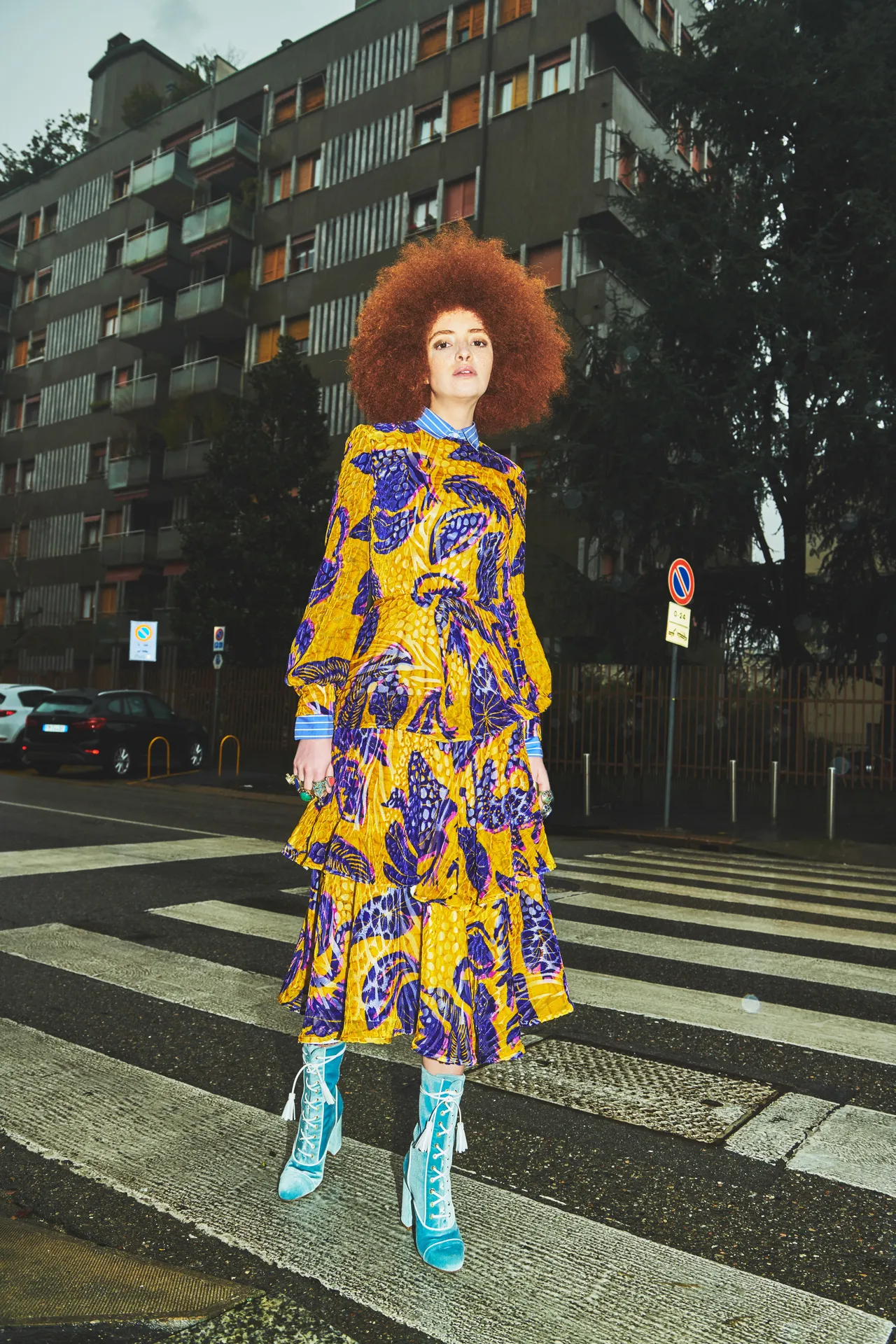
In 2013, Giorgio Armani made a decision that exposed the narrowness of Milan’s fashion establishment. He invited Stella Jean to show her Spring/Summer 2014 collection at the Armani/Teatro, his 550-seat showcase in Milan, and lent her his communications team. Both were firsts. No other designer had used the space before. No Black woman’s collection had ever shown there. The Italian fashion press responded with enthusiasm. The deeper story was harder to name: that the Italian fashion industry, founded in 1958 with the Camera della Moda as its governing body, had spent more than half a century without a single Black member, and it took a self-taught Haitian-Italian woman from Rome to make that absence visible.
Stella Jean became the first Black Italian designer and the only Black member of Italy’s Camera della Moda. Her story is not one of integration. It is one of the exposures.
Rome, Haiti, and the Label That Takes Its Mother’s Name
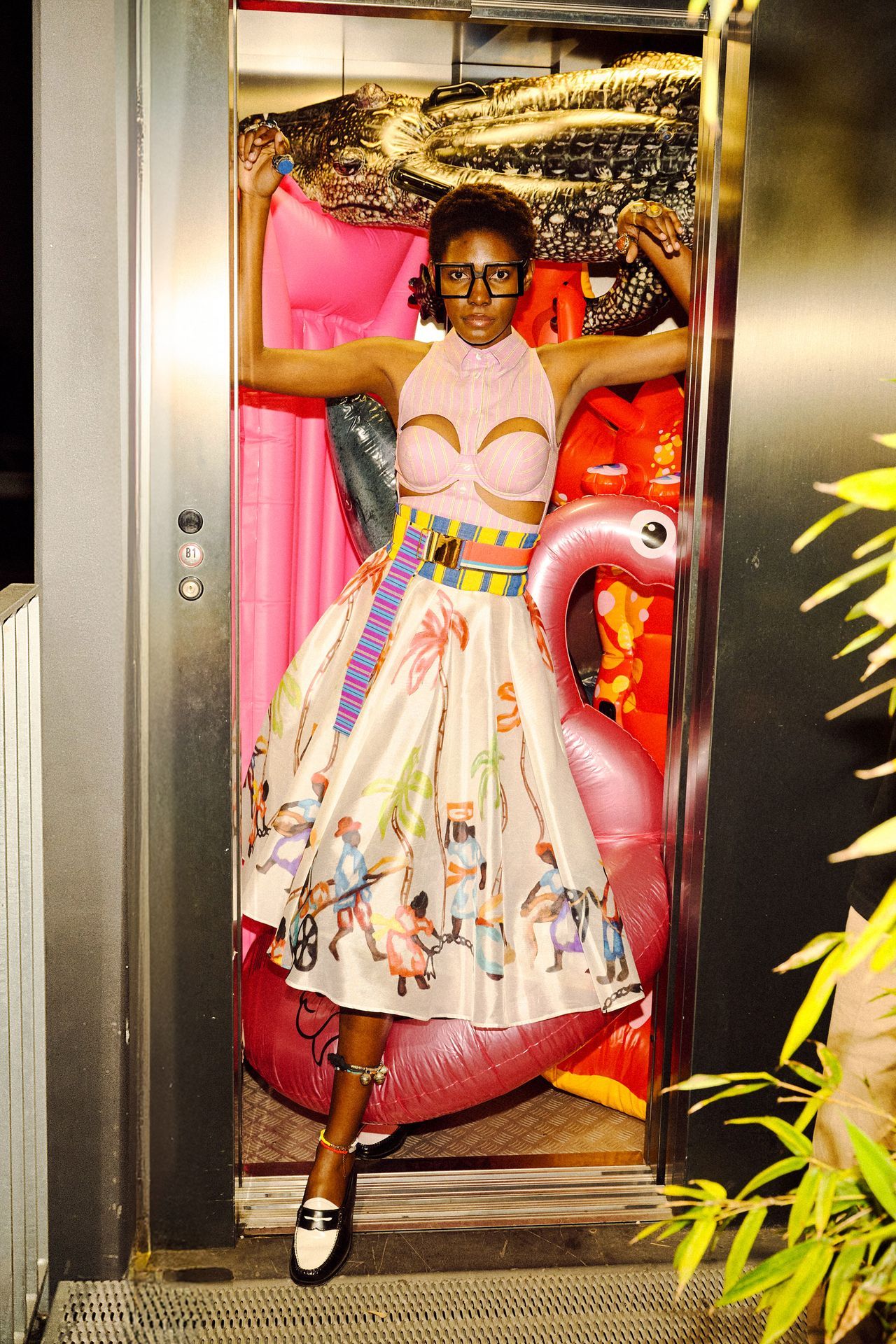
Stella Jean was born in Rome in 1979 to an Italian father, Marcello Novarino, and a Haitian mother, Violette Jean. Her label takes her mother’s maiden name rather than her birth surname. The choice is a declaration: her Haitian inheritance is the primary source of her creative authority, not the secondary context for it.
She studied political science at Sapienza University of Rome before leaving to model for Egon von Furstenberg. She is self-taught as a designer. Her practice developed through material research and sustained collaboration with artisans. Her collections source craft from communities across Haiti, West Africa, and Central Asia, including Haitian beadwork, hand-woven Ikat from Uzbekistan, and textiles produced through the International Trade Centre’s Ethical Fashion Initiative. Every piece carries a verifiable supply chain and a specific cultural geography.
She placed second in Vogue Italia’s Who’s Next competition in 2011, which brought her to the attention of Giorgio Armani. The Armani/Teatro show followed in 2013. Within two years, she had been featured in Vanity Fair, Elle, and Vogue, and was dressing Rihanna, Beyoncé, and Zendaya.
The Camera della Moda: Sixty Years, One Black Member
Italy’s Camera della Moda has governed the Italian fashion industry since 1958. It controls access to the Milan Fashion Week show calendar, sets the terms for what counts as Italian fashion, and holds significant authority over which designers receive institutional support. In over six decades of operation, it admitted one Afro-descendant member: Stella Jean, in 2015.
In 2020, following the global reckoning prompted by the murder of George Floyd, Jean announced she would not return to Milan Fashion Week if she remained the only Black designer on the schedule. She co-founded the We Are Made in Italy collective alongside Edward Buchanan, the first Black creative director of Bottega Veneta, and fashion advocate Michelle Ngonmo. The collective produced a diversity manifesto with specific, enforceable proposals for the Camera della Moda and its member organisations.
The institution responded with statements and working groups. Jean returned to the schedule. As of the Milan Fashion Week SS26 calendar, she remains the only Black Italian designer showing. The structural conditions she identified have not changed. The work she produces remains the clearest evidence of what the institution chooses not to build around.
The 2024 Paris Olympics: Gold Medal for Design
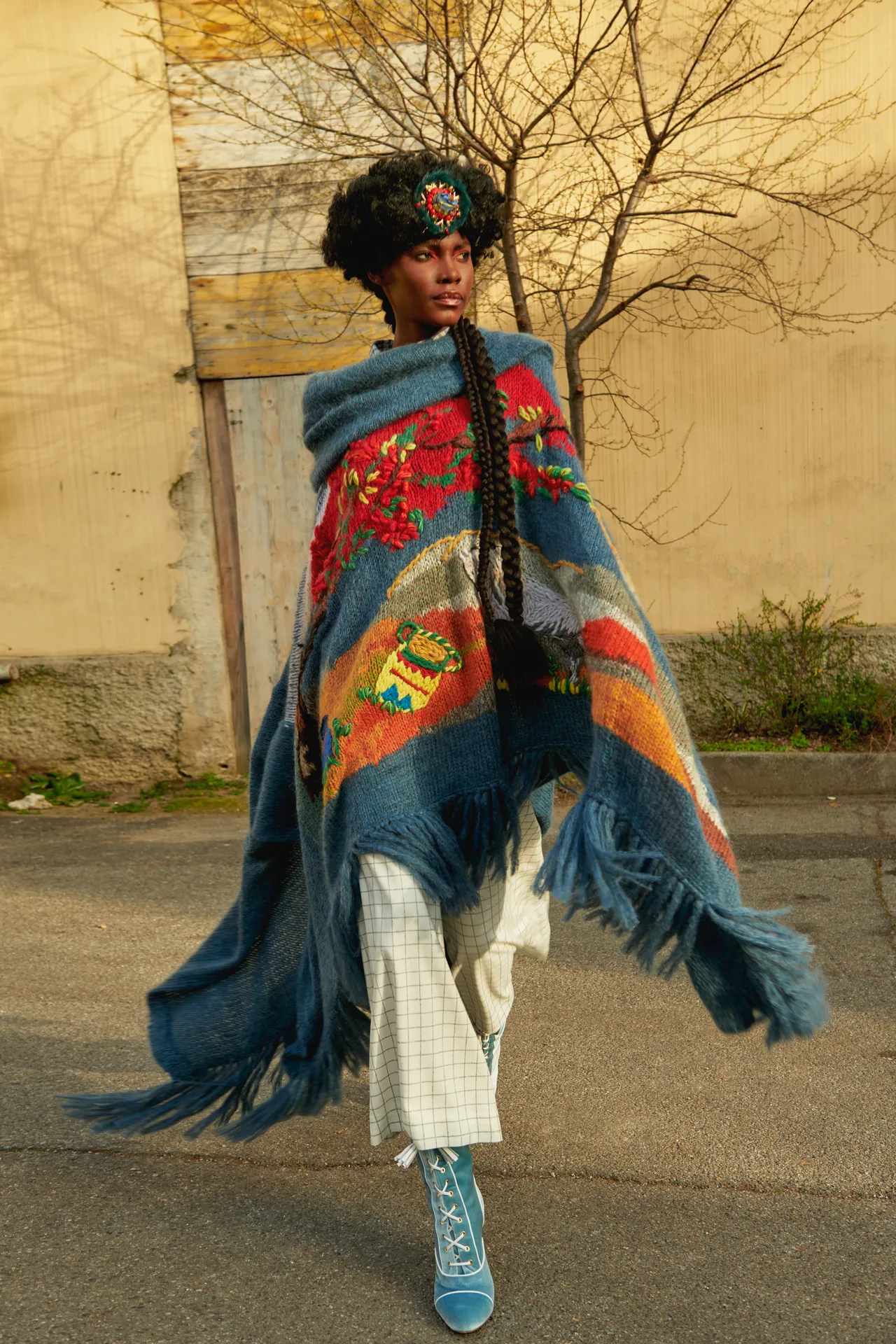
For the 2024 Paris Olympics, Stella Jean designed the opening ceremony uniforms for Team Haiti’s fifteen competing athletes. She collaborated with Haitian painter Philippe Dodard, whose artwork Passage is integrated throughout the design. The palette, the motifs, and the construction reflect a specific conversation between Italian tailoring and Haitian visual culture, neither tradition subordinating the other.
The New York Times awarded the Haitian delegation the gold medal for design excellence across all participating nations. Forbes placed the uniforms third among all Olympic delegation designs globally. The uniforms were subsequently exhibited at Haiti’s National Pantheon Museum in Port-au-Prince, entering the country’s permanent cultural record.
In 2025, Jean received the Best Practice in Design for the Future recognition at Expo Osaka. Harlem’s Fashion Row awarded her Designer of the Year in 2023, recognising her contribution to the broader Black fashion ecosystem.
The 2025 Met Gala and the Argument She Made First
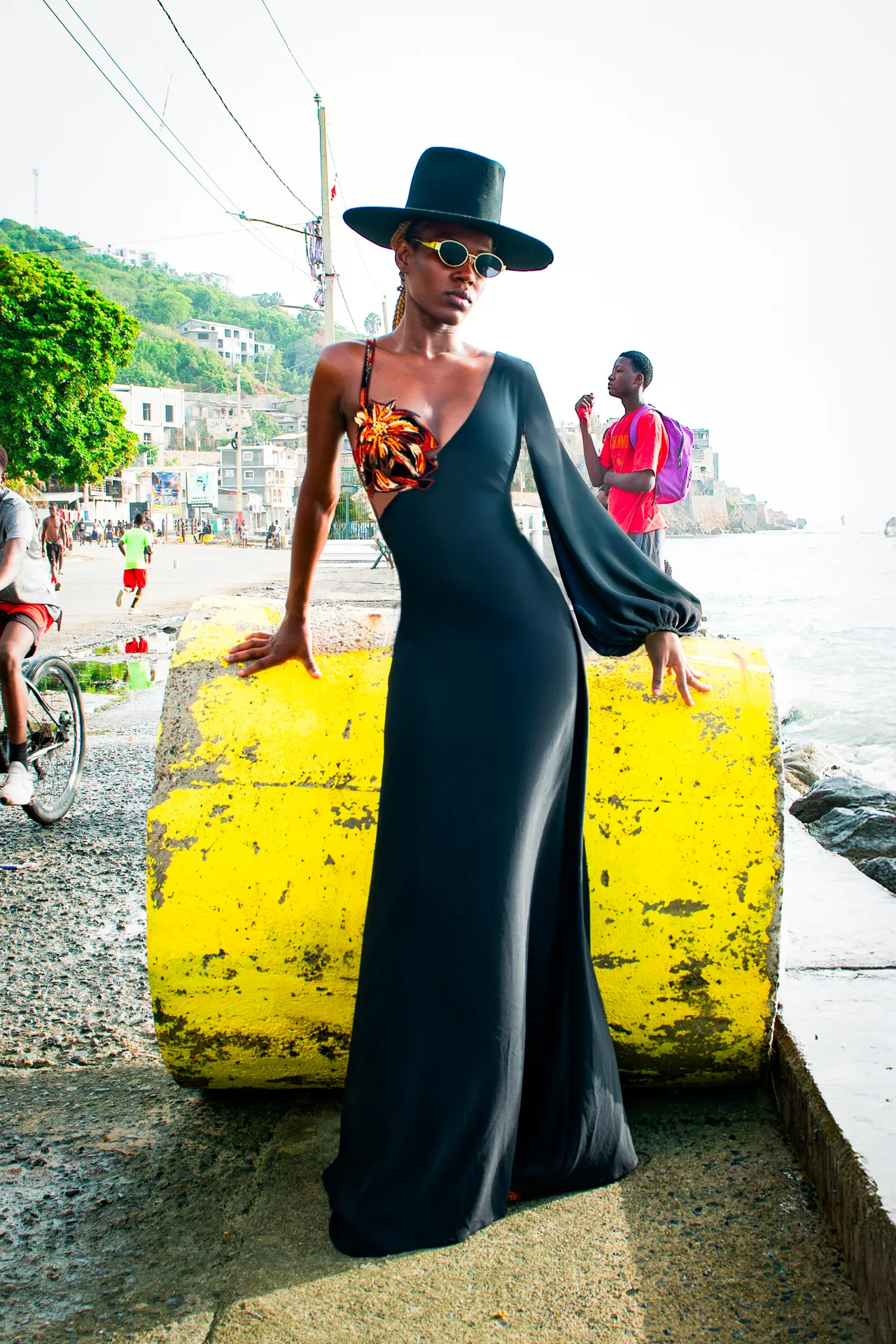
The 2025 Met Gala theme, Superfine: Tailoring Black Style, offered institutional acknowledgement of what Stella Jean has argued through her practice for over a decade. The exhibition, built around Monica L. Miller’s research on the Black dandy and the Black Atlantic tradition of sartorial excellence, documented the contribution of Black cultures to tailoring as a global form.
Jean’s career is a primary exhibit in that case. The first Black woman at the Armani/Teatro. The only Black member of the Camera della Moda. The designer of Haiti’s Olympic uniforms. The co-founder of We Are Made in Italy. The Met acknowledged the argument. Jean had been making it through the work since 2011.
Also Read:
- Haiti Fashion: The Designers Reshaping Global Style from the Inside Out
- Azede Jean-Pierre: From Pestel, Haiti to Gucci’s Runway
What the Stella Jean Label Stands For
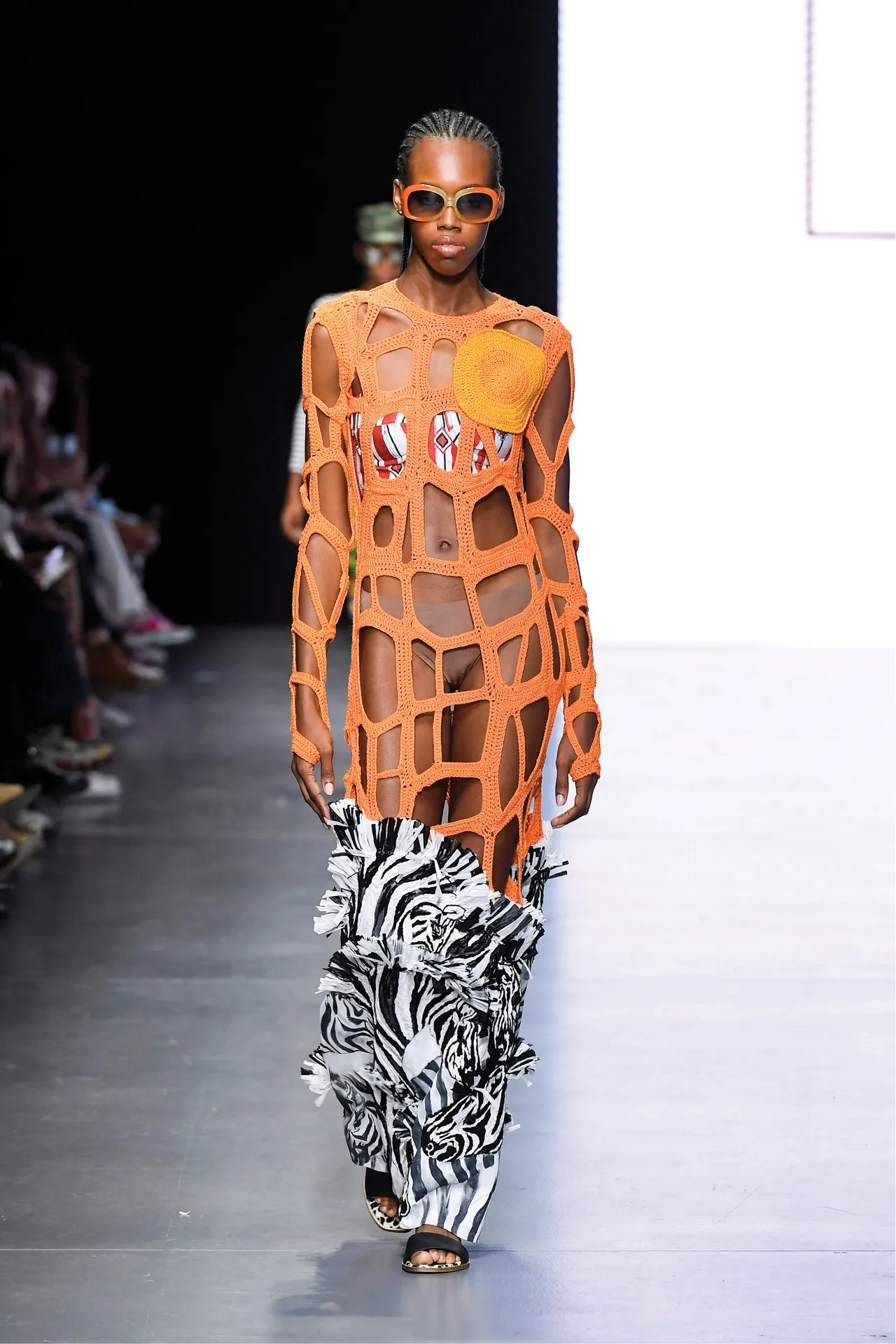
Stella Jean’s label operates as a sustained argument in fabric: that Italian elegance and Haitian craft are not opposites being fused, but two equally rigorous traditions held simultaneously. Her artisan partnerships connect Italy, Haiti, Burkina Faso, Benin, Mali, and Peru. Her supply chain documentation through the Ethical Fashion Initiative makes those connections traceable and accountable.
She has described her philosophy as cross-border fertilisation: the making of garments that carry two or more cultural intelligences at once, without subordinating any of them to a dominant aesthetic. Her Spring/Summer 2024 collection, shown at Milan Fashion Week, was reviewed by Business of Fashion as one of the most distinctive collections of the season. The label remains based in Rome.
The Omiren Argument
Thesis: The first Black woman to show at the Armani/Teatro did not integrate Milan. She exposed what Milan had refused to see for sixty years.
Context: Italy’s Camera della Moda has governed the Italian fashion industry since 1958. One Black member in sixty-seven years is not an oversight. It is a structural condition that the institution chose to maintain until a designer made the choice impossible to ignore.
Disruption: Jean did not wait for the institution to open. She built a practice so technically rigorous and culturally specific that Armani himself brought her in. Then she threatened to leave the schedule entirely unless the conditions changed. The We Are Made in Italy collective she co-founded, produced a manifesto that forced the Camera della Moda to draft diversity commitments on paper for the first time in its history.
Cultural insight: Jean’s label takes her Haitian mother’s name. Her supply chains connect Haiti, West Africa, and Central Asia. Her design philosophy holds two complete cultural intelligences simultaneously without hierarchy. This is not multiculturalism as an aesthetic. It is a specific argument about whose craft counts as rigorous and whose counts as decorative, made through the construction of every garment.
Conclusion: Stella Jean’s presence on the Milan show calendar, alone among Black Italian designers after more than a decade of advocacy, is evidence that the Italian fashion industry produces against itself every season. The work remains. The argument remains. The institution’s failure to respond structurally is now part of the record.
Frequently Asked Questions
Who is Stella Jean, the fashion designer?
Stella Jean, born Stella Novarino in Rome in 1979, is a Haitian-Italian fashion designer and the founder of the Stella Jean label. She is the first Black Italian designer and the first Afro-descendant member of Italy’s Camera della Moda since the body’s foundation in 1958. Her label takes her Haitian mother’s maiden name. She is self-taught and based in Rome.
What did Stella Jean design for the Paris 2024 Olympics?
Stella Jean designed the opening ceremony uniforms for Team Haiti’s fifteen athletes at the 2024 Paris Olympics, in collaboration with Haitian painter Philippe Dodard, whose artwork Passage is incorporated into the design. The New York Times awarded the Haitian delegation the gold medal for design excellence across all Olympic nations. The uniforms were subsequently exhibited at Haiti’s National Pantheon Museum in Port-au-Prince.
Is Stella Jean the only Black Italian fashion designer?
Stella Jean is the first and, as of the Milan Fashion Week SS26 calendar, the only Black Italian designer showing at Milan Fashion Week. She was admitted to the Camera della Moda in 2015, making her the first Afro-descendant member since the body’s foundation in 1958. In 2020, she co-founded the We Are Made in Italy collective to push for structural change within the Italian fashion industry.
What is the We Are Made in Italy fashion collective?
We Are Made in Italy (WAMI) is a collective co-founded by Stella Jean in 2020, alongside Edward Buchanan and Michelle Ngonmo, to address the structural absence of Black designers in the Italian fashion industry. The collective produced a manifesto with specific, enforceable diversity proposals for the Camera della Moda. It was formed in direct response to Jean’s announcement that she would not return to Milan Fashion Week if she remained the only Black designer there.
Where can I read more about Stella Jean’s label?
Stella Jean’s label is based in Rome and documented through stellajean.it. Press coverage appears in Business of Fashion, Vogue Italia, and WWD—the label stocks internationally through Moda Operandi, Farfetch, and Alara Lagos.
Which Black fashion designers are changing the luxury industry?
Among the Black designers most actively reshaping luxury fashion in 2025: Stella Jean, the only Black Italian designer on the Milan Fashion Week calendar; Azede Jean-Pierre, whose Gucci collaboration in 2021 positioned her as one of New York’s most technically rigorous knitwear designers; and the trio of Waina Chancy, Jimmy Latouche, and Daveed Baptiste, who shared the Harlem’s Fashion Row runway in September 2025.