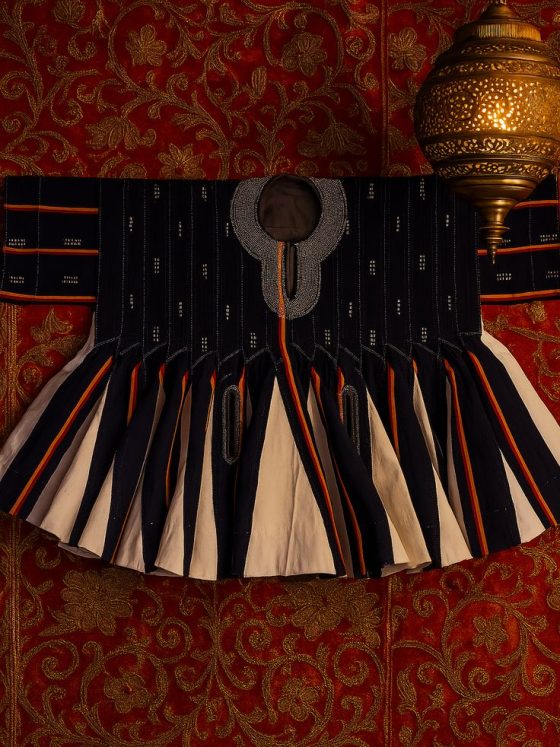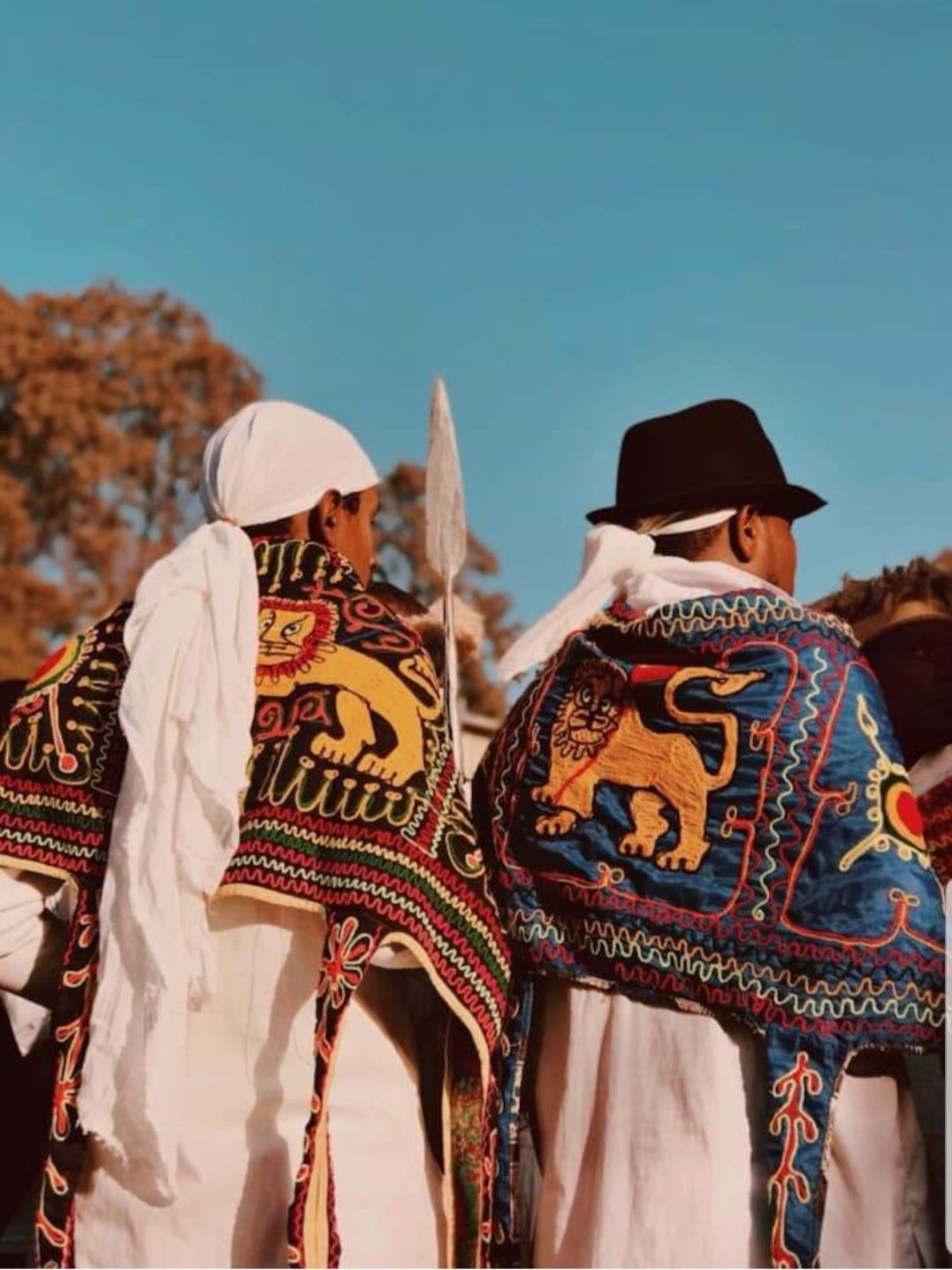
In the high mountain mists of the Ethiopian Highlands, where the legacy of empires is etched into ancient stone, the kaba (Amharic: ካባ) serves as more than a garment; it is a mantle of history, a weight of woven prestige. Deeply entwined with the Solomonic Dynasty, this majestic cloak was historically the exclusive domain of royalty, a visible marker of kings’ glory. To understand the Kaba is to understand the Amhara people’s enduring connection to the Ethiopian Empire.
The word itself, rooted in the Amharic “kabe”, literally translates to “to praise”, “to build up”, or “to honour”. This linguistic foundation reflects the garment’s primary purpose: to elevate the wearer into a figure of monumental significance. For centuries, this elevation was not a choice but a strictly guarded privilege. Under the imperial hierarchy, the Kaba was a primary instrument of state protocol. It served as a “dress of honour” (ክቡር ልብስ), and for the vast majority of Ethiopian history, it was strictly restricted from public view. To wear a Kaba without royal decree was to commit a transgression against the social order, as the garment was reserved exclusively for the emperor, the high nobility, high-ranking military commanders, and the upper echelons of the clergy.
Explore the Kaba, Ethiopia’s royal embroidered cloak, once reserved for emperors and nobles. Learn its Solomonic roots, symbolism, and modern role in weddings and culture.
The Anatomy of the Kaba
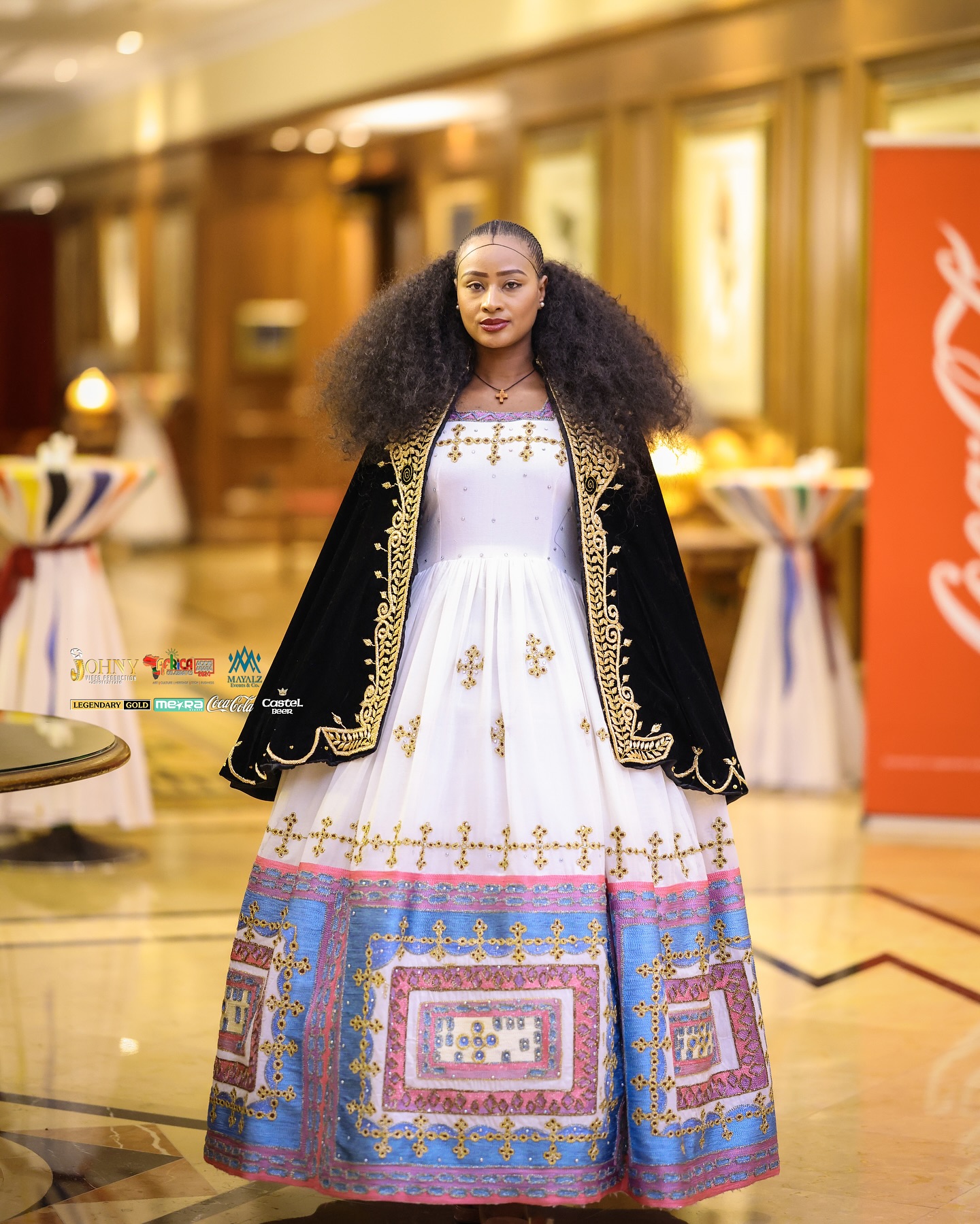
The physical construction of the Kaba begins with selecting a base textile capable of bearing the immense weight of traditional metallic thread. Historically, black velvet was the undisputed choice; its deep light-absorbing pile provides a stark, nocturnal backdrop for the brilliance of gold. In the bustling markets of Bahir Dar or the labyrinthine alleys of Addis Ababa’s Merkato, merchants unroll bolts of heavy velveteen and shimmering silks specifically for this purpose. While black remains the standard for its timeless gravitas, the modern Amhara palette has expanded to include the regal depths of burgundy, forest green, and midnight blue, reflecting the personal tastes of a contemporary generation of highlanders who have access to what was once a forbidden luxury.
The soul of the Kaba lies in its sirma, the intricate embroidery that transforms a simple cloak into a masterpiece of Ethiopian craftsmanship. This is rarely the work of machines, but of the shemane, traditional weavers and embroiderers who possess a geometric vocabulary passed down through centuries. Using gold-plated or silver-toned threads, these artisans map out a celestial cartography across the velvet. They begin at the high collar, which stands stiff against the neck, and work their way down the lapels and the sweeping hem. The patterns are often floral or cross-shaped, echoing the motifs found in the illuminated manuscripts of the Lake Tana monastery.
The Types of Kaba
Within the Amhara tradition, the Kaba is categorised into several distinct types, each defined by its material, its symbolic weight, and the specific social role of the wearer. To understand the Kaba is to understand the hierarchy of an empire that existed for centuries.
1. The Emperor’s and Empress’s Kaba
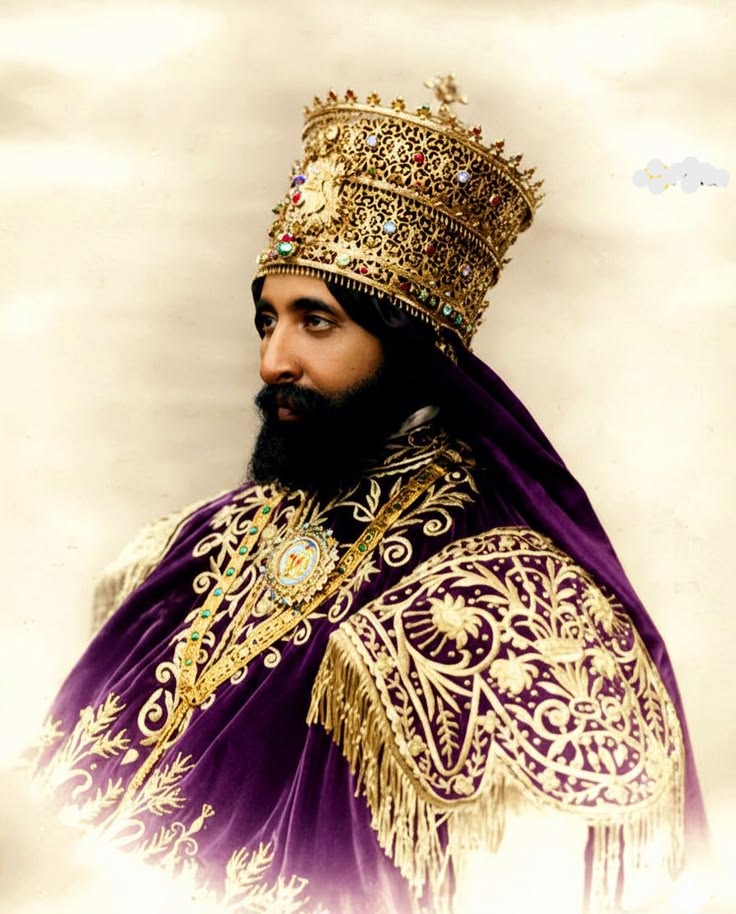
At the absolute apex of this tradition sits the Kaba of the Emperor and Empress. These garments were the physical embodiment of the state’s majesty and divine mandate. The Emperor’s Kaba was distinguished by its exhaustive use of high-relief gold embroidery, often covering nearly every inch of the shoulder, collar, and chest. Beyond the threadwork, these imperial mantles were uniquely adorned with full-scale gold or silver emblems, including substantial shields and heraldic symbols that represented the defensive strength and military might of the throne. These solid metallic accents, coupled with the Lion of Judah bearing the cross, signified the monarch’s role as the “Conquering Lion of the Tribe of Judah.”
The Empress’s Kaba was equally opulent, featuring its own distinct and prominent array of solid gold and silver decorations applied in intricate patterns that mirrored the emperor’s but with feminine grace. These heavy emblems were often arranged in celestial or floral arrays, creating a shimmering, tactile mosaic of precious metal across the silk velvet. These cloaks were more than clothing; they were sacred regalia, used during coronations and the most solemn of imperial ceremonies to signal the unshakeable dignity of the throne.
2. The Royal Kaba (Princes and Princesses)
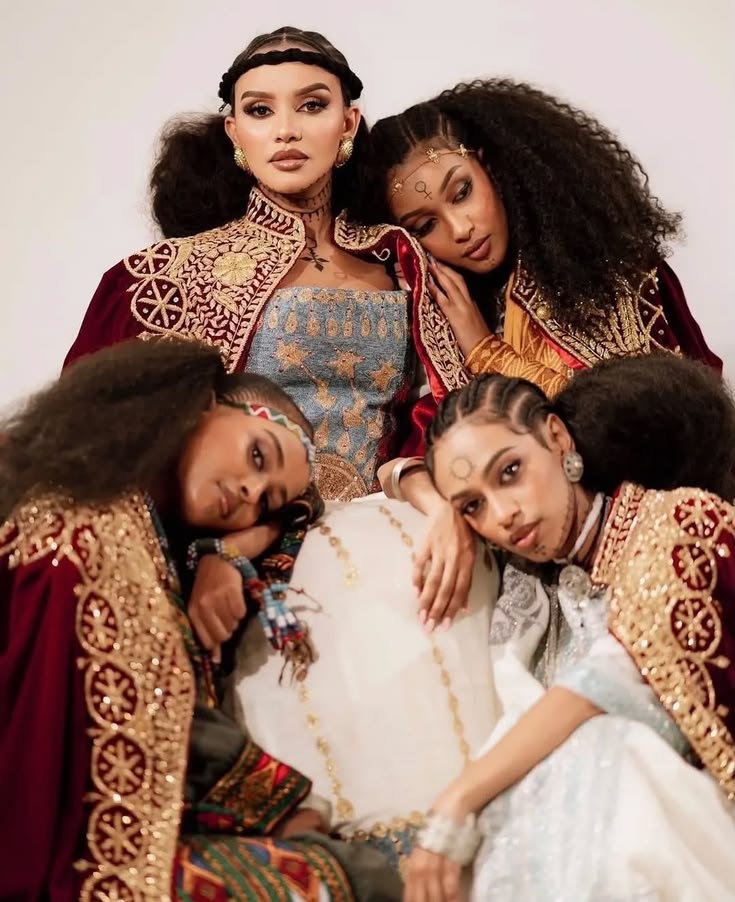
The most iconic form, reserved for Princes and princesses, is fashioned from royal blue or emerald silk velvet to distinguish the wearer from the lower nobility, who were restricted to black. A unique feature is the integration of the Lion of Judah emblem, often embroidered on the back or breast with an imperial crown. The borders sometimes incorporated actual gold leaf or semi-precious stones. The Royal Kaba was a garment of the state, worn at coronations, imperial banquets, and during audiences with foreign dignitaries to project the wealth and antiquity of the Ethiopian crown.
3. The Ministerial Kaba
This was the formal uniform for government officials and high-ranking ministers. In the complex bureaucracy of the imperial court, clothing served as a visual CV. High-ranking judges (Amharic: አፈንጉስ) wore heavy black velvet versions with stiff stand-up collars. The density and intricacy of the gold embroidery indicated their specific ministerial rank. Those of high merit but without royal blood were historically restricted to silver embroidery (sirma) rather than the pure gold reserved for the immediate family of the emperor (Niguse Negest). This served as a constant reminder of the distinction between inherited royal and appointed authority.
4. The Lemd (Amharic: ለምድ)
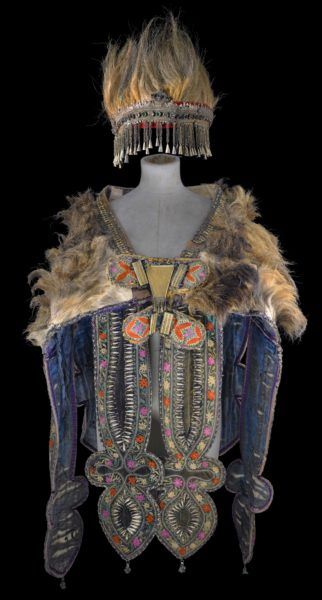
The Lemd is a specific type of Kaba used by regional governors (Dejazmach) and military generals. Its history is rooted in the ancient warrior traditions of the Amhara people. Traditionally derived from lion skins, the modern textile version features tiered “wings” or lappets over the shoulders and is intentionally crafted to imitate the lion’s limbs and paws. This structural feature imitates a lion’s mane, symbolising the warrior’s strength and ferocity. It represents a figure who has conquered both political enemies and the wilderness to protect the realm. In the past, an emperor would personally drape a Lemd over a general who had returned victorious from battle, making it the highest military honour in the land.
The Lemd is originally fashioned from an actual lion’s skin. It is fundamentally a centrepiece of Amhara warrior culture. It was typically awarded by the emperor only to aristocratic warriors or lion hunters who had demonstrated exceptional valour. In Amhara tradition, the Lemd was often paired with a headdress called the Anfaro (አንፋሮ), together forming the complete uniform of a high-status hero or nobleman.
The use of the Lemd by non-Amhara groups today is a testament to its historical role as an imperial mark of merit rather than a claim to its origin. During the era of the Ethiopian Empire, the Lemd was used as a prestigious military award. The emperor would bestow these cloaks upon valiant officers and generals of various ethnic backgrounds who served with distinction in the unified imperial army. Because it was the uniform of the senior military and government, the Lemd eventually became a visual shorthand for Ethiopian national identity on the world stage.
5. The Clergy’s Kaba
In the spiritual realm, the clergy’s Kaba takes on a liturgical dimension. Worn by high-ranking priests, bishops, and the patriarch, these ecclesiastical vestments are intended to mirror the splendour of the heavenly kingdom. These are often fashioned from shimmering gold, ivory, or white silk, representing purity and divine light, although other colours have also been used historically. They are heavily embroidered with sacred iconography, including the Meskel (cross) and images of Saint George, Ethiopia’s patron saint. On special occasions, they are paired with a cloche-style hat called a kob and a ‘mekuamia’ (prayer stick). The clergy kaba is not just clothing; it is a tool of worship designed to inspire awe in the congregation.
6. The Bride’s and Groom’s Kaba
The most common modern iteration, the wedding Kaba, serves as the ultimate cultural bridge. While the groom’s Kaba remains structured and typically dark to project masculine stability, bridal versions have evolved to include a vast spectrum of colours. These are the garments of the Melse ceremony. They are designed to facilitate a symbolic “crowning” of the couple as they transition into their new roles as heads of a household. This version of the Kaba is the primary way that modern Amharas interact with their royal history, allowing them to inhabit the majesty of their ancestors for one night.
Also Read:
- Addis Ababa Street Style: How Ethiopia’s Capital Is Wearing Its Cultural Confidence
- Civilisational Framing Shewa Oromo Cultural Clothing: The Living Governance Document Worn Across the Ethiopian
- Ethiopian Men’s & Gender-Neutral Tailoring in Contemporary African Fashion
Democratisation and Influence of the Amhara Mantle
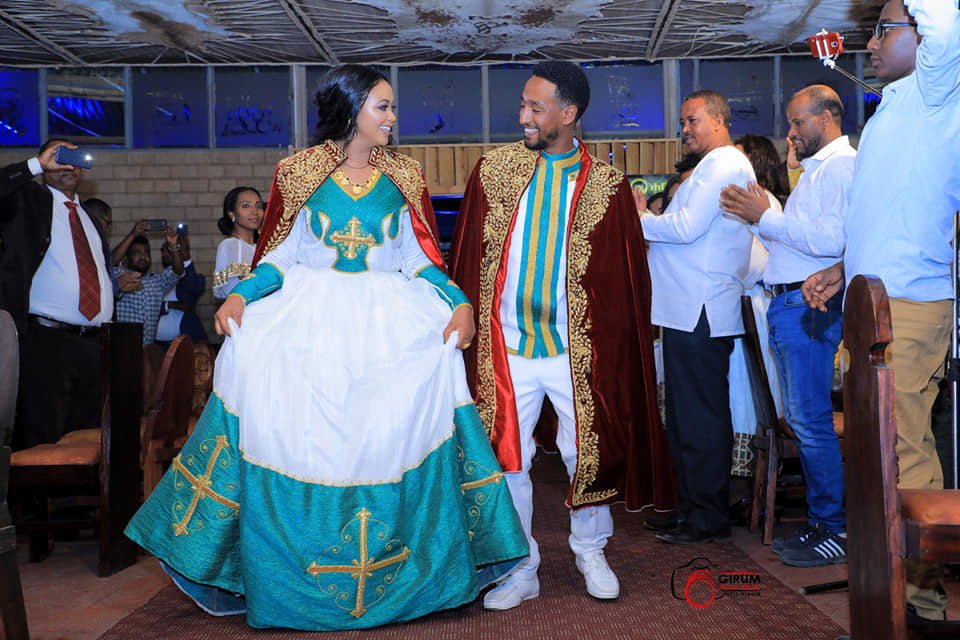
The most profound shift in the history of Kaba occurred following the 1974 revolution. With the fall of the monarchy, the strict legal restrictions that had once prevented commoners from wearing the Kaba were lifted. This sparked a “democratisation” of the imperial aesthetic, moving the garment from the throne room to the wedding hall.
In modern Amhara culture, the bride is seen as a queen and the groom as a king on their wedding day. Kaba is the essential tool for this transformation. This is most visible during the Mels and Kelekel, the traditional post-wedding receptions. While the main wedding may feature Western-style white wedding gowns, Mels’s and Kelekel’s are strictly a traditional affair. The couple sits on a raised platform, often in ornate chairs resembling thrones, draped in their matching kabas.
The climax of the Mels is the Dabo-Sim naming ceremony. Here, the bride’s mother or mother-in-law presents her with a new name, signifying her transition into her own household as a matriarch. As she is given this name, the Kaba is adjusted on her shoulders, a symbolic coronation. It is a moment of profound continuity: a young woman from a modern city is draped in the same symbols that once adorned the princesses of the empire. The Kaba bridges the chasm between the imperial royalty of the past and the Amhara bride of today, ensuring that even in a modern republic, the dignity of the Solomonic era is never forgotten.
Interestingly, the aesthetic power and deep historical resonance of the Kaba have enabled it to transcend the borders of the Amhara people. In a gesture of respect and admiration for the elegance of Amhara heritage, other Ethiopians from different ethnic backgrounds have increasingly begun to incorporate the Kaba into their own ceremonies. This cross-cultural adoption is seen as a testament to the garment’s universal appeal and its association with dignity and honour.
To wear the Kaba is to carry the weight of one’s lineage. These garments are rarely seen as disposable fashion; they are family heirlooms preserved in cedar chests for decades. A daughter may wear the same Kaba her mother wore thirty years prior, the gold thread perhaps slightly tarnished by time, but the cultural value only increases. This intergenerational continuity is central to Amhara identity.
The Kaba remains a steadfast symbol of an ancient African civilisation. It is a textile testament to the belief that beauty is a form of honour and that history is something to be worn upon the shoulders. Whether it is shielding a nervous bride or shimmering in the candlelight of a midnight mass, the Kaba continues to drape the Amhara people in the golden threads of their own magnificent history. In every stitch of the sirma and every fold of the velvet, the Kaba tells a story of survival, of faith, and of the unyielding dignity of the Ethiopian spirit.
FAQs
1. What is a Kaba in Ethiopian culture?
The Kaba is a traditional Ethiopian cloak, historically worn by royalty, nobility, and high-ranking clergy. It is typically made from velvet and decorated with intricate gold or silver embroidery known as sirma.
2. Who was historically allowed to wear the Kaba?
Under the Ethiopian Empire, the Kaba was restricted to emperors, members of the royal family, senior officials, and elite clergy. Wearing it without permission was considered a serious breach of social order.
3. What does the Kaba symbolise?
The Kaba symbolises authority, honour, and lineage. Its design, material, and embroidery often reflected the wearer’s rank and role within imperial society.
4. How is the Kaba used today?
Today, the Kaba is widely worn at weddings and cultural ceremonies, especially among the Amhara. It plays a central role in traditional events like the Mels, where couples are symbolically “crowned”.
5. What is the difference between a royal and modern kaba?
Royal kabas were highly regulated, often featuring gold embroidery and imperial symbols like the Lion of Judah. Modern Kabas are more accessible, come in a variety of colours, and are primarily used for ceremonial and celebratory purposes.
6. What is the Lemd, and how is it related to the Kaba?
The Lemd is a type of Kaba historically associated with warriors and generals. Originally made from lion skin, it symbolised bravery and was awarded as a military honour.