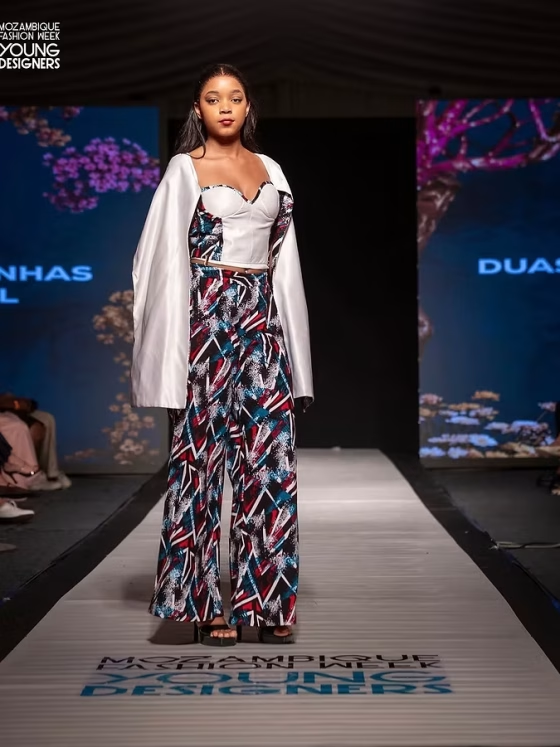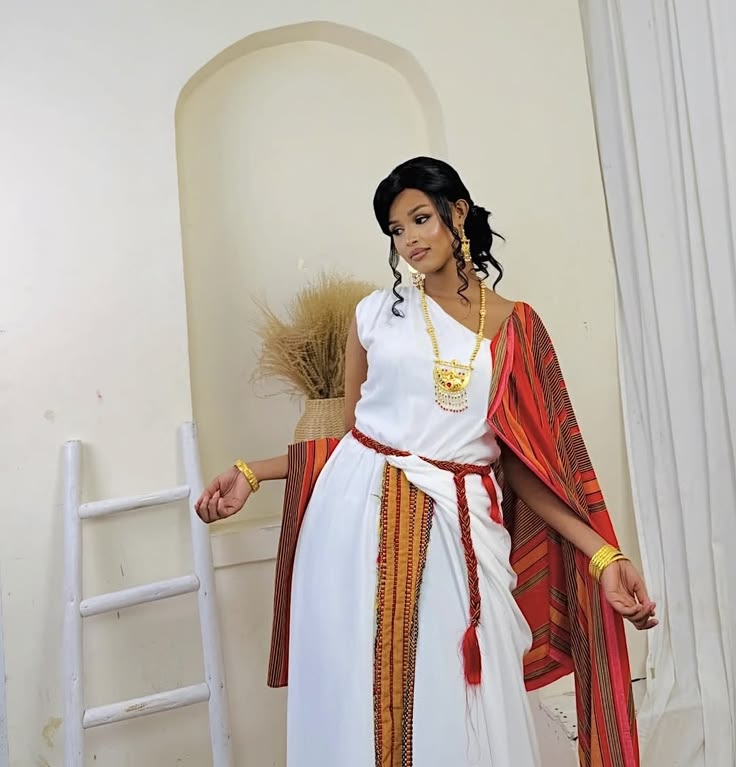
Some landscapes shape the people who inhabit them, and some people, in turn, shape their landscapes. In Ethiopia’s far eastern frontier, where the Somali Region stretches into a horizon of heat, wind, and open sky, clothing becomes more than adornment. It becomes a survival strategy, a cultural archive, and a moving expression of identity. The women of this region, wrapped in white Sadexqayd, shimmering Dirac, or the ancestral folds of Guntino, carry with them a textile history inseparable from the land itself.
To understand Ethiopian Somali clothing, one must first understand the Somali presence in Ethiopia: where they live, how their region was formed, how cities like Dire Dawa emerged, and how the climate itself dictates the logic of their garments. Only then can we appreciate why a white one-piece cloth, a floating chiffon dress, or a single draped garment can hold generations of memory.
Exploration of Ethiopian Somali cultural clothing woven through the history, geography, climate, and identity of the Somali Region, Hararghe, and Dire Dawa.
The Somali Region of Ethiopia: History, Geography, and Climate
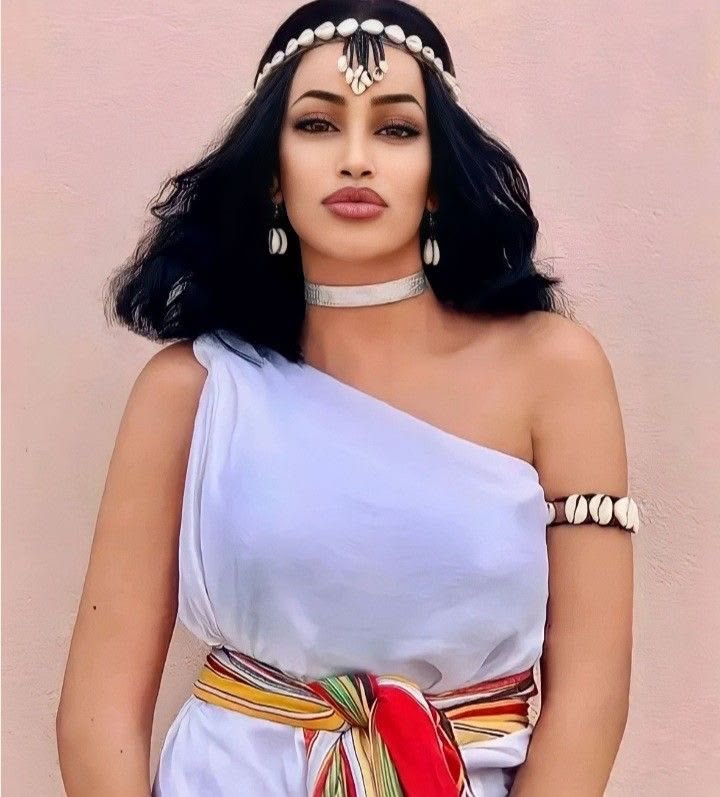
The Somali people of Ethiopia inhabit one of the country’s largest and most culturally distinct regions. The Somali Regional State, often called ‘Soomaali Galbeed’, occupies the eastern and south-eastern lowlands, bordering Djibouti, Somaliland, Somalia, and Kenya. Its capital, Jigjiga, anchors a region historically shaped by pastoral mobility, clan networks, and cross-border trade. Long before Ethiopia’s federal restructuring in 1995, Somali communities lived across territories that once formed the old provinces of Hararghe, Bale, and Sidamo. Their presence is not a modern insertion but a deep historical reality, documented in chronicles, colonial records, and the oral histories of clans such as Geri, Bartire, Ogaden, and Issa.
The name ‘Hararghe’ itself originates from Harar, the ancient walled city that served as the capital of the Emirate of Harar. By the late 19th century, the surrounding territories under the Emirate of Harar were reorganised and formally designated as Hararghe Province. Somali communities were already part of this region, moving between highland edges and lowland plains, trading livestock, using caravan routes, and shaping the cultural landscape long before administrative borders sought to define them.

Dire Dawa, one of Ethiopia’s two chartered cities, was not born from an ancient settlement but from steel and steam. Dire Dawa was founded on 4 December 1902, the day the Addis Ababa-Djibouti railway reached the area, making its official establishment as a strategic railway station and commercial hub. The railway could not climb the elevation to Harar, so Dire Dawa became the new urban centre. For Somali Ethiopians, Dire Dawa became a gateway: a place where imported fabrics from Djibouti, the Gulf, and India entered inland markets; where rural dress met urban fashion; and where the Dirac found fertile ground to evolve into the inland Somali wardrobe.
But before we speak of garments, we must speak of heat. The Somali Region is one of the hottest parts of Ethiopia. Much of it falls under arid and semi-arid climate zones, with temperatures frequently rising above thirty degrees Celsius, intense sunlight, and long dry seasons. In such an environment, clothing is not merely cultural. It is climate engineering. Somali garments evolved to address this heat with remarkable precision. Loose silhouettes allow air to circulate freely. Lightweight fabrics such as cotton, chiffon, and voile prevent heat from trapping against the skin. Layering provides sun protection without suffocating the body. Light colours, especially white, reflect sunlight rather than absorbing it. Even the draping techniques of Guntino and Sadexqayd are designed to create airflow, allowing the body to cool naturally in a landscape where shade is scarce.
Editor’s Note
Many contemporary designers continue to embrace these principles of breathable construction and fluid draping. We’ve selected a few naturally woven textiles and lightweight accessories inspired by similar craftsmanship. Browse our curated collection of artisan textiles and accessories
Sadexqayd: Climate, Craft, and Cultural Identity
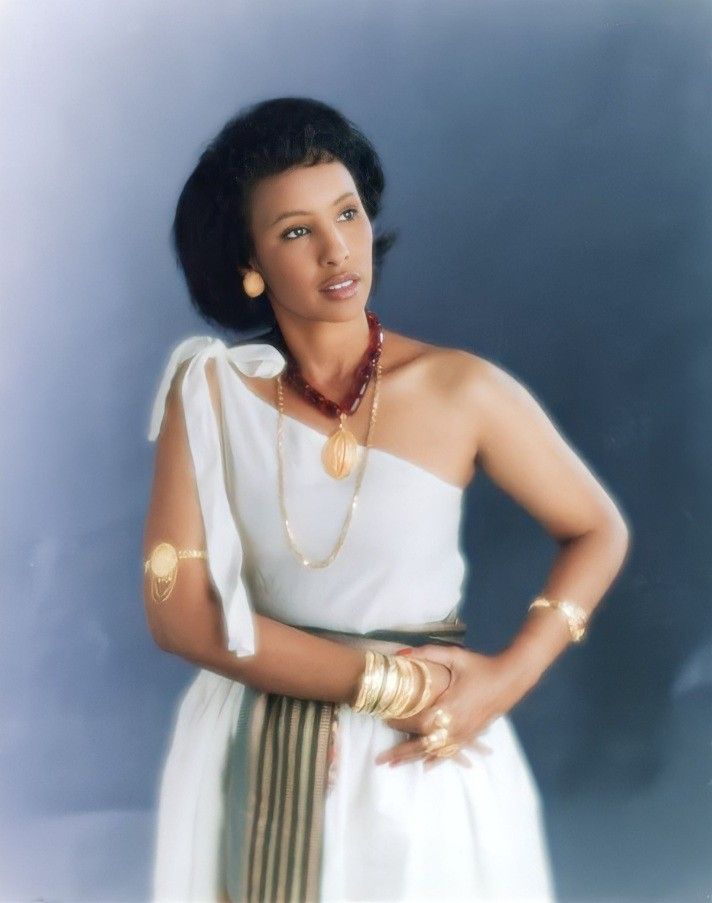
Among Somali women, the Sadexqayd stands as one of the most iconic garments. A sadexqayd is a single long white cloth wrapped around the body in a continuous sculptural motion. It is secured by a long, grey, woven belt, a narrow cotton strip traditionally made by Somali women. The belt is wrapped tightly around the waist several times to anchor the garment, then its remaining length is allowed to hang freely to the knee, a signature detail that moves with the wearer. Once the lower body is secured, the upper part of the white cloth is drawn diagonally across the torso and knotted over one shoulder, creating the iconic asymmetrical drape that defines Sadexqayd.
The whiteness of Sadexqayd is not an aesthetic coincidence but a climactic necessity. In the Somali Region’s intense heat, white reflects sunlight, keeping the wearer cooler during long pastoral movements or daily tasks under the open sky. Historically, Sadexqayd was made by Somali women to suit the region’s climate. Today, fabrics are often imported, but the draping remains the same. Tailoring is minimal; the beauty of Sadexqayd lies in how it is wrapped, how it moves and how it transforms the body into a silhouette of clean lines and quiet elegance. #sadexqayd | TikTok
Rather than relying on elaborate tailoring, the elegance of garments such as the Sadexqayd comes from fabric quality and thoughtful draping. Readers interested in traditional-inspired textiles may enjoy our curated collection of handcrafted woven fabrics. Explore Editor Selected fabrics
ALSO READ
- Afro-Luxury Hair Trends Set to Define 2026
- Royal African Beauty Rituals: Power, Craft, and Modern Elegance
- African Print as Modern Armour: Identity, Belonging, and Cultural Authority
The long belt itself carries its own cultural weight. Traditionally woven in muted grey tones from natural cotton or ash-based washing, it is a functional tool of pastoral life and a quiet symbol of women’s craftsmanship. Without the belt, Sadexqayd would not hold its shape; with it, the garment becomes a perfect fusion of climate logic, modesty, and Somali aesthetic philosophy. #sadexqayd | TikTok.
Dirac and Guntino: Trade, Elegance, and Ancestral Draping
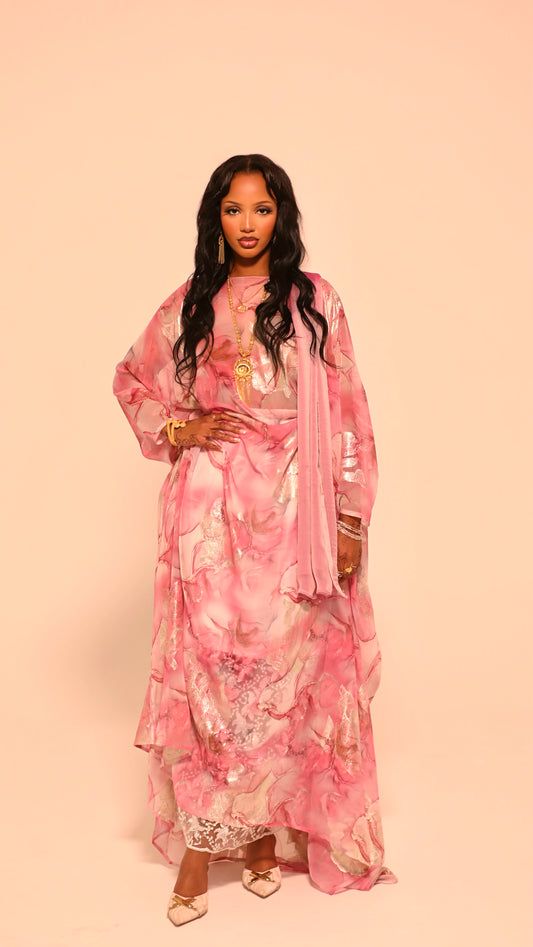
If the Sadexqayd is the pastoral garment of the lowlands, the Dirac is the urban, coastal-influenced dress that has become synonymous with Somali femininity across the Horn. Originating along the Somali coast, in cities like Zeila, Berbera, and Mogadishu, the Dirac travelled inland through trade routes, marriage networks, and the cosmopolitan markets of Dire Dawa. A Dirac ensemble consists of a long, flowing gown, often semi-transparent; a satin or cotton underskirt called ‘gorgorad’; and a matching shawl known as ‘garbasaar’. They float in the heat, catching the wind and creating a sense of movement that is both cooling and visually striking. Understanding SADAX QAYD: Traditional Somali Dress | TikTok
THE OMIREN ARGUMENT
Somali women’s clothing has been shaped by one of the harshest climates on the continent, by centuries of pastoral movement, by trade routes that connected the Horn of Africa to the Gulf, India, and the Red Sea, and by the quiet, persistent craft of women who engineered garments before the word “fashion” existed in any language that would later claim authority over it. The Sadexqayd is not a dress. It is a climate solution. The Guntino is not a traditional costume. It is a textile system refined across generations by women who understood airflow, modesty, and movement in conditions that most of the global fashion industry has never had to consider. When Western fashion speaks of “breathable silhouettes” and “fluid draping” as innovations, it is describing principles that Somali women codified long before any fashion week existed to celebrate them.
The deeper failure is one of geography. Ethiopian Somali dress sits at the intersection of African, Islamic, and Indian Ocean textile cultures, which makes it one of the most genuinely cosmopolitan clothing traditions on the continent. It is also one of the least documented in global fashion media. Publications that dedicate issues to “African fashion” routinely collapse the continent into a handful of West African references, leaving the entire Horn of Africa, its draped garments, its trade-shaped fabrics, and its centuries of women’s craft, entirely outside the frame. The Dirac, the Sadexqayd, and the Guntino are not waiting to be discovered. They have been worn, refined, and passed down without requiring outside validation. What they deserve is accurate, specific, and sustained documentation on their own terms. Omiren Styles is providing it.
Diracs are often richly decorated. Gold thread embroidery, sequins, beadwork, and patterned borders transform the garment into a piece of wearable art. The colours vary widely: deep reds and gold for weddings, blues and greens for Eid, and soft pastels for everyday elegance. The patterns, often floral, paisley, and geometric, reflect both local taste and global textile influences. The Dirac is a garment of transnational craftsmanship. Fabrics may come from Dubai, Jeddah, India, or China. Embroidery may be done by Somali women in Jigjiga or Dire Dawa or by specialised shops in the Gulf. Tailors in Ethiopian Somali towns cut and finish the dresses, ensuring they fit the wearer’s height and style. In Somali culture, the Dirac is the garment of celebration, urban sophistication, and cultural pride. The intricate embellishment found on ceremonial Diracs continues to influence contemporary African designers working across textiles, jewellery, and evening accessories. Discover our curated edit of artisan jewellery
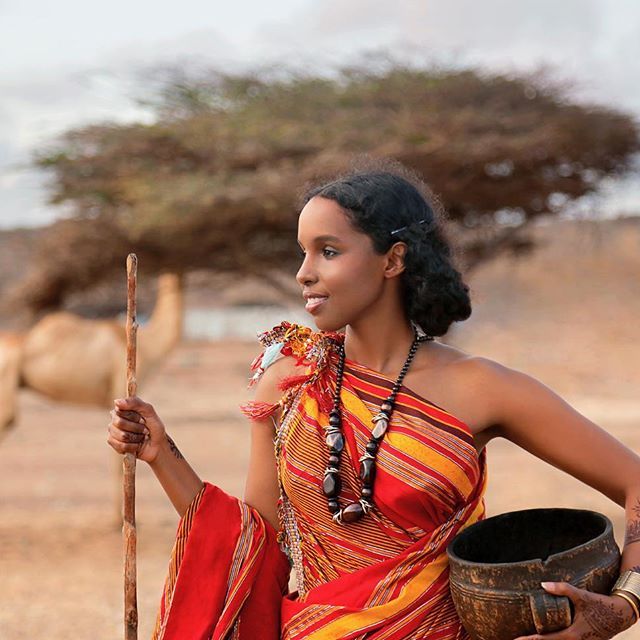
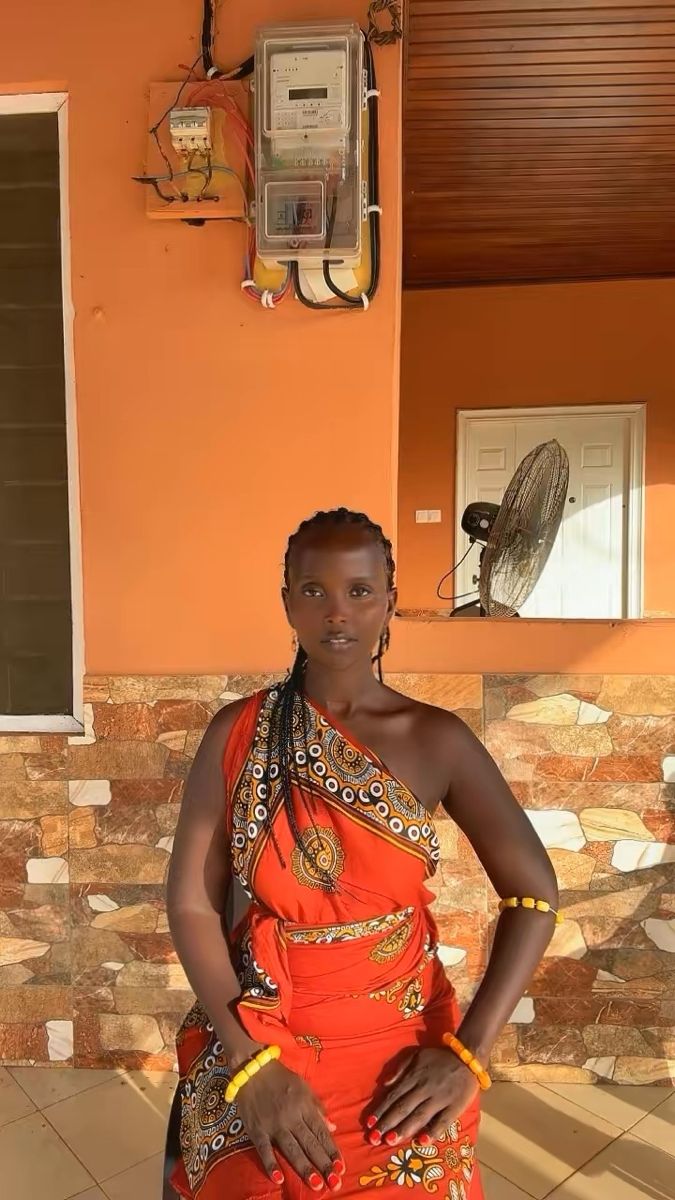
The Guntino is a single-piece garment, usually three to four metres long, wrapped around the body and fastened at one shoulder with a pin or tied in a knot. The Guntino is climate-smart by design. Its loose draping allows maximum airflow, and its adjustability lets the wearer tighten or loosen it throughout the day. One of the most distinctive fabrics used for making Guntiino is alindi. Alindi is a lightweight, breathable cloth characterised by linear motifs. Historically, Guntino fabrics were striped or geometric cottons woven by Somali women. Today, they may be printed cotton or polyester blends, but the draping technique remains unchanged. Guntino is often worn during weddings, cultural festivals, and clan gatherings. It is the garment that most visibly expresses Somali antiquity. It is a reminder that long before borders, railways, or modern cities, Somali women wrapped themselves in cloth that moved with the wind and honoured the body’s natural form.
The enduring simplicity of the Guntino reminds us that timeless design often begins with exceptional craftsmanship rather than excess. We’ve gathered a small collection of handcrafted pieces inspired by this philosophy. Explore Contemporary Artisan Fashion.
Somali clothing traditions are inseparable from the hands that make them and the trade routes that supply them. Whilst imported fabrics dominate today, weaving persists in some rural communities, where women still use ground looms to produce cotton cloth for special garments. Natural dyes, simple patterns, and hand-spun threads survive in pockets of the Somali Region, often undocumented but deeply cherished. Trade has always shaped Somali wardrobes. Indian cotton, Gulf chiffons, and Red Sea textiles have flowed into Somali markets for centuries. Djibouti, with its port and proximity, has long served as a gateway for fabrics that then travelled inland to markets in Jigjiga, Dire Dawa, and Hararghe. This global textile circulation explains why Somali clothing often feels more international in its fabric choices than many other Ethiopian traditions.
For Somalis, clothing is a map of identity. It expresses clan belonging, Islamic modesty, pastoral heritage, and regional pride. It is a way of carrying history to the body. Sadexqayd, Dirac, and Guntino are not competing styles; they are layers of Somali womanhood. Sadexqayd reflects the sun and the region’s pastoral heart. Dirac brings coastal elegance into inland cities. Guntino carries the memory of ancient draping traditions. Together, they form a wardrobe that is both practical and poetic, shaped by the land and shaping the identity of those who wear it.
Editor’s Curated Collection
The garments explored in this feature represent centuries of craftsmanship, cultural memory, and textile innovation. For readers interested in discovering contemporary artisans creating heritage-inspired fashion and accessories, we’ve assembled a carefully curated selection.
Explore
• Lightweight Linen & Cotton Fashion Pieces
Frequently Asked Questions
- What is Sadexqayd, and how is it worn?
The Sadexqayd is a traditional Somali garment made from a single long white cloth wrapped around the body and secured with a narrow woven belt tied at the waist. The upper portion is drawn diagonally across the torso and knotted over one shoulder, creating an asymmetrical drape. It is worn primarily across the Somali Region of Ethiopia and is designed to reflect heat and allow airflow in hot, arid conditions.
- What is the difference between the Dirac and the Guntino?
The dirac is a long, flowing gown, often semi-transparent, worn with an underskirt called a ‘gorgorad’ and a matching shawl known as a ‘garbasaar’. It is associated with urban settings, celebrations, and coastal Somali culture. The Guntino is a single piece of cloth three to four metres long, wrapped around the body and fastened at one shoulder. It is older in origin, more closely tied to pastoral and clan traditions, and is considered the garment that most visibly expresses Somali cultural antiquity.
- How has trade shaped Somali women’s clothing in Ethiopia?
Somali clothing in Ethiopia has been shaped by centuries of trade across the Indian Ocean, the Red Sea, and overland routes through Djibouti and the Gulf. Indian cotton, Gulf chiffons and fabrics from Jeddah and Dubai have circulated through Somali markets for generations. The city of Dire Dawa, founded as a railway hub in 1902, became a key inland gateway for imported fabrics, which is why Ethiopian Somali dress often carries a distinctly international textile character while maintaining its own cultural draping traditions.
- Why is Ethiopian Somali clothing underrepresented in global fashion media?
Global fashion media tends to reduce African dress to a narrow set of West African references, leaving the Horn of Africa and its distinct clothing traditions largely undocumented. Ethiopian Somali dress sits at the intersection of African, Islamic, and Indian Ocean textile cultures, making it one of the most cosmopolitan clothing traditions on the continent. Its absence from mainstream fashion coverage reflects a structural gap in how African fashion is framed globally, not a gap in the richness or depth of the tradition itself.
Editorial Disclosure: Some links are affiliate links. OmirenStyles may earn a commission at no extra cost to you.