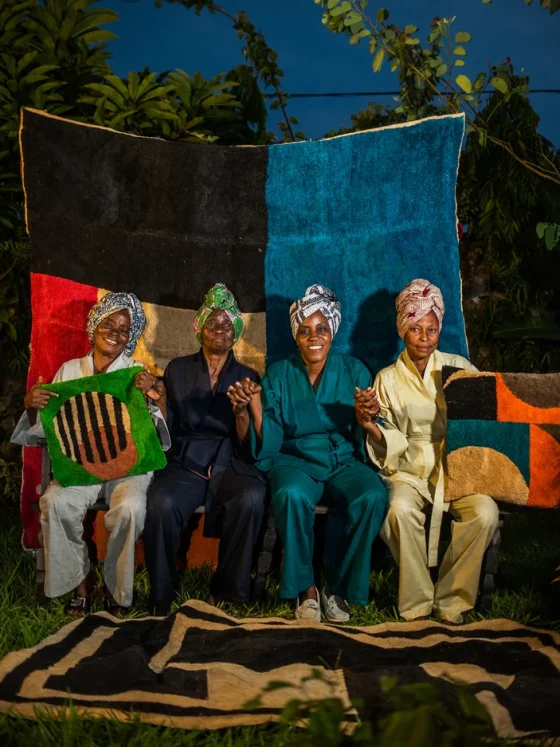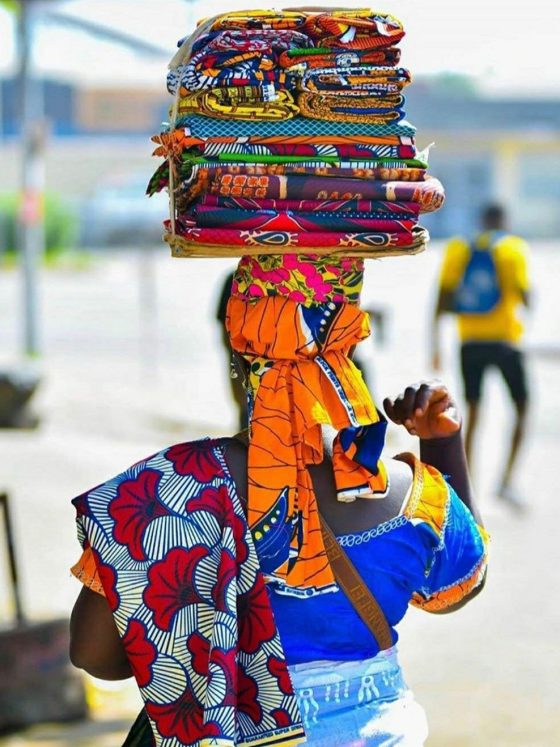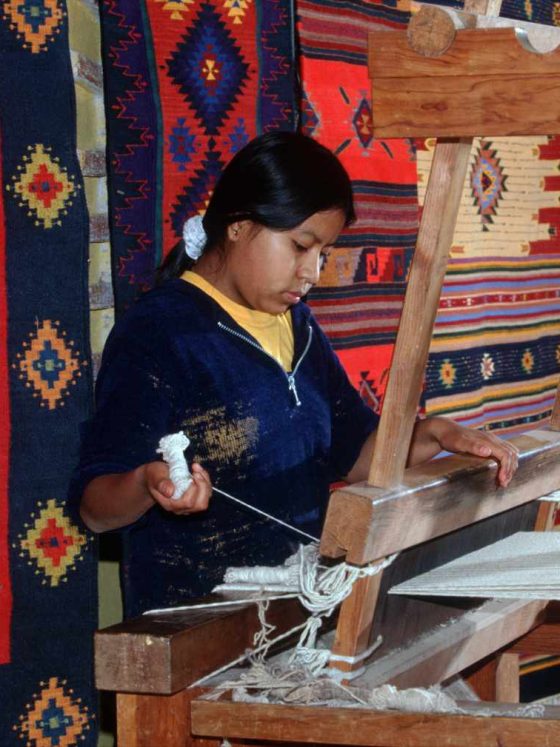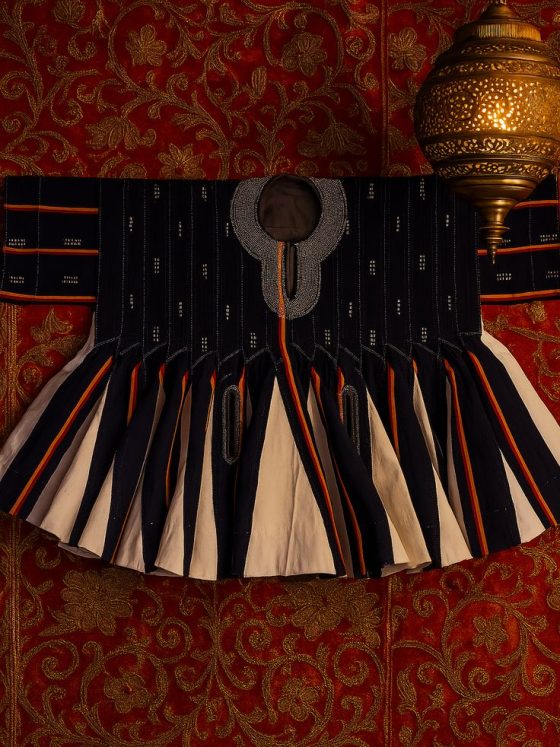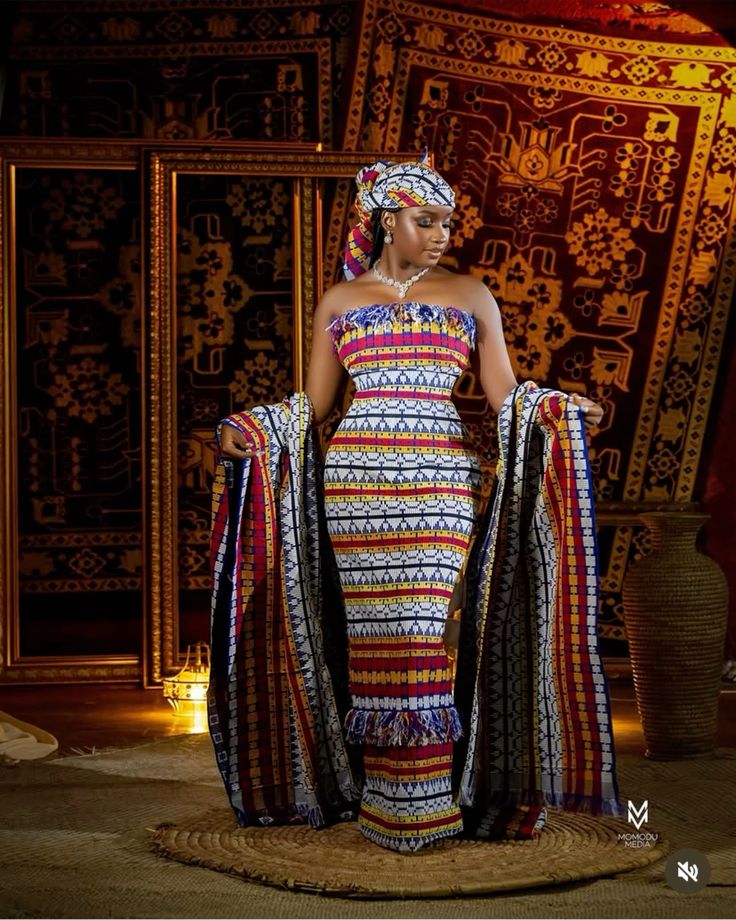
There is a cloth woven in Abia State that Igbo women have worn at their most significant occasions since the 19th century, and which the rest of the world is only now beginning to notice properly. Akwete cloth, handwoven on an upright Nkwe loom in the Ndoki community of Ukwa East Local Government Area, is not a decorative textile in the usual sense of the phrase. Its motifs carry social rank. Its patterns communicate family lineage. Its presence at a ceremony tells the assembled community something specific about the woman wearing it and the occasion she has dressed for.
When Dr Sharon Ifunanya Madueke arrived at her traditional marriage ceremony in 2025 wearing a white sequinned blouse with Akwete wrappers, the internet responded with something that looked very much like recognition: here was a fabric that had been waiting for this moment and for the woman confident enough to bring it back into the centre of the room. The Akwete renaissance did not begin with that wedding. But that wedding made the argument visible to a generation who had not grown up seeing Akwete treated as the serious, culturally weighty cloth it has always been.
This article is the argument in full. Five styles. Their Igbo names. Their cultural history. And the occasions at which each one earns its place.
From the Akwa Abuo double wrapper to the contemporary Akwete gown, discover the top 5 Akwete styles for Igbo women in 2026. A cultural guide to the handwoven cloth of Ndoki, its motifs, occasions, and the legacy of Dada Nwakwata.
The Cloth That Carries Memory: A History of Akwete Weaving
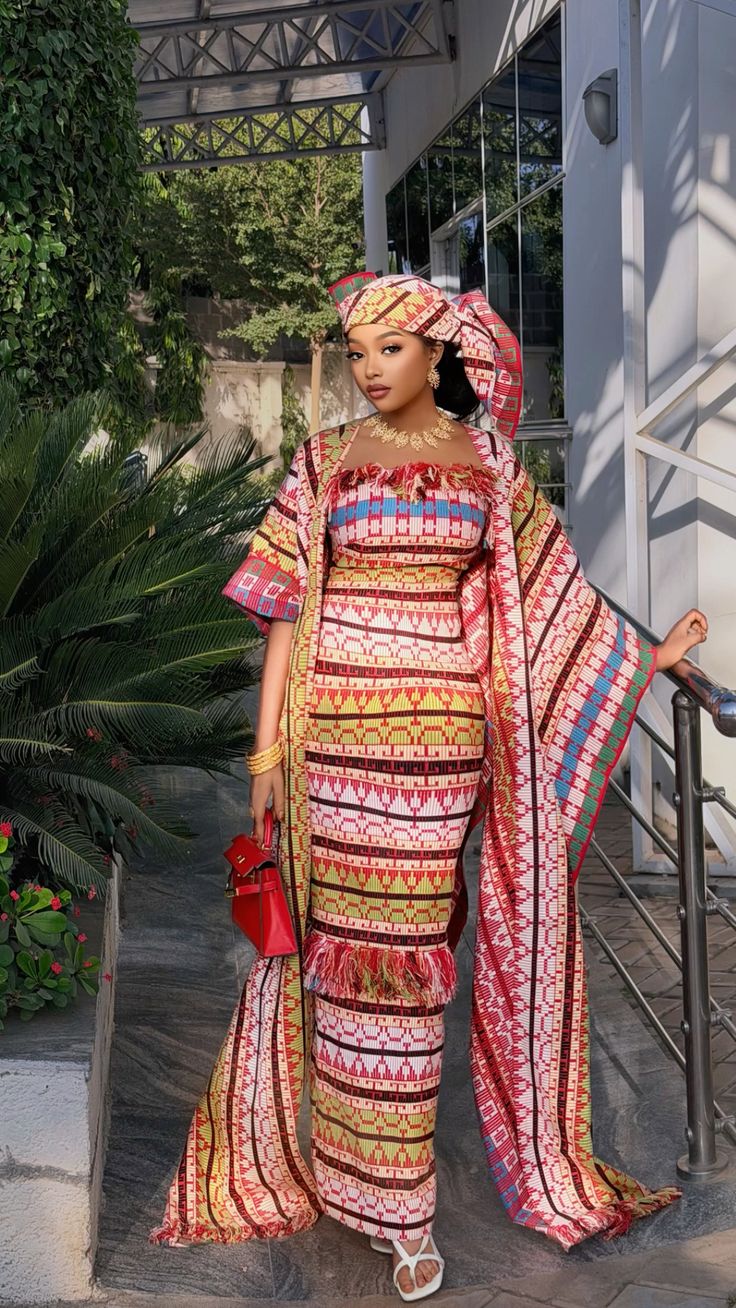
The founding story of Akwete weaving belongs to a woman. Dada Nwakwata, a weaver of extraordinary technical invention, is credited with transforming Akwete from a community producing functional cloth into a centre of artistic textile production that would eventually reach the British Museum, the Metropolitan Museum of Art in New York, and the international runways of Lagos Fashion Week. As the Fashion History Timeline at FIT notes, citing textile scholar Lisa Aronson, Dada Nwakwata was active in the late 19th century, when palm oil trading was at its peak. She studied the imported cloth her eastern Ijo trading partners valued and began weaving textiles that absorbed those patterns and dimensions while developing something entirely her own. Her innovations gave Akwete weavers a repertoire of over fifty motifs that remains the foundation of the craft today.
The cloth itself is older than its most celebrated innovator. Originally called Akwa Miri, meaning ‘cloth of the water’, it was woven on a vertical Nkwe loom, the widest loom in Nigeria, producing a single fabric panel up to 115 centimetres wide. As Afrocritik notes in its account of the Akwete renaissance, the coarser raffia Akwete was used by masquerades and as headgear for warriors in earlier periods. At the same time, the more comfortable and colourful spun cotton became the cloth of everyday wear and ceremony. The weaving is done exclusively by women on the Nkwe loom, and the knowledge is passed from older women to younger female relatives, making Akwete one of the few textile traditions in Nigeria in which the craft itself is both produced and transmitted by women.
The motifs woven into Akwete cloth are named and socially significant. The Ikaki motif, a tortoise pattern, was historically reserved for members of royal families: anyone outside the nobility who wore it risked punishment and, in earlier periods, could be sold into slavery. The snake-back pattern, the coral motif, the Ogene bell, the comb, children’s fingers, and ceremonial stools are among the designs woven into Akwete cloth for generations. Each motif is a visual vocabulary drawn from Igbo cosmology, daily life, and social hierarchy. Over a hundred distinct motifs are now in use, and weavers claim they can replicate any design shown to them.
The global conversation caught up with Akwete in 2018, when British Prime Minister Theresa May wore an Akwete jacket made by designer Emmy Kasbit during her visit to Nigeria. That moment placed Akwete on an international fashion timeline it had been quietly occupying for decades. More recently, the Afrocritik account of the 2025 Akwete renaissance tracks how Nigerian designers, including Emmy Kasbit, Orange Culture, and Dyelab, are transforming the handwoven cloth into architectural gowns, silk-blend suits, and zero-waste garments that place Igbo textile heritage at the centre of contemporary African fashion.
Akwete cloth is not a decorative surface. It is a record. Every motif carries a name, every name carries a meaning, and every meaning carries the social and spiritual history of the Igbo people woven directly into the thread.
The 5 Akwete Styles Defining Igbo Women’s Fashion
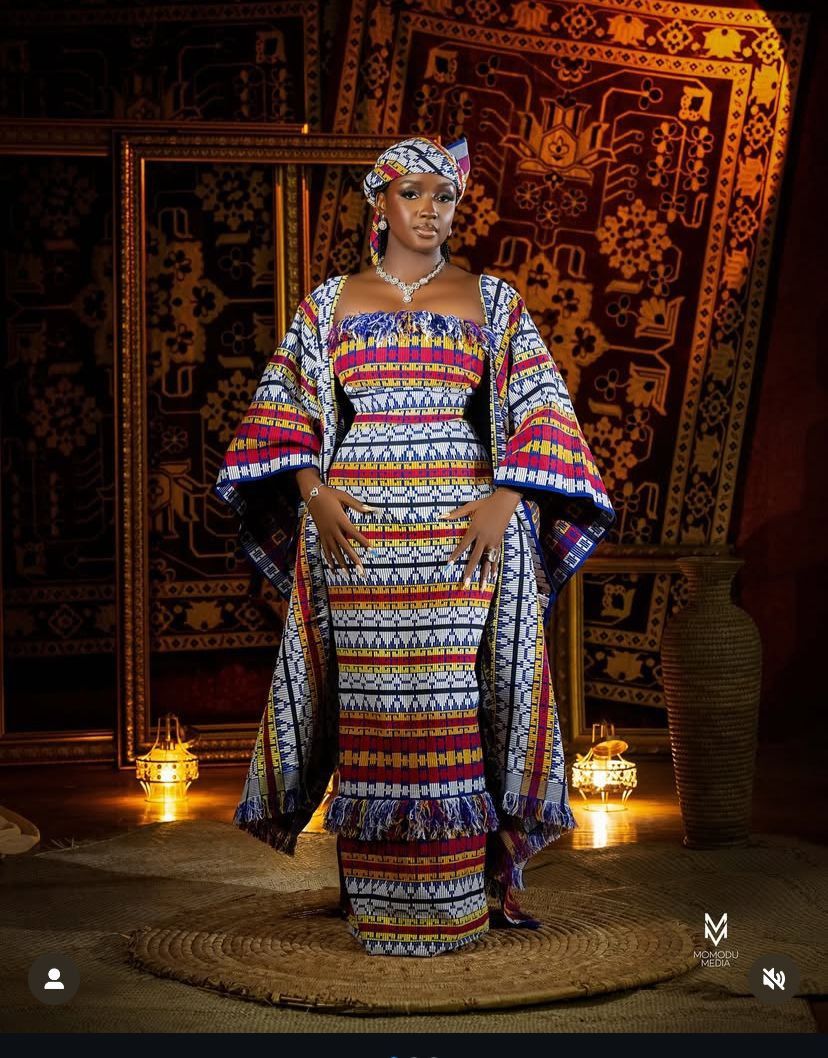
1. The Akwa Abuo (The Double Wrapper With Blouse and Ichafụ)
The Akwa Abuo is the ceremonial foundation of Igbo women’s dress. Two wrappers of Akwete cloth, one tied at the ankle and the other folded at mid-calf length, worn with a matching blouse and an Ichafụ, the headscarf tied and shaped at the crown, constitute the standard dress for every significant occasion in Igbo women’s ceremonial life. This is not a look assembled from separate pieces. It is a system, and each element within it is culturally weighted. As the Ozi Ikoro history of Akwete weaving records, Akwete clothes are worn for ceremonial events, including weddings and burials, and were previously worn by leaders and elders as status symbols in Igbo culture. The double wrapper is the garment form through which that status is most publicly declared.
The blouse worn with the Akwa Abuo has its own history. The puffed-sleeve blouse, an adaptation shaped by contact with European garment forms during the colonial period, became the standard ceremonial blouse for Igbo women and has been refined over generations into something entirely its own. It is worn with coral beads at the neck and wrists, a hand fan held in the right hand, and often anklets that chime softly as the wearer moves. The Ichafụ, shaped into a flat or structured fold at the crown, completes the silhouette. Together, the Akwa Abuo with its full accessories is one of the most compositionally complete traditional dress forms in Nigeria, and it is the form against which every other Akwete style is measured.
In 2026, Igbo women are returning to Akwa Abuo with renewed deliberateness. The motifs they select communicate family lineage and social standing. The quality of the handwoven cloth, the depth of its colour, and the complexity of its pattern speak to the wedding, the titled gathering, or the Umuada meeting in the same language they have always spoken. Nothing about this style is casual. That is the point.
2. The Akwete Ogologo Gown
The ‘Ogologo’, meaning ‘long’ or ‘elongated’ in Igbo, refers to the floor-length gown form that contemporary designers are cutting from Akwete cloth with increasing confidence and increasingly wide international notice. Where the Akwa Abuo is the traditional ceremonial standard, the Ogologo gown is the statement that Akwete cloth is architecturally capable of any silhouette a modern woman requires. It is this style that designers like Emmy Kasbit and Emmanuel Okoro have showcased on Lagos Fashion Week runways, and, as Wikipedia’s account of Akwete cloth confirms, it is now being produced for a wide global market by the Ndoki women who continue to weave it on Nkwe looms in Abia State.
The Akwete Ogologo gown works because the fabric’s weight, texture, and visual complexity give it an authority that lighter printed fabrics cannot carry in the same way. A floor-length gown cut from Akwete cloth with the Ikaki tortoise motif running through the body panel and the Ogene bell pattern at the hem is not a gown that arrives quietly. It commands the room. For Igbo women who choose it for traditional weddings, Ozo title ceremonies, or high-society gatherings, the Ogologo gown makes the cultural argument with the full force of the fabric’s history behind it.
In 2026, the Ogologo is being tailored in structured A-line and column silhouettes, sometimes with a modest puff at the sleeve to recall the blouse tradition of the Akwa Abuo and almost always accessorised with original coral beads. The fabric carries the styling. The woman wearing it understands what she has put on.
3. The Akwete Etibo Blouse With Wrapper
The ‘Etibo’ is the Igbo term for the structured blouse worn by women and men at semi-formal traditional occasions. This garment form sits between the full ceremonial ‘Akwa Abuo’ and casual everyday dress. An Akwete Etibo blouse, cut with a modest puffed or fitted sleeve, a modest neckline, and the Akwete cloth’s intricate pattern reading as the primary visual statement across the chest and shoulders, paired with a matching Akwete wrapper, is one of the most versatile styles in the tradition. It works for the Umuada association meeting, for a naming ceremony, for a titled elder’s celebration, and for the kind of cultural function where an Igbo woman needs to be visibly, specifically Igbo, in her dress without deploying the full ceremonial weight of the double wrapper.
The motif selection for the Etibo blouse is a considered decision. A wearer who chooses a cloth carrying the coral or the Ogene bell pattern is communicating something about her understanding of the cloth she is wearing. A wearer who chooses the snake-back or the geometric stripe patterns makes a different statement. Akwete weavers who produce cloth for Etibo blouses know their customers are making those choices consciously, and they weave accordingly. In 2026, demand for custom Etibo blouses from weavers in Abia State and from designers in Lagos and Abuja who work directly with Ndoki artisans is the clearest indicator that the Akwete renaissance is not a trend. It is a sustained return to knowledge.
4. The Akwete Two-Piece Co-ord
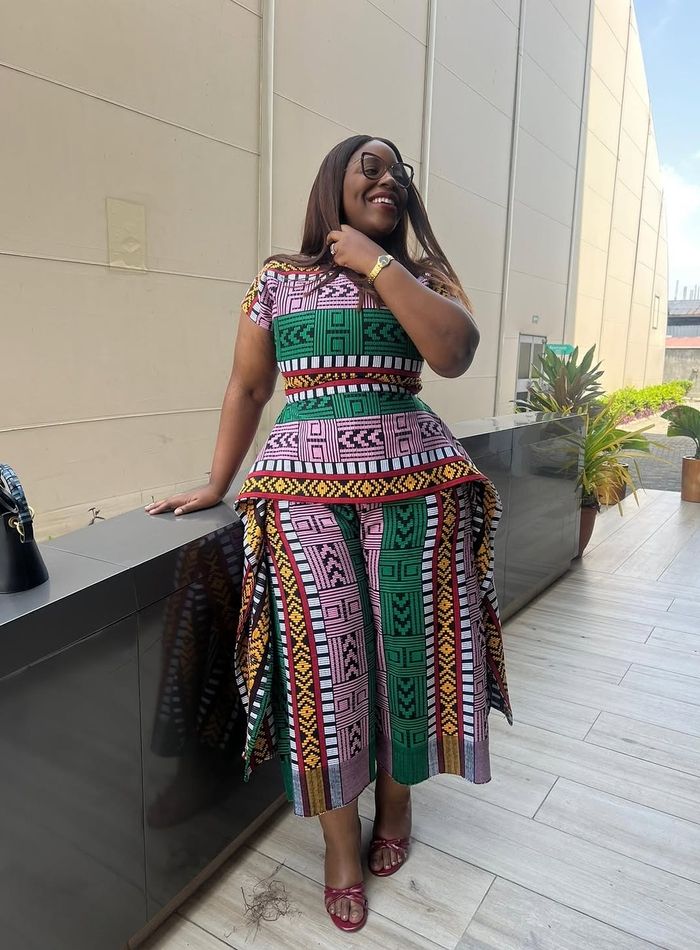
The structured two-piece co-ord in Akwete cloth, a cropped or fitted top with wide-leg trousers or a midi skirt in the same handwoven fabric, is the style that Igbo women in the diaspora and in the urban centres of Abuja and Lagos are using to carry Akwete into the full range of rooms they occupy. It is the newest form in this series and the one with the most distance to cover between its current visibility and the cultural authority it carries. But as Omiren Styles’ account of how digital creativity is reshaping African textile traditions shows, the relationship between indigenous craft and contemporary design is evolving faster and with greater intent than ever. The Akwete co-ord is part of that movement.
A cropped Akwete top in a cloth carrying the Ikaki motif, paired with wide-leg Akwete trousers in a complementary stripe pattern, worn with coral bead earrings and a simple handwoven bag, is a complete Igbo cultural statement in a contemporary silhouette. The fabric is handwoven in Ndoki by a woman who has been weaving since she was a teenager and whose mother wove before her. The motifs are named. The garment is Igbo. The room it enters does not change what it is.
For diaspora Igbo women in London, Houston, and Toronto who want to wear their cultural identity in settings where the Akwa Abuo may not be the immediate register, the co-ord is the Akwete style that travels most easily without losing any of its cultural substance. That is not a compromise. It is a strategy.
5. The Akwete Jacket Suit
The Akwete jacket suit is the style that placed Akwete cloth on the international fashion map in a way that the traditional wrapper had never fully managed. When Theresa May wore an Emmy Kasbit Akwete jacket during her 2018 visit to Nigeria, the garment was read globally as a diplomatic statement. But for Igbo women who commission Akwete jacket suits from designers in Lagos or directly from artisan tailors in Abia State, it carries a meaning that has nothing to do with diplomacy and everything to do with cultural authority. An Akwete jacket in a structured modern cut, worn over a matching Akwete skirt or tailored trousers, is the garment that carries Igbo textile heritage into the boardroom, the graduation hall, and the cultural institution without asking permission. As the Fashion History Timeline’s Akwete entry records, the silhouette is entirely modern, but the fabric is quintessentially Akwete. That combination is the argument.
In 2026, Akwete jacket suits are being commissioned in both traditional handwoven cloth from Ndoki weavers and machine-adapted Akwete print fabrics for wider accessibility. The distinction matters. A jacket cut from cloth woven on an Nkwe loom by a woman in Abia State carries a cultural weight that a machine-printed Akwete pattern, however accurately rendered, does not. For women who can access the handwoven cloth, the jacket suit made from it is an investment in the craft and in the community that produces it. For women who cannot, the adapted print is the beginning of a relationship with a fabric tradition that deserves their full attention.
When Akwete Speaks: The Cloth Across Igbo Ceremonies
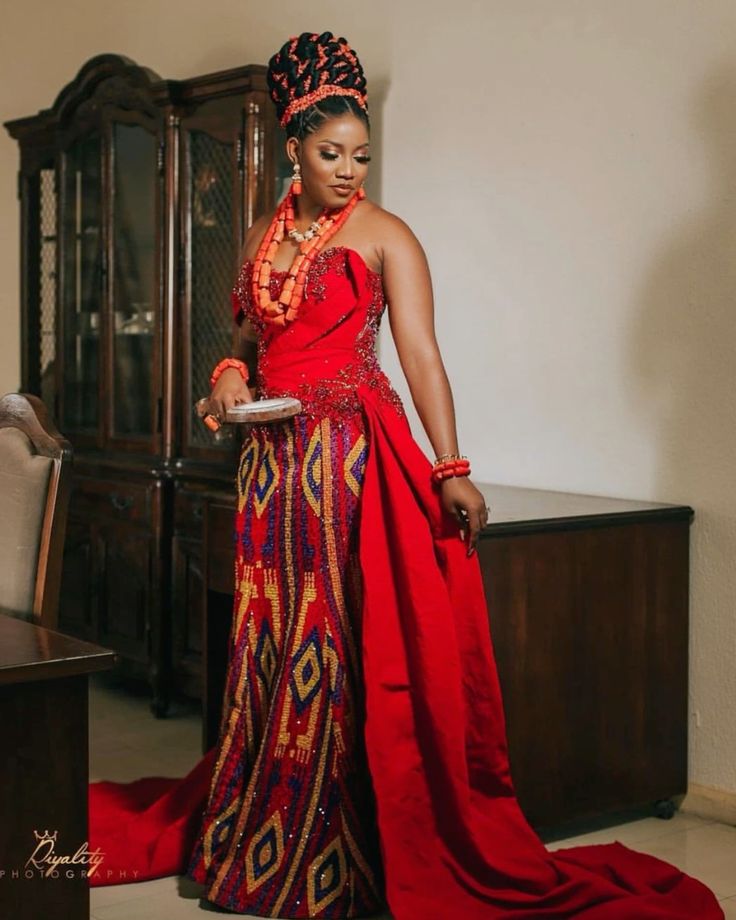
Akwete cloth moves through Igbo ceremonial life according to a grammar that has been in place since Dada Nwakwata’s innovations made the fabric the prestige textile of the Ndoki community. Each occasion has its own expectations of the cloth, and an Igbo woman who knows her Akwete dresses accordingly.
Igba Nkwu (The Traditional Marriage)
The Igba Nkwu, the wine-carrying ceremony at the centre of Igbo traditional marriage, is the occasion at which the Akwa Abuo double wrapper is most fully expected and most carefully chosen. The bride presents herself before her family and her husband’s family, carrying a cup of palm wine that she will, after searching the assembled crowd, present to the man she chooses to marry. The cloth she wears at that moment communicates her family’s standing, her own cultural literacy, and the seriousness with which her household has prepared for the occasion. Akwete in deep red, indigo, and rich earth tones, with full coral bead accessories and a precisely tied Ichafụ, is the standard for bridal presentation at Igba Nkwu. The Akwete motifs chosen for this occasion are often discussed among the bride, her mother, and female relatives in the weeks before the ceremony.
Ozo Title Ceremony
The Ozo title is one of the most prestigious social achievements available in Igbo society, a formal recognition of a man’s standing within his community that transforms his social position and brings obligations as well as honours. The women of his household and extended family dress at the highest register they possess for the ceremony. Akwete cloth in the Ikaki tortoise motif, historically reserved for royalty, is appropriate for women of standing within titled families at Ozo ceremonies. The double wrapper with full coral jewellery; the Ichafụ, shaped and sized to announce the occasion’s weight; and the hand fan, held with the quiet authority of a woman who knows exactly where she is and why she is there: this is Akwete at its most culturally charged.
Ikwa Ozu (Igbo Funeral Rites)
The Igbo funeral is not a subdued occasion. It is a reckoning, a celebration of a life completed, and a gathering at which the community assembles in its fullest ceremonial capacity to honour the dead and acknowledge the living. Akwete cloth is present at Igbo funerals in specific configurations. For the funeral of an elder, titled man, or community figure, the women of the household dress in coordinated Akwete, the fabric worn as the Akwa Abuo and the colour palette selected to communicate mourning without abandoning the dignity that Igbo ceremony always demands. White and black Akwete combinations are seen at funerals. The quality of the cloth, even at a funeral, is a statement of the family’s cultural seriousness.
Ito Ogbo (Naming and Coming-of-Age Ceremonies)
The naming ceremony, held eight days after a child’s birth, is the occasion when the community formally receives the new person, and the parents present themselves as a household capable of raising the child well. Akwete cloth in warm, celebratory tones worn as the Etibo blouse and wrapper combination, with coral bead jewellery and an Ichafụ, marks the mother as a woman who has prepared for this day with the full seriousness it deserves. The coming-of-age ceremonies that mark a young woman’s passage into adulthood are similarly occasions at which Akwete cloth, chosen for its motifs as much as its colour, makes the cultural statement that cannot be made in any other fabric.
Umuada Meetings and Ulo Nne Gatherings
The Umuada is the association of daughters of an Igbo community, and their meetings are among the most socially powerful gatherings in Igbo communal life. A Umuada meeting is not casual. The women who attend dress in coordinated Akwete to declare their collective identity and their shared authority within the community. Similarly, the Ulo Nne, the women’s evening gathering that functions as both a social event and a form of community governance, is an occasion when Akwete cloth in the Etibo blouse-and-wrapper combination is both appropriate and expected. These are the routine, non-ceremonial occasions at which Akwete is worn not to mark an exceptional event but to mark membership in a community that takes its cultural identity seriously on ordinary days as well as extraordinary ones.
The Igbo woman who wears Akwete to her Umuada meeting is making the same argument as the Igbo woman who wears it to her traditional wedding. The cloth says, ‘I know where I come from.’ I know where I am. I have dressed accordingly.
Also Read
- Top 5 Isi-Agu Styles for Igbo Women
- How Digital Looms Are Weaving New African Legends
- Reclaiming the Narrative: How Cultural Resistance Shaped the World’s Most Powerful Style Movements
The Omiren Argument
Akwete cloth has spent too long on the margins of the conversation about African fashion heritage. The fabric that the Igbo people of Ndoki have been weaving on vertical Nkwe looms since the 19th century, with over a hundred named motifs drawn from Igbo cosmology, social hierarchy, and daily life, belongs at the centre of that conversation. It belongs there not because it is beautiful, though it is, and not because it is technically accomplished, though a single length of handwoven Akwete cloth can take three or more days to produce on a loom that requires the full weight of the weaver’s body and attention. It belongs there because it is a complete civilisational record, woven into cloth by women, transmitted from women to women, worn by women at the occasions that define the arc of Igbo social life. As the Mbili Journal documents, when Chimamanda Ngozi Adichie wore yellow Akwete trousers to an Igbo Conference and publicly named the fabric, her choice was a deliberate cultural act. That act is available to every Igbo woman who understands what she is putting on.
The five styles in this article are not the full range of what Akwete cloth can do. They are the beginning of a reacquaintance. A woman who starts with the Etibo blouse and wrapper will, at some point, arrive at the Akwa Abuo double wrapper and immediately understand why the garment has carried this culture for over a century.
Akwete is not a trend that arrived. It is a tradition that has returned.
Browse the full African Style collection at Omiren Styles.
Frequently Asked Questions
1. What is Akwete cloth, and where does it come from?
Akwete cloth is a handwoven textile produced in the town of Akwete in the Ndoki community of Ukwa East Local Government Area, Abia State, southeastern Nigeria. It takes its name from its place of origin. Its alternative names include Aruru, meaning something woven, Mkpuru Akwete, and Akuraku. The cloth is woven exclusively by women on a vertical Nkwe loom, the widest loom in Nigeria, producing single panels up to 115 centimetres wide with over a hundred distinct named motifs. The Wikipedia entry on Akwete cloth provides a comprehensive overview of its history, production, and cultural significance.
2. Who was Dada Nwakwata, and why does she matter?
Dada Nwakwata was the 19th-century Igbo weaver who transformed Akwete weaving from functional cloth production into the highly ornamented, motif-rich textile tradition it is today. She studied the patterns of imported cloth traded by her Ijo partners in the palm oil trade. She began developing a new vocabulary of woven design, giving Akwete weavers a repertoire of intricate geometric and figurative patterns. Her innovations are the foundation of every Akwete motif woven today. She kept her methods secret during her lifetime: the techniques were revealed after her death by the only person she had allowed in her company while she wove. A detailed account of her significance is available at Bellafricana.
3. What is the Akwa Abuo, and when is it worn?
The Akwa Abuo, meaning ‘two wrappers’ in Igbo, is the double-wrapper style that is the ceremonial standard of Igbo women’s dress. One wrapper is tied at the ankle, and a second is folded at mid-calf length, both in matching Akwete cloth, worn with a matching blouse and an Ichafụ headscarf. The Akwa Abuo is the appropriate attire for traditional weddings (Igba Nkwu), Ozo title ceremonies, funeral rites, Umuada association meetings, and any Igbo occasion at which a woman’s cultural membership in the gathering must be fully and formally expressed.
4. What motifs are traditionally significant in Akwete cloth?
Akwete cloth carries over a hundred named motifs drawn from Igbo cosmology, social hierarchy, and daily observation. The Ikaki, a tortoise motif, was historically reserved for royal families and remained socially regulated into the colonial period. Other significant motifs include the snake-back, coral, Ogene bell, comb, children’s fingers, and ceremonial stools. More recent Akwete designs have incorporated themes relevant to contemporary Nigerian identity, including representations of the national flag and coat of arms. The motif a woman chooses for a ceremonial cloth communicates her knowledge of the fabric’s cultural grammar as clearly as the weave’s quality.