Menu
  • Fashion
    • Africa
    • Caribbean
    • Latin America
    • Trends
    • Street Style
    • Sustainable Fashion
    • Diaspora Connects
  • Culture
    • Textiles
    • Cultural Inspirations
    • Ceremony & Ritual
    • Art & Music
    • Cultural Inspirations
  • Designers
    • African Designers
    • Caribbean Designers
    • Latin American
    • Emerging Talent
    • Interviews
  • Beauty
    • Skincare
    • Makeup
    • Hair & Hairstyle
    • Fragrance
    • Beauty Traditions
  • Women
    • Women’s Style
    • Evening Glam
    • Workwear & Professional
    • Streetwear for Women
    • Accessories & Bags
    • Health & Wellness
  • Men
    • Men’s Style
    • Grooming Traditions
    • Traditional & Heritage
    • The Modern African Man
    • Menswear Designers
  • Diaspora
    • Diaspora Voices
    • UK Scene
    • US Scene
    • Caribbean Diaspora
    • Afro-Latino Identity
  • Industry
    • Strategy
    • Investment
    • Retail
    • Insights
    • Partnerships
  • News
    • Cover Stories
    • Fashion Weeks
    • Opinion & Commentary
    • Style Icons
    • Rising Stars
    • Editorial Intelligence
Subscribe
OMIREN STYLES OMIREN STYLES

Fashion · Culture · Identity

OMIREN STYLES OMIREN STYLES OMIREN STYLES OMIREN STYLES
  • Fashion
    • Africa
    • Caribbean
    • Latin America
    • Trends
    • Street Style
    • Sustainable Fashion
    • Diaspora Connects
  • Culture
    • Textiles
    • Cultural Inspirations
    • Ceremony & Ritual
    • Art & Music
    • Cultural Inspirations
  • Designers
    • African Designers
    • Caribbean Designers
    • Latin American
    • Emerging Talent
    • Interviews
  • Beauty
    • Skincare
    • Makeup
    • Hair & Hairstyle
    • Fragrance
    • Beauty Traditions
  • Women
    • Women’s Style
    • Evening Glam
    • Workwear & Professional
    • Streetwear for Women
    • Accessories & Bags
    • Health & Wellness
  • Men
    • Men’s Style
    • Grooming Traditions
    • Traditional & Heritage
    • The Modern African Man
    • Menswear Designers
  • Diaspora
    • Diaspora Voices
    • UK Scene
    • US Scene
    • Caribbean Diaspora
    • Afro-Latino Identity
  • Industry
    • Strategy
    • Investment
    • Retail
    • Insights
    • Partnerships
  • News
    • Cover Stories
    • Fashion Weeks
    • Opinion & Commentary
    • Style Icons
    • Rising Stars
    • Editorial Intelligence
  • Luxury Living

How Japanese Denim Culture Teaches Us the Value of Patina

  • Ayomidoyin Olufemi
  • February 17, 2026
The Emotional Weight of Time
Total
0
Shares
0
0
0

Luxury once meant untouched.

Pristine leather. Sharp creases. Perfect symmetry. The unmarked surface is proof of value.

Japanese denim culture quietly rejects that idea.

Across Japan, particularly in regions like Okayama, a devoted community of artisans and collectors has developed a philosophy centred around raw indigo jeans. Jeans are purchased stiff, dark, and unwashed. They are worn for months, sometimes years, before their first soak. Creases develop. Indigo fades. Fabric softens. The garment transforms.

The goal is not preservation.

It is patina.

And in that transformation lies a lesson far beyond clothing.

How Japanese denim culture transforms raw indigo into philosophy, teaching the value of patina, patience, and slow luxury.

Raw Denim as Commitment
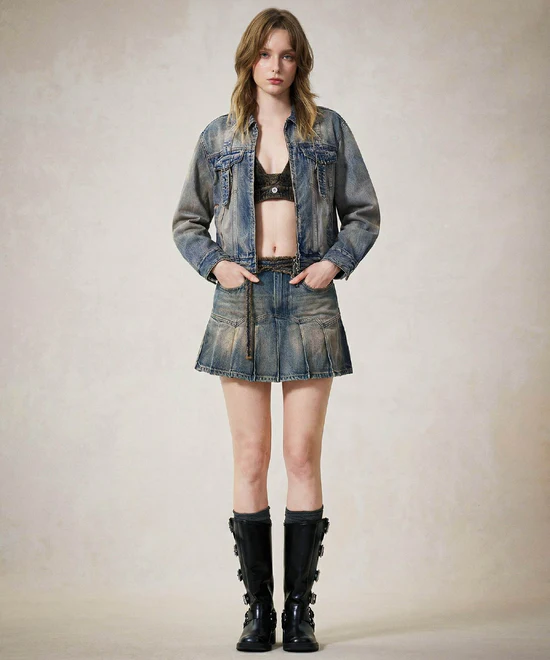
Raw Denim as Commitment
Photo: Evisu.

Raw denim is unforgiving at first. It resists the body It creases sharply. It demands repetition.

Enthusiasts speak of “earning” their fades — honeycomb creases behind the knees, whisker patterns at the hips, subtle lightening along the thighs. These fade patterns become personal signatures. No two pairs age identically.

In an industry built on uniformity, this unpredictability is radical.

Patina becomes a biography.

The Philosophy of Impermanence

Japanese aesthetic traditions have long embraced impermanence. The concept is often associated with wabi-sabi values: weathering, irregularity, and quiet transformation.

Raw denim embodies this ethos. The garment is incomplete when purchased. It requires time to reveal character.

Contrast this concept with fast fashion’s model: garments pre-distressed to simulate age, designed for immediate aesthetic payoff, and often discarded within seasons.

Japanese denim culture refuses simulation.

It insists on authenticity, not only in construction but also in experience.

Craft, Slowness, and Discipline

In Okayama’s mills, fabric is woven slowly on shuttle looms, producing selvedge edges and subtle irregularities. Indigo is rope-dyed, allowing the surface to fade while the core remains white. The science of ageing is intentional.

But the wearer must participate.

Denim forums document wash schedules, wear cycles, and repair techniques. Owners debate when to soak and when to wait. What appears obsessive is, in truth, disciplined stewardship.

The garment is not disposable. It is collaborative.

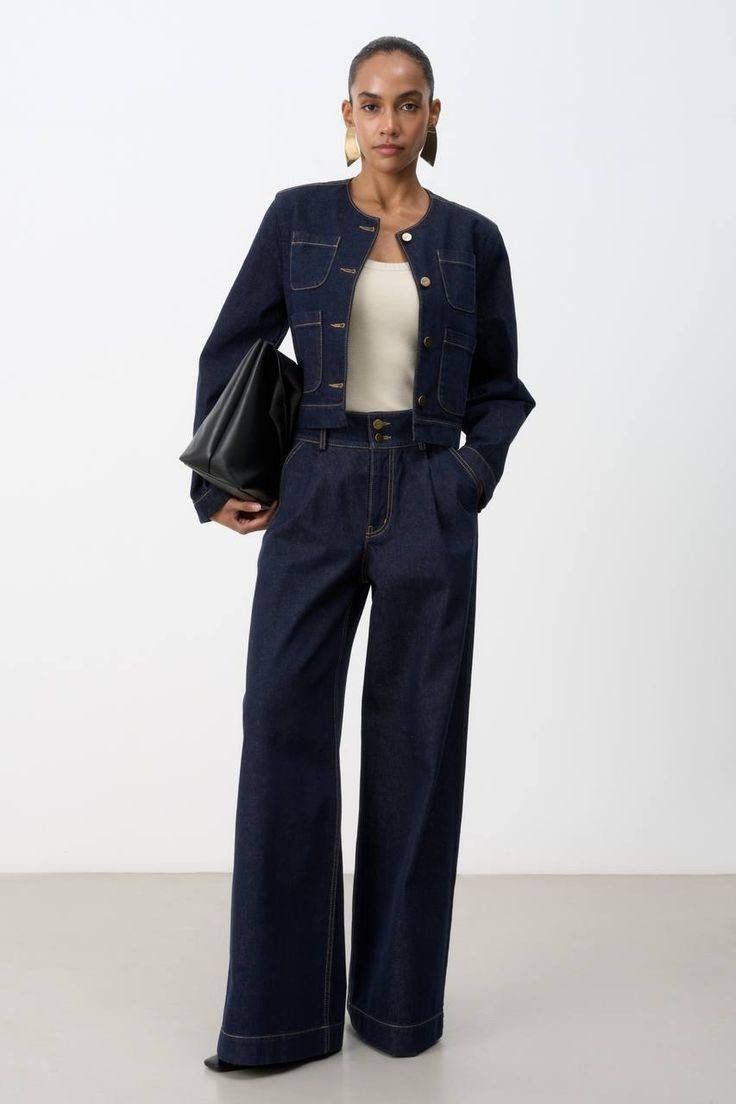
Patina as Counter-Luxury
Patina as Counter-Luxury

Contemporary luxury often prioritises immaculate surfaces—smooth, glossy, untouched. Wear is considered damage.

Japanese denim culture reframes wearing denim as a symbol of prestige.

The most admired jeans are those that display years of dedication. High-contrast fades indicate commitment. Repairs add depth. Fraying edges become evidence of loyalty.

In this framework, time increases value rather than diminishing it.

Luxury becomes longitudinal.

Repair as Refinement

Japanese textile culture has long embraced repair traditions such as boro — visible patchwork that strengthens worn fabric while honouring its history.

When applied to denim, repair does not conceal imperfections. It accentuates resilience. Reinforced knees and stitched tears become part of the garment’s visual narrative.

In a global economy that encourages replacement, visible mending feels subversive.

Repair extends lifespan. It resists waste. It dignifies use.

Beyond Clothing: A Lifestyle Lesson

The value of patina extends beyond denim.

  • Leather that deepens in tone with travel
  • Brass that softens with touch
  • Wooden tables that carry marks of shared meals
  • Books annotated across years

Japanese denim culture teaches that longevity breeds intimacy. Objects become meaningful not because they remain flawless, but because they absorb life.

There is a quiet psychological shift here: ownership becomes a relationship.

Identity Through Repetition

Identity Through Repetition

Modern fashion encourages constant rotation: new season, new silhouette, new drop.

Raw denim culture encourages repetition. Wearing the same pair daily sounds restrictive, yet repetition builds identity; the jeans mould to posture, routine, and movement.

This continuity suggests that self-expression need not depend on constant novelty. It can emerge through sustained engagement.

Sustainability Without Performance

Sustainability in contemporary fashion is often communicated through campaigns and certifications. Japan’s denim culture emphasises durability.

A well-crafted pair of selvedge jeans can last a decade or more. With repair, even longer.

Such longevity is not marketed loudly. It is assumed. Longevity is intrinsic to quality.

In this sense, Japanese denim offers a blueprint for conscious consumption that relies not on morality but on excellence.

READ ALSO:

  • Why Culture Is the Foundation of Style in African and Global Fashion
  • When Creativity Resists Erasure: How Culture Lives On Through Art

The Emotional Weight of Time

There is something deeply human about watching indigo fade.

At first, the change is barely perceptible. Then contrasts sharpen. Knees lighten. Edges soften. What began as uniform darkness became a gradient of experience.

The transformation mirrors ageing itself,  gradual, uneven, irreversible.

Japan’s denim culture normalises that change. It celebrates it.

Patina gains permission to evolve visibly.

The Future of Value
How Japanese Denim Culture Teaches Us the Value of Patina


As global consumers grow fatigued by hyper-speed trend cycles, interest in craftsmanship and longevity continues to rise. Japanese denim remains niche, but its philosophy resonates widely.

In a digital age defined by immediacy, patience feels luxurious.

Raw denim may seem like a small, specific subculture. Yet its lesson is expansive:

Beauty is not frozen.

Value is not instant.

Character is earned.

And sometimes, the most refined luxury is simply the willingness to wait.

Experience the finer side of life — explore Luxury Living on OmirenStyles now.

FAQs

  • What is Japanese raw denim?

Japanese raw denim is unwashed, selvedge denim produced using traditional shuttle looms and high-quality indigo dyeing techniques.

  • Why is patina important in denim culture?

Patina represents the natural fading and wear that occurs over time, making each pair of jeans unique to its wearer.

  • What makes Japanese denim different from regular denim?

Japanese denim emphasises small-batch production, vintage weaving methods, and meticulous craftsmanship, resulting in durable, textured fabric.

  • What is selvedge denim?

Selvedge denim is woven on shuttle looms that create a clean, finished edge, signalling higher-quality construction.

  • How does Japanese denim relate to slow fashion?

Its focus on durability, repair, and long-term wear aligns with slow fashion principles that prioritise quality over rapid consumption.

Post Views: 689
Total
0
Shares
Share 0
Tweet 0
Pin it 0
Related Topics
  • Artisan Textile Craftsmanship
  • Japanese Denim Culture
  • Slow Fashion Philosophy
Avatar photo
Ayomidoyin Olufemi

ayomidoyinolufemi@gmail.com

You May Also Like
The Legacy of the Modern Timepiece: Precision and Presence
View Post
  • Luxury Living
  • Men's Style

The Legacy of the Modern Timepiece: Precision and Presence

  • Faith Olabode
  • April 13, 2026
The Architecture of African Luxury Living: Style, Culture, and the New Definition of Opulence
View Post
  • Luxury Living

The Architecture of African Luxury Living: Style, Culture, and the New Definition of Opulence

  • Heritage Oni
  • March 26, 2026
The Return of High Glamour: Inside Africa’s New Couture Capitals
View Post
  • Luxury Living

The Return of High Glamour: Inside Africa’s New Couture Capitals

  • Ayomidoyin Olufemi
  • February 19, 2026
The Lagos Silhouette: Why Volume Is the New Status Symbol
View Post
  • Luxury Living

The Lagos Silhouette: Why Volume Is the New Status Symbol

  • Ayomidoyin Olufemi
  • February 18, 2026
Gold, Coral, and Cowrie: The Power Codes of African Ornament
View Post
  • Luxury Living

Gold, Coral, and Cowrie: The Power Codes of African Ornament

  • Ayomidoyin Olufemi
  • February 16, 2026
View Post
  • Luxury Living

Caftan Reimagined: How Morocco Turned a Ceremonial Garment into Everyday Luxury

  • Ayomidoyin Olufemi
  • February 10, 2026
African Horology: How Caveman Watches Is Rewriting Luxury Time
View Post
  • Luxury Living

African Horology: How Caveman Watches Is Rewriting Luxury Time

  • Ayomidoyin Olufemi
  • February 5, 2026
Living Well Without Performing Wealth: A New Language of Luxury
View Post
  • Luxury Living

Living Well Without Performing Wealth: A New Language of Luxury

  • Philip Sifon
  • February 4, 2026

Leave a Reply Cancel reply

Your email address will not be published. Required fields are marked *

The Omiren Argument

African fashion and culture are not emerging. They are foundational. We document, interpret, and argue for the full cultural weight of African and diaspora dress. With precision. Without apology.

Omiren Styles Fashion · Culture · Identity

All 54 African Nations
Caribbean · Afro-Latin America
The Global Diaspora

Platform

  • About Omiren Styles
  • Our Vision
  • Our Mission
  • Editorial Pillars
  • Editorial Policy
  • The Omiren Collective
  • Campus Style Initiative
  • Sustainable Style
  • Social Impact & Advocacy
  • Investor Relations

Contribute

  • Write for Omiren Styles
  • Submit Creative Work
  • Join the Omiren Collective
  • Campus Initiative
Contact
contact@omirenstyles.com
Our Reach

Africa — All 54 Nations
Caribbean
Afro-Latin America
Global Diaspora

African fashion intelligence, in your inbox.

Editorial features, designer profiles, cultural commentary. No noise.

© 2026 Omiren Styles — Rex Clarke Global Ventures Limited. All rights reserved.
  • Privacy Policy
  • Editorial Policy
  • Terms of Use
  • Accessibility
Africa · Caribbean · Diaspora
The Omiren Argument

African fashion and culture are not emerging. They are foundational. We document, interpret, and argue for the full cultural weight of African and diaspora dress. With precision. Without apology.

Omiren Styles Fashion · Culture · Identity
  • About Omiren Styles
  • Our Vision
  • Our Mission
  • Editorial Pillars
  • Editorial Policy
  • The Omiren Collective
  • Campus Style Initiative
  • Sustainable Style
  • Social Impact & Advocacy
  • Investor Relations
  • Write for Omiren Styles
  • Submit Creative Work
  • Join the Omiren Collective
  • Campus Initiative
Contact contact@omirenstyles.com

All 54 African Nations · Caribbean
Afro-Latin America · Global Diaspora

African fashion intelligence, in your inbox.

Editorial features, designer profiles, cultural commentary. No noise.

© 2026 Omiren Styles
Rex Clarke Global Ventures Limited.
All rights reserved.

  • Privacy Policy
  • Editorial Policy
  • Terms of Use
  • Accessibility
Africa · Caribbean · Diaspora

Input your search keywords and press Enter.