The joint Colombia–Ecuador heritage record does not describe one standard marimba performance. It brings together festive gatherings, devotional practices and funeral expressions whose musical arrangements and purposes differ. Some involve instrumental ensembles and dancing; others give the unaccompanied voice a central role. Understanding those differences is the first step towards understanding what the performance means. This distinction matters because a public presentation can bring related expressions together while leaving their original contexts unexplained. A listener may encounter instruments, voices and movement as a single cultural offering. Yet the knowledge behind them includes when people gather, who takes responsibility and what participants understand themselves to be doing.
Ecuadorian musician and instrument maker Guillermo Ayoví Erazo, known as Papá Roncón, expressed a related caution. A Wambra profile published after his death in 2022 recalls his statement that Afro-Ecuadorians are “much more than music.” The observation does not diminish musical practice. It refuses to let a highly visible art form stand in for a people’s full knowledge and experience. For the wider story of how African rhythm travelled, see our piece on the African roots of Caribbean and Latin American dance.
How marimba, song and dance connect teaching, remembrance and community life in Colombia’s South Pacific region and Ecuador’s Esmeraldas province.
A shared coastal heritage with specific locations
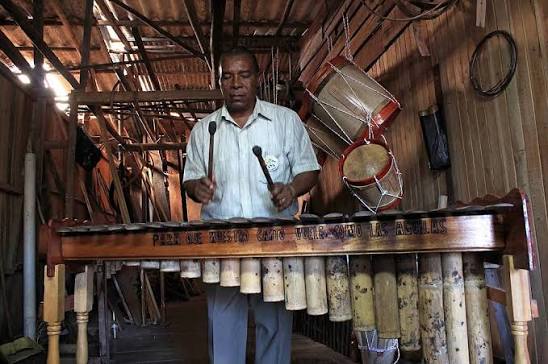
The UNESCO inscription concerns Afro-descendant communities in Colombia’s South Pacific region and Ecuador’s Esmeraldas province. The joint nomination identifies coastal municipalities in the Colombian departments of Valle del Cauca, Cauca and Nariño, including Buenaventura, Guapi, Timbiquí and Tumaco. On the Ecuadorian side, it identifies communities across Esmeraldas province, including the cantons of Esmeraldas, San Lorenzo, Eloy Alfaro, Quinindé, Atacames and Muisne. This is a cross-border cultural field, not a description of every Afro-Colombian or Afro-Ecuadorian musical practice. The shared designation recognises related histories and expressions without making every locality interchangeable. It should not be expanded into a general account of all Afro-Latin American culture.
The dates require equal precision. The joint inscription was made in 2015, and the Committee’s decision states that it replaces the Colombia-only inscription from 2010. The public video associated with the nomination carries a 2013 credit. These dates identify moments of documentation and institutional recognition, not the beginning of the traditions themselves. The nomination is therefore useful as a dated account of how communities, practitioners and institutions described the practice and its needs. Later testimony adds individual perspectives; it does not automatically update every condition recorded in that earlier file.
“A dated record tells you what was said then. It cannot tell you what is true now.” Omiren Styles Editorial Intelligence
Different occasions, different responsibilities
The joint nomination distinguishes several expressions within the broader heritage designation. It describes currulao as festive, bringing music and dance together with stories, poetry, food and drink. It associates arrullo with devotional celebration and worship of a saint, chigualo with a child’s wake, and alabao with an adult wake featuring a cappella singing. These are introductory descriptions within a regional document, not an exhaustive classification of every local variation. They establish that occasion changes participation. Celebration, devotion and mourning do not ask the same things of those who gather. An unaccompanied funeral song should not be described as though its significance were the same as that of an ensemble accompanying a festive dance.
The record also identifies specialised responsibilities. Singers hold repertoires; experienced musicians guide learners; prayer leaders participate in wakes; elders retain stories and contextual knowledge. Instrument makers maintain another field of expertise. Participation may be widely shared, but it does not erase the distinctions between these roles.
Food and drink also belong within this social account. The nomination situates symbolic exchange within existing family ties and alliances, including relationships through which support may be mobilised during hardship, disaster or conflict. That is not proof that a musical gathering automatically produces mutual aid. It describes occasions embedded in relationships that continue beyond the music.
The instrument connects making and playing.
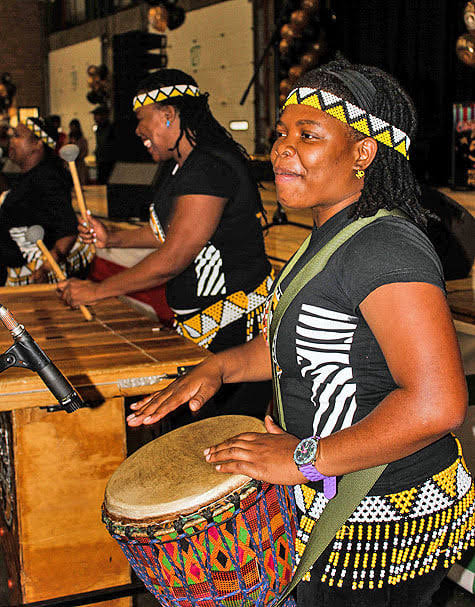
The marimba described in the nomination has palm-wood keys and bamboo resonators and is played with rubber-tipped wooden sticks. It belongs to an ensemble that also includes bombos, cununos and guasás. Behind that ensemble are makers who understand materials, construction and tuning, as well as players who understand musical relationships. Papá Roncón’s account brings those forms of knowledge together in one practitioner. Wambra’s 2022 profile quotes an earlier interview in which he described himself as a master both of making the marimba and of playing it. His explanation concerned knowing why it sounds, how it sounds and what must be done to make it sound.
That is a more precise understanding of expertise than public recognition alone. It locates authority in an ability to explain and work with the instrument, not simply to appear beside it. The same profile records that his early contact with the marimba came through relationships with Chachi communities in Esmeraldas. This is part of his particular learning history, not a basis for reducing the instrument’s regional history to one simple line of origin. It shows why a practitioner’s account can complicate neat cultural categories while remaining firmly situated in Afro-Ecuadorian life.
Learning happens across homes, teachers and schools.
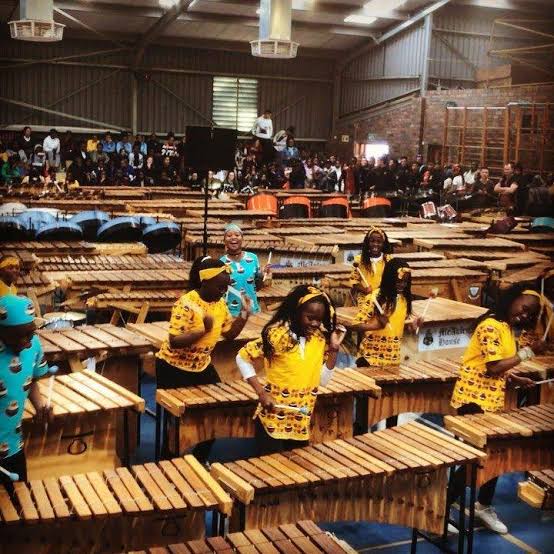
Everyday participation is a beginning.
The 2015 nomination identifies the home as a primary setting for transmission. Children observe and imitate from an early age, encountering songs during daily activities and communal occasions. The account includes mothers and grandmothers singing while caring for children, preparing food or washing clothes. Learning is not confined to a moment formally announced as a lesson. That does not mean knowledge passes automatically. The same document describes experienced adults guiding learners and helping them understand the tradition. Observation provides access; sustained relationships give that access direction.
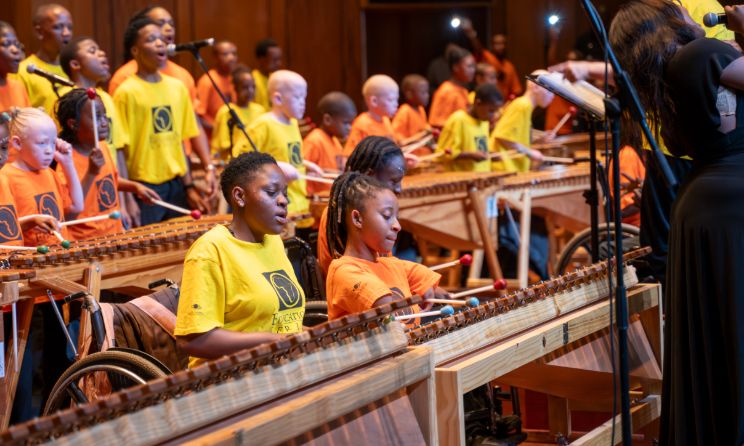
Formal and informal schools add another setting. The nomination distinguishes programmes supported by institutions from schools established by practitioners, where lessons are normally free and organised around observing, listening and practising. It presents these settings as complementary to family learning, not as replacements.
Papá Roncón made transmission an explicit responsibility.
Papá Roncón founded the Escuela de Cultura Tradicional La Catanga, which Wambra describes as supporting music, marimba dance, poetry and knowledge of instruments. His teaching also extended to his grandchildren. The profile quotes his explanation that they should be able to carry the work forward after he was gone and pass it to those who remained. The importance lies in the intention. Continuity was something to prepare for through teaching, not something guaranteed by ancestry.
Wambra’s account includes historian and teacher María Barbarita Lara Calderón’s reflections on his generosity with knowledge. She connects his example to the need to keep teaching and to Afro-Ecuadorian ethnoeducation, a project of learning that takes people’s own histories, experiences, and knowledge seriously. Her comments frame transmission as an educational and political responsibility, not simply an act of affection for a celebrated musician. These testimonies appear in a profile published in October 2022, after Papá Roncón’s death. They record his teaching legacy and others’ interpretation of it; they do not establish the present operating status of every initiative associated with him.
Inheritance can include an independent creative path.
Colombian musician Esteban Copete offers a different perspective on continuity. In a 2023 interview with El País, he describes the marimba as resistance, connecting its survival with communities’ perseverance and attachment to African origins. That is his interpretation, grounded in his own musical practice, not a declaration that every practitioner uses the same language. Copete also explains why inheritance did not mean merely reproducing his grandfather’s career. A grandson of composer Petronio Álvarez, he wanted to make his own songs, arrangements and projects. Family accounts helped him know a grandfather who died before he was born; creating music gave him a way to develop an individual legacy.
His account makes regional differences equally clear. Copete distinguishes the southern Pacific’s marimba association from the northern Pacific’s chirimía tradition and describes his own musical formation through both. The distinction prevents “Pacific music” from becoming a convenient label that conceals different instruments and histories. On experimentation, he argues against closing the door to musical currents already present in young people’s lives. His openness to fusion sits alongside his recognition of musicians working with tradition. In his account, continuity and invention are not mutually exclusive obligations.
Placed beside Papá Roncón’s testimony, this does not produce a single model of inheritance. It shows two practitioners locating responsibility differently: through teaching others to continue and through creating an independent path within an inherited musical world.
What the 2015 nomination said needed support
The safeguarding proposals in the joint file extend well beyond attracting audiences. They include strengthening teaching, supporting knowledgeable elders, sustaining access to instrument-making materials and improving community participation in decisions. The document also records concern about the effects of tourism and about researchers extracting information without returning knowledge or benefits to communities. These are concerns and proposed responses recorded for the 2015 nomination. They should not be treated as proof that every measure has been implemented, or that every documented problem remains unchanged today.
Their significance is the scope of safeguarding they describe. Continuity depends on people being able to teach, make, gather and exercise judgement about how their knowledge circulates. Recording a performance may support visibility, but it cannot sustain those conditions on its own. The file’s preparation also involved cross-border participation. It records a December 2013 meeting in Esmeraldas that brought together community representatives from Colombia and Ecuador, including teachers, singers, cultural promoters, and others. The nomination emerged through that process rather than solely through an institutional description written at a distance.
The Omiren Argument
The central question is participation: who can learn, teach, make and decide, not simply who can watch. Papá Roncón’s teaching and Copete’s account of creative independence reveal different ways cultural continuity becomes active. Neither depends on treating practitioners as anonymous custodians of an unchanging inheritance. Both involve decisions about what to carry forward and how to work with it.
That is why safeguarding cannot be measured through visibility alone. An admired performance does not tell us whether teachers have the conditions to teach, makers can obtain materials or communities have authority over documentation. The 2015 proposals recognised those wider responsibilities. The performance remains important. Understanding the relationships behind it makes it more specific: an expression made possible by people whose work extends before, beyond and between public appearances. More cultural coverage is at Omiren Styles.
Also Read:
- African Drums: History, Talking Drums, Colonial Bans, and Survival Across the Diaspora
- What Quibdo Wears: The Afro-Colombian Dress Culture That Colombian Fashion Never Documented
- Palenque Style: The Cultural Logic of Afro-Colombian Dress in San Basilio
- Cumbia Dress and the Colombian Dance Tradition That Built One of the Region’s Most Recognisable Silhouettes
Frequently Asked Questions
Does every expression include marimba, singing and dancing together?
No. The joint nomination covers related but distinct practices and identifies the adult funeral alabao with a cappella singing. The heritage designation should not be read as one fixed performance format.
Does the inscription represent all Afro-Latin American music?
No. It concerns specified communities in Colombia’s South Pacific and Ecuador’s Esmeraldas province. Its geographical scope should remain explicit.
When was the joint practice recognised?
The Colombia–Ecuador inscription dates to 2015 and replaced a Colombia-only inscription from 2010. The associated public video is credited to 2013.
Which instruments make up the ensemble?
The nomination describes a marimba with palm-wood keys and bamboo resonators, played with rubber-tipped wooden sticks, alongside bombos, cununos and guasás.