A fashion collection does not go from a sketch to a finished garment on its own
Between the designer’s initial idea and the moment a finished garment reaches the buyer, warehouse, retail floor or customer, a specific set of people do specific work: they develop patterns, source materials, manage factory relationships, control quality, coordinate logistics, handle customs, manage payments and ensure that what was designed is what gets made. Each of those people occupies a role whose function is distinct from the others, whose skills are specific to that function, and whose absence creates a specific gap in the production chain that the designer typically discovers when something goes wrong.
For an independent designer in Africa, the Caribbean, Latin America or the Latinx diaspora building their first production infrastructure, understanding the production team is the knowledge that converts a fashion project into a fashion business. A project can be delivered with a designer doing most of the production work themselves, accepting the time cost that comes with it. A business requires a production team whose roles are defined, whose skills are matched to the work, and whose engagement model, whether employed, freelanced or outsourced to a factory or service provider, is calibrated to the production volume and the commercial stage the brand is at.
Seventy per cent of downstream production issues trace back to ambiguities introduced in the design lock, tech pack and fabric sourcing phases of a production timeline. Each of those phases has a specific role. The ambiguity that causes the downstream problem usually stems from the absence of the right role, or the wrong person filling it.
As Omiren Styles has established in its analysis of why independent designers struggle between the sketchbook and the factory floor, the documentation gap between intuitive design practice and the technical documentation a factory relationship requires is one of the primary barriers to independent designers’ commercial development. Every role in this guide addresses some dimension of that gap. The roles exist because the gap is real, and the roles are named here because the designers who navigate the gap successfully are the ones who understand which role closes which part of it.
Fashion media names the designer. This guide names the ten roles between design and delivery: what each does, when you need them and whether to hire, freelance or outsource them.
Role 1: Technical Designer
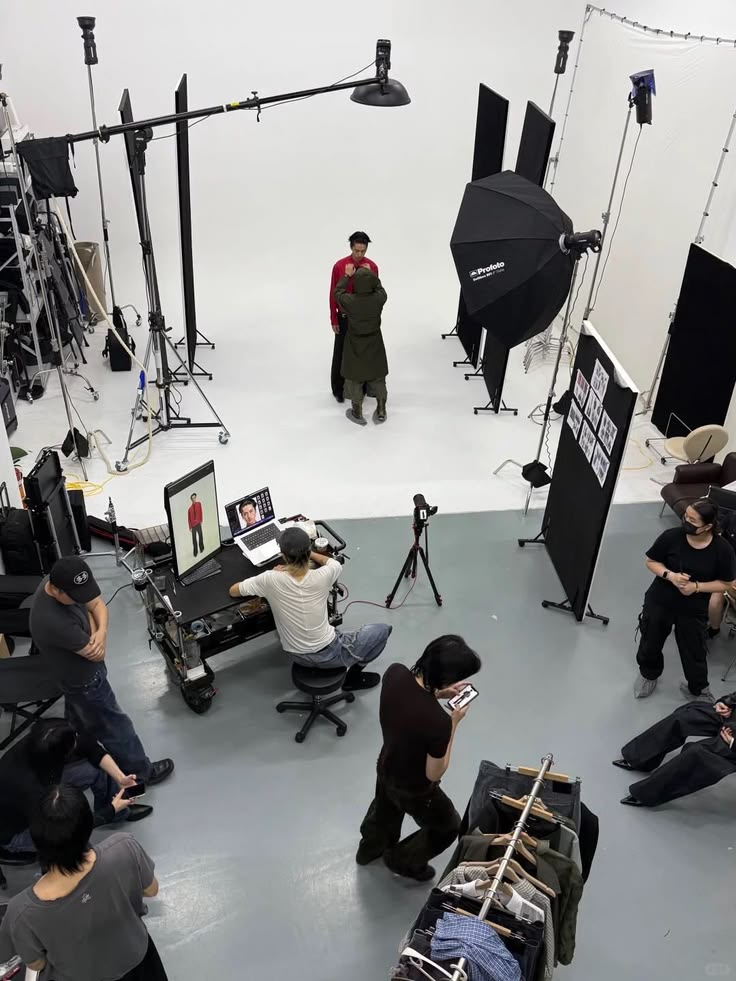
Primary function: Converts the designer’s creative sketches and concepts into technical documents the factory can execute: technical flats, construction specifications and measurement charts
Stage needed: At the point of transition from concept to production. The technical designer is needed before any sample can be requested from a factory
Key skills: Technical flat drawing; garment construction knowledge; measurement specification; understanding of factory production processes; specification software (CLO3D, Browzwear, Adobe Illustrator, Gerber AccuMark)
Engagement model: Freelance at early commercial stage, typically paid per style or per tech pack; in-house as production volume grows and the number of styles per season justifies a permanent position
The technical designer is the first role most independent designers discover they need, often when they send a design sketch to a factory and receive a request for a tech pack they have not produced. A fashion illustration shows how the garment looks. A technical flat shows how it is made. The technical designer bridges the gap between those two documents.
In a cross-border production context, the technical designer’s work also serves as the primary translation document: it converts the designer’s creative intent into a format that the factory’s pattern maker can read without the designer’s presence. The quality of the technical flat directly determines the accuracy of the first sample. An incomplete or unclear technical flat results in a first sample that the designer must revise through multiple rounds rather than one or two.
Role 2: Pattern Maker
Primary function: Develops the pattern from the technical flat: the individual fabric pieces that, when cut and sewn together, produce the finished garment in the specified measurements and construction
Stage needed: At the point of sample production. A pattern must exist before fabric can be cut
Key skills: Flat pattern drafting; draping; grading (scaling patterns across multiple sizes); pattern correction based on fit feedback; software (Gerber, Lectra, Optitex for industrial pattern making; CLO3D for digital pattern development)
Engagement model: Freelance for specific styles at early commercial stage; may be employed by the factory rather than the brand in a CMT relationship; in-house as volume grows
The pattern maker translates the technical flat into the production-ready pattern pieces the factory’s cutter will use. In many factory relationships, especially in a full-package or CMT arrangement, the pattern is developed by the factory’s own pattern maker from the technical designer’s specification. In this case, the designer does not hire a pattern maker independently. In a relationship where the designer develops patterns independently for multiple factories, an independent pattern maker is necessary.
Pattern ownership, as the cross-border production brief guide in this series noted, is a contractual question whose answer determines whether the designer can move production between factories without paying for pattern redevelopment. Where the pattern is developed by an independent pattern maker engaged by the brand, the brand typically owns the pattern. Where the pattern is developed by the factory, ownership should be specified in the production contract.
Role 3: Fabric and Materials Sourcer
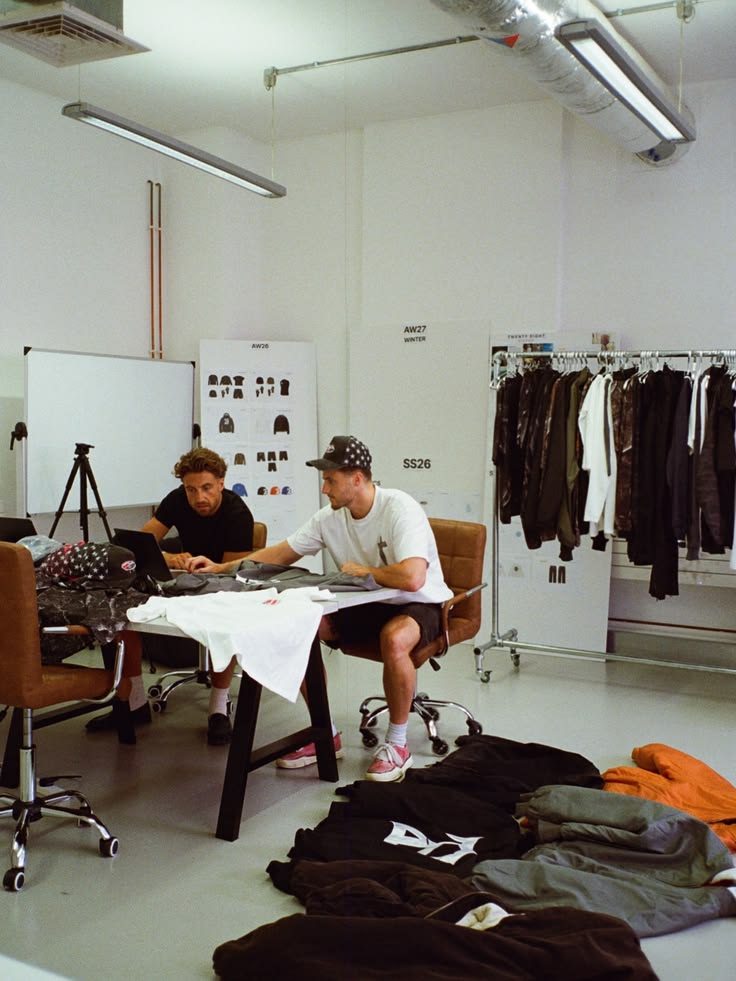
Primary function: Identifies, samples and procures the fabrics, trims and components the production requires, at the quality, price and lead time the production needs
Stage needed: Simultaneously with technical design. Materials must be confirmed before a factory can quote accurately
Key skills: Fabric and textile knowledge; supplier relationships; understanding of fabric composition, weight, finish and performance characteristics; knowledge of the intermediary chain (mills, converters, wholesalers, jobbers); cost negotiation; import logistics
Engagement model: Often handled by the designer themselves at early commercial stage; outsourced to a sourcing agent as production scale and material complexity grow; in-house as the brand’s material sourcing becomes a sustained commercial activity
The materials sourcer is the role most frequently absorbed into the designer’s own work at the the early commercial stage, and the role that creates the most expensive mistakes when it is not handled with sufficient expertise. A fabric sourced to a vague specification produces a sample in the wrong material. Sourcing fabric without confirming lead time can cause a production delay if the material does not arrive in time for the production window. A fabric sourced without confirming repeat availability creates a design that cannot be repeated in a second production run.
As Omiren Styles has established in its analysis of the fabric middleman and the fashion supply chain, the converter, the wholesaler and the jobber who sit between the mill and the designer are among the most commercially significant and least documented actors in the fashion supply chain. The materials sourcer is the role that navigates that chain on the designer’s behalf. A designer who sources without a materials sourcer is navigating a commercial system whose opacity, as this series has documented, is part of the system’s commercial value to the intermediaries within it.
Role 4: Garment Technologist
Primary function: Evaluates samples against specifications, identifies construction and quality issues, manages the correction process with the factory, and sets the quality standard for bulk production
Stage needed: At the sampling stage, before any sample is approved for bulk production
Key skills: Garment construction analysis; fit assessment; quality standard-setting; understanding of manufacturing processes and their quality implications; fabric performance testing; communication with factory technical teams
Engagement model: Freelance for sample review at early commercial stage; in-house as the brand’s sample volume justifies a permanent position; may also be provided by a buying agent or quality assurance service
The garment technologist is the role that prevents the most expensive production mistake in fashion: approving a sample for bulk production that has a quality, fit or construction problem that will appear in every unit of the bulk run. The garment technologist reviews each sample against the specification, identifies every deviation from the approved standard, communicates those deviations to the factory clearly enough for them to be corrected, and confirms when the corrected sample meets the standard required for bulk production approval.
The garment technologist is also the role that manages the measurement tolerance: confirming that the sample’s measurements fall within the specified tolerance across all critical dimensions, and flagging dimensions that fall outside tolerance before bulk production is committed. A measurement error discovered in bulk production cannot be corrected without rejecting or reworking the entire run.
Role 5: Production Manager
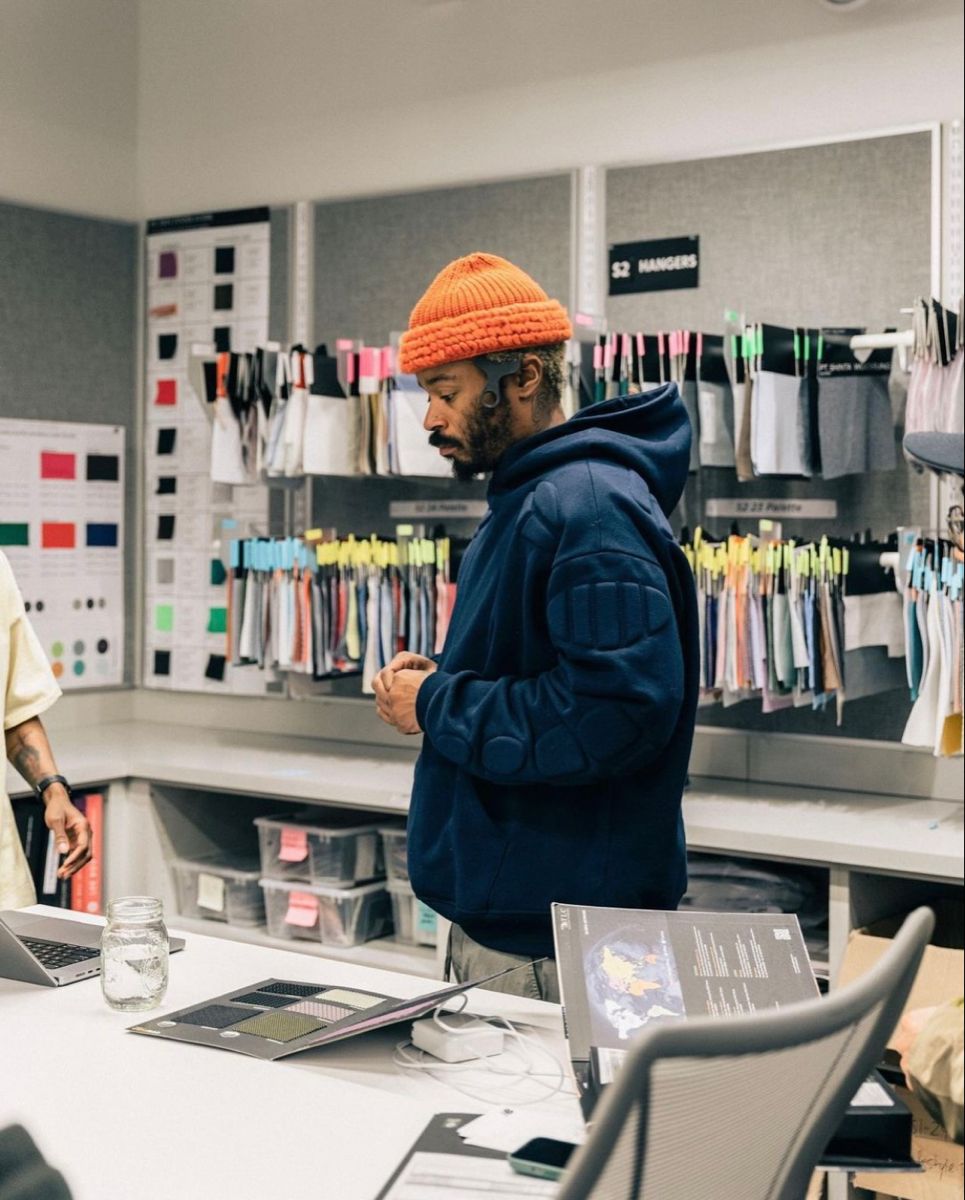
Primary function: Manages the end-to-end production process from order placement through bulk production, quality inspection and shipment preparation; coordinates between the brand, the factory and all supporting suppliers
Stage needed: At the point of placing the first bulk production order
Key skills: Production planning; factory communication; timeline management; problem-solving under time pressure; understanding of garment manufacturing processes; budget management; supplier relationship management
Engagement model: Often handled by the designer themselves at early commercial stage; freelance production consultant for specific production runs as scale grows; in-house as the number of concurrent production relationships justifies a permanent role
The production manager is the operational centre of the production team: the person who knows at any given moment where every garment in the production pipeline is, when it is due to move to the next stage, and what needs to happen to keep it on schedule. Without a production manager, the designer becomes the production manager, meaning design work stops whenever a production problem demands attention, which, in a cross-border production context, is frequent.
The production manager’s most critical function is the early identification of timeline risks: the material supply delay that will push the production window back, the factory capacity constraint that makes a confirmed production date ambitious, or the sampling correction that will consume time the original timeline did not account for. A production manager who identifies these risks two weeks before they materialise gives the designer options. A designer who discovers them on the day the delivery was due to leave the factory has no options.
Role 6: Quality Control Inspector
Primary function: Conducts pre-shipment inspection of bulk production to verify that the quantity, quality and specification of the finished goods meet the approved standard before they leave the factory
Stage needed: At the end of bulk production, before goods are approved for shipment
Key skills: Garment quality assessment; AQL (Acceptable Quality Limit) inspection methodology; measurement verification; defect identification and classification; inspection report production
Engagement model: Third-party quality control services engaged per inspection, typically by the designer or a buying agent; in-house only at production scales where the inspection frequency justifies a dedicated role
The quality control inspector is the last check before money crosses a border. A pre-shipment inspection that discovers the bulk production meets the approved standard confirms that the payment terms can be honoured and the goods can ship. A pre-shipment inspection that discovers defects above the acceptable rate initiates a negotiation about rework, price adjustment, or partial rejection, which is significantly easier to resolve before the goods ship than after they arrive.
As Omiren Styles has established, in its analysis of what makes a fashion manufacturer verified, consistent quality across the batch is the production standard that distinguishes a credible specialist manufacturer from an uncredible one. The quality control inspector is the role that verifies that standard at the batch level before the brand commits to accepting the goods.
Third-party quality control services that conduct pre-shipment inspections at factories globally are commercially available and widely used for cross-border production relationships where the brand cannot be physically present at the factory. The cost of a pre-shipment inspection is substantially lower than the cost of accepting substandard goods and managing the returns, rework, or reproduction that follow.
Role 7: Compliance Officer or Agent
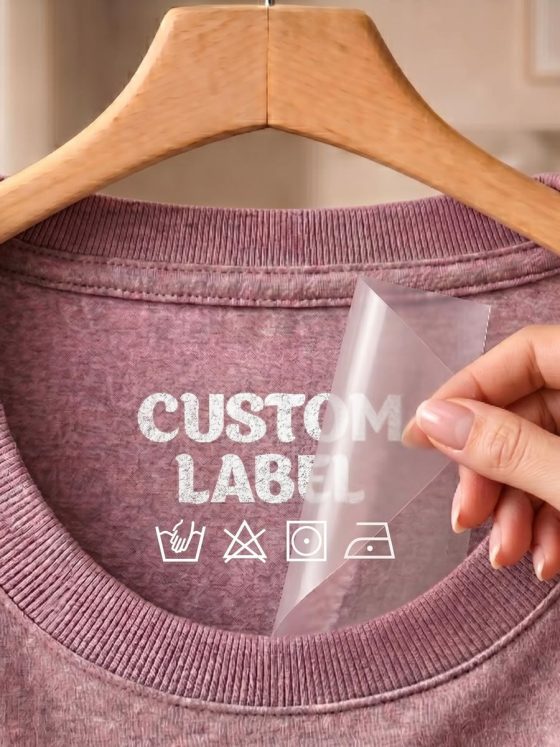
Primary function: Manages the brand’s compliance with the regulatory requirements of its target markets: labelling requirements, textile composition disclosure, care label standards, product safety certifications, import documentation and trade regulations
Stage needed: Before the first production run and continuously as new markets are entered or regulations change
Key skills: Knowledge of textile and apparel regulations in target markets; labelling standards; import/export trade regulations; awareness of evolving requirements including EU Digital Product Passport; certification management
Engagement model: Compliance consultant engaged for specific market entry decisions; importing agent or customs broker for ongoing trade documentation; in-house as the brand’s compliance obligations across multiple markets become a sustained workload
The compliance role is the one most frequently overlooked by independent designers until a shipment is held at customs because a document is missing, a label does not meet the destination country’s requirements, or a product safety standard hisnot bet. Regulatory compliance in cross-border fashion production is not difficult to manage once the requirements are known, but the consequences of failing to manage it are commercially severe.
As Omiren Styles has established in its analysis of the EU Digital Product Passport, the DPP applies to all products sold on the EU market regardless of where the brand is based, and compliance requires specific material origin documentation, production facility records and sustainability data that must be collected during production rather than reconstructed after it. The compliance role builds the documentation infrastructure the DPP will eventually require. Starting to build it before the regulatory deadline is substantially easier than starting at the deadline.
Role 8: Logistics Coordinator
Primary function: Manages the physical movement of goods between the factory and the destination: freight booking, document preparation, customs clearance coordination, delivery tracking and warehouse or stockroom arrival
Stage needed: From the point of production completion to delivery
Key skills: Freight booking and logistics platform management; Incoterms knowledge; customs documentation; knowledge of import procedures in destination markets; shipping cost optimisation; experience with both air and sea freight
Engagement model: Freight forwarder or logistics agent engaged per shipment at early commercial stage; ongoing third-party logistics relationship as shipment volume grows; in-house logistics management only at the scale where the complexity and cost justify a dedicated role
The logistics coordinator is the role that manages the physical gap between the factory floor and the delivery address. In a cross-border production context, that gap involves a freight booking, export documentation from the factory’s country, international transit (by air or sea), import documentation in the destination country, customs clearance at the destination, and domestic last-mile delivery. Each stage has a timeline, a cost and a documentation requirement. A logistics coordinator who manages all of these stages allows the production manager to focus on the next production run rather than tracking the current shipment through its customs clearance journey.
For independent designers whose production is in Africa, the Caribbean or Latin America and whose buyers and markets are in Europe or North America, the logistics coordinator role is particularly important: the specific customs procedures of their destination markets, the import duties applicable to their product categories and the documentation requirements at each end of the shipment are knowledge that takes time to build and is expensive to learn by error.
Role 9: Production Finance Manager
Primary function: Manages the financial flows of the production process: supplier payments, factory deposits and balance payments, currency conversion, working capital management, landed cost calculation and production budget tracking
Stage needed: From the point of placing the first production order
Key skills: Production cost accounting; landed cost calculation (including freight, duties and all logistics costs to the point of delivery); currency risk awareness; payment terms management; working capital understanding; supplier payment administration
Engagement model: Usually handled by the designer or a general accountant at the early commercial stage; a production finance specialist as the complexity of multi-currency, multi-supplier production finance grows
The production finance role addresses the specific financial structure of fashion production: the deposit paid at order placement, the balance due at shipment or delivery, the currency in which each payment is made and the conversion costs, the freight and customs duties that sit between the ex-factory cost and the landed cost, and the working capital requirement of paying for production before the goods are sold and revenue is received.
Landed cost is the number the production finance role must calculate accurately before any pricing decision is made: it is the total cost of a unit of production from the factory floor to the point at which the brand can sell it, including the ex-factory cost, the freight, the insurance, the import duties, the customs agent fees, the domestic delivery cost and any warehousing cost before the unit reaches the buyer. A retail price built on a unit cost that does not include all landed cost components erodes margin at every stage of the logistics chain the designer has not costed.
Role 10: Production Administrator
Primary function: Maintains the production documentation system: the order tracker, the sample log, the factory communication record, the delivery status tracker, the document archive and the purchase order register
Stage needed: From the point at which the production relationship produces more documentation than one person can manage alongside the design and production decision-making work
Key skills: Document management; production management software; order tracking; email and communication management; attention to detail; ability to maintain accurate records across multiple concurrent production relationships
Engagement model: Usually absorbed into the designer’s or production manager’s own work at early commercial stage; dedicated production admin role as the number of concurrent suppliers, factories and orders creates a documentation management burden that cannot be managed effectively alongside substantive production decisions
The production administrator is the role whose absence is most often invisible until its absence creates a problem: the factory that was not chased for the sample delivery confirmation because no one was tracking the sample log, the payment that was delayed because the purchase order had not been filed and could not be found when the invoice arrived, the customs document that was not provided on time because the documentation checklist had not been maintained.
In a cross-border production context with multiple factory relationships, the production administrator is the role that keeps the production system legible: the person who can answer, at any moment, what the current status of every active order is, what the next action is on each, and when each is due. Without that role, the production system’s status resides in the production manager’s memory, a single point of failure that creates operational fragility as production complexity grows.
When Each Role Is Needed: A Stage Guide
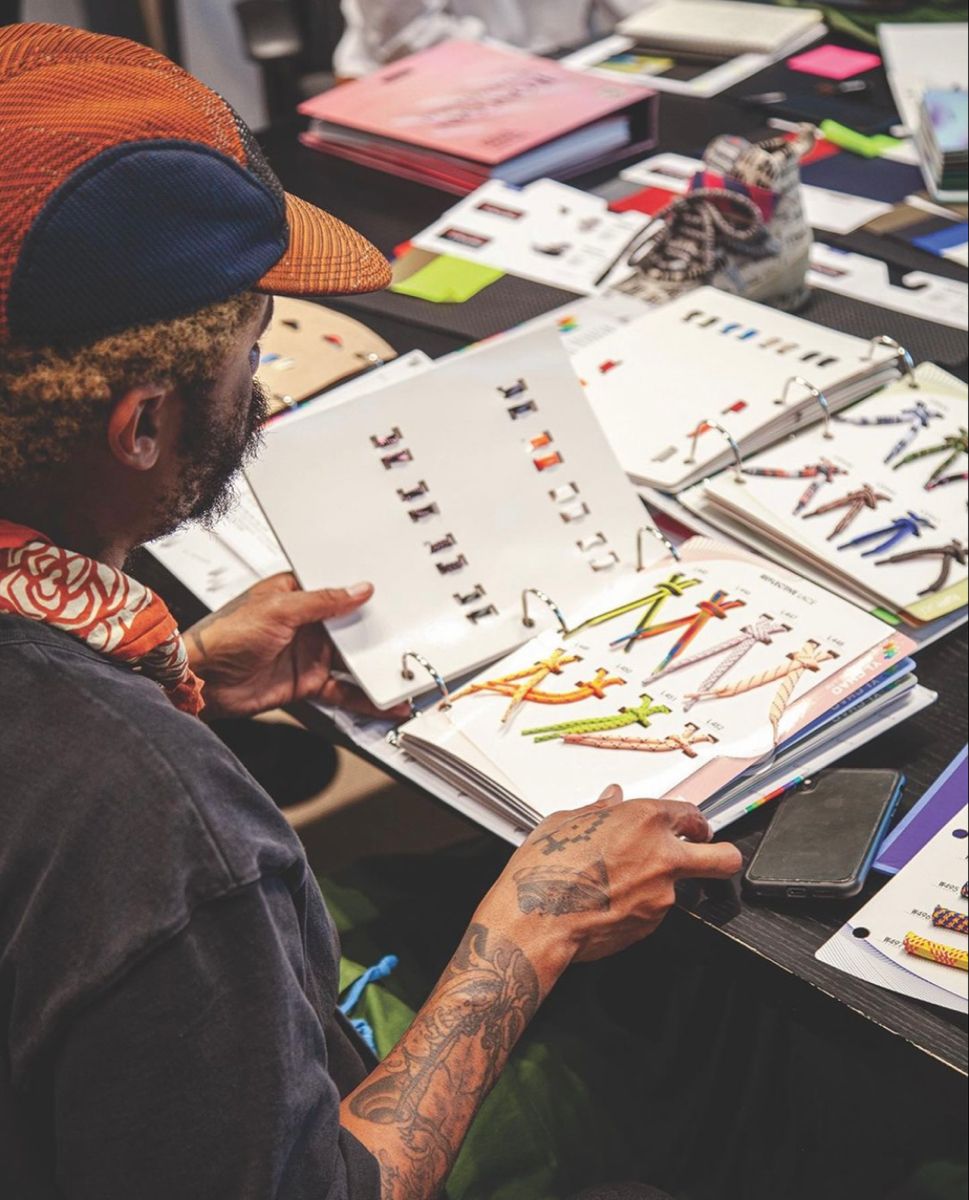
Not every independent designer needs all ten roles at every stage of their commercial development. The roles are needed in a sequence that follows the growth of the production system’s complexity.
At the first collection stage, the designer typically fills most roles themselves: developing technical flats, sourcing materials, managing the factory relationship, tracking the production, handling shipping. The roles are implicit rather than named. The designer discovers which roles are missing when the consequences of their absence appear: the sample that comes back wrong because the technical flat was unclear, the material that arrives late because the lead time was not confirmed, the shipment that is delayed at customs because a document was missing.
At the first wholesale stage, the roles that must be explicitly filled are the technical designer (to produce specs good enough for a buyer’s review), the garment technologist (to ensure samples meet the buyer’s quality standard), the logistics coordinator (to manage a cross-border delivery to an external buyer’s warehouse), and the compliance officer (to ensure the product meets the buyer’s market regulatory requirements). These four roles are the minimum production team for a brand that is fulfilling wholesale orders.
At the scaling stage, the production manager, the quality control inspector, and the production finance manager become necessary, as the complexity of managing multiple concurrent orders exceeds the designer’s capacity to handle them alongside design work. The materials sourcer becomes a dedicated role as the volume and complexity of material procurement justifies specialist attention. The production administrator becomes necessary as the documentation burden of the growing production system requires dedicated management.
The Global South Production Team
For independent designers in Africa, the Caribbean, Latin America and the Latinx diaspora, the production team question has a specific local dimension: the availability of each role in the local market, the cost of each role relative to the production revenues the brand generates, and the extent to which roles can be filled by cross-border freelancers or service providers where the local market does not provide them at accessible cost or quality.
The role most commonly unavailable or underrepresented in African and Caribbean fashion markets is the garment technologist: the practitioner who combines garment construction knowledge with quality standard-setting capability and factory communication skills at the level required for international wholesale relationships. The garment technologist whose training and experience are calibrated to international buyers’ quality standards is a role that typically requires either international training, sustained experience in an international production context, or access to the mentorship network that transmits that knowledge.
The role most commonly fulfilled by informal networks in Global South fashion markets is the logistics coordinator: the knowledge of how to get goods from a specific factory to a specific destination market through customs clearance at both ends is held by freight agents and informal networks that may not be formally documented but that represent real, accumulated expertise in the specific logistics challenges of specific cross-border routes. Building and maintaining these network relationships is a form of production intelligence distinct from the technical skills described above: it is the relationship knowledge that comes from sustained commercial activity on the same routes.
As Omiren Styles has established, in its analysis of production intelligence for African fashion brands, production intelligence is the specific knowledge that converts creative output into a commercially deliverable fashion product. The ten roles in this guide are the institutional form of that knowledge: the functions that, when filled by the right people with the right skills, convert a designer’s creative output into a delivered collection.
The Omiren Argument
Fashion media names the designer because the designer is the visible author of the collection. The production team is invisible in the record for the same reason the supply chain is invisible: the documentation of fashion has been built around the commercial front end of the industry rather than the production infrastructure behind it.
Naming the ten roles between design and delivery is the minimum act of documentation that makes the production team legible. A designer who knows the names of the roles, what each does, when each is needed and how each is typically engaged is a designer who can build a production team rather than discovering the need for one role at a time through the cost of its absence.
For designers in the Global South building production teams with fewer institutional resources and less established infrastructure than their counterparts in established fashion markets, that knowledge is not supplementary to the creative work. It is the operational foundation on which the creative work can become a commercial output that reaches the buyer, the market and the customer it was made for.
As Omiren Styles has argued throughout this series, the Global South made fashion and never got credit. The production team is where a significant part of that making happens. The technical designer who draws the flat, the pattern maker who develops the pattern, the materials sourcer who finds the fabric, the garment technologist who approves the sample, the production manager who keeps the timeline, the quality control inspector who passes the batch, the compliance officer who clears the customs, the logistics coordinator who books the freight, the production finance manager who tracks the costs, and the production administrator who maintains the records: each is a member of the team that made the collection. None of these typically appears in the photograph in the collection that the media publishes.
ALSO READ
- The Missing Middle: Why Independent Designers Struggle Between the Sketchbook and the Factory Floor
- How to Write a Cross-Border Fashion Production Brief: Budget, MOQ, Materials and Timeline
- What Makes a Fashion Manufacturer Verified? A Practical Framework for Emerging Brands
- African Fashion Does Not Need Another Marketplace. It Needs Production Intelligence.
- The Global South Made Fashion. It Just Never Got Credit.
Frequently Asked Questions
At what stage does a designer need a production manager?
A production manager becomes necessary at the point at which the complexity of managing concurrent production relationships exceeds the capacity of the designer to manage them alongside design work. At the first collection stage, the designer typically manages production themselves. When the brand reaches the point of managing multiple factory relationships, multiple material suppliers,s and multiple delivery commitments simultaneously, the designer’s attention is split between production management and design work, degrading both. The production manager role allows the designer to return to full focus on design while someone else maintains continuous oversight of the production pipeline.
What is the difference between a technical designer and a pattern maker?
The technical designer converts the designer’s creative sketches into technical documents: the technical flat that shows the garment’s construction details, the measurement specification that defines its dimensions and the construction notes that specify its stitching, seam, closure and finishing requirements. The pattern maker takes the technical designer’s documents and develops the actual pattern pieces: the individual fabric shapes that, when cut and sewn together, produce the finished garment. The technical designer produces the document. The pattern maker produces the production tool. In many factory relationships, both roles are filled within the factory: the designer provides the technical flat and the factory’s own technical team develops the pattern. In relationships where the designer wants to own the pattern and retain the ability to produce across multiple factories, the pattern maker is typically engaged independently.
Does an independent designer need all ten roles?
Not at every stage of commercial development. At the first collection stage, an independent designer typically fills most roles themselves, often without formally naming them. The roles become explicit and require dedicated attention in a sequence determined by the production system’s increasing complexity. The four minimum roles for a brand fulfilling wholesale orders are the technical designer, the garment technologist, the logistics coordinator and the compliance officer. The production manager, quality control inspector, production finance manager, materials sourcer, and production administrator become necessary roles as production volume, the number of concurrent relationships, and the complexity of financial and logistics management exceed what can be managed effectively alongside the design work.
What is a garment technologist and why is this role critical?
A garment technologist evaluates samples against specifications, identifies construction and quality issues, manages the correction process with the factory, and sets the quality standard for bulk production. The garment technologist is the role that prevents the most expensive production mistake in fashion: approving a sample for bulk production that has a quality, fit or construction problem that will appear in every unit of the bulk run. A measurement error, a construction defect or a finish quality issue discovered at the pre-shipment inspection stage, after the bulk run is complete, requires either rework at cost, a price reduction for the defective goods or rejection of the entire run. A garment technologist who catches these issues at the sampling stage, before bulk production is committed, turns an expensive problem into a correction route that costs a fraction of the alternatives.
How should a Global South designer fill production team roles that are not locally available?
As Omiren Styles has established in its analysis of production intelligence for African and Caribbean fashion brands, production intelligence is the specific knowledge that converts creative output into commercially viable fashion products, and the infrastructure gaps in Global South fashion markets are addressable through targeted interventions. For roles that are not locally available at the quality or cost that the designer’s production requires, the options are cross-border freelance engagement (a garment technologist based in a different country reviewing samples remotely and providing written feedback); buying agent relationships (a buying agent whose services include some production team functions such as quality control and logistics coordination); and skills development investment (building the role’s capability within the designer’s own team through training, mentorship or partnership with more experienced practitioners). The choice between these options depends on the specific role, the production volume, and the institutional context of the market in which the designer operates.
EXPLORE MORE
Read the full Industry and Production Intelligence sections at Omiren Styles for ongoing practical guides to fashion production team building, cross-border manufacturing relationships and the production intelligence that allows independent designers in the Global South to build commercially credible collections. Discover travel and heritage intelligence across Africa, the Caribbean and Latin America at Rex Clarke Adventures.