Every garment has two kinds of documentation.
The first is the instruction. Before a garment is made, someone has to tell the factory what to make, in what fabric, to what measurements, with what construction method, using which trims, at what cost and to what quality standard. That instruction is the technical pack. Without it, a factory operates on assumptions, and those assumptions produce sample revisions that cost time and money.
The second is the record. After a garment is made, someone needs to know what it is made of, where the materials came from, who made it, how it should be cared for, whether it can be repaired and what will happen to it when it reaches the end of its useful life. That record is the product data. Without it, a retailer cannot make accurate claims, a consumer cannot make an informed decision, and a regulator cannot verify a compliance statement.
These are not two separate documents serving two separate purposes. They are the same information at two different stages of the same garment’s life: the production instruction becomes the product record once the garment has been made to it. The brand that builds a good technical pack is already building the product data needed for retail, compliance, and traceability. The brand that builds a poor technical pack and then tries to reconstruct product data for regulatory purposes is doing the same work twice, under pressure and with incomplete information.
The technical pack is the document that a factory needs. The product data record is the document that a retailer, a regulator, and a consumer need. Between the two is the entire production history of a garment.
The technical pack tells a factory how to make a garment. The product data record tells a retailer what it is made of. Between these two documents lies the full production history of every garment – and most fashion brands treat them as separate.
What a Technical Pack Is and What It Is Not

A technical pack (often called a tech pack) is the specification document that tells a manufacturer exactly how to produce a garment: flat sketches, measurements, materials, construction notes, and cost dat, all in one place. It is the translation layer between what a designer intends and what a factory can actually build. It is not a design brief, a mood board or a sketch. A mood board communicates aesthetic direction. A sketch communicates shape. A tech pack communicates production instructions.
The distinction between a tech pack and a spec sheet matters for brands new to production. A spec sheet covers measurements only. A tech pack covers the full production picture: materials sourcing, construction methods, revision history and every other instruction the factory needs to produce the garment correctly.
As Onbrand’s PLM documentation establishes, a tech pack is a comprehensive document that details every aspect of a style so a factory can produce it accurately and consistently. It includes fashion flats, materials and trims, measurement specifications, grading rules and other technical specifications. For manufacturers, a tech pack is the starting point: most will not begin sampling or quoting without one, since it lays out everything needed to build a finished garment.
The Components of a Production-Ready Technical Pack
A production-ready technical pack must answer every question a factory could ask about the garment before sampling begins. Each section addresses a different category of production knowledge.
Style Identity and Version Control
Every tech pack must carry a unique style name and code, a version number and a date. Version control is not a formality. A factory working from an outdated version of a technical pack produces the wrong garment, and without a version record, the discrepancy cannot be resolved. The version history should record every change, when it was made, by whom and what was altered.
Technical Flat Sketches
Technical flats are two-dimensional illustrations of a garment drawn as if it were laid flat on a surface. They are not stylised fashion illustrations: they show the garment from the front, back, and any additional angles needed to convey construction details. Every seam, pocket, pleat, button, zip, vent, collar, cuff, waistband and finish detail should be visible and legible. Where a standard front-and-back view is insufficient to convey a detail, a close-up illustration should be added.
Bill of Materials
As part of Surefront’s guide to fashion tech pack documents, the Bill of Materials (BOM) is a detailed list of all materials needed to produce the garment, including the main fabric, lining, trims, labels, and any other components. A well-defined BOM ensures that nothing is overlooked and helps determine material costs and sourcing.
Each line in the BOM should specify the material or component by name; the composition, weight and finish; the colour reference (Pantone, PMS or lab-dip standard); the approved supplier or alternative source; the quantity per garment unit; and the unit cost. Where substitutions are permitted, they should be listed explicitly. Where a material is not yet sourced, the specification should describe the required standard closely enough for the factory to source accurately or for the brand to approve a specific alternative.
Digital BOM systems achieve 95%+ cost-prediction accuracy, compared with 70-80% for manual systems, according to data from Apex Fashion Lab. The Fashion Apparel PLM Software market reached $2.24 billion in 2024, growing at 12.08% annually, with BOM management enabling 10-15% material cost savings.
Measurement Specifications
Measurements are the most technically critical section of the tech pack for fit. The measurement chart should list every measurement relevant to the garment: body length, chest, waist, hip, sleeve length, shoulder width, neck opening, armhole, rise, inseam, cuff, collar, and any product-specific dimensions.
Each measurement should carry a target value and a tolerance, which is the acceptable range above and below the target. A tolerance of plus or minus 1 centimetre means the factory can produce within 1 centimetre of the target measurement; a smaller tolerance requires greater precision and may increase cost. The tolerance system accommodates the minor variations that occur in cut-and-sew production without resulting in a garment that fails fit requirements.
For a graded size range, the measurement chart must also specify the grade rules: how each measurement changes between sizes. Grade rules should be derived from a coherent size system, not extrapolated informally, because informal grading produces inconsistent fit across the size range.
Construction Notes
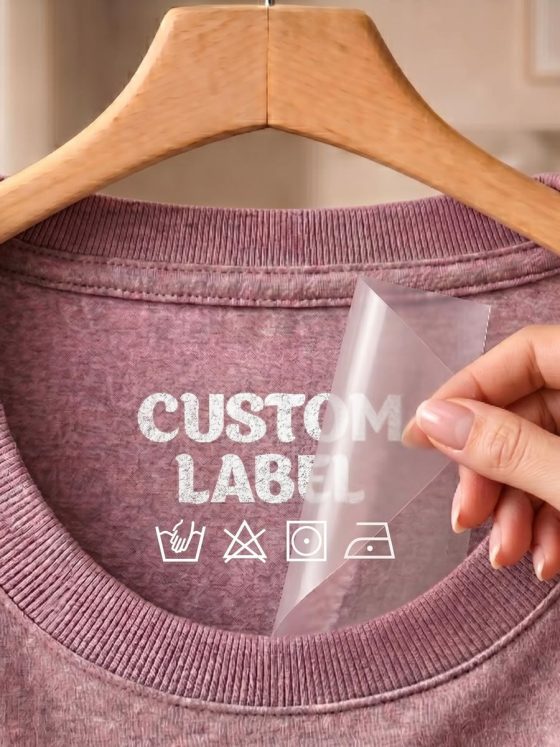
As Apex Fashion Lab’s technical documentation establishes, construction notes should specify seam types, stitch types, stitches per inch, seam allowances and finishing instructions. Complex garments include assembly sequence diagrams. Care label content should follow ISO 3758 or ASTM D5489 standards, as applicable, and include brand label placement diagrams, hangtag specifications, folding instructions, and packaging dimensions.
Construction notes should also specify what is not permitted. If a seam type should not be substituted, say so. If a specific interfacing weight must be used, specify it. If a pattern piece should not be cut on the cross-grain, mark it. Factories follow what is written, and the gaps between what the brand assumes and what the factory defaults to are where most production errors occur.
Cost Sheet
The cost sheet within the tech pack provides a breakdown of the estimated or agreed cost to produce the garment: materials at the specified BOM cost, cut-and-make labour, trimming, finishing, packing, and any other production costs. The cost sheet is used for pricing, margin calculation and cost negotiation with the factory. It should be version-controlled alongside the rest of the tech pack, because any material or construction change that affects cost should trigger a cost-sheet update.
The Gap Between Technical Pack and Product Data

The technical pack is a production instruction. It is designed for a factory. Product data is a commercial and compliance record. It is designed for retailers, regulators and consumers.
Most fashion brands manage these as separate documents in separate systems, often maintained by different teams at different stages of the production calendar. The product development team builds the tech pack. The compliance or sustainability team builds the product data record. The retail team publishes the product description. Each works from the same underlying garment but from different, often inconsistent, information.
The inconsistency is not unusual. A material may be substituted during production and the substitution recorded in the factory’s production record but not in the brand’s tech pack. A component may be sourced from a different supplier when the original source is out of stock, and the correct BOM information is never carried into the product data. A fabric weight may change between approved sample and bulk production, and the stated composition on the product page reflects the sample rather than the bulk garment.
As Omiren Styles has established, in its analysis of the documentation gap in fashion supply chains, the things the fashion supply chain fails to record are precisely the things whose documentation would make extraction harder to disguise and errors harder to sustain. The gap between a brand’s technical pack and its product data record is one of the most commercially significant instances of that documentation gap: the information that was accurate at sampling may not be accurate at retail, and neither document may reflect what was actually produced in bulk.
What the Digital Product Passport Changes
The European Union’s Digital Product Passport requirement, mandating traceability from 2026, creates a regulatory framework that brings the technical pack and the product data record into the same compliance structure for the first time.
Under the Digital Product Passport framework, a product must carry a verifiable record of its material composition, production origin, care and repair information, recyclability, and the supply chain relationships through which it was made. That record is not a specification document: it is a post-production traceability document. But its content depends entirely on whether the specification document, the technical pack, was built with sufficient precision to ensure the product data is accurate.
A brand that builds its technical pack with a clear, verified BOM, confirmed material sourcing, specified construction methods and documented supplier relationships is already building most of what the Digital Product Passport will require. A brand that builds an incomplete or informal tech pack and then relies on supplier declarations and recalled information to populate its product data is attempting to build a regulatory record on an inadequate production foundation.
The Digital Product Passport does not make technical documentation more important. It makes the consequences of inadequate technical documentation more visible.
As Omiren Styles has established in its analysis of what makes a fashion manufacturer verified, the EU Digital Product Passport, mandating traceability from 2026, creates a regulatory requirement for material documentation that extends beyond commercial transaction records to include material origins, processing chains, and compliance credentials in a verifiable form. The product data record enabled by a strong technical pack is the link between the manufacturer’s compliance record and the consumer-facing traceability claim.
The Technical Pack as a Cultural Accountability Document

The technical pack is understood primarily as a production management tool. For fashion brands working with cultural materials, craft techniques and traditional textiles, it is also a cultural accountability document.
A tech pack that names the specific wax-print supplier, rather than describing the fabric as ‘African print’, has created a record linking the garment’s cultural reference to a specific supply chain relationship. A BOM that identifies a Ghanaian kente weaver as the source of the woven cloth rather than ‘woven trim’ has documented the knowledge holder’s commercial relationship with the garment. A construction note that describes a hand-finishing technique as ‘hand-finished by artisans in Lomé’ rather than ‘hand-finished’ has created the maker record that standard supply chain documentation omits.
The precision that makes a tech pack a better production document is the same precision that makes it a better accountability document. The brand that specifies exactly which community produced which material and documents that specification in a version-controlled technical pack has laid the foundation for the cultural attribution, the licensing record, and the community benefit structure that this series has been arguing the fashion industry needs to build.
As Omiren Styles has established in its analysis of the Omiren Index production and manufacturing methodology, a documented claim distinguishes between self-reported information and evidence supported by independently reviewed records. The technical pack, when built with specific named suppliers, confirmed material sources and documented artisan relationships, provides the evidentiary foundation that allows an Omiren Index record to describe a manufacturer’s supply chain with precision rather than generality.
Common Technical Pack Failures and Their Costs
The most common technical pack failures have predictable cost consequences.
Missing or vague BOM: The factory sources substitute materials without approval. The bulk product differs from the sample. The product data record is inaccurate at retail.
No version control: The factory works from an outdated tech pack. Corrections are disputed. Responsibility for errors is unclear.
Incomplete measurements: The sample fit is wrong. Additional sample rounds are required. Rework costs range from $1,500 to $5,000 per round.
Ambiguous construction notes: The factory defaults to its standard methods. The garment does not match the approved construction. The error may not be discovered until bulk production.
No cost sheet: Cost negotiations are poorly grounded. Margin calculations are inaccurate. A material substitution that affects cost goes unnoticed.
Missing care or label spec: Labelling is incorrect. In regulated markets, this creates compliance risk. In a retail context, it damages the brand’s customer relationships.
No supplier approval process: Unapproved materials enter the supply chain. The product data record cannot accurately represent material sourcing.
As Omiren Styles has established, in its analysis of why sampling is the first real test of a fashion partnership, brands sending incomplete or vague briefs face 3 to 5 sample revision rounds per style instead of 1 to 2, adding weeks of delay and significant rework costs. The technical pack failure and the sampling failure are the same failure at different stages: the instruction was not clear enough to produce the correct result the first time.
Building the Technical Pack as a Living Document
The technical pack should not be understood as a document created once before sampling and then left unchanged. It is a living record of all decisions made about a garment across its development and production lifecycle.
Every sample comment should be reflected in the tech pack as a version update. Every approved material change should update the BOM. Every construction correction should update the construction notes. Every cost change should update the cost sheet. The tech pack is the authoritative record of what the garment is supposed to be, and it should always reflect the most current, approved state of the specification.
A tech pack that has not been updated since the first sample describes the first sample, not the bulk production garment. The product data record built from it will be inaccurate. The Digital Product Passport will be inaccurate. The consumer claim will be inaccurate. The traceability record will not trace what was actually produced.
The test for a technical pack is simple: if a factory received this document today, with no other information, could it produce the bulk garment that was approved? If not, the tech pack is not complete.
For fashion brands working across geographies, the technical pack is also the primary communication tool between the design and production teams. In the diaspora fashion context specifically, where a designer may be working in London while production occurs in Lagos or Kingston, the technical pack bridges the geographic and time-zone gap that makes real-time communication impractical. A precise, version-controlled technical pack makes distance manageable. An informal or incomplete one makes it unmanageable.
From Technical Pack to Product Data: Closing the Loop

The product data record that a garment carries into the retail channel should be the logical completion of the technical pack. Every claim the product data makes should be traceable to a specification or an approved material in the tech pack.
Where product data and the tech pack diverge, the divergence is a documentation failure: either the tech pack was not updated when a production decision changed, or the product data was populated from recalled information rather than from confirmed records. In either case, the publicly stated information about the garment does not accurately represent what was produced.
Closing this loop requires treating the technical pack and the product data as a single document system rather than as two separate tools maintained by different teams. The information required in the product data should be specified in the technical pack. The material confirmation, the supplier approval, the construction verification, and the labelling information that populate the product record should come directly from the confirmed, version-controlled production specification.
As Omiren Styles has established in its analysis of fashion technology access and who benefits from the new tools, digital documentation systems are most beneficial when they connect the production workflow to the compliance and retail workflows without creating additional data-entry burden for smaller producers. The technical pack-to-product data loop is the clearest available example of this principle: a well-built technical pack already contains most of the product data record, and a documentation system that recognises this connection reduces the compliance burden on smaller brands while improving the accuracy of the record.
The Omiren Argument
The argument this series has been making throughout is that the things fashion fails to document are precisely the things whose documentation would make accountability possible.
The technical pack and the product data record are the two moments in a garment’s life at which documentation is most consequential. The technical pack is where the design becomes a production instruction: where a material is specified, a supplier is approved, an artisan’s technique is named, and a construction method is committed to paper. The product data record is where the produced garment becomes a commercially accountable object: where the material claim, the origin statement, the care instruction and the traceability chain are published to the market.
Between those two moments lies the entire production history of the garment. A brand that builds the first document well and connects it directly to the second has created a production system that is both more efficient and more accountable. A brand that builds them separately, informally or incompletely has created a systemin whiche the marketed garment is difficult to trace, the compliance claim is difficult to verify, and the cultural knowledge that makes the collection what it is remains unnamed and uncompensated in the supply chain record.
As Omiren Styles has argued throughout this series, the Global South made fashion and never got credit. The technical pack is one of the places where credit can begin to be built into the production system rather than assigned retrospectively: where the name of the weaver, the address of the atelier, the technique of the dyer and the tradition of the textile can be specified as production instructions rather than appended as marketing claims. The document that tells the factory what to make is also the document that tells the record who made it. Those two functions should not be separated.
ALSO READ
- Production Field Note: Why Sampling Is the First Real Test of a Fashion Partnership
- The Documentation Gap: What Fashion Supply Chains Still Fail to Record
- What Makes a Fashion Manufacturer ‘Verified’? A Practical Framework for Emerging Brands
- The Global South Made Fashion. It Just Never Got Credit.
Frequently Asked Questions
What is a fashion technical pack?
A fashion technical pack (also called a tech pack) is the specification document that tells a manufacturer exactly how to produce a garment. It includes flat sketches, measurement specifications, a bill of materials, construction notes, cost data and version history. It is the translation layer between what a designer intends and what a factory can build. Most manufacturers will not begin sampling or quoting without one, since it lays out everything needed to produce the garment accurately.
What is the difference between a tech pack and a spec sheet?
A spec sheet covers measurements only. A tech pack covers the full production picture: materials sourcing, construction methods, bill of materials, cost data, label and packaging specifications and revision history. A spec sheet is often one section within a tech pack rather than a substitute for one.
What is a Bill of Materials in fashion?
The Bill of Materials (BOM) is a detailed list of all materials and components needed to produce a garment, including the main fabric, lining, trims, labels and packaging. A well-defined BOM ensures nothing is overlooked and helps determine cost and sourcing. Digital BOM systems can achieve 95%+ cost prediction accuracy, significantly improving on manual approaches.
What is a Digital Product Passport for fashion?
The EU Digital Product Passport is a regulatory requirement mandating that products carry a verifiable, machine-readable record of their material composition, production origin, care and repair information, recyclability and supply chain relationships. For fashion, this takes effect from 2026. The passport is the product data record in digital form that connects the garment to its full production history. Brands that have built strong, version-controlled technical packs with verified BOM information and named supplier records will find the Digital Product Passport requirement significantly easier to fulfil than those relying on informal or incomplete documentation.
How does an incomplete tech pack affect production?
Brands that send incomplete or missing tech packs to factories face an average of 3 to 5 sample revision rounds per style, compared to 1 to 2, adding weeks of delay and significant rework costs. Correcting garment errors without a proper technical foundation can cost between $1,500 and $5,000 per sampling round. Beyond cost, incomplete tech packs create inaccuracies in product data: if the specification was never precise, the product data derived from it will not be accurate at retail.
Why should a technical pack be kept as a living document?
A technical pack that is not updated when production decisions change describes the sample rather than the bulk garment. Every material substitution, construction correction, measurement adjustment and cost change should be reflected in the tech pack as a version update. A version-controlled tech pack is the authoritative source for what the garment is supposed to be at every stage of its production life, and the product data record built from it should always reflect the most current, approved specification.
How does the technical pack relate to cultural accountability in fashion?
A technical pack that names a specific wax-print supplier rather than describing the fabric as ‘African print’, identifies a Ghanaian kente weaver as the source of a woven trim rather than ‘woven trim’, or describes hand-finishing as ‘hand-finished by artisans in Lomé’ rather than ‘hand-finished’, has created a production record that names the knowledge holder, specifies the supply chain relationship and provides the foundation for cultural attribution, licensing and community benefit claims. The precision that makes a technical pack a better production document is the same precision that makes it a better accountability document.
EXPLORE MORE
Read the full Industry and Production and Manufacturing sections at Omiren Styles for ongoing production intelligence, technical documentation standards and the supply chain accountability frameworks that connect the technical pack to the product data record. Discover travel and heritage intelligence across Africa, the Caribbean and Latin America at Rex Clarke Adventures.